


Temple Tour in Hoi An: A Peaceful Half-Day Itinerary Through Historic Pagodas and Sacred Sites
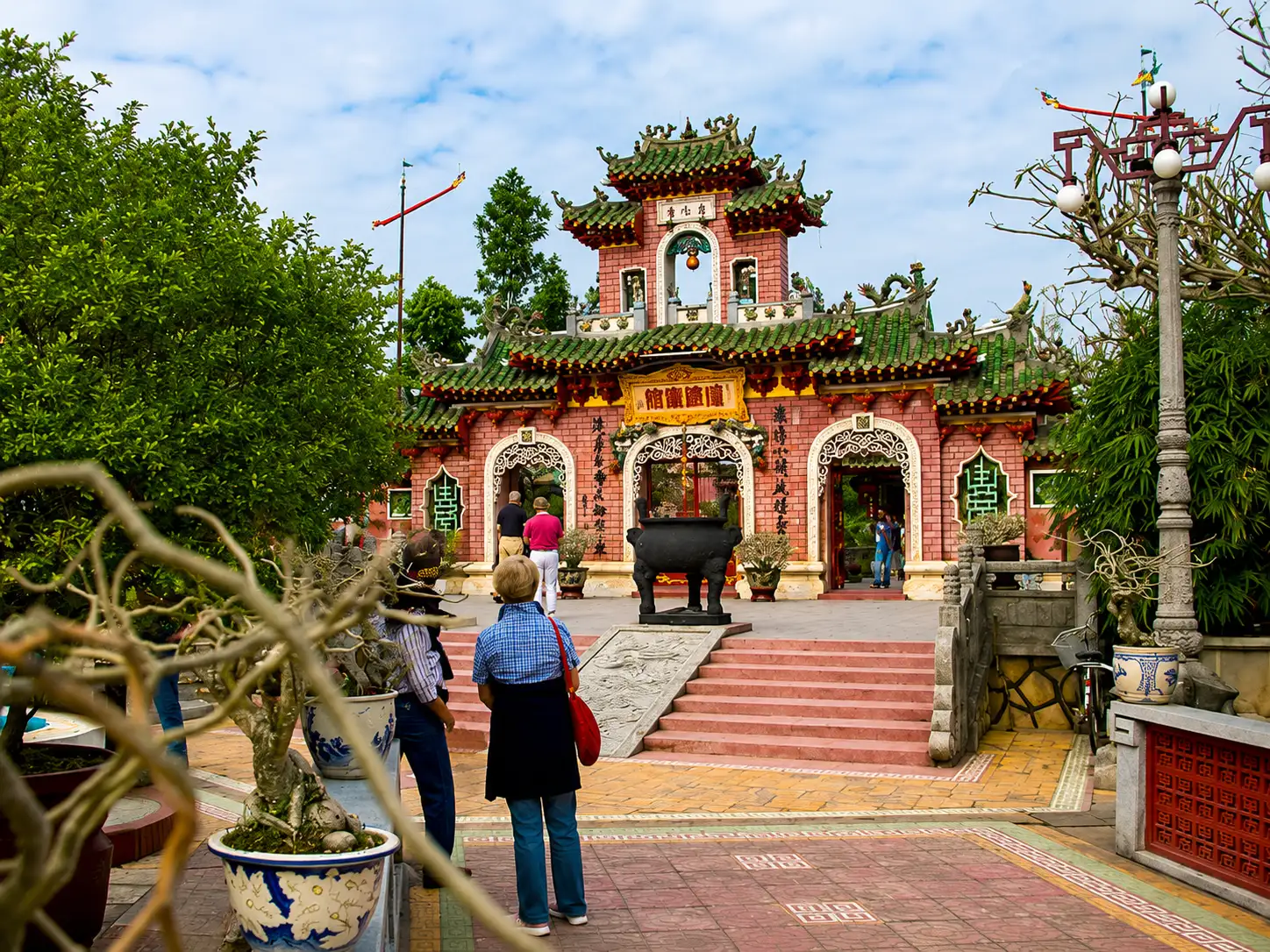
A well-planned temple tour in Hoi An connects these two sides of the destination. Rather than moving quickly between buildings for photographs, the route gives enough time to understand why each site was established, how it remains part of local religious life and what international guests should know before entering an active place of worship. The itinerary below takes approximately half a day and works particularly well for couples, families, guests travelling with older parents and anyone seeking a quieter cultural experience during a longer beach holiday.
Temple Tour in Hoi An: Quick Planning Guide
| Planning point | Practical recommendation |
| Suggested duration | Around 4.5 to 5.5 hours |
| Recommended start | Between 7:30 AM and 8:00 AM |
| Main route | Chuc Thanh Pagoda, Phuoc Lam Pagoda, Van Duc Pagoda and Quan Cong Temple |
| Best transport | Private car with a waiting driver or a pre-arranged guided vehicle |
| Walking level | Light to moderate, with short walks and several thresholds or steps |
| Suitable for older guests | Generally yes, although the sites are not fully step-free |
| Suggested finish | Vegetarian lunch or a relaxed meal near the Ancient Town |
| Admission | Outer pagodas generally accept visitors without a formal sightseeing ticket; Quan Cong Temple is included among the Ancient Town heritage sites |
| Cultural essentials | Covered shoulders and knees, quiet behaviour and no intrusive photography |
Opening arrangements at active religious sites can change during ceremonies, maintenance work or local festivals. It is sensible to confirm access with a hotel travel desk, local guide or driver on the morning of the visit.
Temple, Pagoda or Assembly Hall: What Is the Difference?
English-language maps often use “temple” as a general label for several different types of religious architecture. That translation is convenient, but it can hide important differences between the places included in a Hoi An temple tour.
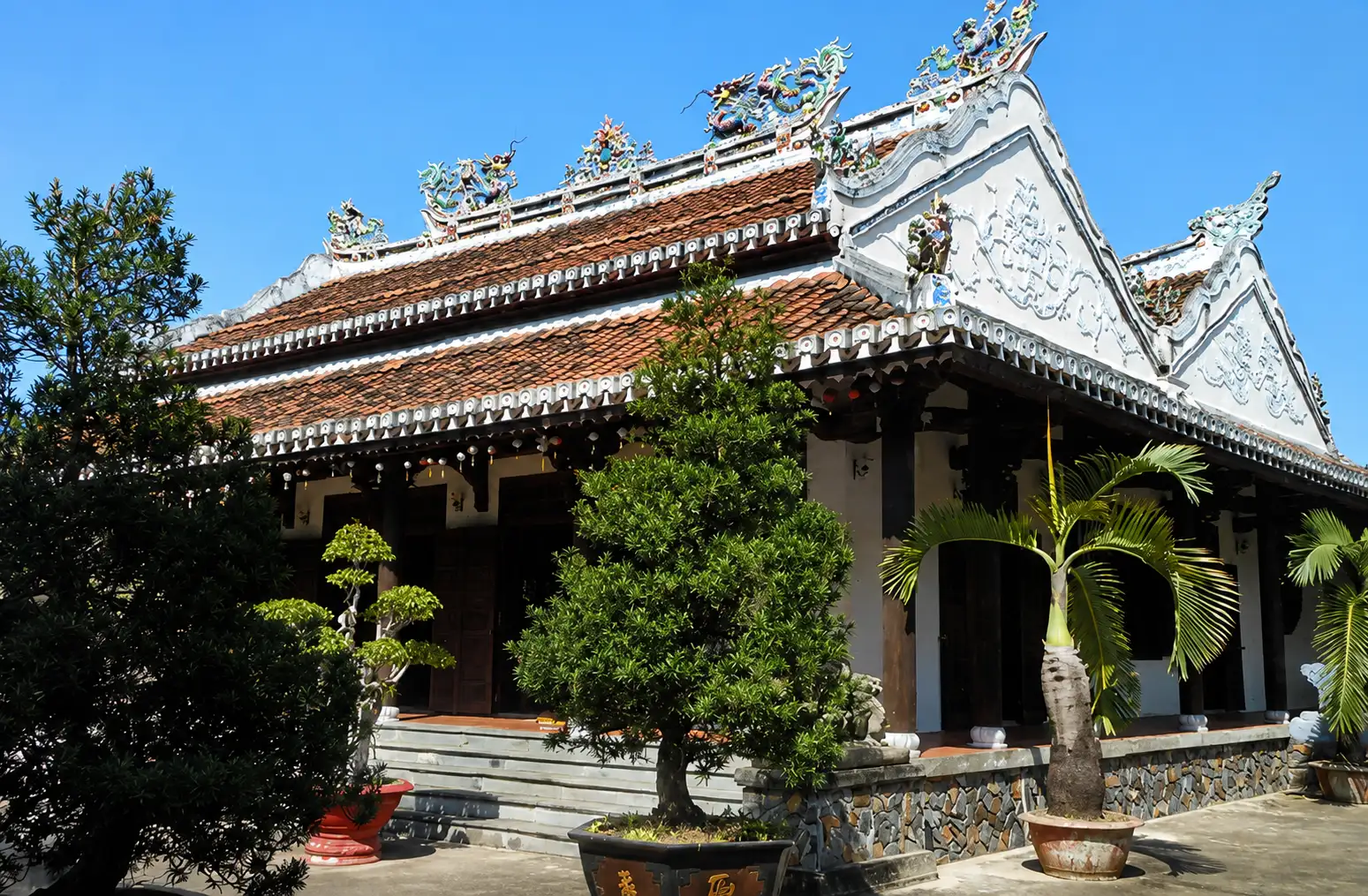
- A Pagoda Is Primarily a Buddhist Religious Site: The Vietnamese word chua is usually translated as “pagoda.” It refers to a Buddhist place of worship that may include a main sanctuary, ancestral halls, monks’ quarters, gardens, stupas and spaces used for chanting or ceremonies. Chuc Thanh, Phuoc Lam and Van Duc are Buddhist pagodas. They remain connected with monastic traditions and should be approached as active religious environments rather than open-air museums.
- A Temple or Shrine Honours a Deity or Historical Figure: The words den and mieu are more accurately translated as “temple” or “shrine.” These buildings may honour protective deities, cultural figures, local spirits or historical personalities rather than functioning as Buddhist monasteries. Quan Cong Temple is a clear example. Known locally as Chua Ong, the building is not a Buddhist pagoda despite the word “chùa” in its popular Vietnamese name. It is a shrine dedicated to Quan Cong, or Guan Yu, a Chinese general associated with loyalty, integrity and moral conduct.
- An Assembly Hall Combined Community Life and Worship: Hoi An’s Chinese assembly halls, known as hoi quan, were established by merchant communities from different parts of China. They provided social support, meeting spaces and places of worship for people sharing the same regional background. This distinction helps explain why Hoi An’s spiritual architecture feels so varied. Buddhist practice, local beliefs and Chinese community traditions developed alongside one another within the same trading port.
The Best Pagodas and Temples to Include
A half-day route should contain no more than four principal stops. Adding too many sites leaves little time to read the inscriptions, observe the architecture or wait respectfully when a ceremony is taking place. The following sequence provides a useful balance between Buddhist heritage outside the old centre and a historic temple within the Ancient Town.
Chuc Thanh Pagoda: The Ancestral Home of an Important Zen Lineage
Chuc Thanh Pagoda stands approximately two kilometres north of central Hoi An at 104 Ton Duc Thang Street. The Hoi An heritage authority dates its foundation to the late 17th or early 18th century, when Zen Master Minh Hai established the pagoda. It later became the ancestral monastery of the Lam Te-Chuc Thanh Zen lineage in southern Vietnam. This historical role is more significant than the frequently repeated claim that Chuc Thanh is simply “Hoi An’s oldest pagoda.” Its importance comes from the religious lineage that developed from the site and influenced Buddhist communities across Central and Southern Vietnam.
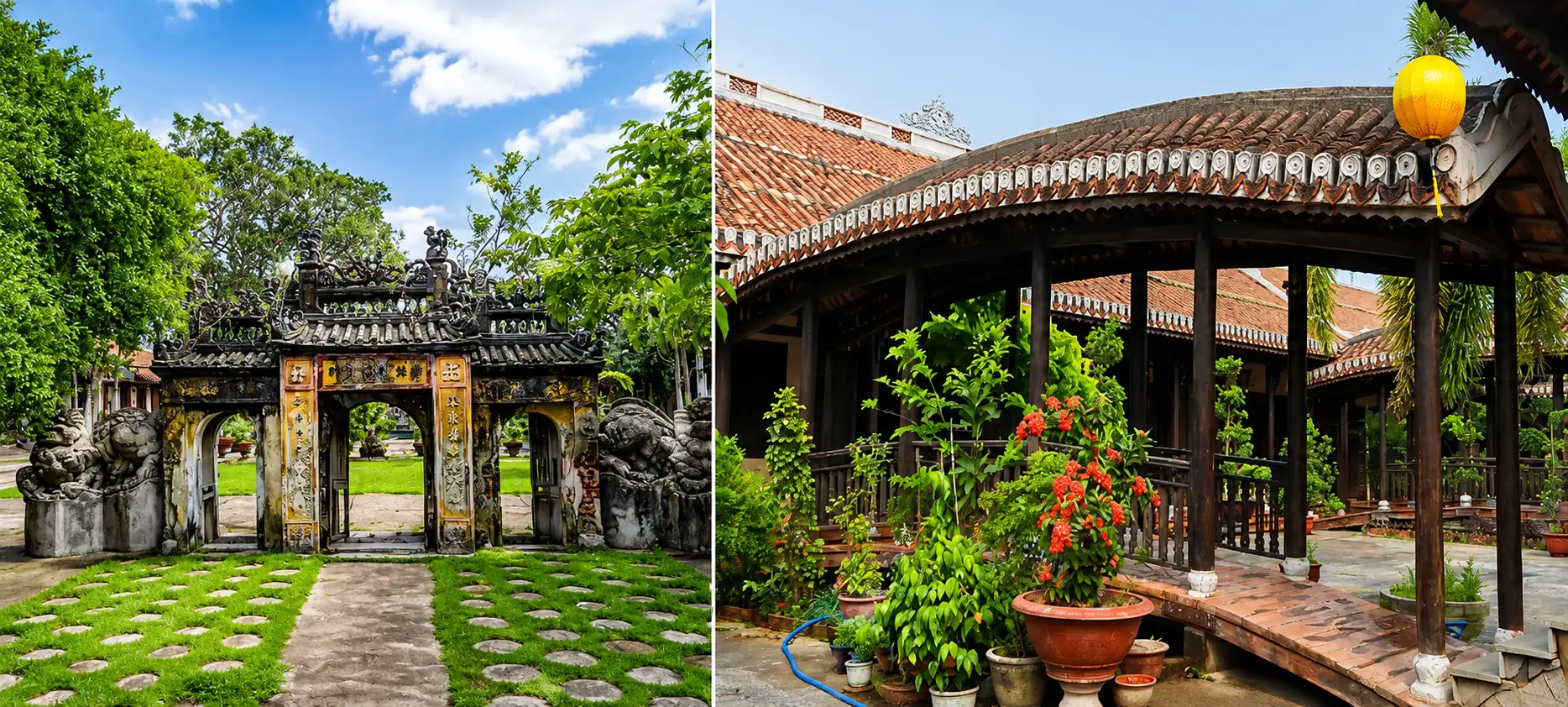
Begin with the main axis of the pagoda rather than entering and walking directly towards the largest statue. The arrangement of gates, courtyards, worship halls and ancestral spaces shows how Buddhist architecture organises movement from the public exterior towards more sacred interior areas. Details such as horizontal lacquered boards, Chinese characters, old roof forms and ancestral altars are easier to understand with a guide. Without one, allow time to observe the layout quietly rather than attempting to interpret every image or inscription independently.
Read more: What Is Hoi An Famous For Beyond Lantern Streets?
Phuoc Lam Pagoda: Buddhist Heritage Beyond the Town Centre
Phuoc Lam Pagoda is located in the Cam Ha area, approximately three kilometres from central Hoi An. It was founded by the monk Minh Giac during the 18th century and later became an important record of Buddhist development in Central Vietnam. The pagoda contains religious statues, inscriptions, scriptures and historical objects. Its value was formally recognised when it received national monument status in 1991. Historical documents also show that Phuoc Lam received imperial recognition during the Nguyen dynasty, adding another layer to its institutional importance. The setting feels more removed from commercial tourism than the monuments inside the pedestrian district. That does not mean the pagoda is empty or unused; monks, worshippers and local families may be present, particularly on lunar observance days.
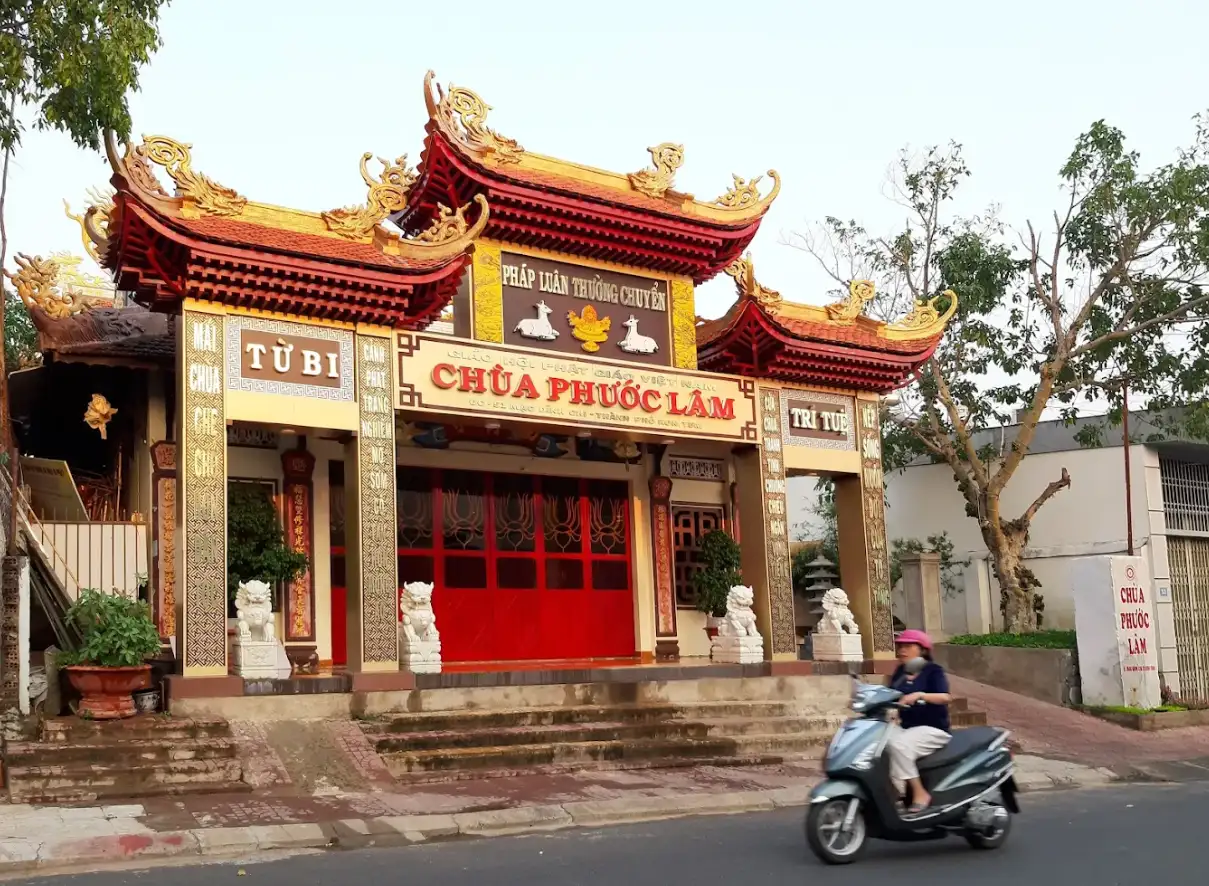
Phuoc Lam complements Chuc Thanh because the two sites are connected through the development of Buddhist traditions in Hoi An. Visiting them together gives the morning a clearer historical structure than selecting unrelated shrines from a map. The architecture and religious collection also reward a slower visit. Thirty to forty minutes is enough for a general introduction, while a guided group may need longer to discuss the preserved objects and the pagoda’s role within the wider Buddhist network.
A vehicle can approach the area without requiring a long walk from the Ancient Town. Even so, paved access does not guarantee full accessibility inside every religious building. Older guests should avoid rushing through raised doorways and narrow transitions between halls. A folding walking stick, supportive footwear and a driver who can stop close to the entrance can make the visit considerably easier.
Van Duc Pagoda: A Religious Site Connected with Hoi An’s Historic Waterways
Van Duc Pagoda lies roughly four kilometres north of central Hoi An near the former Co Co River route. The Hoi An heritage authority records that Zen Master Minh Luong founded the site around the late 17th or early 18th century. Its location beside the old river system is historically relevant. The Co Co waterway once linked the Da Nang and Hoi An areas, allowing merchants and other passengers to approach religious sites from the river. Van Duc therefore belongs not only to the history of Buddhism but also to the wider geography of movement and trade around the port.
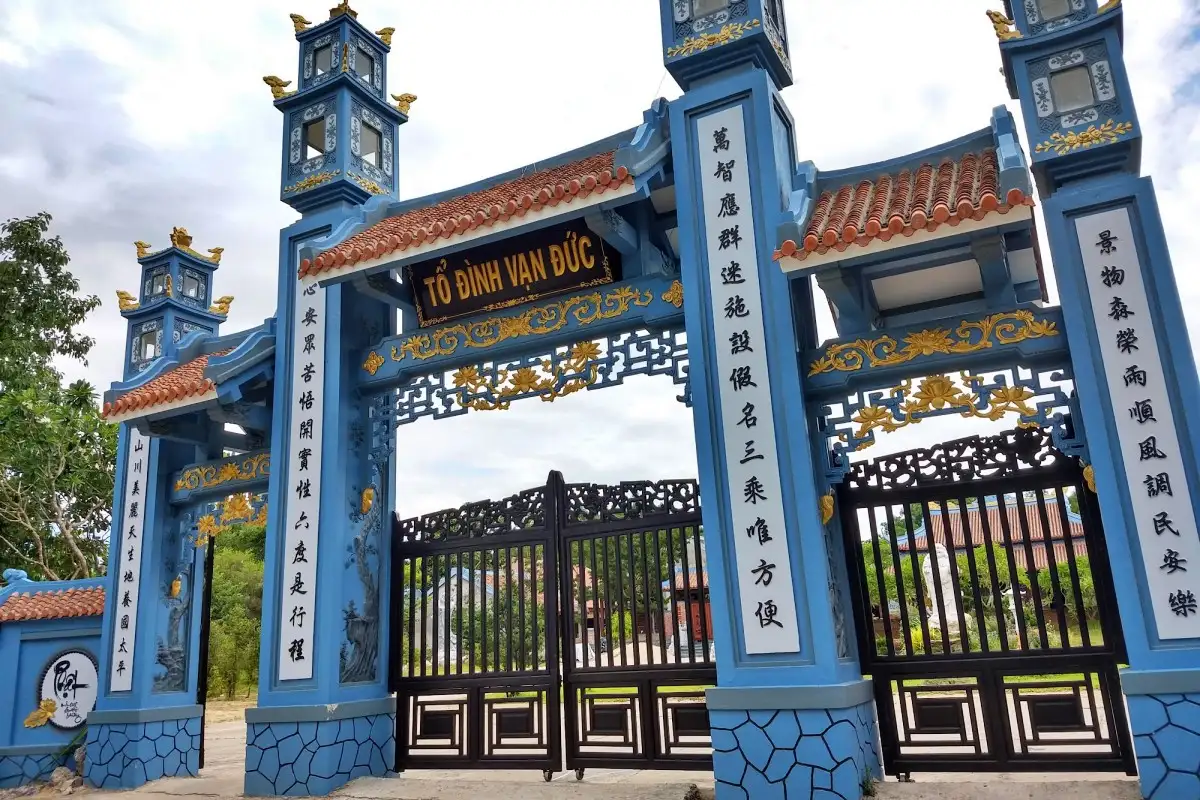
Van Duc helps place religious buildings within the physical landscape of the former trading port. Its story demonstrates that sacred architecture did not develop only inside the present-day tourist centre; pagodas also stood near villages, river routes and areas used by merchants. This is a useful stop for anyone interested in how the town functioned before modern roads and hotel districts reshaped local movement. Allow around 30 to 40 minutes, keeping the visit flexible if a service or private religious activity is underway.
Quan Cong Temple: The Spiritual and Commercial Values of Old Hoi An
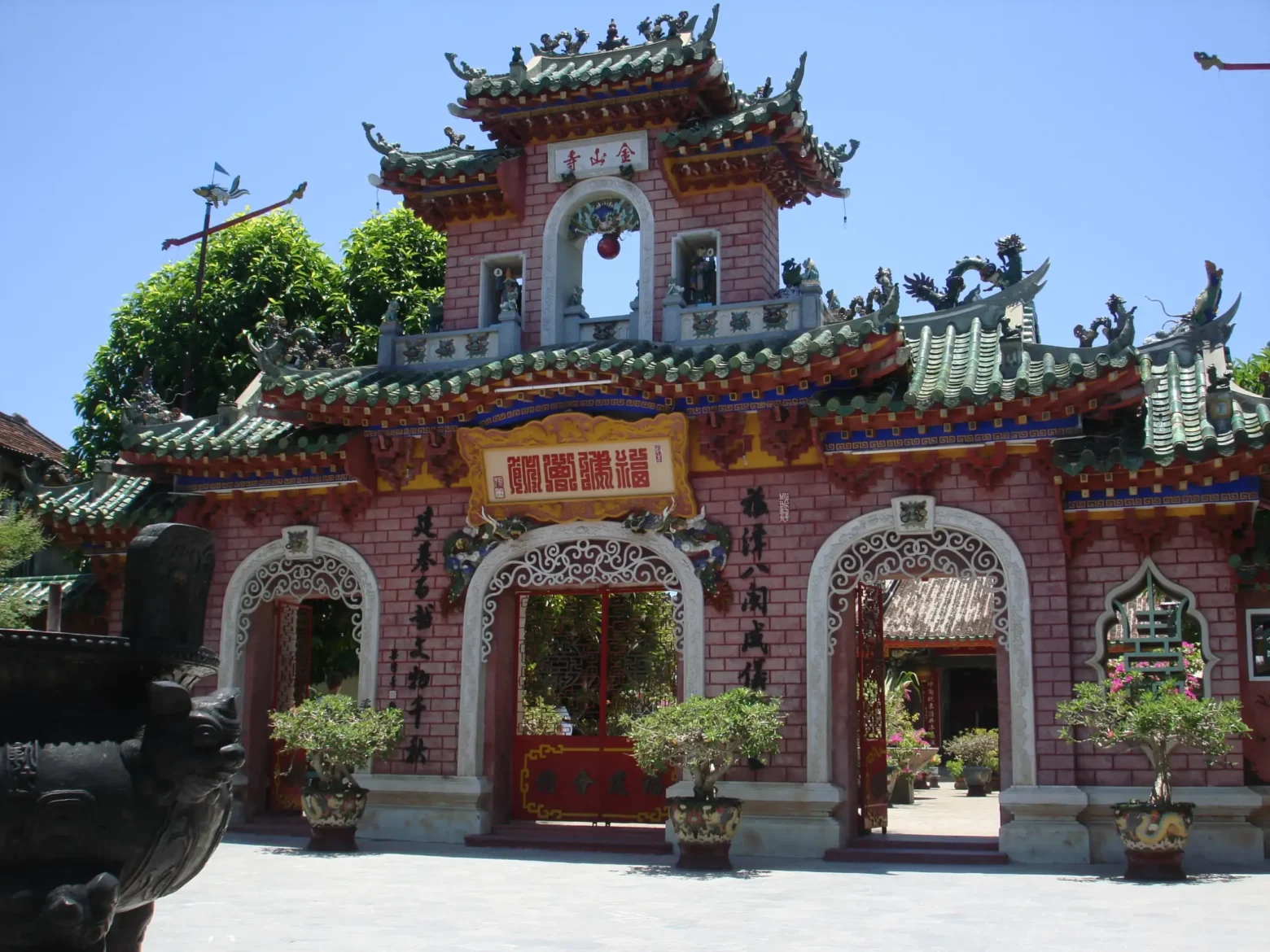
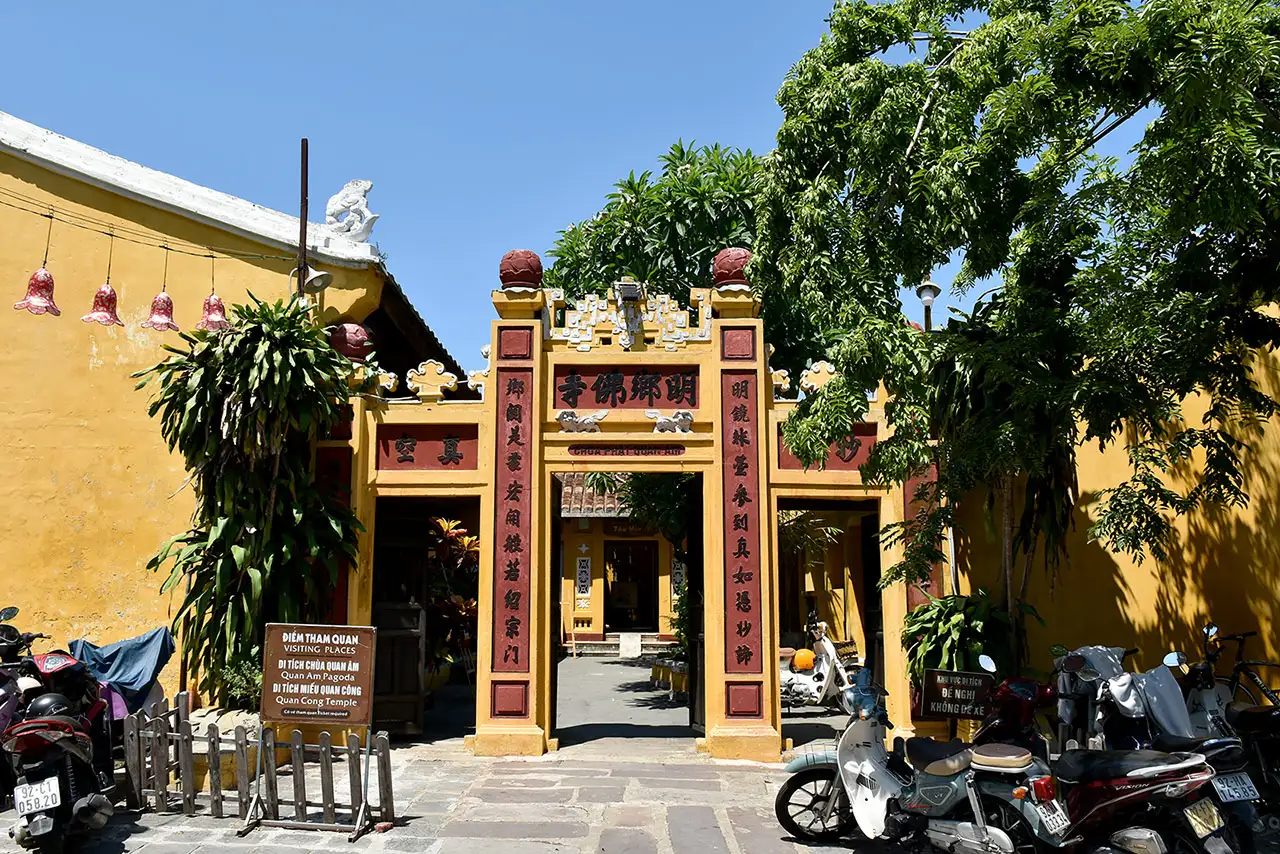
Quan Cong Temple stands at 24 Tran Phu Street opposite the central market area. Also called Chua Ong or Trung Han Cung, it was established by Hoi An’s Minh Huong and Vietnamese communities by the mid-17th century. Records preserved at the site indicate that the temple was already in existence by 1653. The temple honours Quan Cong, the Vietnamese name for Guan Yu. In the cultural setting of Hoi An, he came to represent loyalty, trustworthiness and moral integrity qualities with particular relevance in a commercial port where merchants depended heavily on reputation and reliable agreements.
The building served as an important centre of belief near the old market. Nineteenth-century renovations helped shape its present architectural appearance, including its distinctive roof structure and sculptural decoration. The temple was recognised as a national historical and cultural monument in 1991.
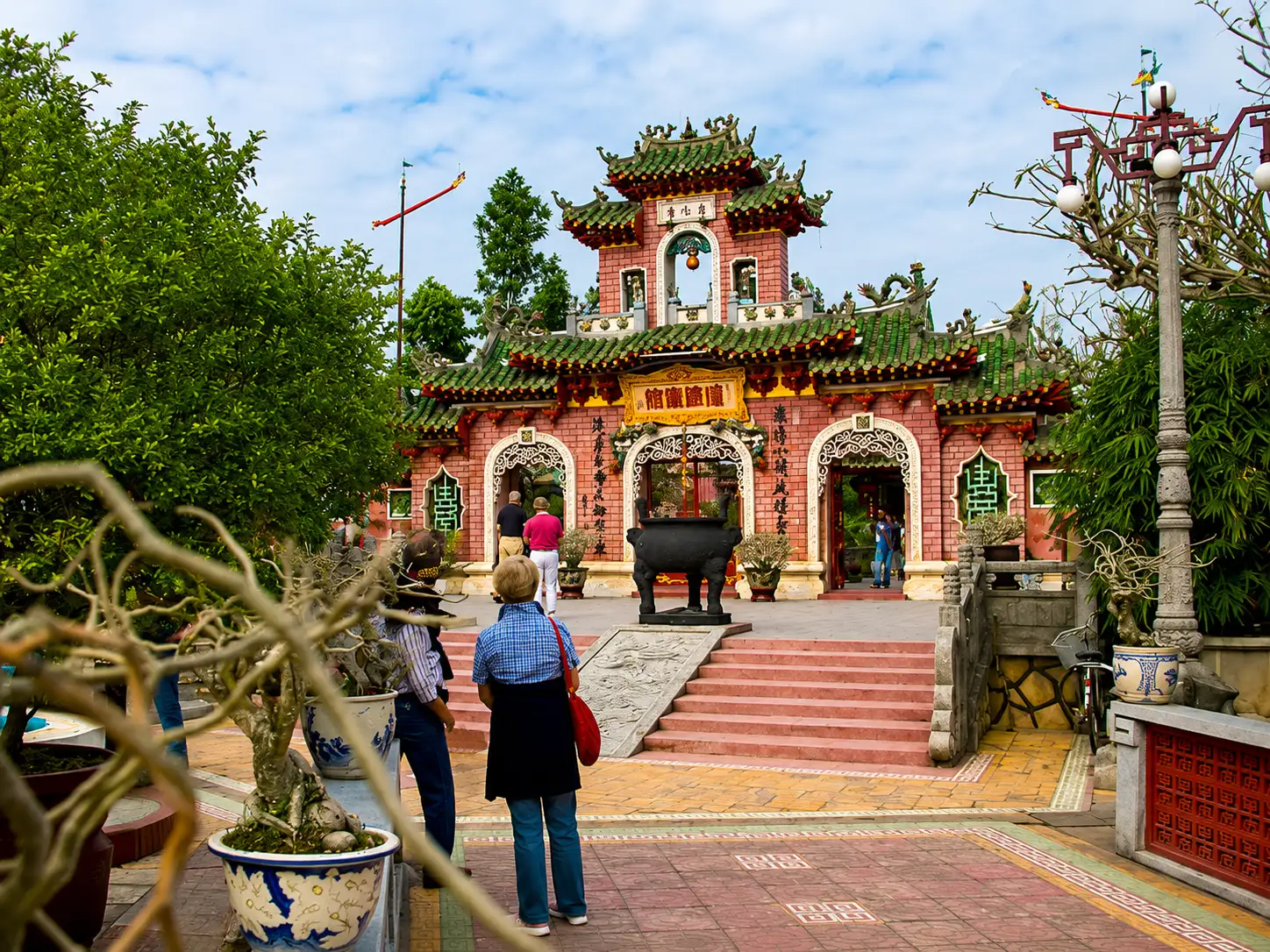
Ending at Quan Cong Temple allows the morning to move from Buddhist monastic sites into the multicultural heart of the trading town. The contrast is immediately visible: stronger red tones, Chinese decorative elements and a shrine centred on a historic figure rather than a Buddhist monastic lineage. Its central position also makes lunch easy to arrange. After the visit, the group can walk a short distance to a restaurant rather than returning immediately to the vehicle.
Ticket Information: Quan Cong Temple is included among the heritage sites covered by the Hoi An Ancient Town sightseeing ticket. Official visitor information has listed the international ticket at 120,000 VND, with access to five selected sites, although ticket policies should be checked again at the official booth before entry. The outer pagodas are not part of the same ticket system. A formal entrance charge is not usually the focus at active Buddhist sites, but visitors should never assume unrestricted access. Private halls may be closed, and a small voluntary donation can be placed in an official box when available.
Suggested Half-Day Temple Tour from Bliss Hoi An
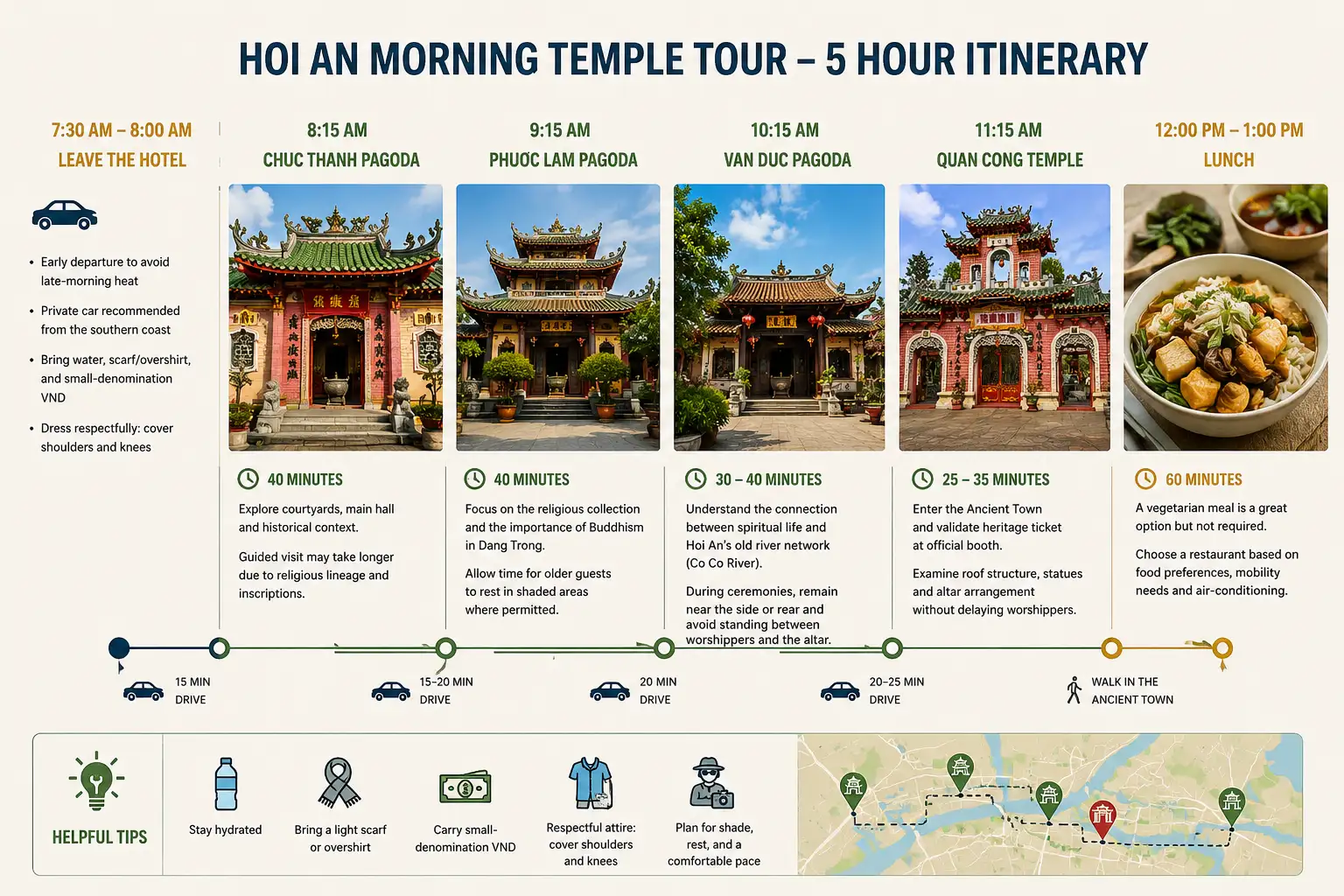
A comfortable morning can begin at approximately 7:30 AM, after breakfast at the resort. The first drive to the northern side of Hoi An takes longer than the short transfers between the three pagodas, so an early departure leaves enough time to visit without rushing. The route can be arranged as follows:
| Approximate time | Stop | Suggested duration |
| 7:30 AM | Leave Bliss Hoi An by private car | X |
| 8:20 AM | Chuc Thanh Pagoda | 40-45 minutes |
| 9:20 AM | Phuoc Lam Pagoda | 35-40 minutes |
| 10:15 AM | Van Duc Pagoda | 30-40 minutes |
| 11:15 AM | Quan Cong Temple | 25-35 minutes |
| 12:00 PM | Leave the Ancient Town | X |
| 12:45-1:00 PM | Return to Bliss Hoi An for lunch | X |
This order reduces backtracking. The morning begins with the Buddhist pagodas north of the historic centre, continues towards the Ancient Town and finishes at Quan Cong Temple, where the group can use the Hoi An heritage ticket. Returning directly to Bliss after the final stop is more comfortable than extending the programme through the hottest part of the day, especially when children or older parents are joining the trip.
Travel times remain approximate. Traffic near the Ancient Town, religious ceremonies and the group’s walking pace can easily add 15 to 30 minutes to the schedule, so the car should be reserved for at least five hours rather than exactly four. These figures should not be presented as official Bliss Hoi An rates. The final quotation may change according to the date, vehicle type, total waiting time, child-seat requirements and whether the car remains with the group during lunch. Before confirming the booking, ask whether the price includes parking, bottled water, additional waiting time and the return to Bliss Hoi An. A low initial quote may cover only the transfer itself, with separate charges added for every extra stop or 30 minutes of overtime.
How Much Does a Temple Tour in Hoi An Cost?
The entrance fees are only a small part of the total budget. Transport has the greatest impact on the final cost, particularly when the itinerary begins at Bliss Hoi An Beach Resort & Wellness rather than at a hotel in the Ancient Town.
When pricing this route, I would arrange one private vehicle for the entire morning instead of booking separate taxis between the pagodas. Chuc Thanh, Phuoc Lam and Van Duc are located outside Hoi An’s pedestrian heritage area, and the driver needs to wait during each visit before continuing to the next stop. Paying for the vehicle by the half-day keeps the schedule under control and avoids searching for another car after leaving a quiet religious site.
The complimentary shuttle operated by Bliss Hoi An is useful for a direct visit to the Ancient Town, but it is not designed for a multi-stop temple route. Guests following this itinerary should contact the resort’s Travel Desk and request a private car with waiting time, hotel pickup and a return journey included. The team can also help arrange an English-speaking guide when the group wants a clearer explanation of Buddhist lineages, temple architecture and the history of Hoi An’s Chinese merchant community.
Read more: Best Restaurants in Hoi An for Every Taste & Budget (2026 Guide)
Entrance Tickets and Temple Donations
Chuc Thanh, Phuoc Lam and Van Duc do not operate under the Ancient Town sightseeing-ticket system. They are active Buddhist pagodas rather than conventional ticketed attractions. Visitors can enter the public areas when access is permitted, while a small contribution may be placed in an official donation box. There is no need to purchase expensive incense bundles or ceremonial offerings. A voluntary contribution of around VND 20,000 to VND 50,000 at a pagoda is sufficient when guests wish to support maintenance, although donating is not a condition of entry.
Quan Cong Temple is part of the Hoi An Ancient Town heritage system. The ticket for an international visitor is currently listed at VND 120,000 and includes entry to five selected heritage sites.[2] A guest who already purchased the ticket on another day may be able to use one of the remaining admission sections, subject to its current validity and the instructions at the official ticket booth. For two international adults, the predictable entrance cost is therefore VND 240,000, plus any voluntary donations made during the morning.
Where to Eat After the Tour
I would return to Bliss Hoi An for lunch rather than trying to fit a restaurant stop into the Ancient Town. By midday, the temperature is higher, the central streets are becoming busier and a family group may already have spent several hours getting in and out of the vehicle.
Binh Minh Restaurant at Bliss Hoi An is open from 6:30 AM to 10:00 PM and serves Vietnamese, Central Vietnamese and international dishes in indoor and outdoor dining areas. Returning to the resort also means that children and older guests can go directly back to their rooms after eating, while the rest of the group remains free to continue with the pool, beach or spa.
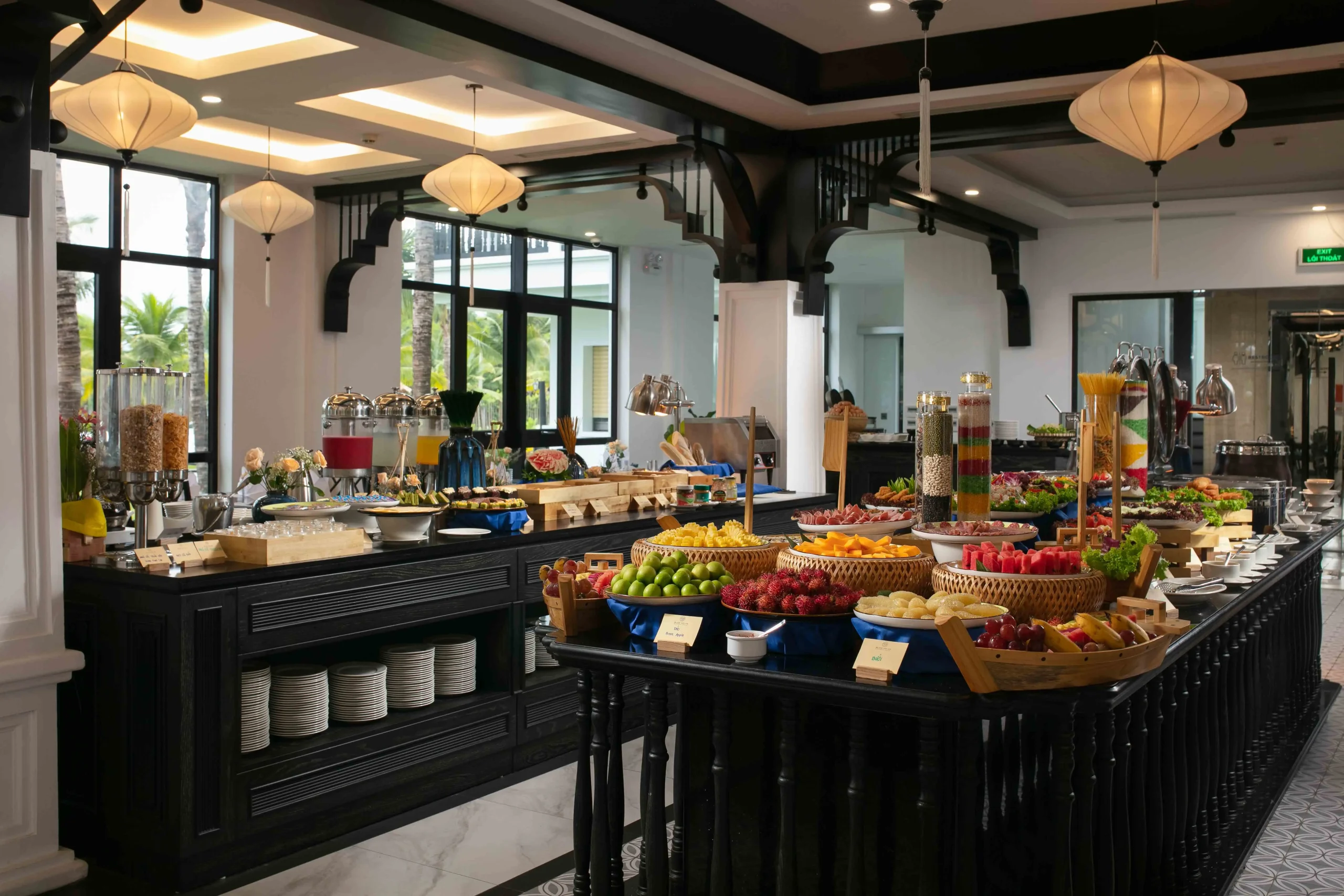
A suitable post-tour lunch could include a shared starter, a local noodle or rice dish, vegetables and a cold drink. Guests who do not follow a vegetarian diet are not required to order Buddhist vegetarian food simply because the morning included pagodas. The menu should be chosen according to dietary needs and the group’s appetite after the journey.
Because Binh Minh Restaurant does not currently publish a complete à la carte price list online, a reasonable editorial planning allowance is approximately VND 300,000 to VND 500,000 per adult for lunch, including a main dish, a drink and a share of one starter. This is not an official menu quotation, and guests should request the latest menu from the resort before arrival. Service charges and taxes may also apply.
Temple Etiquette International Guests Should Understand
Religious etiquette in Vietnam is not complicated, but active worship sites require more care than ticketed museums.
- Cover the Shoulders and Knees: Vietnam’s official tourism guidance recommends covering the shoulders and legs and removing hats when visiting temples and pagodas. Lightweight trousers, a long skirt or a loose overshirt are suitable for the climate and avoid the need to borrow coverings at the entrance.
- Do Not Automatically Remove Shoes Everywhere: Shoes are not removed at every gate or courtyard. Look for footwear placed outside a hall, follow posted instructions or observe what local worshippers are doing before taking shoes off. When removal is required, leave footwear neatly to the side without blocking the entrance. Socks can be useful because stone or tiled floors may become hot or slippery.
- Treat Incense as a Religious Practice, Not a Photo Prop: There is no requirement to light incense at every site. Anyone unfamiliar with the practice can simply stand quietly and observe without participating. When choosing to make an offering, use the designated burner and follow the local arrangement. Large quantities of incense do not represent greater respect and may create unnecessary smoke inside enclosed areas.
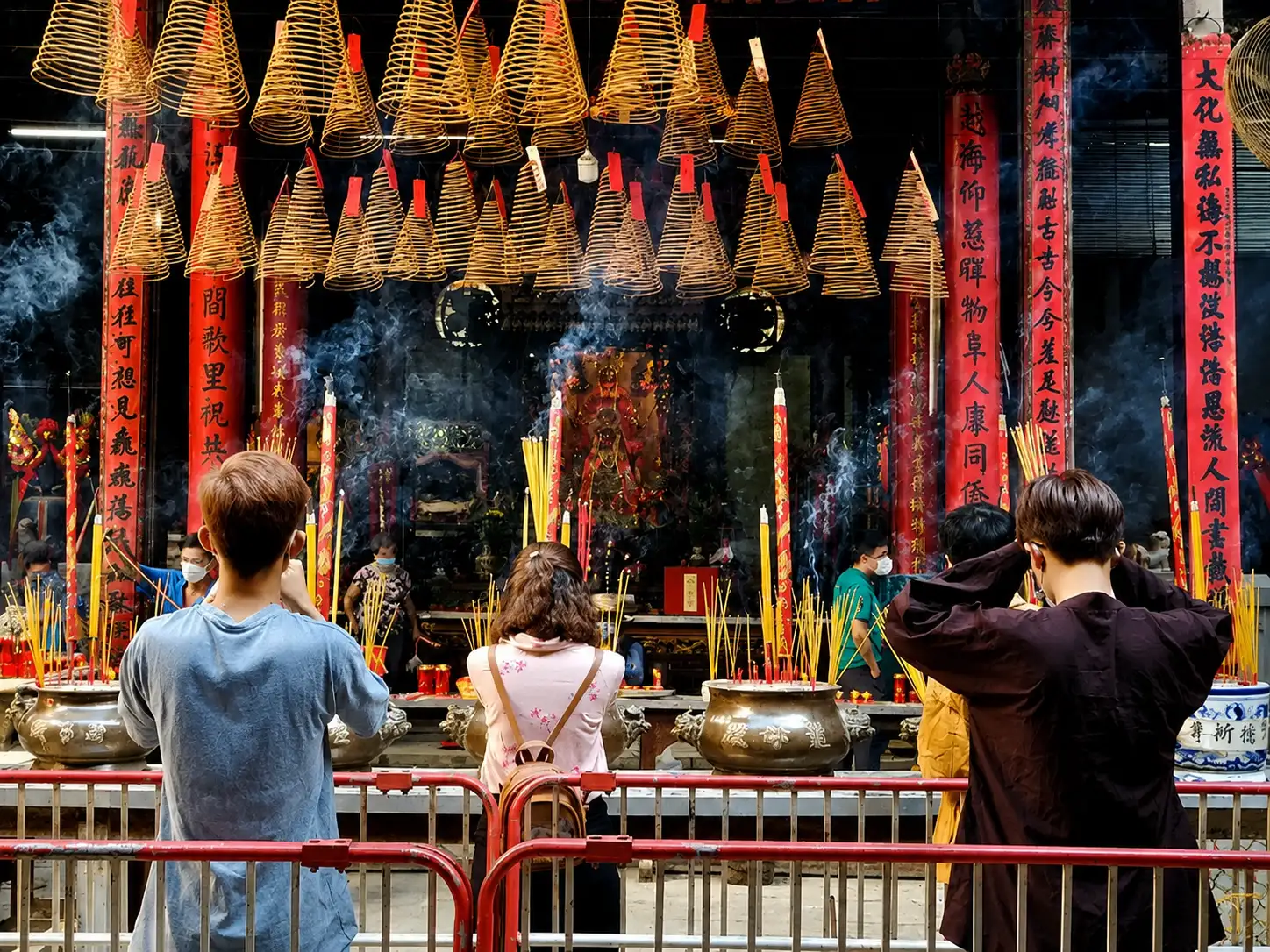
- Keep Photography Discreet: Outdoor architecture and courtyards can usually be photographed, but permission should not be assumed inside every worship hall. Flash, tripods and prolonged posing near altars can interrupt religious activity. Never photograph monks, worshippers or private ceremonies at close range without consent. A respectful distance preserves the atmosphere and produces more natural images.
- Avoid Touching Religious Objects: Statues, bells, altar objects and old inscriptions may appear accessible, but they should not be handled. Conservation concerns are especially important at nationally recognised monuments containing old wood, lacquer and documentary materials. Children should remain close to an adult inside the main halls. Running through worship spaces or climbing on architectural features is inappropriate even when the area appears quiet.
- Donations Are Voluntary Unless Clearly Stated Otherwise: A donation box may be available for maintenance or religious activities. Contributions should be placed directly in the official box rather than handed to an unknown individual. Money should not be placed on statues, altars or decorative objects unless local staff specifically indicate an accepted practice. A visit remains respectful even without making a financial offering.
When Is the Best Time to Visit?
The period between 7:30 AM and 10:30 AM provides the most comfortable balance of temperature, light and activity. Early arrival also leaves space in the schedule if a ceremony delays entry to a main hall. The first and fifteenth days of the lunar month can be busier because local residents visit pagodas to pray and make offerings. These dates offer a stronger sense of living religious practice, although they are less suitable for anyone seeking complete quiet.
Lunar New Year, Vesak, Vu Lan and local temple festivals bring ceremonies, decorations and larger groups. Access may become restricted in certain areas, so a guide or hotel travel desk should confirm whether the site is welcoming general sightseeing on that date. Rain does not automatically cancel the route. Covered halls make short showers manageable, but wet stone surfaces and thresholds require additional care for older guests.
Common Planning Mistakes
- Treating the Pagodas as a Checklist: Four well-chosen stops are enough for a half-day. Adding every pagoda shown on Google Maps creates a repetitive route and reduces the time available to understand the strongest sites. The value lies in the connection between them: Chuc Thanh’s Zen lineage, Phuoc Lam’s Buddhist collection, Van Duc’s river history and Quan Cong’s relationship with merchant ethics.
- Depending on Online Opening Hours Alone: Active religious sites do not always operate like commercial attractions. A main hall may temporarily close for ceremonies, maintenance or private activities even when a map listing shows the site as open. Confirming access on the same day is especially important for a guided group, a wheelchair user or anyone working with a strict transport schedule.
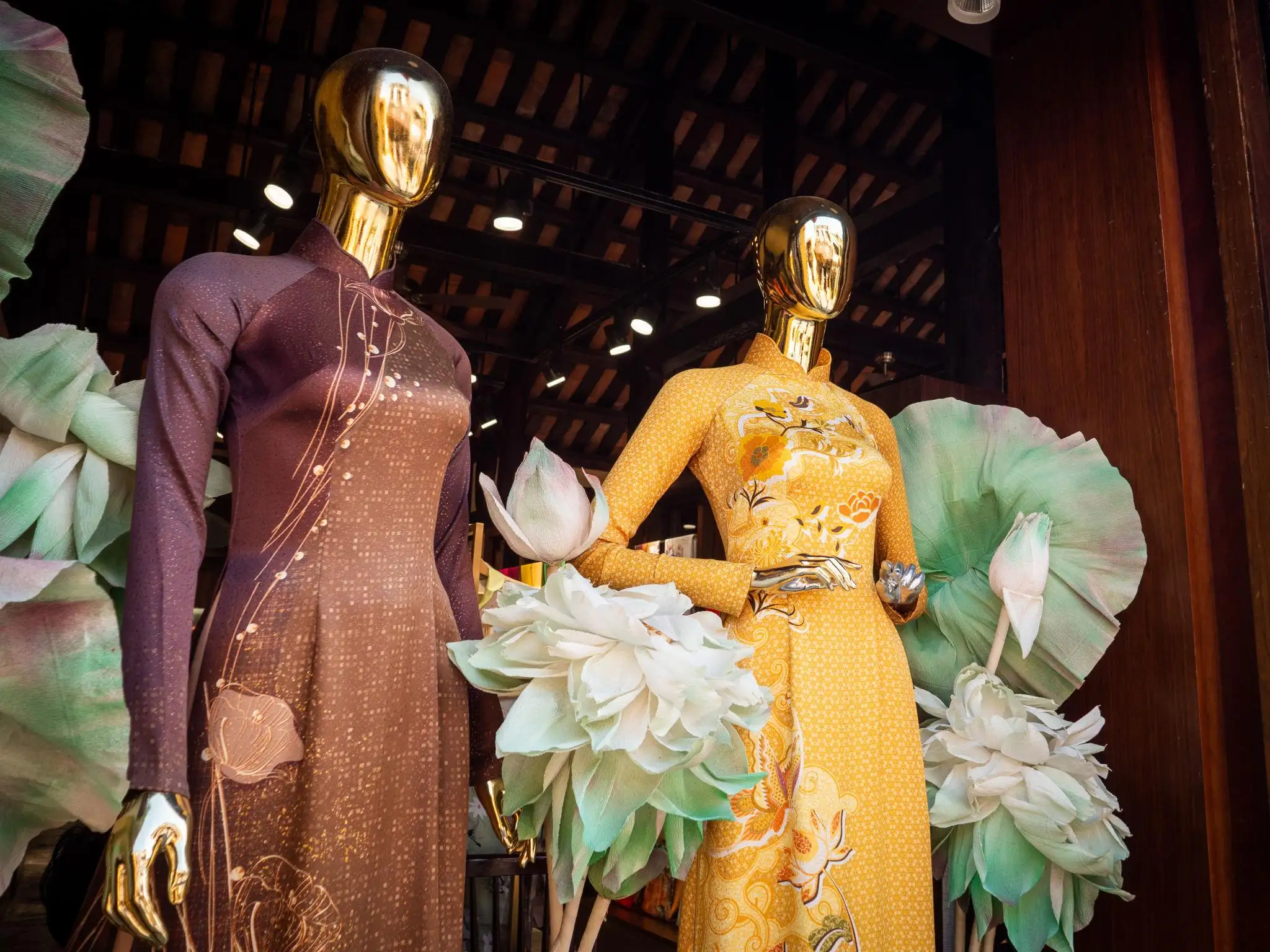
- Arriving in Beach Clothing: Hoi An’s coastal climate makes shorts and sleeveless clothing comfortable, but the same outfit may be inappropriate inside a pagoda. Carrying a scarf is helpful, although proper clothing from the start provides better coverage and looks more respectful. This consideration matters for guests combining the tour with a beach afternoon. The order of activities should not reduce the care given to religious etiquette.
- Assuming That “Free Entry” Means Unlimited Access: A pagoda can welcome guests without charging admission while still restricting private rooms, monks’ quarters or ceremonial spaces. Signs, ropes and staff instructions should always take priority over a desire to see every part of the complex. Respecting boundaries is part of the experience. The sites remain places of worship and community life rather than buildings maintained solely for tourism.
- Booking Transport Without Waiting Time: A driver who only provides separate drop-offs may not be available when the group finishes each visit. This creates delays and makes the itinerary difficult for older parents. A half-day vehicle arrangement with agreed waiting time is more reliable. The booking should also state the number of stops and whether the final drop-off is at the Ancient Town or the hotel.
Combining the Temple Tour With a Stay at Bliss Hoi An
A cultural morning works particularly well when the rest of the day is intentionally left open. After several hours of religious architecture and historical interpretation, another crowded sightseeing programme can feel unnecessary.
Bliss Hoi An Beach Resort & Wellness is located along Binh Minh Beach and offers a complimentary shuttle connection to Hoi An Ancient Town, with the official resort information describing the journey as approximately 20 minutes.Because Chuc Thanh, Phuoc Lam and Van Duc lie outside the central heritage district, a dedicated private vehicle is still the more practical choice for the complete temple route. Guests can contact the resort’s Travel Desk for assistance with local transport and tour planning. This is particularly useful for families requiring a larger vehicle, an English-speaking guide or a route adapted to reduced mobility.
After returning to the resort, the afternoon can remain genuinely restful. Bliss Hoi An’s 55-metre infinity pool includes a children’s area and a jacuzzi section, while the resort also provides wellness facilities, a gym and access to the quieter beachfront setting of Binh Minh Beach. This combination gives the holiday a more balanced structure: cultural depth in the morning, followed by time to rest rather than another long transfer. It also suits stays of three or four nights, when guests want to experience Hoi An without spending every day inside the crowded centre.
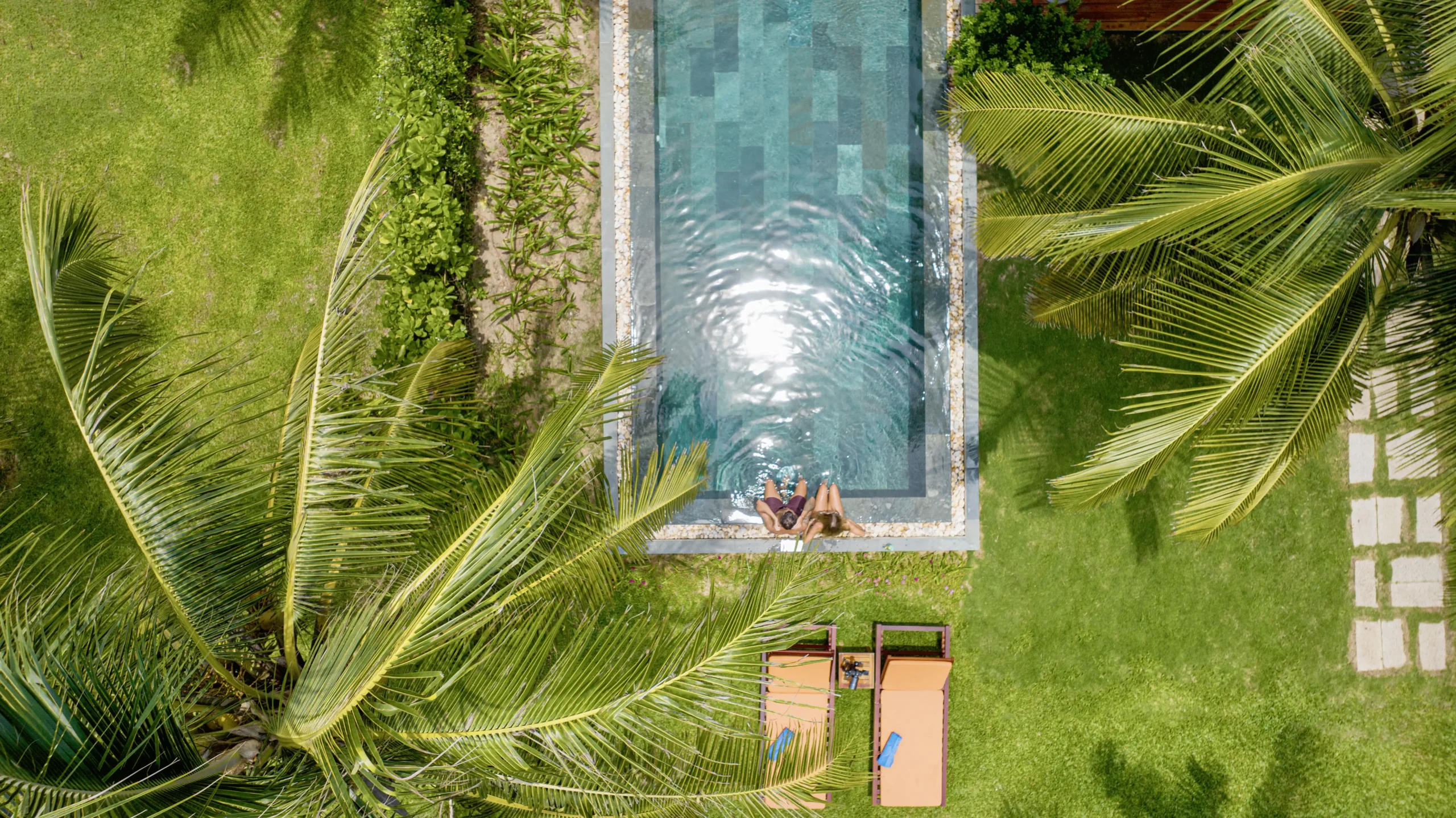
A temple tour in Hoi An reveals how religion, migration and trade shaped the town beyond its famous lanterns and merchant houses. Chuc Thanh, Phuoc Lam and Van Duc trace important chapters in the development of Buddhism in Central Vietnam, while Quan Cong Temple reflects the ethical and spiritual world of Hoi An’s former commercial communities.
The route is compact enough for one morning but substantial enough to add real cultural depth to a holiday. With private transport, respectful clothing and enough time at each stop, the experience remains comfortable for couples, families and guests travelling with older parents. Staying at Bliss Hoi An allows the morning’s cultural programme to be followed by a quieter afternoon on Binh Minh Beach. The resort’s Travel Desk can assist with local arrangements, while the pool, wellness facilities and beachfront setting provide a natural place to slow down after returning from the city.

Related Posts
TEST – n8n WordPress Automation
Hoi An Mid Autumn Festival 2026: 5 Things That Make It Different
Hoi An Old Town Tourist Traps: What to Watch Out For

Guide to using the Grab app Vietnam when traveling to Hoi An

Teh Dar Show Hoi An: Inside Vietnam’s Bamboo Circus of the Central Highlands