

Tam Thai Pagoda in Da Nang: History, highlights & Travel guide
Located on the slopes of Thuy Son within Da Nang’s Marble Mountains complex, Tam Thai Pagoda is a centuries-old Buddhist temple known for its tranquil atmosphere, historical value and scenic views over the coast. Despite its long cultural legacy, the pagoda remains less visited than many other spiritual sites in the area, making it an ideal stop for travelers seeking both serenity and heritage. Whether you come for architecture, Buddhist art, panoramic viewpoints or simply a quieter escape, Tam Thai offers a meaningful journey beyond the city’s beaches and modern landmarks.
Overview of Tam Thai Pagoda
Tam Thai Pagoda is one of the oldest and most important temples located on Thuy Son Mountain, part of the Marble Mountains in Da Nang. Perched on the hillside, the pagoda offers a serene and secluded atmosphere, far from the bustle of the coastal city, giving visitors a sense of peace right from the stone stairway leading up to the temple.
Beyond its spiritual value, Tam Thai Pagoda is a cultural and historical site associated with the Nguyen Dynasty. Although it has undergone several restorations, the pagoda still retains its ancient charm and traditional Buddhist architectural features, including worship halls, Buddha statues, a bell tower, stone steles, and scenic viewpoints overlooking Non Nuoc Beach and Da Nang City.
Interestingly, Tam Thai Pagoda is not as widely known as some other temples in Da Nang, which becomes an advantage for travelers seeking calm and authenticity. With fewer crowds, the pagoda offers a quieter atmosphere and a more reflective spiritual experience. Thanks to its blend of nature, culture, and history, Tam Thai Pagoda stands as a meaningful stop when exploring the Marble Mountains.
How to get to Tam Thai Pagoda at Marble Mountains
Located on Thuy Son – the main peak of the Marble Mountains complex, visitors need to reach the base of the mountains first before continuing up to the pagoda. The route is straightforward from both Da Nang and Hoi An, making it convenient for independent travelers as well as guided tours.
Getting to Marble Mountains (Base of Thuy Son)
From central Da Nang, follow Vo Nguyen Giap – Truong Sa – Le Van Hien or take the coastal road heading toward Ngu Hanh Son. If coming from Hoi An, the seaside route takes around 30–40 minutes with clear signage along the way. At the base area, visitors will find a parking lot for motorbikes, cars, and tour buses, along with the main ticket booths.
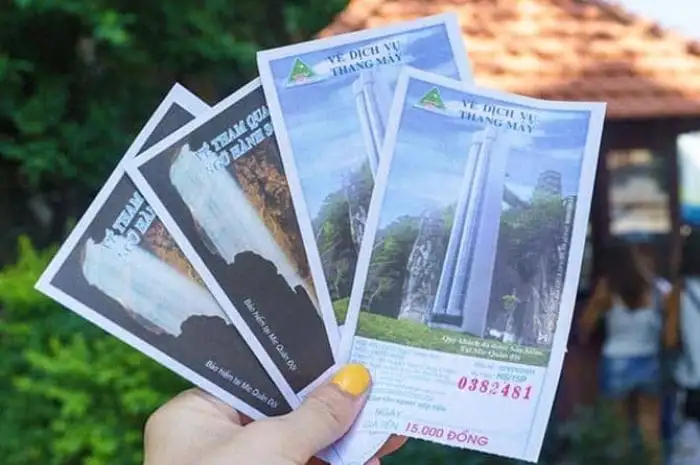
Entrance fees (Thuy Son – Marble Mountains):
- Thuy Son entrance ticket: 40,000 VND/person
- Elevator (optional): 15,000 VND/ride
Prices may vary depending on policies and discounts for children.
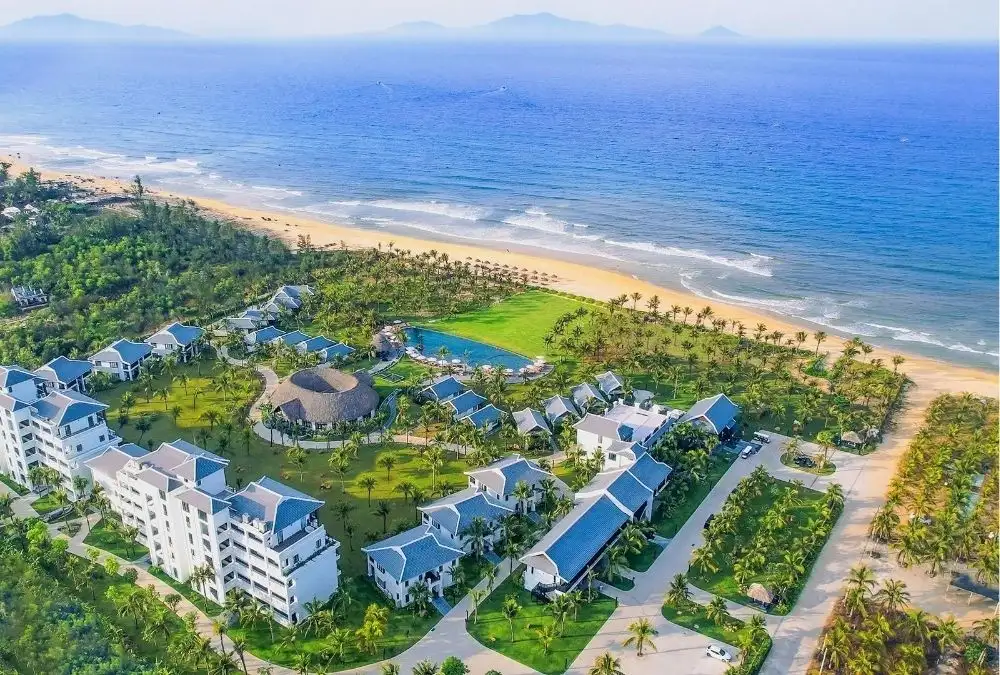
For small groups and families who prefer flexible pickup and schedule, Bliss Hoi An Beach Resort & Wellness offers Transportation Service between Marble Mountains – Da Nang – Hoi An, providing convenient transfers without time pressure.
Read more: Guide on how to get to the Marble Mountains from Da Nang
Choosing your way up to Tam Thai Pagoda
After entering Thuy Son, visitors have two options to reach the pagoda area:
- Stone stairway (traditional route) – A scenic, slightly steep staircase shaded by trees with rest stops and directional signs. It takes around 10–15 minutes depending on fitness level and is ideal for travelers who enjoy cultural discovery and photo stops.
- Elevator (modern option) – Convenient for seniors, children, or those saving energy to explore additional caves and spiritual sites on Thuy Son. From the elevator exit, it is only a short walk to the pagoda.
The best times to visit are early morning or late afternoon to avoid heat and peak crowds, especially during high season. If joining a half-day or full-day tour from Hoi An, a guide will assist with navigation while sharing historical and cultural insights related to Tam Thai Pagoda.
History of Tam Thai Pagoda
Tam Thai Pagoda was originally built around 1630 during the Later Lê Dynasty on the southern slope of Thuy Son (Water Mountain), the largest peak within the Marble Mountains complex in Da Nang. With its prime location backed by mountains and facing the sea, the pagoda holds significant spiritual value for locals and has long served as an important pilgrimage site.
Historical accounts note that the first abbot was Master Monk Hung Lien, a Chinese Buddhist monk. During the turbulent Tay Son period, the pagoda was destroyed and later restored in 1825 under Emperor Minh Mang, who officially conferred upon it the title “Quoc Tu Tam Thai” (Tam Thai National Pagoda). The restoration also included imperial plaques and a bronze tablet bearing the emperor’s own calligraphy, many of which are still preserved today.

Over the centuries, Tam Thai Pagoda became closely associated with several influential Buddhist figures, including the renowned monk Master Thach Liem, whose writings and poetry on Marble Mountains added literary and cultural depth to the site. He is also credited with naming Hoa Nghiem Cave, located behind the pagoda.
From the early 20th century to 1995, the pagoda underwent multiple renovations yet retained key elements of traditional Buddhist architecture and its subdued, ancient aesthetic. Today, Tam Thai Pagoda stands as one of the oldest religious landmarks in Da Nang and is recognized as a National Historical and Cultural Monument by the Vietnamese Ministry of Culture.
With nearly four centuries of history marked by destruction, restoration, and preservation, Tam Thai Pagoda is widely regarded as both a cultural symbol and a spiritual sanctuary of central Vietnam.
What to explore at Tam Thai Pagoda
Tam Thai Pagoda is a place where spiritual values, natural scenery, and nearly four centuries of cultural and historical layers come together. Nestled against the western slope of Thuy Son Mountain, the pagoda offers a quiet and contemplative atmosphere that contrasts with the lively coastal city of Da Nang below. A visit here is not only about sightseeing but also about slowing down and reconnecting with one’s inner space.
A scenic feng shui setting
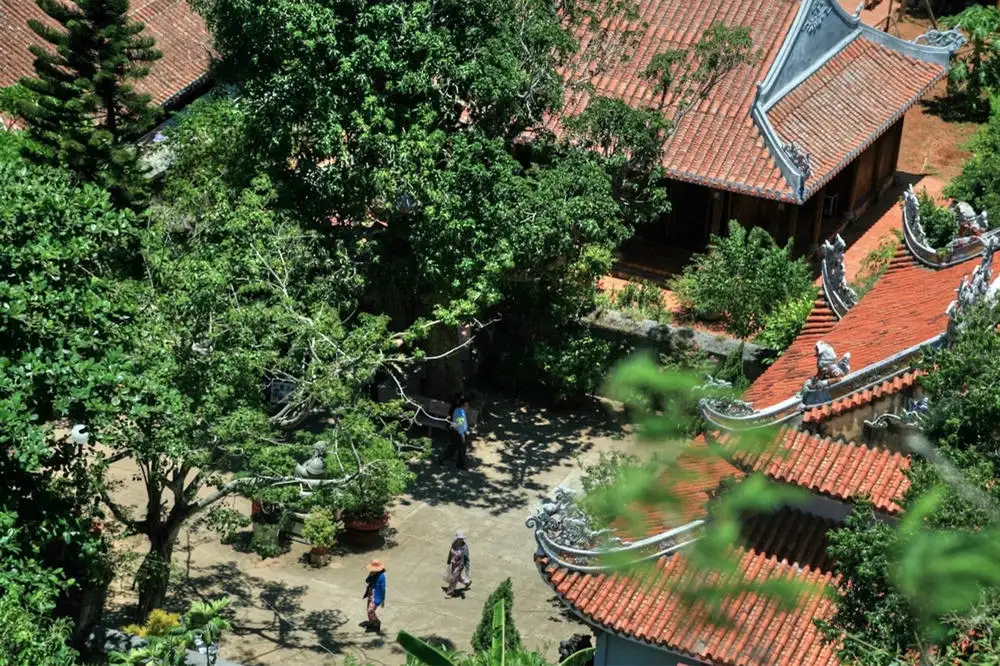
Situated on the western flank of Thuy Son Mountain, the pagoda occupies a site long considered favorable in feng shui, mountain at the back, sea in front, and an open, peaceful horizon. This unique location helps Tam Thai maintain a calm spiritual ambiance and creates a natural connection between the pagoda and nearby attractions such as Huyen Khong Cave and Tang Chon Cave. Thanks to this landscape harmony, Tam Thai is often regarded as the place that “keeps the soul of Thuy Son,” balancing the entire spiritual terrain of the area.
Nguyen-Dynasty architecture with Viet-Chinese aesthetic influence
The pagoda features a three-bay, two-wing structure made of wood, stone, and traditional tiles, an architectural language shaped during the Nguyen Dynasty. Mossy roofs, curved eaves, mythical motifs, and wood carvings blend seamlessly with the surrounding cliffs and trees. Rather than being imposing or monumental, Tam Thai’s architecture prioritizes elegance and harmony with nature. The interplay between mountain, temple, sky, and sea makes the site one of the most atmospheric stops within the Marble Mountains.
A space for worship, contemplation, and mindfulness
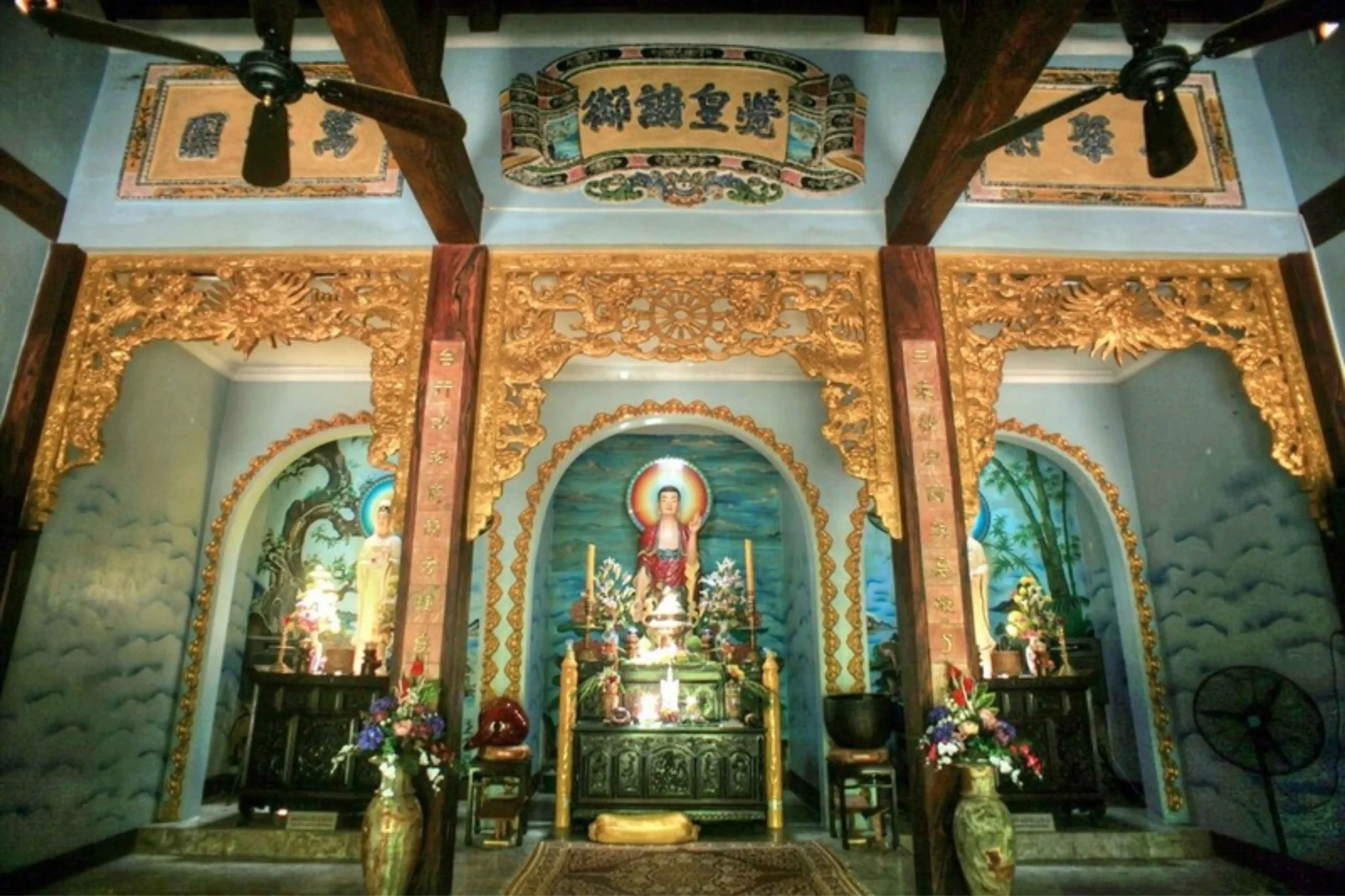
Beyond tourism, Tam Thai plays an active role in the spiritual life of Da Nang residents and the many travelers who visit throughout the year. Buddhist rituals and temple activities take place in a solemn yet welcoming environment, especially during full-moon days or Buddhist festivals. Many visitors spend time lingering in the courtyard or resting under ancient trees to breathe in the mountain air, reflect, and appreciate the quiet pace of the pagoda. This contemplative quality distinguishes Tam Thai from purely scenic viewpoints.
System of Buddhist statues and historical artifacts
Tam Thai Pagoda preserves a collection of statues, stone steles, and ritual objects dating back to the Nguyen Dynasty, illustrating an interplay between court aesthetics and Buddhist art. For visitors interested in history, archaeology, and religion, this section of the pagoda offers a particularly rich cultural dimension.
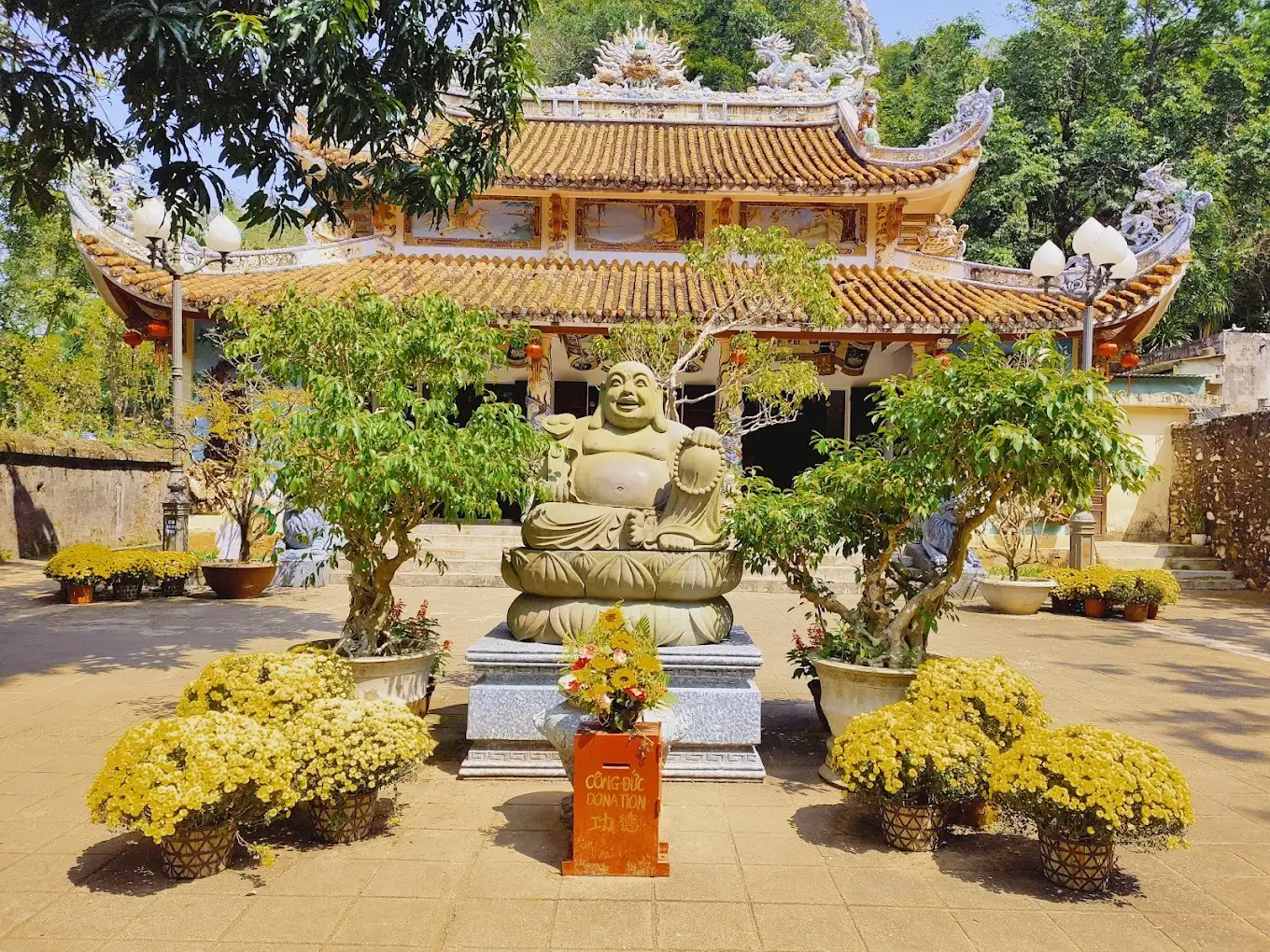
• Maitreya Statue in the Courtyard
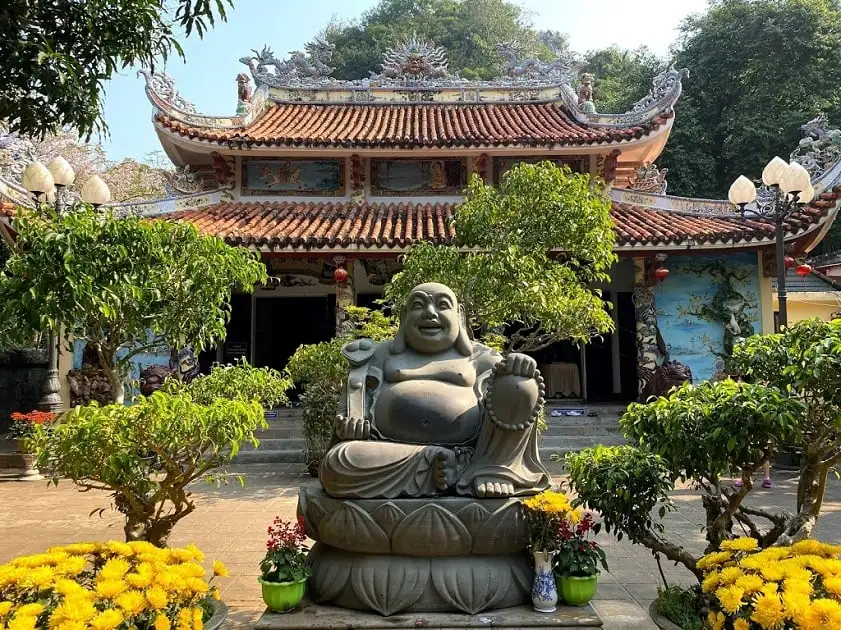
Featuring a serene and joyful expression, the statue is positioned openly as a welcoming gesture to visitors. Its sizeable structure, durable material, and cheerful symbolism make it both a popular photo spot and an embodiment of Buddhist hope and compassion.
- Buddha Statues in the Main Hall
These statues follow Nguyen-era court artistry, characterized by balanced postures, softened contours, and intricate drapery details. The faded gilt lacquer and red tones further enhance their antique beauty and solemnity, emphasizing the sacred atmosphere of the hall.
- Carved calligraphic panels and couplets
Engraved wooden calligraphy works express Buddhist philosophy and traditional Vietnamese reflections on ethics and life. Beyond religious meaning, these pieces serve as valuable textual and artistic evidence for studying pre-modern Vietnamese literature and aesthetics.
- Stone steles marking restorations
The ancient steles record donors, dates, and contexts of restoration throughout different historical periods. They function not only as documentation of the pagoda’s continued religious relevance but also as archaeological material confirming its integration into the spiritual life of Da Nang across centuries.
- Bronze bells, incense burners, and ritual objects
Crafted in bronze and wood with motifs such as lotus petals, auspicious clouds, and mythological animals, these objects represent traditional Vietnamese Buddhist iconography. The resonant sound of the bronze bell enriches the meditative ambiance, reinforcing the contemplative character that defines Tam Thai Pagoda.
If you want to make the most of your visit to Tam Thai Pagoda and the surrounding highlights of Marble Mountains, consider booking one of Bliss Hoi An’s guided tours. Their experienced team can take you to key cultural and scenic spots without the hassle of planning, from the iconic sanctuaries of My Son Sanctuary & Marble Mountains to the spiritual beauty of Marble Mountains & Linh Ung Pagoda.
Nearby attractions
Visiting Tam Thai Pagoda is often combined with exploring the highlights of Thuy Son, the most impressive peak of the Marble Mountains complex. The distribution of sacred temples, caves, and viewpoints allows for a seamless route that blends spirituality, culture, and scenery.
Huyen Khong Cave
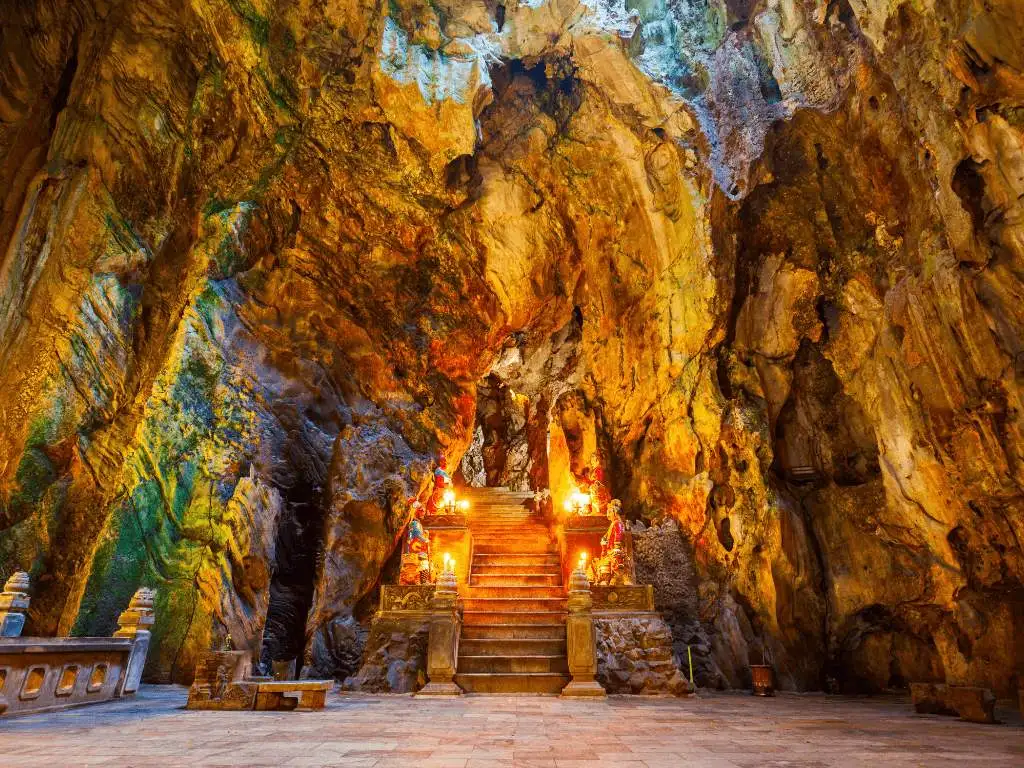
The most famous cave in Thuy Son, known for its natural skylight that illuminates the statues and incense smoke below. The interplay of light and shadow gives the cave a mystical yet uplifting atmosphere, making it a must-visit spot for first-timers.
Tang Chon Cave
More enclosed and tranquil than Huyen Khong, this cave offers a contemplative ambiance. Buddhist statues placed inside create a spiritual setting suited for those seeking reflection rather than photography.
Tam Ton Cave and surrounding shrines
Small but culturally significant, these shrines showcase the coexistence of Buddhism, Taoism, and local folk beliefs. Their craftsmanship and subdued scale add depth to the spiritual landscape of Thuy Son.
Vong Hai Dai & Vong Giang Dai (Viewpoints)
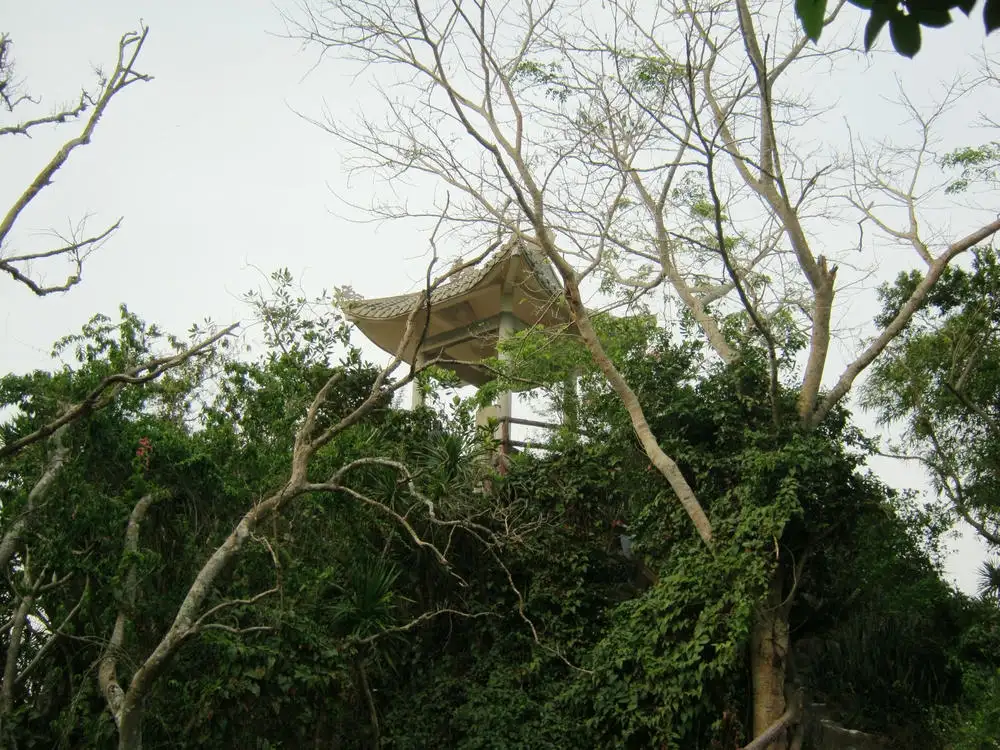
These viewpoints offer panoramic vistas of the East Sea, Son Tra Peninsula, Non Nuoc Beach, and the Cổ Cò historical river route. Ideal for photography, resting, and appreciating the natural–cultural interplay that defines Da Nang.
Tips for visiting Tam Thai Pagoda
To enjoy both the spiritual and scenic aspects of the visit, travelers should keep a few practical tips in mind:
Best time to visit: Morning or late afternoon. Cooler temperatures and softer lighting for photography at caves and viewpoints.
Dress appropriately: Respectful and comfortable. As a religious site, modest clothing is recommended; no strict dress code but avoid overly revealing outfits.
Footwear matters: Wear sneakers or secure sandals. The route involves steep stone stairs, so good grip is essential for safety and comfort.
Stay hydrated: Bring a small water bottle. Exploring Thuy Son can take 2–3 hours depending on how thoroughly you explore the caves.
Mind the spiritual atmosphere: Stay quiet and respectful. Especially near worship halls, altars, and incense areas.
Plan a combined itinerary: Marble Mountains pairs well with Hoi An, My Khe Beach, or Son Tra Peninsula for a half-day or full-day trip.
Read more: Discover the Marble Mountains Vietnam: Top things to do
Tam Thai Pagoda may not be the most famous temple in Da Nang, but that is precisely what preserves its charm. Here, history, nature and spirituality blend into a contemplative experience that rewards those willing to climb the mountainside paths. Combined with nearby caves, viewpoints and Marble Mountains attractions, the pagoda is a worthy addition to any itinerary in central Vietnam, especially for travelers who appreciate cultural depth and peaceful scenery over crowds and souvenir stalls.

Related Posts
Private Tours from Hoi An Beach Resorts: Discover Central Vietnam from Bliss Hoi An
How much does a Hoi An wedding for 40 guests cost?
Is fine dining Hoi An really worth the price? What are travelers paying for?
Cau Bong Festival in Hoi An: Inside Tra Que’s Agricultural New Year Tradition

Top 8 things to consider for a wedding in Hoi An with 20 guests