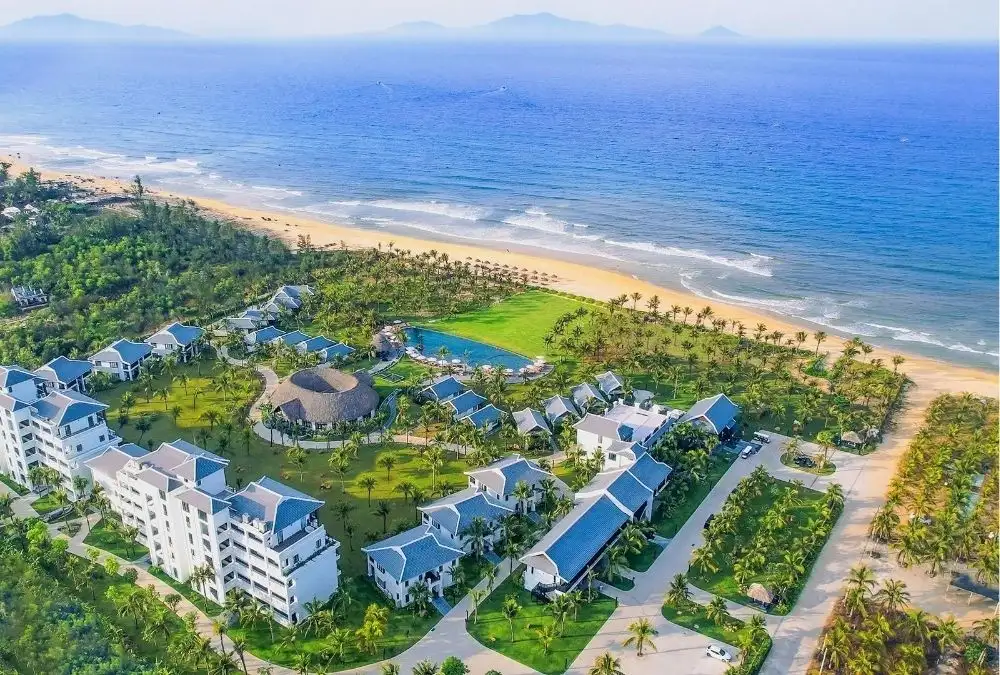


Marble Mountains Pagodas: A guide to temples in the Marble Mountains Da Nang
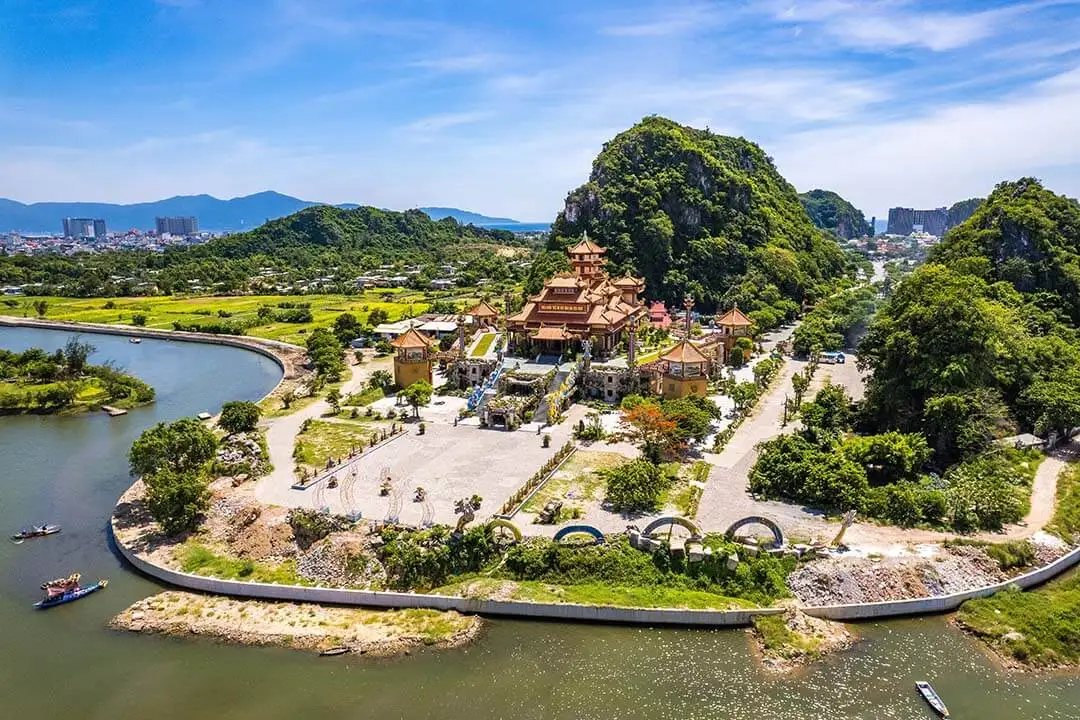
Many travelers visit the Marble Mountains for their dramatic scenery, but exploring a Marble Mountains pagoda offers a deeper cultural experience. From well-known temples to smaller, quieter sanctuaries, these sacred places bring a peaceful and meaningful atmosphere to the entire mountain complex.
Linh Ung pagoda – One of the oldest and most important pagodas in Marble Mountains
Among the temples located within the Marble Mountains complex, Linh Ung Pagoda is considered one of the most historically significant and spiritually important sites. For centuries, the pagoda has served as a place of Buddhist worship for local communities while also becoming a must-visit stop for travelers exploring the famous limestone mountains of Da Nang.
What makes Linh Ung Pagoda particularly well known is not only its scenic location on Thuy Son Mountain but also its long history connected with the Nguyen Dynasty, its impressive collection of Buddhist statues, and its peaceful atmosphere surrounded by rocky cliffs and lush greenery. Today, visitors come here not only for spiritual purposes but also to experience the cultural and historical depth of the Marble Mountains.
Location on Thuy Son Mountain
Linh Ung Pagoda is located on the eastern slope of Thuy Son, the largest and most famous mountain in the Marble Mountains complex. This mountain is the central area where many of the site’s caves, temples, and historic landmarks are concentrated.
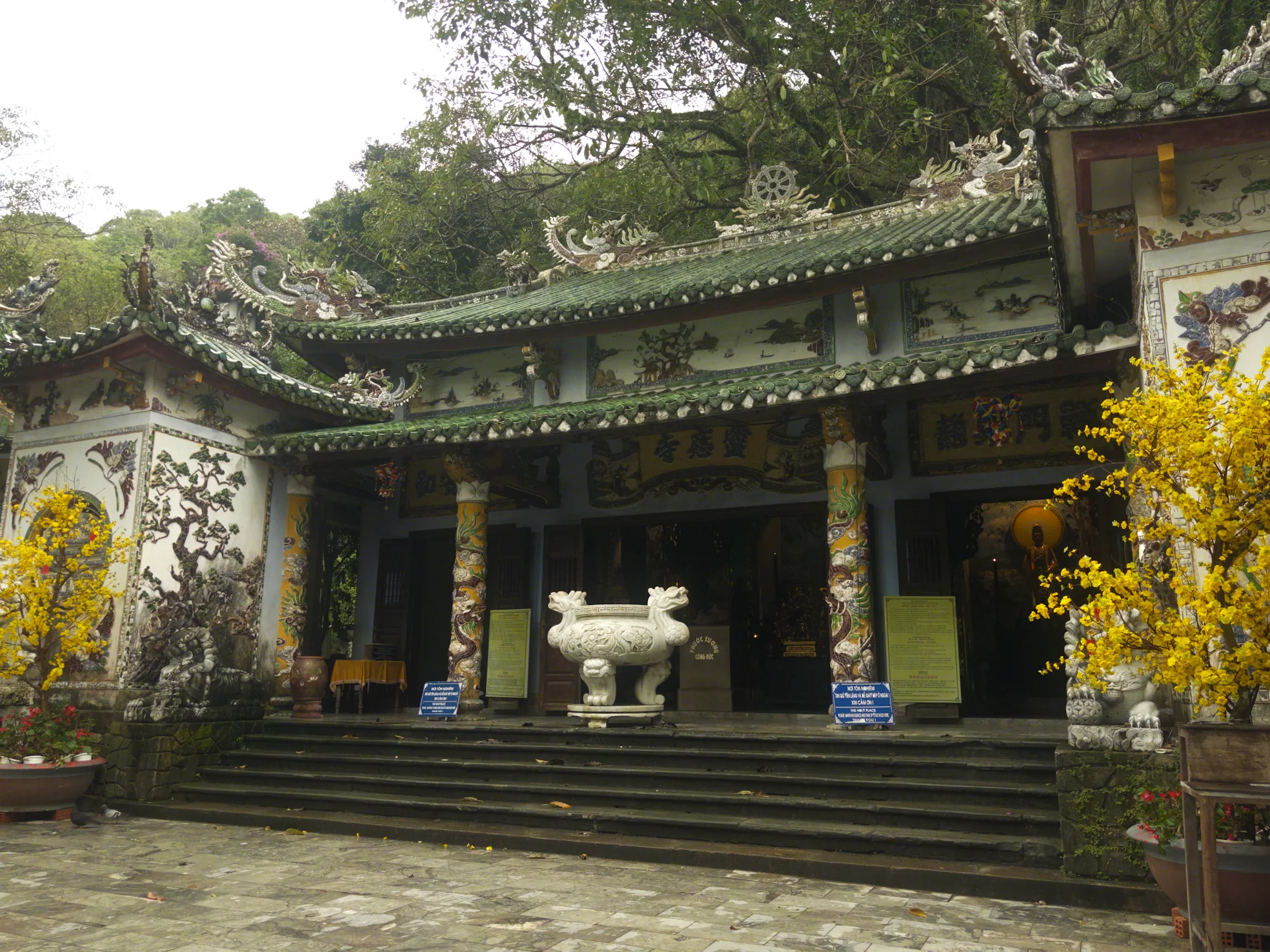
From the pagoda, visitors can easily continue exploring nearby attractions such as Tang Chon Cave, ancient meditation grottoes, and scenic viewpoints overlooking the coastline. The elevated position of the temple creates a peaceful setting, slightly separated from the busy tourist paths below.
Surrounded by limestone cliffs, trees, and fresh mountain air, the pagoda offers a quiet spiritual atmosphere that contrasts with the vibrant coastal city nearby.
A history of more than two centuries
The origins of Linh Ung Pagoda date back to an early Buddhist retreat established by monks who practiced meditation in the caves of the Marble Mountains. Initially, the site was known as Duong Chan Hermitage, a small spiritual sanctuary used for monastic practice.
In 1825, when Emperor Minh Mang visited the Marble Mountains, the hermitage was expanded and officially rebuilt as a pagoda named Ung Chan Tu. Later, during the reign of Emperor Thanh Thai, the temple was renamed Linh Ung Pagoda, the name that remains today.
Over the past two centuries, the pagoda has undergone several restorations due to storms and historical conflicts. Despite these changes, many traditional architectural elements have been preserved, allowing the temple to retain its historical character and cultural value.
Architecture and unique Buddhist statues
Linh Ung Pagoda reflects the traditional architectural style of Vietnamese Buddhist temples. The complex features a classic layout with a ceremonial gate, a spacious courtyard, and a solemn main hall.
Inside the main hall, visitors can see statues of important Buddhist figures, including:
- Shakyamuni Buddha
- Amitabha Buddha
- Maitreya Buddha
Throughout the pagoda grounds, there are also statues of Bodhisattvas such as Avalokitesvara, Manjusri, Samantabhadra, and Ksitigarbha, along with sculptures of the 18 Arhats, each carved with distinctive expressions and postures.
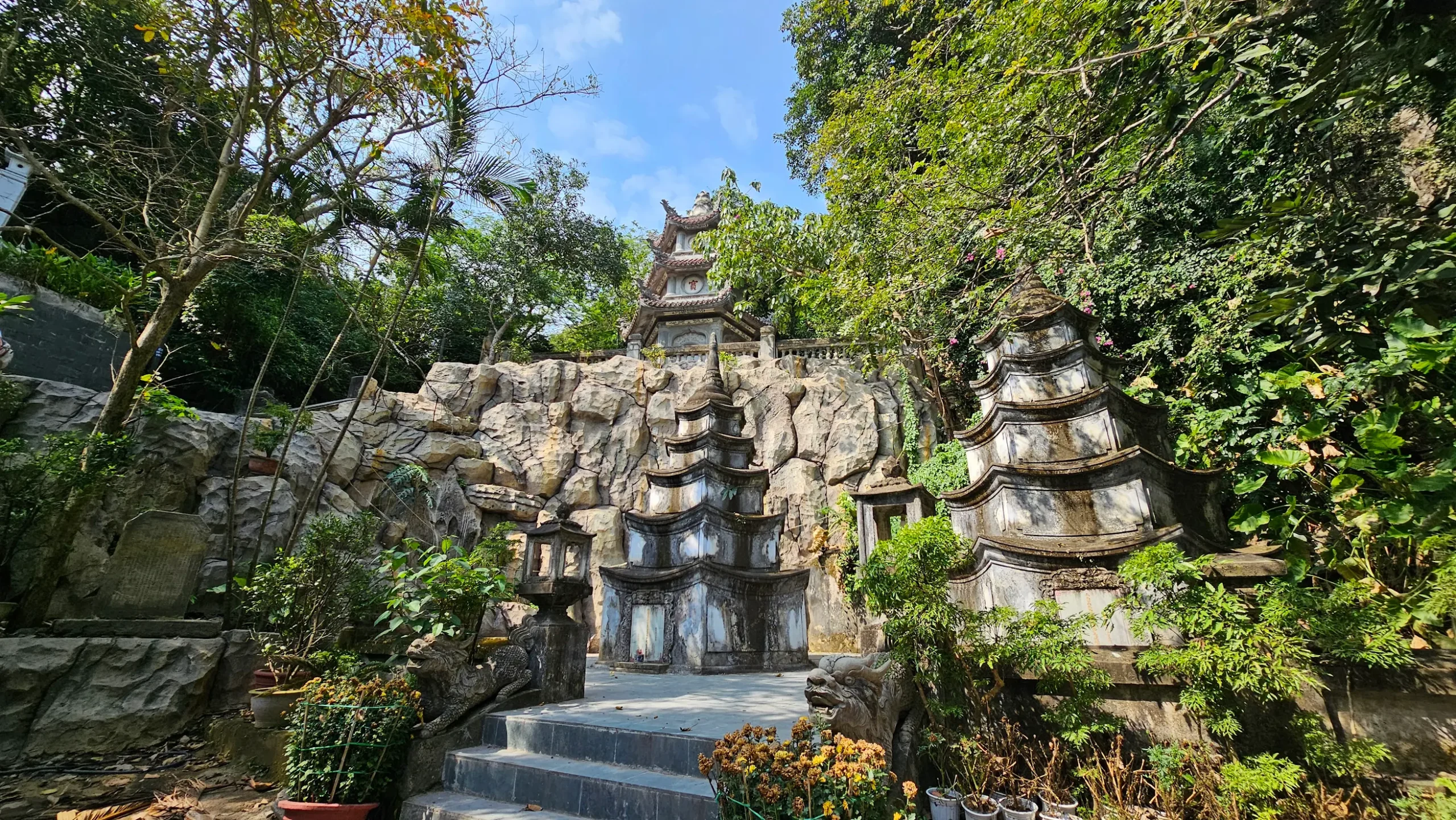
One of the most remarkable structures within the complex is the seven-story relic tower, rising about 28 meters high. Inside this tower are more than 200 stone statues of Buddhas, Bodhisattvas, and Arhats, making it one of the most impressive collections of Buddhist stone sculptures in the region.
Historical relics and cultural value
A lesser-known detail about Linh Ung Pagoda is that it still preserves several historical artifacts from the Nguyen Dynasty. Among them are royal plaques granted by Vietnamese emperors, acknowledging the pagoda’s importance as a religious site.
These historical relics, together with the temple’s long cultural heritage, contributed to the recognition of the pagoda as a national historical and cultural monument.
Today, Linh Ung Pagoda continues to function as both a spiritual sanctuary and a cultural landmark. Visitors to the Marble Mountains often stop here to light incense, admire the ancient architecture, and enjoy the serene atmosphere that has been preserved for generations.
If you’re planning to explore Marble Mountains, don’t miss the chance to combine your trip with a relaxing stay at Bliss Hoi An Beach Resort & Wellness. From Bliss Hoi An, you can easily join a Marble Mountains & Linh Ung Pagoda tour, enjoying both the peaceful beachfront atmosphere and the rich spiritual and cultural beauty of this iconic destination. Book your stay today to turn your journey into a memorable, comfortable, and inspiring experience.
Read more: Marble Mountains tour from Hoi An: Top 3 tours for first-time visitors
Tam Thai pagoda – The oldest pagoda in Marble Mountains
Among the temples located within the Marble Mountains complex, Tam Thai Pagoda is considered the oldest and one of the most historically significant. With a history of nearly four centuries, the pagoda has played an important role in the development of Buddhism in central Vietnam and remains a valuable cultural and spiritual landmark in the Marble Mountains today.
Located on Thuy Son Mountain, the temple stands out for its ancient architecture, peaceful atmosphere, and historical connection with the Nguyen Dynasty. For visitors exploring the Marble Mountains, Tam Thai Pagoda offers not only a spiritual experience but also an opportunity to learn more about the region’s cultural heritage.
Location on the slopes of Thuy Son Mountain
Tam Thai Pagoda is situated on the western slope of Thuy Son, the central and largest mountain in the Marble Mountains complex. The path leading to the temple consists of a series of stone steps winding up the mountainside and passing through shaded areas with large old trees.
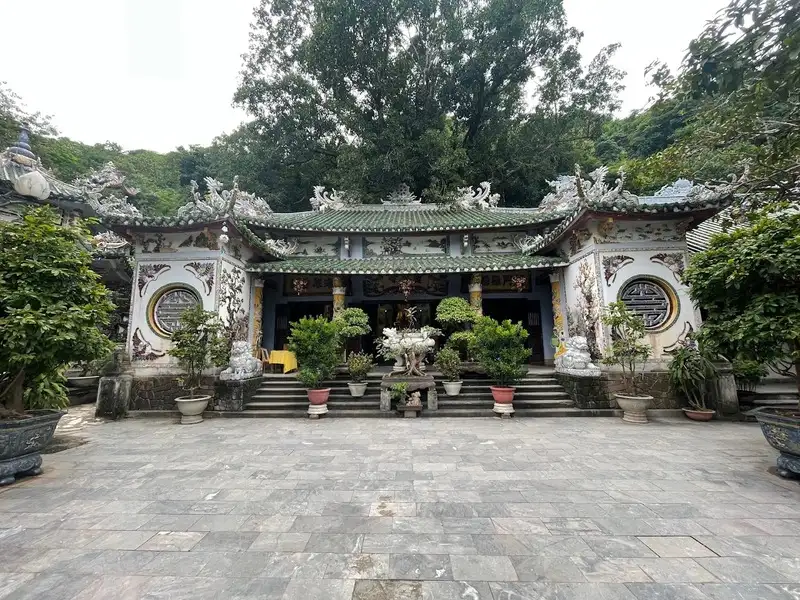
Visitors approaching the pagoda will first pass through a traditional three-gate entrance (Tam Quan Gate), a common architectural feature in Vietnamese temples symbolizing the three paths of Buddhist practice. Beyond the gate lies a spacious courtyard where smaller shrines and statues are placed.
Thanks to its elevated position surrounded by limestone cliffs and natural greenery, the pagoda maintains a quiet and contemplative environment that is well suited for meditation and worship.
A history dating back to the 17th century
Tam Thai Pagoda was originally built in 1630 during the reign of the Nguyen Lords, a period when Buddhism was flourishing in southern Vietnam. At first, it served as a small temple where monks practiced and lived while studying Buddhism in the Marble Mountains area.
In 1825, when Emperor Minh Mang visited the Marble Mountains, he ordered the restoration and expansion of the temple. The emperor also granted several valuable royal items to the pagoda, which increased its status as an important Buddhist center in the region.
Over the centuries, Tam Thai Pagoda has undergone multiple restorations due to natural disasters and historical events. Despite these changes, the temple has preserved many traditional architectural features that reflect the style of Vietnamese pagodas during the Nguyen Dynasty.
Traditional architecture influenced by the Nguyen dynasty
The structure of Tam Thai Pagoda follows the classic layout of traditional Vietnamese temples, including a ceremonial gate, an open courtyard, the main sanctuary, and additional supporting buildings.
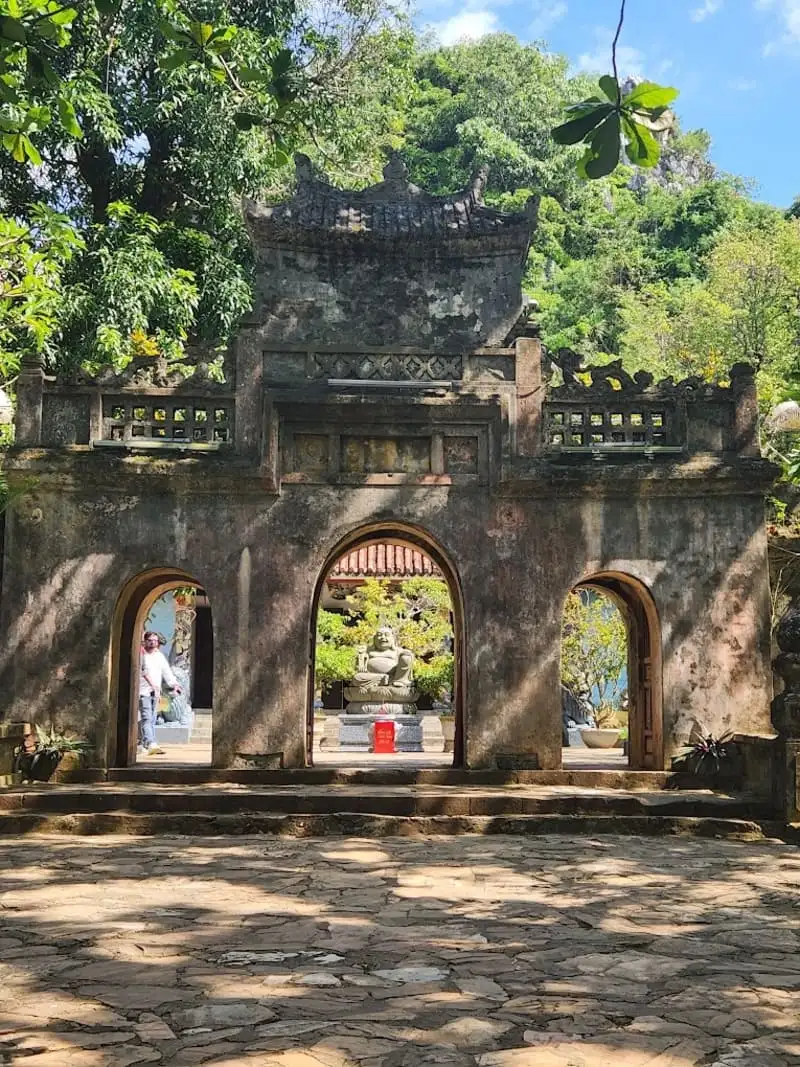
Some notable architectural features include:
- The Tam Quan Gate, with curved tiled roofs and decorative carvings typical of Vietnamese temple architecture
- The main hall, where statues of Shakyamuni Buddha and other Buddhist figures are worshipped
- A spacious courtyard shaded by old trees that contributes to the peaceful environment of the temple
Inside the pagoda, visitors can also see several historical relics such as bronze bells, stone steles, and wooden plaques bearing Chinese characters that were granted during the Nguyen Dynasty.
A peaceful spiritual site in the Marble Mountains
Unlike many temples located in busy urban areas, Tam Thai Pagoda offers a distinctive spiritual atmosphere thanks to its location within the limestone mountains of the Marble Mountains.
From the pagoda grounds, visitors can enjoy views of the surrounding mountain landscape while experiencing the quiet ambiance created by the natural environment. The sound of the temple bell echoing through the rocky hills further enhances the sense of tranquility.
Today, Tam Thai Pagoda continues to function as an active place of worship for local Buddhists while also serving as an important cultural and historical attraction for travelers visiting the Marble Mountains.
Read more: Tam Thai Pagoda in Da Nang: History, highlights & Travel guide
Quan Am pagoda – A spiritual pilgrimage site in Marble Mountains
Quan Am Pagoda is one of the most important Buddhist temples in the Marble Mountains, particularly known for its connection with the worship of Avalokitesvara (Quan The Am Bodhisattva). Located in a peaceful area near Kim Son Mountain, the pagoda has long attracted pilgrims who come to pray for compassion, protection, and inner peace.
Location near Quan Am Cave
One of the most distinctive features of Quan Am Pagoda is its proximity to Quan Am Cave, a natural cave known for its impressive stalactites and sacred atmosphere.
Inside the cave, a natural stalactite formation resembles the image of Avalokitesvara. For many Buddhists, this formation symbolizes the compassionate presence of the Bodhisattva, which is why the pagoda was established nearby. Over time, the cave and the temple together became an important place of worship within the Marble Mountains.
Visitors often explore the cave after visiting the pagoda, where natural light filtering through openings in the rock creates a mystical and tranquil environment.
Famous Quan The Am festival
Quan Am Pagoda is closely associated with the Quan The Am Festival of Marble Mountains, one of the largest and most significant Buddhist festivals in Da Nang.
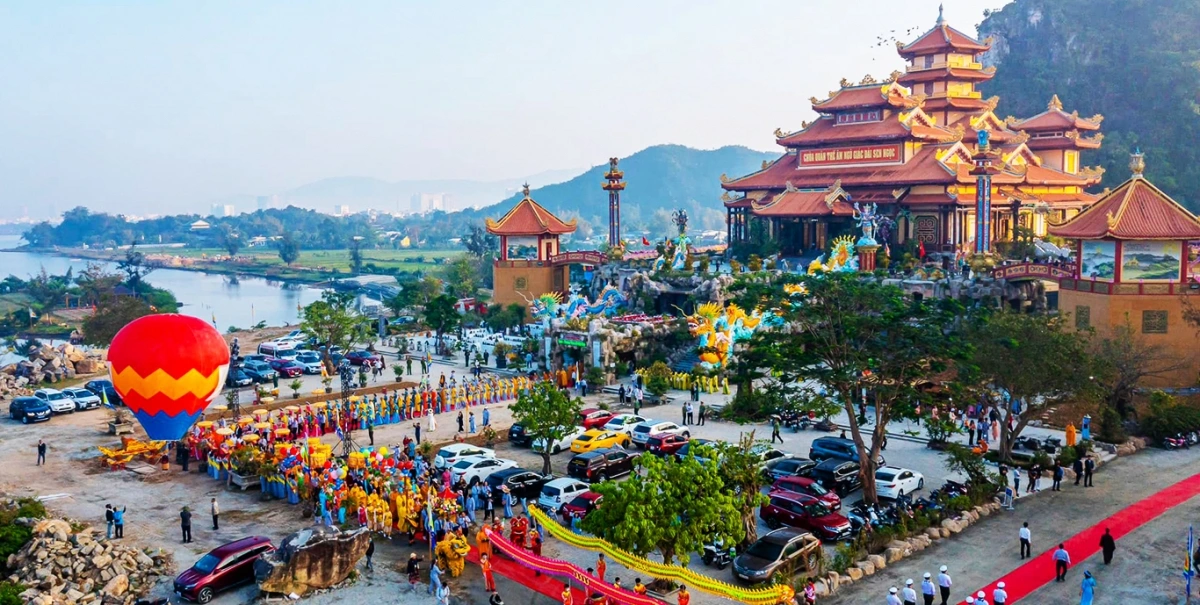
The festival is held every year on the 19th day of the second lunar month and attracts thousands of monks, pilgrims, and visitors from across Vietnam. During the festival, the temple becomes the center of many religious ceremonies and cultural activities. Because of this festival, Quan Am Pagoda has become widely recognized as a spiritual gathering place for the Buddhist community.
Linh Son Pagoda – A quiet temple hidden in the Marble Mountains
Compared with larger temples such as Tam Thai Pagoda or Linh Ung Pagoda, Linh Son Pagoda is a smaller and more secluded temple within the Marble Mountains. Although it receives fewer visitors, the pagoda offers a peaceful atmosphere that many travelers appreciate when exploring the mountain complex.
Located on Thuy Son Mountain
Linh Son Pagoda is located on Thuy Son Mountain, the central and most visited mountain in the Marble Mountains complex. The temple is situated along the stone pathways that connect several caves and viewpoints on the mountain.
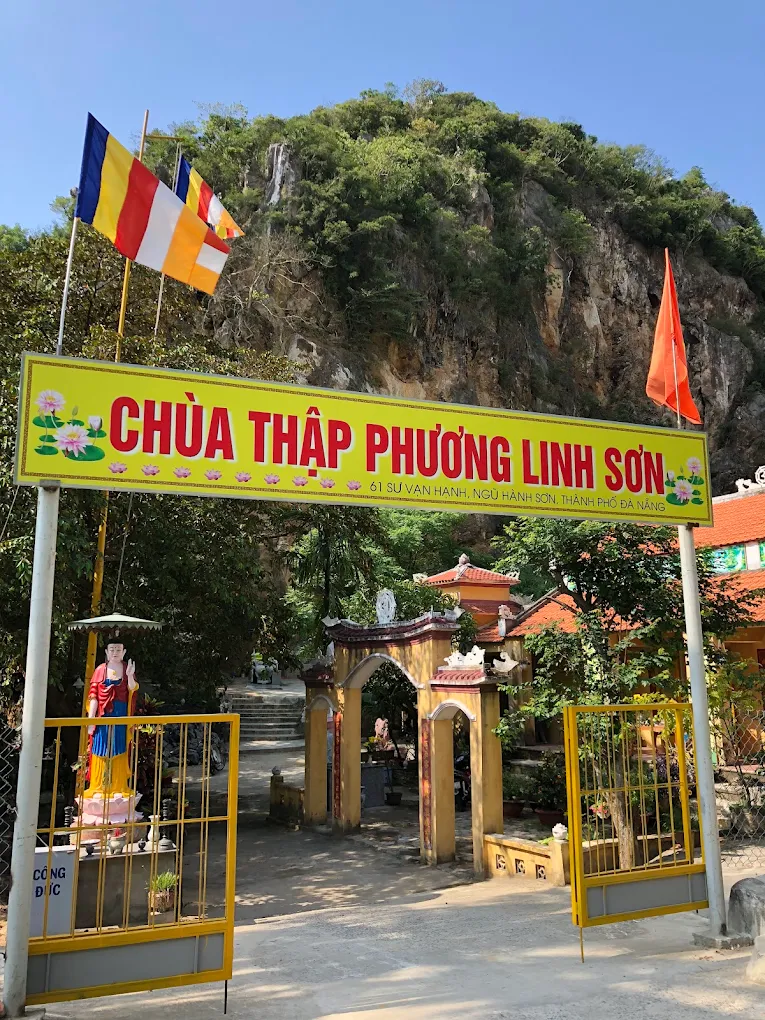
Because of its slightly hidden location, many visitors discover the pagoda while walking between other attractions such as Tang Chon Cave or nearby pagodas. The surrounding area is filled with trees, rock formations, and shaded walking paths, which help create a tranquil environment around the temple.
Simple architecture and peaceful atmosphere
Unlike some of the larger pagodas in the Marble Mountains, Linh Son Pagoda has a relatively simple structure. The temple consists of a small main hall used for worship and a courtyard where visitors can quietly observe the surrounding landscape.
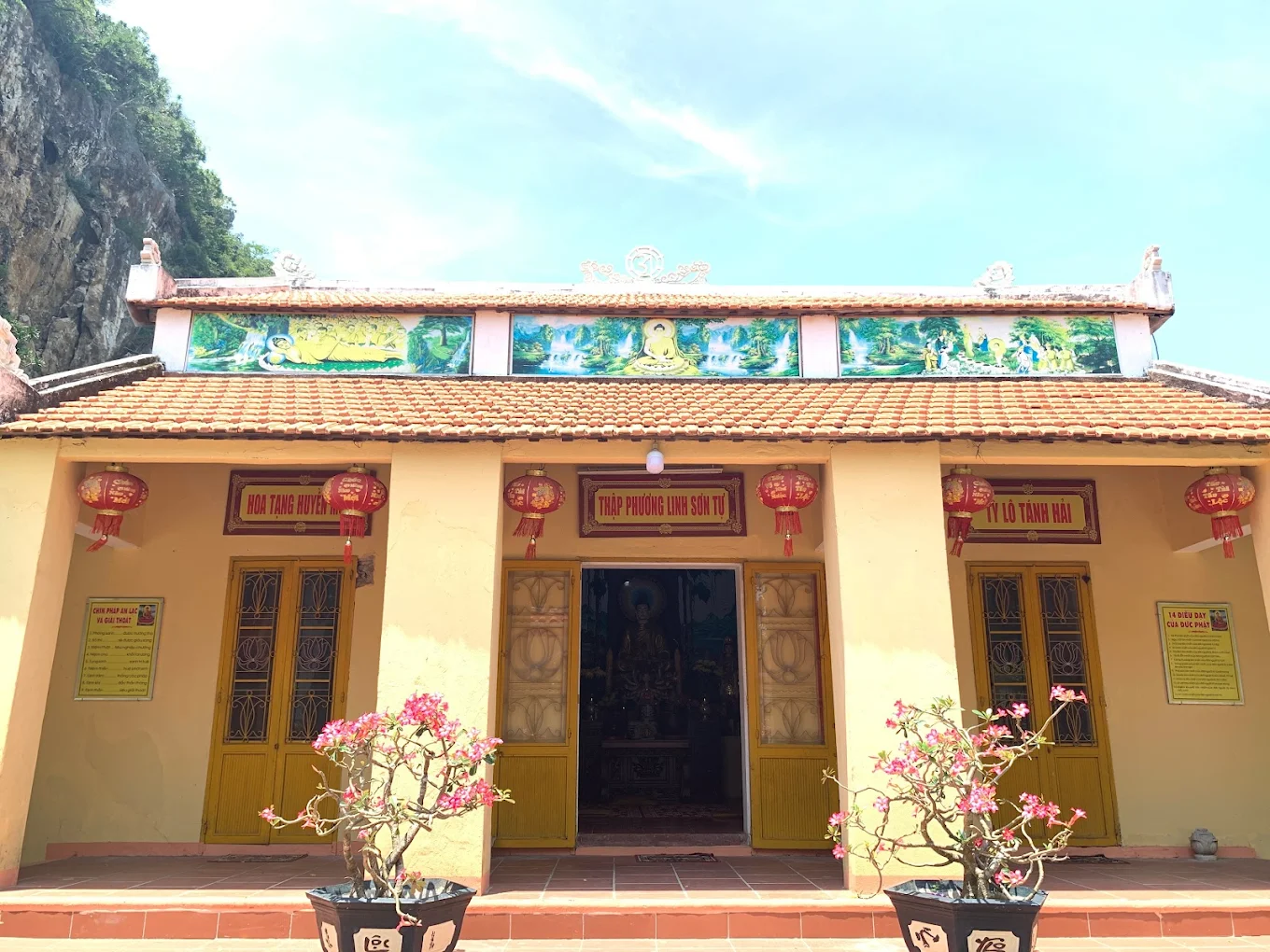
Inside the temple, statues of Buddha and Bodhisattvas are placed in a traditional altar arrangement. The design reflects the typical style of small Vietnamese mountain temples, where simplicity and harmony with nature are emphasized.
Because the temple is less crowded, the atmosphere here is often calm and reflective. Visitors can hear the sound of wind moving through the trees and enjoy the quiet environment that contrasts with the more popular areas of the mountain.
Long Hoa pagoda – A lesser-known temple with a peaceful setting
While some temples in the Marble Mountains attract large numbers of visitors, Long Hoa Pagoda remains relatively quiet and less frequently mentioned in travel guides. This modest temple offers a different perspective of the Marble Mountains, one that focuses more on calm spiritual practice rather than sightseeing.
A temple nestled in the natural landscape
Long Hoa Pagoda is located within the Marble Mountains area, surrounded by limestone hills, greenery, and traditional stone pathways connecting different parts of the complex. The temple blends naturally into the landscape, appearing almost hidden among the rocks and trees.
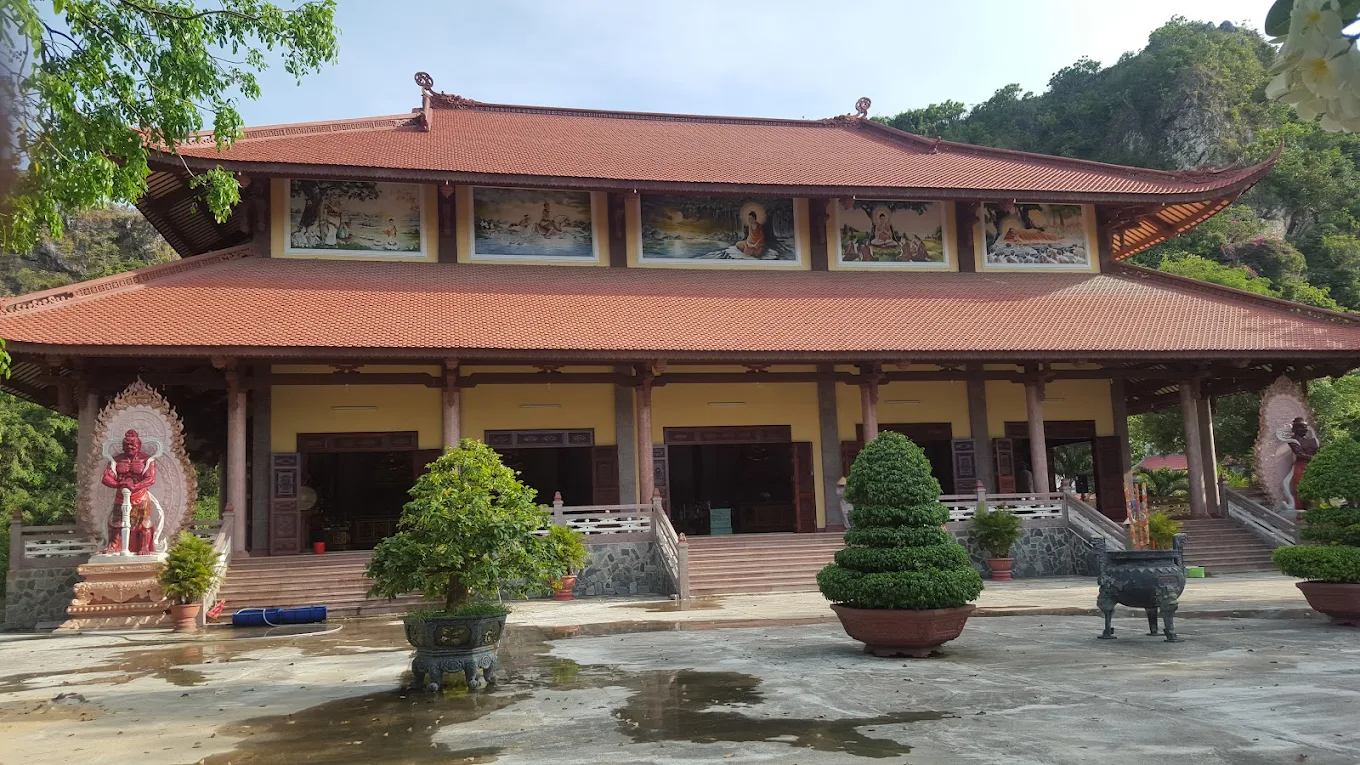
This natural setting gives the pagoda a quiet and contemplative character. The sound of wind passing through the mountains and the shade provided by old trees contribute to the calm atmosphere around the temple grounds.
Modest architecture reflecting traditional temples
In contrast to larger temples with elaborate structures, Long Hoa Pagoda features a relatively modest design. The temple includes a small worship hall and a courtyard where incense offerings are placed.
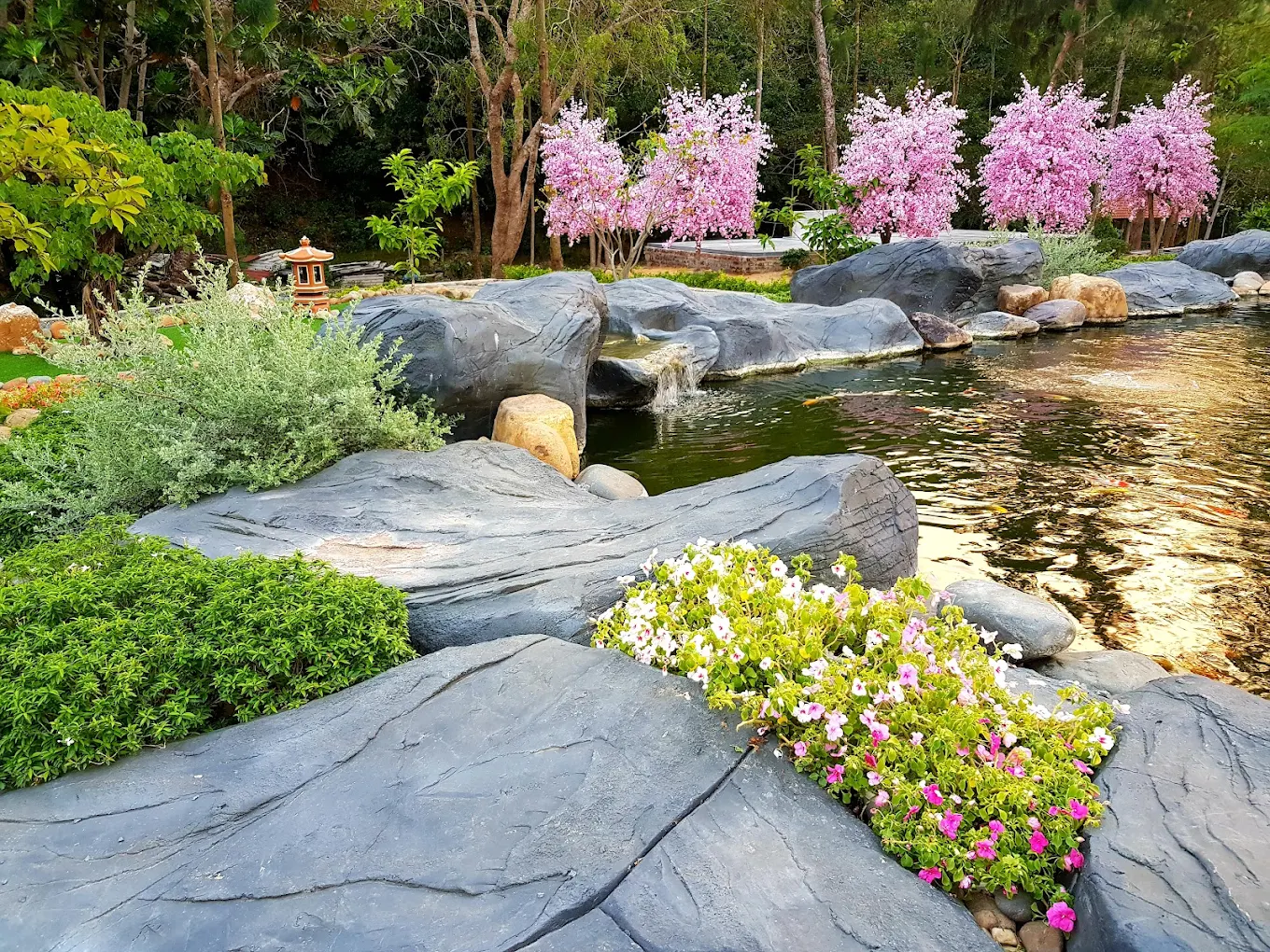
Inside the main hall, statues of Buddha and Bodhisattvas are arranged according to traditional Vietnamese Buddhist practice. The decoration is simple but respectful, focusing on spiritual devotion rather than architectural grandeur.
This understated style reflects the character of many smaller temples historically built within mountain areas for monks practicing meditation and quiet religious life.
Other small pagodas in the Marble Mountains
Besides the well-known temples scattered across the Marble Mountains, there are also several smaller pagodas that many visitors may overlook. These modest spiritual sites are part of the broader Buddhist landscape of the mountains, quietly reflecting the long religious history of the area.
Although they are not major tourist attractions, these pagodas contribute to the peaceful atmosphere of the Marble Mountains and offer visitors additional places to pause, explore, and experience the spiritual character of this famous destination.
Pho Da Son Pagoda
Pho Da Son Pagoda is a small temple located within the Marble Mountains complex. Compared with the larger pagodas in the area, it remains relatively quiet and receives fewer visitors throughout the day.
The pagoda features simple architecture surrounded by rocky hills and trees. Its calm setting provides a peaceful stop for travelers exploring different paths and viewpoints around the mountains.
Ung Nhien Phat Tong Tu
Ung Nhien Phat Tong Tu is one of the lesser-known Buddhist temples in the Marble Mountains area. Though modest in size, it reflects the spiritual traditions that have long been associated with the mountains.
The temple offers a quiet space for prayer and reflection. Its simple structures blend naturally with the surrounding landscape, creating a tranquil environment for visitors.
Hue Quang Pagoda
Hue Quang Pagoda is another small pagoda located within the Marble Mountains complex. It is not as prominent as some of the main temples but still forms part of the region’s spiritual heritage.
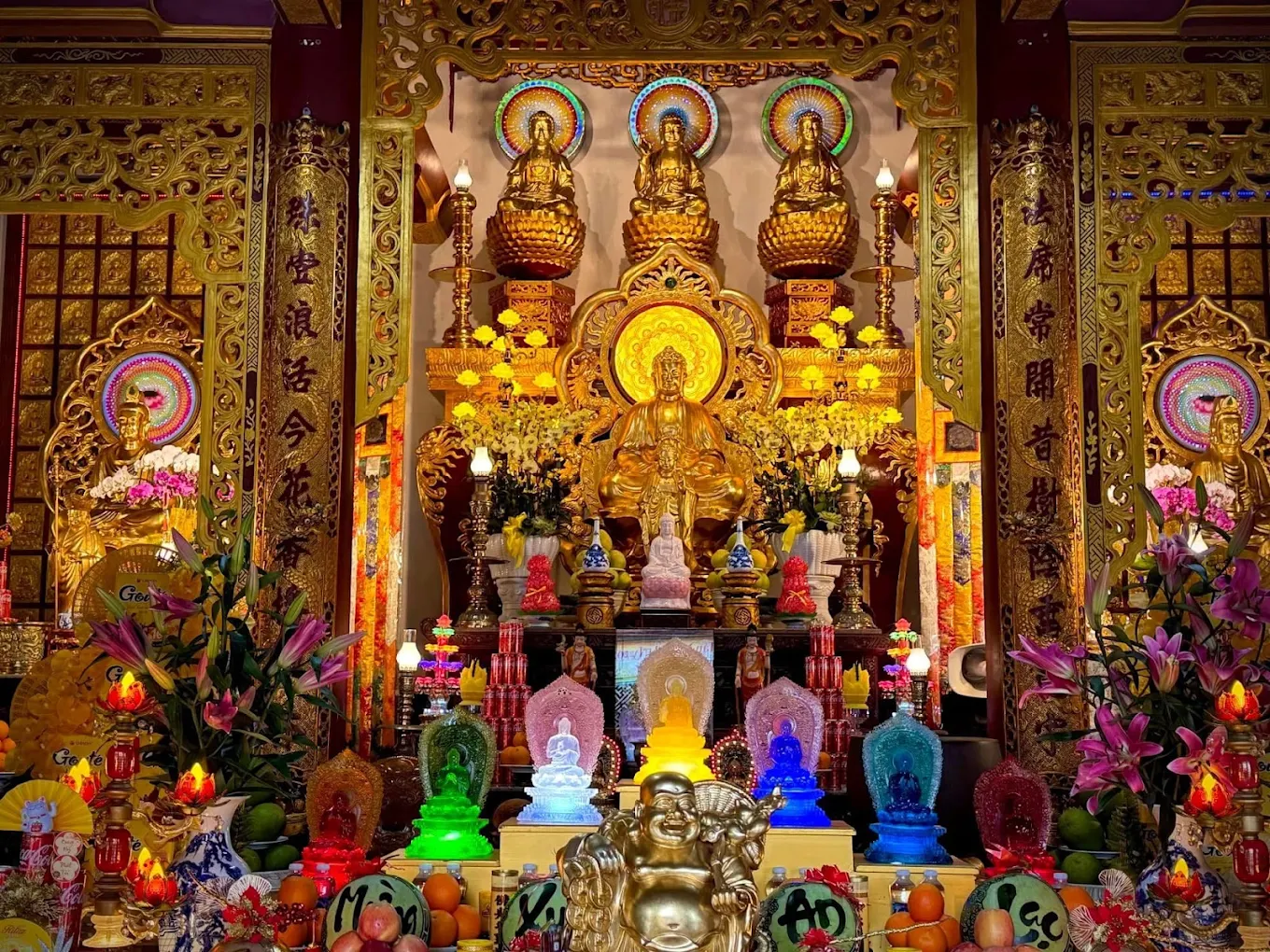
Surrounded by natural stone formations and greenery, the pagoda provides a calm atmosphere for those exploring the mountain trails. Visitors often appreciate the peaceful environment while passing through the area.
Huong Son Pagoda
Huong Son Pagoda is a modest temple that contributes to the network of religious sites found across the Marble Mountains. While it is not widely known among tourists, it still holds meaning for local Buddhist worship.
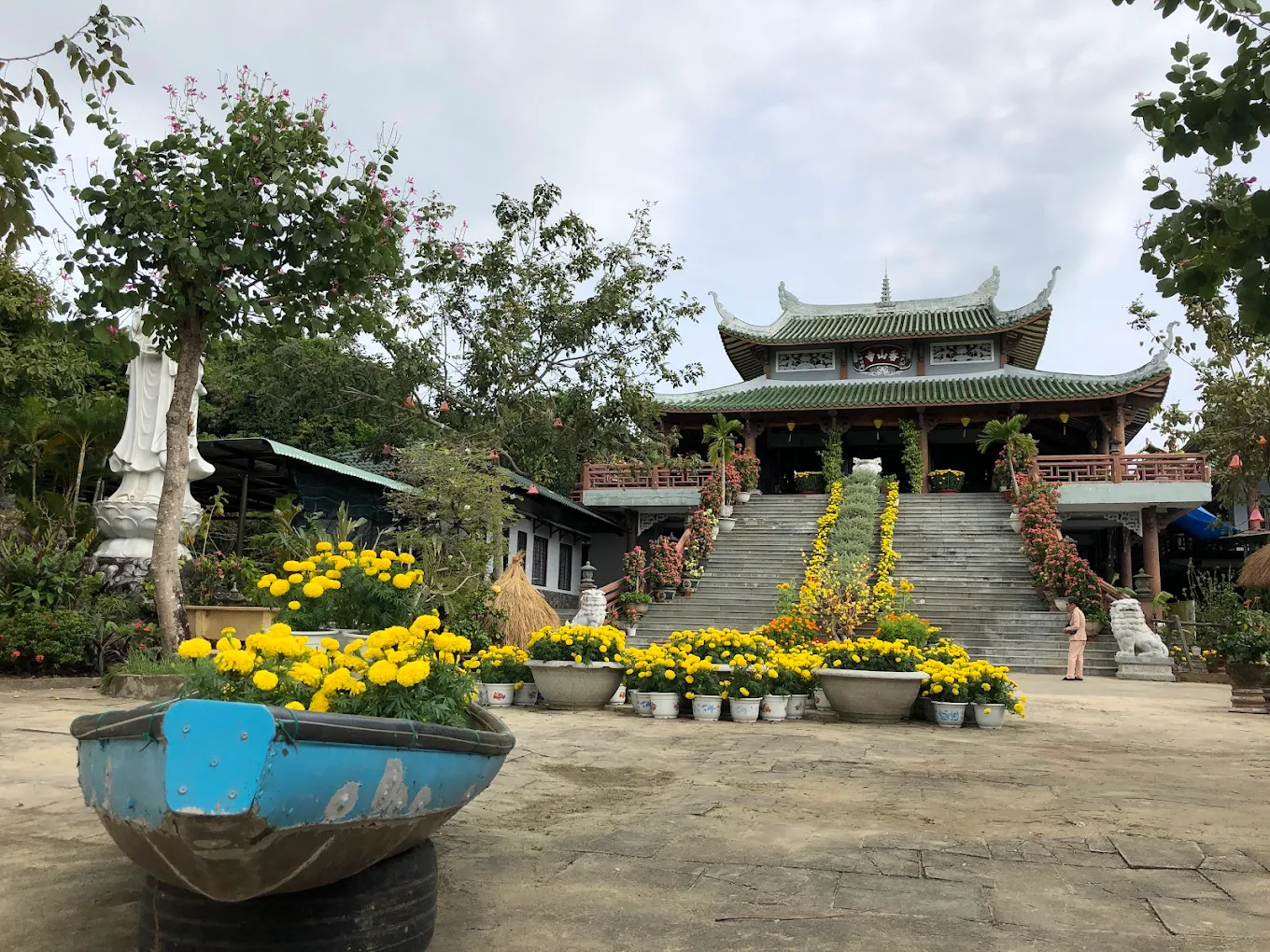
The pagoda’s quiet surroundings and simple design create a gentle and reflective atmosphere. It serves as a small spiritual stop for visitors interested in the cultural side of the mountains.
Giac Hoang Vien
Giac Hoang Vien is a small Buddhist sanctuary within the Marble Mountains area. Rather than being a large temple complex, it functions as a quiet place for worship and contemplation.
The space is known for its peaceful environment and modest structures. For travelers exploring the Marble Mountains, it offers another glimpse into the spiritual life connected to this historic landscape.
Visiting a Marble Mountains pagoda allows travelers to discover the spiritual side of Marble Mountains. Each temple contributes to the unique character of this historic site, combining natural beauty with religious heritage.

Related Posts
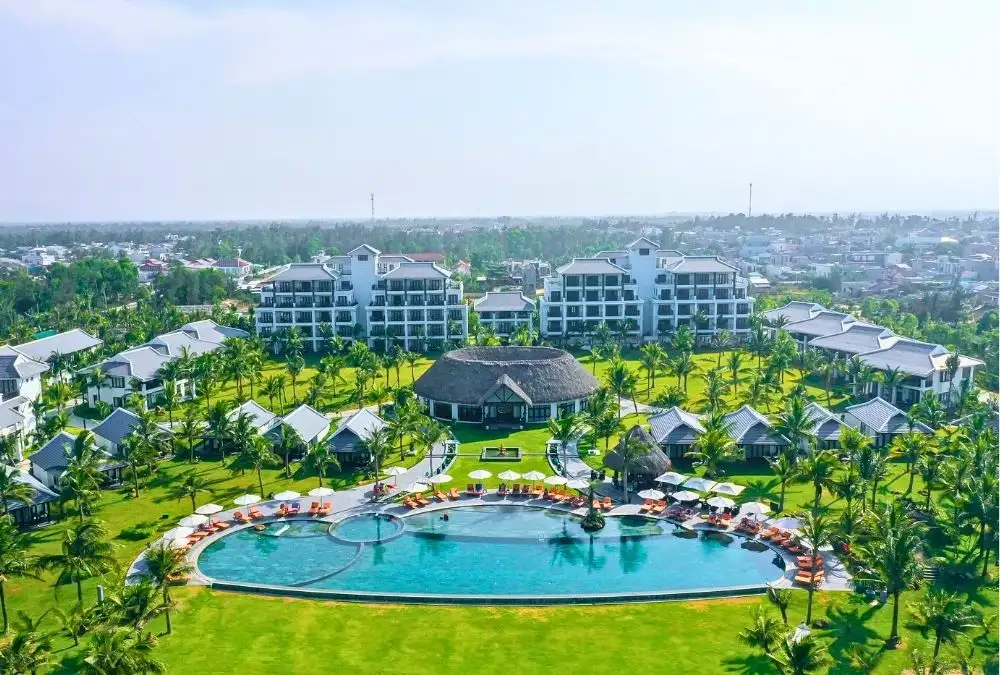
Private Tours from Hoi An Beach Resorts: Discover Central Vietnam from Bliss Hoi An
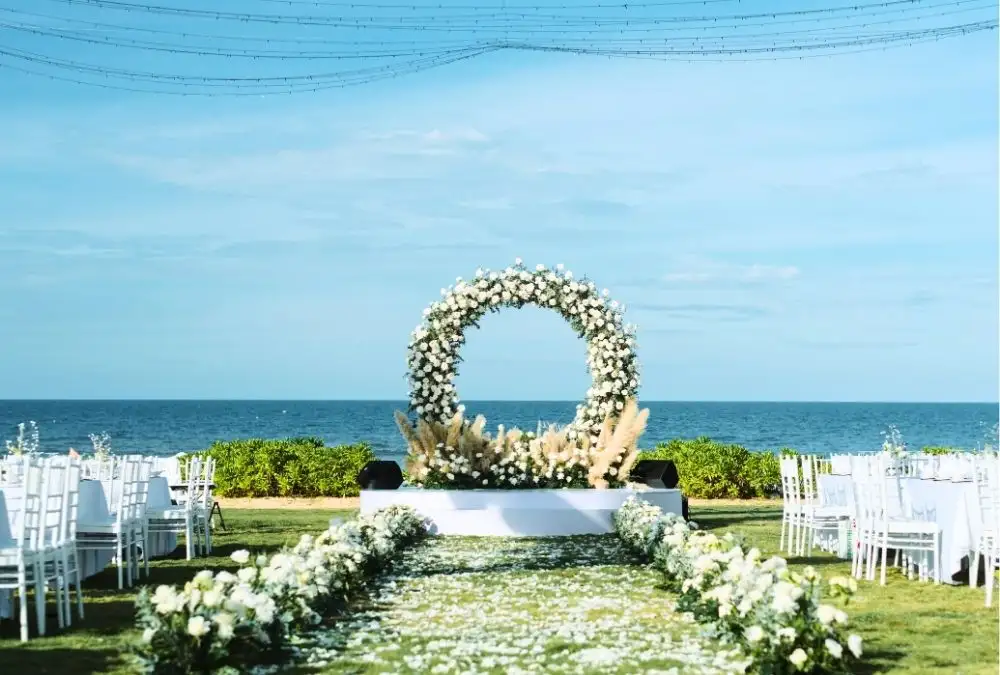
How much does a Hoi An wedding for 40 guests cost?

Is fine dining Hoi An really worth the price? What are travelers paying for?
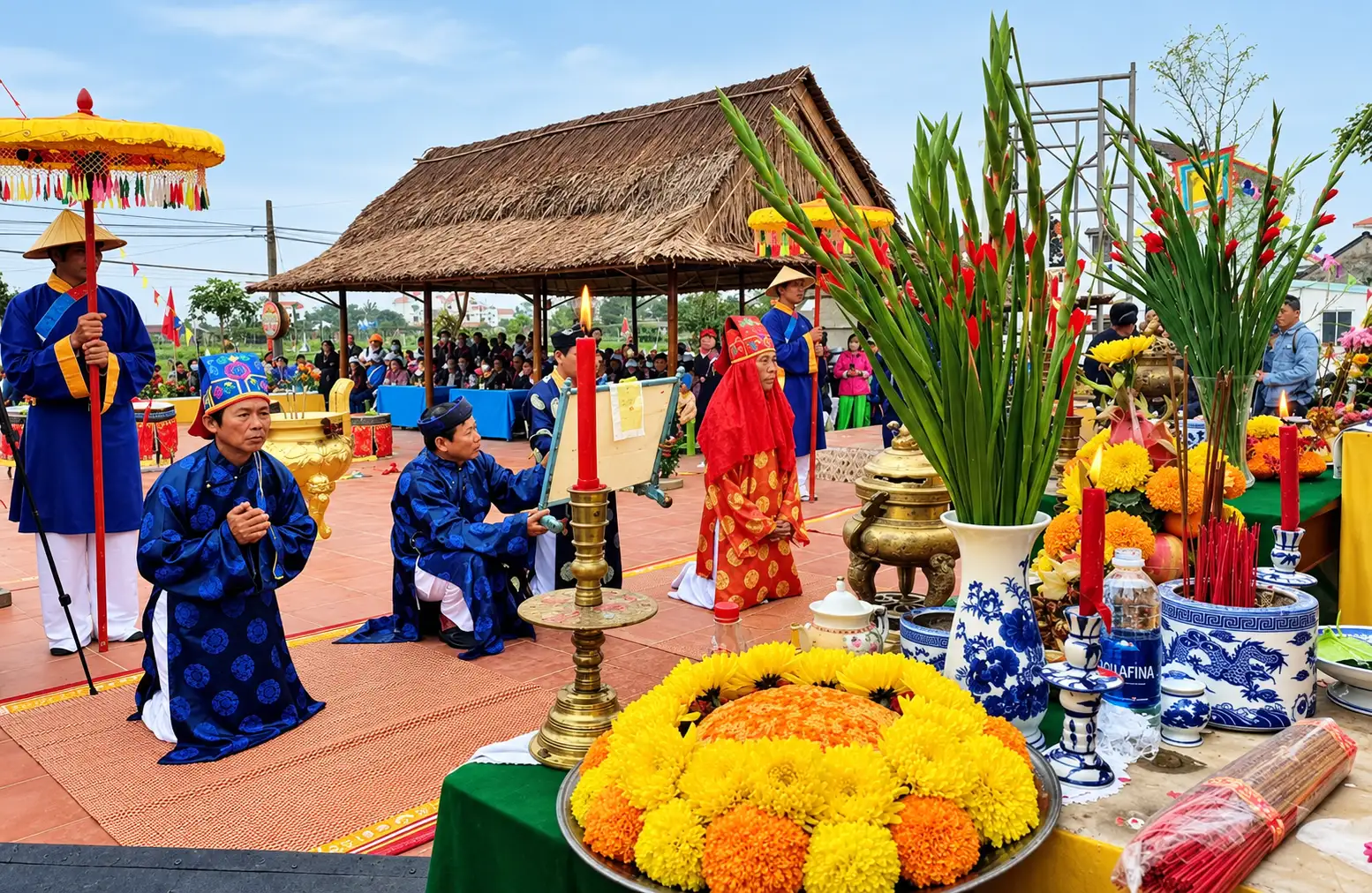
Cau Bong Festival in Hoi An: Inside Tra Que’s Agricultural New Year Tradition

Top 8 things to consider for a wedding in Hoi An with 20 guests