


Marble Mountains how many steps? Full guide to climbing in Da Nang
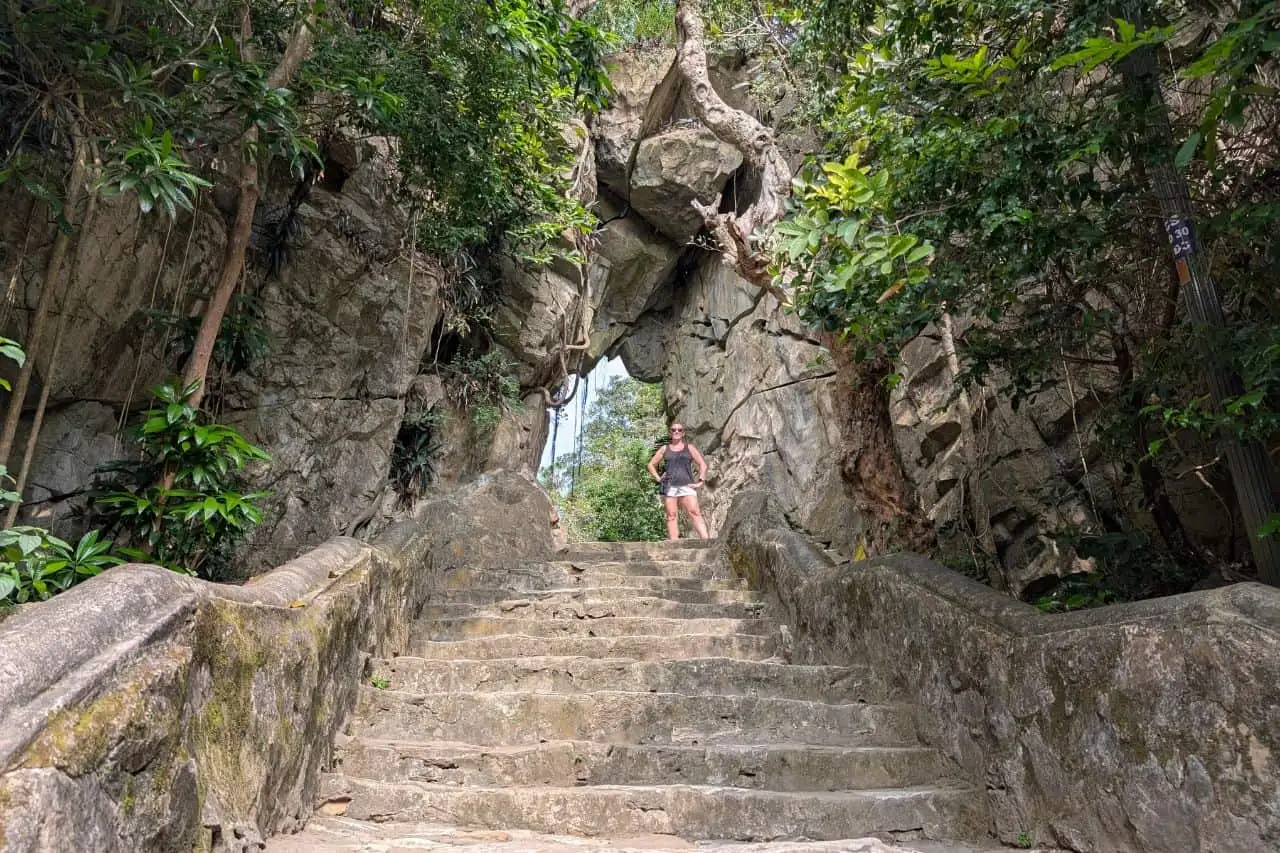
Standing at the base of the Marble Mountains, many visitors quickly realize this isn’t just a simple walk up a few stairs. The paths wind through temples, caves, and steep stone passages, making the climb feel more like an exploration than a straightforward ascent. That’s why the question marble mountains how many steps comes up so often, but the answer isn’t just a single number. In this guide, you’ll find a clear breakdown of the steps, difficulty level, and practical tips to make your visit easier and more enjoyable.
Marble Mountains how many steps to the top?
The short answer is: there is no exact fixed number, but most visitors will climb around 150 to 300+ steps, depending on the route and how much of the area you explore.
At Thuy Son (the main and most visited mountain), the staircase from the main entrance to the first level of temples and viewpoints has approximately 156 stone steps, a figure commonly cited in travel guides and local references. However, if you continue exploring caves (such as Huyen Khong or Van Thong) and higher viewpoints, the total number of steps can increase to several hundred due to multiple pathways and vertical climbs.
The actual number of steps you take also depends on how you choose to get up:
- Walking from the base: you’ll climb nearly all the steps
- Taking the elevator: you can skip the first 100+ steps and only climb shorter sections above
Total Marble Mountains steps explained
As mentioned earlier, the total number of steps at the Marble Mountains is not fixed and typically ranges from around 150 to over 300 steps, depending on how much you explore. The commonly cited figure of ~156 steps only refers to the main staircase leading from the base to the central area of Thuy Son. In reality, the full experience is more complex, as the entire site consists of multiple layers of stairways connecting temples, caves, and viewpoints. This is why the question marble mountains how many steps often has different answers depending on the route.
Main entrance route (Tam Thai Path) – The core 156 steps
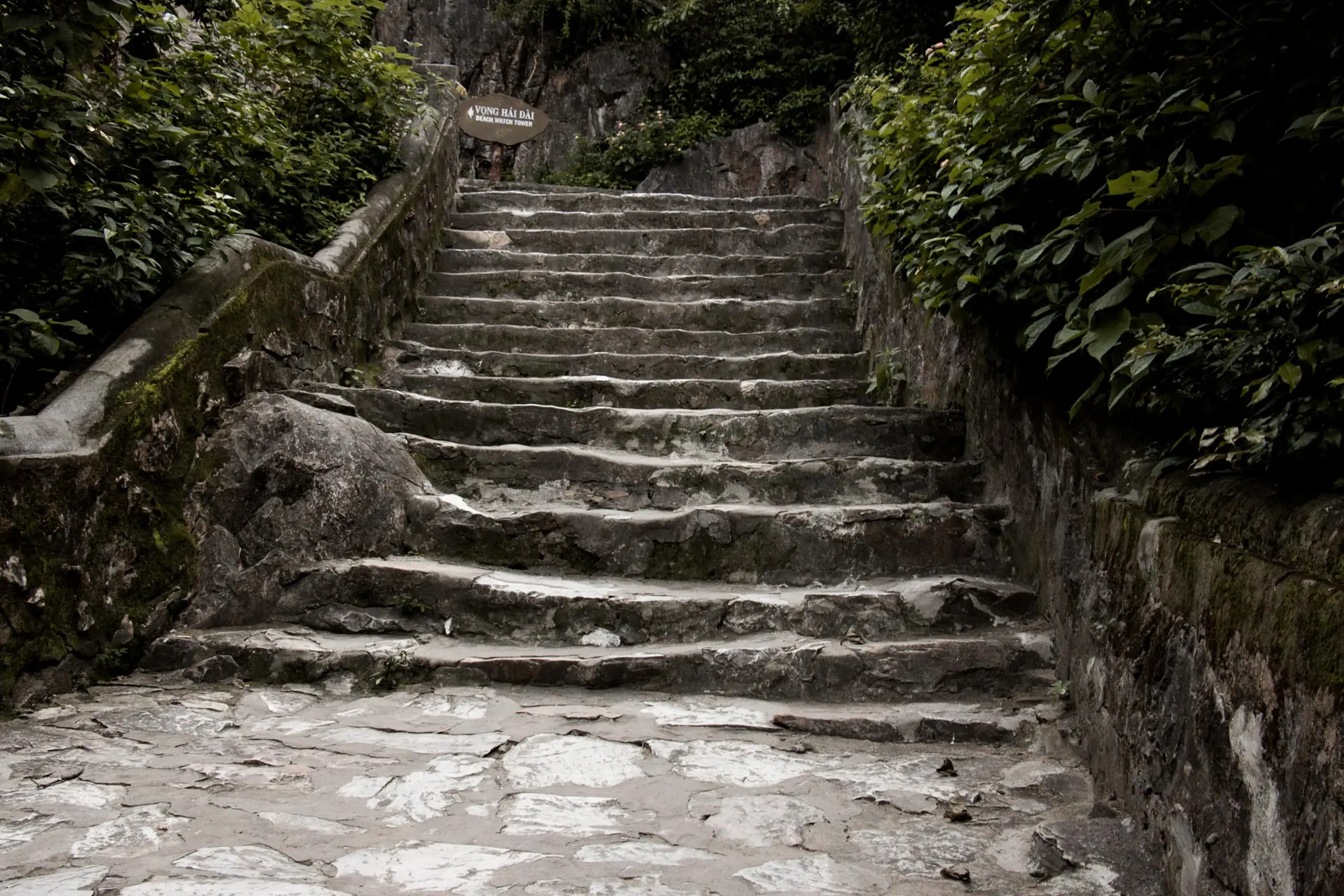
This is the primary climbing route and the most clearly measurable section. From the base of the mountain, you will ascend approximately 156 stone steps to reach the Tam Thai Pagoda area.
The path stretches roughly 120–150 meters along the mountainside, with an average incline of about 25–35 degrees. The steps are carved from stone, with a height of around 15–20 cm, similar to standard stairs, though not perfectly uniform. The tread depth is typically 25–35 cm, but some sections are narrower, requiring shorter, more careful steps.
While the surface has been smoothed over time, it can still become slippery in humid or rainy conditions. Along the way, there are small resting points every few dozen steps, along with shaded areas and small shrines that naturally encourage short breaks. Even though the slope is not extreme, the continuous climb without long flat sections can feel tiring, especially in hot weather.
Elevator option
The elevator is a popular option for visitors who want to reduce physical effort, but it does not eliminate the need to climb entirely. It takes you up approximately 35–40 meters, effectively skipping the first 100+ steps.

However, once you exit the elevator, you will still need to walk and climb to reach various attractions such as temples, caves, and viewpoints. These remaining steps are spread out rather than concentrated in one staircase, typically adding up to about 50 to 150 steps. As a result, you will still be walking quite a bit, just in shorter, more manageable segments.
Internal connecting steps
After reaching the main area, you will move between sites like Tam Thai Pagoda, Linh Ung Pagoda, and surrounding structures. In this section, the stairs are no longer continuous but appear in short segments scattered throughout the area.
These steps are generally lower (around 10–15 cm in height) and less steep, often combined with flat walking paths. Because of this, they feel easier and less noticeable. However, over time, they accumulate significantly. In total, these connecting steps can add approximately 50 to 100 steps to your journey, contributing to the overall marble mountains steps count that many visitors underestimate.
Cave exploration steps
Exploring caves such as Huyen Khong, Am Phu, and Van Thong introduces a completely different climbing experience. Instead of regular staircases, you’ll encounter more natural and uneven terrain.
Inside the caves, steps can vary widely in height (from about 10 to 30 cm), and some sections are not formally constructed steps at all. The incline can reach 40–60 degrees in certain areas, making the climb more physically demanding.
Huyen Khong Cave is relatively accessible, with wider steps and natural light filtering in. In contrast, Am Phu Cave involves descending deep into the cave before climbing back up, often in humid and slippery conditions. Van Thong Cave is the most challenging, with narrow passages and steep sections where you may need to use your hands to support yourself.
If you explore multiple caves, this section alone can add around 100 to 200 steps, and it is often the most tiring part of the visit due to both the terrain and effort required.
Summit & Viewpoint steps – The final climb for the best views
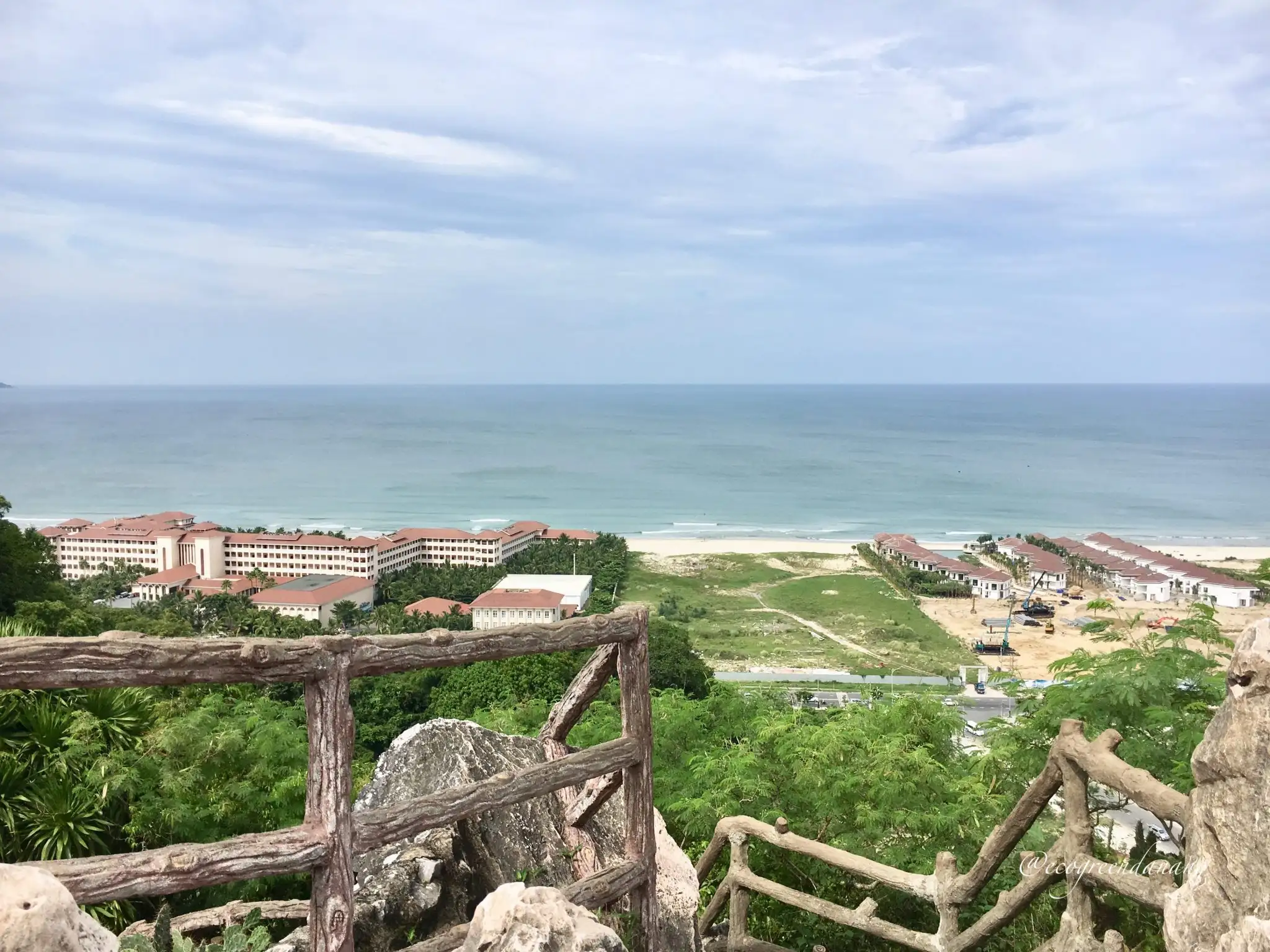
For those who want to reach higher viewpoints and enjoy panoramic views of the coastline and Da Nang city, additional climbing is required. These steps are typically steeper, less uniform, and more exposed to direct sunlight. This final stretch usually adds about 50 to 100 steps. While optional, completing this section will almost certainly push your total step count beyond 300.
Read more: Marble Mountains Pagodas: A guide to temples in the Marble Mountains Da Nang
How hard is it to Climb Marble Mountains?
Overall, climbing the Marble Mountains is considered moderate in difficulty, not too challenging, but also not completely effortless, especially if you plan to explore caves and reach higher viewpoints.
What often surprises visitors is not the number of steps (typically around 150–300+), but how the climb is structured. Instead of one continuous staircase, the experience involves repeated cycles of climbing, walking, and short breaks across different types of terrain, including outdoor stone steps, cave passages, and steeper sections. This stop-and-go pattern can make the climb feel more tiring than expected.
Difficulty by fitness level
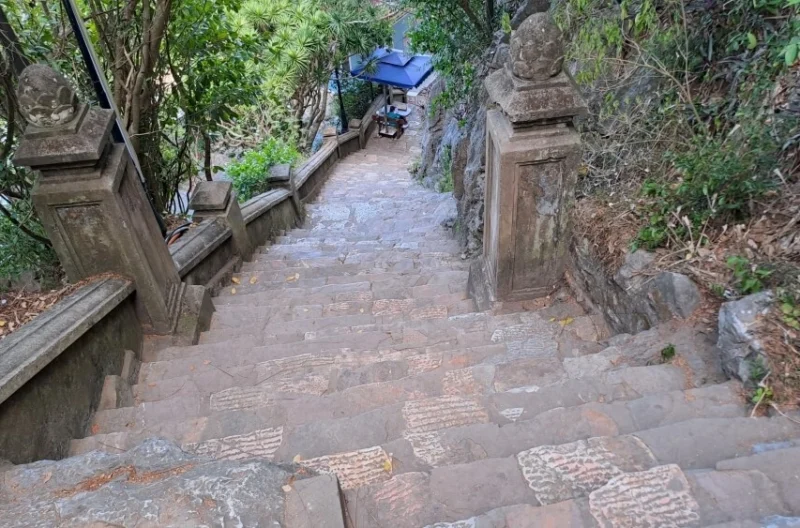
For people with average fitness, reaching the main area (around 156 steps) usually takes about 10–15 minutes and is quite manageable. However, if you continue exploring caves or climbing to higher, fatigue becomes more noticeable, especially in the legs due to frequent ascending and descending.
Those who are less active may start to feel tired after the first 100–150 steps, particularly in hot weather. On the other hand, if you are used to regular exercise or light hiking, the Marble Mountains should feel relatively easy.
Difficulty by terrain
Not all steps are the same. The main staircase is fairly straightforward, but the difficulty increases once you enter the caves. Inside, the steps are often uneven, steeper, and sometimes slippery, with limited lighting in certain areas.
For example, Van Thong Cave includes narrow passages and steep sections where you may need to use your hands for support, while Am Phu Cave requires descending deep into the mountain and climbing back up. These types of terrain demand more effort and balance compared to standard stairs.
Impact of weather
Weather plays a significant role in how difficult the climb feels. On hot days, the heat and humidity in Da Nang can make the climb more exhausting due to dehydration and fatigue. On the other hand, during rainy or humid conditions, the stone steps can become slippery, especially inside caves, increasing the risk of slipping. The best time to visit is early morning or late afternoon, when temperatures are cooler and conditions are more comfortable.
Tips to climb Marble Mountains easily
To make your climb at the Marble Mountains more comfortable and enjoyable, it’s not just about fitness, you also need the right preparation. The tips below will help you save energy, avoid unnecessary fatigue, and make the most of your visit.
- Choose the right time to climb: Visit early in the morning (before 9 AM) or late afternoon (after 3:30 PM) to avoid intense heat; cooler temperatures will help you conserve energy, and the lighting is also better for sightseeing and photos.
- Wear proper footwear: Opt for sneakers or sandals with good grip, as the stone steps can be slippery, especially inside caves or in humid conditions; avoid flip-flops or smooth-soled shoes.
- Bring enough water, but not too much: A 500ml to 1-liter bottle is usually sufficient for a standard visit; sip water gradually during breaks to stay hydrated without carrying unnecessary weight.
- Pace yourself and take short breaks: Instead of climbing continuously, use rest spots, shaded areas, or attractions along the way to pause for 1–2 minutes, allowing your body to recover and preventing early fatigue.
- Consider using the elevator: If you’re traveling with elderly visitors, children, or simply want to save energy, the elevator helps you skip over 100 of the steepest steps at the beginning.
- Be cautious inside caves: Caves like Am Phu and Van Thong have uneven, sometimes slippery steps and limited lighting, so move slowly, watch your footing, and use hand support when needed.
- Dress comfortably and appropriately: Wear light, breathable clothing for easier movement; if you plan to visit temples, choose modest outfits (long pants, covered shoulders) to respect the spiritual setting.
- Maintain a steady pace: Avoid rushing; walking at a consistent, moderate speed will help you conserve energy and make the climb feel much easier overall.
Marble Mountains entrance fee & Elevator cost
Before starting your visit to the Marble Mountains, it’s helpful to understand the basic costs involved, including the entrance fee and the optional elevator ticket. Overall, these costs are quite affordable compared to the experience you get.
Entrance fee
The entrance ticket applies mainly to Thuy Son, the most popular mountain where you’ll find the main temples, caves, and viewpoints.
- Adults: 40,00 VND per person
- Children: about 10,000 VND per person (depending on height/age policies)
Prices are generally stable but may change slightly over time. Tickets are clearly listed at the entrance.
Elevator cost
The elevator is a convenient option if you want to save energy, especially by skipping the first section of stairs.
- One-way ticket: around 15,000 VND per person
- Round-trip ticket: around 30,000 VND per person
The elevator takes you close to the main area, but you will still need to walk and climb some steps to reach different attractions.
Is the elevator worth it?
Whether you should take the elevator depends on your fitness level and travel style. If you enjoy a more complete experience and don’t mind climbing, walking from the base gives you a stronger sense of accomplishment. On the other hand, if you’re traveling with elderly visitors, children, or simply want to save time and energy, the elevator is a practical choice.
Besides the entrance and elevator fees, you may have small extra expenses such as parking, drinks, or souvenirs. However, the overall cost of visiting the Marble Mountains remains budget-friendly for most travelers.
With prices starting from just a small amount, the Marble Mountains is one of the most affordable attractions in Da Nang. You can easily choose between walking or using the elevator depending on your preferences and physical condition.
Read more: Marble Mountains price: Entrance fee, tour cost & Travel tips
If you want to explore the Marble Mountains without worrying about routes, timing, or logistics, joining a guided experience is a great option. The Marble Mountains tour by Bliss Hoi An Beach Resort & Wellness offers a well-planned itinerary that combines cultural insights with a comfortable pace, so you can fully enjoy the journey without feeling rushed. From convenient transportation to knowledgeable guides who bring the history and spiritual significance of the site to life, it’s an ideal choice for travelers who prefer a smooth, enriching experience. After a day of exploring caves, temples, and scenic viewpoints, returning to a peaceful riverside retreat like Bliss Hoi An makes the trip even more memorable.
So, when it comes to marble mountains how many steps, the most accurate answer depends on how much you choose to explore. From around 150 steps for a basic visit to over 300 steps for a full experience, the journey can be as light or as challenging as you make it. The good news is that with proper planning, you can fully enjoy the beauty of the Marble Mountains without feeling overwhelmed. Whether you climb every step or take the elevator part of the way, the experience is well worth it for the views, culture, and unique landscapes waiting at the top.

Related Posts
Hoi An to Mui Ne: 3 Routes Compared for Travel, Scenery and Adventure

Hoi An Indochine Style Resort: How to Choose a Stay With Real Vietnamese Character

Private Chef Hoi An: Top 10 Chefs for a Personalised Dining Experience

A trip from Hoi An to Tam Ky in one day: Is it feasible?

Private Tours from Hoi An Beach Resorts: Discover Central Vietnam from Bliss Hoi An