

15+ best places to shop in Hoi An: A local’s shopping guide (2026)
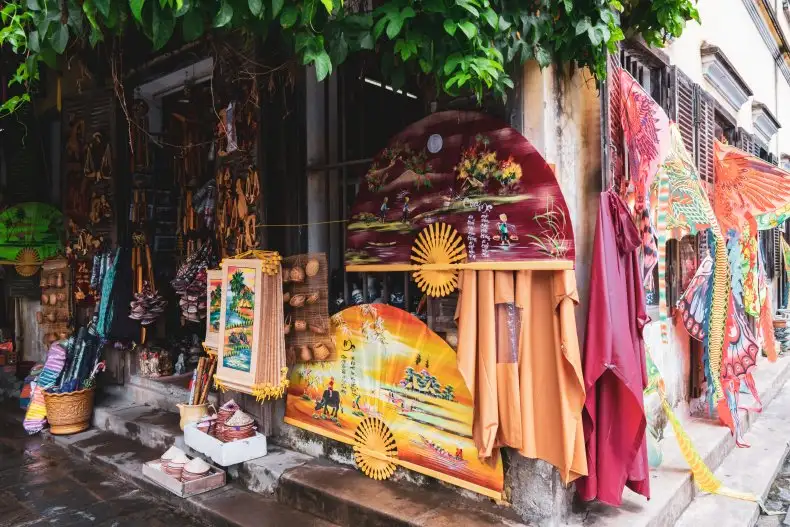
Walking through Hoi An’s lantern-lit streets, you’ll quickly realize this ancient town isn’t just one of Vietnam’s most beautiful destinations, it’s also one of Southeast Asia’s best-kept shopping secrets. From bespoke suits stitched in 24 hours to handmade silk lanterns and butter-soft leather bags, the best places to shop in Hoi An offer quality and value you simply won’t find back home. This guide breaks down where to go, what to buy, and how to avoid the tourist traps, based on years of wandering these streets and learning which shops the locals actually trust.
Why Hoi An is a shopper’s paradise
Long before it became a tourist darling, Hoi An was a working port. For over 400 years, merchants from Japan, China, the Netherlands, India, and Portugal sailed into the Thu Bon River to trade silk, spices, ceramics, and lacquerware. That cosmopolitan heritage didn’t disappear when the port silted up in the 1800s, it crystallized into the dense network of artisan workshops, family tailors, and craft houses that still defines the Old Town today.
What makes Hoi An genuinely different from shopping in Hanoi or Ho Chi Minh City comes down to scale and specialization. The historic core spans just 2 square kilometers, yet it contains over 500 active tailor shops, dozens of leather workshops, and several centuries-old craft villages within cycling distance. Lower rents inside this preserved district mean prices run 20–40% cheaper than in Vietnam’s major cities, and the concentration of skilled hands means you can commission a custom suit, a pair of leather brogues, and a silver ring on the same afternoon and pick them all up the next day.

The Old Town itself is a UNESCO World Heritage Site (inscribed in 1999), which is why the shophouses you’ll wander through look almost identical to photographs taken a century ago. Many of the tailors and galleries operate inside buildings over 200 years old, with original wooden beams and tiled courtyards intact.
If you can time your visit, February to April offers the best shopping conditions: dry weather, cooler temperatures around 22–28°C, and significantly fewer crowds than the July–August peak. Avoid October and November when flooding can submerge parts of the Old Town and force shops to close for days.
What to buy in Hoi An: 12 must-have souvenirs & specialties
Hoi An’s shopping scene is wide but specialized, every street has its niche, and walking in without a plan is how travelers end up with a suitcase full of mediocre lanterns and no time left to commission the suit they actually wanted. The list below covers the items Hoi An is genuinely known for, with realistic prices and the practical details that determine whether you’ll be happy with your purchase six months later.
Custom-tailored clothing
This is Hoi An’s signature product and the reason many travelers extend their stay. A two-piece wool suit costs $80–250 here against $800+ in Europe or the US, and tailors will happily replicate a design from a photograph, a magazine spread, or an existing garment. Quality varies enormously, the cheapest tailors use polyester blends and rushed construction, while top-tier houses use Italian wool, hand-stitched canvassed jackets, and three-piece linings.
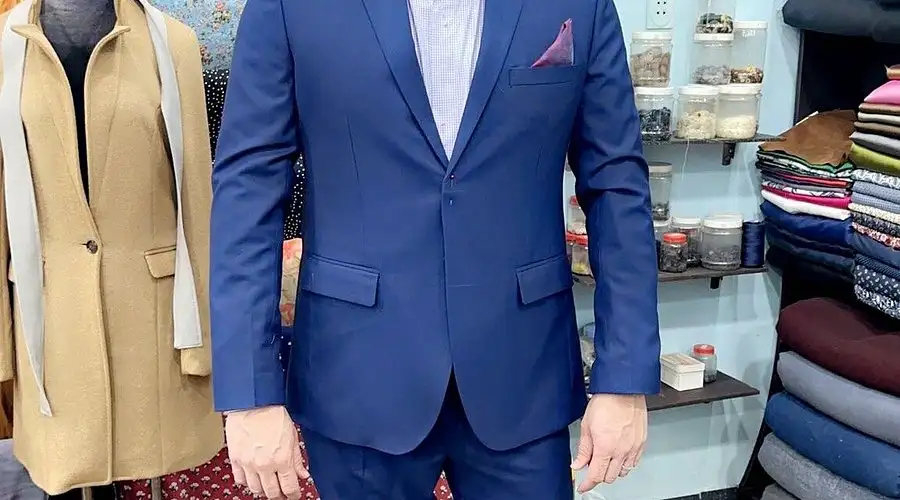
What you’re really paying for is fit. The best tailors take 15+ measurements and require 2–3 fittings over 24–48 hours, adjusting between sessions. Walk in on your first day in town to start the clock. Average savings versus Western prices land around 60–75% for comparable quality.
Silk lanterns
The image of Hoi An on every postcard, and surprisingly practical to take home. The traditional construction uses a bamboo frame wrapped in silk, with a wire mechanism that lets the entire lantern collapse flat to about 2–3 cm thick, slipping easily into a suitcase. Sizes range from small desk lanterns at ~20 cm ($3–8) to dramatic ceiling pieces of 60 cm+ ($12–25).

Real silk lanterns feel soft and almost translucent; the cheaper polyester knockoffs look fine in photos but feel stiff and fade within a year. Several workshops also offer 2-hour lantern-making classes for $15–20.
Leather goods
Hoi An’s leather scene is a notch below Florence or Buenos Aires in pure craftsmanship, but the value is exceptional. Wallets run $20–40, bags $50–150, custom shoes $40–100 with 1–2 day turnaround, belts from $15.
The catch: “leather” doesn’t always mean leather. Cheaper shops sell PU synthetic at genuine-leather prices. Two quick tests, real leather has a distinct rich smell synthetic can’t replicate, and the cut edge looks slightly fibrous and irregular, while PU shows a clean uniform layer.
Silk fabric & scarves
Vietnamese mulberry silk is genuinely good, soft, lightweight, dyed in pastels and jewel tones. Finished scarves cost $5–25, fabric by the meter $15–40.
The fake-silk problem is endemic at markets. The reliable burn test: pull a thread, light it. Real silk turns to fine grey ash and smells like burnt hair. Synthetic silk melts into a hard plastic bead and smells acrid. If a vendor refuses to demonstrate, walk away.
Vietnamese coffee & phin filters

Vietnam is the world’s second-largest coffee producer, and Central Highlands robusta has a deep, chocolatey intensity that’s worlds away from supermarket coffee. A 250g bag of good ground coffee runs $4–8, and the small aluminum drip filter (phin) costs another $2–5. For something unusual, look for weasel coffee ($15–25 per 250g) or local salt and coconut coffee blends.
Lacquerware
Traditional Vietnamese lacquerware involves 10–20 layers of natural lacquer over a wood base, sanded between coats, then inlaid with mother-of-pearl, eggshell, or gold leaf. A single high-quality piece takes 3–6 months to complete. Prices range from $5 for a small trinket box to $100+ for serious decorative pieces.
Genuine lacquerware has a glassy, almost liquid-looking surface with visible depth when tilted under light. Cheap painted imitations look flat and feel lightweight.
Hand-embroidered art
Some of the most stunning souvenirs in Hoi An are framed silk embroideries, landscapes, koi ponds, lotus flowers, portraits, stitched entirely by hand. Small pieces start around $20, gallery-quality works reach $500+. A single large piece can take 6+ months for one artisan to complete.
The Vietnamese specialty worth seeking out is double-sided embroidery, where the design is visible and identical from both sides of the silk, a rare technique requiring every knot to be hidden inside the fabric.
Thanh Ha pottery

Just 3 km from the Old Town, Thanh Ha village has produced ceramics continuously for over 500 years. The clay is dug from the Thu Bon riverbanks, hand-thrown on wooden wheels, and fired in wood-burning kilns. Visiting the village ($5 entry fee) lets you buy directly from the artisans at 30–50% less than Old Town prices, watch the throwing process, and try the wheel yourself. Bowls and cups run $1–10, decorative figurines $10–30.
Conical hats (Non la)
Light, cheap, and instantly recognizable. Standard hats cost $2–5 and weigh under 200 grams, though the 40 cm diameter makes them awkward to pack, most travelers wear them on the plane. The version worth seeking out is the “bai tho” poem hat from Hue ($5–8), which has paper poems and silhouettes woven between palm-leaf layers, invisible until you hold it up to light.
Handmade jewelry
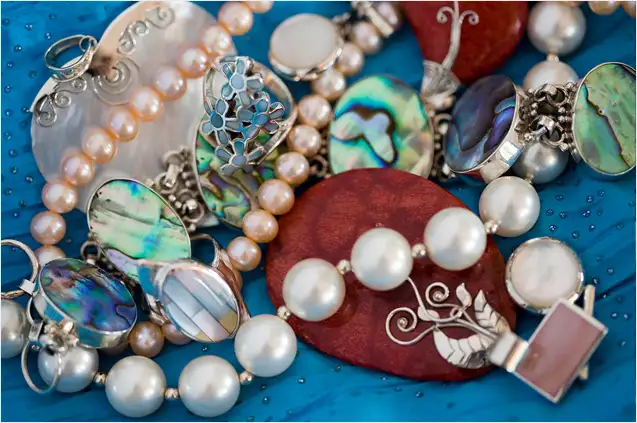
Hoi An has a quiet but high-quality jewelry scene. Silver rings and earrings run $5–30, freshwater pearl necklaces $20–80, fully custom designs $30–150 with 1–2 day turnaround. For pearls, the tooth test: real pearls feel slightly gritty when rubbed against your front teeth; plastic imitations feel perfectly smooth.
Local spices & cao lau kits
The dry goods section of Hoi An Central Market is the place for small bags of cinnamon, turmeric, star anise, black pepper, and dried chili, most $2–5 per pack. The most Hoi An-specific item is a dried cao lau noodle kit ($5–10), since traditional cao lau noodles use water from a specific local well, the dried version is your only realistic way to recreate it abroad. Most countries allow sealed, dried, commercially packaged spices; declare them on arrival.
Quick comparison: Souvenir at a glance
| Item | Price range | Best for | Pack-friendly | Bargain? |
|---|---|---|---|---|
| Custom suit | $80–250 | Special occasions | Yes | No |
| Silk lantern | $3–25 | Decor, gifts | Yes (folds flat) | Light |
| Leather bag | $50–150 | Daily use | Yes | Light |
| Silk scarf | $5–25 | Easy gift | Yes | Yes |
| Lacquerware | $5–100 | Statement piece | Fragile | Light |
| Embroidered art | $20–500 | Collector item | Frame separately | No |
| Pottery | $1–30 | Kitchen, decor | Wrap carefully | Light |
| Conical hat | $2–8 | Photo prop | Awkward | Yes |
| Silver jewelry | $5–150 | Wearable gift | Yes | Light |
| Coffee + phin | $6–13 | Coffee lovers | Yes | No |
| Spices | $2–10 | Cooks | Yes | Yes |
What to avoid buying
A few categories are best skipped entirely. “Antiques” sold in tourist shops are almost always fakes, and Vietnamese law prohibits exporting genuine antiquities anyway, yours would be confiscated at the airport. Suspiciously cheap pearls (under $10 for a “real” necklace) are plastic. Large wood furniture often costs $200–500 to ship home, frequently more than the piece itself is worth. And designer “copies” risk being confiscated by customs in the EU, US, Australia, and Canada, where enforcement has tightened sharply in recent years.
Read more: What to buy in Hoi An: 25+ Meaningful gifts for your family
Best markets in Hoi An (4 picks)
Hoi An’s markets serve completely different purposes, daily-needs local commerce, tourist-focused lantern strolling, beach casual, and a smaller wholesale alternative. Hitting at least two of them gives you a real sense of how commerce works in this town, and prices at the markets are consistently 30–50% lower than equivalent Old Town shops.
Hoi An Central Market (Cho Hoi An)
The beating heart of local commerce and, at dawn, the first place in the Old Town to come alive. The ground floor is dominated by fresh produce, fish brought in from Cua Dai port that morning, butchers, and legendary breakfast stalls where you can grab a bowl of mi quang or cao lau for under $2. The second floor pivots completely, fabric vendors stacked with silk bolts, smaller tailors offering budget alternatives to the Tran Phu boutiques, and souvenir stalls selling everything from chopstick sets to embroidered handbags. Bargaining is expected, start at 50% of asking and settle around 30% off. Bring small VND notes; almost no one accepts cards.
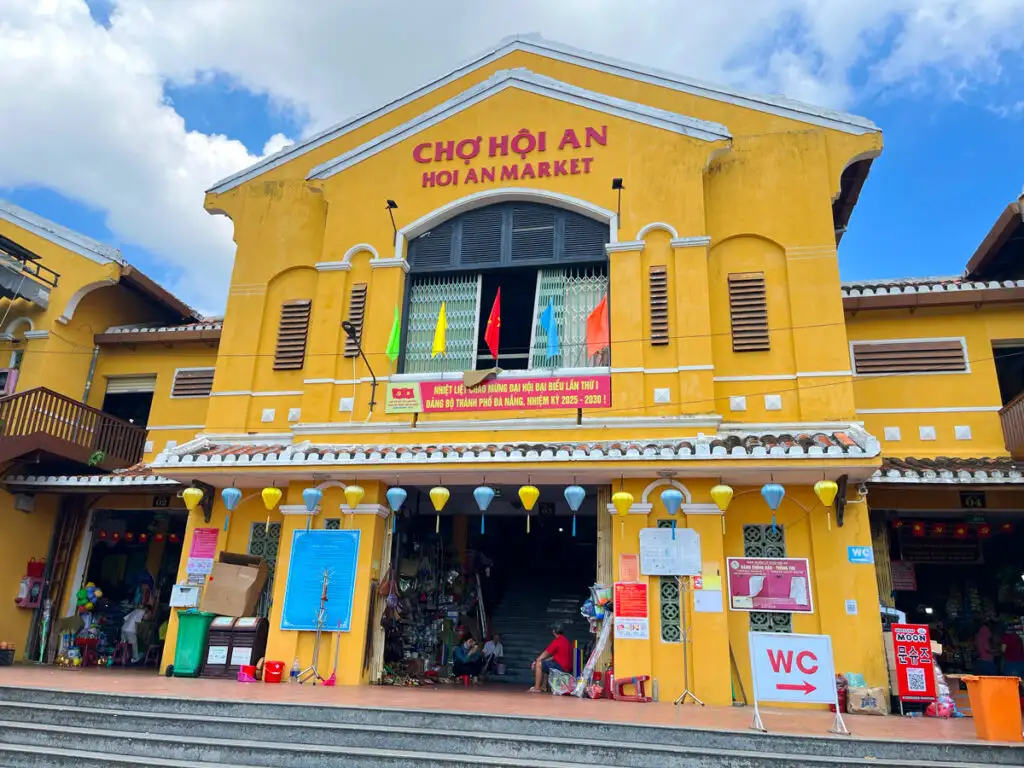
- Address: Tran Phu Street, eastern edge of the Old Town. Open 6:00 AM – 8:00 PM daily.
- Price level: Cheapest in town. Souvenirs $1–10, silk fabric $10–25/m, breakfast bowls $1.50–2.50.
Hoi An Night Market
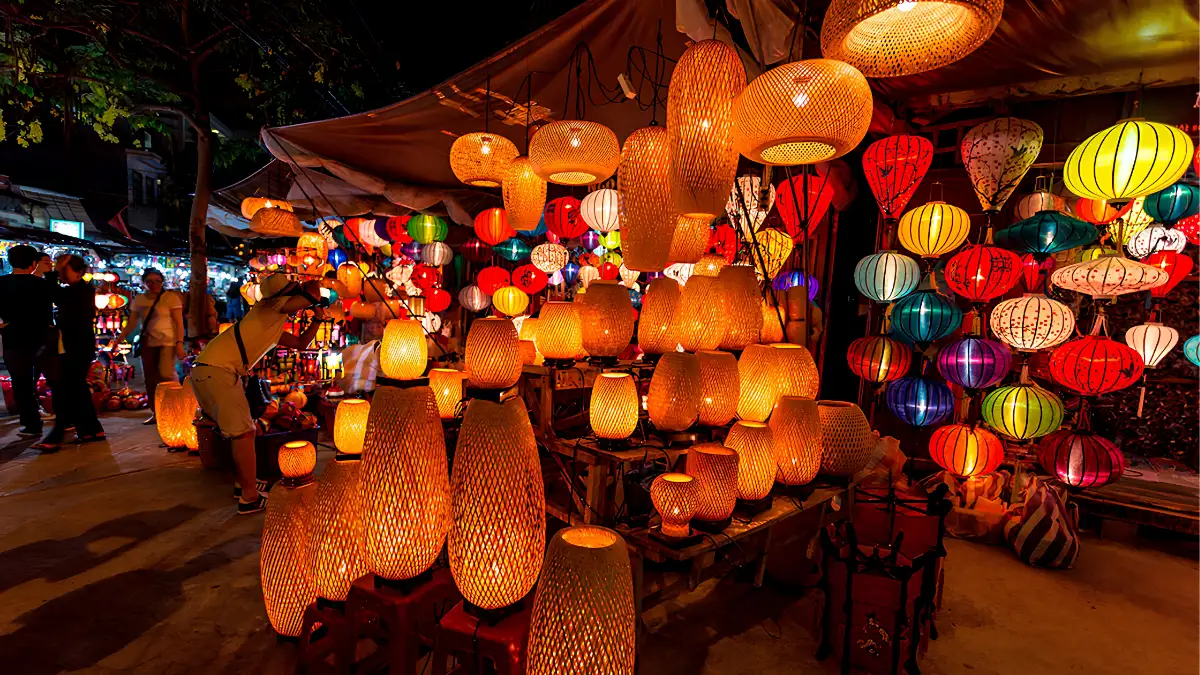
Walk across the An Hoi pedestrian bridge after sunset and you’ll find yourself in the Night Market, a 300-meter stretch of around 50 stalls that’s the most photogenic shopping experience in Vietnam. Every stall sells lanterns, lit up and hanging in dense canopies overhead. The best photos happen between 7:00 PM and 8:00 PM, when the sky still has color but the lanterns are fully glowing. Beyond lanterns, the market sells handmade jewelry, small leather goods, embroidered bags, t-shirts, and street food. Quality skews lower than Old Town shops since vendors rotate frequently, but prices are correspondingly cheaper, bargain harder, starting at 40% off asking.
- Address: Nguyen Hoang Street, An Hoi (across the bridge from the Old Town). Open daily 5:00 PM – 11:00 PM.
- Price level: Budget. Small lanterns $2–6, jewelry $3–15, t-shirts $5–12, street food $1–3.
An Bang Beach Market
A smaller, untouristed alternative northeast of the Old Town, near An Bang Beach. The vibe is casual, locals shopping for everyday goods, vendors selling beachwear, sarongs, sunglasses, and basic snacks. Worth combining with a half-day at the beach rather than making a special trip.
- Address: An Bang Beach, ~4 km from the Old Town. Open 7:00 AM – 6:00 PM. Taxi ~$3 (5–10 min), or 20 min by bicycle.
- Price level: Budget-casual. Sarongs $3–8, swimsuits $5–15, sunglasses $2–10.
Ba Le Market (Cho Ba Le)
A locals-only market that most tourists never find. The food here is some of the freshest in Hoi An, this is where Old Town restaurants actually source their ingredients, and the dry goods stalls sell spices, dried noodles, and Quang Nam coffee at noticeably better prices than the Central Market. Smaller, less photogenic, but a great stop if you want to shop where the locals do without a tourist markup.
- Address: ~600 m northwest of the Old Town, off Tran Cao Van Street. Open 5:30 AM – 6:00 PM, peak activity 6:00–9:00 AM.
- Price level: Cheapest in town, 20–30% below Central Market. Spices $1–4/pack, coffee 250g $3–6, dried noodles $2–5.
Best streets for shopping in Hoi An Old Town
The Old Town is small enough to walk end-to-end in 20 minutes, but each main street has a distinct character, and you’ll save a lot of time by knowing which one matches what you want. Below are the four streets where most of the serious shopping happens.
Tran Phu Street – tailors & silk
Running parallel to the river, Tran Phu is the main commercial spine, about 600 meters end-to-end and densely packed with over 100 storefronts. Most established mid- to high-end tailors cluster along this street, alongside silk specialists selling fabric by the meter, ready-made silk pajamas and dresses, and a handful of jewelers. Shops here generally operate at fixed prices with limited room for bargaining.
- Address: Tran Phu Street, central Old Town (runs east–west, one block north of the river).
- Price level: Mid-range to upper. Tailored shirts $15–40, silk fabric $15–40/m, ready-made dresses $25–80.
Nguyen Thai Hoc Street – art galleries & boutiques
One street south of Tran Phu, Nguyen Thai Hoc is Hoi An’s upscale shopping street and the place for original art, designer pieces, and social-enterprise crafts. Prices are firmly fixed, bargaining is considered rude in galleries and high-end boutiques, but quality is consistently the highest in town.
- Address: Nguyen Thai Hoc Street, between the Japanese Covered Bridge and Hoang Dieu Street.
- Price level: Upper. Designer pieces $50–300, original art $40–2,000+, social-enterprise crafts $5–80.
Le Loi Street – leather workshops
Running perpendicular to Tran Phu and Nguyen Thai Hoc, Le Loi is the leather quarter, a concentrated stretch of custom shoe and bag workshops where you can watch artisans cut, stitch, and finish pieces in the front windows. Most workshops here will turn around a custom order in 24–48 hours.
- Address: Le Loi Street, intersecting Tran Phu near the center of the Old Town.
- Price level: Mid-range, 20–30% below Old Town boutiques. Custom shoes $40–90, wallets $15–35, bags $45–140.
Bach Dang Street – riverside boutiques & galleries
Running directly along the Thu Bon River, Bach Dang is the prettiest shopping street in town and home to some of the more design-forward boutiques. The vibe is calmer and quieter than Tran Phu, fewer aggressive vendors, more curated independent shops selling minimalist clothing, modern Vietnamese ceramics, contemporary art, and concept homeware. This is where to come if you want unique, designer-made pieces rather than traditional souvenirs.
- Address: Bach Dang Street, riverside, running parallel to Tran Phu.
- Price level: Upper, fixed prices. Designer clothing $40–180, modern ceramics $15–80, homeware $20–120.
Best tailor shops in Hoi An
Choosing a tailor in a town with over 500 of them is genuinely intimidating, and many travelers default to whichever shop their hotel recommends, which usually means paying a commission. The four shops below have built reputations over decades of consistently good work at different price points, so you can match the choice to what you actually need.
Yaly Couture
The most established luxury tailor in Hoi An, operating from 3 locations with a reputation that draws repeat visitors and expats who fly in specifically to order from them. The flagship stocks Italian wool, cashmere blends, and premium silks. Construction quality, hand-stitched canvassed jackets, three-piece linings, real working buttonholes, is closer to genuine bespoke than anything else in town. Standard turnaround is 24–48 hours with 2–3 fittings included.
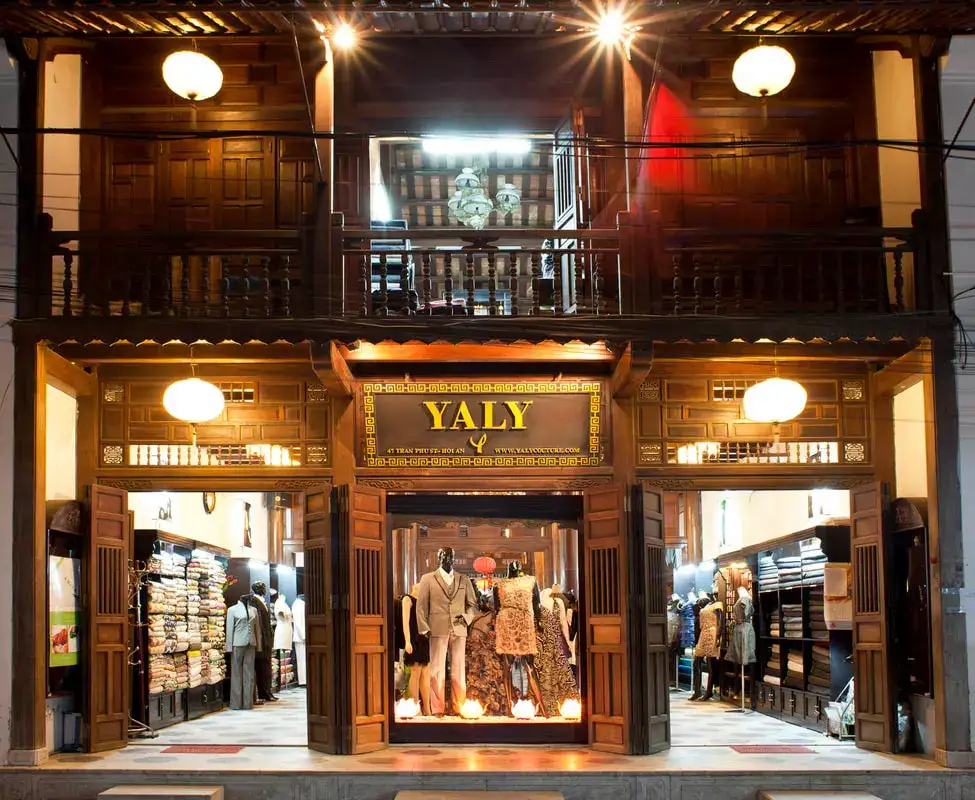
- Address: 47 Nguyen Thai Hoc Street (flagship); additional branches on Tran Phu and Le Loi.
- Price level: Luxury. Suits $150–400, dresses $80–200, shirts $30–60.
BeBe Tailor
A consistent favorite among English-speaking travelers, sitting in the sweet spot between value and quality. The shop is known for attentive service, staff remember repeat clients, free hotel pickup is included within the Old Town, and standard orders come together in 24 hours. Specialty is men’s suits and women’s blazers; less strong on formal eveningwear than Yaly.
- Address: 11 Tran Phu Street, Old Town.
- Price level: Mid-range. Suits $120–300, dresses $60–150, shirts $22–45.
A Dong Silk
If your budget is tighter or you want a custom piece without committing to Yaly prices, A Dong Silk delivers solid quality at the lower end of the spectrum. The specialty is silk dresses and traditional ao dai, both made from the shop’s own fabric inventory. Turnaround 24–36 hours.
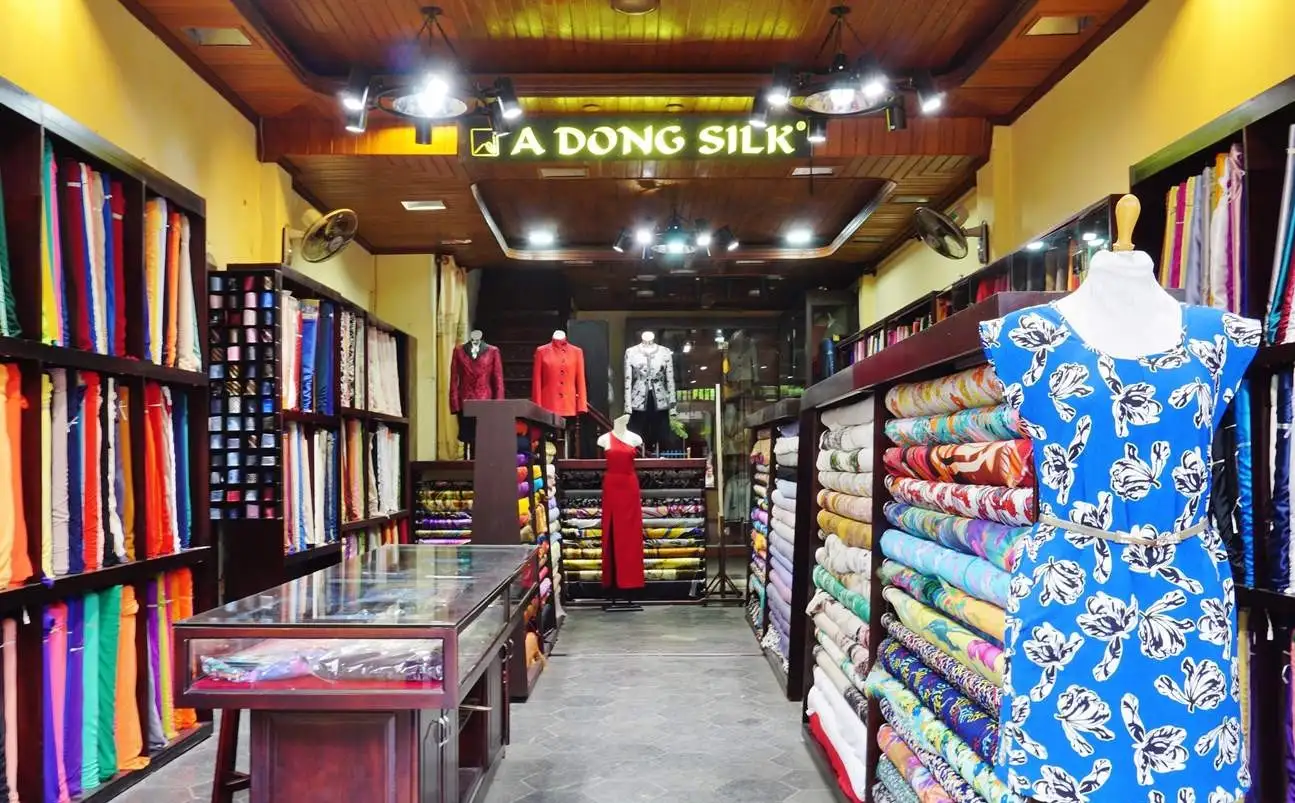
- Address: 40 Le Loi Street, Old Town.
- Price level: Budget-mid. Suits $80–200, dresses and ao dai $40–120, shirts $18–35.
Kimmy Tailor
Long-standing favorite popular with both expats and tourists, sitting between BeBe and Yaly in price and quality. The shop is particularly strong on women’s formalwear and replicating designer pieces from photos, bring a screenshot of what you want and they’ll quote on the spot. Turnaround 24–48 hours.
- Address: 70 Nguyen Thi Minh Khai Street (flagship); branch on Tran Hung Dao.
- Price level: Mid-upper. Suits $130–320, dresses $70–180, replica designer pieces $80–250.
Best places to buy lanterns in Hoi An
Lanterns are everywhere in Hoi An, but quality and ethics vary wildly between vendors. The four spots below stand out for genuine silk-and-bamboo construction, fair pricing, or the chance to make one yourself.
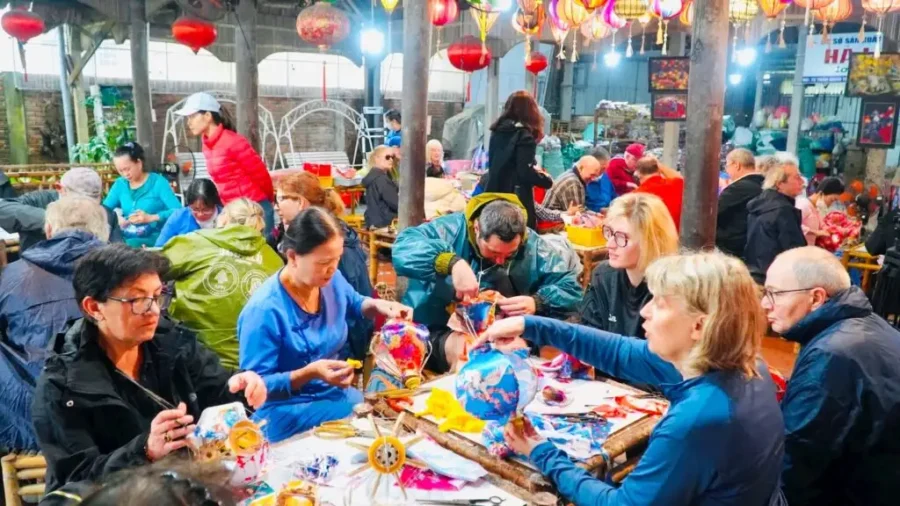
Ha Linh Lantern Workshop
A family-run workshop near the Hoai River, producing real bamboo-and-silk lanterns using traditional methods. You can drop in to buy a finished piece or join their 2-hour workshop, which walks you through bending the bamboo frame, stretching and gluing the silk, and finishing with tassels. You leave with your own ~30 cm lantern and a working understanding of how the craft works.
- Address: Cam Pho ward, near the Hoai River (a short walk west of the Japanese Covered Bridge).
- Price level: Mid. Finished lanterns $5–25, workshop class $15–20/person.
Lifestart Foundation Shop
A social enterprise selling lanterns and handcrafted goods made by local artisans with disabilities or from disadvantaged backgrounds. Prices run slightly higher than market rates, but 100% of profits fund skills training programs for the makers. Quality is consistently above average, and the storefront also stocks embroidered bags, jewelry, and ceramics from the same network.
- Address: 77 Phan Chu Trinh Street, Old Town.
- Price level: Mid-upper. Lanterns $5–25, embroidered bags $10–35, jewelry $8–40.
Lantern Lady (Co Duc)
Run by a local artisan known to long-time visitors as “Co Duc,” this small open-front shop along the riverfront produces some of the most colorful lanterns in town and offers on-the-spot custom orders, bring a color request and she’ll often have it ready by the next morning.
- Address: Nguyen Phuc Chu Street, riverside in An Hoi (near the Night Market).
- Price level: Budget-mid. Finished lanterns $4–20, custom orders $10–30.
Hoi An Handicraft Workshop
A larger workshop that combines lantern-making with traditional music performances throughout the day. The lanterns themselves are mid-tier in quality, but it’s an excellent one-stop visit if you want to see lantern construction, embroidery, mat weaving, and pottery shaping in a single courtyard. Free entry; performances roughly every 45 minutes.
- Address: 9 Nguyen Thai Hoc Street, Old Town. Open 8:00 AM – 6:00 PM.
- Price level: Mid. Lanterns $4–18, embroidered souvenirs $5–30.
Best leather shops in Hoi An
For custom leather goods that hold up beyond the trip home, the four shops below consistently deliver genuine quality at fair prices, covering everything from custom shoes to bags, belts, and small accessories.
Friendly Shoes
Custom leather shoes made to measure, with 24–48 hour turnaround. You choose the style (brogues, loafers, boots, sandals, even custom designs from photos), the leather type (cowhide, buffalo, or lambskin), and the color. The shop takes detailed foot measurements and produces a single pair specifically for you, no inventory of pre-made shoes here.
- Address: 18 Tran Phu Street, Old Town.
- Price level: Mid. Custom shoes $40–100, sandals $25–55.
Real Leather Hoi An
The safe choice for bags, belts, and wallets, they sell genuine leather only, with a 1-year stitching warranty on bags and clear authenticity guarantees in writing. Construction quality is closer to mid-range Italian leather goods than the typical tourist-market output.
- Address: 102 Tran Hung Dao Street, just outside the Old Town pedestrian zone.
- Price level: Mid-upper. Wallets $20–40, bags $60–180, belts $15–35.
Mr Xe Tailor & Leather
A combined tailor-and-leather shop that’s especially good for matching custom leather bags to commissioned outfits, handy if you’re already ordering a suit elsewhere and want a coordinated briefcase or handbag. The shop also resoles and repairs leather goods, which is rare in Hoi An.
- Address: 71 Tran Hung Dao Street, Old Town edge.
- Price level: Mid. Bags $50–160, custom belts $15–30, repairs $5–20.
Hoi An Leather
A larger workshop with a visible production area where artisans cut and stitch in front of customers, useful if you want to verify the leather is genuine before committing. Turnaround on custom orders typically 48 hours.
- Address: Le Loi Street, Old Town (leather quarter).
- Price level: Mid. Wallets $18–35, bags $55–170, custom shoes $45–95.
Best art & craft galleries in Hoi An
Hoi An’s gallery scene punches above its weight for a town this size. The four destinations below cover photography, fair-trade crafts, traditional embroidery, and contemporary Vietnamese art, and together they make for an excellent half-day walk along Nguyen Thai Hoc Street.


Reaching Out Arts & Crafts
A fair-trade social enterprise employing artisans with disabilities, primarily deaf and physically disabled craftspeople who make ceramics, silk accessories, jewelry, and handmade cards. The attached Reaching Out Tea House is staffed entirely by deaf employees; you order by placing wooden communication blocks in a wooden tray, which makes the experience quiet, contemplative, and unexpectedly moving.
- Address: 103 Nguyen Thai Hoc Street, Old Town. Open 8:30 AM – 9:00 PM.
- Price level: Mid. Ceramics $8–60, jewelry $5–40, handmade cards $2–6.
Couleurs d’Asie Gallery
The gallery and project space of French photographer Réhahn, who has spent more than a decade photographing portraits of Vietnam’s 54 officially recognized ethnic minorities. The adjoining Precious Heritage Museum (free with gallery visit) displays the actual traditional costumes from each minority group alongside the corresponding portraits.
- Address: 7 Nguyen Hue Street, Old Town. Open 8:00 AM – 8:00 PM.
- Price level: Upper. Signed prints $50–500 depending on size and edition.
XQ Hand Embroidery
A working embroidery workshop and gallery where you can watch artisans hand-stitch silk landscapes and portraits in front of you. This is one of the few places in Hoi An that consistently stocks double-sided embroidery (visible and identical from both sides), the rare technique that makes for true collector pieces.
- Address: 41 Le Loi Street, Old Town. Open 8:00 AM – 9:00 PM.
- Price level: Mid-upper. Small embroideries $30–80, large gallery pieces $200–1,500.
March Gallery
A contemporary art gallery showcasing emerging Vietnamese painters and sculptors, with a rotating exhibition program. The staff are happy to explain each artist’s background, useful if you’re buying art seriously rather than as a souvenir.
- Address: Nguyen Thai Hoc Street, Old Town. Open 9:00 AM – 8:00 PM.
- Price level: Wide. Smaller works $40–200, mid-career artists $200–800, established names $800–2,000+.
Read more: Hoi An jewelry guide: Best shops, prices & What to buy
Shopping tips for Hoi An
A few practical rules will save you money, hassle, and the occasional disappointment.
- Bargaining etiquette matters more than most travelers realize. At markets and small souvenir stalls, vendors expect negotiation and quote starting prices accordingly — counter at 50% of the first offer and settle around 30% off. In tailor shops, galleries, and established boutiques, prices are fixed and haggling is considered rude. A useful tell: if the shop has a printed price list or sealed price tags, prices are firm.
- Cash versus card trips up many travelers. Small shops and all market vendors accept only Vietnamese dong cash. ATMs in the Old Town typically cap withdrawals at around 5 million VND (~$200) per transaction. Larger tailors and galleries take Visa and Mastercard, sometimes with a 3% surcharge. As of May 2026, 1 USD trades for roughly 25,400 VND; tourist shops quote in USD, markets quote in VND.
- Timing your shopping affects both atmosphere and pricing. Mornings between 8:00 and 11:00 AM are best for the Central Market, when produce is fresh and crowds are thin. Evenings from 6:00 to 10:00 PM are when the Night Market and lantern-lit Old Town are at their best. Avoid the 12:00–3:00 PM stretch in summer, many shops close for lunch, and temperatures peak at 35–38°C.
- Shipping home is worth considering for heavy or bulky items. Reputable tailors and galleries arrange international shipping via DHL or FedEx for $30–80, with delivery in 5–10 business days. Always insist on a tracking number and add insurance for anything over $200.
- Driver commissions are the single biggest source of inflated prices in Hoi An. If a taxi or motorbike driver insists on taking you to a “special” shop the hotel didn’t recommend, that driver is earning a 20–30% commission, which you’ll pay through marked-up prices. Walk away.
Shopping map of Hoi An
The geography is forgiving, almost everything on this list sits within a 1 km radius of the Japanese Covered Bridge, the unofficial center of the Old Town. The Central Market is 350 meters east; the Night Market 400 meters south across the An Hoi Bridge; the Tran Phu tailors and Nguyen Thai Hoc galleries run east for 100–600 meters. You can cover all 27 shops on foot in 2–3 days without rushing.
One practical note: the Old Town is closed to motorized traffic during peak hours (9:00–11:00 AM and 3:00–9:30 PM), so plan to walk or cycle within the core. Wear comfortable shoes, the streets are paved with uneven stone tiles that punish flip-flops.
Frequently asked questions
After years of helping friends plan Hoi An trips, the same handful of questions come up again and again. The answers below cover the practical details most travelers want confirmed before they go.

What is Hoi An best known for shopping? Hoi An is most famous for custom-tailored clothing (suits, dresses, ao dai) made in 24–48 hours, followed by silk lanterns, leather goods, and silk fabric. Over 500 tailors and dozens of artisan workshops operate within walking distance in the Old Town.
Is shopping in Hoi An cheap? Yes, but quality varies. A tailored wool suit costs $80–250 in Hoi An versus $800+ in Western countries. Silk scarves run $5–25, leather wallets $20–40, silk lanterns $3–15. Bargaining is expected at markets but not at established shops.
How long does tailoring take in Hoi An? Most tailors complete a suit or dress in 24–48 hours with 2–3 fittings. Place your order on the first day of your stay and allow at least 3 days for adjustments. Rush jobs are possible but reduce fit quality.
Can you bargain in Hoi An? Yes, at markets (Central Market, Night Market, Ba Le) and small souvenir stalls, start at 50% of the asking price and settle around 30% off. Do not bargain at established tailor shops, galleries, or boutiques where prices are fixed.
What is the best night market in Hoi An? The Hoi An Night Market on Nguyen Hoang Street (in An Hoi, across the bridge from the Old Town) is the best, open 5:00 PM – 11:00 PM. Famous for silk lanterns, handicrafts, jewelry, and street food, set against a backdrop of glowing lanterns and the Thu Bon River.
Is Hoi An tax-free for tourists? No, Vietnam does not currently offer a tourist tax refund scheme like Singapore or Thailand. However, VAT (10%) is typically included in advertised prices, and the overall cost remains far lower than duty-free shopping in most countries.
How much money should I budget for shopping in Hoi An? A typical traveler spends $200–500 on shopping over a 3-day visit. Big-ticket items: tailored suit ($120–300), leather bag ($60–150), 2–3 silk lanterns ($15–30). Add $50–100 for smaller souvenirs and gifts.
Can tailors ship clothes home? Yes. Most established tailors offer international shipping via DHL or FedEx for $30–80, delivery in 5–10 business days. Insurance is usually included for items over $200.
Hoi An’s best stores are spread across the Old Town, Thanh Ha village, and An Bang Beach, not all walkable in a day. Bliss Hoi An Beach Resort & Wellness‘s private transportation provides English-speaking drivers and comfortable cars so you can shop on your schedule, with no commission detours.
The best places to shop in Hoi An reward travelers who slow down. Don’t try to do everything in one rushed afternoon, give yourself 2–3 days to compare tailors, visit workshops, and discover the smaller boutiques tucked down side streets. Order custom pieces early, leave room in your luggage (serious shoppers should plan for 5–7 kg of extra space), and don’t be afraid to walk away from anything that doesn’t feel right.

Related Posts
Cau Bong Festival in Hoi An: Inside Tra Que’s Agricultural New Year Tradition
Top 8 things to consider for a wedding in Hoi An with 20 guests

Best Beach Resort in Hoi An: Top 7 things to avoid when choosing to stay
4 Hoi An wedding packages compared: Which one is right for you?

5 mistakes to avoid when self-driving from Hoi An to Quang Ngai in a day