

Hoi An Clam Porridge: Where, When & How to Eat It Like a Local
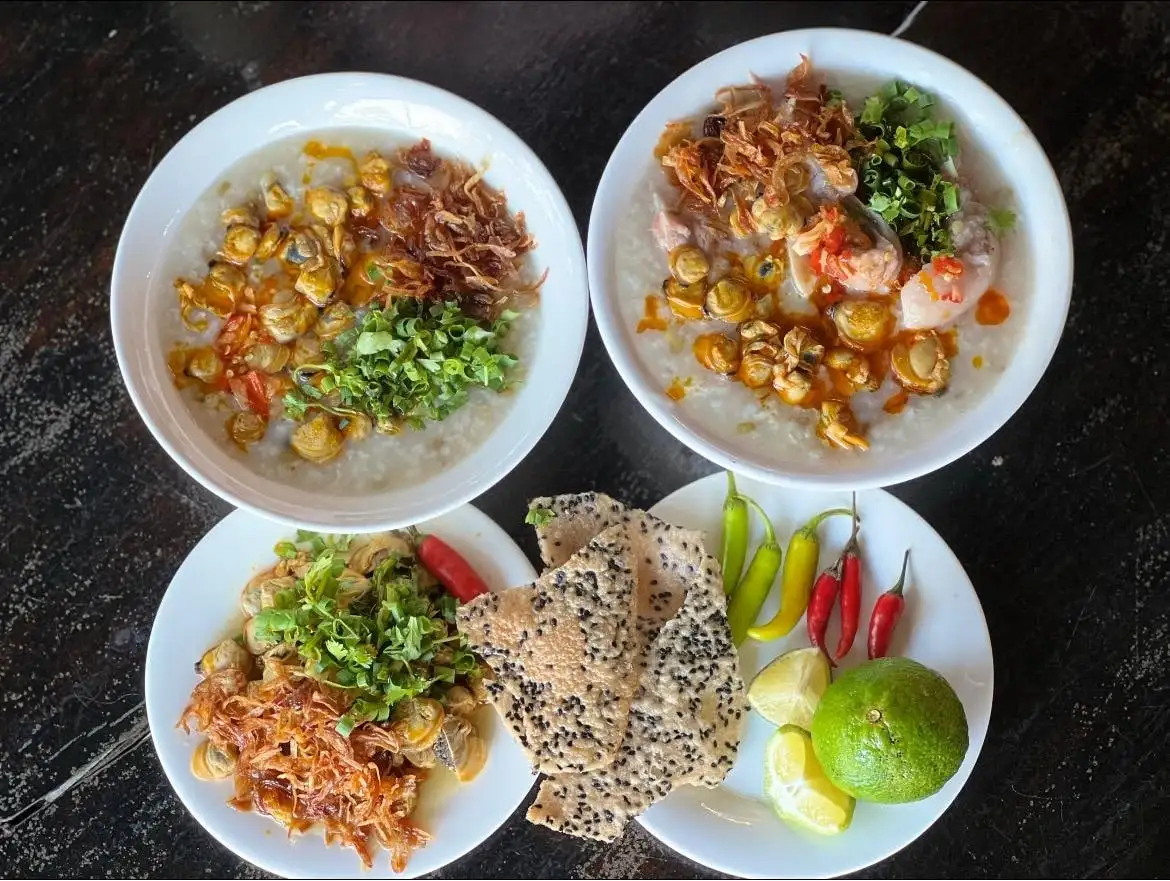
Hoi An clam porridge, known locally as chao ngheu, is a warm, savory rice porridge cooked with fresh river clams, mung beans, and crispy fried shallots, sold almost exclusively in the late afternoon along the coast near Hoi An. It is cheap, it is filling, and most first-time visitors never even hear about it because it rarely shows up on restaurant menus in the Ancient Town. If you only eat cao lau and banh mi on this trip, you are missing the bowl that locals themselves queue up for after a day at the beach.
What Is Hoi An Clam Porridge and Why Travelers Can’t Stop Talking About It
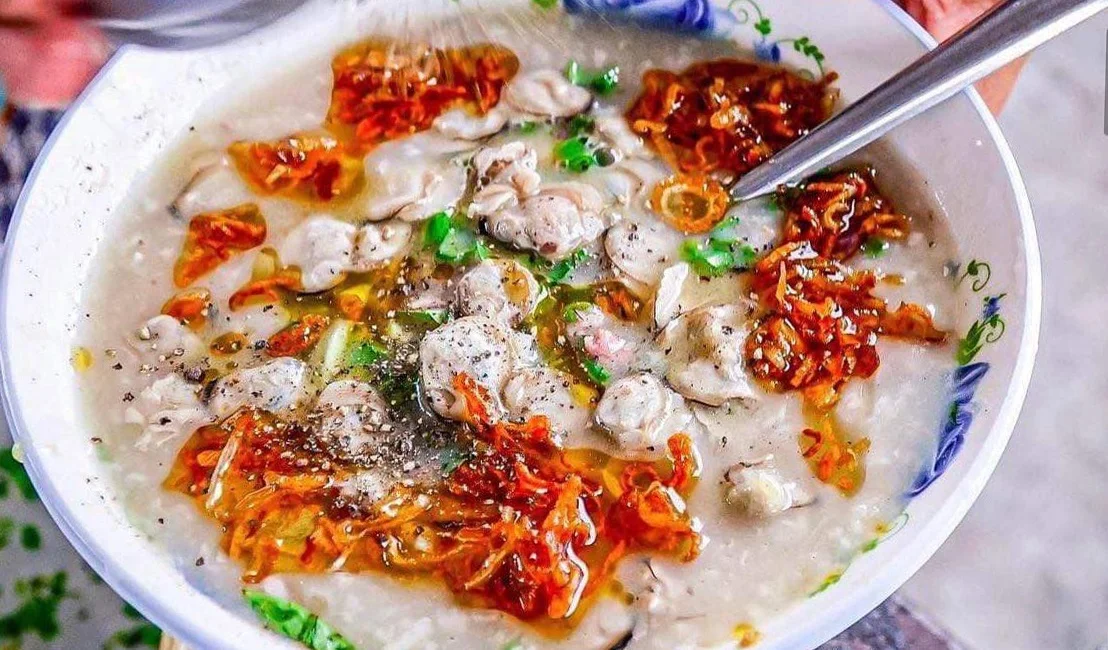
Clam porridge is one of the few Hoi An dishes that was never designed for tourists, which is exactly why it has become a small obsession among food-curious travelers. The base is plain rice porridge simmered with a little mung bean, giving it a slightly thicker, silkier texture than a typical Asian congee. On top goes the real star: clam meat that has been quickly stir-fried in annatto oil until it turns a warm orange-red, then finished with crispy fried shallots and chopped green onion.
What makes this dish stand out from the usual souvenir-shop food guides is the story behind it. Most stalls are run by a single vendor, often an older woman, who has been cooking the same recipe from a small cart or plastic-stool stand for decades. There is no real branding and rarely an English menu, so most visitors only find these places through a name passed on by a local, a driver, or a guide like this one, rather than by walking past a storefront sign.
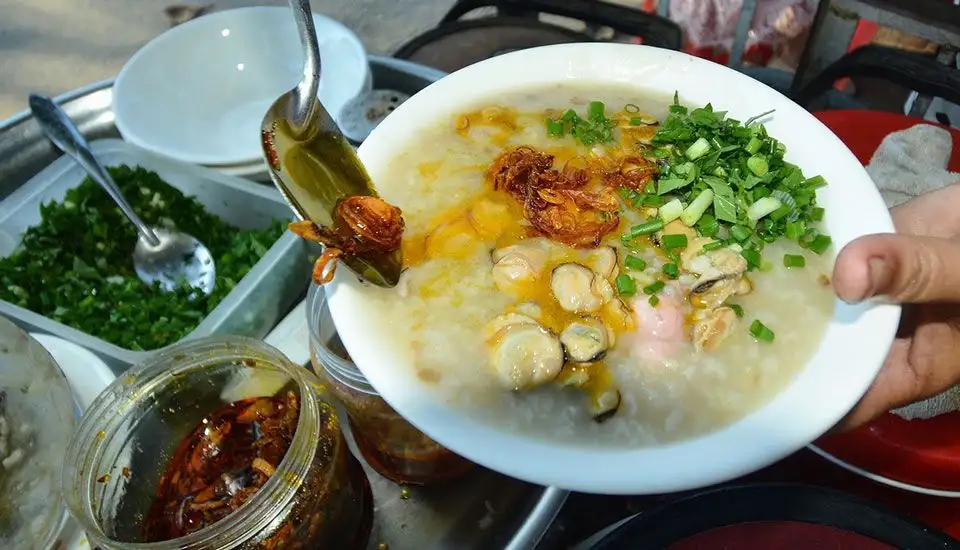
The flavor itself surprises a lot of first-timers. It is light rather than heavy, slightly sweet from the clams and shallots, and comforting in a way that feels closer to a home-cooked meal than restaurant food. Because portions are modest and prices are low, many travelers treat it less as dinner and more as an early-evening snack before heading out for the rest of the night in Hoi An.
Where to Eat the Best Clam Porridge in Hoi An
Almost every serious clam porridge stall in Hoi An is clustered within a few hundred meters of each other along Hai Ba Trung Street, on the road leading into An Bang Beach, so it is realistic to compare two or three in a single visit. Below are four vendors we verified on Google Maps, complete with current ratings, opening hours, and phone numbers, so you can pin the exact location before you go instead of wandering around asking strangers.
| Stall | Address | Hours | Price | Google Maps Rating |
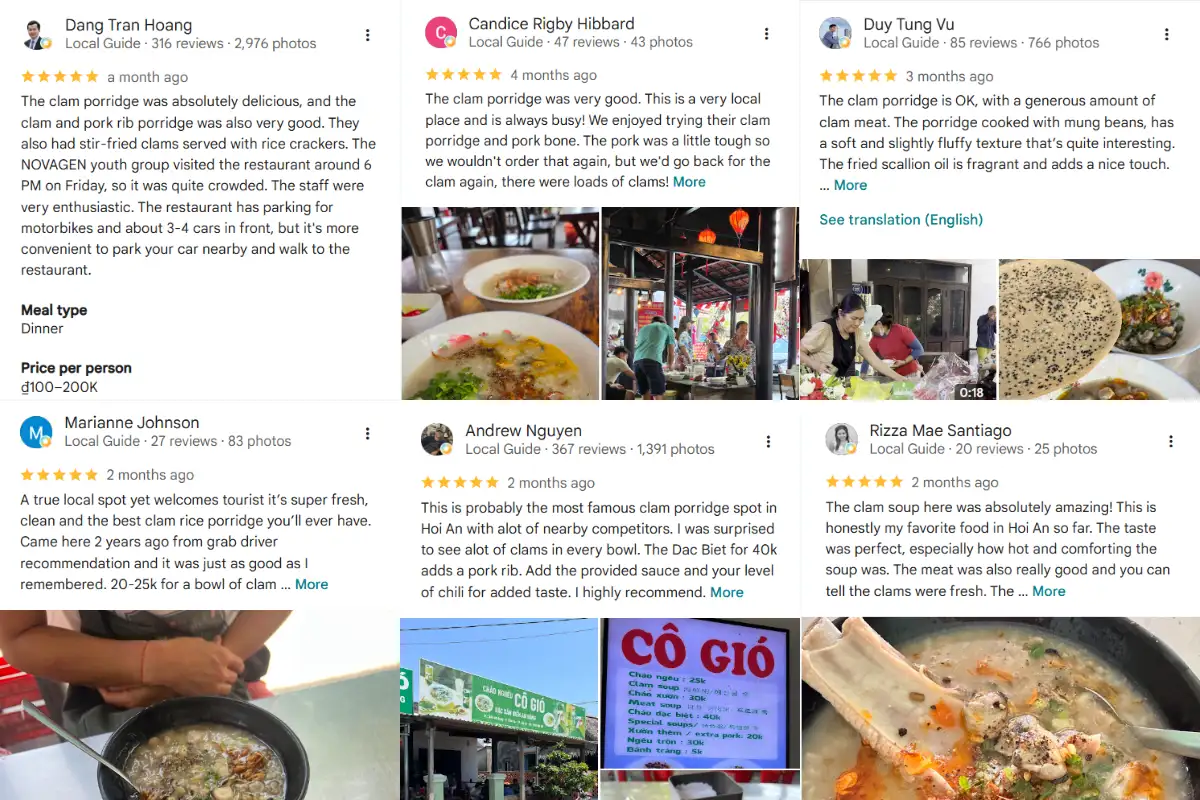
| Chao ngheu Co Gio | Hai Ba Trung St, An Bang Beach, Hoi An Tay, Da Nang | 8:00 AM – 6:30 PM daily | ~20,000–40,000 VND | 4.6★ (1,500+ reviews) |
| Chao ngheu Co Ban | Hai Ba Trung St, An Bang Beach, Hoi An Tay, Da Nang (next door to Co Gio) | 11:00 AM – 8:00 PM daily | ~20,000–35,000 VND | 4.9★ (45+ reviews) |
| Chao ngheu Sau Bieu | Hai Ba Trung St, Hoi An Tay, Da Nang | 6:00 AM – 8:00 PM daily | ~20,000–30,000 VND | 4.8★ (260+ reviews) |
| Chao Co Tam 8 | An Bang, Hoi An Tay, Da Nang | 11:00 AM – 7:00 PM daily | ~20,000–25,000 VND | 4.9★ (75+ reviews) |
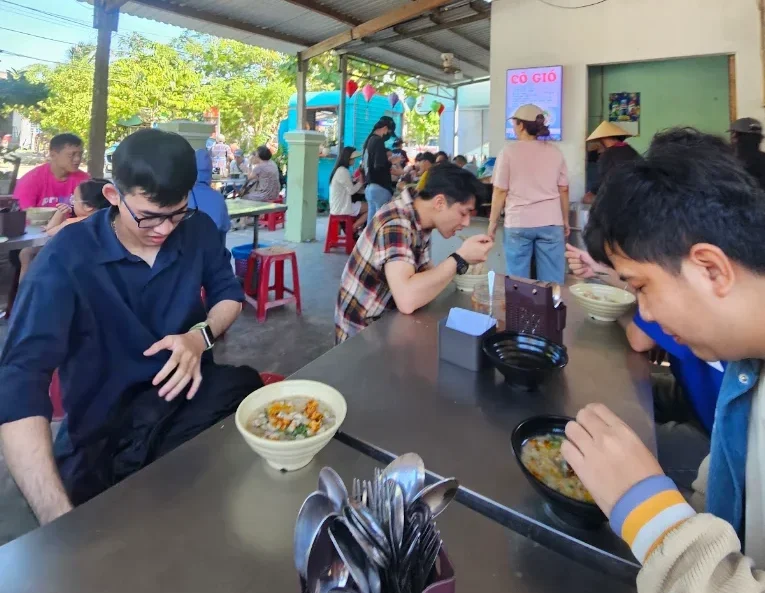
Co Gio is the most reviewed and best known of the four, and it shows: foreign visitors on Google routinely describe it as the most famous clam porridge spot in Hoi An, with long shared tables, a steady lunchtime crowd, and bowls loaded generously with clams. Its popularity is also its one downside, since it fills up fast and the wait can stretch out around midday.
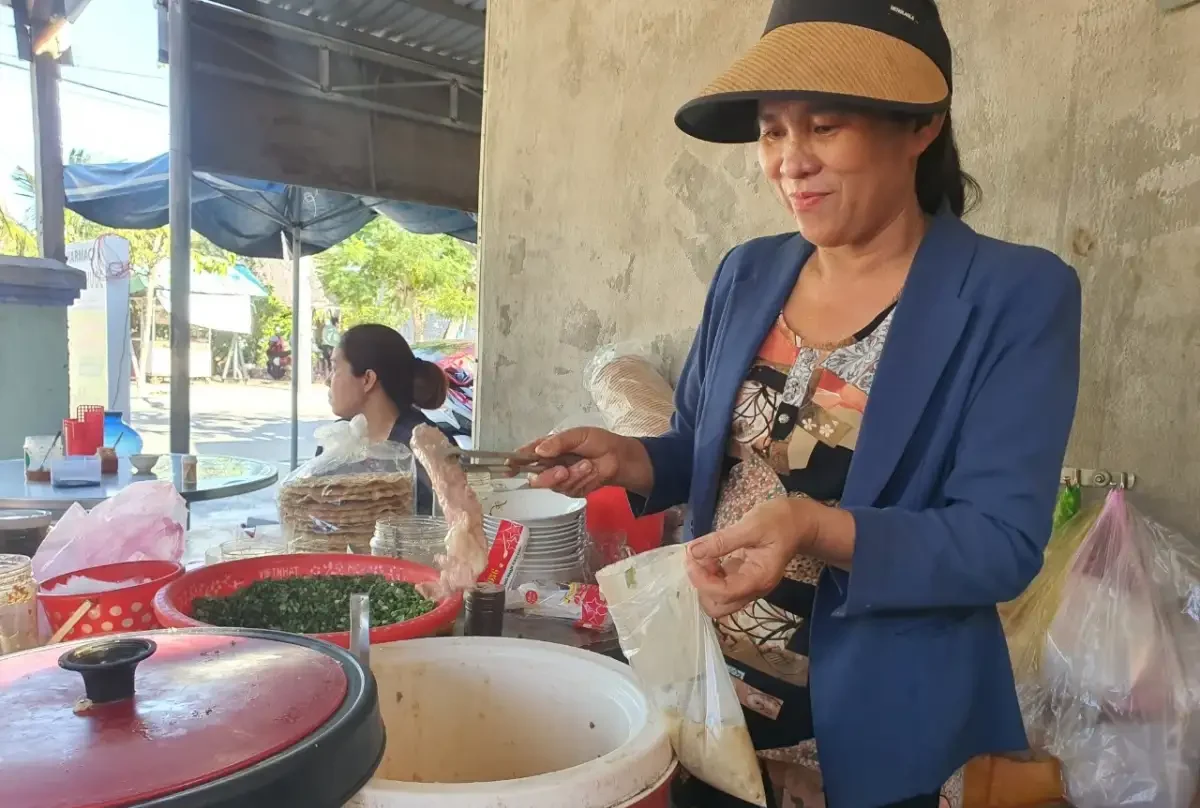
Co Ban sits right next door and works well as a backup, or honestly as a first choice. Several English-language Google reviewers mention trying it specifically because Co Gio was full, then coming away just as impressed, with one reviewer calling the space calmer and less crowded while the porridge itself was still excellent. Sau Bieu and Co Tam 8 are quieter still, both keeping ratings above 4.8 stars, and are good picks if you would rather skip the queue entirely and eat somewhere more relaxed.
A few practical notes apply across all four. None of them keep a large stock once the daily batch runs out, so arriving before 5:00–6:00 PM meaningfully improves your odds, especially on weekends. Payment is cash only in Vietnamese dong at every stall, and the phone numbers listed above are useful for a Grab driver or hotel front desk to confirm same-day opening hours before you set off. For a broader food crawl rather than a single dish, it helps to plan clam porridge alongside other Hoi An classics. Our guide to where to eat cao lau in Hoi An covers the noodle dish most visitors try first, and our roundup of the best places to eat in Hoi An is a useful reference if you want to line up several stops in one evening walk.
Best Time to Go and the One Mistake Most Tourists Make
Clam porridge in Hoi An is an afternoon-into-evening dish, not a breakfast or lunch item, and this single detail trips up more travelers than anything else. Most stalls do not open until roughly 3:00–4:00 PM and are frequently sold out by 7:00 or 8:00 PM, especially on weekends when both locals and visitors show up in bigger numbers. Arriving at noon expecting a bowl, as many first-time visitors do, is the most common reason people give up and assume the dish is a myth.
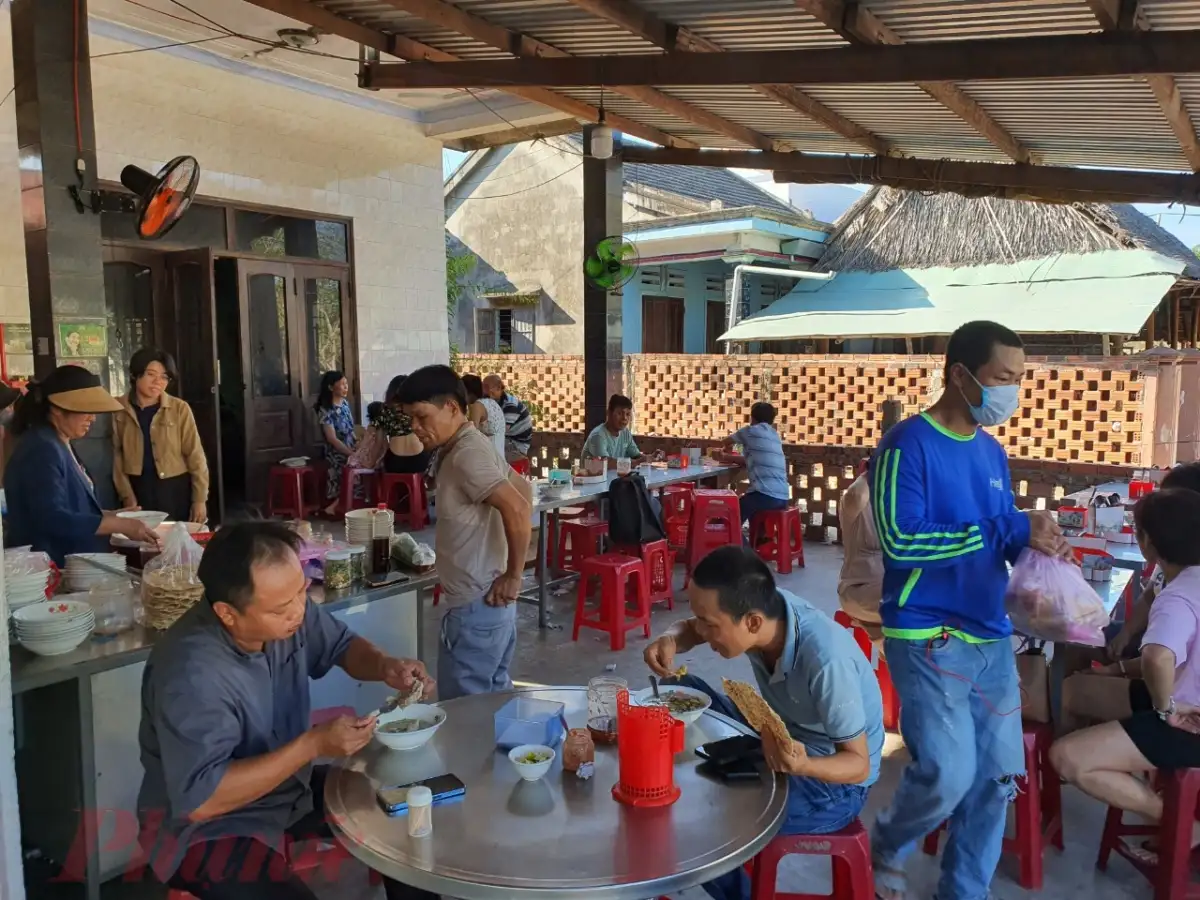
The second mistake is treating it like a sit-down restaurant meal that can be planned around a fixed schedule. These are small, independent vendors with no reservation system, no delivery app listing, and no guarantee they will be open on any given day, particularly during bad weather or the off-season. Building in a flexible plan B, such as another beachfront snack or an early dinner reservation elsewhere, saves the evening if your first stall choice is closed.
Timing also affects the experience itself, not just availability. Locals tend to eat clam porridge as the sun is going down, often after a swim or a walk along the beach, and the dish genuinely tastes better in that relaxed, unhurried setting than it would as a rushed midday stop. If your schedule allows it, treat this as a slow, early-evening ritual rather than something to squeeze between two other activities.
What’s Actually in the Bowl: Ingredients, Flavor, and Spice Level
The base of Hoi An clam porridge is simple: rice, a portion of mung beans, and a broth built from both pork bones and the clam cooking liquid, which is what gives the porridge its subtle savory depth. Vendors soak live clams in fresh water for several hours before cooking, allowing the clams to release sand and grit so the final dish is clean and gritless. The clams are then briefly boiled, the meat is removed by hand, and that meat is quickly stir-fried in annatto oil with garlic and a touch of seasoning.
Texture-wise, expect a porridge that is thicker than plain congee but still spoonable, topped with tender, slightly chewy clam meat and a generous scattering of crispy fried shallots. Black pepper is the main seasoning note rather than chili, so the base dish is mild rather than spicy, though most stalls keep a small dish of chili sauce or fresh chili on the table for anyone who wants extra heat. Fresh herbs and a squeeze of lime are sometimes added on the side, giving the dish a brightness that balances the richness of the fried shallots.
For travelers used to heavier, richer congee styles from other parts of Asia, this version reads as noticeably lighter and less oily, closer to a broth-forward soup than a heavy rice dish. It pairs naturally with a side of grilled rice crackers or a simple iced tea, which many stalls also sell. If you enjoy comparing regional variations of Vietnamese comfort food, this dish sits nicely alongside the wider culinary picture covered in our guide to food in Hoi An.
Is It Safe to Eat? Hygiene, Allergies, and Vegetarian Options
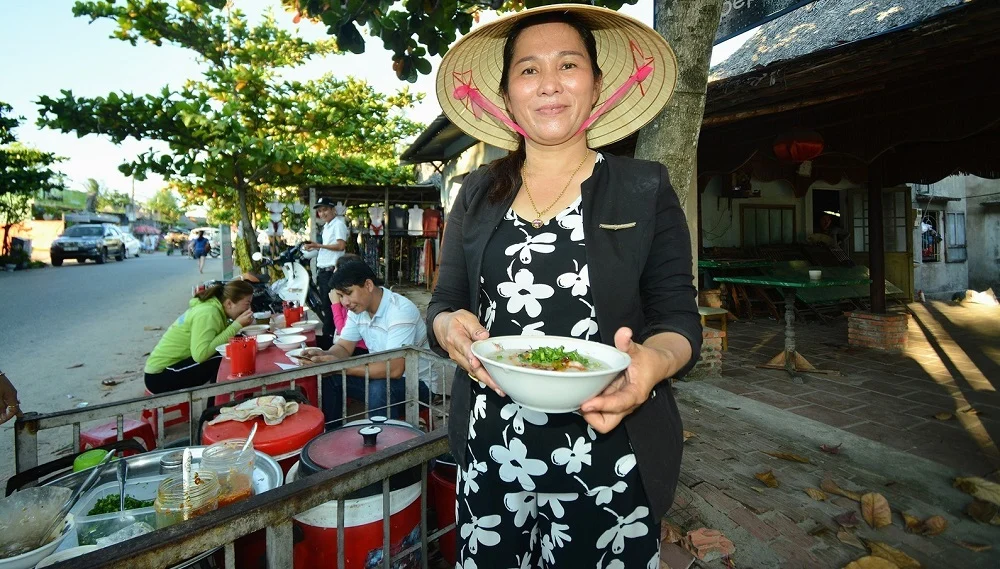
Street-side clam porridge is generally considered safe for most travelers, provided you apply the same common-sense rules used for any street food in Vietnam. Choose stalls that are visibly busy with a steady turnover of customers, since high demand means ingredients are fresher and clams are not sitting around for long. Watching the vendor cook the clams and porridge to order, rather than serving from a pot that has been standing for hours, is a simple visual check worth doing before you sit down.
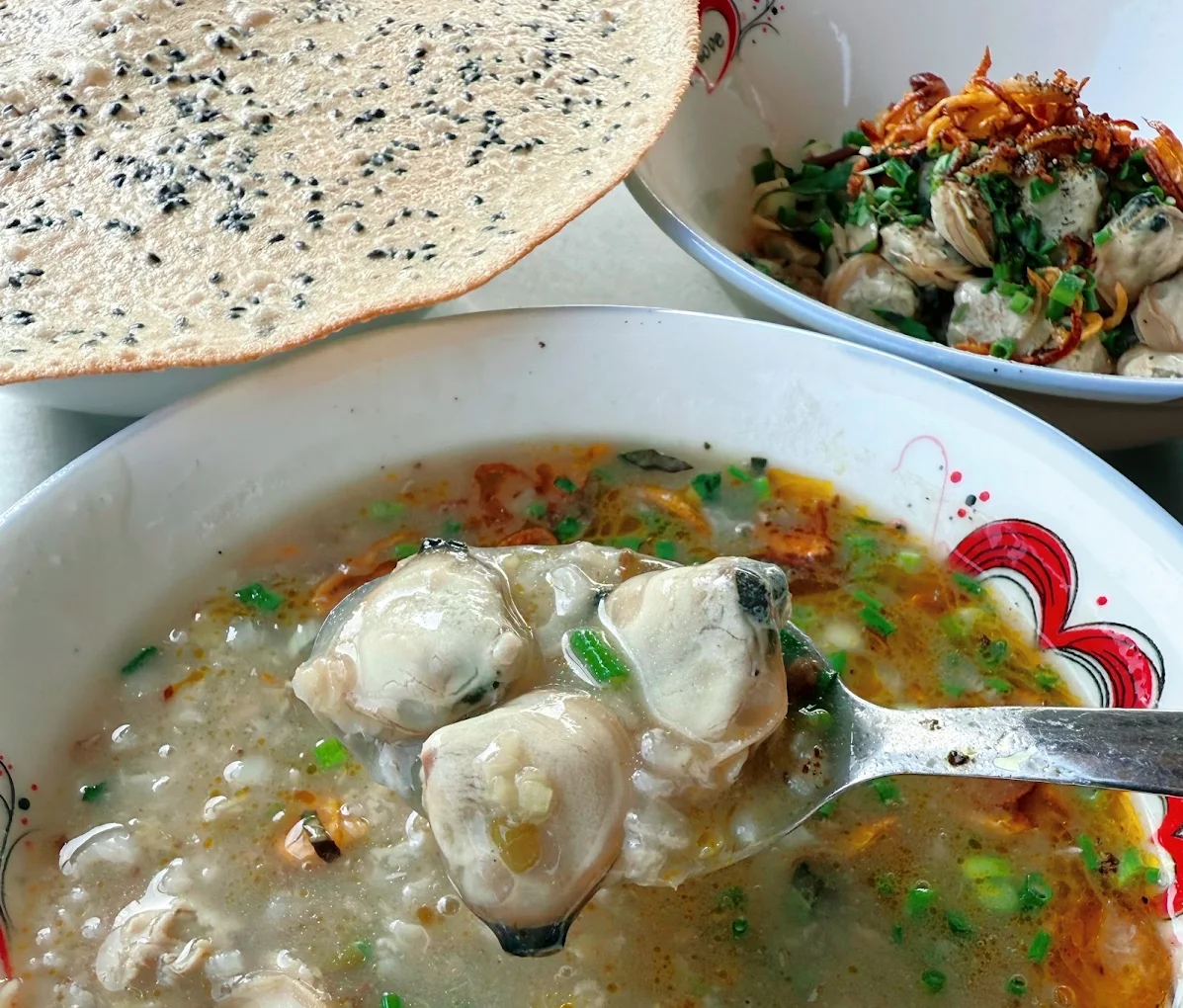
Shellfish allergies are the most important consideration here, and travelers with a known shellfish allergy should avoid this dish entirely rather than risk cross-contact, since clams are the entire point of the recipe. Anyone with a sensitive stomach or who is newly arrived in Vietnam might also consider trying clam porridge a few days into the trip rather than on day one, simply to let the body adjust to new food and water sources first. Bottled water and basic hygiene habits, like avoiding ice of uncertain origin at unfamiliar stalls, apply here as they would anywhere else in the region.
Vegetarian and vegan travelers unfortunately have no real substitute at these specific stalls, since the dish is built entirely around clam meat and pork bone broth. If you are traveling with a mixed group where some people cannot eat shellfish or meat, it is worth pairing this stop with a wider street food outing rather than making it the single focus of the evening, so everyone has something to eat. Our overview of Hoi An street food lists several vegetarian-friendly dishes that work well alongside a clam porridge stop.
A Short History: Where chao ngheu Comes From
Clam porridge is part of a much older tradition of river-and-coastal home cooking in Central Vietnam, built around whatever fresh, affordable protein local fishing communities could gather that day. Long before Hoi An became a tourist destination, families living along the Co Co and De Vong rivers near the town relied on clams as a cheap, plentiful source of protein, and rice porridge was the natural way to stretch a small amount of meat into a full, satisfying meal. The dish was never invented for restaurants; it grew out of home kitchens and market stalls.
Over time, a handful of vendors turned their family recipe into a small daily business, selling porridge from carts and roadside stools rather than opening formal restaurants. This is part of why the dish still feels so personal and hyper-local today: many of the best-known stalls are still run by the same families, using recipes passed down rather than standardized across a chain. It is a useful reminder that some of Hoi An’s most memorable food has nothing to do with the Ancient Town’s restaurant scene at all.
This kind of home-style, one-vendor-one-recipe food culture is common across Central Vietnam, and clam porridge is simply one of its most accessible examples for visitors. Understanding this background also explains why the dish can be inconsistent from stall to stall, and why locals tend to have strong, specific opinions about which vendor makes it “properly.” Asking a local for their personal recommendation will usually get you a much better answer than any generic list.
Clam Porridge vs Other Hoi An Specialties
Travelers with limited time often want to know how clam porridge stacks up against the dishes they have already heard of, like cao lau or Hoi An chicken rice. The table below is a quick reference for deciding what to prioritize based on your schedule, appetite, and dining style.
| Dish | Best Time to Eat | Typical Price (VND) | Where It’s Usually Served |
| Clam porridge (chao ngheu) | Late afternoon to evening | 15,000–25,000 | Street carts, beach stalls |
| Cao lau | Lunch or dinner | 30,000–50,000 | Old town restaurants, street stalls |
| Hoi An chicken rice | Lunch or dinner | 30,000–45,000 | Street stalls, small eateries |
| Banh mi | Any time of day | 15,000–30,000 | Street stalls, bakeries |
Cao lau and chicken rice are easy to find any time of day and appear on far more restaurant menus, which makes them a safer bet if your schedule is tight or unpredictable. Clam porridge, by contrast, rewards travelers who can be flexible with timing and are willing to seek out a specific vendor rather than walk into the nearest restaurant. If cao lau is already on your list, our dedicated guide on where to eat cao lau in Hoi An pairs well with this one for planning a two-dish evening.
Because clam porridge has such a narrow serving window, most travelers do best treating it as one stop within a broader food route rather than the entire plan for the night. Pairing an early clam porridge stop with a later dinner or a walk through the lantern-lit streets is the combination most returning visitors recommend.
FAQ Before You Go
A few short, practical answers cover most of what first-time visitors ask before heading out to try this dish.
What time should I go?
→ Aim for 4:00–6:00 PM to have the best chance of a fresh, unsold-out bowl.
How much does it cost?
→ Expect roughly 15,000–25,000 VND per bowl at street stalls, making it one of the cheapest proper meals in the area.
Is it spicy?
→ No, the base dish is mild; chili is added separately if you want extra heat.
Do I need cash?
→ Yes. Most street vendors do not accept cards or e-wallets, so bring small denomination Vietnamese dong.
Can I take a taxi or Grab there?
→ Yes, most beach-area stalls are reachable by taxi or the Grab app, though addresses are informal, so a rough location pin is more useful than a street number.
These are the same practical questions that come up across most of Hoi An’s street food scene, not just this one dish, so it is worth reading them once and applying them broadly during your trip.
Done Exploring? Unwind With Real Vietnamese Flavors at Bliss Hoi An

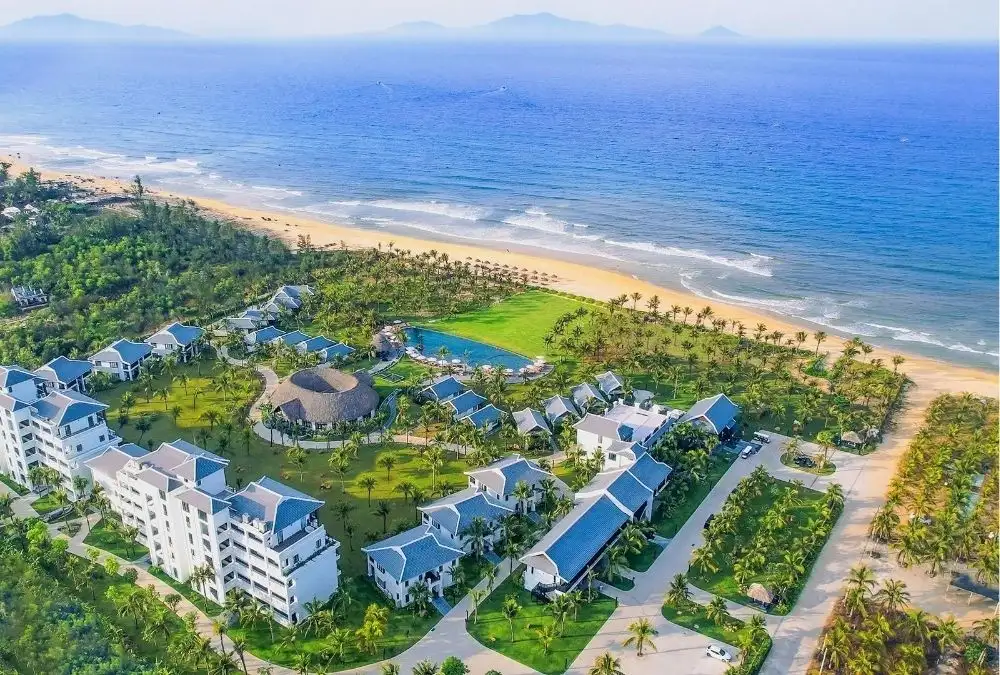
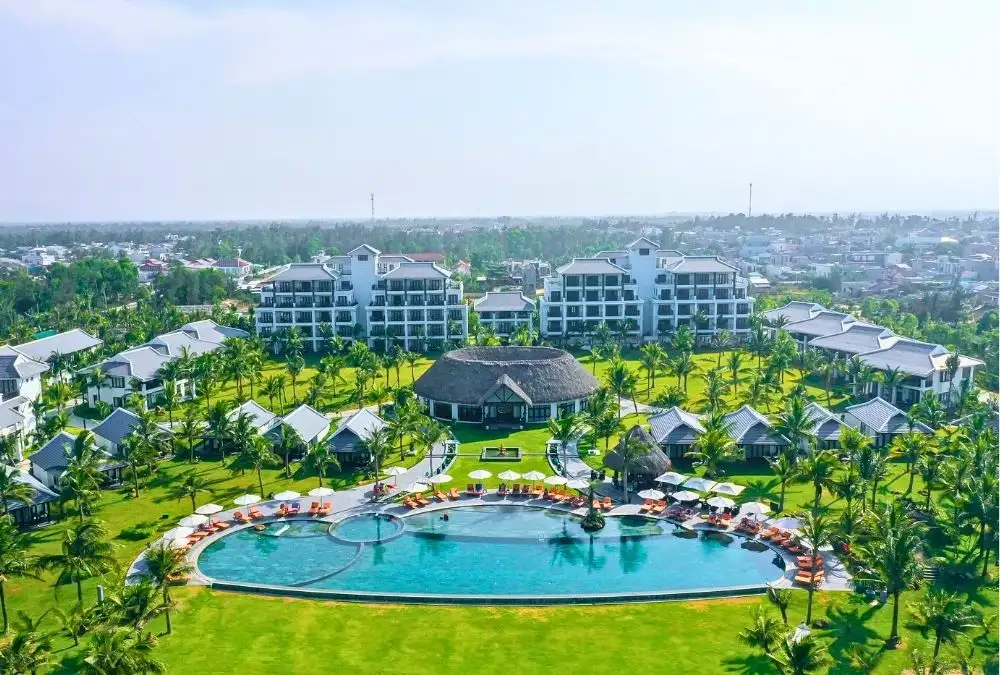
Chasing down a street cart at sunset is part of the fun, but it is also unpredictable, and not every evening will go to plan if a stall sells out early or the weather turns. That is exactly the moment a reliable, comfortable dinner option matters, and it is where Binh Minh Restaurant at Bliss Hoi An fits naturally into the day. The restaurant’s Indochine-style interior sits right on the beachfront, and its kitchen focuses on the same regional Central Vietnamese flavors your street food adventure was chasing, just served in a calmer, air-conditioned setting.
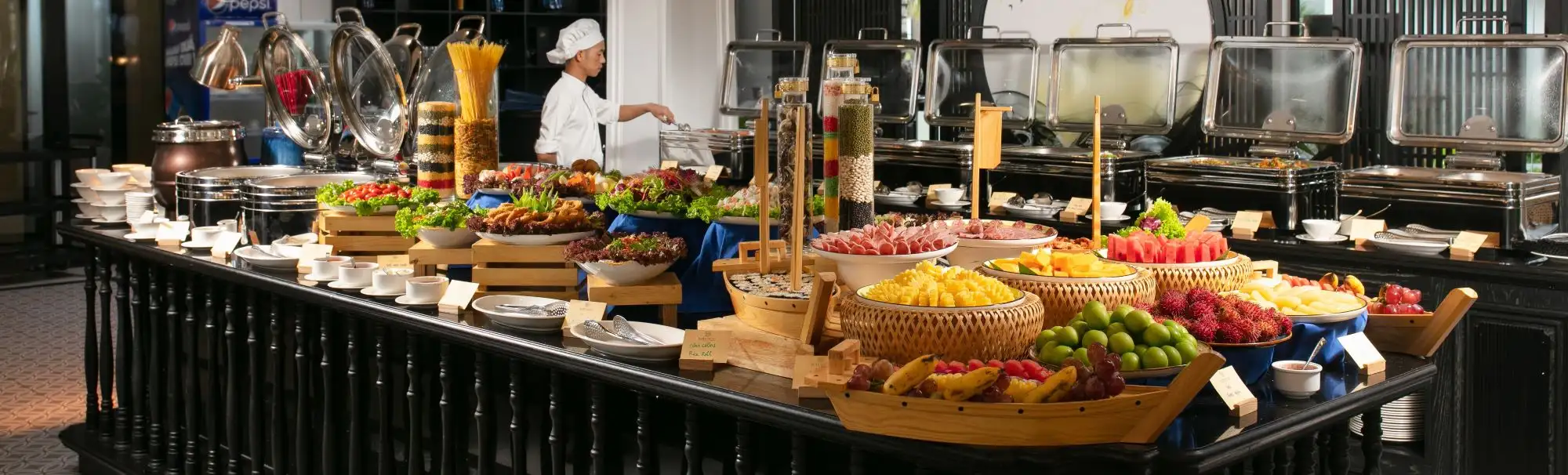
Guests who prefer the ease of one venue over hopping between stalls often lean on the resort’s buffet breakfast and themed BBQ buffet dinners, which showcase fresh local seafood alongside Asian and Western dishes in a single, relaxed sitting. It is a practical option for families or travelers who want variety without the guesswork of finding an open street stall at the right hour.
Several recent guest reviews on Google and Tripadvisor specifically call out the generous seafood buffet nights and the wide breakfast spread as highlights of a stay here, which lines up with what the on-site team has built the dining program around.
If your Hoi An trip is centered on food, it is worth building a full day or two around it rather than a single evening. Our broader roundup of best restaurants in Hoi An for every taste and budget is a good next stop for planning the rest of your meals, and pairing it with a stay at a beachfront resort like Bliss Hoi An means the comfortable, reliable dinner is always just a few steps from your room, whatever happens with the street food carts that day.

Related Posts
Private Tours from Hoi An Beach Resorts: Discover Central Vietnam from Bliss Hoi An
How much does a Hoi An wedding for 40 guests cost?
Is fine dining Hoi An really worth the price? What are travelers paying for?
Cau Bong Festival in Hoi An: Inside Tra Que’s Agricultural New Year Tradition

Top 8 things to consider for a wedding in Hoi An with 20 guests