


Hoi An to Mui Ne: 3 Routes Compared for Travel, Scenery and Adventure
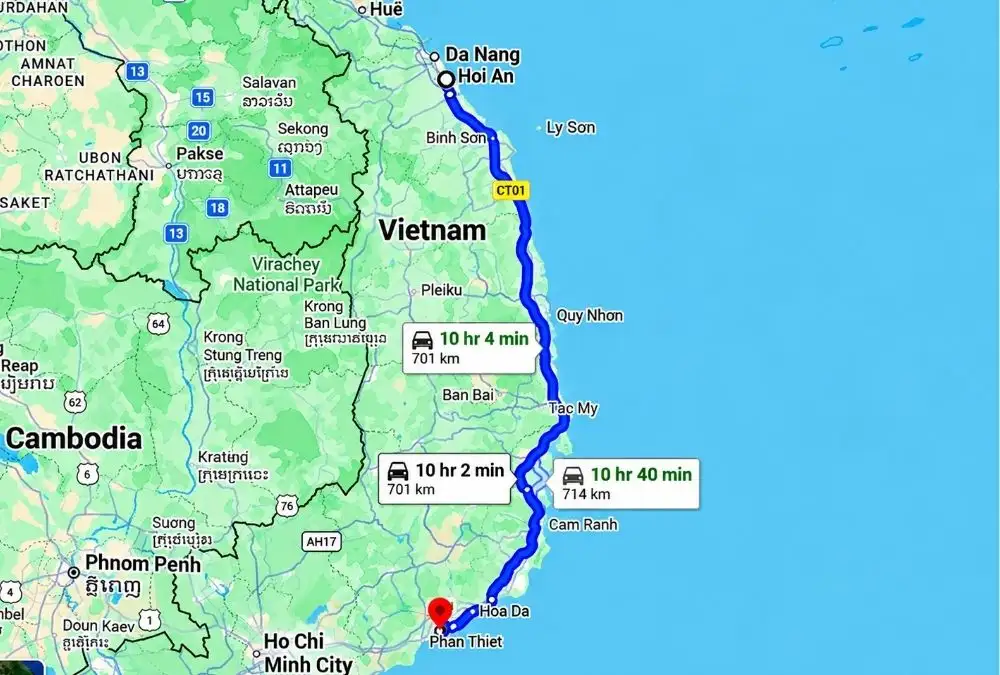
Hoi An to Mui Ne are about 701 km apart by road, and there is no direct train, bus or flight that does the job quickly. That distance is a problem for fast travellers, but it is a gift if you choose the right route. Each of the three options below changes what you will see, eat and do before you arrive on Mui Ne’s windy beaches.
Overview of 3 routes from Hoi An to Mui Ne
| Route | Main path | Transport | Suggested length |
| 1. Via Ho Chi Minh City | Hoi An, Da Nang, Ho Chi Minh City, Phan Thiet, Mui Ne | Flight, then coach, limousine or private car | 4 days, 3 nights |
| 2. Via Cam Ranh and Ninh Thuan | Hoi An, Cam Ranh, Phan Rang, Vinh Hy and Nui Chua, Mui Ne | Flight, then rented car, motorbike or coach | 5 days, 4 nights |
| 3. Via Da Lat | Hoi An, Da Lat, mountain pass to Phan Thiet, Mui Ne | Flight, then coach, limousine or private car | 4 days, 3 nights |
Note: Mui Ne now sits in Lam Dong province after the 2025 provincial merger, but most maps, drivers and signs still use the old Binh Thuan name (Source: Thu Vien Phat Luat).
Route 1: Fly to Ho Chi Minh City, then follow the coast to Mui Ne
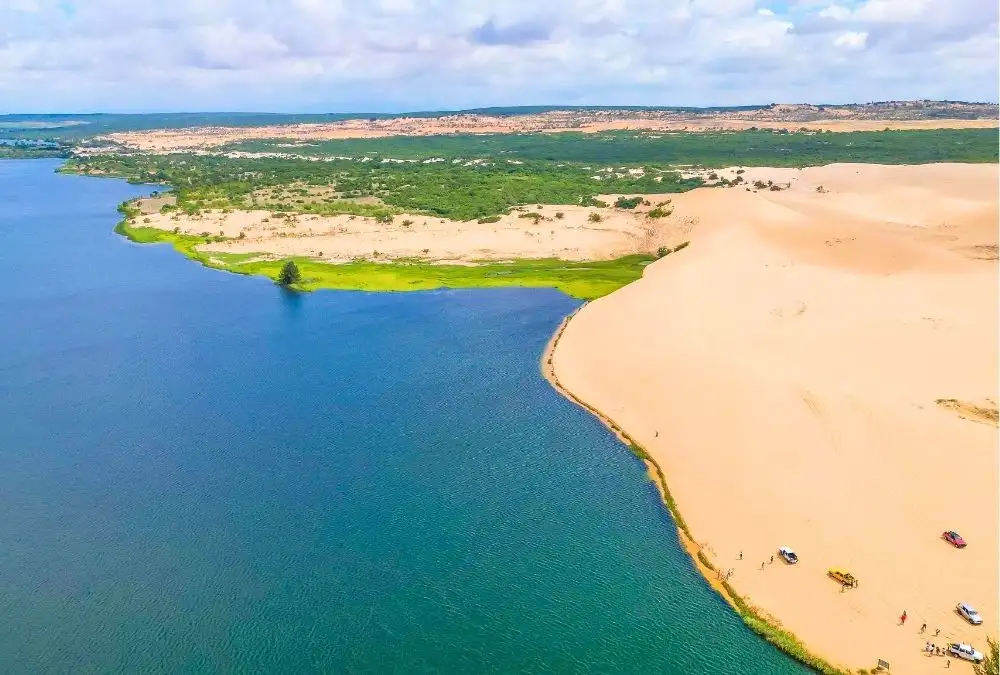
Itinerary: Hoi An → Da Nang International Airport (about 45 to 60 minutes by car) → flight to Ho Chi Minh City → Dau Giay-Phan Thiet expressway (about 2.5 hours) → Phan Thiet → Mui Ne.
This is the fastest option and the easiest to book. You take a short transfer to Da Nang Airport, fly to Ho Chi Minh City (fares can start around 400,000 VND one way, and a limousine van to Mui Ne costs roughly 350,000 to 500,000 VND per person). Door to door, expect 8 to 10 hours, far less than the 14 to 16 hours of a sleeper bus.
The speed buys you time for the best part: the slow coastal roads around Phan Thiet. Many travellers also use the first day to see the city, then drive on the next morning.
Highlights worth stopping for
A road with its own character
| Scenic Route | What Makes It Special |
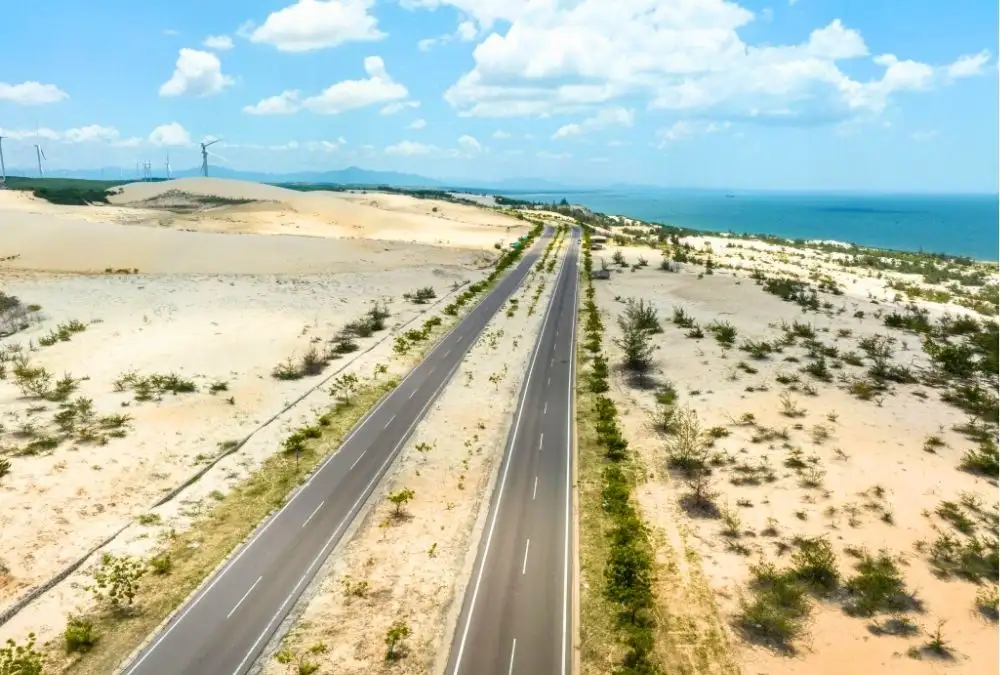
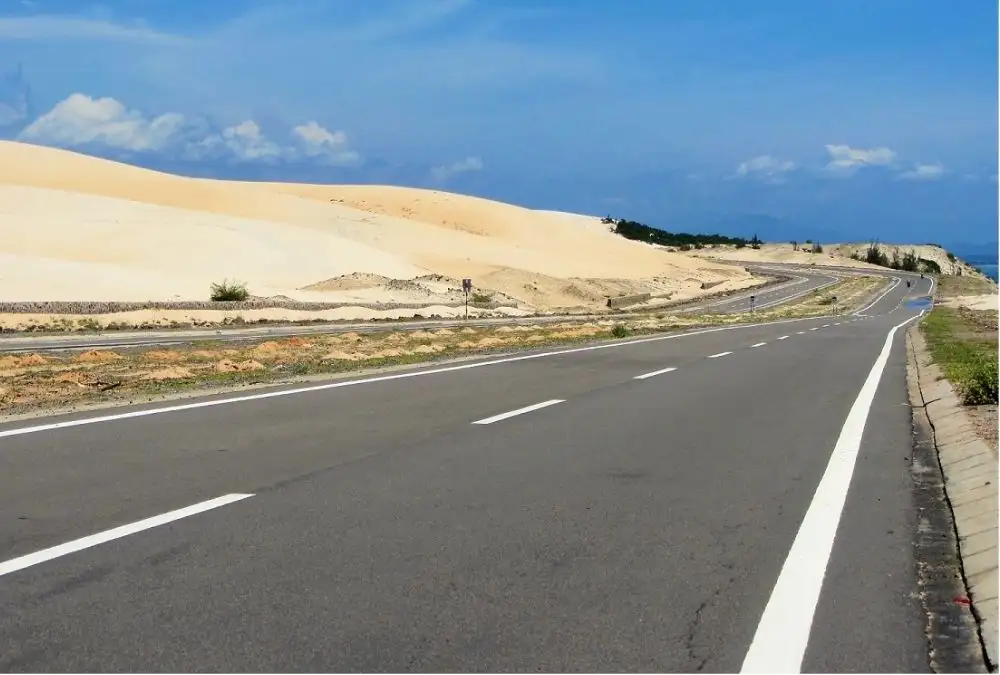
| DT716 (Bau Trang – Phan Ri Cua) | Often described as one of Vietnam’s most beautiful desert roads, this stretch features a straight asphalt ribbon cutting through vast white sand dunes. Along the way, look out for brightly coloured yellow and orange drink trucks that evoke a Wild West scene in the middle of the desert. |
| Ke Ga Cape Coastal Road (DT719) | This coastal route passes through Bình Thuận’s extensive dragon fruit plantations. Time your visit with low tide to walk across the rocky causeway that emerges from the sea and leads to Ke Ga Lighthouse, often described as Vietnam’s oldest lighthouse. |
Check the tide table before you go to Ke Ga, because the sand path only appears when the water drops. Boats are the fallback when it does not. Boat rides usually cost around 40,000-100,000 VND per person for a short trip. In October, jellyfish and rubbish near the shore can make swimming less enjoyable. Bring drinking water, a hat and shoes with good grip, as the staircase is steep and there is little shade around the cape.

Discover the cultural story behind fish sauce making
Phan Thiet is Vietnam’s fish sauce capital, and the Lang Chai Xưa Fish Sauce Museum (360 Nguyen Thong, Phu Hai, Phan Thiet) is the first museum of its kind in the country. You start with a short film about local fishing and the history of Phan Thiet and Mui Ne, then walk past old photographs, salt-making tools and large wooden vats (Source: VOV).

The finale is a tasting of nuoc mam tin, the traditional sauce aged in clay jars. The smell is strong and salty, and the taste is deeper and rounder than the bottled sauce most travellers know.
Reviews say the quality of the visit depends on your guide, and some guests noticed language barriers. Ask for an English-speaking guide at the door, and ask them to explain the Cham and Nguyen-era items on display.
Kitesurfing, windsurfing and quad bikes
Mui Ne is Vietnam’s wind-sports capital. The windiest season runs from November to March, with winds of about 18 to 30 knots, and most kite schools sit around the beach in Ham Tien. Beginners often find November or March softer than January.
| Activity | What to expect | Where | Notes |
| Kitesurfing and windsurfing | Learn to harness the wind and glide across the sea. Feel the thrill of being pulled over the waves by a powerful kite or riding the wind on a board. | Schools along Nguyen Dinh Chieu Street, Ham Tien | Beginner tip: Check IKO certification, instructor-to-student ratio, equipment and insurance. Strong winds and high tides can make conditions unsafe for beginners. |
| Thrilling ATV Dune Rides | Take control of a powerful four-wheel-drive ATV and roar across the sand, racing down steep dune slopes for an adrenaline-filled ride. | White Sand Dunes (Bau Trang) | Start around 4:30 AM for sunrise, so expect to travel in the dark. Entry costs about 10,000 VND; quad biking costs extra, with one visitor paying around 875,000 VND for a 10-minute ride. |

Read more: From Mui Ne to Hoi An: How many options for transport?
Route 2: Fly to Cam Ranh and explore the wild coast of Ninh Thuan
Itinerary: Hoi An → Da Nang Airport → flight to Cam Ranh Airport → Phan Rang-Thap Cham → Vinh Hy Bay and Nui Chua National Park (about 40 km from Phan Rang) → back to Phan Rang → Mui Ne.
This is the route for travellers who want landscape over speed. Flights from Da Nang to Cam Ranh are operated by Vietnam Airlines and Vietjet, with fares starting at around 1,000,000-1,750,000 VND when booked in advance From the airport you rent a car or motorbike, or use coaches between legs, and move south through Phan Rang to Mui Ne. Five days gives you room to enjoy every stop.
Highlights worth stopping for
Trek through dry forest in Nui Chua National Park
A UNESCO World Biosphere Reserve since 2021, Nui Chua National Park spans about 106,646 hectares and is home to more than 1,500 plant species (Source: Vietnam Government News). Located around 40 km from Phan Rang, it is best explored during the dry season, from November to August. Temperatures can reach 42°C, making this rugged landscape a striking contrast to Hoi An’s lush greenery.
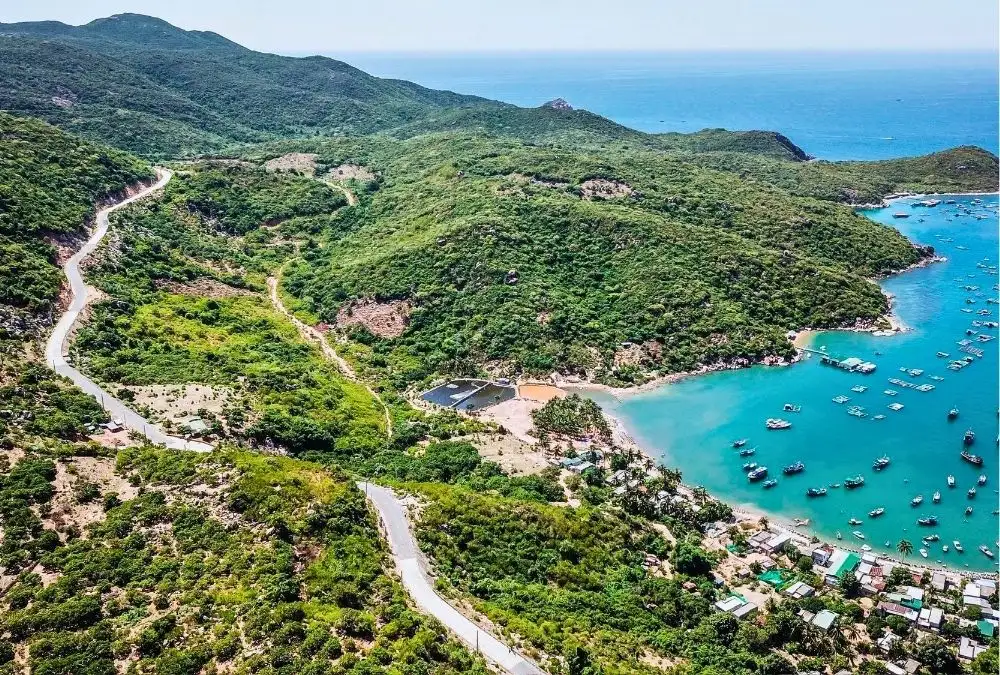
A trail winds through rocky patches, thorny shrubs, and bonsai-like apricot trees, embodying the rugged, pristine character of Nui Chua. If you choose to camp overnight, you can watch the sunset over the sea, admire the silhouettes of mountain peaks against the sky, and gather around a campfire with your Raglai guide.
From the heights, Vinh Hy Bay reveals itself, with a crescent of white sand bordering the blue sea. Be sure to set off early, carry at least 2 liters of water, and hire a guide if necessary.
Visit Bau Truc, one of Southeast Asia’s oldest pottery villages
Bau Truc sits on Highway 1, about 10 km from Phan Rang. Cham women there shape clay without a wheel, walking backward around a fixed pedestal and moulding the piece by hand (Source: Vietnam Tourism). The pieces are then fired in the open air with wood and straw, which leaves the smoky red and black marks that make each jar different.
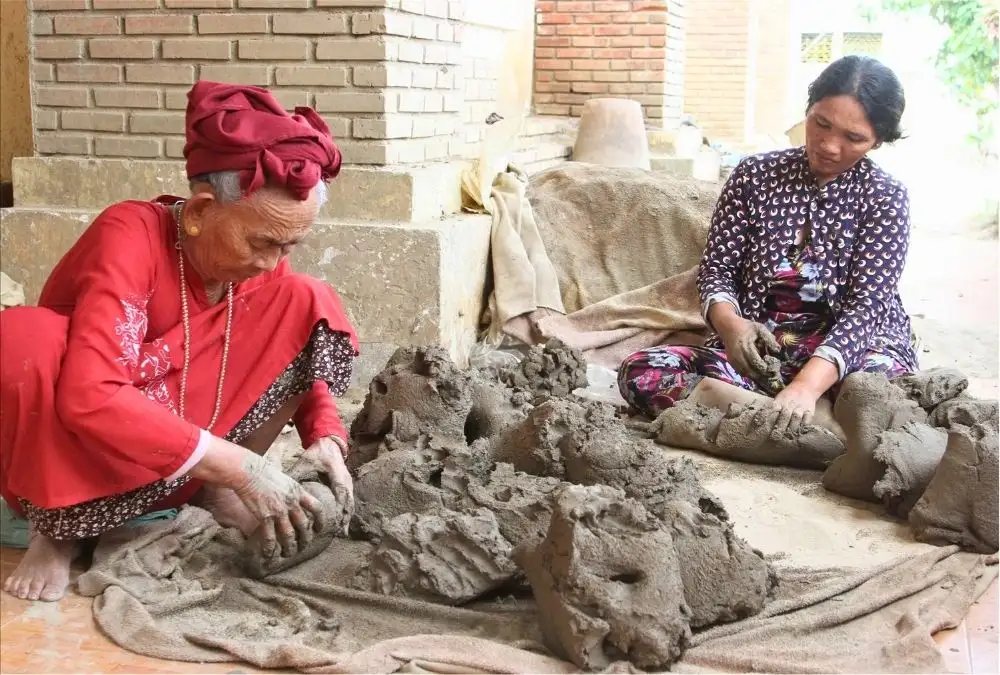
If you see smoke rising behind a shop, go and look. Potters are usually happy to be watched and photographed, and you can see the rhythm of the walk around the clay. The water jars are popular in this hot region because they keep water cooler than the air outside. The recommended visiting window is 2:00 to 4:00 p.m., and buying directly from a potter, after asking the price, helps keep the craft alive.
Eat your way south
At each stop along the coast, you can savor unique local specialties, from fresh seafood in Cam Ranh and piping-hot (banh can) in Phan Rang to the distinctively flavorful (goi ca mai) (white sardine salad) in Mui Ne.
- Cam Ranh: Try grilled sa sung (sipunculid worms) or lobster at Ut Tang Binh Ba Lobster, a seafood spot associated with Binh Ba’s lobster scene.
- Phan Rang: Sample banh can, small rice-flour pancakes cooked in clay moulds and served with dipping sauce. Banh can banh xeo Son Map at 32 To Hieu Street is one local option.

- Mui Ne: Order goi ca mai, a fresh herring salad typically eaten with rice paper, herbs and dipping sauce. Ask seafood restaurants around Nguyen Dinh Chieu Street, Ham Tien whether it is available.
Route 3: Stop in Da Lat, from cool highlands to sunny coast
Itinerary: Hoi An → Da Nang Airport → flight to Lien Khuong Airport → Da Lat → Duc Trong → Dai Ninh Pass → Luong Son → Phan Thiet → Mui Ne.
Da Lat offers a cooler mountain retreat during a coastal trip and is located about 180-200 km from Mui Ne by road. After a flight from Da Nang, the sudden cool air feels like a different country. Then you drop down by road to the sunshine of the coast. Four days is enough, but a second night in Da Lat is worth it for the pine forests and night food.
Highlights worth stopping for
Da Lat at night: cafes, snacks and pine forests
After the heat of the coast, Da Lat feels like a different country. In the late afternoon, stop at Panorama Cafe Dalat in Trai Mat for sweeping views of the valley and greenhouse lights beginning to glow as dusk falls. Alternatively, head to The Seen House by Tuyen Lam Lake, where pine-covered hills frame the quiet water.

As evening falls, take a stroll around the breezy shores of Xuan Huong Lake, then pull up a chair at a roadside stall to enjoy a steaming cup of soy milk, a fragrant grilled rice-paper snack, or a piping hot, spicy bowl of chicken hotpot with la e (lemon basil) leaves. The point of this stop is the contrast: cold air, warm food and a quiet evening before the hot coast.
Canyoning down waterfalls
For an adrenaline rush, spend a day canyoning at Datanla Waterfall. The roughly 7-hour trip combines waterfall abseiling, natural water slides, a Tyrolean traverse and an optional cliff jump of 6-11 m, depending on the operator.

After gearing up and practising with your guide, you descend wet, uneven rock faces as cold water crashes around you. The final “Washing Machine” drop is the most intense, with rushing water making it difficult to hear instructions. Expect a physical challenge, patient guides and a welcome lunch afterwards.
Before you go: Wear a swimsuit and grippy shoes, check the operator’s safety equipment, guide-to-group ratio, insurance and rain policy, and mention any fear of heights.
Beyond the three routes: a slow trip by train
If you have extra time, you can extend your journey beyond the three routes mentioned above by traveling through Central Vietnam via train or bus. Starting from Hoi An, head to Da Nang Railway Station, then board a train heading south. You can disembark at Binh Thuan Station (formerly Muong Man Station) or Phan Thiet Station to continue your trip to Mui Ne.

One of the most captivating aspects of this journey is the scenery visible from the train window. The railway line through Central Vietnam, especially the stretch crossing the Hai Van Pass and running along the coast near Ca Na in Ninh Thuan, occupies a truly spectacular vantage point. From your seat, you can catch glimpses of pristine, deep-blue coastal stretches that remain hidden from those traveling by highway or air.
Stops at major stations also offer a chance to experience the local rhythm of life and explore regional cuisine. Whenever the train pulls into a large station, you can soak up the lively atmosphere and enjoy local specialties brought right to your carriage door, such as warm banh chung (sticky rice cakes) in Quang Ngai, nem cho Huyen (fermented pork rolls) in Binh Dinh, or sweet, freshly picked dragon fruit as the train rolls into Binh Thuan.
Read more: Hoi An to Phu Yen by road: 5 stops worth getting out of the car for
How do the Hoi An to Mui Ne routes compare on time, cost and experience?
| Route 1: Ho Chi Minh City | Route 2: Ninh Thuan | Route 3: Da Lat | |
| Route | Hoi An → Da Nang → Ho Chi Minh City → Phan Thiet → Mui Ne | Hoi An → Cam Ranh → Phan Rang → Nui Chua → Mui Ne | Hoi An → Da Lat → Dai Ninh Pass → Phan Thiet → Mui Ne |
| Travel time | Around 8-10 hours, depending on connections | Slowest; several transfers and sightseeing stops | One flight plus 3.5-4.5 hours by road |
| Estimated transport cost | Around 1,000,000-2,000,000 VND/person | Around 1,500,000-3,000,000 VND/person | Around 1,500,000-3,000,000 VND/person |
| Best for | Short trips and kitesurfing | Coastal scenery, culture and road trips | Adventure and a cool-weather break |
| Main challenge | Less time for sightseeing if rushed | Heat, long distances and multiple transfers | Winding mountain roads and flight connections |
Which route gives the best experience?
For most travellers taking the Hoi An to Mui Ne route, Route 1 offers the best balance of time and money. Route 2 gives the strongest sense of discovery, especially at Bau Truc and Nui Chua, and it suits people who are happy to spend long hours in a car. Route 3 wins on variety, because you can drink coffee in the mist one day and kitesurf on the sea the next.
If you can choose only one, choose the route that matches how you like to travel, because the best route is the one you will enjoy for all of its hours.
Which route should you choose for your trip?
Match the route to your calendar and energy. With 3 or 4 days and a plan to learn kitesurfing, take Route 1 and arrive between November and March, when winds are generally favourable. With 5 days or more and a love of landscapes, choose Route 2 during the dry season. With 4 days and a taste for adventure and cool air, Route 3 offers a refreshing change of scenery.
Your starting point matters, too. A relaxing stay at Bliss Hoi An Beach Resort & Wellness, on Binh Minh Beach south of Hoi An’s Old Town, gives you time to unwind before heading south. Spend the morning by the beachfront infinity pool, enjoy Vietnamese and international dishes at Binh Minh Restaurant, or recharge with a spa treatment before departure. The resort also offers a complimentary shuttle to Hoi An’s Old Town, making it easier to enjoy the heritage streets before beginning your longer journey.
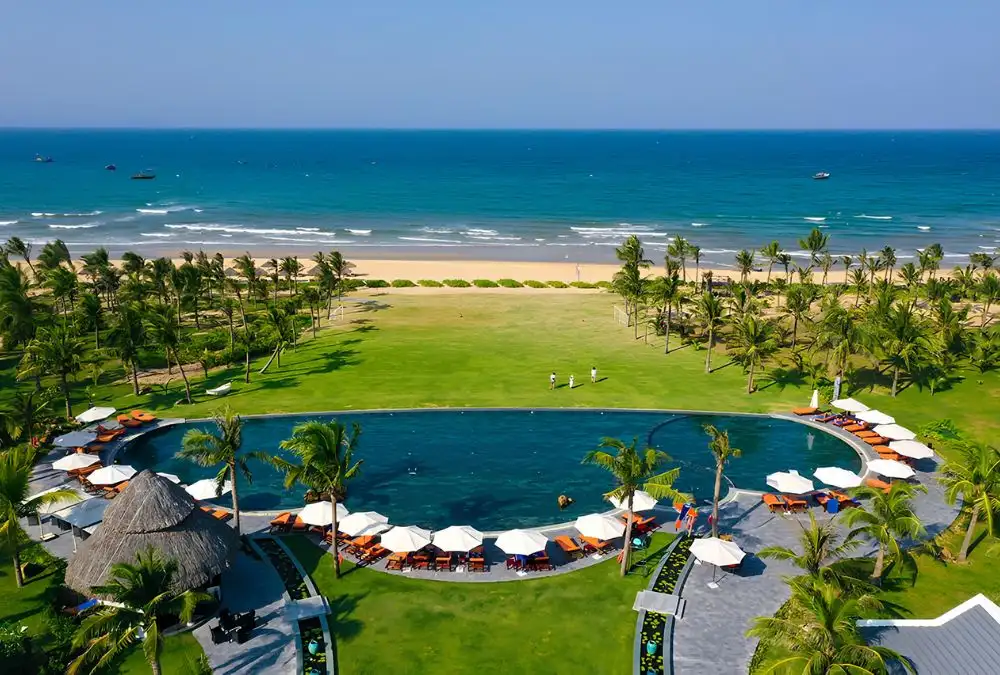
If you have extra days in Hoi An, use the resort as a base for local experiences through its private tours from Hoi An beach resorts. Once your travel dates are set, book your stay at Bliss Hoi An to make the beachside portion of your trip part of the experience, rather than simply a place to sleep.
Frequently Asked Questions
Is it better to go from Hoi An to Mui Ne via Nha Trang or Ho Chi Minh City?
Ho Chi Minh City is faster, because flights from Da Nang are frequent and the road from the city to Mui Ne is straightforward. Nha Trang suits you if you want a beach stop and extra time, but it adds a transfer and a longer drive.
How long does it take to travel from Hoi An to Mui Ne?
By flight and limousine, plan on about 8 to 10 hours door to door. A sleeper bus takes about 13 to 16 hours, and the train takes about 16 hours plus a taxi from Binh Thuan Station.
Can you visit Nha Trang on the way to Mui Ne?
Yes. Fly from Da Nang to Cam Ranh Airport, stay a night or two in Nha Trang, then continue south by road or by coach to Mui Ne. Route 2 follows a similar line, and it adds Ninh Thuan if you have an extra day.
Is it worth spending a night in Da Lat before Mui Ne?
Yes, if you like cool weather, coffee and outdoor sports. One night gives you the mist, the lake and the food, and a second night lets you add Datanla canyoning.
How many days should you spend in Mui Ne?
Two to three nights cover the dunes, the fishing village and a first kite lesson. Stay longer if you want to learn kitesurfing in a full beginner course.
What are the best experiences in Mui Ne?
Sunrise on the White Sand Dunes, a Fairy Stream walk, fresh seafood at the fishing village and, between November and March, kitesurfing along Nguyen Dinh Chieu Street. Agree the price of jeeps and quad rides in advance.

Related Posts

Hoi An Indochine Style Resort: How to Choose a Stay With Real Vietnamese Character

Private Chef Hoi An: Top 10 Chefs for a Personalised Dining Experience

A trip from Hoi An to Tam Ky in one day: Is it feasible?

Private Tours from Hoi An Beach Resorts: Discover Central Vietnam from Bliss Hoi An
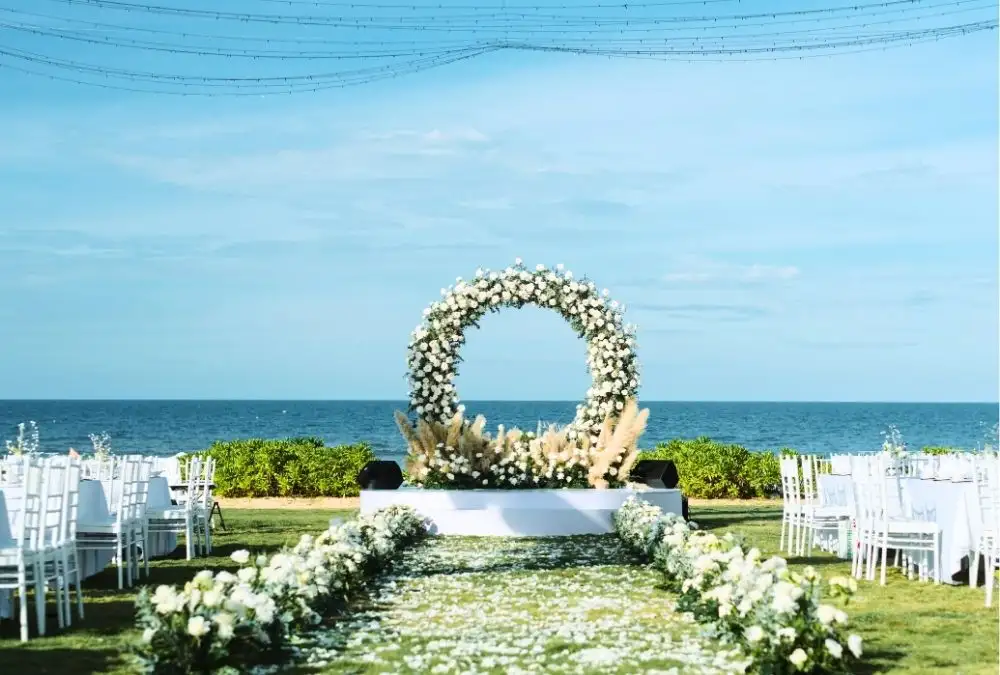
How much does a Hoi An wedding for 40 guests cost?