

Vegetarian cooking class Hoi An: Is it really meat-free?
A vegetarian cooking class Hoi An sounds like the perfect way to discover Vietnamese food, until you realize that “vegetarian-friendly” doesn’t always mean completely meat-free. Fish sauce, seafood-based seasonings and meat broths can still find their way into dishes that look entirely plant-based.
So how do you find a class that actually suits your diet without missing out on Hoi An’s incredible food culture? From fresh herbs in Tra Que Village to hands-on Vietnamese cooking and countryside adventures, this guide reveals what you’ll really cook, what it costs and the questions worth asking before you book.
Vegetarian Cooking Classes in Hoi An: Quick Overview
| Information | Details |
| Popular locations | Hoi An Ancient Town, Tra Que Village, Cam Thanh |
| Duration | Approximately 2 – 5 hours |
| Typical price | Around US$20 – 40+ per person; longer packages may cost more |
| Popular dishes | Spring rolls, banh xeo, vegetable salads, tofu and mushroom dishes |
| Activities | Market visits, vegetable farming, basket boat rides, cooking |
| Vegetarian options | Available through selected providers |
| Vegan options | Require confirmation before booking |
| Best for | Couples, families, solo travelers and food enthusiasts |
| Booking tip | Confirm ingredients and dietary requirements in advance |
For travelers interested in the broader culinary scene, our Hoi An cooking class guide introduces other cooking experiences available in the area.
What to expect from a vegetarian cooking class in Hoi An
A vegetarian cooking class offers more than learning Vietnamese recipes. Many programs introduce visitors to the ingredients, farming traditions and everyday cooking methods that shape Central Vietnamese cuisine.
Visiting a traditional local market
Some classes begin with a guided visit to a local market, where participants discover ingredients such as lemongrass, banana blossoms, green papaya, fresh tofu, rice noodles and Vietnamese herbs. Your guide may explain how locals select fresh produce, use different herbs and prepare ingredients for everyday meals.
For vegetarian travelers, market visits are especially interesting because Vietnamese cooking relies heavily on flavor-building ingredients. Fish sauce, oyster sauce and meat-based stocks are common in traditional recipes, even when vegetables form the main part of a dish. Understanding plant-based alternatives helps you recognize which ingredients are suitable for your diet and recreate Vietnamese flavors at home.
Market visits are not included in every cooking class, so check the itinerary before booking.
Exploring Tra Que vegetable village
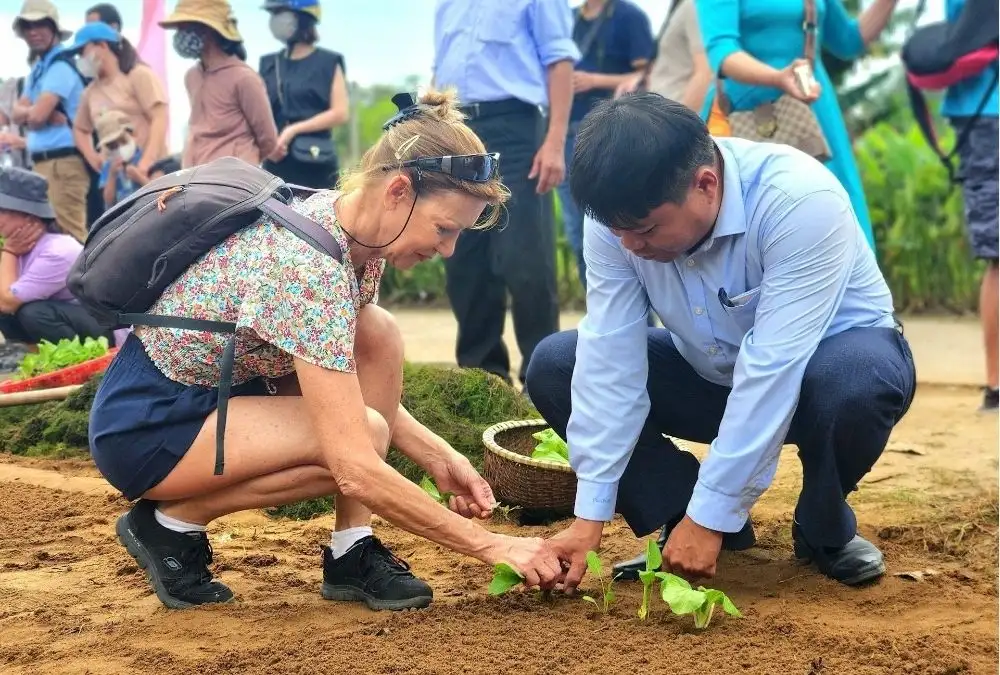
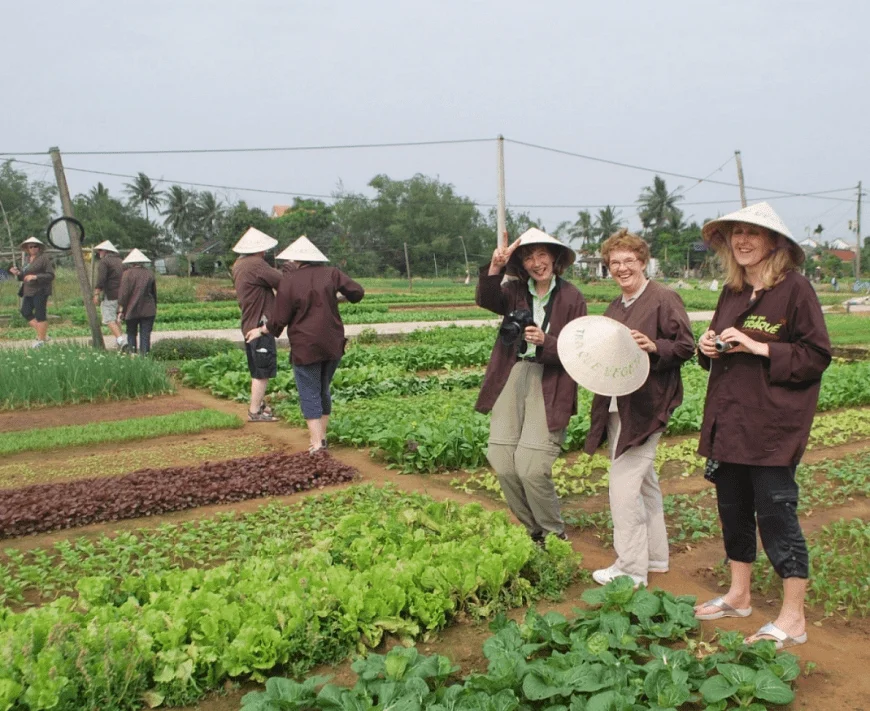
For a countryside experience, Tra Que Vegetable Village is one of Hoi An’s most interesting destinations for food lovers. Situated near Hoi An Ancient Town, the village is known for its vegetable gardens and traditional farming methods. Local farmers grow herbs and greens used in Vietnamese dishes, particularly noodles, salads and fresh spring rolls. Depending on the program, visitors may observe gardening techniques, learn about local agriculture or participate in simple farming activities before cooking.
The experience connects the ingredients on your plate with the people who grow them.
Read more: Tra Que Vegetable village Hoi An: An ultimate travel guide
Learning to cook with a local instructor
The cooking session is usually the highlight of the experience. An instructor demonstrates how to prepare ingredients, combine seasonings and cook Vietnamese dishes. Depending on the class, you may learn to roll spring rolls, prepare dipping sauces, mix pancake batter or cook vegetables and tofu.
Hands-on classes are particularly valuable because you practice techniques rather than simply watch demonstrations. After cooking, participants generally enjoy the dishes they have prepared. If you want to recreate the recipes at home, ask whether the class provides written recipes and explains alternatives for ingredients that may be difficult to find outside Vietnam.
What vegetarian Vietnamese dishes can you learn to cook?
Hoi An’s culinary traditions offer plenty of inspiration for vegetarian cooking. Many familiar Vietnamese dishes can be adapted by replacing meat or seafood with tofu, mushrooms or vegetables. However, menus vary between providers. The following dishes are examples worth looking for, not a confirmed menu for every class.
Vegetarian Banh Xeo – Crispy Vietnamese pancakes
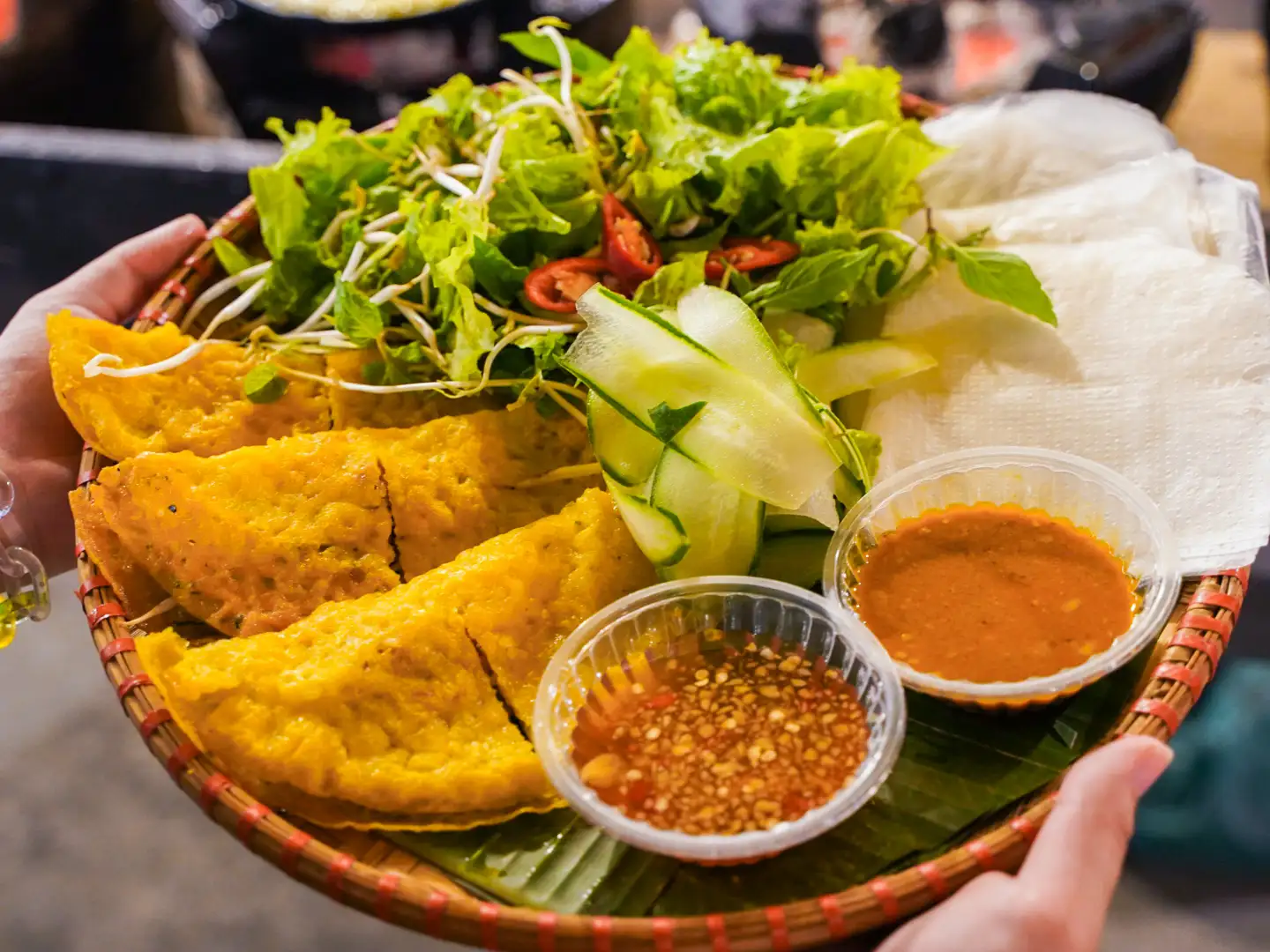
Banh xeo is a crispy rice-flour pancake traditionally filled with pork, shrimp and bean sprouts. Vegetarian versions can use mushrooms, tofu, bean sprouts and fresh vegetables. During a cooking lesson, you may learn how to prepare the batter, control the pan’s temperature and achieve a thin, crispy texture without using excessive oil.
Banh xeo is commonly enjoyed with lettuce, herbs and dipping sauce. Vegetarians should check that the accompanying sauce does not contain fish sauce.
Vegetarian spring rolls
Spring rolls are among the most approachable dishes for beginners. Fresh spring rolls combine rice paper with vegetables, herbs, noodles and optional tofu. Crispy spring rolls typically contain seasoned fillings wrapped and fried until golden. Both versions teach useful preparation techniques, including balancing fillings, handling rice paper and preparing dipping sauces. Fresh rolls highlight the natural flavors of herbs and vegetables, while fried rolls introduce different textures and cooking techniques. For vegan visitors, confirm that the wrappers, fillings and dipping sauces contain no animal-derived ingredients.
Green papaya salad
Green papaya salad is known for its refreshing combination of crunchy vegetables, aromatic herbs and tangy dressing. A vegetarian version can include shredded green papaya, carrots, peanuts, lime juice, chili and suitable plant-based seasonings. The main skill is balancing sweet, sour, salty and spicy flavors. Because traditional versions may contain fish sauce or seafood, ask the instructor which ingredients are used in your particular class.
Tofu and mushroom clay-pot dishes
Clay-pot cooking is common in Vietnamese home-style cuisine. Vegetarian variations may feature tofu, mushrooms and vegetables simmered in a flavorful sauce with garlic, pepper and soy-based seasonings.
A cooking class can demonstrate how to develop rich flavors without relying on meat stock. These techniques are useful for travelers interested in making Vietnamese vegetarian dishes at home.
Vegetarian Cao Lau
Cao lau is a well-known Hoi An specialty traditionally prepared with thick noodles, pork, greens and a savory sauce. Vegetarian adaptations may replace the pork with mushrooms or tofu and use vegetable-based seasonings.
Although the adaptation differs from the traditional recipe, it offers an opportunity to explore Hoi An’s distinctive noodle culture. Not all cooking classes teach vegetarian cao lau, so confirm the menu if this dish is a priority.
Read more: Food in Hoi An: A Journey through tradition and flavor
Vegetarian vs. Vegan cooking classes: What should you know?
A vegetarian-friendly cooking class is not automatically a fully vegan cooking class.
Vegetarian diets generally exclude meat and seafood but may include eggs or dairy. Vegan diets exclude all animal-derived ingredients. In Vietnamese cooking, sauces and broths are particularly important because dishes containing vegetables may still use animal-based seasonings.
| Ingredient | Vegetarian-friendly? | Vegan-friendly? |
| Fresh vegetables and herbs | Yes | Yes |
| Plain tofu | Yes | Yes |
| Fish sauce | No | No |
| Traditional oyster sauce | No | No |
| Mushroom-based oyster-style sauce | Usually | Usually |
| Eggs | For some vegetarians | No |
| Meat-based broth | No | No |
| Honey | For some vegetarians | No |
Always check the complete ingredients of sauces and packaged seasonings rather than relying on their names.
Best vegetarian-friendly cooking experiences in Hoi An
There are different types of cooking experiences in Hoi An, each offering something beyond the preparation of food. The right choice depends on your interests, available time and dietary requirements.
Tra Que farming and cooking experience
Best for: Nature lovers, vegetarian food enthusiasts and travelers interested in local agriculture.
Tra Que offers a peaceful countryside setting where visitors can explore vegetable cultivation and learn about ingredients used in Vietnamese cuisine. A farming and cooking experience may include meeting local farmers, discovering fresh herbs and preparing traditional dishes. This option is particularly appealing to travelers who want to understand the journey from garden to table. Bliss Hoi An has previously published a Tra Que farming and cooking experience with a vegetarian menu available upon request. Contact the resort’s Travel Desk to confirm whether this program is currently available, including its menu, schedule and transportation arrangements.
Cooking class and basket boat experience
Best for: Couples, families and visitors looking to combine sightseeing with cooking.
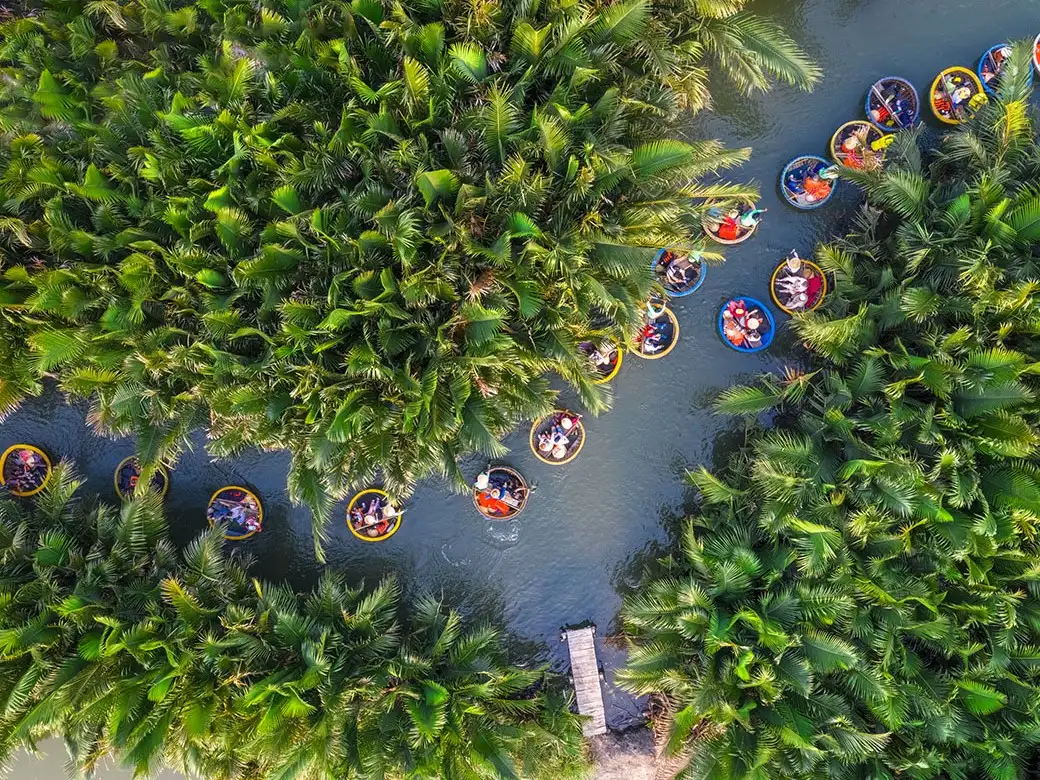
The Cooking Class & Basket Boat Tour at Bliss Hoi An combines a market visit, traditional bamboo basket boat activities and a Vietnamese cooking lesson. Participants explore the coconut waterways around Cam Thanh before joining the cooking session. The published itinerary takes approximately four to five hours, making it a convenient half-day activity. However, the standard menu includes meat and seafood. Vegetarian or vegan modifications have not been confirmed, so guests should contact the Travel Desk before booking if they require a special menu.
Which cooking experience is right for you?
| Your preference | Suggested experience |
| Learning about herbs and vegetables | Tra Que farming and cooking |
| Combining sightseeing and food | Cooking and basket boat tour |
| Strict vegan requirements | Class with a confirmed vegan menu |
| Improving cooking skills | Hands-on cooking-focused class |
| Traveling with children | Family-friendly guided cooking class |
| Limited time | Short cooking-only experience |
If your main priority is preparing vegetarian food, choose a provider that confirms the complete menu rather than simply advertising vegetarian options.
How much does a vegetarian cooking class Hoi An cost?
Prices depend on the duration, location, group size and activities included. As a general planning estimate, standard cooking classes may cost around US$20 – 40 or more per person, while packages combining cooking with transportation, sightseeing or private instruction may be more expensive. These figures are indicative market estimates, not guaranteed prices for a particular date.
Bliss Hoi An Cooking Class & Basket Boat Tour Prices
The published standard package prices are:
Package | Price |
| Cooking class with basket boat | 1,050,000++ VND/person |
| Cooking class without basket boat | 940,000++ VND/person |
| Children aged 5 – 10 with basket boat | 730,000++ VND/child |
| Children aged 5 – 10 without basket boat | 660,000++ VND/child |
Children under five are listed as free under the published policy. The tour requires a minimum of two paying participants. The program includes transportation, a guide, applicable entrance fees, a meal and mineral water. The “++” notation indicates that additional taxes or service charges may apply. Confirm the total payable amount when booking. These prices refer to the published standard tour, not a confirmed vegetarian package. Before booking, check whether the quoted price includes ingredient preparation, hotel transfers, additional activities and any dietary modifications.
How to choose the right vegetarian cooking class in Hoi An
Choosing a cooking class involves more than comparing prices. Consider the following factors to find an experience that matches your expectations.
Check the actual cooking time
A four-hour tour may include transportation, sightseeing and a meal, leaving less time for cooking. If learning techniques is your main goal, ask how long participants spend preparing food and whether everyone has an opportunity to cook individually. Smaller classes may provide more personal instruction, although this depends on the provider and teaching format.
Confirm dietary requirements
Request the menu before making a reservation. If you are vegetarian, check which traditional ingredients will be replaced. If you are vegan, ask about sauces, eggs, broths and animal-derived seasonings. Travelers with allergies should contact the organizer directly to discuss specific risks.
Consider transportation and location
Classes in central Hoi An can be convenient for visitors already exploring the Ancient Town. Tra Que and Cam Thanh offer countryside settings but may require additional travel. Guests staying at resorts outside the town center should confirm pickup locations, journey times and additional transportation fees.
Choose the right time
Morning sessions may suit travelers interested in market visits and outdoor farming activities. Afternoon sessions can fit a more relaxed schedule, especially if you prefer spending the morning at the beach or resort. During hotter months, consider how much time the tour involves outdoor activities. If you have only one day in Hoi An, choose a class that fits comfortably around your other plans rather than rushing between attractions.
How to arrange a vegetarian-friendly cooking experience with Bliss Hoi An
Guests staying at Bliss Hoi An Beach Resort & Wellness can contact the resort’s Travel Desk for assistance with local cooking experiences.
The resort offers a Cooking Class & Basket Boat Tour and has previously featured a Tra Que farming and cooking program.
To request a suitable experience, share your preferred date, number of participants, dietary restrictions and whether you want additional activities such as vegetable farming or a basket boat ride. The Travel Desk can clarify available programs, menus, pickup arrangements and final prices.
Interested in exploring Vietnamese cooking during your Hoi An holiday? Contact Bliss Hoi An Beach Resort & Wellness to ask about vegetarian-friendly cooking experiences, current availability and transportation. Confirming your requirements before booking is the best way to ensure the experience suits your expectations.
Frequently asked questions vegetarian cooking class Hoi An
Are there vegan cooking classes Hoi An?
Yes, some independent providers offer vegan cooking experiences, while others provide plant-based alternatives on request. Confirm the ingredients, sauces and cooking arrangements before booking.
How long is a vegetarian cooking class Hoi An?
Cooking-focused sessions often last around two to three hours. Experiences combining market visits, farming activities or basket boat tours may take four to five hours or longer.
Can beginners join a cooking class?
Yes. Many classes are suitable for beginners and include demonstrations followed by practical cooking activities. No previous experience with Vietnamese cuisine is generally required.
Can I join if I am traveling alone?
Some providers accept solo travelers in shared sessions. Others require a minimum number of participants. Bliss Hoi An’s published cooking and basket boat package requires at least two paying guests, so solo travelers should inquire about available arrangements.
Are cooking classes suitable for children?
Many classes welcome families, but age restrictions and safety arrangements vary. Check the operator’s child policy, especially for activities involving hot pans, knives or outdoor excursions.
Can I request vegetarian food for a basket boat cooking tour?
Some operators may accommodate dietary requests. However, Bliss Hoi An’s published standard tour menu includes meat and seafood, so vegetarian modifications must be confirmed directly before booking.
Should I book in advance?
Advance booking is recommended, particularly if you require a vegetarian or vegan menu. It gives the organizer time to verify ingredients, availability and any necessary dietary arrangements.

Related Posts
Best Hoi An tours with resort pickup: From hidden gems to local experiences
Is all-inclusive worth it in Hoi An? Costs, pros and who should book
Hoi An resort with toddlers: A parent’s guide to Bliss Hoi An
Hoi An countryside tours for families: How to choose the right experience with kids
Hoi An family suite vs villa: Which is better for a family of four?