

Hoi An countryside tours for families: How to choose the right experience with kids
A child who has spent the morning planting herbs in a Vietnamese garden may remember that experience long after the names of Hoi An’s historic buildings have faded. That’s part of what makes the countryside worth exploring with children. Beyond the Ancient Town’s lantern shops and busy streets, families can spend time in working villages, learn traditional crafts and discover the everyday routines that have shaped life in this part of Central Vietnam.
But choosing the right experience takes a little more thought than booking the most popular excursion. A six-hour cycling and farming tour might be wonderful for an adventurous ten-year-old and exhausting for a preschooler. A basket boat ride can be an entertaining introduction to local fishing traditions, but parents travelling with very young children will understandably have questions about life jackets, boat movements and weather conditions.
For most families, the best Hoi An countryside tour is not the one that includes the most activities. It’s the one that gives children something meaningful to do without asking too much of them. Tra Que is particularly appealing for hands-on farming and craft experiences, Cam Thanh works well for families wanting a shorter outing, and the villages around Tra Nhieu offer more variety for children who enjoy cycling. Each has its merits, and knowing the differences can save you from spending half your holiday managing a tired child.
Is a countryside tour in Hoi An really worth doing with children?
Hoi An’s Ancient Town deserves its reputation, but for younger visitors, its appeal can be difficult to sustain over several hours. Historic architecture, merchant houses and temples are fascinating when you understand their stories. Children, particularly those who are still quite young, often connect more easily with places where they can touch, create or participate.
This is where the surrounding countryside has an advantage. A visit to a vegetable farm is not simply another sightseeing stop when children are invited to try the work themselves. Watching a craftsperson construct a lantern becomes more memorable when they can make one of their own. Even a short trip through the coconut waterways can introduce a completely different way of moving through the landscape.
There is also a cultural reason to visit these places. The countryside around Hoi An is not merely a scenic backdrop for tourism. Farming, fishing and traditional crafts remain part of its identity. In November 2024, Tra Que Vegetable Village was recognised as one of UN Tourism’s Best Tourism Villages, highlighting the importance of its agricultural heritage and community-based tourism. According to the Vietnam National Authority of Tourism, the village was the only Vietnamese destination to receive the distinction that year.
That recognition makes Tra Que especially interesting, although it shouldn’t be mistaken for a guarantee that every tour there will suit every family. The quality of the experience still depends on what visitors actually get to do, how activities are organised and whether the pace is appropriate for the children involved.
My preference would be to choose one countryside experience with a clear focus rather than combining several villages into a long itinerary simply to cover more ground. Families are more likely to remember an enjoyable morning spent learning something together than an ambitious day that ends with everyone wishing they had stayed at the pool.
Where should families go in Hoi An’s countryside?
Three areas are particularly relevant when comparing countryside tours for families: Tra Que, Cam Thanh and the villages around Tra Nhieu and Kim Bong. They offer quite different experiences, even though tour descriptions often group them together under the broad label of “Hoi An countryside”.
| Area | What makes it distinctive | My recommendation |
| Tra Que Vegetable Village | Working vegetable gardens, farming traditions, cooking and craft experiences | The strongest all-round choice for children who enjoy hands-on activities |
| Cam Thanh Coconut Forest | Traditional bamboo basket boats and water-coconut waterways | Worth considering when you want a shorter excursion with less physical effort |
| Tra Nhieu and Kim Bong | Cycling, traditional workshops, rice-paper making and village life | Better suited to active families with children comfortable on bicycles |
These recommendations concern the type of experience, not official age restrictions. Parents should confirm each operator’s participation requirements before booking, particularly when transport, boats or bicycles are involved.
Tra Que: More than a photo stop in a vegetable garden
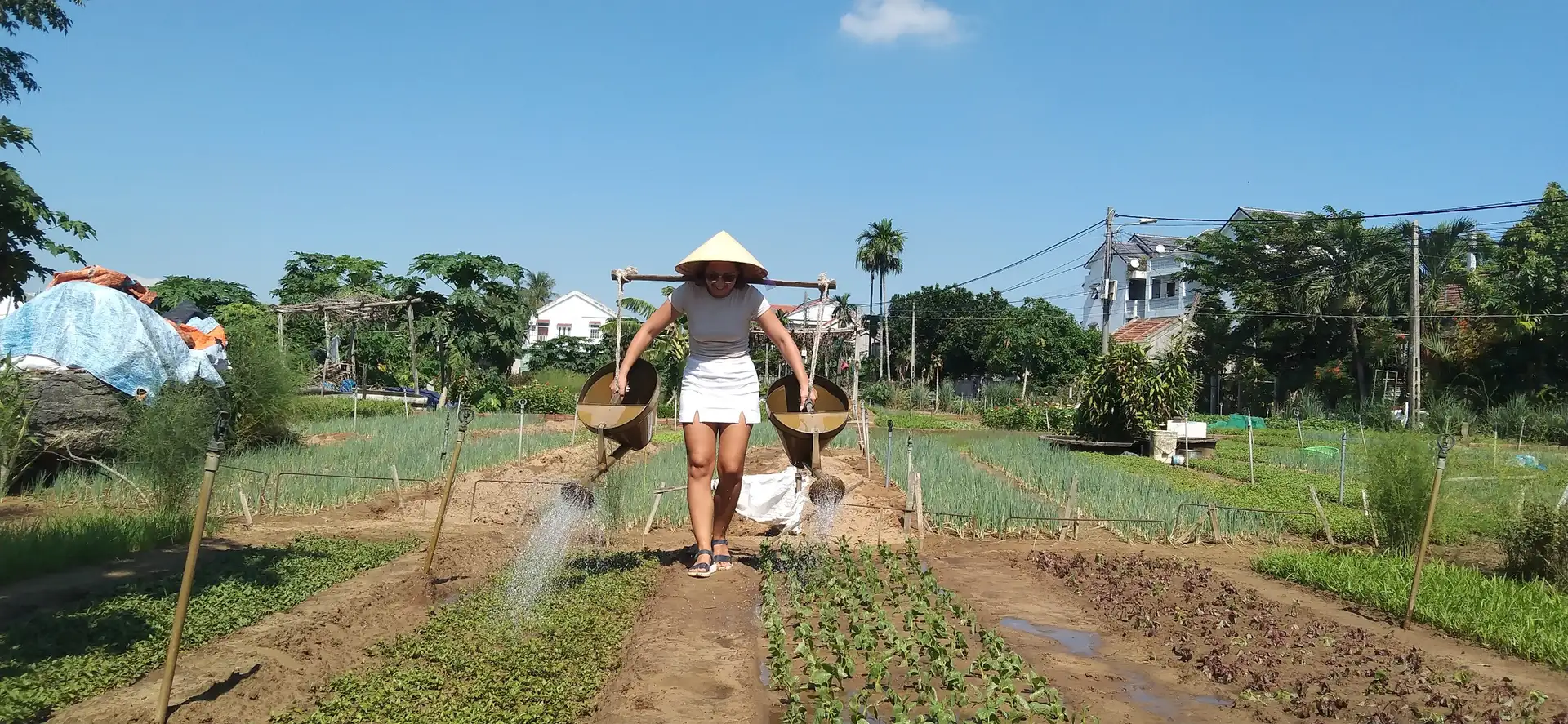
Only about three kilometres from Hoi An Ancient Town, Tra Que has a farming history reaching back to the 16th century, according to the Hoi An World Heritage website. The village is known for its vegetable gardens and the herbs used in local cooking. Its proximity to town makes it relatively easy to include in a half-day excursion, although the total travelling time will depend on where your family is staying.
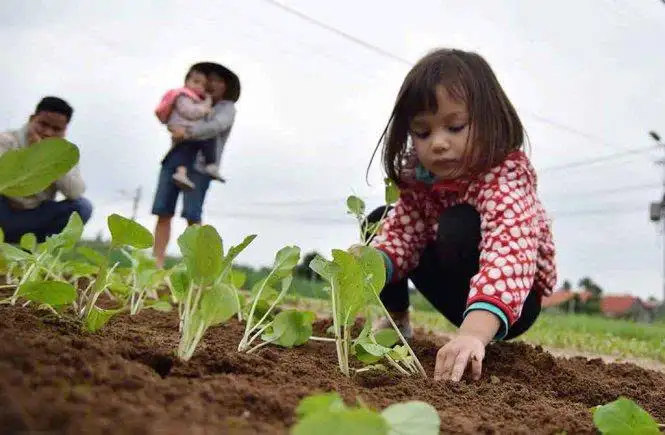
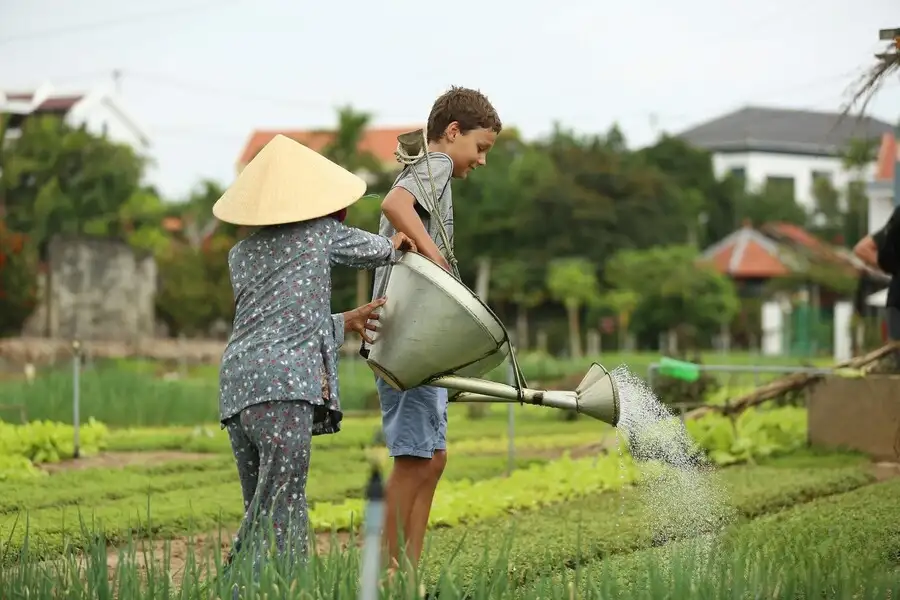
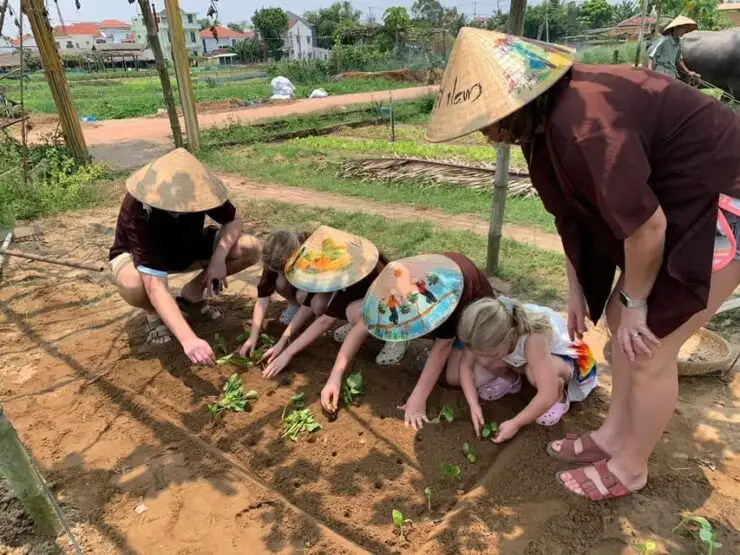
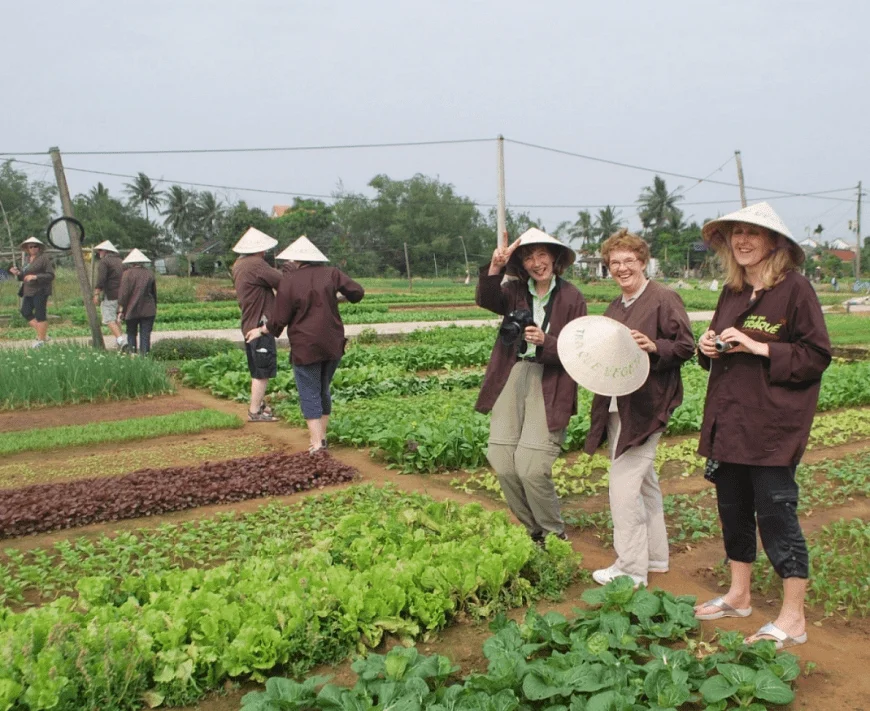
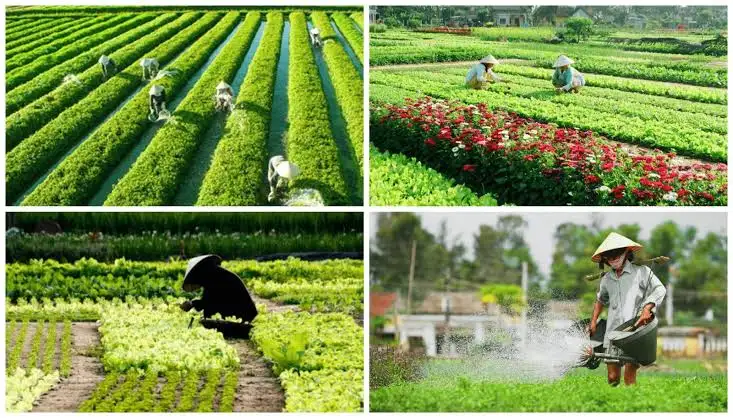
The most worthwhile part of a Tra Que visit is the opportunity to learn how the gardens are cultivated. When children are shown how to prepare the soil, plant vegetables or use traditional watering equipment, they begin to see the connection between the ingredients on their plates and the people who grow them. It’s a simple idea, but a much more engaging introduction to local agriculture than a quick walk through the fields.
For families who want to combine outdoor activities with something creative, Bliss Hoi An’s Lantern Making & Tra Que Farming Tour brings together vegetable farming, a countryside bicycle ride and a lantern-making workshop. The approximately six-hour programme includes lunch, guiding, bicycle use and lantern-making materials.
The lantern workshop is particularly appealing because it gives children a finished object to take home. It also provides a change of pace after the farming activity. However, the cycling component is worth discussing with the Travel Desk before booking, especially if your children are not confident riders.
There is another option for families whose children are more enthusiastic about food than handicrafts. The Tra Que Farming & Cooking Class combines a market visit, agricultural activities and Vietnamese cooking. It is a useful alternative when the family would rather prepare and enjoy local dishes than spend time making lanterns.
My take: Tra Que offers the most balanced introduction to Hoi An’s countryside for families who value cultural learning. I’d prioritise it for curious school-age children, particularly those who enjoy making things or getting their hands dirty. The decision becomes less straightforward with toddlers, since the published itineraries include cycling and last several hours.
Cam Thanh: A shorter adventure among the coconut palms
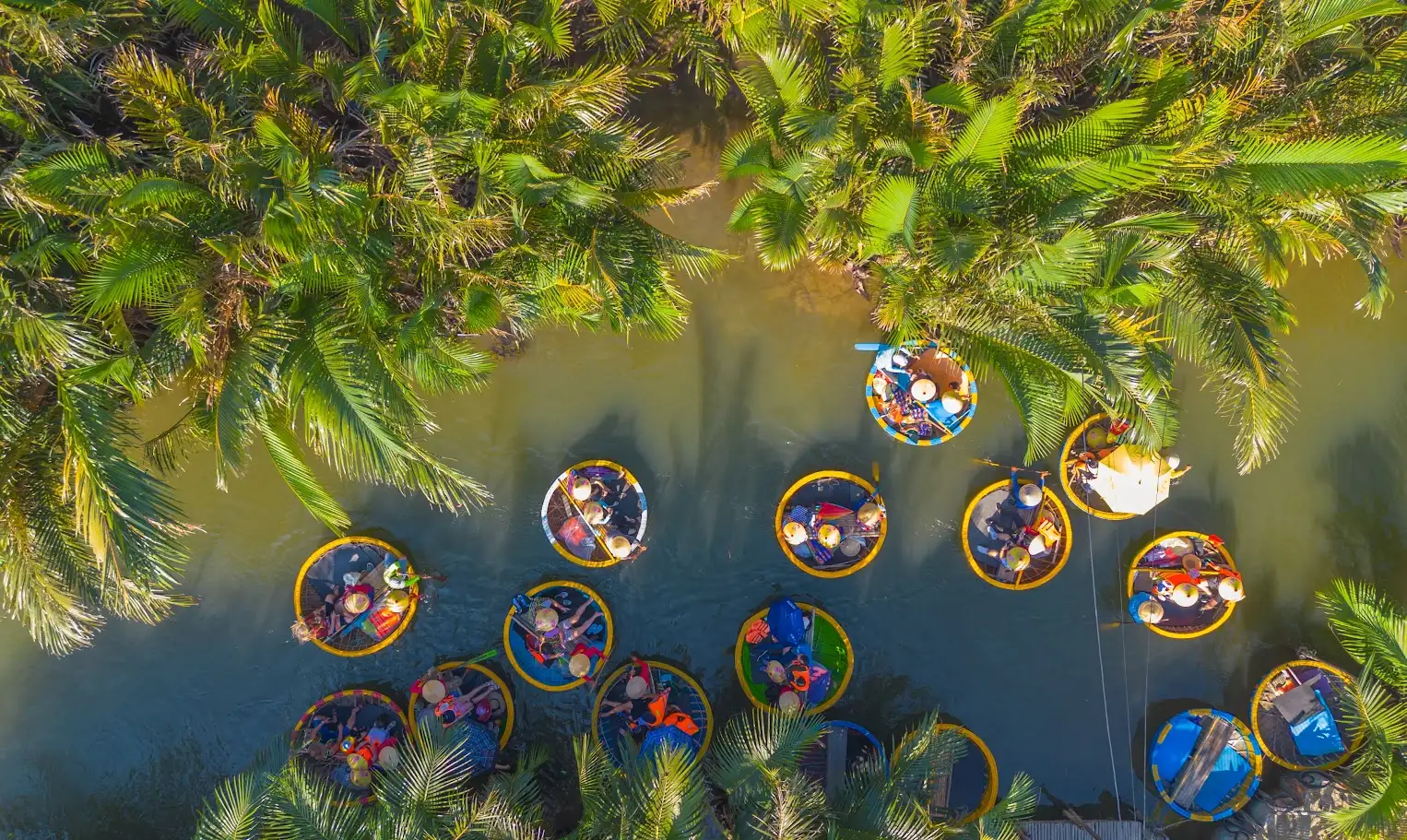
Cam Thanh feels quite different from Tra Que. Instead of vegetable gardens and small agricultural plots, the landscape is shaped by narrow waterways and dense water-coconut palms. Located near the lower reaches of the Thu Bon River, the Bay Mau Coconut Forest is described by the official Da Nang tourism portal as a distinctive ecological destination connected to the area’s riverine environment and traditional livelihoods.
The best-known activity here is a ride in a round bamboo basket boat, or thúng chai. These boats are closely associated with coastal fishing communities in Vietnam. Seeing a local operator manoeuvre one through the waterways is interesting in itself, particularly for visitors accustomed to conventional boats.
The experience is often marketed as an adventure, with some operators offering lively demonstrations and entertainment. For families, however, I would make the boat ride itself the attraction rather than choosing a programme based on how dramatic the performance looks. Children who are unfamiliar with boats may be happier with a gentle journey through the palms, where they can look around, listen to the guide and enjoy being on the water without unnecessary excitement.
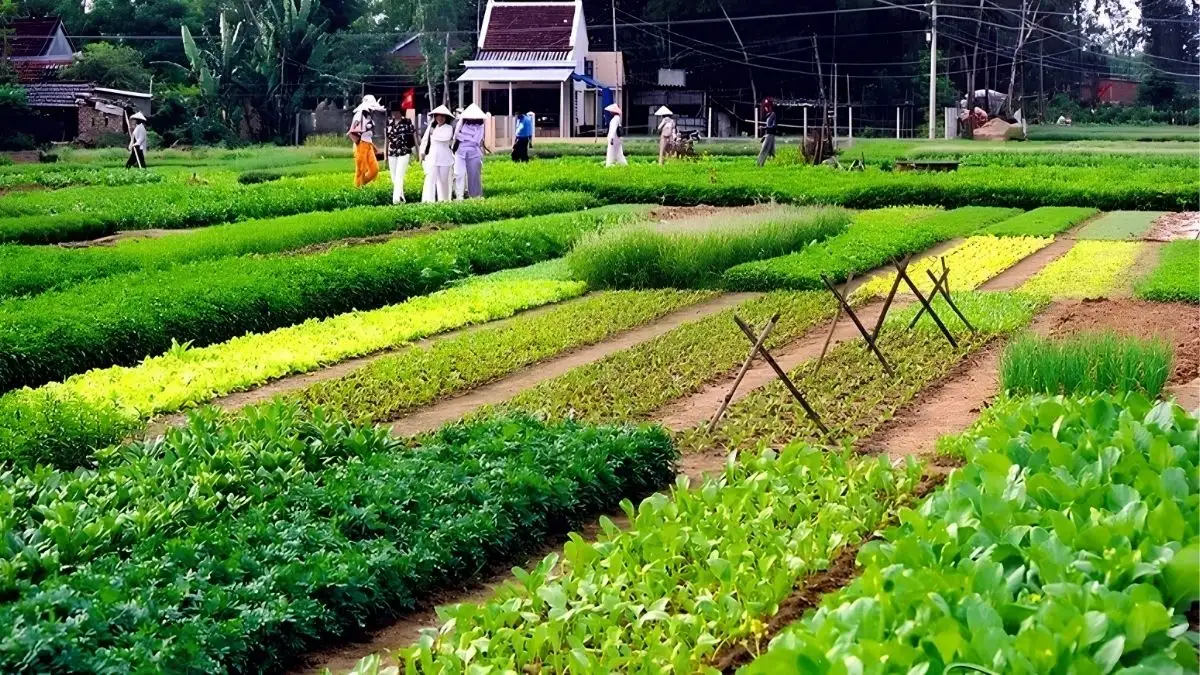
This is also where practical questions matter more than promotional descriptions. Ask whether properly fitted child-sized life jackets are available, how many people will be in each boat, whether spinning demonstrations can be avoided and what happens if the weather changes.
The Cam Thanh Basket Boat Tour offered by Bliss Hoi An lasts approximately two to three hours, with transport, guiding and the boat experience included. A light-meal option is available, making it possible to choose a shorter outing without arranging a separate restaurant stop.
My take: Cam Thanh would be my first area to investigate for a family that has limited time or wants to avoid cycling. That said, a short tour is not automatically a suitable tour for a baby or toddler. I would only recommend booking once the operator has confirmed the child’s eligibility and appropriate safety arrangements.
Tra Nhieu and Kim Bong: Better for families who want to keep moving
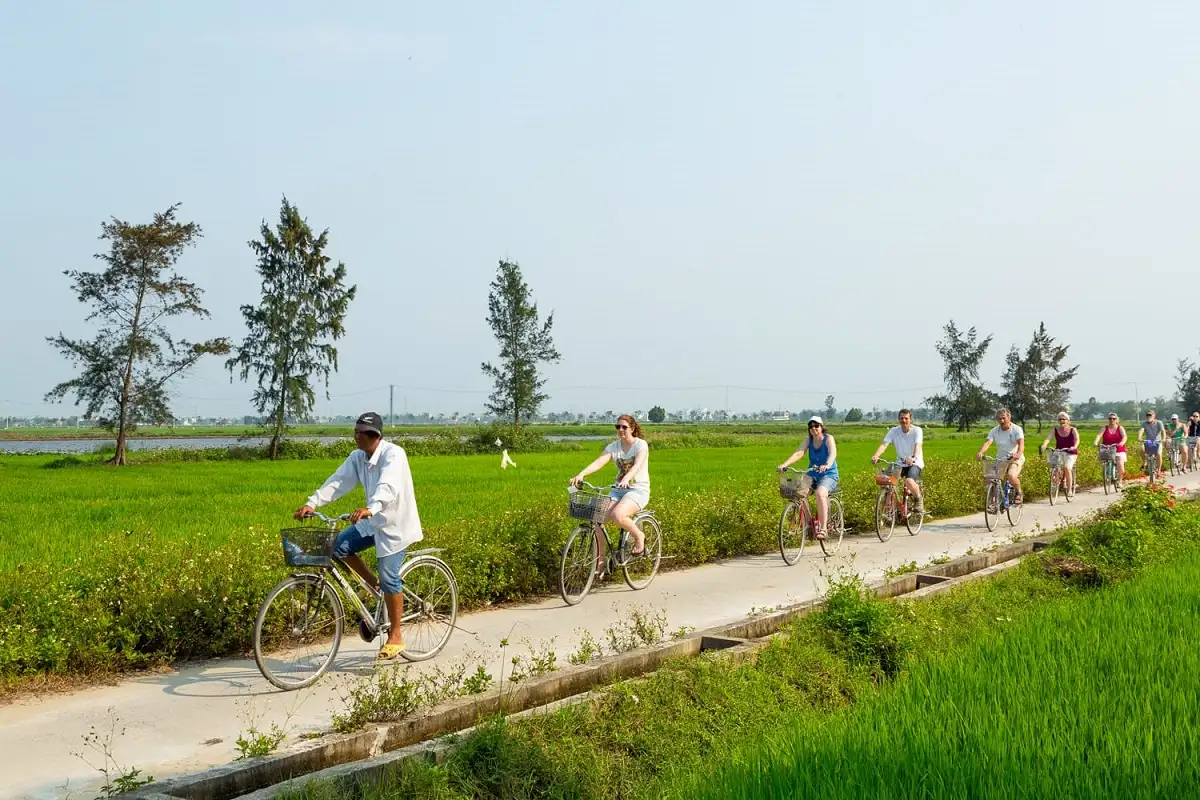
While Tra Que centres on agriculture and Cam Thanh on the waterways, the villages around Tra Nhieu and Kim Bong offer a broader introduction to traditional village life. Kim Bong is associated with woodworking and boatbuilding, while the wider countryside offers opportunities to discover activities such as rice-paper making and mat weaving. These are not merely demonstrations of unfamiliar crafts; they help explain how local households have traditionally earned their living and how skills are passed between generations.
Bliss Hoi An’s Tra Nhieu Eco Bicycle Tour brings several of these experiences together. Its published itinerary includes cycling along village roads, observing wooden boatbuilding, trying rice-paper making, learning about mat weaving and travelling through coconut waterways by basket boat.
There is more variety here than in a single-activity excursion, but that comes with a trade-off. The tour takes approximately five hours and uses bicycles as a principal means of getting around. Even when the roads are quieter than those in town, parents still need to consider traffic, weather, riding ability and how children handle longer periods outdoors.
For a family with teenagers or confident young cyclists, this is arguably the most interesting option of the three. It combines physical activity with several opportunities to learn about local crafts and rural life. For families with preschoolers or children who have only recently learned to ride, I would be inclined to choose a less demanding programme unless the operator can offer a suitable alternative.
Choosing by age matters, but so does your child’s personality
It is tempting to divide family tours into neat age groups, yet age alone doesn’t tell you whether a child will enjoy an activity. Some six-year-olds are perfectly happy spending an hour on a craft project, while others would rather be moving outdoors. A teenager interested in food may enjoy a cooking class more than a long cycling excursion.
I would start with what your children already enjoy at home and then look for a countryside experience that introduces a Vietnamese cultural element.
For a child who likes painting, building or making things, a lantern workshop has an obvious appeal. For someone fascinated by animals, plants and the natural world, the vegetable gardens at Tra Que provide more to discover. Children who enjoy cycling and exploring new places may find the Tra Nhieu route more rewarding, provided they are capable of managing the journey safely.
For families with children under five, I would be especially cautious about choosing a tour solely because the operator lists a free admission rate. A complimentary ticket does not tell you whether a child can use the transport safely, participate in all the activities or remain comfortable throughout the programme.
The same applies when travelling with grandparents. A tour that requires little walking may still involve uncomfortable boarding arrangements, steps or long periods in the heat. Ask about the complete experience, not just the activity advertised in the headline. There is no need for every family member to participate in every activity. A successful family excursion is one where people can enjoy different parts of the experience without feeling that they are holding everyone else back.
How much should a family budget for a Hoi An countryside tours for families?
Price comparisons can be misleading when one tour includes only a short activity and another combines transport, meals, guiding and several experiences. The useful question is not simply which tour is cheapest, but what your family will receive and which expenses are not included.
Bliss Hoi An publishes the following rates for its countryside programmes:
| Tour | Published adult rate | Duration |
| Basket Boat Tour, without light meal | 480,000++ VND | 2 – 3 hours |
| Basket Boat Tour, with light meal | 640,000++ VND | 2 – 3 hours |
| Lantern Making & Tra Que Farming Tour | 790,000 VND | Approximately 6 hours |
| Tra Que Farming & Cooking Class | 800,000 VND | Approximately 5.5 hours |
| Tra Nhieu Eco Bicycle Tour | 850,000 VND | Approximately 5 hours |
The difference becomes clearer when you calculate the cost for an actual family. Consider two adults travelling with two children aged seven and nine. For the Lantern Making & Tra Que Farming Tour, the published adult price is 790,000 VND, while children aged five to nine are listed at 75% of the adult rate. That produces the following indicative calculation:
| Travellers | Calculation | Cost |
| 2 adults | 2 × 790,000 VND | 1,580,000 VND |
| 2 children aged 7 and 9 | 2 × 592,500 VND | 1,185,000 VND |
| Family total | 2,765,000 VND | |
This is not a final booking quotation. The tour page lists round-trip resort transfers as an additional charge, and participation requirements must still be confirmed.
A family planning the Basket Boat Tour without a light meal would arrive at a different result. With two adults at 480,000++ VND each and two children aged five to ten at 340,000++ VND each, the published base rates add up to 1,640,000++ VND.
The comparison illustrates an important point: the shorter basket boat excursion may be less expensive for this family, but it offers a narrower range of activities. The longer farming and lantern-making programme costs more while providing a more varied cultural experience. Neither is automatically better value; that depends on what your children are likely to enjoy. For families looking at private departures or alternative arrangements, it’s worth asking the Bliss Hoi An Travel Desk for a full quotation that includes transport, child rates and any requested changes. A clear total price is more useful than comparing adult ticket rates in isolation.
When is the best time to explore Hoi An’s countryside with kids?
Timing can make as much difference as the choice of activity, particularly in a region where heat and seasonal rain can affect outdoor travel.
According to Vietnam Tourism’s official weather guide, Hoi An generally experiences warmer, sunnier conditions from February through August, with May to August bringing particularly hot weather. The wetter period usually extends from September into January, and heavy rain or flooding may affect travel in the later months of the year.
For families travelling during the hotter months, I would favour a morning departure. Children are generally better placed to enjoy farming, walking or cycling before the heat becomes tiring, and there is less pressure to keep going through the afternoon.
This is more than a comfort issue. The CDC’s guidance on travelling safely with infants and children emphasises the importance of protecting children from excessive sun exposure, particularly around midday, and using appropriate shade, clothing and sun protection.

During the rainy season, flexibility becomes the priority. A little rain may not ruin a countryside visit, but flooded roads, strong winds or poor water conditions are different matters. Families should confirm cancellation and rescheduling arrangements rather than assuming outdoor activities will operate regardless of the forecast.
I would also avoid booking a long countryside excursion immediately after a particularly demanding travel day. An early morning departure may sound appealing in theory, but it becomes less attractive when the family arrives late the night before.
The details I’d check before booking any family countryside tour
One of the frustrations of comparing family tours online is that descriptions often devote more space to the activities than to the practical details parents need. A programme might promise an unforgettable cycling adventure without specifying the distance. Another may describe a basket boat ride as suitable for families but provide no information about life-jacket sizes or how the boat is operated. Those omissions don’t necessarily indicate a poor-quality tour. They do, however, make it harder to judge suitability.
Before committing to a cycling excursion, I would want to know the approximate riding distance, whether the route uses public roads and what happens if a child becomes tired halfway through. For a boat tour, I’d ask about child-sized life jackets, passenger capacity, weather restrictions and the possibility of choosing a gentle ride. For any programme involving cooking, it’s worth checking how children are supervised around knives and hot equipment.
If your family is considering a vehicle-based countryside excursion instead, ask about the available seating and child-restraint arrangements rather than assuming that a vintage Jeep or motorbike experience will suit younger passengers. Bliss also offers a Hoi An Countryside Jeep Tour, but I’d treat its suitability for children as something to confirm directly rather than an automatic alternative to cycling.
Finally, ask about the time spent travelling from your accommodation. Families staying at a beachfront resort outside central Hoi An need to consider the entire door-to-door outing, not just the duration advertised for the activity itself.
These are the small details that can turn a good-looking itinerary into an enjoyable family day. For a broader look at planning around different ages and energy levels, our guide to common family vacation mistakes in Hoi An discusses why an overpacked itinerary often creates more stress than enjoyment.
A better way to fit a countryside tour into your family holiday
If you’re staying for three or four nights, I would generally suggest choosing one main countryside experience and leaving room for the Ancient Town, the beach and unplanned time together. A family interested in traditional culture might spend one morning farming and making lanterns, then return to the resort for lunch or an afternoon by the pool. Another family might prefer a short basket boat trip followed by a relaxed evening in town.
There is little reason to book both a long cycling tour and a separate farming excursion unless your children genuinely enjoy that type of activity. These programmes may cover different villages, but they can also involve overlapping cultural experiences. For guests staying at Bliss Hoi An Beach Resort & Wellness, this approach fits naturally with a holiday that combines cultural visits with time at the beach. The resort’s Travel Desk can help guests compare available excursions, understand transfer arrangements and check which programmes may suit their family.
My suggestion would be to tell the team what your children enjoy before asking which tour is most popular. A child who loves drawing, for example, may get far more out of lantern making than a longer route through several villages. A family with limited time may be happier with Cam Thanh and an unhurried afternoon than a packed day of sightseeing.
Read more: Countryside experiences and sightseeing tours available through Bliss Hoi An
Frequently asked questions
Can toddlers join a Hoi An countryside tour?
Some shorter activities may be possible for toddlers, but suitability depends on the operator, transport and safety arrangements. Parents should confirm whether their child’s age and size are permitted before booking. Tours that include bicycles, boats or open-air vehicles require particular attention to appropriate safety equipment.
Is Tra Que Vegetable Village suitable for children?
Tra Que is an appealing destination for children interested in plants, farming and hands-on activities. However, a visit to the village and a combined six-hour tour are different experiences. Families with younger children should consider the full itinerary, including cycling and time outdoors, before choosing a programme.
How long does a basket boat tour in Hoi An take?
Bliss Hoi An’s published Basket Boat Tour lasts approximately two to three hours, including the organised programme. Actual travel time will depend on your departure point and transport arrangements. Parents should confirm whether a gentle ride is available and what safety requirements apply to children.
Are private countryside tours available for families?
Private or customised arrangements may be available depending on the tour and date. Families seeking flexibility should ask the operator about private departures, alternative transport, rest breaks and any additional charges rather than assuming these are included in a standard booking.
Should we book a morning or afternoon countryside tour?
Morning tours are often a more comfortable option during the hotter months, particularly when children will be cycling or working outdoors. In the rainy season, the weather forecast and operator’s safety advice should take priority over a preferred departure time.

Related Posts
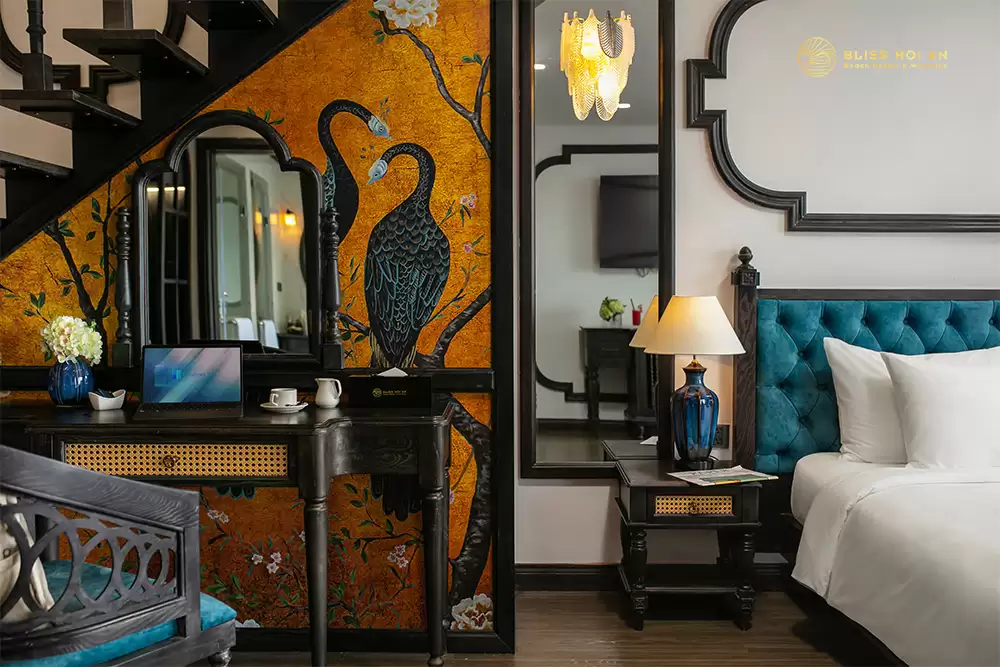
Hoi An family suite vs villa: Which is better for a family of four?

Day trips from Hoi An: 20 ideal and interesting destinations
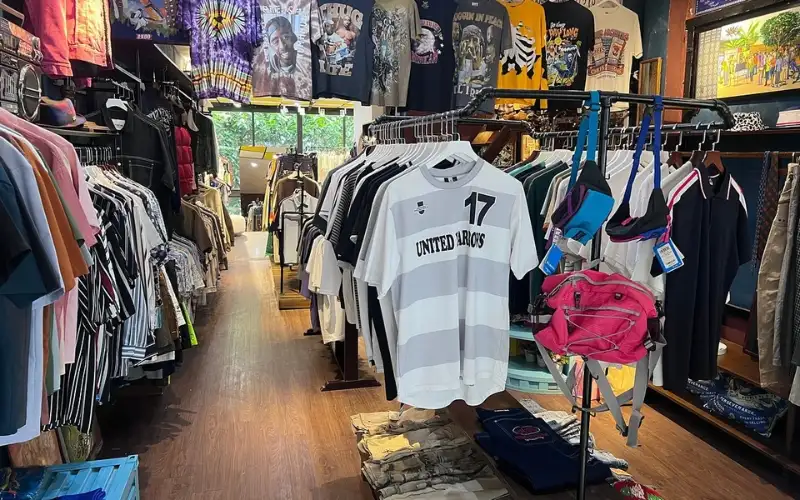
Hoi An thrift shopping: 5 local vintage shops, prices and a walkable route

Jeep tour Hoi An to Hue: The most scenic way to travel via Hai Van Pass

Hoi An vespa adventures: Best tours, prices & Booking guide