


Top 15+ Temple near Hoi An you must visit
Escape the bustle of Hoi An and find serenity among the town’s most beautiful temples near Hoi An. These peaceful pagodas and sacred sites offer quiet corners for reflection, meditation, and a deeper connection to the local culture. From ornate halls to shaded courtyards, each temple provides a calm retreat, allowing travelers to slow down, absorb the spiritual ambiance, and appreciate the timeless beauty and traditions that make Hoi An truly unforgettable.
Top 15 temple near Hoi An
Discover the most iconic and hidden temple near Hoi An, each offering a unique glimpse into the town’s history, culture, and spiritual heritage. From well-known landmarks to peaceful pagodas tucked away in quiet corners, these 15 temples provide a memorable journey for travelers seeking culture, reflection, and serene experiences.
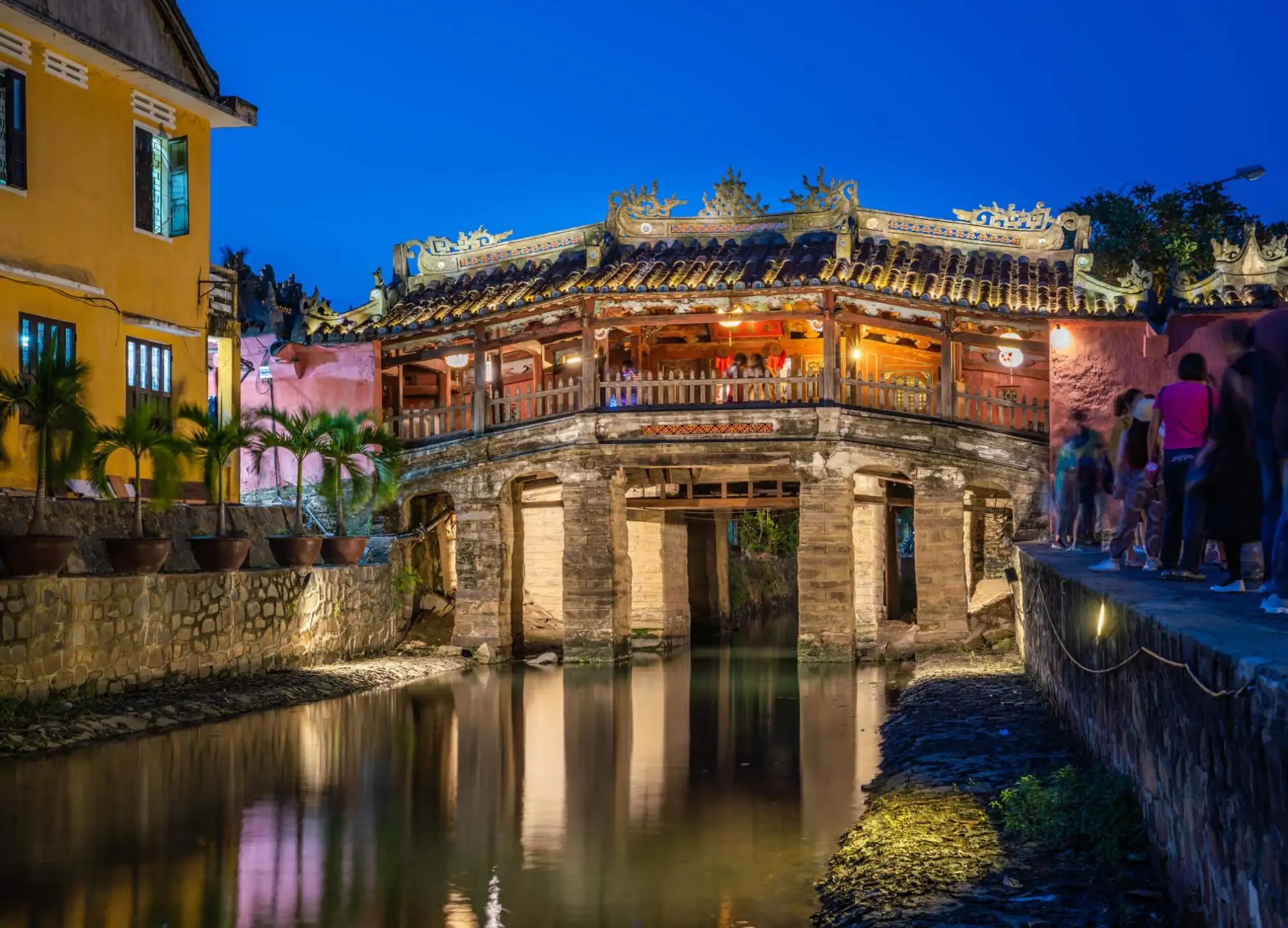
Japanese Covered Bridge – An iconic temple near Hoi An you shouldn’t miss
- Address: Located in the heart of Hoi An Ancient Town, connecting Nguyen Thi Minh Khai Street and Tran Phu Street
- Entrance fee: Included in the Hoi An Ancient Town ticket (around 120,000 VND per adult)
- Opening hours: Approximately 08:00 – 17:00 for interior visits; the exterior can be seen anytime
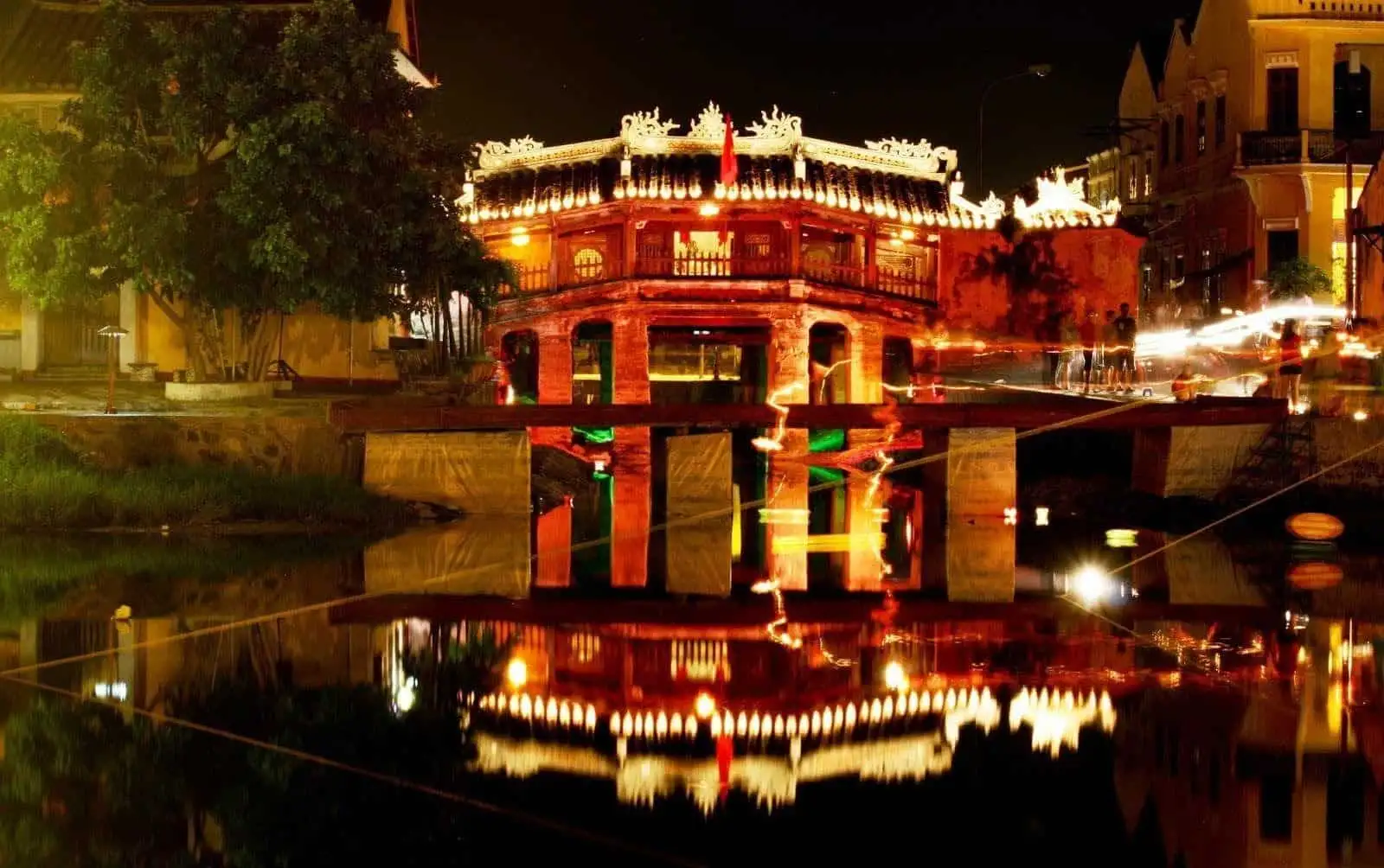
The Japanese Covered Bridge is one of the most recognizable landmarks when searching for a “temple near Hoi An.” Built in the early 17th century by the Japanese merchant community, the structure was originally designed to connect different parts of the town. What makes it unique is that it also houses a small temple inside, dedicated to the deity Tran Vo (the God of Weather), blending functionality with spiritual significance.
Thanks to its central location, getting to the bridge is incredibly easy. If you are already exploring Hoi An Ancient Town, you can simply walk there within minutes. This convenience makes it an ideal stop for travelers who want to visit a temple near Hoi An without traveling far. For those staying outside the old town, options like bicycles, taxis, or Grab rides are all quick and accessible.
Architecturally, the bridge stands out for its distinctive mix of cultural influences. While the curved roof and wooden structure reflect traditional Japanese design, decorative elements also show Chinese and Vietnamese touches. At both ends of the bridge, you’ll find statues of a dog and a monkey, believed to symbolize the years when construction began and ended. Inside, the small shrine creates a quiet, sacred atmosphere that contrasts with the busy streets outside.
Visiting the Japanese Covered Bridge is not just about sightseeing but also about experiencing the atmosphere of Hoi An. Many travelers stop here for photos, especially in the early morning when the area is peaceful and less crowded. In the evening, the bridge takes on a completely different charm as lanterns light up the surroundings, reflecting beautifully on the water and creating a classic Hoi An scene. Its location also makes it easy to combine with nearby attractions, cafés, and traditional houses.
The best time to visit is early morning or late afternoon, when the weather is cooler and the lighting is ideal for photography. Evening visits are also worth considering if you want to experience the vibrant and colorful ambiance of the old town.
When visiting, keep in mind that this is both a historical and spiritual site. Dress modestly, be respectful, and avoid blocking the walkway for too long, especially during peak hours. If you plan to step inside for a closer look, having your Old Town ticket ready will help save time.
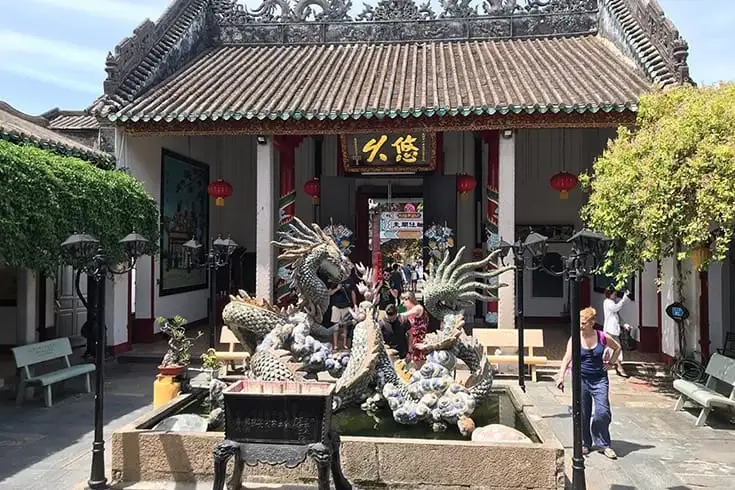
From the outside, the temple immediately catches your attention with its bold red gate, curved tiled roof, and intricate Chinese-style decorations. Inside, the atmosphere becomes noticeably calmer, with soft lighting and the subtle scent of incense creating a sense of reverence. The main altar features a striking statue of Quan Cong, depicted with a dignified expression, long beard, and commanding posture. Surrounding details, including guardian statues and ornate carvings, highlight the craftsmanship and artistic traditions brought by the Chinese community.
What makes Quan Cong Temple particularly appealing is its authenticity. It is not overly crowded, allowing visitors to take their time to observe the architecture, appreciate the details, or simply pause and enjoy a quiet moment away from the busy streets outside. For those interested in cultural history, the temple offers valuable insight into the influence of Chinese merchants in shaping Hoi An’s heritage.
The best time to visit is in the morning or early afternoon, when the number of visitors is still manageable and the interior remains peaceful. Since it is located within the Old Town, you can easily combine it with other attractions without needing additional travel time.
When visiting, remember that this is an active place of worship. Dress modestly, keep noise to a minimum, and be mindful when taking photos so as not to disturb others who are there for prayer.
Phuc Kien Assembly Hall
- Address: 46 Tran Phu Street, Hoi An Ancient Town
- Entrance fee: Included in the Old Town ticket, around 120,000 VND per adult
- Opening hours: From 08:00 to 17:00
Phuc Kien Assembly Hall, also known as Fujian Assembly Hall, is one of the most visually striking temple-like sites in Hoi An. Originally built in the 17th century by Chinese immigrants from Fujian, it was first used as a gathering place for the community before being transformed into a temple dedicated to Thien Hau, the Goddess of the Sea. Today, it stands as both a cultural landmark and a spiritual site, attracting visitors who are interested in history, architecture, and local beliefs.
Located right on Tran Phu Street, the assembly hall is easy to reach on foot while exploring the Old Town. Its central position makes it a convenient stop in any walking itinerary, especially if you are visiting nearby attractions like Quan Cong Temple or the Japanese Covered Bridge. Despite being in a busy area, the space inside feels more structured and ceremonial, offering a different atmosphere compared to other temples nearby.
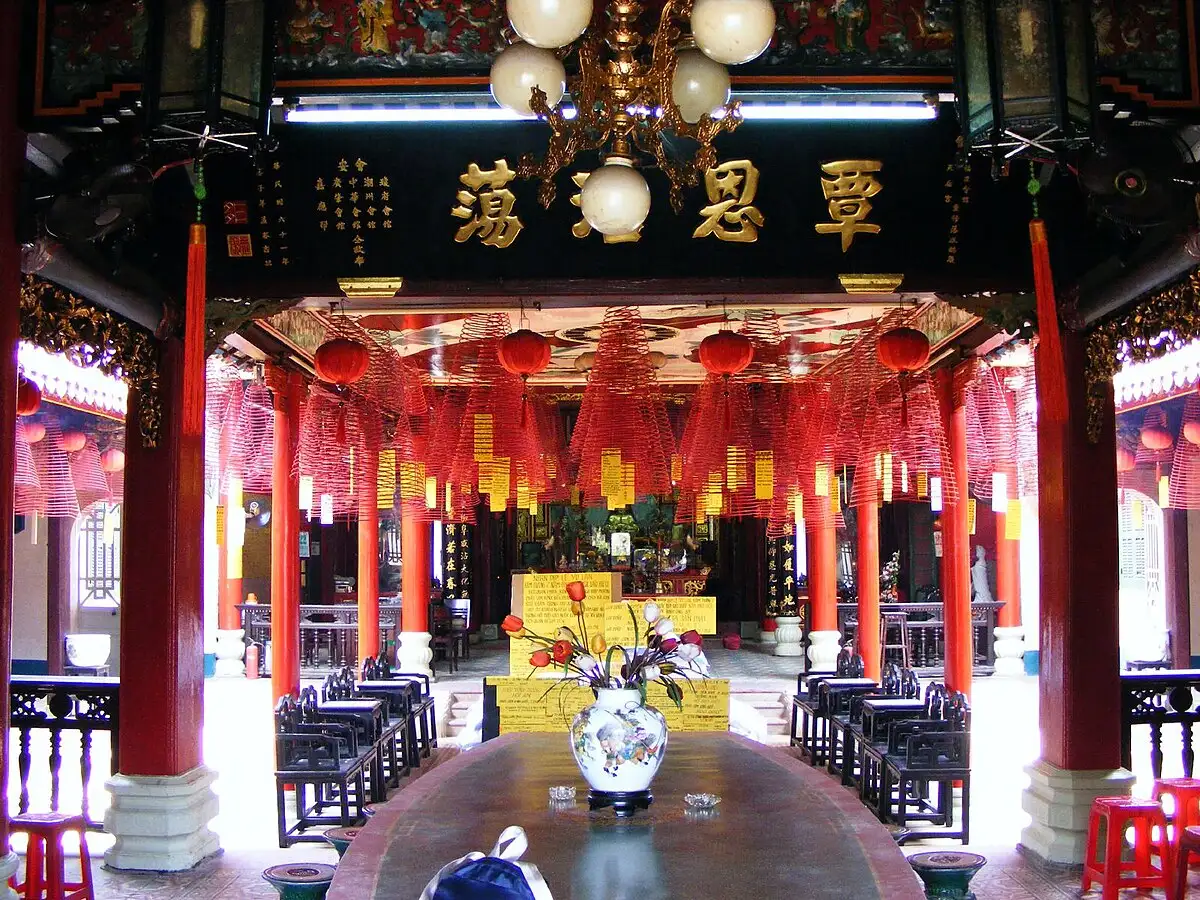
One of the most impressive aspects of Phuc Kien Assembly Hall is its architecture. The entrance gate is grand and colorful, leading into a series of courtyards filled with intricate statues, ornate altars, and detailed carvings. Bright red, gold, and green tones dominate the design, reflecting strong Chinese influences. Inside, you will find large spiral incense coils hanging from the ceiling, creating a unique visual effect while filling the air with a gentle fragrance. These details make the hall especially appealing for photography, but also meaningful for those interested in traditional worship practices.
Chuc Thanh Pagoda
- Address: 7 Ton Duc Thang Street, about 2 km from Hoi An Ancient Town
- Entrance fee: Free
- Opening hours: From 07:00 to 18:00
Chuc Thanh Pagoda offers a completely different experience compared to the busy temples inside Hoi An Old Town. Founded in 1454, this is considered the oldest pagoda in the area and plays an important role in the development of Buddhism in Central Vietnam. It was established by a Chinese monk named Minh Hai, who later founded the Chuc Thanh Zen sect, still influential today.
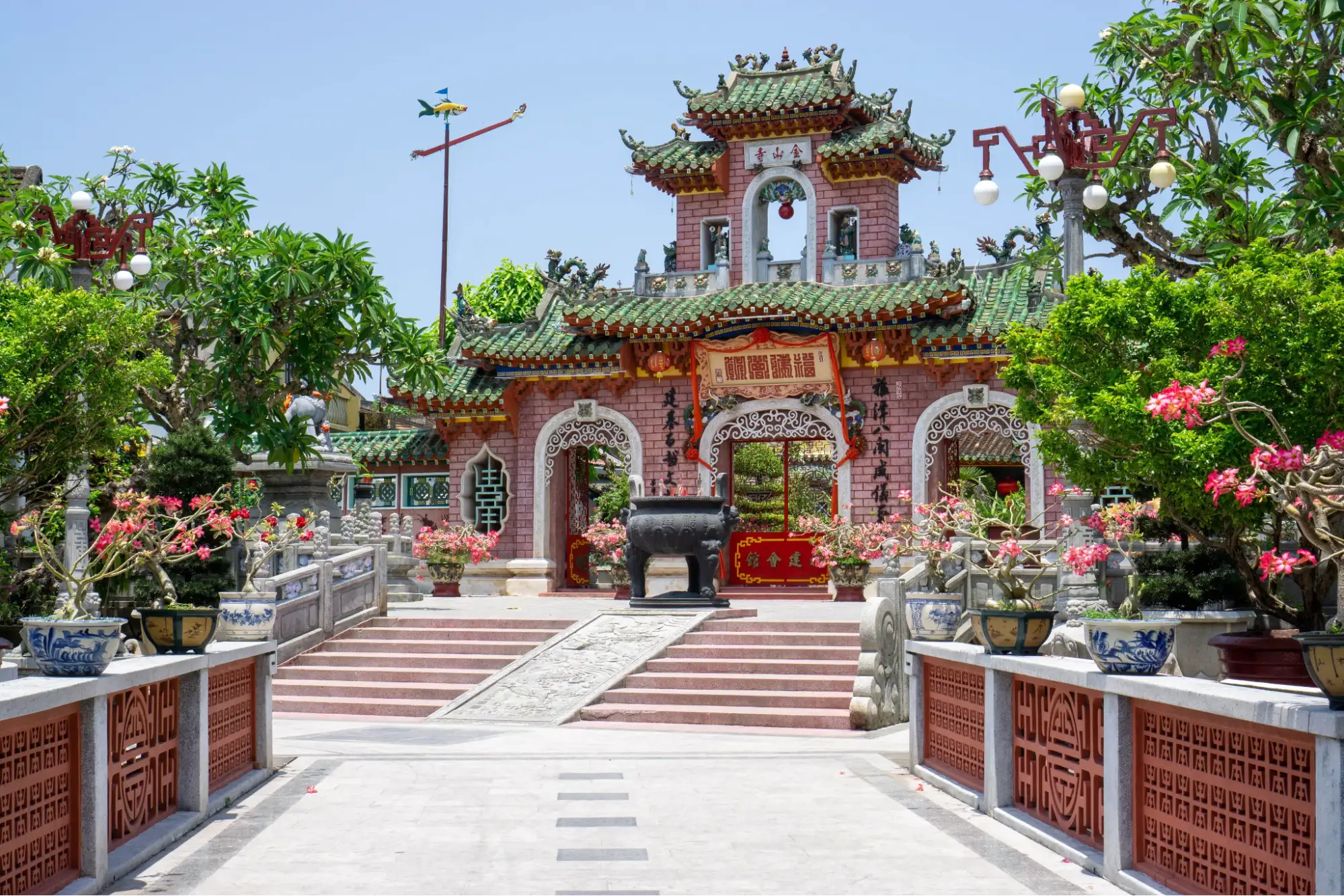
The pagoda’s architecture reflects a blend of Vietnamese and Chinese styles, with traditional tiled roofs, wooden structures, and a peaceful courtyard. Unlike more decorative temples, Chuc Thanh has a simpler, more grounded aesthetic. Inside, the main hall houses statues of Buddha and other important figures, arranged in a way that emphasizes spiritual practice rather than visual display.
What truly stands out here is the atmosphere. The space is quiet, shaded by old trees, and often filled with the soft sound of chanting or the scent of incense. You will not find large crowds or busy photo spots, which makes it ideal for those who want a slower, more reflective experience. It is also a place where you can observe local monks and daily religious activities, offering a more genuine glimpse into Buddhist life.
Phap Bao Pagoda
- Address: 07 Hai Ba Trung Street, about 1 km from Hoi An Ancient Town
- Entrance fee: Free
- Opening hours: From 07:00 to 18:00
If most temples in Hoi An feel like tourist attractions, Phap Bao Pagoda offers something more grounded and local. This is not a historic monument or a UNESCO site, but a functioning Buddhist temple where daily life continues as usual. That difference alone makes it worth visiting if you want to experience a more authentic side of spirituality in Hoi An.
The pagoda sits just outside the Old Town, close enough to reach in a few minutes but far enough to feel noticeably quieter. You can easily walk or cycle here, and the short distance makes it a good stop between sightseeing spots. Unlike the crowded streets of the Old Town, the space around the pagoda feels open and relaxed, with fewer tourists and more locals.
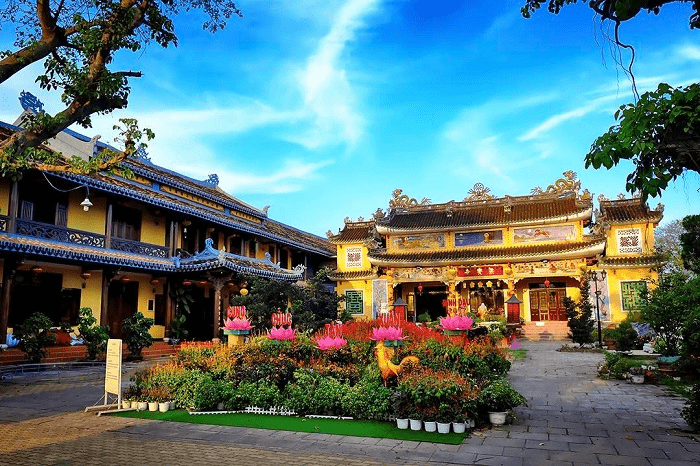
One of the most distinctive features of Phap Bao Pagoda is its spacious layout. Instead of narrow corridors or dense structures, the temple is built around a wide courtyard with plenty of greenery. A large white Buddha statue stands at the center, creating a strong visual focus and a sense of calm. The design is simple but intentional, emphasizing openness, light, and balance rather than heavy decoration.
Ba Mu Temple
- Address: Hai Ba Trung Street, about 1 km from Hoi An Ancient Town
- Entrance fee: Free
- Opening hours: From 07:00 to 18:00
Ba Mu Temple is quite different from most temples near Hoi An, both in meaning and in the way visitors experience it. Originally part of a larger complex built in the 17th century, the temple is dedicated to the Twelve Midwives and fertility goddesses in Vietnamese folk belief. Rather than focusing on well-known deities like Buddha or Confucian figures, this temple reflects local spiritual traditions related to childbirth, protection, and family.
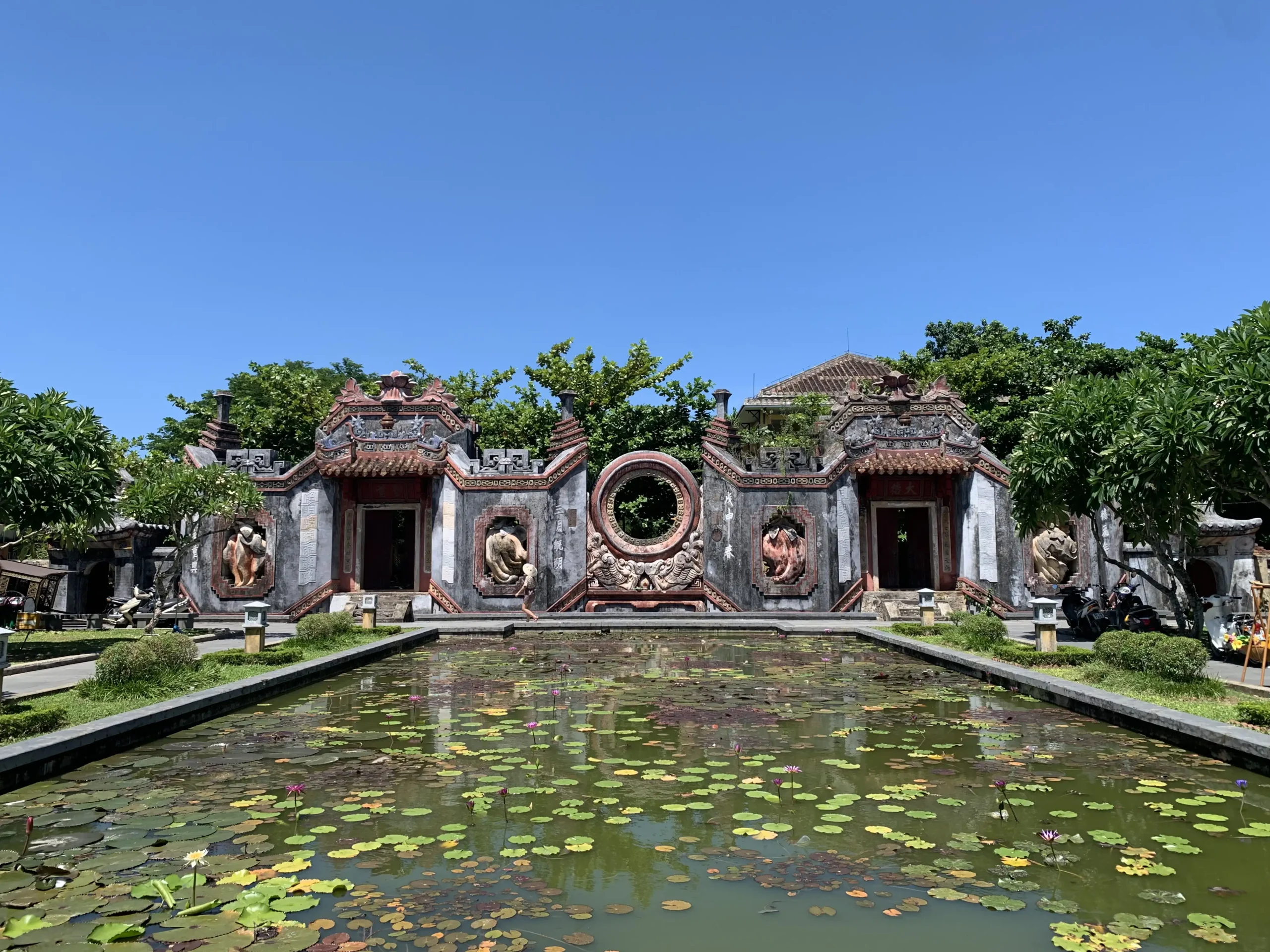
Even though it has become known for photography, the site still holds cultural significance. The connection to fertility worship and traditional beliefs makes it meaningful for locals, especially families. Compared to larger temples, the space feels more open and less formal, allowing visitors to explore freely without feeling rushed.
The best time to visit is early morning or late afternoon, when the light reflects nicely on the water and the area is quieter. Midday can be harsh for photos due to strong sunlight and fewer shadows.
Cam Pho Temple
- Address: Cam Pho Ward, near the western edge of Hoi An Ancient Town
- Entrance fee: Free
- Opening hours: From 07:00 to 17:30
Cam Pho Temple is not the kind of place you visit for impressive architecture or iconic photos. Instead, it offers something more subtle, a glimpse into the everyday spiritual life of Hoi An residents. If you have already explored the main attractions and want a quieter, more local perspective, this is where the experience shifts.
Located just a short walk from the Old Town, the temple is easy to reach but often overlooked. As you move away from the busier streets, the surroundings gradually become less crowded, and the pace slows down. By the time you arrive, the atmosphere feels noticeably different, with fewer tourists and more signs of local life.
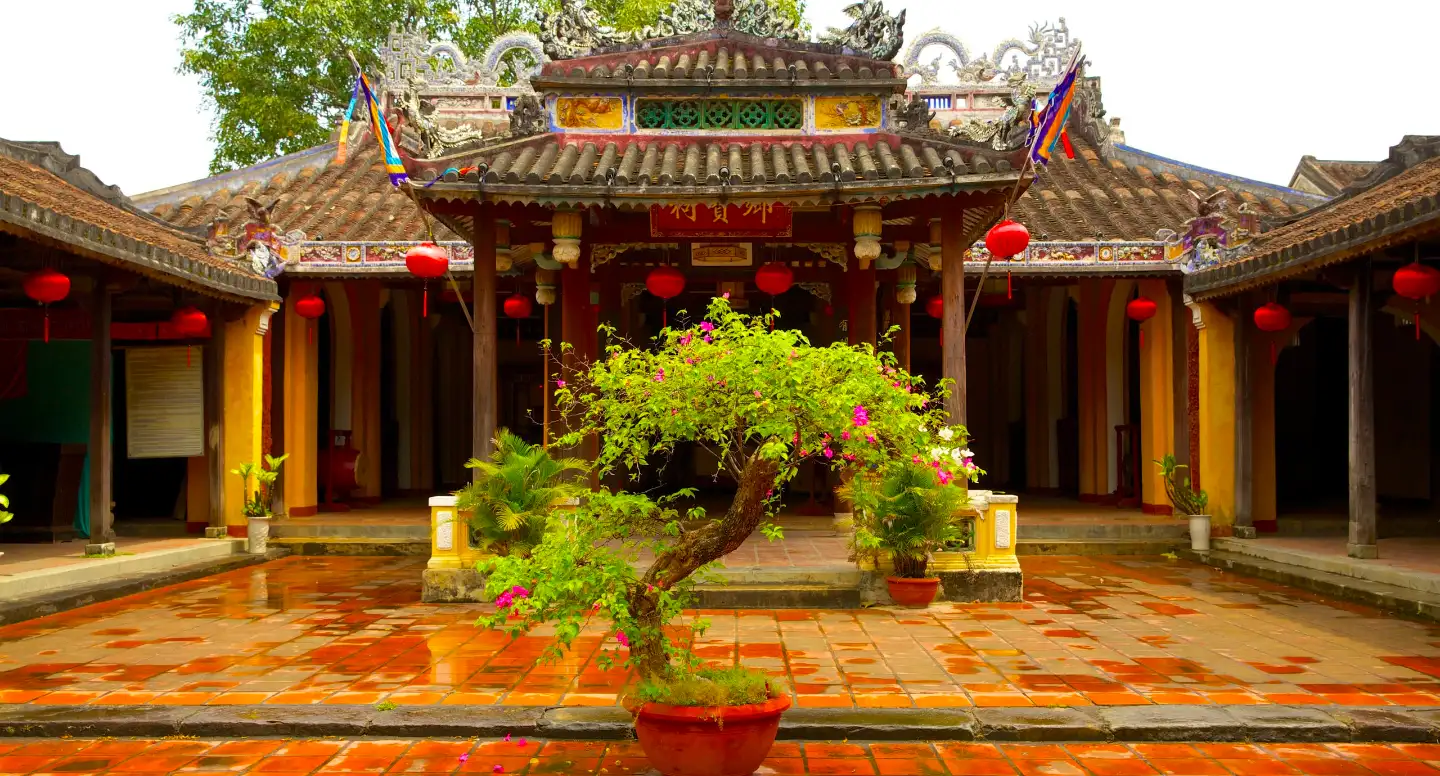
This temple showcases a blend of Vietnamese and Chinese architectural styles, featuring intricately carved wooden doors, colorful roof tiles, and a serene courtyard lined with bonsai trees. Situated near the iconic Japanese Covered Bridge and Hoi An Central Market, it’s easy to include Cam Pho in a walking tour of the Old Town.
The temple opens daily from 8:00 AM to 5:30 PM, with an entrance fee of 120,000 VND for adults and children over 15, while younger visitors enter for free. Guests can stroll through the tranquil grounds, admire the detailed carvings, observe local rituals, or take photos of the peaceful setting that combines cultural heritage with a quiet retreat from the bustling streets.
Phuoc Lam Pagoda
- Address: Hai Ba Trung Street, Tan An Ward, about 2 km from Hoi An Ancient Town
- Entrance fee: Free
- Opening hours: From 07:00 to 18:00
Phuoc Lam Pagoda is one of the oldest Buddhist temples in Hoi An, but unlike many historic sites, it still functions primarily as a monastery. Founded in the 18th century, the pagoda is closely associated with the spread of Lam Te Zen Buddhism in Central Vietnam. This gives it a deeper religious significance beyond its age, making it an active spiritual center rather than just a place to visit.
Located slightly outside the Old Town, the pagoda is easy to reach by bicycle or motorbike within a few minutes. The journey itself is part of the experience, as you leave behind the busy tourist streets and move into a quieter residential area. This shift in atmosphere becomes noticeable as soon as you arrive, with fewer crowds and a more relaxed pace.
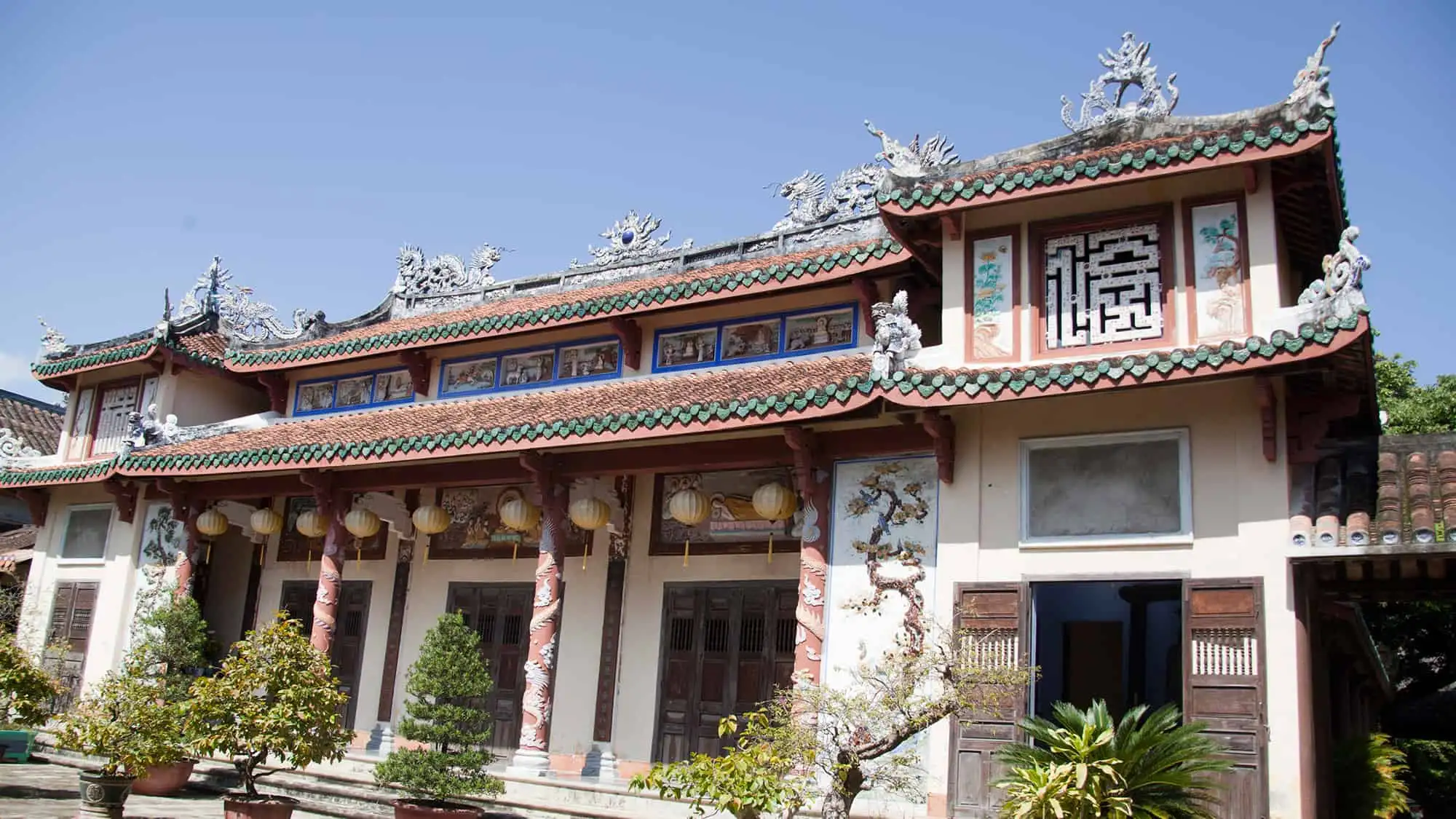
For visitors, the experience here is more about observation and reflection than sightseeing. There are no major “must-see” highlights, but that is part of the appeal. You can walk quietly around the grounds, take in the atmosphere, and gain a better understanding of how Buddhist practice continues in everyday life.
The best time to visit is early morning or late afternoon, when the temperature is cooler and the pagoda is at its most peaceful. Morning visits are especially rewarding if you happen to hear chanting or see monks beginning their day.
Hai Tang Pagoda
- Address: Hon Lao Island, Cham Islands, about 15 km offshore from Hoi An
- Entrance fee: Usually included in Cham Islands tour packages or island entrance fee
- Opening hours: From 07:00 to 17:00
Perched on Cu Lao Cham Island, Hai Tang Pagoda is a serene spiritual sanctuary that has stood since 1758. Located in Bai Lang village, Tan Hiep commune, the pagoda reflects a unique blend of Buddhist and local islander traditions, honoring both Buddha and regional deities.
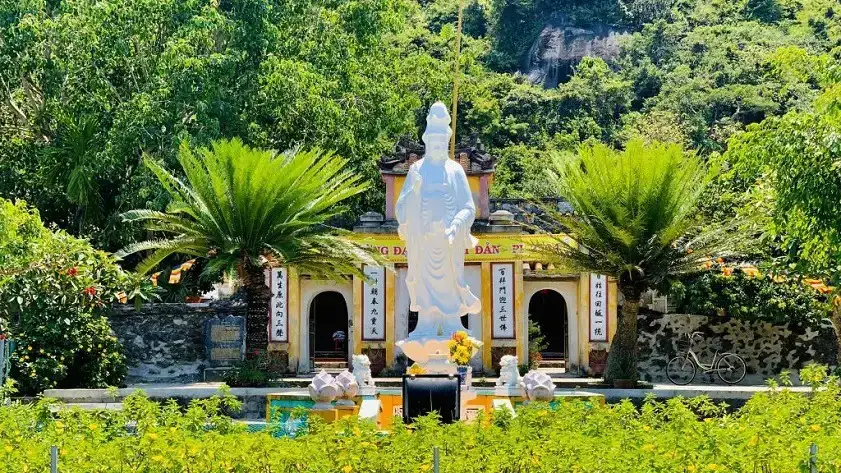
Its striking red-tiled roof, yellow walls, and spacious garden create a tranquil setting, while the majestic statue of Quan Am at the front of the temple inspires reverence and contemplation. Visitors can reach the pagoda by boat from Cua Dai Beach, taking about 1.5 hours by traditional boat or 30 minutes via speedboat.
Once there, guests can explore the historic architecture, enjoy the peaceful surroundings, participate in daily rituals, or take in the stunning coastal scenery. With nearly 300 years of history, Hai Tang Pagoda remains a must-visit temple near Hoi An for those seeking cultural depth, spiritual insight, and a connection to the island’s heritage.
Vien Giac Pagoda
- Address: Dien Ban area, Quang Nam Province, about 15–20 km from Hoi An
- Entrance fee: Free
- Opening hours: From 07:00 to 18:00
Vien Giac Pagoda is one of those places that rarely appears on typical travel lists, but offers a very different perspective if you are exploring temples near Hoi An. Located in a more rural part of Quang Nam, the pagoda feels far removed from the busy atmosphere of the Old Town, making it suitable for travelers who want to go beyond the usual tourist route.
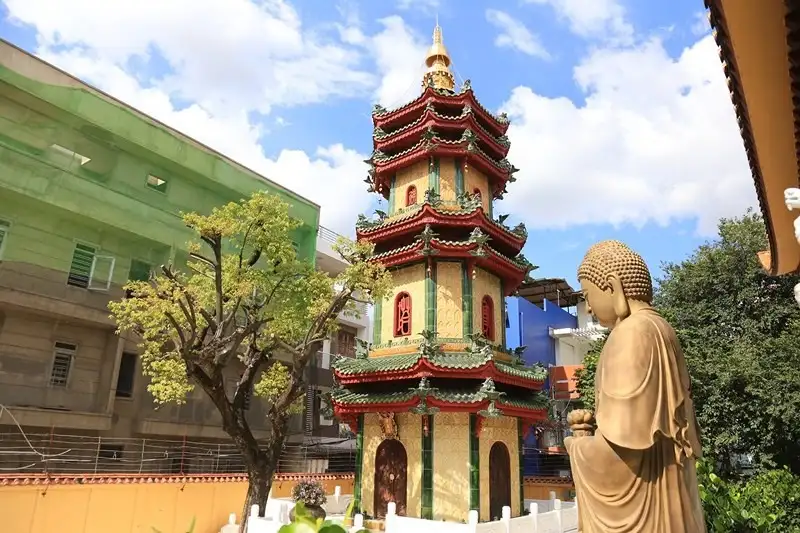
The temple features classic East Asian architecture, with a red-tiled roof, yellow walls, and a spacious courtyard that radiates tranquility. A highlight of the pagoda is the Dang Quang ceramic tower, decorated with exquisite porcelain patterns that showcase a blend of traditional craftsmanship and artistic creativity.
Visitors can wander the serene grounds, admire the intricate architectural details, participate in local worship rituals, or simply enjoy quiet contemplation. Open daily, Vien Giac Pagoda offers a peaceful retreat and remains a notable temple near Hoi An for travelers seeking both cultural insight and spiritual calm.
Van Duc Pagoda
- Address: Cam Ha Ward, about 3 km from Hoi An Ancient Town
- Entrance fee: Free
- Opening hours: From 07:00 to 18:00
Van Duc Pagoda is one of the largest and most active Buddhist temples in Hoi An, offering a noticeably different experience compared to smaller, quieter pagodas. Rather than focusing on historical architecture or tourist appeal, this pagoda stands out for its scale and its role as a living religious center where many local ceremonies and gatherings take place.
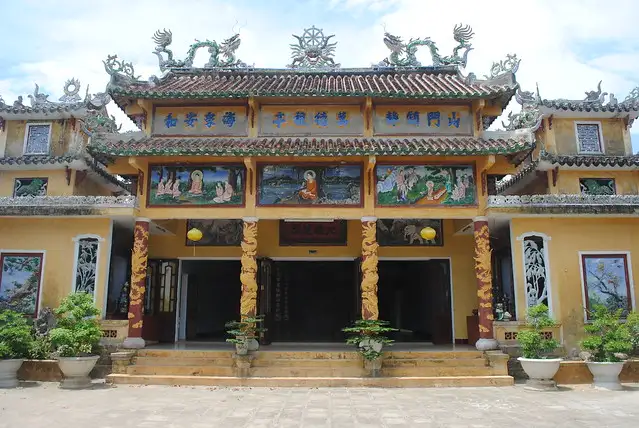
The pagoda showcases traditional East Asian architecture with elegantly curved roof tiles, richly decorated dragons, phoenixes, lions, and lotus motifs, all set within a spacious, tree-lined courtyard that invites quiet contemplation. Inside, visitors can admire precious Buddhist statues, a large bronze bell, stone steles, and the remarkable collection of 115 woodblock Buddhist scriptures, some dating back to 1482.
Throughout the year, Van Duc Pagoda hosts major Buddhist festivals, including Vesak, Vu Lan, and Tet, when worshippers release lanterns on the nearby De Vong River, creating a mesmerizing and spiritually uplifting atmosphere. Open daily from 8:00 AM to 5:00 PM with free entrance, perfect for those seeking both spiritual reflection and a deeper understanding of the region’s Buddhist heritage.
Quan Am Pagoda
- Address: Cam Ha Ward, about 3 km from Hoi An Ancient Town
- Entrance fee: Free
- Opening hours: From 07:00 to 18:00
Quan Am Pagoda, located at 13 Nguyen Hue Street, Minh An Ward, Hoi An, is one of the oldest Buddhist temples in the town, with origins dating back to before 1653. Originally built by the residents of Minh Huong Village, it was later relocated to its current position behind the Quan Cong Temple in the early 20th century.
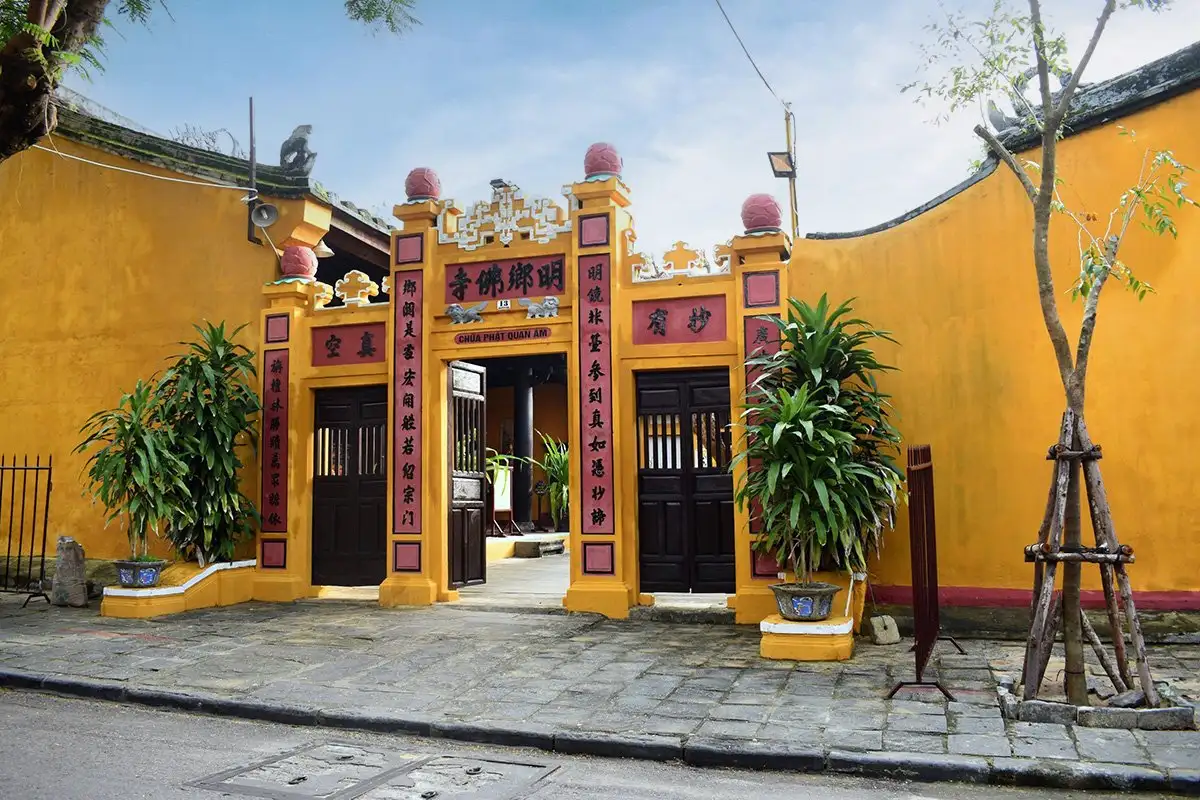
The pagoda is recognized as a national historical and cultural relic, reflecting the rich spiritual heritage of Hoi An. The architecture of Quan Âm Pagoda showcases traditional East Asian design, featuring wooden beams, columns, and intricate carvings crafted by skilled artisans from the renowned Kim Bong carpentry village.
The main hall is solemnly arranged with a central Buddha statue, flanked by altars dedicated to Bodhisattva Avalokiteshvara and other deities, creating a serene and contemplative atmosphere. Visitors to the pagoda can experience the peaceful ambiance, admire the detailed craftsmanship, and participate in local worship rituals.
Hy Hoa Temple
Hy Hoa Temple, located at 6 Nguyen Thai Hoc Street, Minh An Ward, Hoi An, is a spiritual sanctuary that honors the Five Elemental Immortals, revered in Vietnamese folk beliefs.
- Address: Cam Pho Ward, near Hoi An Ancient Town
- Entrance fee: Free
- Opening hours: From 07:00 to 17:30
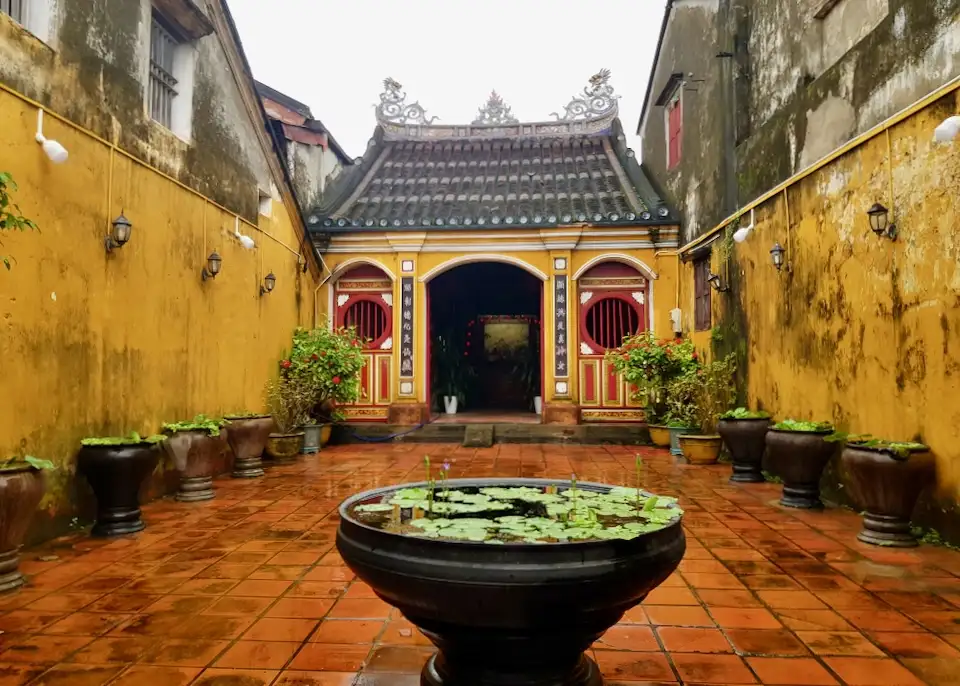
The temple’s architecture reflects traditional Vietnamese design, with a wooden structure adorned with intricate carvings and decorative elements. Inside, visitors can observe altars dedicated to the Five Elemental Immortals, each representing a fundamental aspect of existence. The serene atmosphere provides a peaceful retreat from the bustling streets of Hoi An.
While not as widely known as some other temples in the area, Hy Hoa Temple holds significance for those interested in exploring the diverse spiritual practices that have shaped Hoi An’s history. Its location near other historical sites makes it a convenient stop for travelers seeking to deepen their understanding of the town’s cultural landscape.
Nam Quang Pagoda
- Address: Cam Chau Ward, about 2–3 km from Hoi An Ancient Town
- Entrance fee: Free
- Opening hours: From 07:00 to 18:00
Nam Quang Pagoda, located at 36-430 Cua Dai Street, Cam Chau Ward, Hoi An. Stands out among the many temples near Hoi An for its striking architectural style inspired by Thai and Cambodian design. Founded in 1969 by Venerable Gioi Nghiem, the temple underwent a major restoration between 2005 and 2011 under the guidance of Venerable Phap Cao, transforming it into one of the most unique spiritual landmarks in the region.
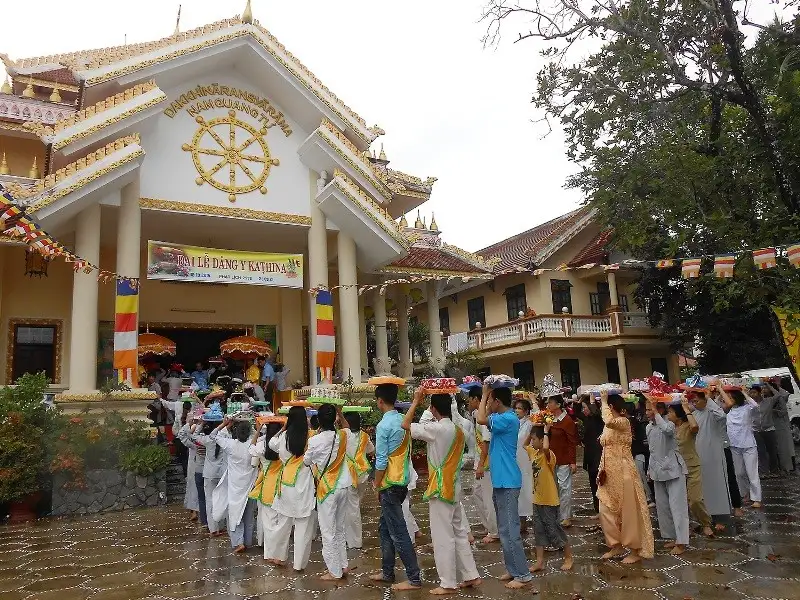
The spacious main hall, covering over 500 square meters, is adorned with colorful motifs and elegant pillars, while a two-story monks’ residence adds to the temple’s grandeur. Inside, the solemn atmosphere invites visitors to pause, reflect, and admire the blend of Southeast Asian influences rarely seen in central Vietnam.
Travelers often find Nam Quang Pagoda an inspiring stop, whether for quiet contemplation, photography of its unusual design, or learning more about the diverse spiritual traditions that enrich Hoi An. Thanks to its location just outside the ancient town, the temple is easily accessible by bicycle or motorbike, making it a convenient addition to a day of cultural exploration.
Travel tips for visiting temple near Hoi An
Visiting temples near Hoi An is a chance to connect with the town’s spiritual traditions while enjoying its serene cultural landmarks. To ensure a respectful and fulfilling experience, keep these practical tips in mind:
Travel tips for visiting temple near Hoi An (source: BDATrip)
- Best time to visit: Early morning (7:00-9:00) or late afternoon (16:00-17:30) offers cooler weather, softer light for photography, and fewer crowds.
- Dress code: Wear modest clothing that covers shoulders and knees. A light scarf is handy if you plan to visit multiple temples.
- Footwear: Choose shoes or sandals that are easy to slip off, as most temples require visitors to remove them before entering the main halls.
- Entrance fees & donations: Most temples are free, but small cash donations are appreciated and help with upkeep.
- Getting around:
- Temples in Hoi An Ancient Town are easily reached on foot or by bicycle.
- Sites further out, such as My Son Sanctuary or Nam Quang Pagoda, are best accessed by motorbike, taxi, or a guided tour.
- Etiquette: Keep your voice low, avoid pointing directly at Buddha statues, and always ask before taking photos inside prayer areas.
- Experiences to try: Join a chanting session, light incense, or simply sit quietly in the courtyard to soak in the atmosphere.
- What to bring: Drinking water, sun protection, and mosquito repellent if you’re heading to pagodas in the countryside.
Taking a little time to prepare makes your temple visits not just smoother, but also more meaningful. With respect, curiosity, and an open heart, exploring these sacred spaces can become one of the most rewarding highlights of your journey in Hoi An.
Hopefully, this overview of Hoi An’s sacred sites has given you both inspiration and a clearer idea of where to go. Each temple holds its own atmosphere, story, and traditions, offering a unique layer to your journey through this historic town.
A day spent exploring the temples near Hoi An will leave you inspired, yet longing for a place to restore your energy. Imagine ending your journey not in the bustle of the city, but in a beachfront haven where every sunrise feels like a new beginning.
That’s exactly what awaits you at Bliss Hoi An Beach Resort & Wellness – a sanctuary where culture, comfort, and the ocean meet. After a day wandering through sacred halls and tranquil courtyards, you can return to oceanfront views. From indulging in spa rituals to savoring gourmet cuisine with sea views, every detail is crafted to turn your stay into a once-in-a-lifetime experience.
Book your stay and let your Hoi An journey be remembered not only for its temples, but also for moments of true relaxation and rejuvenation.

Related Posts

Is fine dining Hoi An really worth the price? What are travelers paying for?
Cau Bong Festival in Hoi An: Inside Tra Que’s Agricultural New Year Tradition
Top 8 things to consider for a wedding in Hoi An with 20 guests

Top 7 things to avoid when choosing the best beach resort in Hoi An

4 Hoi An wedding packages compared: Which one is right for you?