

My Son Sanctuary history: From Champa’s sacred valley to UNESCO World Heritage Site
Located in central Vietnam, My Son Sanctuary is one of the most important remnants of the ancient Champa civilization. The story of My Son Sanctuary history reflects more than the rise and fall of a temple complex, it mirrors the development of the Champa Kingdom itself. Understanding this timeline reveals not only the interesting story of a sacred complex, but also the rise and transformation of Champa itself.
Historical background: The rise of the Champa Kingdom
Before My Son Sanctuary was established in the 4th century, the Champa Kingdom had already emerged as a significant political and cultural power along the central coast of present-day Vietnam. The rise of Champa was closely linked to maritime trade and religion, two key foundations that explain why My Son later developed into a sacred royal center.

Champa in the Southeast Asian Context (2nd–15th Century)
From around the 2nd century onward, Champa actively participated in the maritime trade network connecting India and China. Its strategic location along major sea routes brought economic prosperity and sustained contact with Indian merchants, scholars, and religious figures.
Why religion became central to Champa politics
In Champa, religion played a crucial role in legitimizing royal authority. Kings portrayed themselves as divinely protected rulers and reinforced their legitimacy through temple construction and ritual ceremonies.
Among Hindu deities, Shiva held a particularly prominent position. Worshipped in the form of the linga – a symbol of divine creative power, Shiva became closely associated with royal authority. Temples were therefore not only places of worship but also political statements of power and continuity.
This combination of maritime prosperity and religious state ideology laid the foundation for the establishment of My Son Sanctuary as the principal spiritual center of the Champa Kingdom for centuries.
The foundation of My Son Sanctuary (4th century)
After Champa consolidated a political system closely tied to Hindu religious ideology, establishing a royal-scale ritual center became a strategic and symbolic necessity. My Son Sanctuary took shape around the 4th century, marking an important step in institutionalizing the relationship between sacred authority and royal power in Champa.
Early formation and the role of King Bhadravarman I
According to Sanskrit inscriptions, in the 4th century King Bhadravarman I commissioned the earliest temple at My Son as a dedication to Shiva. The deity was honored under a specific name associated with the royal lineage, reflecting the belief that the king and his dynasty were divinely protected.
This first construction carried more than religious meaning, it was also a political statement. By founding a major Shiva sanctuary, the king reinforced legitimacy through a direct symbolic connection to the divine. From that point forward, My Son gradually became Champa’s most important Shiva worship center, where later rulers continued to build additional temples and towers and perform major royal ceremonies.
Why My Son was chosen as a sacred valley
The selection of My Son was not accidental. The site lies in a secluded, enclosed valley surrounded by mountains, creating a naturally separated space away from everyday settlements. This landscape offered both practical advantages such as protection and an atmosphere that supported the idea of a sacred realm distinct from the secular world.
In Hindu cosmology, temple architecture often represents Mount Meru – the cosmic mountain at the center of the universe and the dwelling place of the gods. My Son’s valley setting, framed by mountains, could be understood as a “microcosm” of that sacred universe, an ideal place for kings to conduct rituals that linked royal authority to divine power.
Read more: Where is My Son Sanctuary located? Distance, map & How to get there
The Golden Age (7th–13th Century)
Between the 7th and 13th centuries, My Son reached its peak and became the most important religious center of the Champa Kingdom. During this period, successive Cham rulers continuously expanded and rebuilt the sanctuary, transforming it into a large and complex sacred landscape. This was not only a time of architectural growth, but also the height of Cham artistic and religious expression.
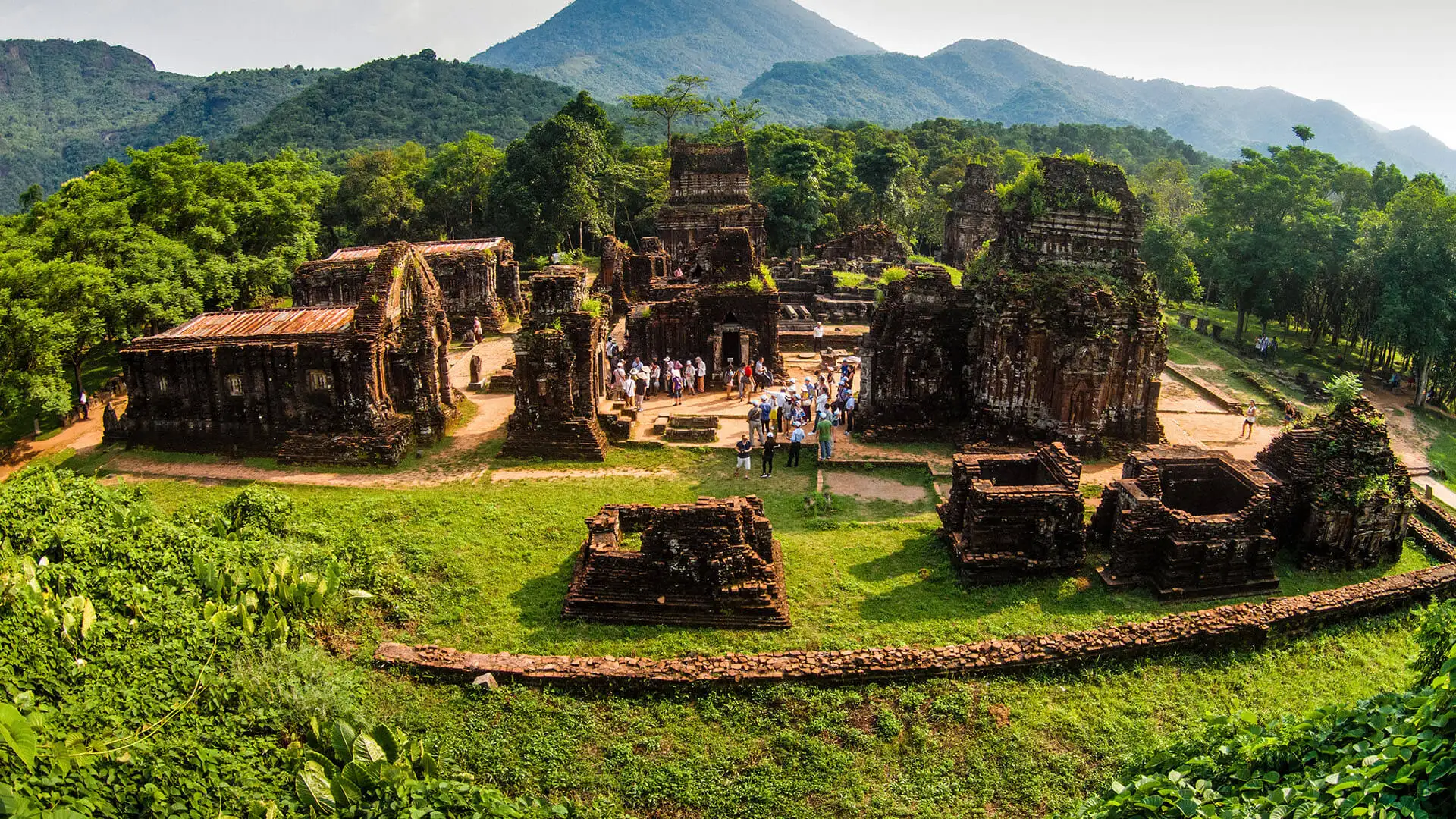
Although My Son was first established in the 4th century, major expansion took place from the 7th century onward. Over time, the site developed into multiple architectural groups, now identified by scholars with letters such as A, B, C, D, E, F, G, and H. Each group represents a different historical phase and reflects the artistic style of its period.
Construction continued for nearly a thousand years, demonstrating that My Son remained central to Champa’s spiritual and political life. As time progressed, tower designs became more refined and vertically emphasized. Decorative elements grew increasingly sophisticated, and temple layouts were organized more systematically. These stylistic changes allow researchers today to distinguish different phases in Cham architectural history.
At its height, My Son functioned not only as a place of worship but also as a royal ceremonial center. Important state rituals and religious ceremonies were conducted here to affirm the sacred connection between the king and the divine.
Some temples were associated with the commemoration of deceased rulers, suggesting that the sanctuary also held dynastic significance. Through this close link between political authority and religious devotion, My Son became the spiritual heart of the Champa Kingdom for several centuries, maintaining its prominence until its gradual decline after the 13th century.
Decline and abandonment (13th–15th Century)
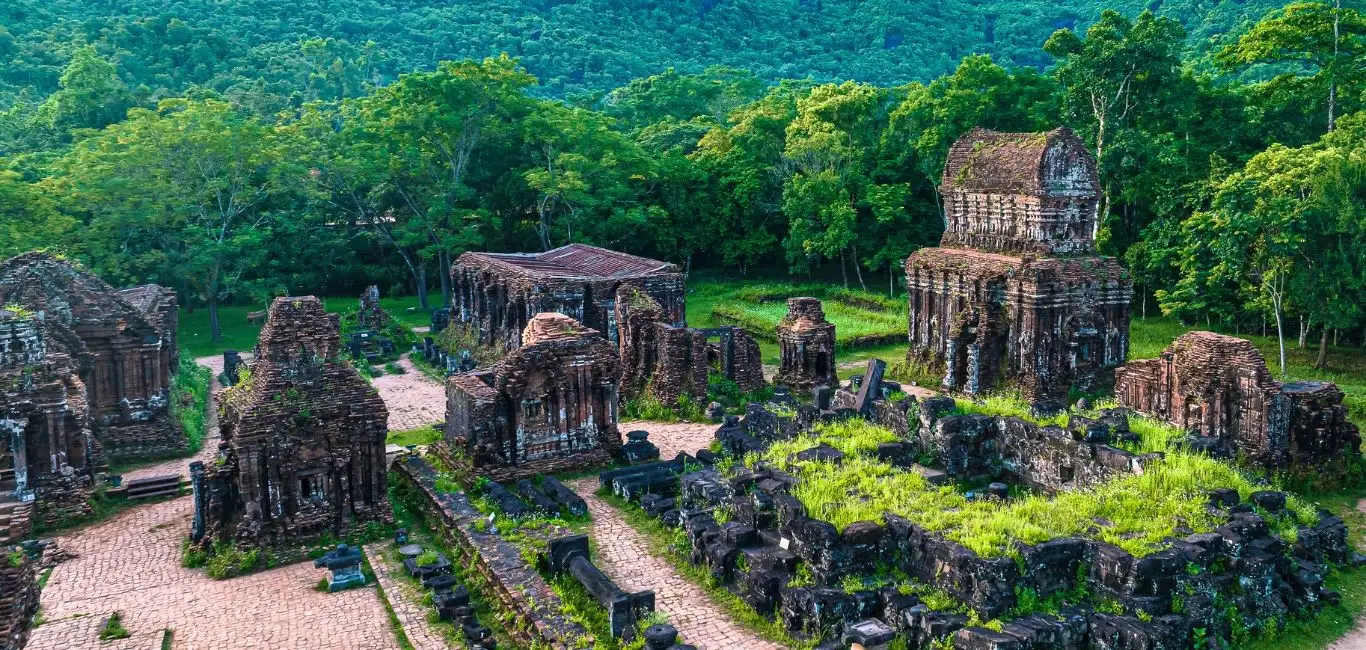
From the late 13th century onward, My Son gradually lost its central position in Champa’s political and religious system. This decline was closely linked to territorial losses, repeated wars, and the weakening of royal authority. By the 15th century, the sanctuary had largely fallen out of active use.
Political shifts and Dai Viet expansion
From the 13th century, Champa faced increasing military pressure from Dai Viet to the north. Although Champa remained an independent kingdom for several centuries, its power steadily declined due to continuous conflicts.
A major turning point came in 1306, when Champa ceded two northern provinces (O and Ly, roughly corresponding to present-day Quang Tri and Thua Thien Hue) to Dai Viet as part of a political marriage alliance. This marked a significant territorial contraction.
Throughout the 14th century, Champa experienced internal instability and repeated warfare. The most decisive event occurred in 1471, when Dai Viet forces under Emperor Le Thanh Tong captured the Cham capital of Vijaya (in present-day Binh Dinh). Historical records indicate that this campaign severely weakened Champa’s political structure and reduced its territory to the southern regions. As Champa’s political center shifted southward after 1471, My Son, located in the northern part of the former kingdom, lost its strategic and administrative importance.
Rediscovery in the 19th – Early 20th Century
After centuries of abandonment and gradual overgrowth by vegetation, My Son re-entered historical and academic awareness in the late 19th century. This period marks the transition from the ancient history of Champa to the modern phase of documentation, research, and early preservation.
French archaeological expeditions
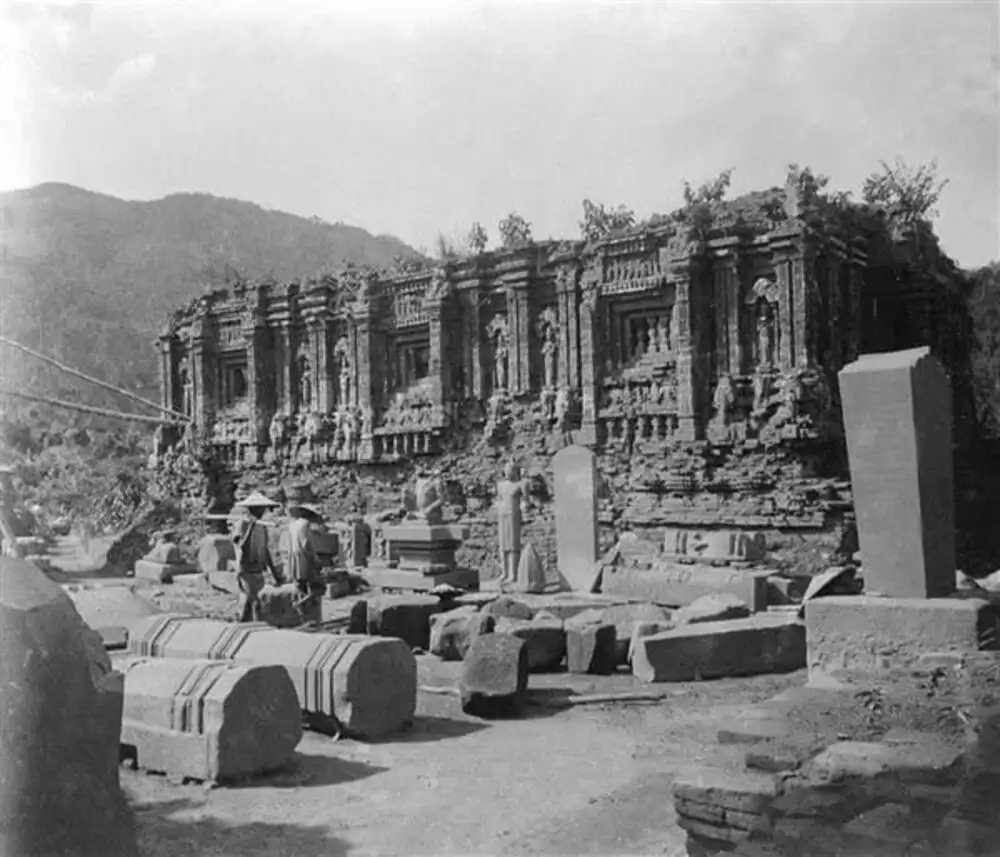
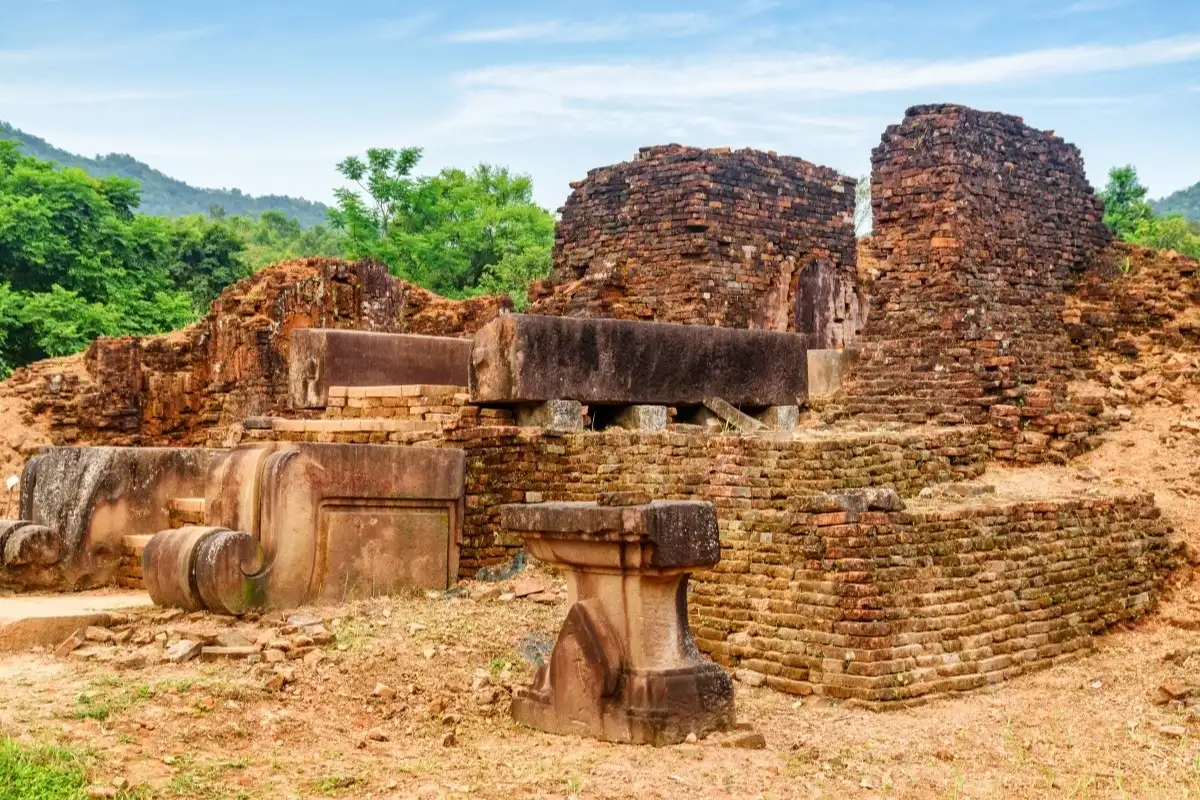
In 1898, French scholar Henri Parmentier, working under the École française d’Extrême-Orient (EFEO), began systematic surveys of the temple complex at My Son. This was the first structured archaeological study of the site.
Parmentier and his colleagues carried out detailed architectural drawings, documented the layout of the sanctuary, and classified the temple clusters using letter designations such as A, B, C, and D. This classification system remains in use today. Their work established the foundation for modern scholarship on My Son’s architectural chronology and artistic development.
Academic documentation and early restoration efforts
In addition to architectural surveys, French researchers collected and transcribed inscriptions written in Sanskrit and Old Cham found at the site. These inscriptions provided crucial historical data, including the names of Cham rulers, dates of temple construction, and records of religious dedications, particularly to Shiva.
Based on epigraphic and architectural analysis, scholars were able to confirm My Son’s role as the principal religious center of the Champa Kingdom for several centuries.
In the early 20th century, EFEO also initiated preliminary conservation efforts. These included clearing vegetation and stabilizing damaged structures. However, these interventions were limited in scale and focused primarily on documentation and structural reinforcement rather than full restoration.
This rediscovery phase fundamentally changed My Son’s status: from a forgotten ruin hidden in the forest to a recognized archaeological and cultural heritage site of significant historical value.
Read more: My Son Sanctuary entrance fee 2026 – Ticket price, inclusions & Extra costs
War destruction and heavy damage (20th Century)
In the 20th century, especially during the Vietnam War, My Son suffered severe destruction. This period caused major structural losses and significantly changed the condition of the sanctuary as seen today.
The impact of the Vietnam War
Before the war, dozens of temple structures at My Son were still standing, including important towers in groups A, B, C, and D.
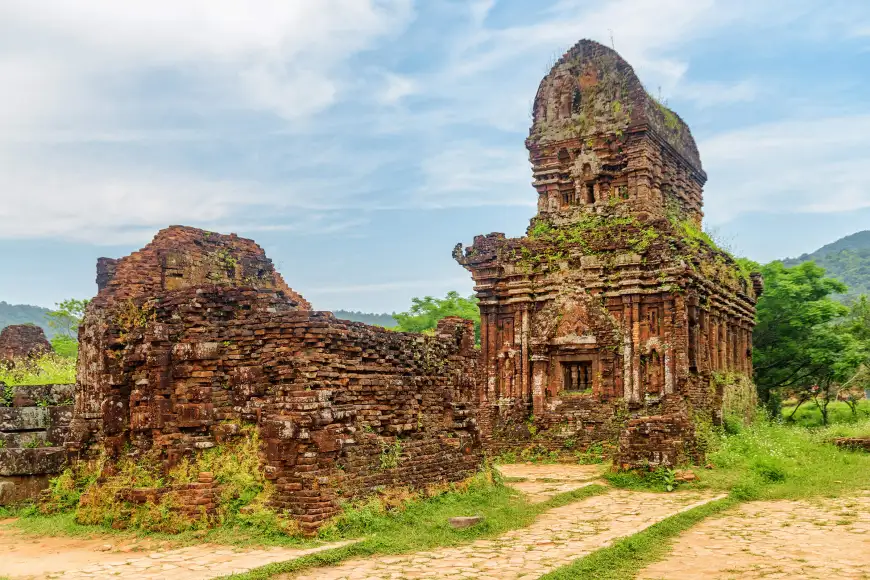
In 1969, the My Son area was heavily bombed during U.S. military operations. Airstrikes, including large bombs, caused serious damage to the temple complex. Many structures collapsed completely or were severely damaged. The most significant loss occurred in Group A, which had been considered the architectural core of the sanctuary. The famous A1 Tower, one of the most important Cham monuments, was almost entirely destroyed during this period.
After 1975, most of the remaining towers were in unstable condition, with cracks, partial collapses, and structural weakness. Compared to the early 20th century, the number of intact monuments had been greatly reduced.
UXO and Post-War Challenges
After the war, one of the most serious problems at My Son was the presence of unexploded ordnance (UXO). Bombs and other unexploded materials remained in and around the site, making archaeological work and restoration extremely dangerous.
Large-scale mine clearance efforts began only in the late 20th and early 21st centuries, with international assistance. Until certain areas were cleared, excavation and conservation work could not be safely carried out.
The impact of the war was not only physical destruction but also long-term delays in research and restoration. Many damaged structures could not be fully restored because of the scale of destruction.
Restoration and international cooperation
After the severe destruction caused by war, My Son Sanctuary entered a new phase focused on recovery and long-term conservation. This process has taken place over several decades, with significant international cooperation and technical support.
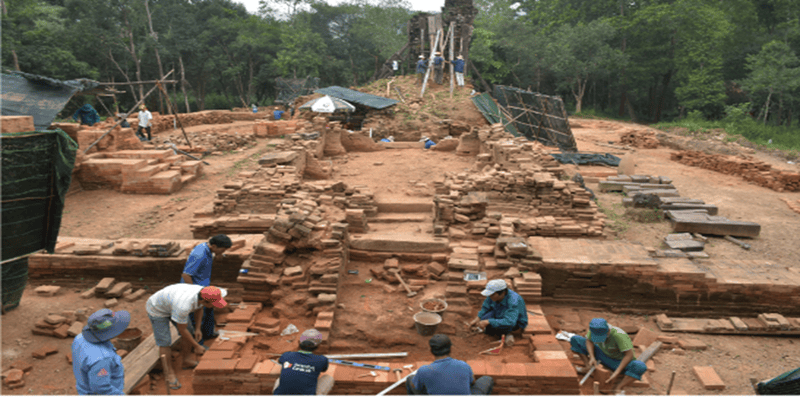
From the late 1970s, and more actively during the 1980s and 1990s, Vietnam began working with foreign experts to assess structural damage and stabilize the remaining towers. Polish conservation specialists contributed technical studies on structural reinforcement and methods to prevent further collapse. Cooperation with France continued based on earlier research conducted by EFEO, focusing on archaeological documentation and brick conservation techniques.
A major milestone was the restoration of Group G, carried out over several years and completed in the early 21st century. This project focused on structural stabilization and partial architectural recovery, and it later became a reference model for future restoration programs at the site.
In the 21st century, conservation efforts have continued with broader international collaboration. Since 2017, the Government of India has funded and supported restoration work on temple groups E and F. The project has focused on stabilizing foundations, repairing damaged brick walls, and conserving original materials.
Modern technologies such as 3D surveying, material analysis of ancient bricks, and minimal intervention conservation methods have been applied to ensure authenticity and structural safety. From a heavily damaged war site, My Son has gradually transformed into a protected international heritage site, reflecting a long-term shift from destruction to sustainable preservation.
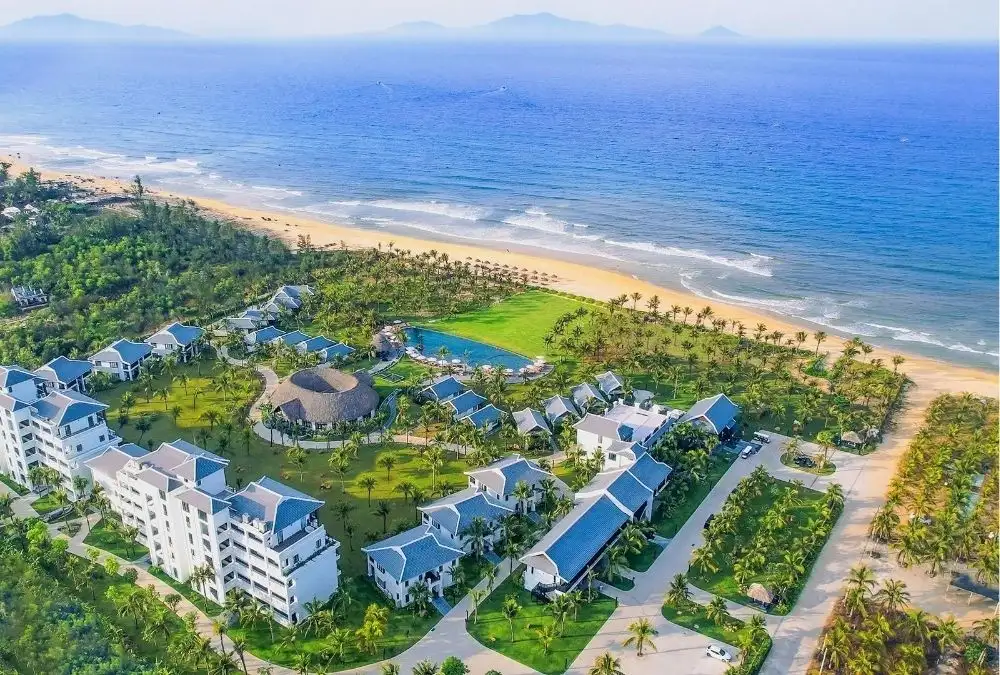
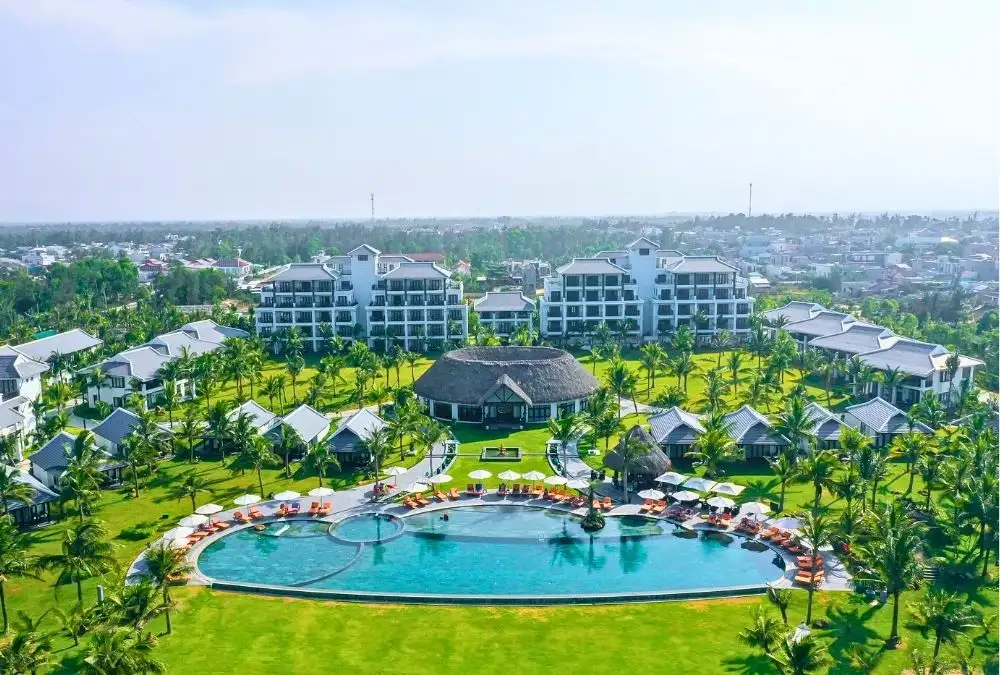
After exploring the rich layers of My Son Sanctuary history, complete your journey with a relaxing stay at Bliss Hoi An Beach Resort & Wellness. Located just a short drive from My Son, the resort offers a peaceful beachfront setting, wellness experiences, and comfortable accommodations, perfect for unwinding after a day of cultural discovery. Book your stay at Bliss Hoi An and turn your historical exploration into a complete Central Vietnam experience.
Understanding My Son Sanctuary history means understanding the political, religious, and cultural evolution of Champa. The site survived territorial decline, the fall of Vijaya in 1471, severe bombing during the Vietnam War, and decades of structural instability. Today, My Son stands as both an archaeological monument and a symbol of long-term preservation efforts. Its recognition as a World Heritage Site confirms its global value and ensures that this sacred valley remains protected for future generations.

Related Posts
Private Tours from Hoi An Beach Resorts: Discover Central Vietnam from Bliss Hoi An
How much does a Hoi An wedding for 40 guests cost?
Is fine dining Hoi An really worth the price? What are travelers paying for?
Cau Bong Festival in Hoi An: Inside Tra Que’s Agricultural New Year Tradition
Top 8 things to consider for a wedding in Hoi An with 20 guests