


Is Hoi An Crowded? An Honest 2026 Guide (And How to Still Have It to Yourself)
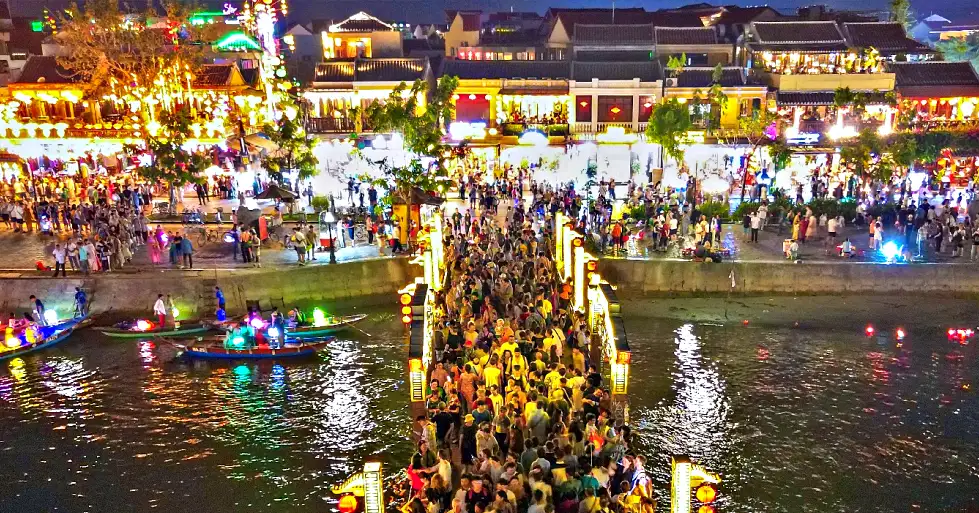
Yes – the Old Town’s historic core gets genuinely packed, especially in the evenings and during peak season. But that crowding is concentrated in one small pocket of the city, not spread across all of Hoi An, and it’s entirely possible to time and place your visit around it.
That’s the real problem most travelers run into: nobody tells you when and where the crowds actually hit, so you end up walking straight into the busiest hour by accident. This guide breaks down exactly that, plus where to stay if you want the Old Town on your own schedule and real quiet the rest of the time.
So, Is Hoi An Crowded? The Honest Answer
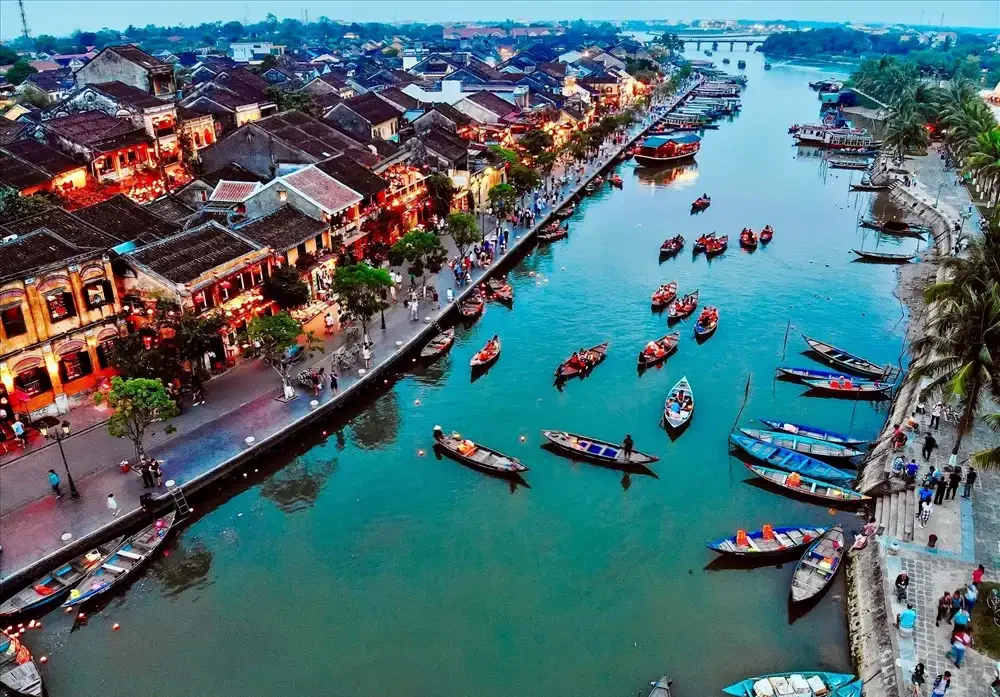
Exactly yes! Hoi An is genuinely one of the busier destinations in Central Vietnam, and pretending otherwise wouldn’t do you any favors as a traveler trying to plan a realistic trip. The Old Town’s Ancient Quarter is compact, roughly one square kilometer of pedestrian streets, and it now receives a heavy daily flow of both domestic and international visitors, especially during lantern evenings and school holiday periods. If your mental image of Hoi An is the empty, dreamlike alley shots you’ve seen on Instagram, it helps to know that most of those photos were taken at very specific hours, not as a snapshot of what the town looks like all day.
That said, “crowded” in Hoi An looks very different depending on where you are standing and what time it is. The pedestrian zone around the Japanese Covered Bridge, Tran Phu Street, and the night market can feel genuinely packed after sunset, with a steady flow of tour groups, cyclos, and lantern-boat vendors competing for space along the riverbank. A few hundred meters away, in the same town, you’ll find rice-paddy backroads and residential lanes where locals are going about ordinary life with barely a tourist in sight. Hoi An isn’t uniformly crowded – it’s concentrated in a handful of iconic pockets.
The most useful way to think about it is this: the Old Town’s fame is also its bottleneck. Because so much of what makes Hoi An special is packed into a small historic core, that same core absorbs almost all of the foot traffic. Travelers who only budget a few rushed hours in the Old Town during peak evening hours tend to leave with the “overtouristed” impression. Travelers who spread their visit across different times of day, or who base themselves somewhere quieter and treat the Old Town as one stop among several, generally come away with a much warmer view of the town – and that’s really the whole strategy this guide is built around.
When Is Hoi An Most Crowded? Seasons and Time of Day
Timing is, by far, the single biggest factor in how crowded your Hoi An experience will feel, more than which specific streets you walk down. Understanding the rhythm of the town’s daily and seasonal patterns lets you plan around the crush rather than walking straight into it.
By season, the dry months from February through April are considered the most comfortable weather-wise, which unfortunately also makes them the most heavily booked stretch of the year, alongside July and August summer holidays and the Lunar New Year period in late January or February. During these windows, hotel rates climb, restaurant tables fill up faster, and the Old Town’s pedestrian streets see their heaviest daytime volume.
If you have flexibility, shoulder-season months tend to offer a noticeably calmer version of the same town, often with only a slightly higher chance of rain in exchange. Our full breakdown of the best time to visit Hoi An walks through month-by-month weather and festival timing in more detail if you’re still choosing your travel dates.
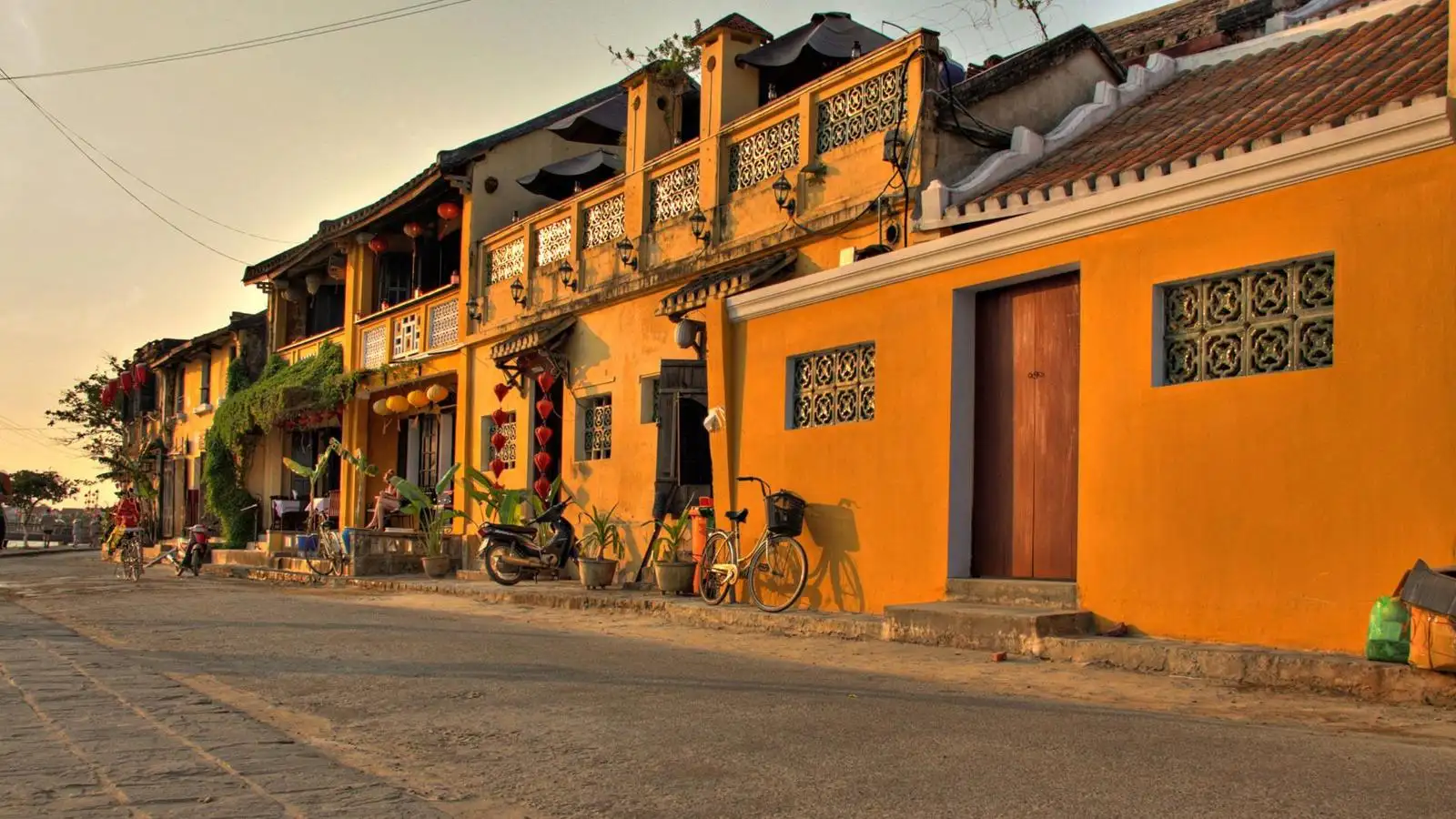
By time of day, the pattern is even more predictable. Early morning, roughly between 6am and 8am, is consistently the quietest window in the Old Town, when the shopfronts are just opening, the light is soft, and it’s mostly locals, market vendors, and a handful of early-rising photographers on the streets.
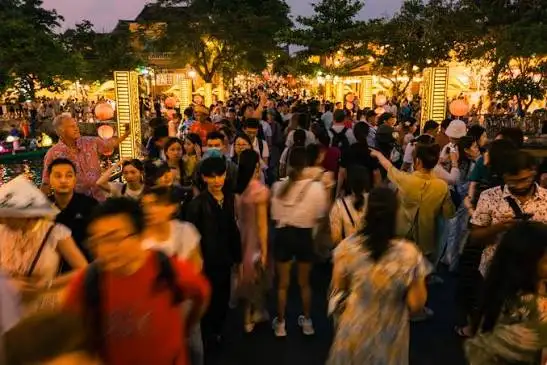
The crowd builds steadily through the late morning and afternoon as day-trip buses arrive from Da Nang and Hue, then peaks dramatically after sunset, roughly 6pm to 9pm, when the lanterns are lit and the riverside becomes the most visually stunning and most physically packed part of town. Late evening, after around 9:30pm on weeknights, sees a noticeable thinning-out as day-trippers head back to their buses, leaving a calmer, still-lit town for anyone staying nearby.
Weekday versus weekend also matters more than most first-time visitors expect. Weekends, especially when they coincide with domestic Vietnamese holidays or the monthly Lantern Festival on the 14th day of the lunar calendar, bring a noticeably larger wave of visitors than an ordinary Tuesday or Wednesday. If your schedule allows any flexibility at all, planning your Old Town visit for a weekday morning or a weekday late evening will make a bigger difference to your experience than almost any other single decision you make.
Where the Crowds Concentrate – and Where They Don’t
Not all of Hoi An carries the same crowd density, and knowing the geography helps you route around the busiest pinch points without missing anything important. The Japanese Covered Bridge and the streets immediately around it, particularly Tran Phu and Nguyen Thai Hoc, are the undisputed epicenter of foot traffic. These narrow lanes were built for a much smaller town centuries ago, and they simply weren’t designed to absorb today’s visitor volumes, which is part of why they can feel overwhelming even when the crowd size wouldn’t seem dramatic in a wider street.
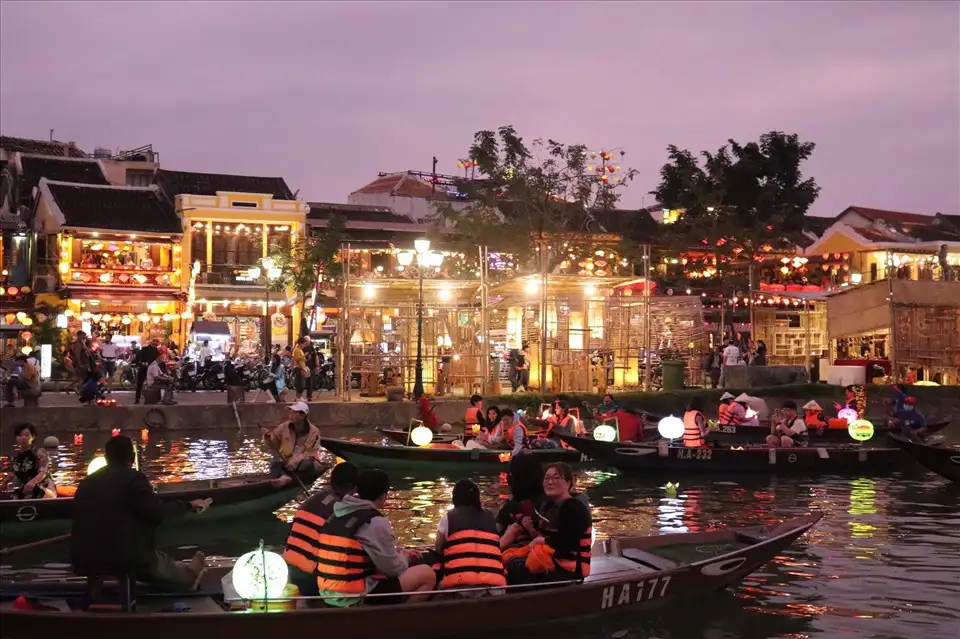
The riverside promenade along the Thu Bon River during lantern hours is the second major pressure point, largely because it’s genuinely one of the most photogenic scenes in Vietnam and everyone wants the same shot at the same golden hour. Boat vendors, lantern sellers, and photo-taking visitors all converge here between roughly 6pm and 8:30pm, creating a lively but undeniably dense atmosphere. If a slower, quieter riverside moment is what you’re after, this particular stretch at this particular hour is the one place in Hoi An where that expectation needs the most adjusting.
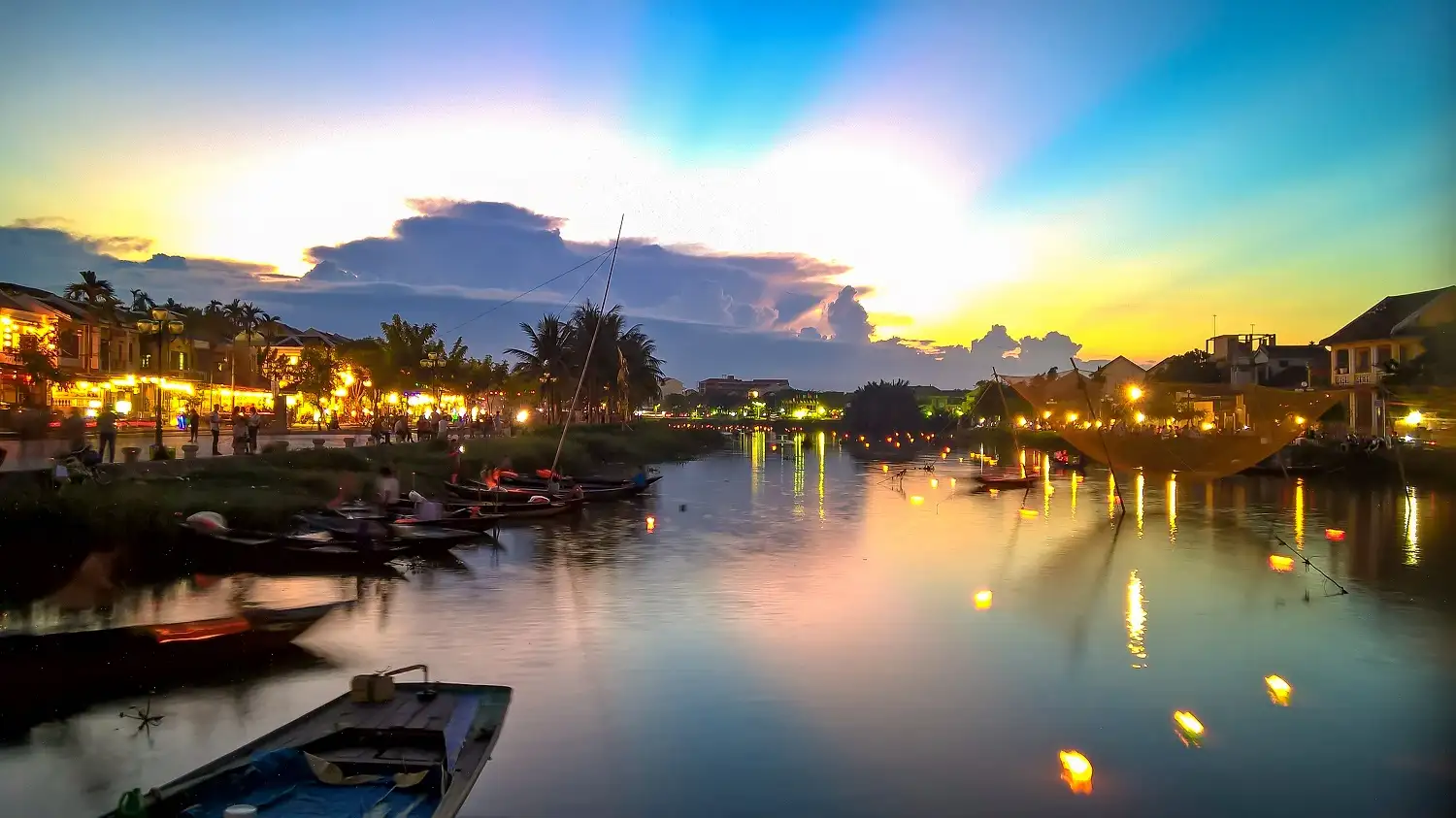
Move even a short distance outside this core, though, and the experience changes completely. The rice paddies and cycling paths just outside the Ancient Quarter, the quieter museum streets slightly off the main tourist spine, and the residential lanes toward Cam Nam Island all retain a slower, more local pace, even during peak season. Our guide to Hoi An’s museums covers several of these worthwhile, historically rich stops that see a fraction of the bridge-area foot traffic, making them a smart way to fill a curious afternoon without joining the densest part of the crowd.
Perhaps most importantly for your accommodation decision, the coastline south of Hoi An – including Binh Minh Beach – sits in an entirely different rhythm altogether. This stretch of shoreline is a genuine working fishing beach rather than a tourist beach, and it remains one of the few places near Hoi An where you can watch the sun rise over open water without another hotel guest in the frame. It’s a very different kind of “crowded” question entirely – because out here, the honest answer is almost always no.

How to Experience Hoi An Without the Crowds
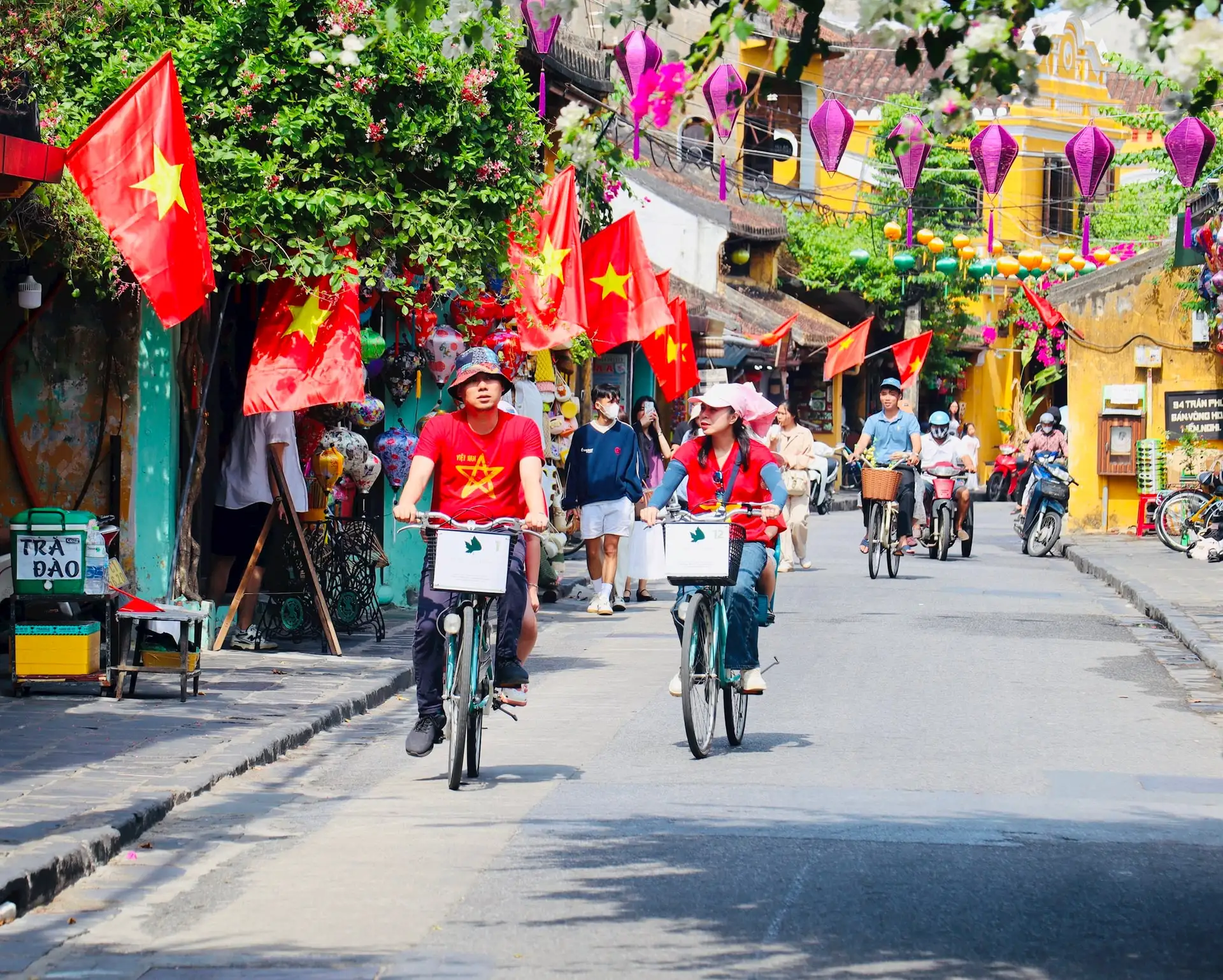
Once you understand the patterns, avoiding the worst of the crowds becomes a fairly simple matter of sequencing your day correctly. The single most effective habit is visiting the Old Town twice – once in the early morning for photos, temple visits, and unhurried wandering, and again after 9:30pm on a weeknight if you want to see the lanterns lit without the peak dinner-hour density. This “bookend” approach lets you experience both the practical, everyday texture of the town and its famous evening glow, without ever standing in the thickest part of the crowd.
Booking your Old Town ticket and any workshop or boat activities in advance is another small but meaningful step, since it removes the need to queue at ticket counters during the busiest hours and lets you move straight into the streets. Renting a bicycle rather than walking is worth considering too, particularly if you want to reach the quieter rice-paddy backroads or Cam Nam Island without retracing your steps through the densest lanes twice.
Many travelers also find that pairing an Old Town morning with an afternoon spent somewhere completely different, a beach, a spa, a cooking class outside the historic core, breaks up the trip in a way that feels far less exhausting than trying to “do” Hoi An in one long, crowded stretch.
Perhaps the most overlooked strategy, though, is simply choosing where you sleep. A hotel located directly inside the Old Town might feel convenient on paper, but it also means every walk to breakfast, every evening stroll, and every return from dinner happens through the same congested streets you were trying to avoid.
Basing yourself a short, easy drive away, somewhere with its own private beach, its own quiet grounds, and a shuttle that takes the logistics off your hands, lets you dip into the Old Town on your own schedule and retreat to genuine calm the moment you’re done. That single decision does more to shape how “crowded” your trip feels, in hindsight, than almost anything else on this list.
Why Staying Outside Old Town Changes Everything
This is exactly the gap that Bliss Hoi An Beach Resort & Wellness was built to fill. Rather than sitting inside the congested historic core, the resort occupies an isolated stretch of Binh Minh Beach, roughly 250 meters of private sand reserved almost entirely for guests, with the Old Town just a short, free shuttle ride away whenever you’re ready to explore it. You get the best of both: full access to Hoi An’s cultural heart on your own schedule, and a genuinely quiet home base to return to once you’ve had your fill of the crowds.

The resort’s low building density, only around 135 rooms and villas spread across five hectares of tropical garden, means the property itself never feels congested, even during the same peak months when the Old Town is at its busiest. Guests routinely describe the grounds as unexpectedly peaceful, with coconut groves, lotus ponds, and the sound of the ocean replacing the noise of tour buses and lantern vendors. After a full day navigating Hoi An’s busiest streets, that contrast is often exactly what makes the difference between a trip that feels frantic and one that feels genuinely restorative.
There’s also a cultural upside to staying on this stretch of coastline that most Old Town hotels simply can’t offer. Guests who wake early can walk the nearby fishing beach and watch local boats returning with the morning catch, an authentic slice of Hoi An life that has nothing to do with the tourist trail at all. It’s the kind of quiet, real moment that the crowded lanes of the Ancient Quarter, however beautiful, generally can’t provide. If you’re weighing where to base your Hoi An trip, it’s worth comparing this against a typical Old Town stay by reading our full guide to choosing a luxury resort in Hoi An. When you’re ready to lock in your dates, you can book your stay at Bliss Hoi An Beach Resort & Wellness directly and secure the room type and dates that fit your itinerary best.

What Real Travelers Say About Avoiding the Crowds
It’s one thing for a resort to describe itself as peaceful, and another to hear it echoed consistently in independent traveler feedback. Across recent Google and Tripadvisor reviews of Bliss Hoi An Beach Resort & Wellness, a clear theme comes up again and again: guests are struck by how calm and private the setting feels, especially in contrast to the busier Old Town they’d just come from. Several reviewers have specifically noted the sense of having a private beach essentially to themselves, with the resort’s own stretch of shoreline standing in sharp contrast to the shared, crowded public beaches closer to town.
Other recent guest feedback highlights the grounds themselves, the lotus ponds, coconut trees, and open sea views, as an unexpected highlight, with more than one traveler mentioning that the resort felt like a genuine retreat rather than just a place to sleep between sightseeing days. Families in particular have called out the shuttle service to the Old Town as a convenient way to get the cultural experience without needing to stay in the middle of it, letting kids and adults alike return to a quiet pool and private beach once the day’s exploring is done.
None of this means the Old Town isn’t worth visiting, quite the opposite. The travelers leaving the most glowing reviews are typically the ones who used their resort as a genuinely restful base and treated Hoi An’s historic center as a memorable day (or two) within a longer, more balanced trip. That combination, cultural immersion by day and real quiet by night, is consistently what separates a trip that feels like a rushed checklist from one that feels like an actual vacation.
FAQ
Is Hoi An overrated because of the crowds?
→ Not really – the historic core is busy, but it earns its reputation, and the crowding is concentrated in a small, well-defined area rather than spread evenly across the whole destination. Visiting at the right hours, or basing yourself outside the Old Town, resolves most of the frustration travelers report.
What is the least crowded time to visit Hoi An?
→ Early mornings before 8am and weeknights after roughly 9:30pm are consistently the quietest windows within the Old Town itself. For overall season, shoulder months outside the February–April and July–August peaks tend to be noticeably calmer, with our seasonal guide to visiting Hoi An breaking this down month by month.
Are the beaches near Hoi An also crowded?
→ The closer public beaches near the town center can get busy in high season, but the coastline further south around Binh Minh Beach remains noticeably quieter, still functioning primarily as a local fishing beach rather than a mass tourist strip.
Does staying outside the Old Town make sightseeing harder?
→ Not if your accommodation offers a reliable shuttle. A short, free ride, like the one provided at Bliss Hoi An Beach Resort & Wellness, gives you full access to the Old Town on your own timetable while letting you return to a quiet, private setting at the end of the day. Ready to plan around the crowds rather than through them?

Related Posts

Private Tours from Hoi An Beach Resorts: Discover Central Vietnam from Bliss Hoi An

How much does a Hoi An wedding for 40 guests cost?

Is fine dining Hoi An really worth the price? What are travelers paying for?
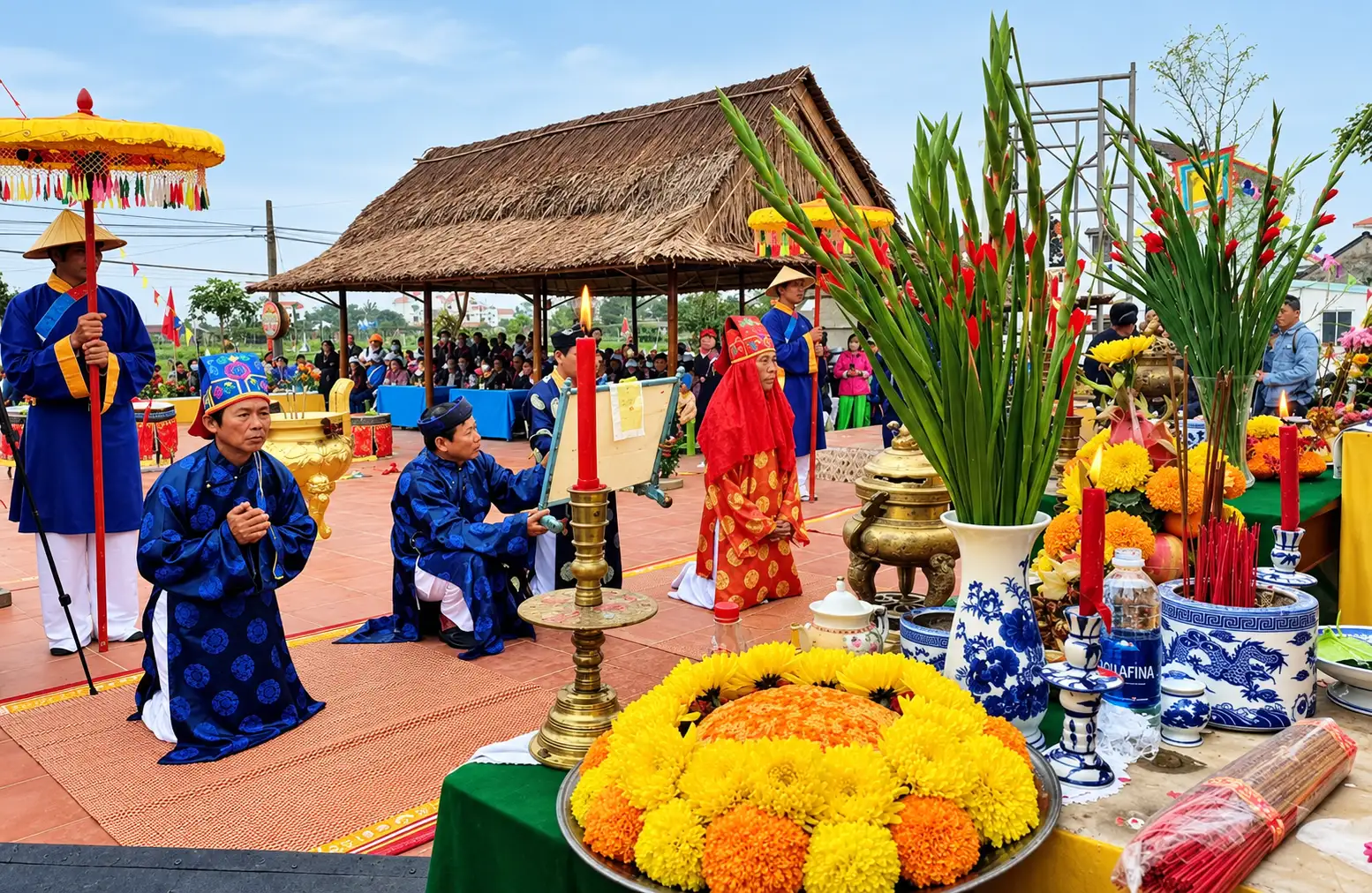
Cau Bong Festival in Hoi An: Inside Tra Que’s Agricultural New Year Tradition

Top 8 things to consider for a wedding in Hoi An with 20 guests