

Is the trip from Hoi An to Ly Son Island actually worth it?
Is a volcanic island four hours away from Hoi An to Ly Son Island actually worth rearranging a trip for? Short answer, yes, and the reasons why have almost nothing to do with beaches.
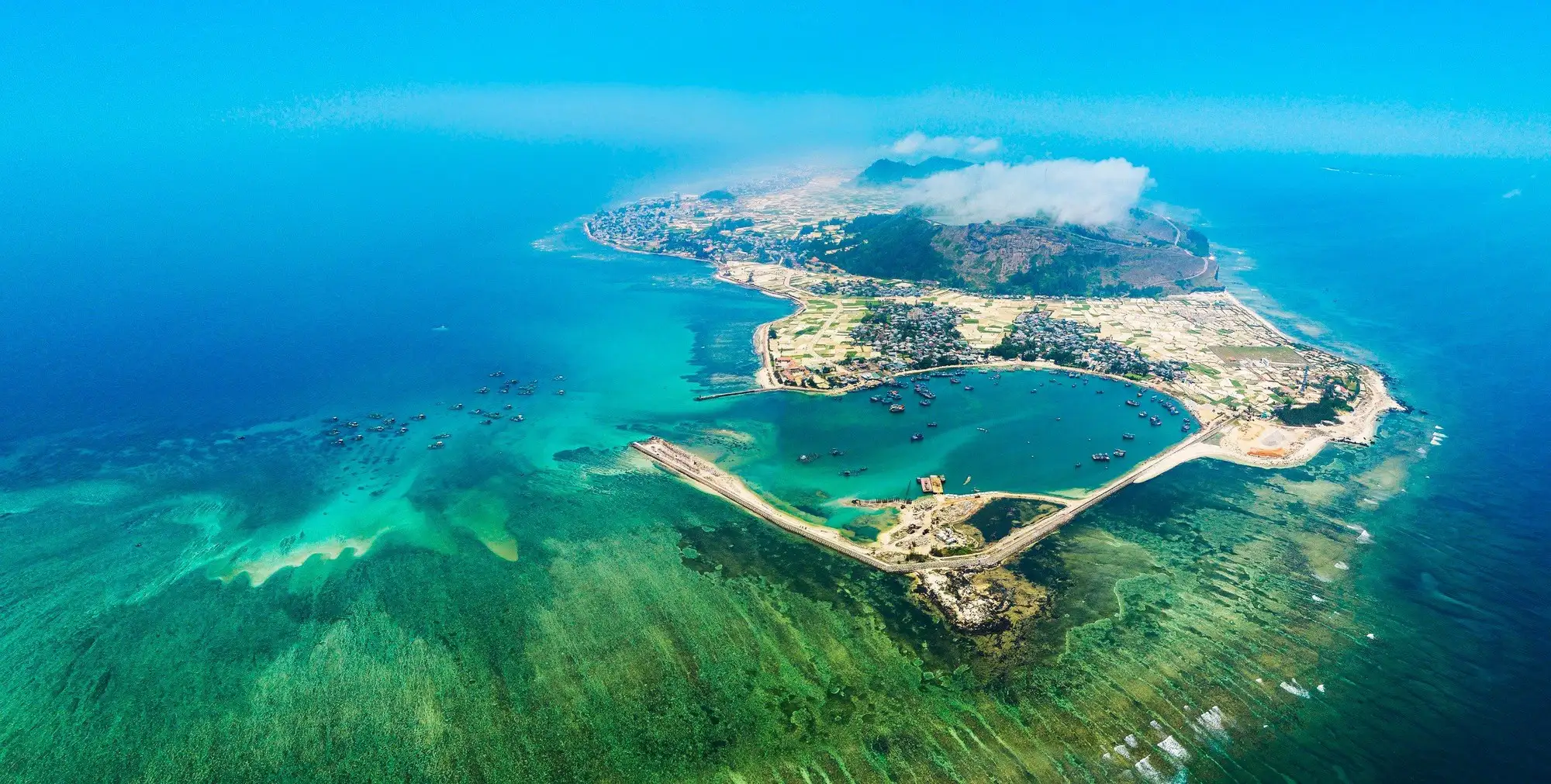
Ly Son sits roughly 30 kilometers off the coast of Quang Ngai province, built from volcanic eruptions that geologists date back millions of years. It’s still a working island. Garlic fields cover the flatter ground, fishing boats crowd the small harbor, and daily life continues much as it has for generations, largely untouched by the kind of tourism infrastructure found in places like Hoi An or Da Nang. That contrast is exactly why more travelers staying along the central coast are now adding it to their plans.
Why travelers are suddenly adding Ly Son to their Hoi An itinerary
For years, Ly Son barely registered outside domestic travel circles. Vietnamese visitors knew it as a weekend escape, a place to eat fresh seafood and photograph volcanic rock formations before heading home.
Foreign travelers, by comparison, remained rare, largely because getting there required knowledge that wasn’t easy to find in English, and because most trip planning defaulted to Da Nang as the departure point rather than Hoi An.
That’s shifting. Better ferry infrastructure, faster crossing times, and a slow but steady rise in English-language coverage have started pulling in travelers who want something that doesn’t feel packaged. Ly Son delivers that almost by accident. There are no beach clubs, no resort strips, and no crowds funneling through a single viewpoint for a photo. What you get instead is a fishing and farming community that happens to sit on top of a genuinely remarkable piece of geology.
There’s also a cultural layer here that most travel guides skim past entirely. Ly Son has more nationally recognized heritage sites and traditions than an island of its size usually holds, tied directly to Vietnam’s centuries-old maritime history. That combination of raw landscape and living heritage is the real reason the island is gaining attention, and it’s worth understanding before you plan the logistics of getting there.
How do you actually get from Hoi An to Ly Son Island?
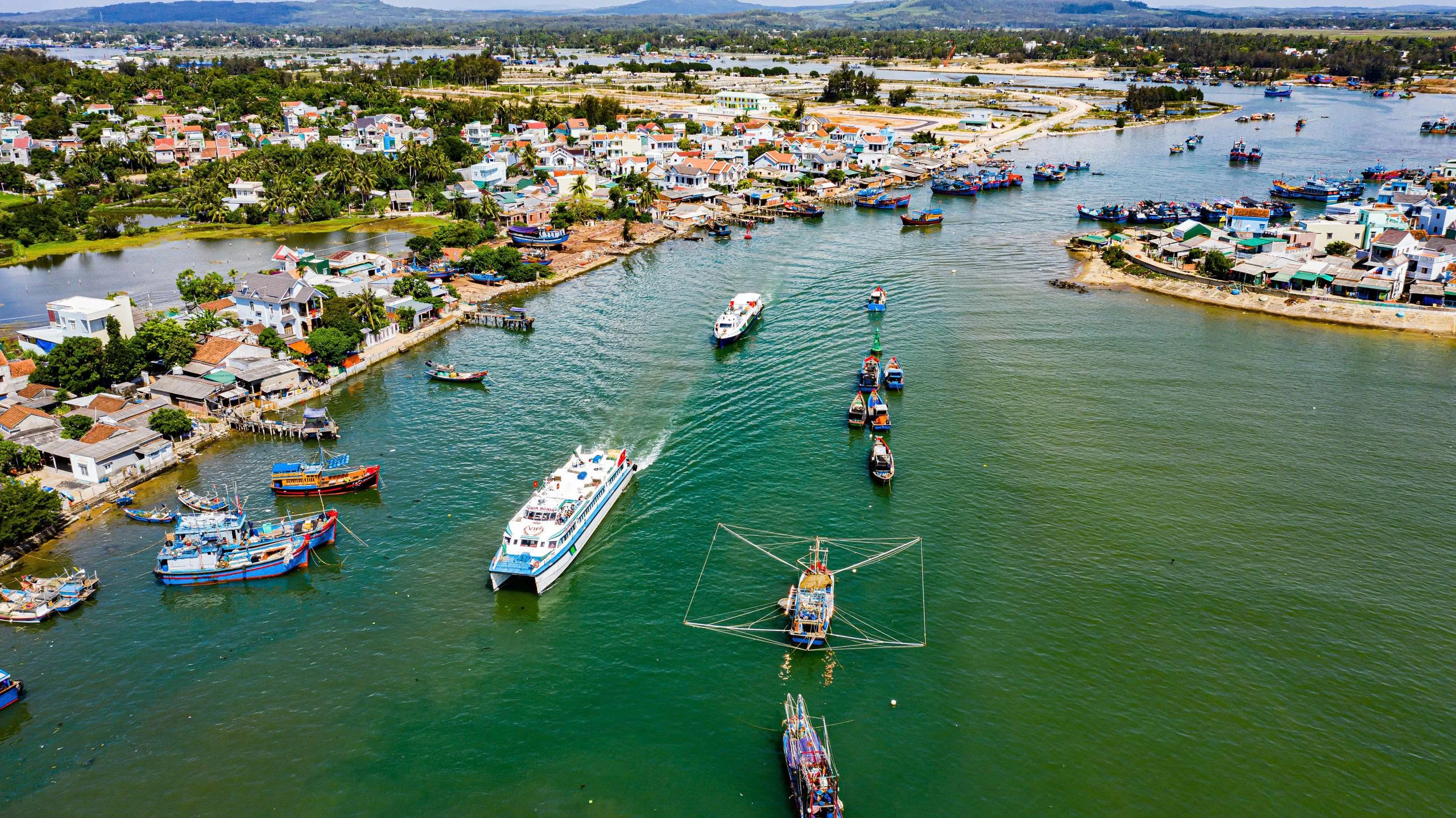
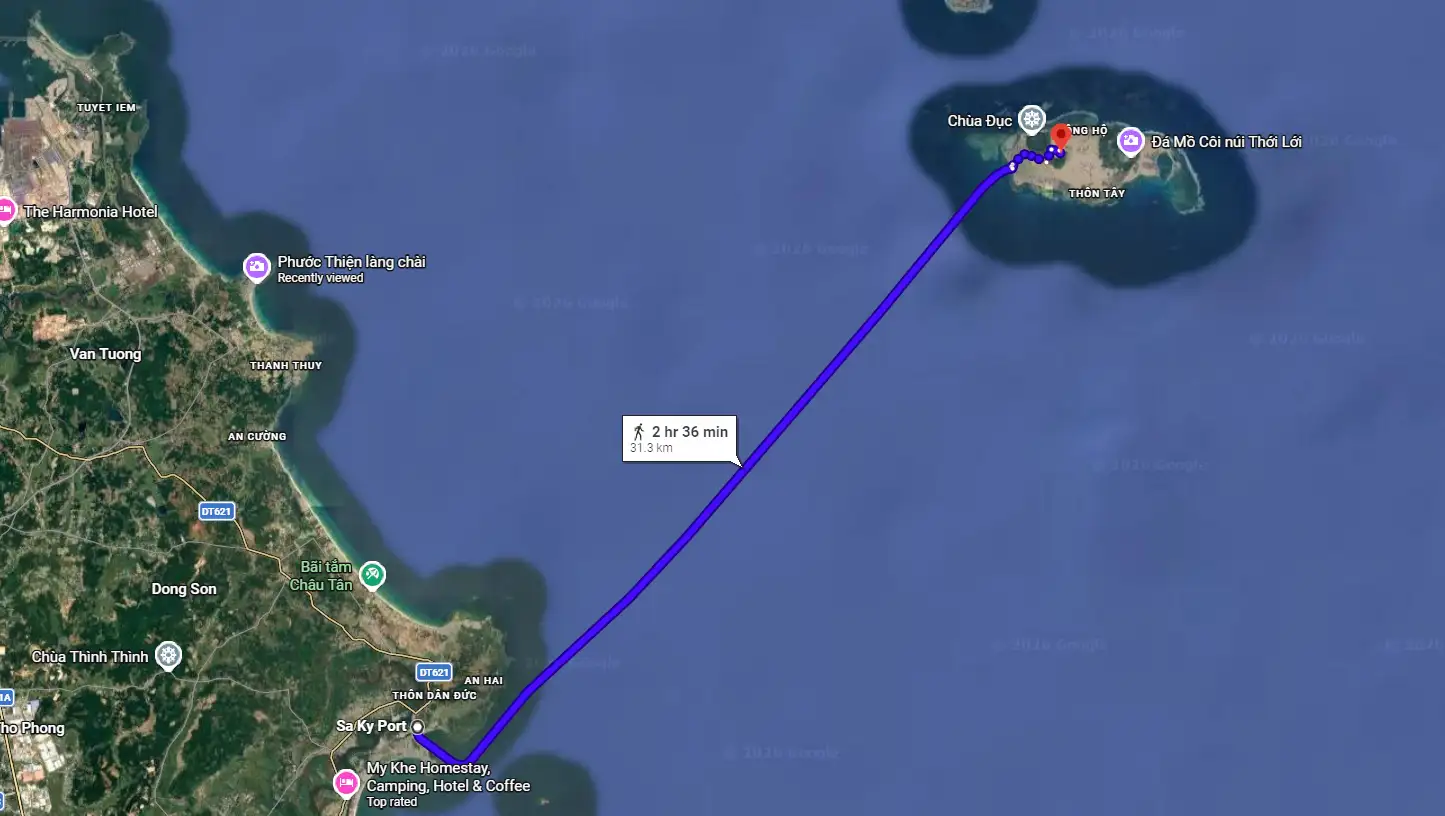
There is no single vehicle, ticket, or route that takes you from Hoi An to Ly Son Island directly. The journey happens in two stages. First, a road trip south to Sa Ky Port, roughly 110 kilometers. Second, a sea crossing of about 27 to 28 kilometers on a speedboat. Both legs are simple on their own, but they run on separate schedules operated by separate companies, and that’s where most planning mistakes happen.
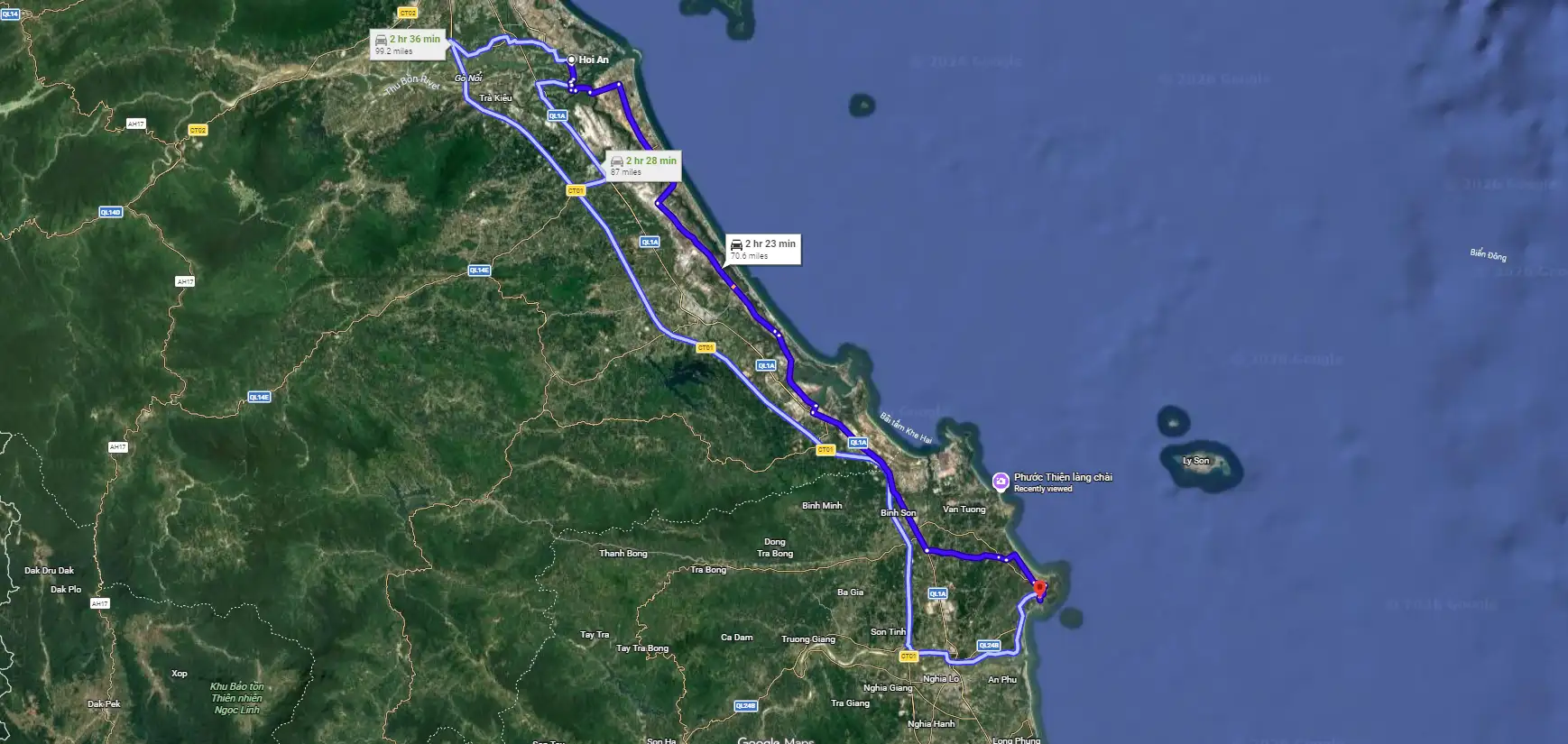
- The road stage typically takes around two hours by motorbike or car, following the coastal route through Quang Ngai City before turning toward the port.
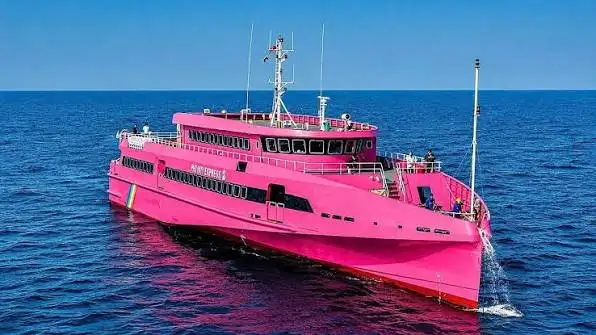
- The sea stage now takes just 35 to 45 minutes on modern high-speed boats, a real improvement over the hour-plus crossings some older guides still describe.
Add loading time, ticket checks, and a reasonable buffer, and the full trip usually lands somewhere between three and three and a half hours door to door.
The single most important thing to know is timing. Ferries to Ly Son stop running by mid-afternoon most days. Leave Hoi An in the early morning, ideally by 5 or 6am, and you’ll comfortably make one of the day’s first sailings. Leave after lunch, and there’s a real chance you’ll reach Sa Ky Port just in time to watch the last boat of the day pull away without you.
What’s actually waiting for you once you reach the island?
Ly Son isn’t just a scenic stopover, it’s what researchers describe as a working geological record. Quang Ngai province formally established the Ly Son Geopark by provincial decision in December 2015, covering more than 100 square kilometers across the island and its nearby coastal communes.
Thoi Loi
According to research summarized by Vietnam’s state news agency VietnamPlus, the exposed volcanic rock here dates back somewhere between 11 million and 4,500 years, spanning several distinct eruption phases. Standing at the rim of Thoi Loi, the island’s tallest extinct crater, you’re not looking at a hill someone named after a volcano for effect. You’re looking at the actual lip of one.
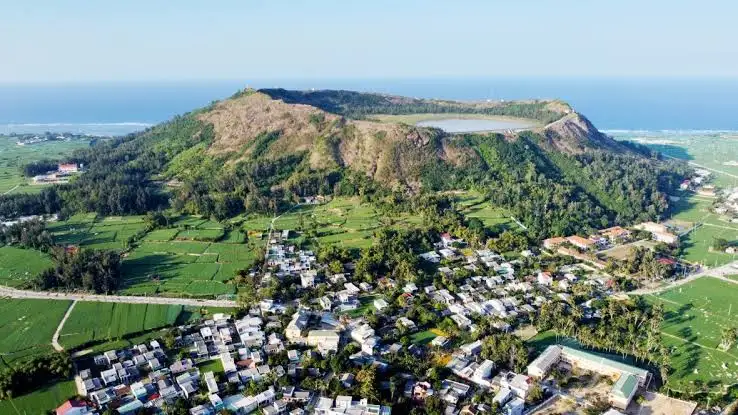
Thoi Loi rises about 170 meters above sea level, and its wide crater basin now holds a freshwater lake that still supplies part of the island. A 20-meter national flag tower marks the summit, and the walk up rewards you with a sweeping view over the garlic fields planted in soil that’s essentially decomposed lava rock, which locals say is exactly why Ly Son garlic carries such a distinct, sharper flavor compared to garlic grown elsewhere in Vietnam.
Am Linh Tu
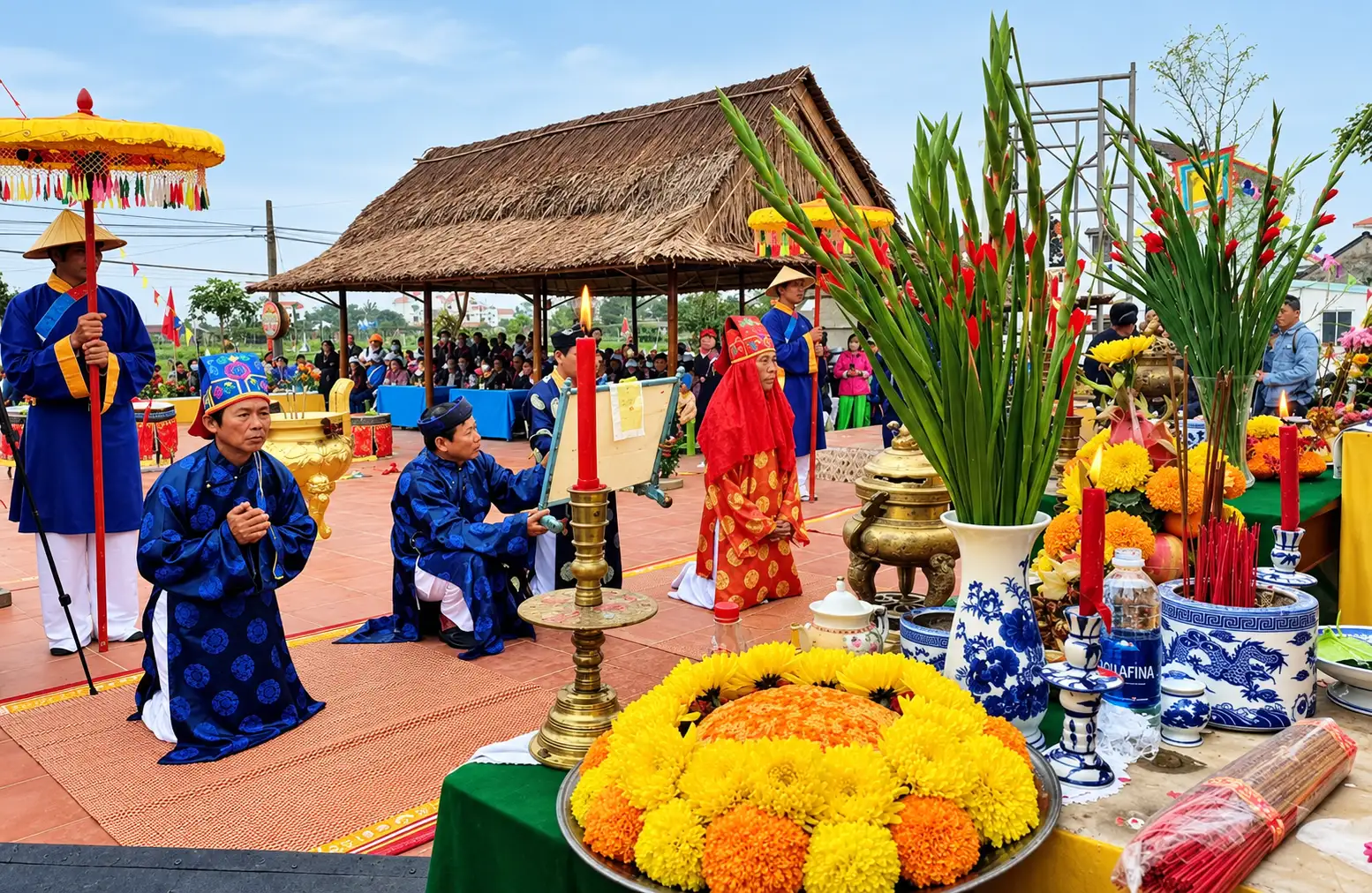
The cultural side runs just as deep. Am Linh Tu, a modest temple near the port, honors the historic Hoang Sa flotilla, sailors sent from this island centuries ago to chart waters and assert sovereignty over the Hoang Sa and Truong Sa archipelagos. The associated ceremony, Le Khao Le The Linh Hoang Sa, has been held here for more than 400 years and was officially recognized by Vietnam’s Ministry of Culture, Sports and Tourism as national intangible cultural heritage in 2013.
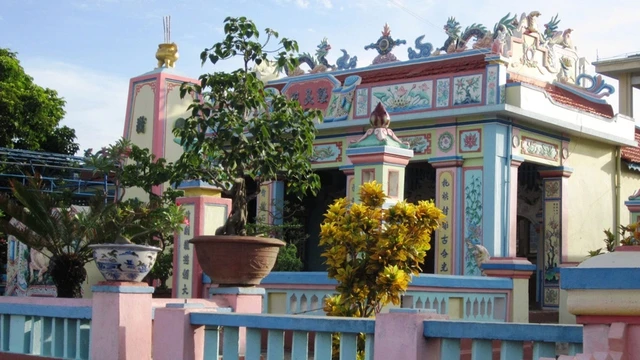
Thirteen family clans still organize it annually. A local craftsman who helps recreate the ceremonial boats once put the risk those sailors faced in blunt terms: of every hundred men sent out, only a fortunate few made it home. That single detail explains why the ceremony still moves people to tears today.
Chua Hang & Chua Duc
Chua Hang, tucked into a large cave on the mountainside near Cong To Vo, is over 400 years old and holds official national heritage status, not just local folklore recognition. Inside, altars sit directly on natural stalactite formations, and remnants linked to earlier Cham settlement of the island are still visible to anyone who looks closely.
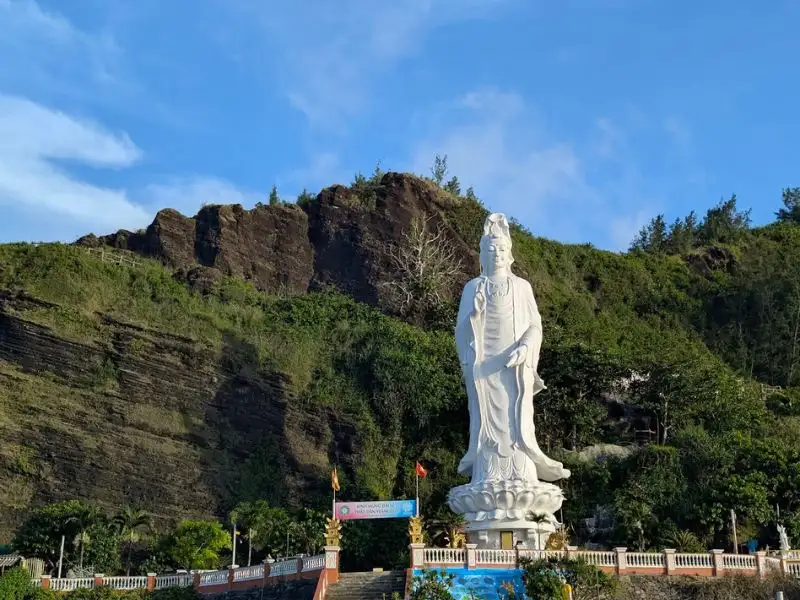
A short distance away, Chua Duc perches on the cliffside of an extinct volcano, where a 27-meter statue of Quan Am faces out to sea at the top of roughly 100 stone steps. Between these sites, the boat racing tradition known as Tu Linh, itself over 300 years old and separately recognized as national heritage, and four nationally protected relic sites across an island of around 70,000 residents, Ly Son holds a density of protected culture that’s unusual for its size.
What do travelers who’ve actually been there say?
One recent Google Maps review from a visitor traveling with family described Ly Son as leaving a genuinely deep impression, pointing to the raw volcanic landscape, the clarity of the water, and a quiet atmosphere completely unlike city life as the standout parts of the visit. That reviewer noted the trip felt less about ticking off sights and more about the time spent together away from noise and distraction, which lines up with how most visitors describe the island once they’ve actually been.
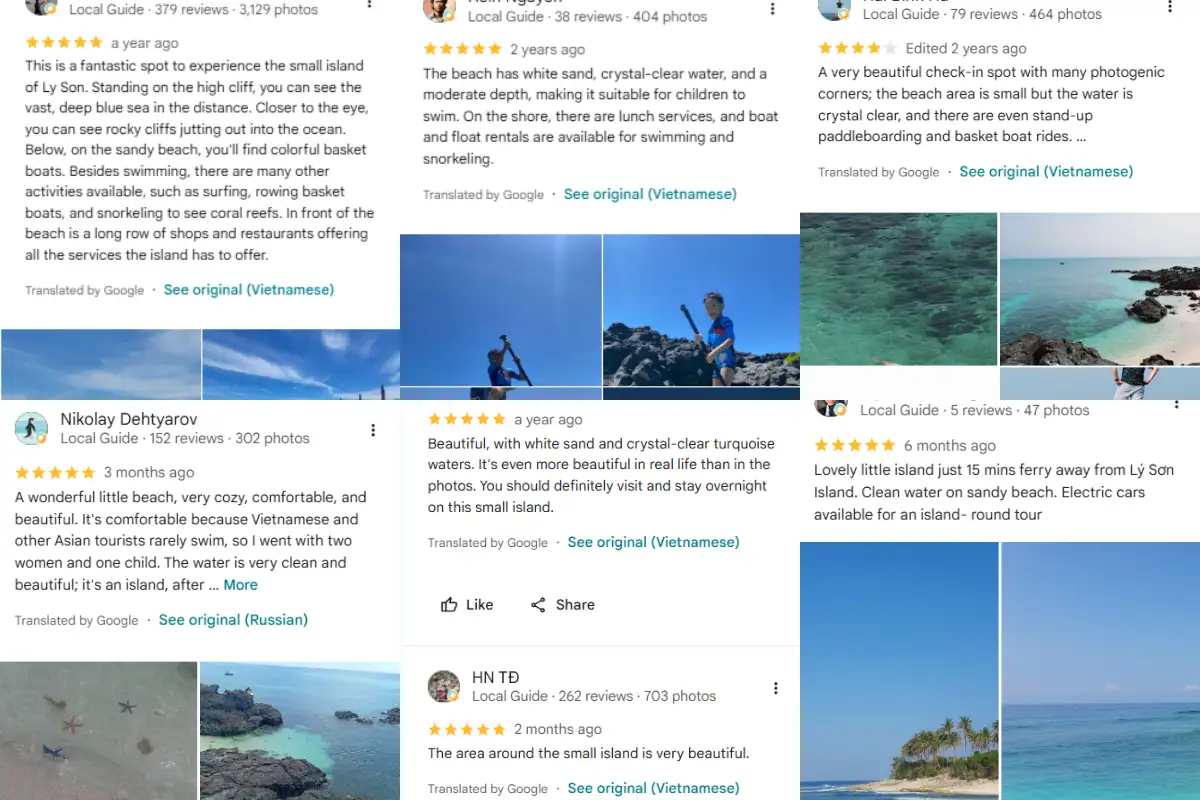
Another traveler review, from a guided family trip, singled out the combination of deep blue sea, dark volcanic cliffs, and open sky as more striking in person than in photos, and mentioned that simply walking around the island and breathing the sea air made the visit feel worthwhile on its own.
That pattern, of visitors arriving with modest expectations and leaving impressed, comes up often enough in traveler feedback that it’s worth setting expectations accordingly. Ly Son isn’t going to hand you infinity pools or beach bars. What it offers instead is the kind of unscripted, occasionally rough-around-the-edges authenticity that’s becoming harder to find along Vietnam’s more developed coastline, and for a growing number of travelers, that’s precisely the draw.

Getting the ferry right: Sa Ky Port to Ly Son, priced and timed
Once you’ve made it to Sa Ky Port, the logistics get considerably simpler. Current fares run from about 160,000 to 220,000 VND per ticket, plus a separate port fee of roughly 22,000 VND that catches a lot of first-time travelers off guard because it’s rarely mentioned upfront. All in, budget somewhere between 180,000 and 240,000 VND for the crossing.
Note: Boats depart roughly ten times a day between 7:30am and 3:30pm, with additional sailings added during national holidays when demand spikes.
A handful of operators share this route, and picking the right one matters more than most travelers assume:
– Twin-hull boats, run by companies such as Phu Quoc Express, are noticeably steadier in choppier water, a real consideration if seasickness is a concern.
– Super Bien Dong and An Vinh Express, offer more frequent departures or wider seating, which can matter more if you end up with time to spare between sailings.
None of these choices is dramatically wrong, but if motion sickness worries you, ask specifically for a twin-hull vessel and try to sit near the center rather than the bow or stern.
Documentation matters here too. You need a valid ID card or passport to buy a ticket and to board, no exceptions made at the counter. Travelers 60 and older need to show ID to receive the senior fare, and children between 6 and 11 need a birth certificate for the reduced child rate, otherwise the counter will simply charge full adult price.
Arrive at least 30 minutes before your intended departure, and during peak months from April through August, book online ahead of time or use a local ticketing service, since queues at the counter can stretch long on busy mornings.
Covering the road distance: Hoi An to Sa Ky Port
The 110-kilometer drive south follows familiar coastal roads before cutting toward Quang Ngai City. You’ll cross the Cua Dai bridge, follow the coastal route south, pass through the city center, cross the Tra Khuc river, then pick up National Highway 1A before turning onto Highway 24B toward the coast again. The final stretch runs along the shoreline directly into Sa Ky Port, in Binh Chau commune, Binh Son district. None of this requires local knowledge, the roads are wide, paved, and clearly signposted.
What matters more is how you cover the distance. Self-driving a motorbike takes about two hours and costs almost nothing beyond fuel, but it’s tiring in the midday heat and leaves no margin for a mechanical hiccup. A private car or taxi shaves the time down slightly and adds real comfort, particularly useful if you’re traveling with family or heavier luggage.
Shared minibuses run on fixed schedules and cost less, though they add time and remove flexibility. A private group transfer arranged in advance, seating four to seven people, typically runs 1,000,000 to 1,300,000 VND per vehicle, which becomes very reasonable once split between passengers, and it drops you directly at the port gate with no parking or route planning required.
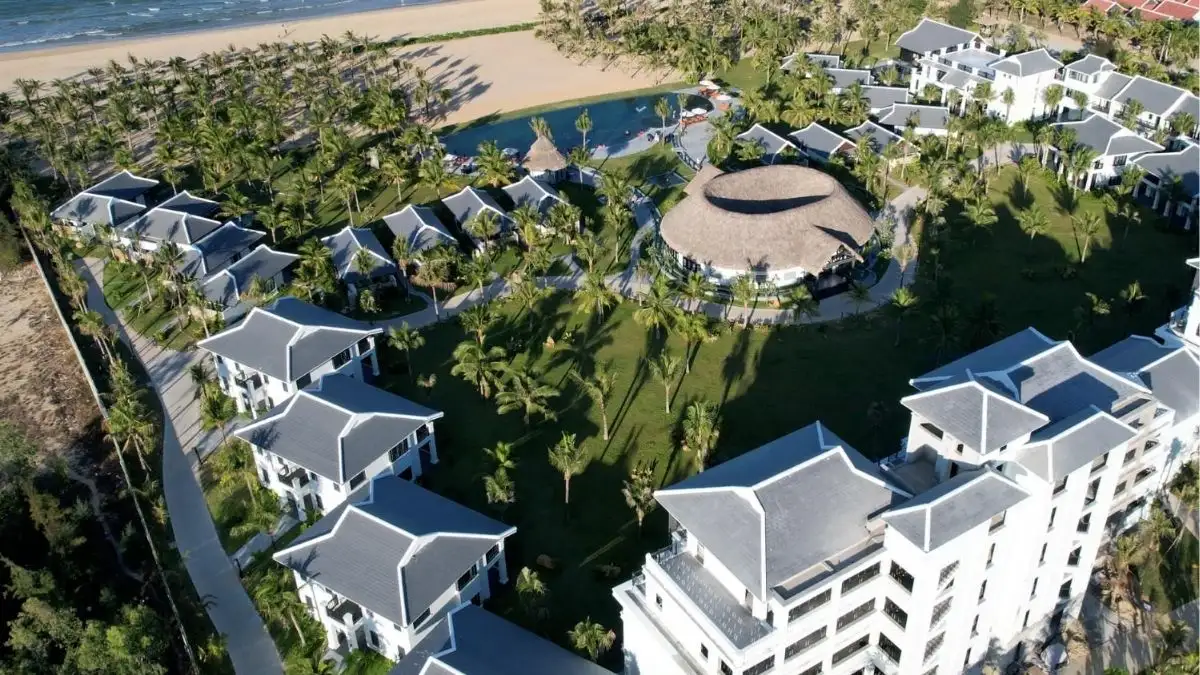
If you’d rather not think about any of this, the travel desk at Bliss Hoi An can arrange a private transfer timed specifically around the ferry schedule, so you’re not the one checking maps at 5am. It’s worth remembering, too, that mobile signal thins out noticeably once you’re on the water and again once you’re on the island, so it helps to sort out a working Vietnam SIM or eSIM in Hoi An first rather than trying to troubleshoot connectivity once you’ve already left the mainland behind.
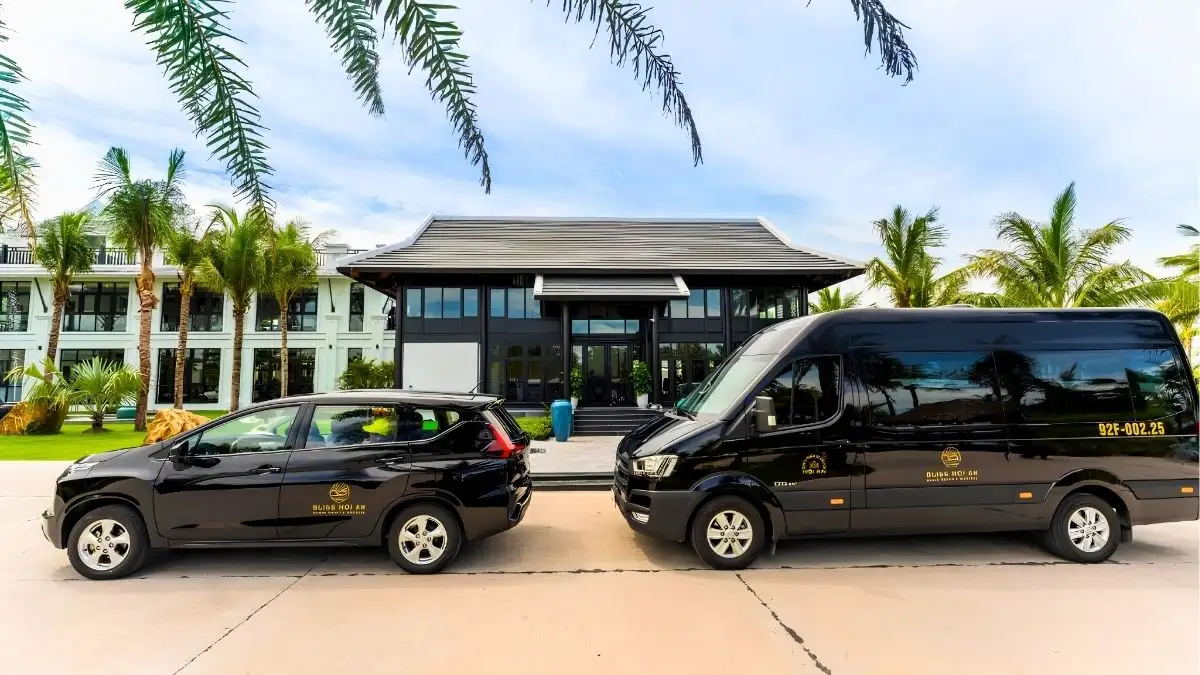
When you’re ready to build the rest of your itinerary, the sightseeing and transportation desk can arrange your transfer to Sa Ky Port and time it around a ferry departure that actually fits your stay. And if this is your first time hearing about the resort itself, it’s worth taking a moment to see what a stay here looks like before you lock in your dates, so the only real decision left is which volcanic cliff to watch the sunset from first.
When should you plan this trip?
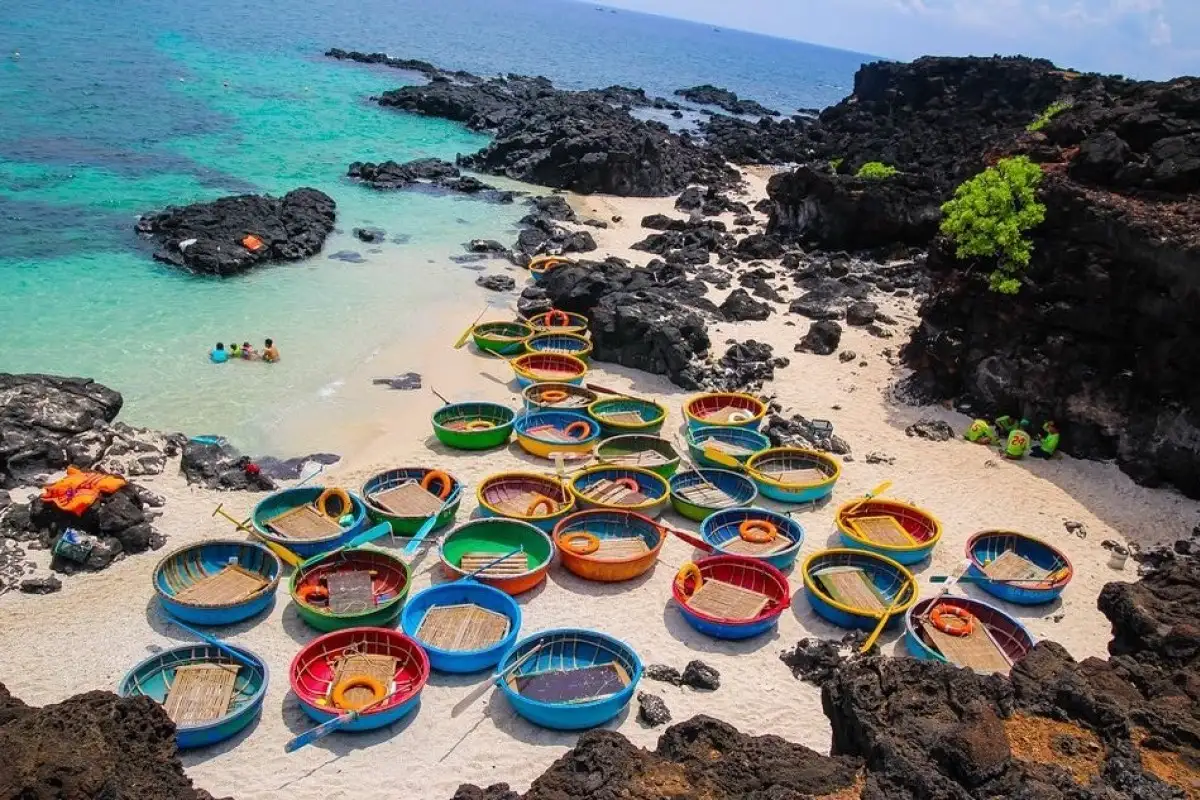
April through August brings the calmest seas, the most reliable ferry schedule, and the clearest underwater visibility if you’re planning to snorkel around An Binh island. Late April through June is also peak domestic travel season, so if you’re traveling during that stretch, book accommodation and ferry tickets a few days ahead rather than assuming you’ll sort it out on arrival.
September through December is a different story entirely. This is typhoon and rough-sea season along Vietnam’s central coast, and ferry cancellations become genuinely common rather than a rare inconvenience. There have been stretches where more than two thousand tourists were stranded on the island at once, waiting days for conditions to calm down enough for boats to resume safely. If your schedule is tight or your return flight is booked for the day after your planned crossing, this window is worth avoiding altogether.
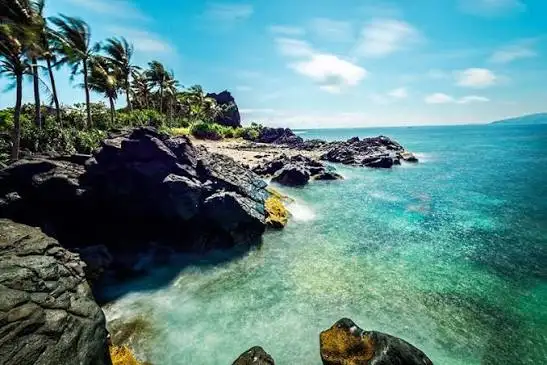
Late December through April offers a quieter middle ground that most guides never mention. This is when green moss spreads across the island’s volcanic rocks, particularly around Hang Cau, Cong To Vo, and the shoreline in front of Chua Hang, creating a striking, almost otherworldly green carpet across the black stone that photographers actively plan trips around. Fewer visitors know to look for this window, which makes it one of the more distinctive times to go if your dates allow the flexibility.
Quick Answers Before You Book
Is there a direct route from Hoi An to Ly Son Island?
No. You travel by road to Sa Ky Port first, roughly 110 kilometers, then by ferry to the island, another 27 to 28 kilometers by sea. No single ticket or vehicle covers the whole distance.
How long does the entire trip take?
Around three to three and a half hours door to door, combining the road journey and the sea crossing, assuming reasonable weather and no long waits at either end.
What should I budget for the trip overall?
Roughly 200,000 to 350,000 VND per person one way, depending on your choice of road transport and ferry operator, plus accommodation and food once you’re on the island.
When is the best time to go?
April through August for the calmest seas and most reliable schedule. Avoid September through December unless your travel dates can flex around possible ferry cancellations.
Can the ferry service actually get cancelled?
Yes, and more often than casual guides suggest. Rough seas have suspended crossings for multiple days in a row during monsoon season. Check the marine forecast a few days out and build at least one flexible day into your plan if your schedule allows it.
Do I need special documents to board the ferry?
A valid ID card or passport is required to purchase a ticket and board, with no exceptions. Foreign passport holders should carry their passport rather than a photocopy, since boat staff typically check the original at boarding.
Getting to Ly Son takes a bit of coordination, and that’s exactly why so many visitors to central Vietnam never make it out there. If you’d rather spend your energy exploring volcanic cliffs than cross-checking ferry timetables, our team can help put the pieces together around your stay. Read more about getting around once you’re back on the mainland, check our guide on staying connected with a local SIM before you head out to the island, and take a look at how much cash to carry for a place where card payments are still rare.

Related Posts
Private Chef Hoi An: Top 10 Chefs for a Personalised Dining Experience
A trip from Hoi An to Tam Ky in one day: Is it feasible?
Private Tours from Hoi An Beach Resorts: Discover Central Vietnam from Bliss Hoi An
How much does a Hoi An wedding for 40 guests cost?
Is fine dining Hoi An really worth the price? What are travelers paying for?