

Dong Hoi to Vinh Moc Tunnels: The complete travel guide for your central Vietnam journey
What would you do if the bombs didn’t stop? The people of Vinh Moc had an answer: they went underground – and stayed there for six years. The road from Dong Hoi to Vinh Moc Tunnels covers just 80 kilometers, but it leads somewhere that no amount of reading quite prepares you for. If you’re moving through Central Vietnam and want to experience something that goes beyond scenic, this guide covers everything – the route, your transport options, and what’s inside.
How Far Is It from Dong Hoi to Vinh Moc Tunnels?
The distance from Dong Hoi to Vinh Moc Tunnels is approximately 80 kilometers, and under normal road conditions, the drive takes around 1.5 to 2 hours by private car or motorbike.
The route is straightforward: head south from Dong Hoi along National Road 1A (QL1A), pass through Dong Ha, and look for the turnoff near Ho Xa village – roughly 1 kilometer north of the Ben Hai River. From there, take Provincial Road DT573 heading east for about 13 kilometers until you arrive at the tunnels.
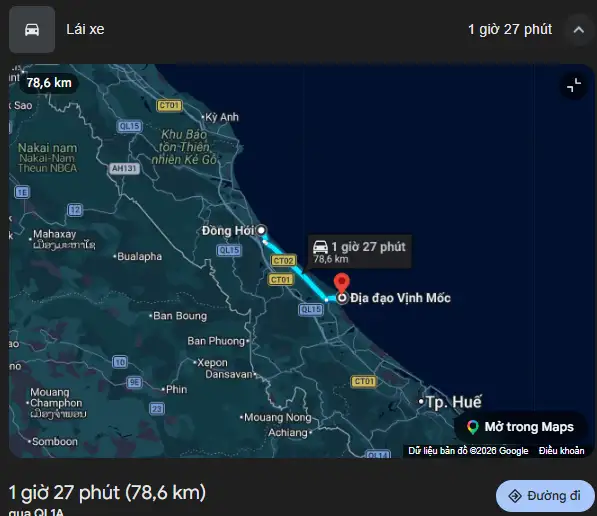
It’s a manageable half-day trip, but most travelers incorporate Vinh Moc as a strategic stopover on the journey between Dong Hoi (or Phong Nha) and Hue — which is really the smartest way to do it. You get to tick off a major historical landmark without any backtracking, and the route passes through some of the most historically significant terrain in all of Vietnam.
Why do Vinh Moc Tunnels belong on your central Vietnam itinerary ?
Before we get into the logistics, let’s talk about why this site deserves more than a cursory glance on a packed tour bus.
Vinh Moc Tunnels are not the Cu Chi Tunnels. Yes, they’re both tunnel systems from the Vietnam War era. But where Cu Chi is a military complex that’s been somewhat theatrically presented for mass tourism, Vinh Moc is something far more intimate and, frankly, more haunting.
These were civilian tunnels. The entire village of Vinh Moc – around 300 people – moved underground between 1965 and 1972 to escape a bombing campaign so relentless that, by the end, an estimated seven tons of bombs had been dropped per person living in the tunnels.
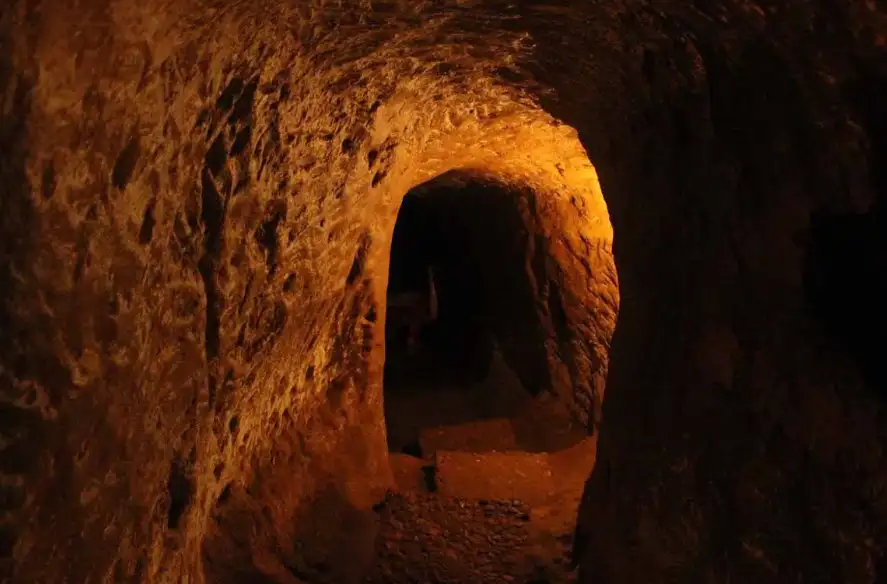
Built between 1965 and 1967 using hand tools, the tunnel system spans over 2,000 meters of primary corridors across three levels, descending between 8 and 23 meters below the surface. There are 13 entrances and exits – six opening onto the hillside, seven leading directly to the sea, which served as both ventilation and supply routes to Con Co Island offshore.
Inside, you’ll find nooks that served as sleeping quarters for individual families, a meeting room, a kitchen designed to channel smoke underground so as not to reveal their position, a generator room, freshwater wells, a clinic, and – most astonishingly – a maternity ward. Seventeen babies were born inside these tunnels. Six of them still live in the village today.
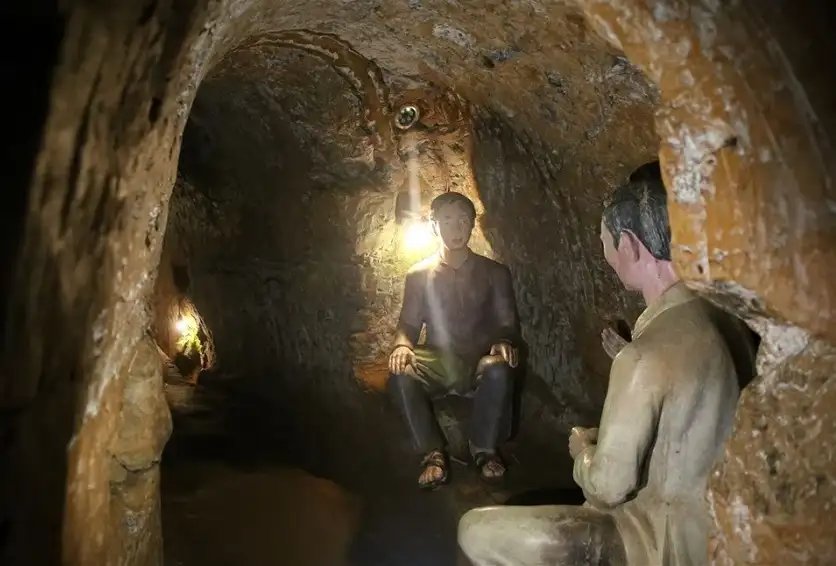
The longest continuous stretch spent underground without emerging: five days and five nights.
Vinh Moc Tunnels are part of the broader “Vinh Moc Tunnels and Vinh Linh Underground Villages” complex, recognized as a Special National Monument by the Vietnamese government in 2014. Of the 114 tunnel systems built in Vinh Linh district during the war, Vinh Moc is the largest and most intact. Twenty-eight of the others sustained direct hits. None of the people sheltering in Vinh Moc during the war lost their lives.
That’s the story that makes this place worth two hours of your time.
See more: Phong Nha cave: Things you shouldn’t miss at this natural wonder
How to Get from Dong Hoi to Vinh Moc Tunnels
There are four realistic ways to cover this journey. Here’s an honest breakdown of each.
By Private Car or Van (Recommended)
For most travelers, hiring a private car is the best option – especially if you’re planning to combine Vinh Moc with other stops along the DMZ (Demilitarized Zone) corridor.
From Dong Hoi, head south on National Road 1A. You’ll pass through Dong Ha city before looking for the junction near Ho Xa town. The road to the tunnels is signposted. The full route: QL1A south → at Ho Xa village (1 km north of Ben Hai River), turn right onto the local road TL70, then continue onto Provincial Road DT573 eastward for approximately 13 km to the entrance.
- Estimated drive time: 1.5 – 2 hours (one way)
- Approximate cost: 500,000 – 1,200,000 VND per vehicle depending on negotiation and whether you include a return trip or onward journey to Hue
- Best for: Families, couples, or anyone wanting flexibility to stop at multiple DMZ sites
A good driver will know all the landmarks and can help you navigate the less-obvious junctions – worth factoring in if you’re not confident in self-navigation.
By Motorbike
If you’re comfortable on a motorbike, the Dong Hoi – Vinh Moc run is genuinely scenic and rewarding. The road is largely flat and well-surfaced.
Specific directions: From Dong Hoi, follow QL1A south. Once you cross into Quang Tri Province and approach the Ben Hai River area, look for the village of Ho Xa. Turn right onto TL70, travel approximately 2.4 km, then turn left and head north for 4.3 km. At the junction, turn right and follow TL573 eastward for another 4.5 km. You’ll see the entrance and museum car park on your right.
- Estimated ride time: Approximately 2 hours (allow extra for navigation and stops)
- Cost: Motorbike rental ~150,000 – 200,000 VND/day plus fuel
- Best for: Solo travelers and backpackers who enjoy riding and want complete flexibility
One important note: some sections between the junction and the tunnels are unmarked small roads. Take a clear photo of the map at the small museum before entering – it’ll save you confusion on the way out.
By tourist shuttle bus (Dong Hoi – Hue)
Several tour operators in Dong Hoi and Phong Nha run shuttle buses toward Hue that include a stop at Vinh Moc Tunnels and the Ben Hai River. This is a practical option for travelers who are moving on from Dong Hoi to Hue and want to absorb the DMZ corridor without the hassle of self-driving.
These buses are advertised in Dong Hoi and Phong Nha for approximately 500,000 VND per person. Departure times are usually in the morning. Time at each stop is typically 45 – 60 minutes, which is enough for a basic circuit of the tunnels but won’t allow for deep exploration.
- Best for: Budget travelers already transitioning from Dong Hoi/Phong Nha to Hue
- Limitation: Less flexibility; the schedule and stops are fixed
By Train to Dong Ha, Then Taxi
A less common but viable option: take a train from Dong Hoi to Dong Ha (the nearest rail hub to the tunnels), then hire a taxi or xe om (motorbike taxi) for the remaining ~37 kilometers.
- Taxi cost from Dong Ha: 200,000 – 300,000 VND per trip (one way)
- Best for: Travelers who prefer not to drive but want more flexibility than a bus
- Note: There’s no direct public bus from Dong Ha to the tunnels, so plan the onward transfer in advance
What to see along the route ?
One of the best things about the Dong Hoi – Vinh Moc journey is that you’re traveling through the old Demilitarized Zone (DMZ) – the 17th Parallel that divided North and South Vietnam from 1954 to 1975. The landscape itself is historically loaded, and there are several stops worth building in:
Hien Luong Bridge & Ben Hai River: Located just a few kilometers before the Vinh Moc turnoff, the Hien Luong Bridge spans the Ben Hai River at the exact point where North and South Vietnam were divided. The original bridge was destroyed by US bombing in 1967 and has since been rebuilt. The northern half was once painted red; the southern half yellow – a living visual metaphor of a nation split in two.
A small museum at the bridge houses photographs and artifacts from the division years. Even if you spend only 20 minutes here, it provides powerful context for what you’ll see at Vinh Moc.
Quang Tri ancient citadel: About 43 km south of Vinh Moc, the Quang Tri Citadel was the site of one of the most brutal battles of the entire war – the 81-day siege of 1972. The ruins still stand as a memorial. The Thach Han River nearby is considered sacred, the site of thousands of military burials. Worth combining if you’re making a full day of DMZ exploration.
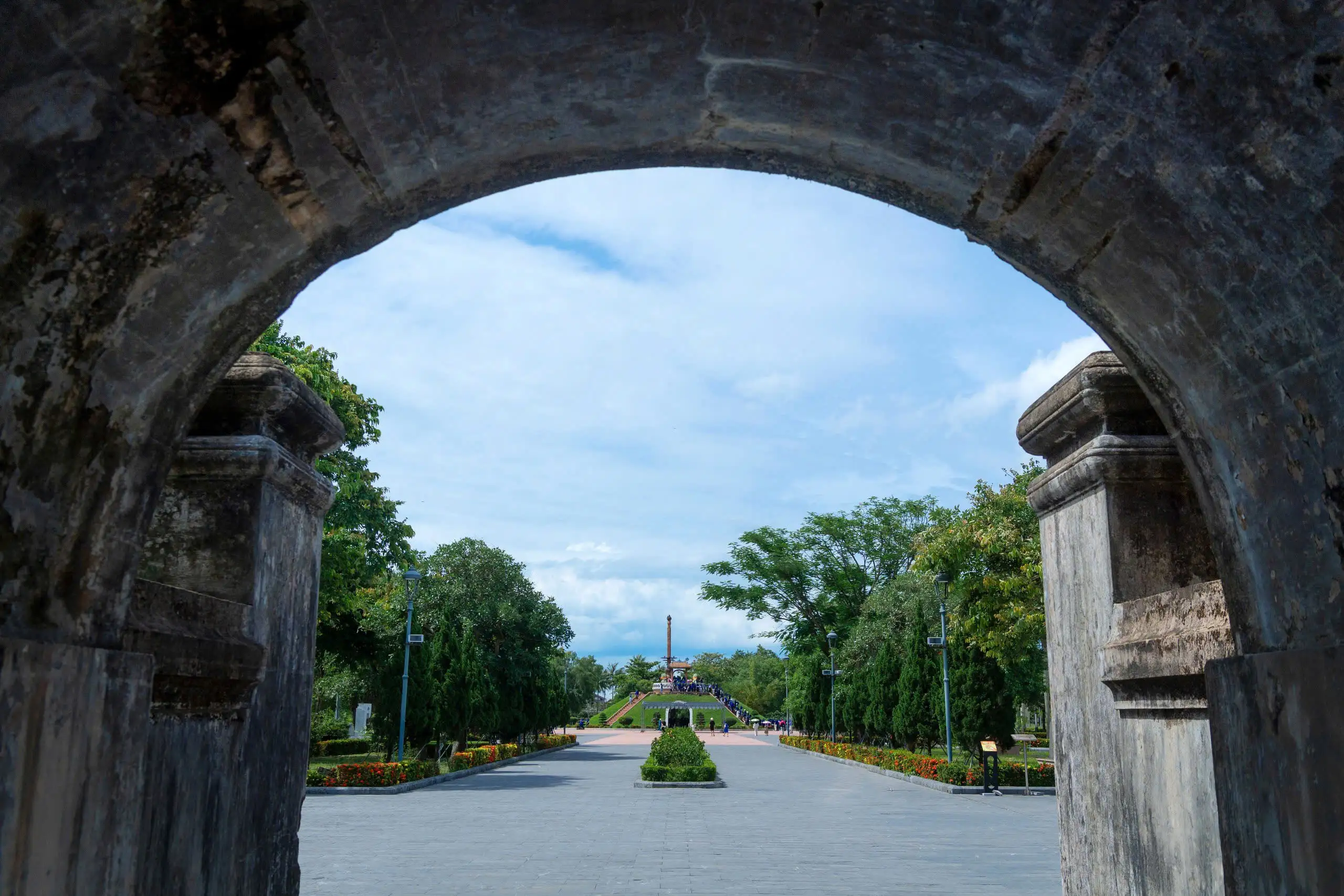
Long Hung Church: On the approach from the north, the bombed-out ruins of Long Hung Church stand roofless and scarred – an arresting image that many travelers drive past without realizing its significance.
Visiting Vinh Moc Tunnels: What you need to know
Practical
Practical Information | Details |
| Address | Vinh Moc Hamlet, Kim Thach Commune, Vinh Linh District, Quang Tri Province |
| Opening hours | Daily, 7:00 AM – 5:00 PM |
| Entrance fee | 50,000 VND per person |
| Guide | Required to enter the tunnel (hire on-site) |
| Museum | On-site, free with entrance ticket |
What’s inside the Tunnels ?
When you enter – typically through one of the hillside openings – the descent is immediate. The walls close in, the air changes, and it becomes viscerally clear why this place made such an impression on everyone who’s ever visited.
The tunnel passages are approximately 1.6 – 1.8 meters tall and 1.2 meters wide. Most adults can walk upright, though taller visitors may find themselves instinctively hunching. This is already a significant difference from the Cu Chi Tunnels, where visitors are required to crawl through deliberately narrowed sections.
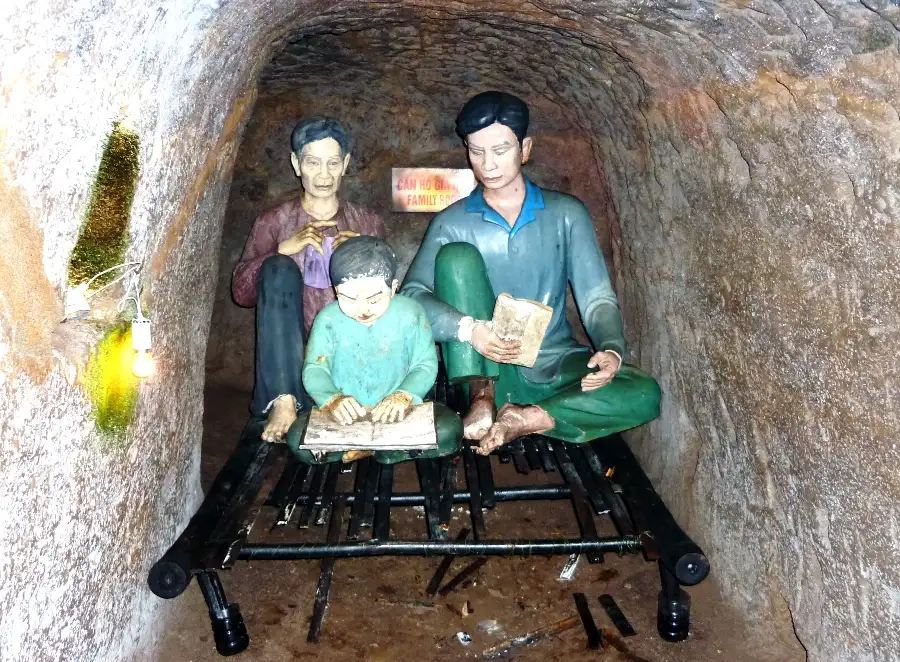
Along the route (usually entered at exit 3, with options to emerge briefly at exit 6 toward the beach before re-entering and exiting at 5), you’ll pass:
- Family sleeping alcoves: small nooks approximately 0.8 m wide, 1.8 m deep, each housing 3 – 4 people
- A meeting hall with a capacity of around 50 people
- A clinic and surgery station
- The maternity room: perhaps the most emotionally striking space, where 17 new lives began underground
- Three freshwater wells: engineering that still astonishes
- A Hoang Cam kitchen designed to vent smoke downward to avoid detection
- Ventilation shafts: cleverly positioned to draw in sea breezes from the coast
The museum near the entrance shows a documentary film (on request) and displays the primitive tools used to dig the 6,000 cubic meters of earth – with no modern machinery, only hand implements and sheer determination.
See more: Ky Anh Tunnels – Vietnam’s hidden underground fortress
Before you go underground: A few things worth knowing
Vinh Moc isn’t a difficult site to visit, but a little preparation makes the difference between a rushed walk-through and an experience that actually lands. A few things to keep in mind before you head in:
- Bring a small torch/flashlight. Some sections are poorly lit. Your guide will have one, but personal lighting helps.
- Wear clothing you don’t mind getting slightly muddy. The walls are damp red clay, especially after rain.
- Take a photo of the tunnel map at the museum before entering – the labyrinth is easy to disorient yourself in.
- Go early or late. Midday brings the most visitors. The tunnels are cooler in the morning and the sea exits are particularly atmospheric at golden hour.
- Claustrophobic travelers: the main routes are manageable, but some side corridors are tight. If you’re uncertain, tell your guide – they’ll keep to the wider passages.
- Compare to Cu Chi Tunnels: Vinh Moc is less crowded, more historically raw, and you walk through it at full height. The sea location adds a layer of beauty that Cu Chi doesn’t have. If you’ve already been to Cu Chi, Vinh Moc will feel like the more authentic experience.
Where to eat and stay near Vinh Moc Tunnels
The area immediately around the tunnels is quiet – a handful of roadside stalls near the car park, but nothing substantial.
For a proper meal, head to Dong Ha city (approximately 38 km away), where you’ll find a range of local restaurants serving Quang Tri specialties: bánh ướt thịt nướng (grilled pork rice rolls), cháo cá lóc (snakehead fish porridge), and bún hến (clam noodle soup).
If you’re overnighting near the DMZ before continuing south:
- Mường Thanh Quảng Trị Hotel – 4-star, from ~800,000 VND/night in Dong Ha
- Sài Gòn Đông Hà Hotel – 3-star, from ~500,000 VND/night
- Budget guesthouses in Dong Ha from ~200,000 VND/night
Most travelers, however, keep moving south toward Hue or continue all the way to Hoi An – which brings us to what might be the best ending to any Central Vietnam road trip.
Making the most of Central Vietnam: From history to the beach
The Central Vietnam corridor – Phong Nha → Dong Hoi → Vinh Moc Tunnels → Hue → Da Nang → Hoi An – is one of the most rewarding travel routes in Southeast Asia. In a single journey, you move through ancient cave systems, wartime history, imperial architecture, and finally, one of the most beautiful stretches of coastline in the country.
By the time you arrive in Hoi An, you’ve earned some rest.
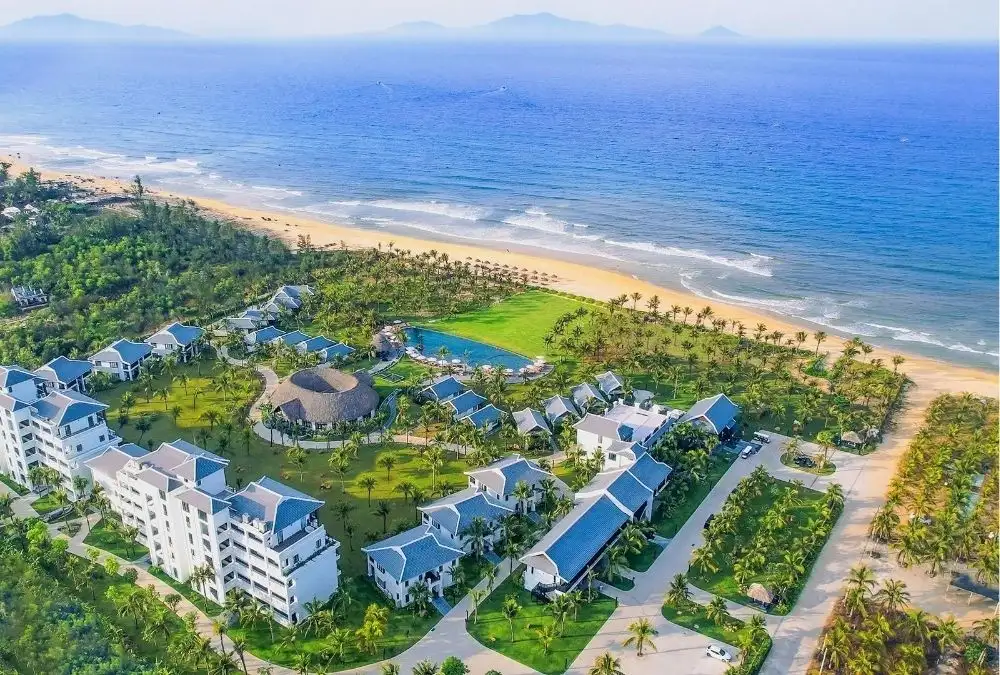
And if you’re looking for somewhere to truly decompress after days of historical exploration and road travel, Bliss Hoi An Beach Resort & Wellness is exactly the kind of place designed for that transition – from the weight of history to the lightness of simply being by the sea.
End Your Central Vietnam Journey in Style at Bliss Hoi An Beach Resort & Wellness
After a day walking through the silence of underground tunnels and standing at bridges that once marked the division of an entire country, there’s something deeply right about arriving at a place that exists specifically to help you slow down. Bliss Hoi An Beach Resort & Wellness sits right on Binh Minh Beach, a quiet stretch of coastline roughly 25 minutes from Hoi An Ancient Town.
The 55-meter beachfront infinity pool overlooking the East Sea is the kind of thing you sink into and don’t want to leave. The private beach with its complimentary cabanas and loungers catches the same ocean breeze that once ventilated the underground corridors at Vinh Moc – now, mercifully, just there to cool you down.
Accommodations range from garden-view Deluxe Rooms (elegant Indochine-inspired interiors with private indoor hot tubs) to the Beachside Bungalows and Two-Bedroom Pool Villas for those who want the full private retreat experience.
The beachfront spa offers everything from traditional Vietnamese massage and Thai massage to facials, body wraps, and steam sessions. There are daily yoga and meditation sessions if you want to start the morning right. If the road has been long, a sunset massage on the terrace with the sea in front of you is – well, it’s quite something.
The Binh Minh restaurant draws on farm-to-table principles, crafting menus from fresh local ingredients including Vietnamese, Asian, and international dishes. Free bicycles are available for anyone who wants to explore the surrounding countryside at their own pace.
If you’re planning the Central Vietnam loop and want to book your stay at Bliss Hoi An – or if you have questions about transportation, room options, or arranging airport transfers – the team is genuinely easy to reach. You can call or WhatsApp directly: +84 91 188 9558. For general reservations, the reception line is +84 235 3874 888. They’re responsive and happy to help you piece together the logistics of a trip like this – which, if you haven’t already noticed, involves quite a few moving parts.

Related Posts
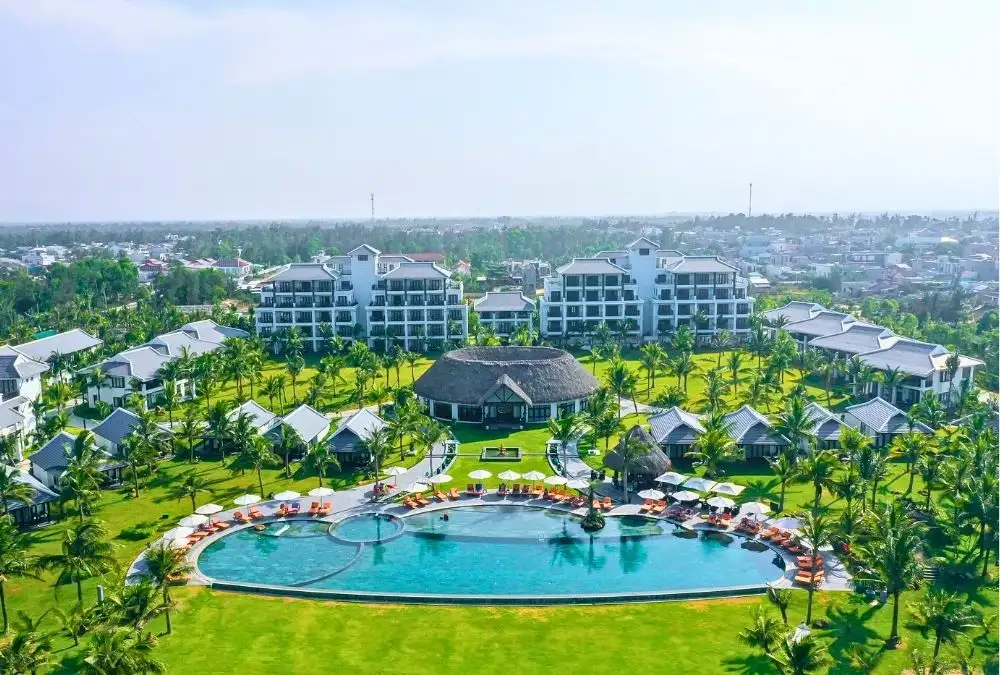
Private Tours from Hoi An Beach Resorts: Discover Central Vietnam from Bliss Hoi An
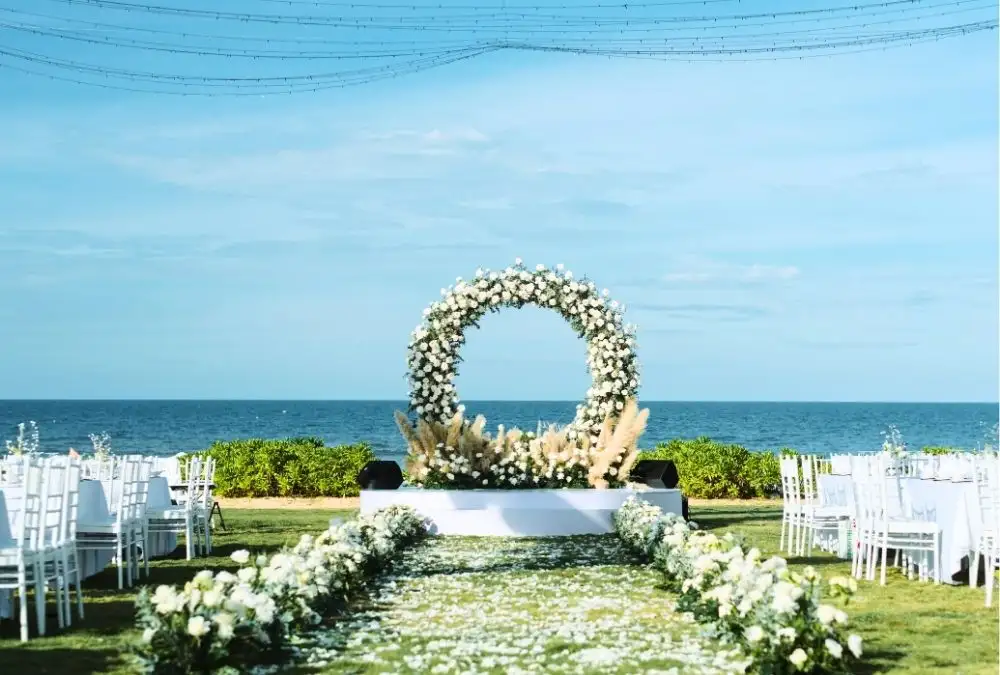
How much does a Hoi An wedding for 40 guests cost?

Is fine dining Hoi An really worth the price? What are travelers paying for?
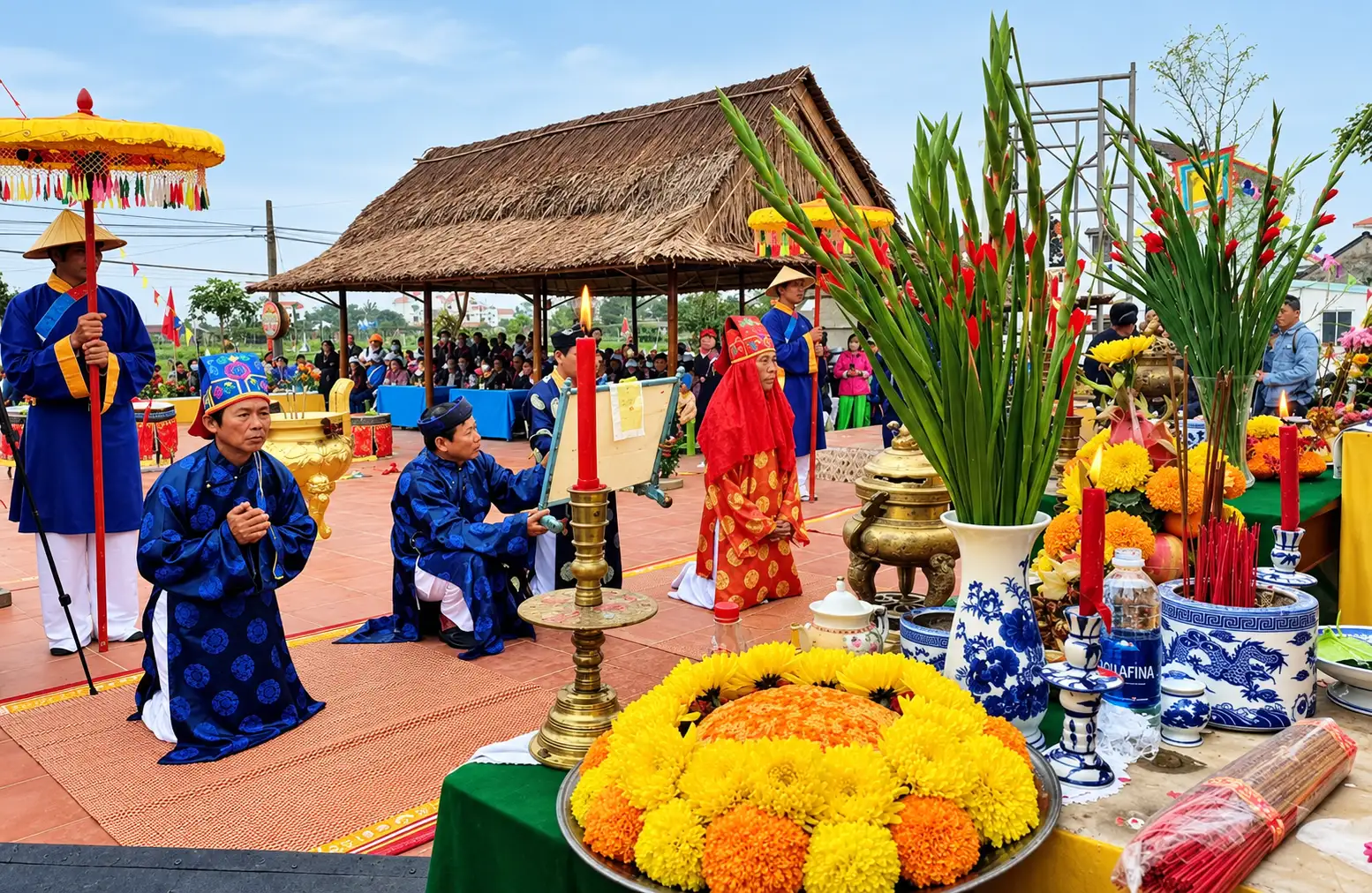
Cau Bong Festival in Hoi An: Inside Tra Que’s Agricultural New Year Tradition

Top 8 things to consider for a wedding in Hoi An with 20 guests