

A month in Hoi An: What a long stay actually looks like

Spending a month in Hoi An gives you time to settle into the city rather than simply tick off its highlights. You can return to the same local spots, get around without thinking about it, and see the Ancient Town at different times of day. Here is what to expect when staying in Hoi An for a month, including costs, transport, things to do, and practical tips.
Is a month in Hoi An actually worth it?
Yes, but only for travelers who want to settle into a place rather than tick it off a list. Three or four days is enough to see Hoi An’s Ancient Town, walk across the Japanese Covered Bridge and eat along the main streets. A month offers a different kind of trip: there is time to have a regular breakfast spot, join a local gym, take slower days and catch local events that a short visit might miss.
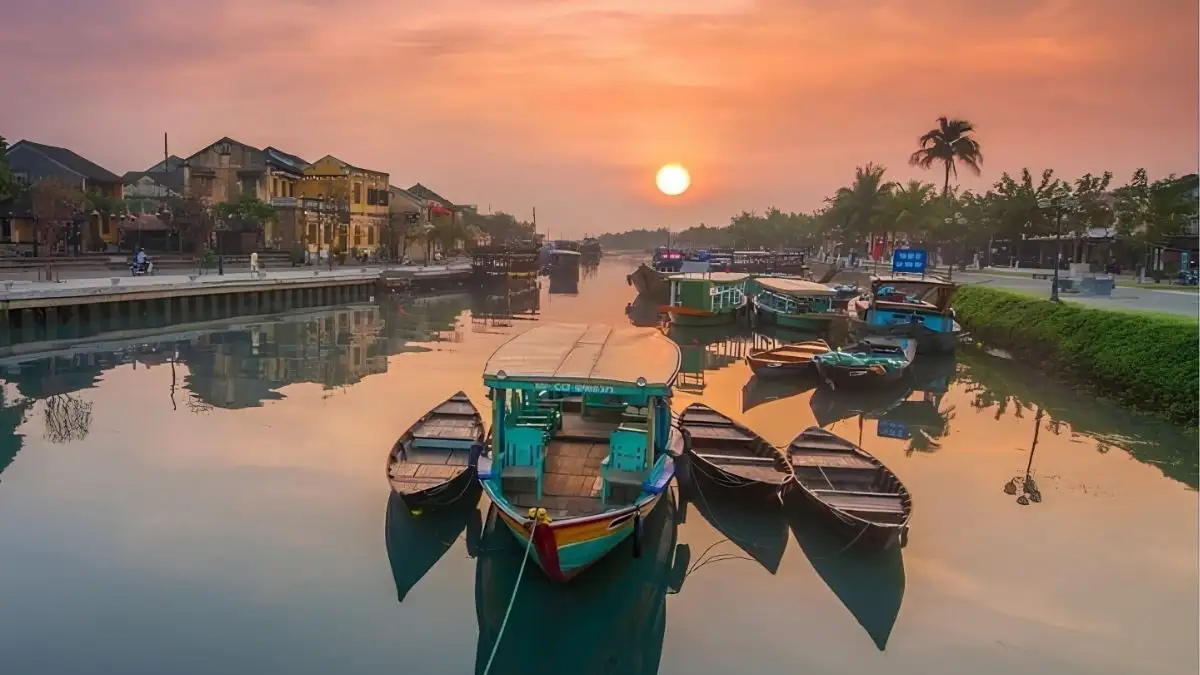
The biggest difference is the pace. Hoi An feels very different at 6:00 AM, before the tour groups arrive and the streets fill with vendors and visitors. That quieter side of the Ancient Town is easy to miss on a short trip when every day is packed with places to see. Staying longer leaves room for those slower mornings, repeat visits and ordinary days that gradually become part of the experience.
How much does it cost to live in Hoi An for a month?
Hoi An can be relatively inexpensive for a month-long stay, especially when most meals come from local markets, street stalls and neighbourhood restaurants. The bigger costs are accommodation, activities and how often you eat in tourist-focused restaurants. For a realistic budget when planning hoi an in one month, it helps to separate everyday spending from the occasional splurge.
| Expense | Typical cost | Approx. monthly cost |
| Local breakfast | 20,000-50,000 VND | 600,000-1,500,000 VND |
| Local lunch | 40,000-70,000 VND | 1,200,000-2,100,000 VND |
| Local dinner | 50,000-120,000 VND | 1,500,000-3,600,000 VND |
| Coffee and drinks | 20,000-60,000 VND | 600,000-1,800,000 VND |
| Tours and activities | 300,000-1,200,000 VND per activity | Depends on frequency |
| Local transport | Varies by distance | Depends on usage |
| Accommodation | 4,000,000-35,000,000 VND/month | Depends on property and location |
Local accommodation prices vary considerably. Basic long-term rooms can start around 4,000,000-7,000,000 VND per month, while furnished apartments and villa-style accommodation can range from 8,000,000 VND to more than 30,000,000 VND per month. Utilities may be charged separately.
Daily food and living costs
Food is one of the easiest parts of a month in Hoi An to keep affordable. A classic banh mi from a street stall can cost around 30,000 VND, while a plate of com ga with a drink can come in at under 100,000 VND. A proper sit-down dinner at a mid-range restaurant can cost around 250,000 VND per person.
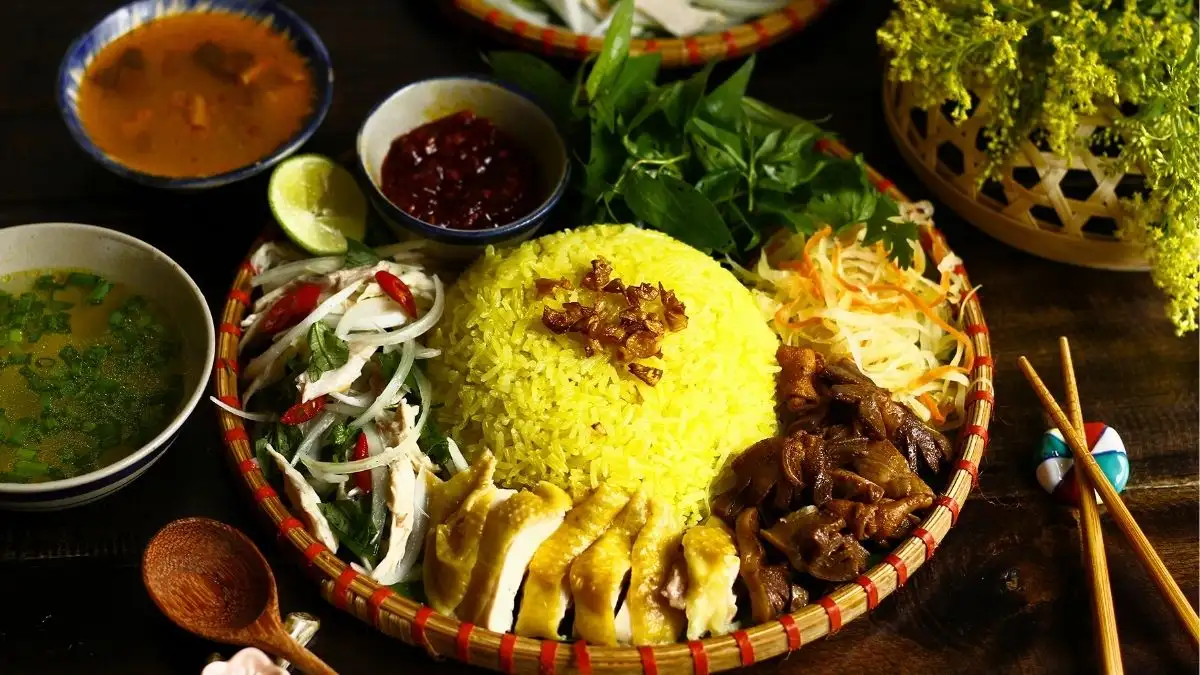
Local dishes such as com ga and mi Quang generally fall in the 30,000-70,000 VND range at smaller local eateries, while prices rise at restaurants around the Ancient Town and riverside.
For example, a simple day could look like this:
- Breakfast: banh mi and coffee: around 50,000-70,000 VND
- Lunch: com ga with a drink: under 100,000 VND
- Dinner: mid-range restaurant: around 250,000 VND
- Drinks or snacks: around 30,000-60,000 VND
Eating well in Hoi An for a month is not just about keeping the daily food budget low. It is also about finding the small places you would probably walk past on a short visit, then returning to the ones you like. If you want a little help getting beyond the familiar restaurants around the Ancient Town, Bliss Hoi An’s Street Food Tour is an easy way to spend an afternoon eating your way through some of the city’s local favourites.
Costs for tours and activities
Paid activities are less predictable because prices vary widely. A casual workshop or local experience may cost a few hundred thousand VND, while full cooking classes and more structured experiences can reach 500,000-1,200,000 VND per person.
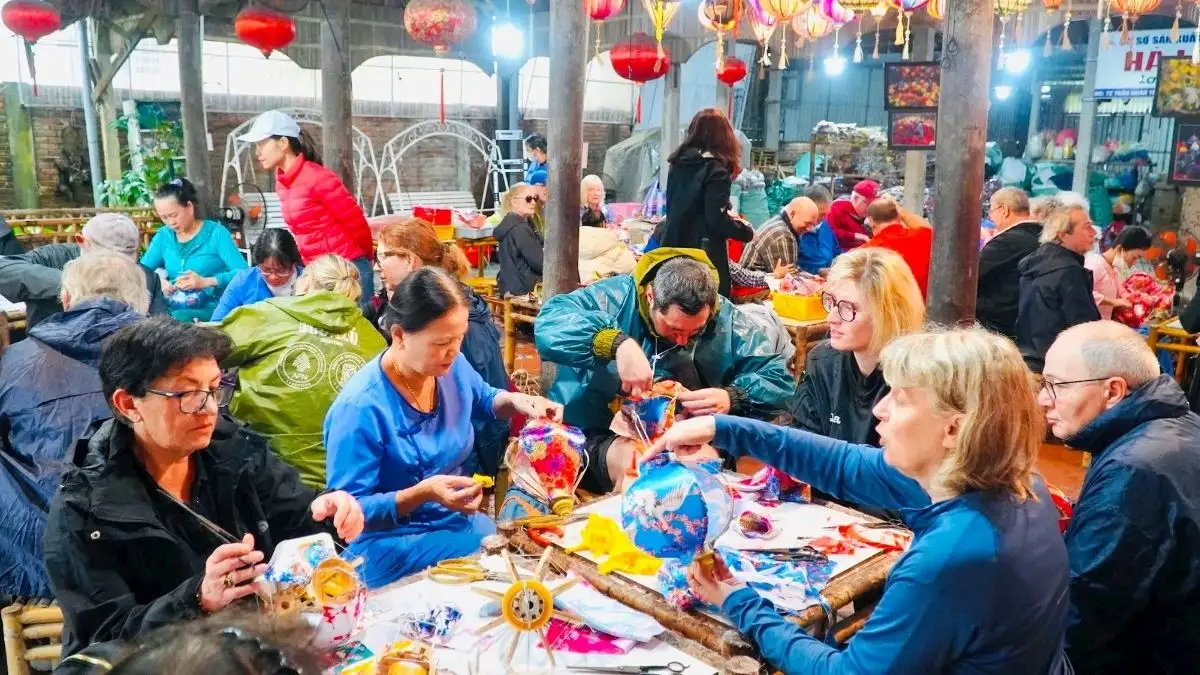
Half-day tours and organised experiences can cost around 600,000 VND. Over a month-long stay, there is little reason to book something every day. One or two paid activities a week leaves plenty of time for free or low-cost parts of Hoi An, such as cycling through the countryside, visiting the Ancient Town in the early morning, spending time at the beach or simply exploring local food spots.
A reasonable activity budget could therefore be:
- Light: 1,000,000-2,000,000 VND/month
- Moderate: 2,000,000-4,000,000 VND/month
- Activity-heavy: 5,000,000 VND or more/month
Cash, ATMs, and card payments
Cash is still useful for everyday spending in Hoi An. Market stalls, small food vendors and some local restaurants may not accept cards, so keeping some Vietnamese đong on hand makes daily purchases easier.
Cards are more widely accepted at hotels, larger restaurants, supermarkets and established businesses. A BankWest Australia debit card can be useful for international travel, but an overseas card may still be declined at some ATMs. In one case, the card was rejected at the first ATM, while switching to a different bank’s machine solved the problem immediately. If an overseas card is declined once, try another bank’s ATM before assuming there is a problem with the account or card.
For a month-long stay, it is also worth keeping smaller notes available. A 500,000 VND note is not particularly convenient when buying a 30,000 VND banh mi.
Getting around Hoi An day to day
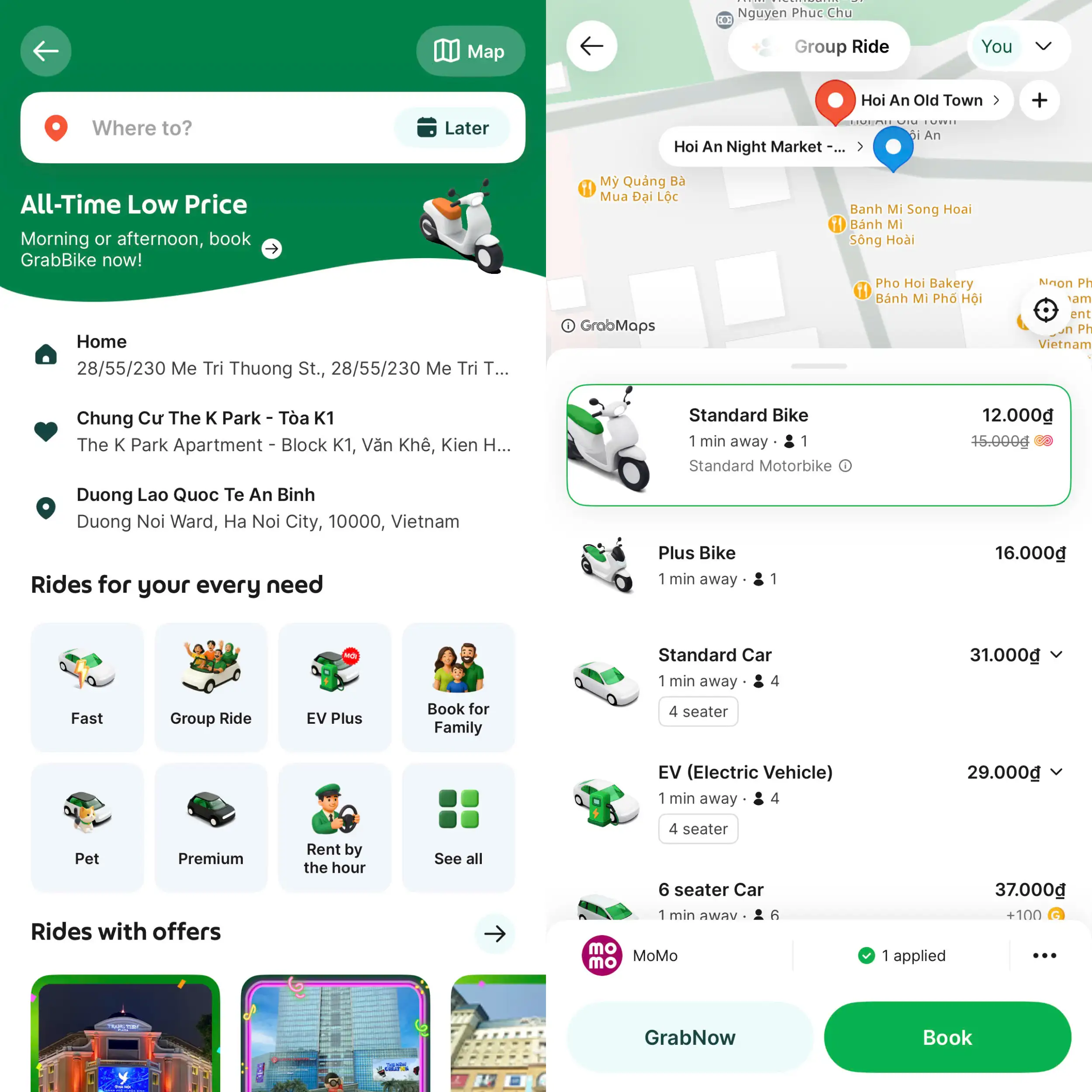
Grab, Southeast Asia’s answer to Uber, is one of the easiest ways to get around Hoi An when the destination is too far to walk. It’s reliable, the app shows the fare upfront so there’s no haggling, and drivers in Hoi An are used to picking up and dropping off tourists throughout the day. For a month-long stay, having Grab set up from day one makes a genuine difference to how easily you settle in, since you’re not relying on flagging down taxis or negotiating fares in a language you don’t speak.
If your month in Hoi An includes a longer trip elsewhere in Vietnam, a sleeper train is worth knowing about, though it comes with a caveat. Booking the “first class” cabin sounds premium, but it’s roughly equivalent to third class back home: four bunks per cabin, basic mattresses that wouldn’t look out of place in a hospital ward, and no food service to speak of. Bring your own snacks and a proper meal before boarding, because the onboard options are limited at best.
Read more: Da Nang to Hoi An Grab: A complete guide for all visitors
Best experiences to try during a month in Hoi An
These five are particularly suited to a longer stay, and they work especially well if you’re planning hoi an in one month.
Hands-On craft experience at Woodart Vietnam
Woodart Vietnam offers a hands-on woodcarving workshop in a peaceful garden near Gonoi village. Sessions last about three hours, with an artisan guiding you through carving your own piece based on a design you choose. The workshop has gained international attention, with its work featured by Marvel Studios and referenced by the team behind Black Myth: Wukong.
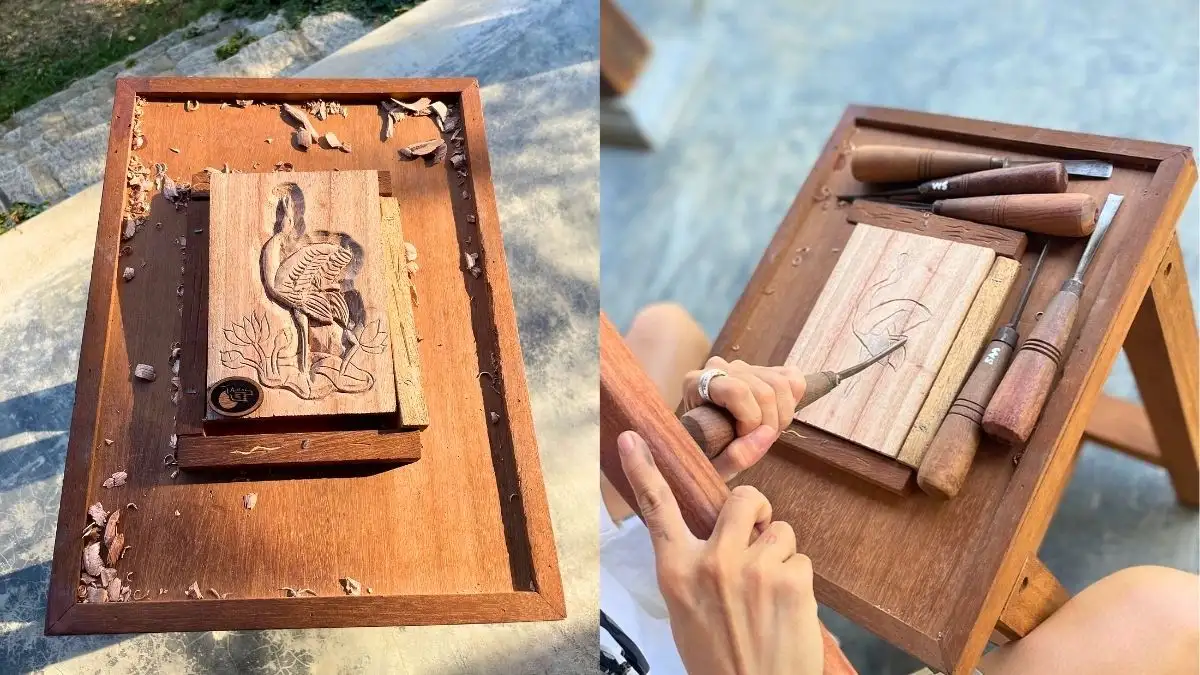
The open-air riverside studio, the smell of fresh wood and the chance to learn directly from local artisans make this more than a typical souvenir workshop. Duy, one of the artisans, continues a family woodcarving tradition, with his family’s work displayed around the studio. Book a few days ahead and allow a full afternoon rather than fitting it between other activities.
The Teh Dar Show at Lune Center
The Teh Dar Show at Lune Center is a good evening experience during a longer stay. Performed inside a distinctive bamboo theatre shaped like a full moon, the roughly one-hour show combines acrobatics, live tribal music and storytelling inspired by Vietnam’s Central Highlands.
The theatre has only 299 seats, with tickets costing 600,000-1,200,000 VND depending on seating. It is located at 1A Nguyen Phuc Chu Street. Arrive at least 30 minutes early to collect your physical ticket, as latecomers may miss the opening. Booking a day or two ahead is recommended.
Eating at Minh Kien
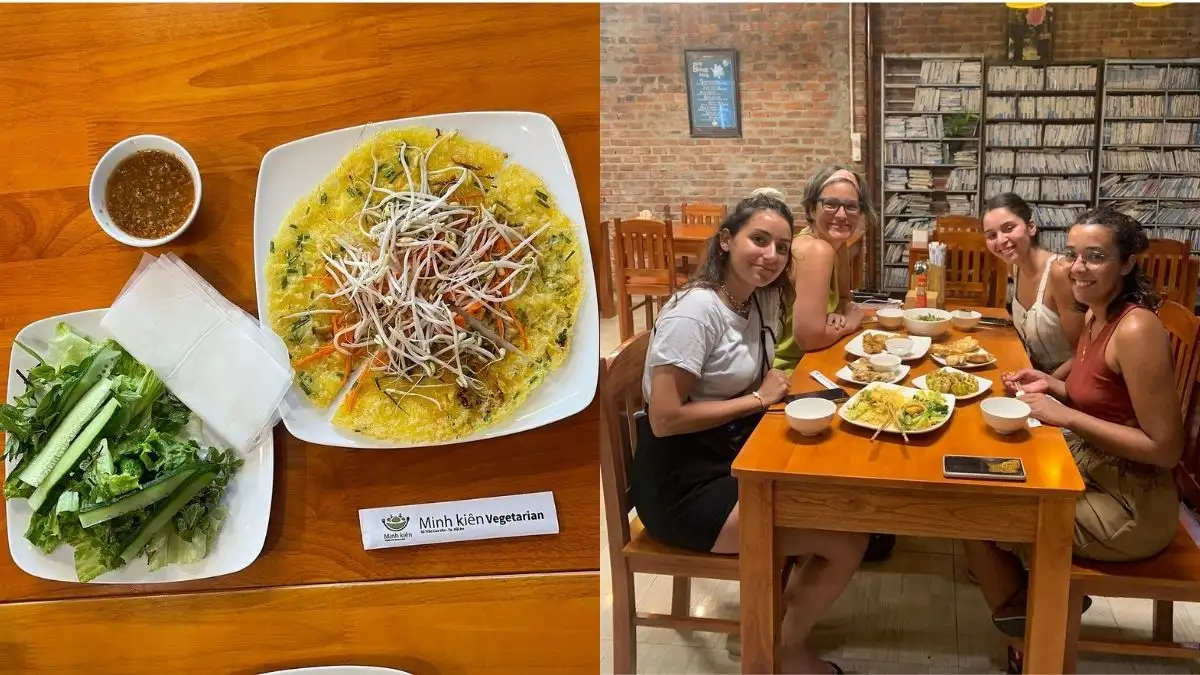
For a long stay, having a few restaurants you return to can feel more rewarding than trying somewhere new every night. Minh Kien is known for its Banh Xeo, while Goi Du Du (papaya salad) and Rose Dumplings are also popular.
The crispy Banh Xeo comes with fresh herbs for wrapping, and the Passionfruit and Mint Soda is frequently praised for its fresh, non-syrupy taste. Regular customers also mention the owner remembering their orders after a few visits, exactly the kind of familiarity that makes a month in Hoi An feel more like living locally.
Training and community at HealthFit Gym
HealthFit Gym & Yoga Center on Ly Thai To in Cam An Ward overlooks nearby rice fields and offers flexible options for short-term visitors. A day pass costs around 50,000 VND, while a monthly package is roughly 500,000 VND for about 12 passes, including gym access and group classes. Prices can change, so check the current rates before joining.
The main advantage for long-stay travelers is the community. During a five-week stay, regular visits can turn the reception staff, trainers and other members into familiar faces, creating a more social experience than a hotel gym. If your stay overlaps Tet (Vietnamese Lunar New Year), you may even catch the gym’s year-end party.
Booking tours and experiences via GetYourGuide and Klook
GetYourGuide and Klook make it easier to book tours, workshops and other experiences online, while comparing prices, reviews and availability without contacting individual operators.
For most activities, one or two days’ advance booking is usually enough. During busy periods such as Tet, book earlier, especially for limited-capacity experiences like the Teh Dar Show. For smaller local activities, ask your accommodation staff which experiences are better booked directly and which are easier to arrange through GetYourGuide or Klook.

Beyond these activities, if you want to spend a few hours away from the busier parts of Hoi An and experience a quieter side of the area, River Serenity & Cultural Discovery at Bliss Hoi An is worth considering. The experience combines a journey along the Truong Giang River with a visit to Giac Vien Pagoda and the surrounding countryside, making it a good fit for a slower day during a month-long stay.
What to prepare for a month in Hoi An
A month-long stay needs slightly different preparation from a short trip. Instead of packing everything, focus on connectivity, cash flow and a little local know-how to make daily life easier.
SIM, internet, and mobile connectivity
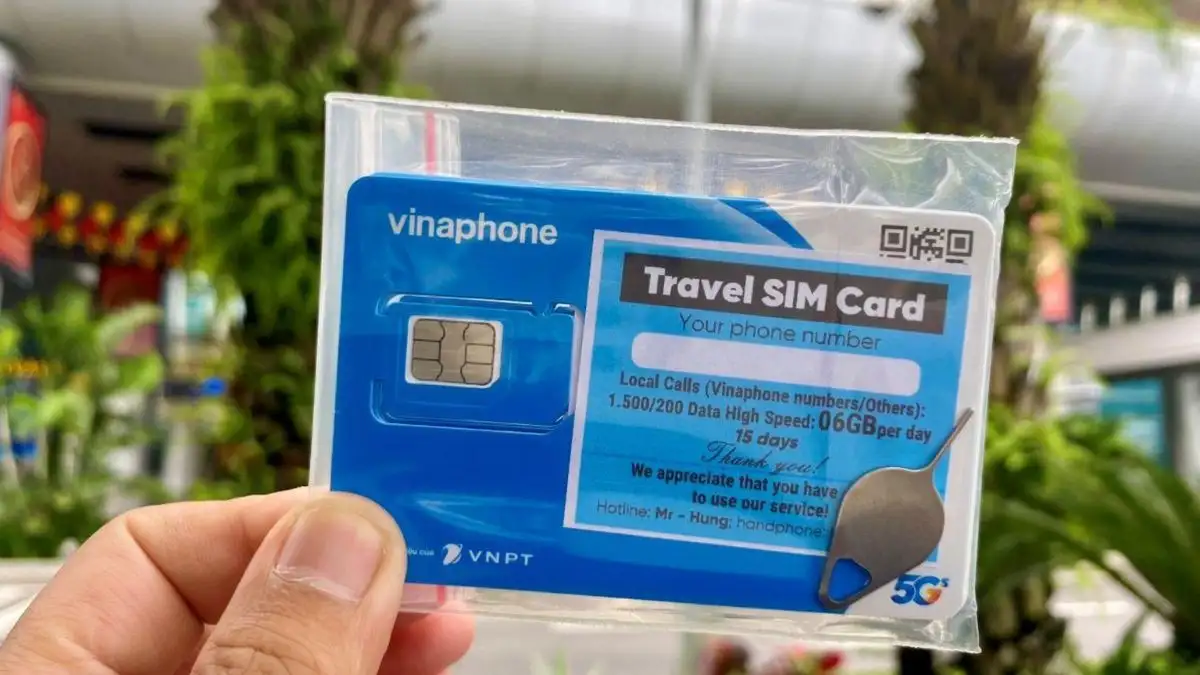
Reliable mobile data is essential for booking rides, checking maps and finding local places. Getting a local SIM on arrival is usually easiest; many hotels and hostels can help with activation. Tourist SIMs from Vietnamese carriers or smaller providers generally offer enough data for a month. Vietnamese law requires passport registration when buying a SIM, so keep your passport handy and check the data allowance and validity before paying, as prices vary between vendors.
Language and a few useful Vietnamese phrases
English is widely spoken in hotels, restaurants and other tourist areas, so you can manage without Vietnamese. Still, knowing “Xin chào” (hello) and “Cảm ơn” (thank you) can make everyday interactions warmer, especially when you regularly visit the same shops, markets or local businesses.
Dress and appropriate etiquette
Locals generally dress more modestly than many Western visitors, particularly around temples, assembly halls and residential areas. A light long-sleeve shirt and loose linen pants are useful for both modesty and sun protection, while remaining comfortable in Hoi An’s heat.
Staying Safe in Hoi An
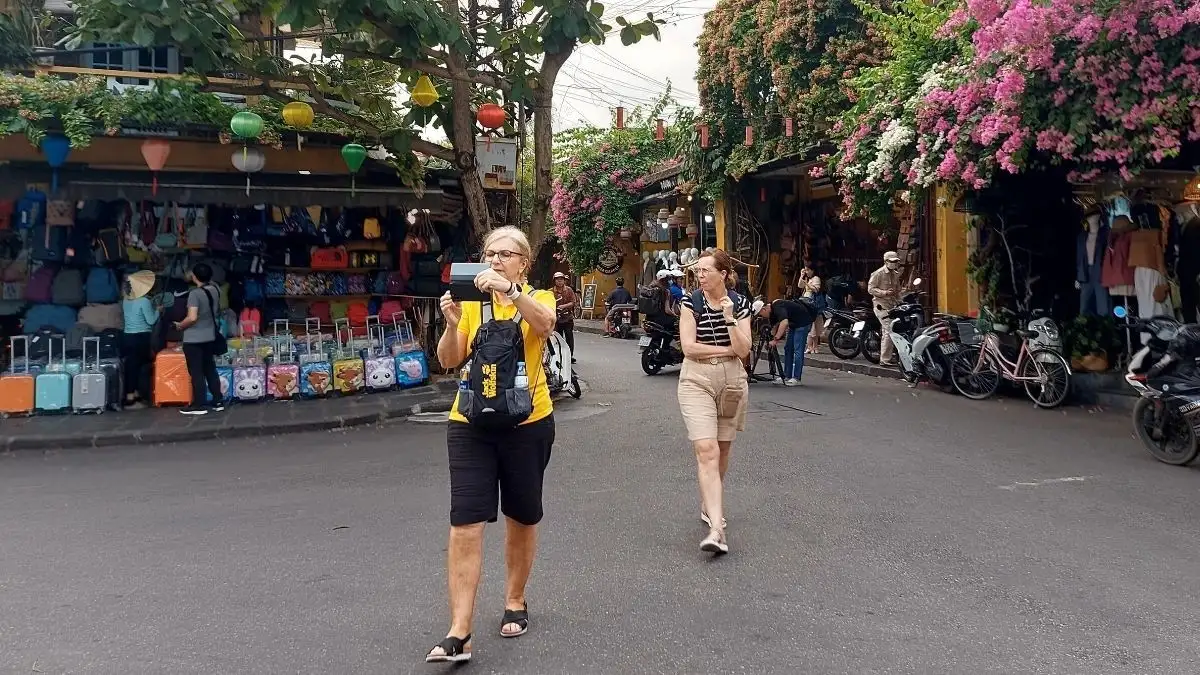
Standard precautions still apply: stay aware at night, keep your phone charged, save your accommodation address and use Grab rather than an unmarked taxi after dark. Hoi An is generally considered comfortable for solo female travelers, with busy markets and lantern-lit streets keeping many areas active into the evening.
Things you don’t need to pack from home
There’s no need to overpack for a month. Snacks, toiletries, sunscreen and electrolyte tablets are easy to buy locally, often at lower prices than at home. Pharmacies stock recognizable Western brands, and English-speaking doctors are available if minor health issues arise. If you’re visiting during the rainy season, roughly September to January, a local poncho costing around 20,000 VND or a rain jacket bought in Hoi An can be more practical than packing bulky rain gear from home.
Read more: Best time to visit Danang Hoi An and Hue for the perfect Central Vietnam trip
Where should you stay for a month in Hoi An?
A month in Hoi An gives you more room to settle into different sides of the city. You might want to be close to the Ancient Town at first, with its markets, tailors, restaurants and evening activities, then spend some time closer to the coast when you feel like slowing down. Rather than choosing one place and staying there for all thirty nights, moving between two areas can make a long stay feel less repetitive.
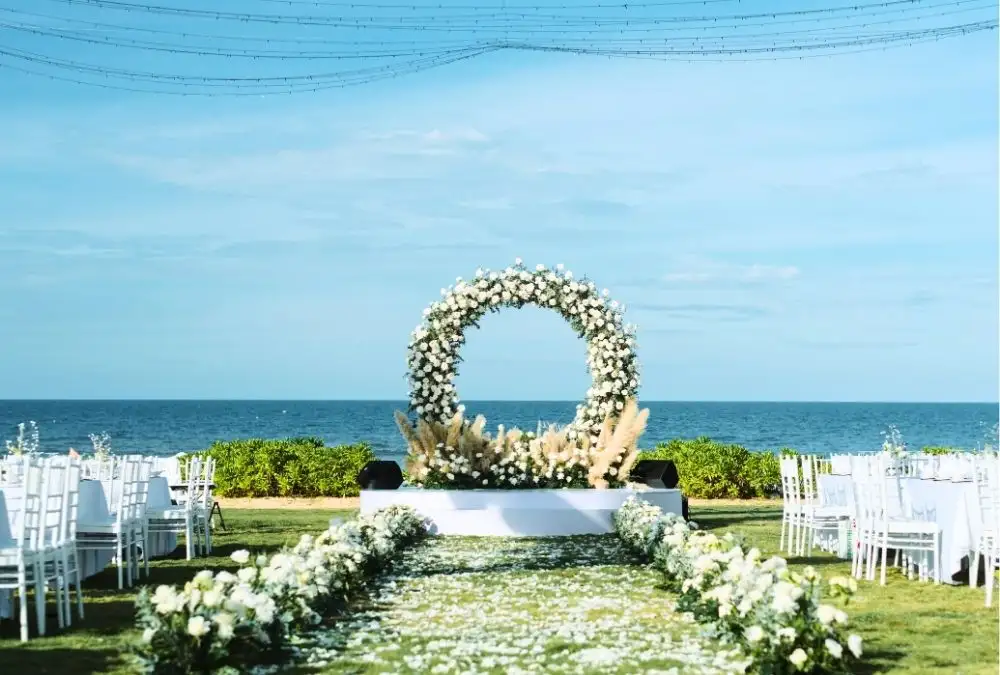
At Bliss Hoi An Beach Resort & Wellness, on Binh Minh Beach, a few nights can feel quite different from the rest of your trip. The resort sits across 5 hectares with 135 rooms and villas, with a 55-metre oceanfront infinity pool and direct access to Binh Minh Beach.

There is also enough happening on-site to fill a few days without creating another packed sightseeing schedule. Depending on the day, the weekly programme includes:
- Wellness: Yoga, Tai Chi and fitness sessions
- Creative activities: ceramic painting, kite making and coconut-leaf origami
- Food experiences: cooking classes and other food-related activities
- Outdoor activities: bicycle rides, beach activities, pool games such as water volleyball, and relaxing under the coconut trees while enjoying the sea breeze

- Slow mornings: watching the sunrise over Binh Minh Beach and spending a quiet morning by the coast
- Evening entertainment: BBQ dinners with live music, cocktail evenings, movie nights and other rotating activities
When you want something quieter, Ngoc Linh Spa offers treatments, while the resort’s restaurants and bars give you options for meals and drinks without having to head back into town. You can also use the complimentary bicycles to explore the surrounding area or take the free shuttle to Hoi An Ancient Town when you want to return to the city.
If you want to add a few days of beachside activities and relaxation to your month in Hoi An, check availability at Bliss Hoi An Beach Resort & Wellness and plan a few nights at Binh Minh Beach.
FAQs
Is a month in Hoi An too long?
→ No. A month gives you time to slow down, build routines and experience Hoi An beyond the usual tourist spots.
Is January a good time to be in Hoi An for a month?
→ Yes. January is generally mild, and you may also experience Hoi An’s festive atmosphere before Tet.
Do you need a SIM card for a month in Hoi An?
→ Yes. A local SIM is affordable and makes getting around, booking rides and staying connected much easier.
Can you get around Hoi An without renting a motorbike?
→ Yes. The Ancient Town is walkable, while Grab is convenient for longer trips.
Is Hoi An safe for solo female travelers staying long-term?
→ Generally yes. Hoi An is considered relatively safe, but normal precautions are still recommended, especially at night.

Related Posts
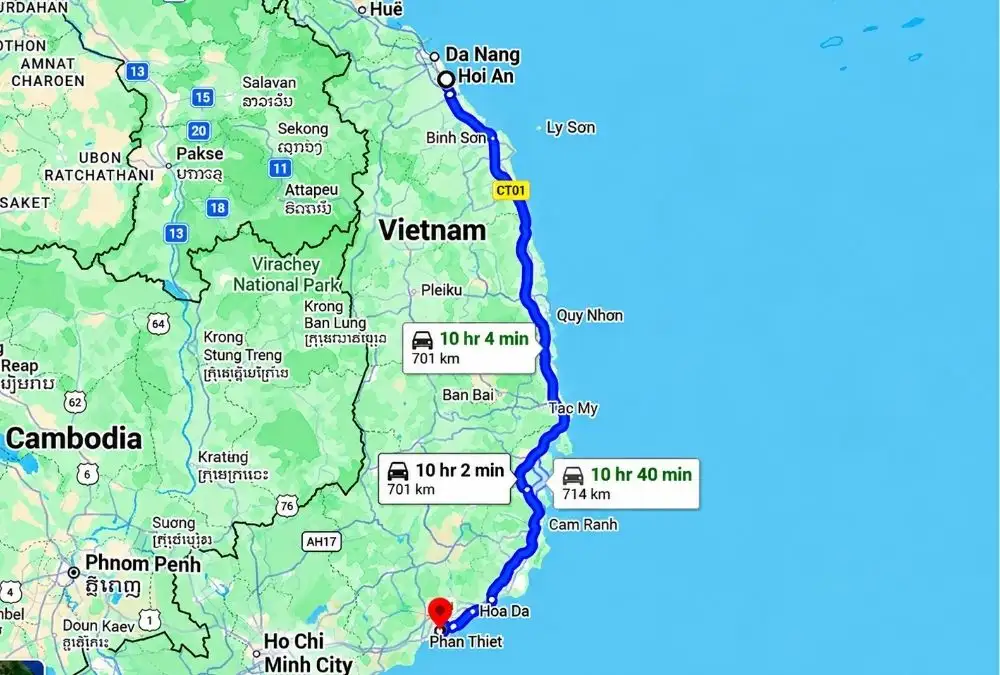
Hoi An to Mui Ne: 3 Routes Compared for Travel, Scenery and Adventure
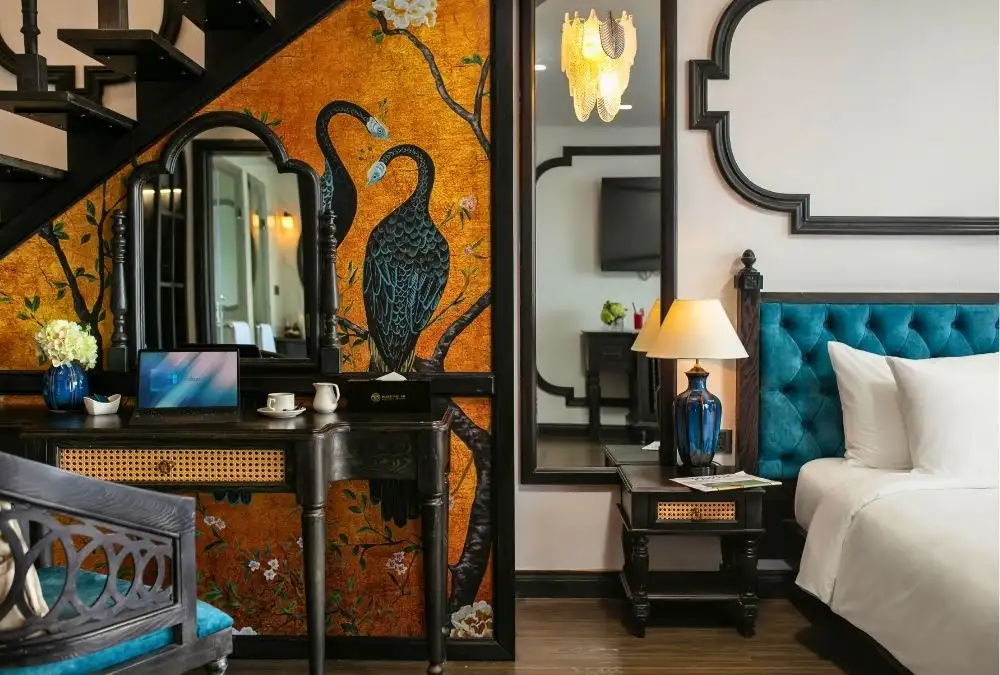
Hoi An Indochine Style Resort: How to Choose a Stay With Real Vietnamese Character
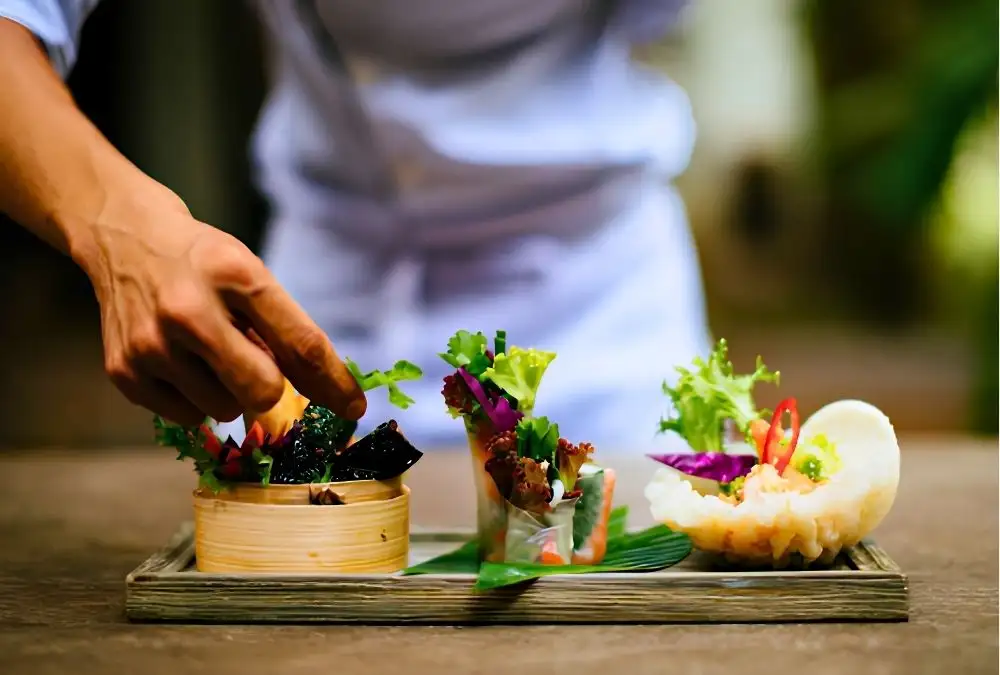
Private Chef Hoi An: Top 10 Chefs for a Personalised Dining Experience

A trip from Hoi An to Tam Ky in one day: Is it feasible?

Private Tours from Hoi An Beach Resorts: Discover Central Vietnam from Bliss Hoi An