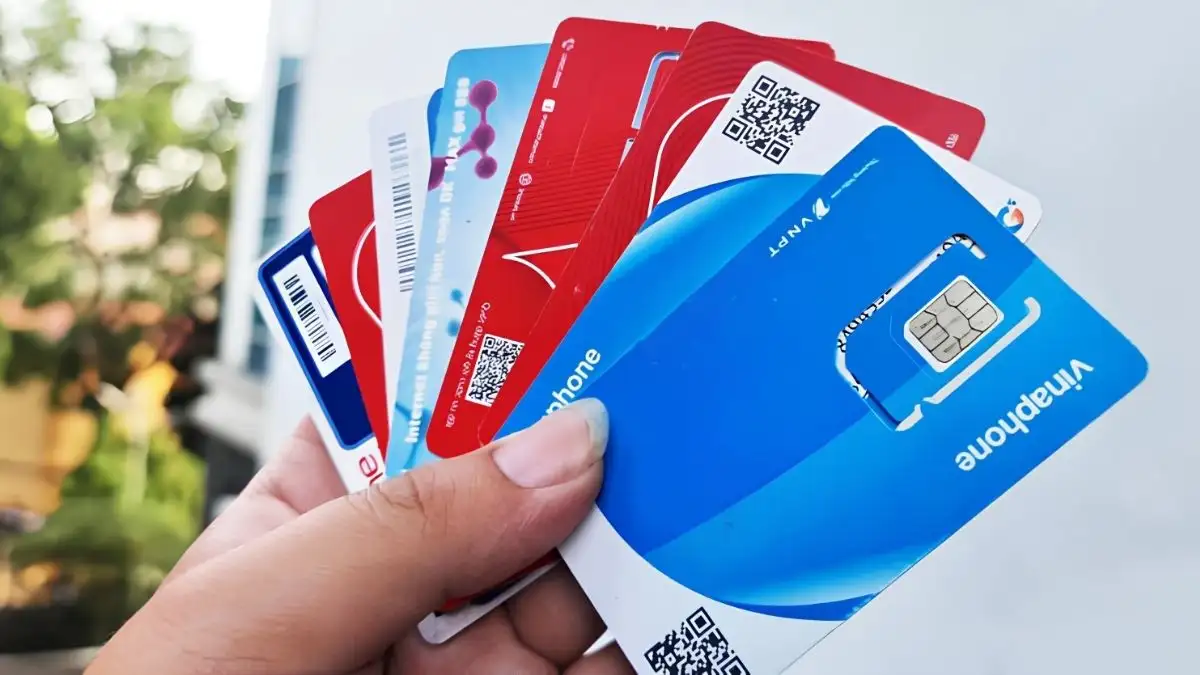


Where can you get Hoi An ATM Cash and how much can you withdraw?
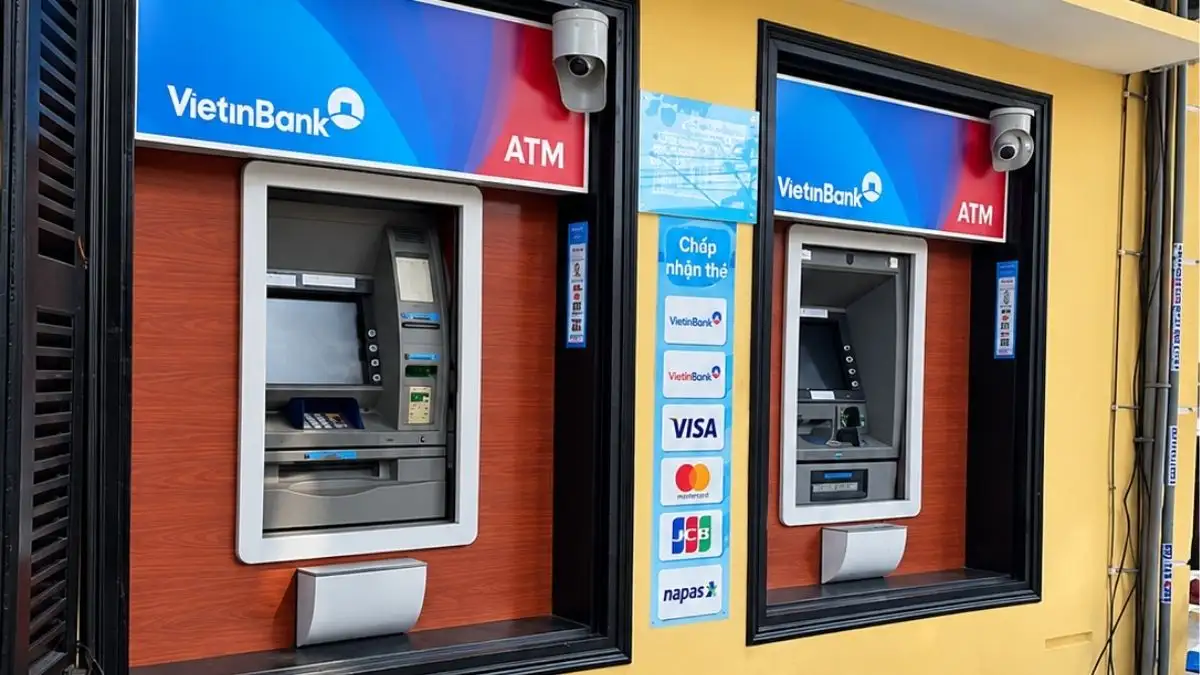
Getting Hoi An ATM cash is part of almost every trip, but a few small details can make the process less straightforward than expected. From choosing a convenient ATM to deciding whether to withdraw cash or exchange foreign currency, there are a few things worth knowing before you start. Let’s find out where to get Hoi An ATM cash and what to expect when withdrawing money.
Where can you get Hoi An ATM Cash?
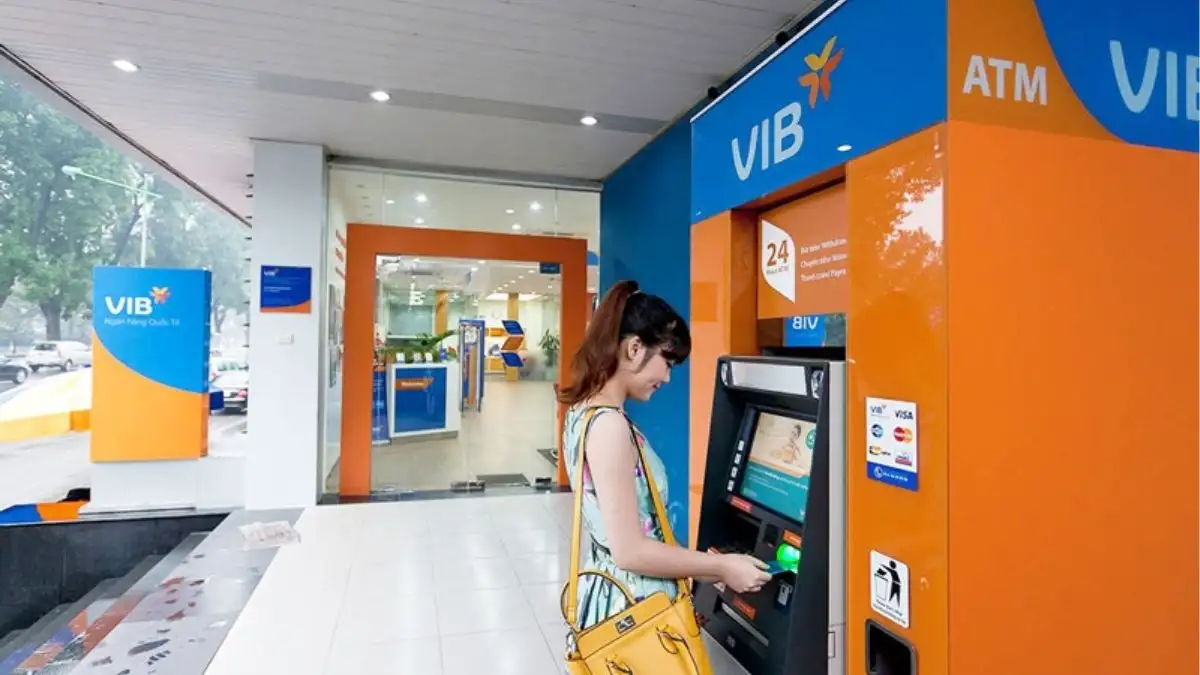
ATMs are easy to find around Hoi An, especially along the streets leading into the Ancient Town and toward the beach. Several major Vietnamese banks have machines within walking distance of the centre:
- VietinBank: 09 Le Loi Street; other ATMs are available along Nguyen Phuc Chu and Hai Ba Trung. The 09 Le Loi location is listed as operating 24/7.
- Vietcombank: 02 Tran Cao Van, plus ATMs around La Hoi and Phan Chau Trinh.
- BIDV: 51 Tran Hung Dao, 06 Phan Dinh Phung, and 156-158 Nguyen Truong To are among the listed locations, with several machines operating 24/7.
- SHB: 130 Nguyen Truong To Street in Cam Pho.
- Agribank: 06 Hoang Dieu is the current location of its former No. 1 transaction office, following a relocation announced in 2024.
- Techcombank: 278 Ly Thuong Kiet is listed as the Hoi An branch, with an ATM also recorded nearby.
The easiest way to find one near you is to search “ATM [bank name] Hoi An” on Google Maps. Before walking over, check the listed opening hours. An ATM inside a bank branch may follow the branch’s schedule, while street-facing machines can operate around the clock.
This is particularly useful before an early airport transfer or day trip. If you need cash before 8:00 AM or late at night, choose a 24-hour ATM near your accommodation rather than relying on one inside a bank branch.
How much Hoi An ATM Cash can you withdraw?
ATM withdrawal limits in Hoi An vary by bank, machine, and card. Some ATMs allow only a few million VND per transaction, while others may let you take out significantly more.
Why does Hoi An ATM Cash have a 2 million VND withdrawal limit?
A 2,000,000 VND per-transaction limit is common when withdrawing Hoi An ATM cash. This can be surprising if you expect to take out a larger amount at once.
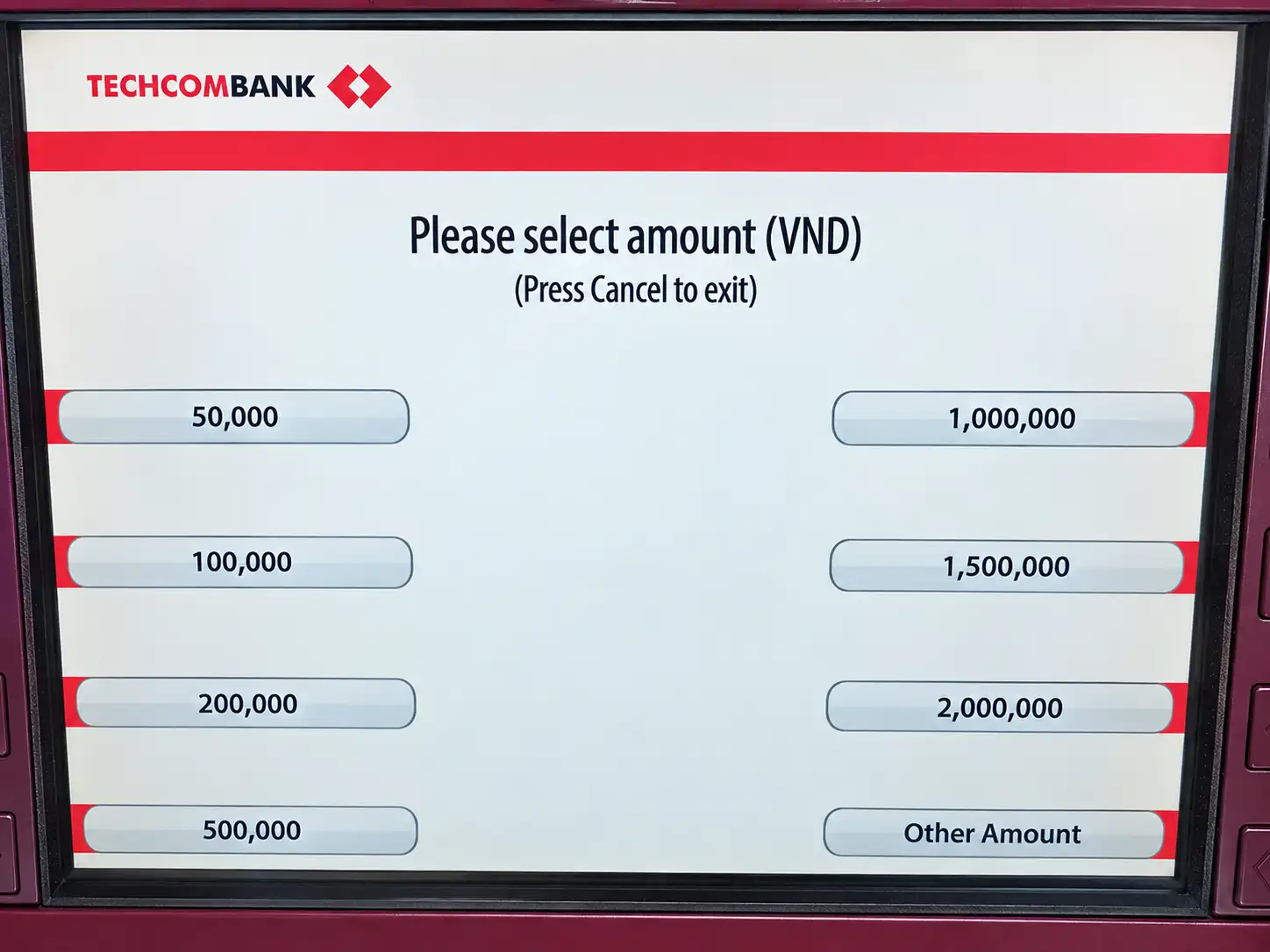
However, limits vary by bank and machine:
- Vietcombank, Agribank, and ACB: Some machines allow up to 5,000,000 VND per withdrawal.
- Southern Bank: Some machines cap withdrawals at around 3,000,000 VND.
- VPBank: Individual reports have mentioned limits as high as 20,000,000 VND per transaction.
The ATM’s limit is only one of several limits that can affect your withdrawal. You may also be restricted by:
- The per-transaction limit of the ATM
- Your home bank’s daily withdrawal limit
- Your card issuer’s international transaction limit
- Limits specific to your card type, such as debit or credit
So, if an ATM stops you at 2,000,000 VND, it does not necessarily mean your card has reached its limit. The machine itself may simply have a lower ceiling. Trying another ATM could allow you to withdraw more.
Read more: A comprehensive guide to exchange money Hoi An: Best rates & expert tips
What fees can stack up in a single withdrawal?
An ATM withdrawal can involve several different fees. Here’s who may charge each one:
| Fee type | Who charges it? |
| ATM fee | The bank that owns the machine |
| Overseas withdrawal fee | Your card-issuing bank |
| Foreign transaction fee | Your card-issuing bank |
| DCC fee or margin | The ATM, if you accept its currency conversion |
This means two travelers withdrawing the same 5,000,000 VND can pay different total fees depending on their card issuer, card type, and the options they select at the ATM.
For domestic NAPAS debit cards, in-network withdrawals typically cost 0-1,100 VND per transaction. Out-of-network withdrawals are around 3,300-5,500 VND, with a maximum of 6,000 VND under NAPAS rules.
For international Visa or Mastercard debit cards, fees are generally higher. A withdrawal may cost 1-3% of the amount, with a minimum fee of around 50,000 VND, plus a separate currency conversion fee.
Credit cards are usually the most expensive option for getting cash. Cash advances typically cost 3-4% of the amount withdrawn, plus a 2-4% currency conversion fee. Interest also starts accruing immediately because a cash advance is treated differently from a normal purchase.
Do ATM fees change over time?
Yes. ATM fee policies can change, sometimes within the same year. TPBank was widely known among travelers for low or waived fees, but traveler reports from 2025-2026 describe new charges appearing, in some cases reaching 55,000 VND per withdrawal.
VPBank has also produced mixed results. Some travelers have reported free withdrawals of 6-10 million VND, while others have been charged standard fees.
These are individual experiences rather than fixed official fee schedules, and the amount can vary by card type and timing. So, don’t assume a particular bank is always the cheapest. Check the fee displayed by the ATM before confirming the withdrawal.
Exchange rates and conversion fees when withdrawing at an ATM
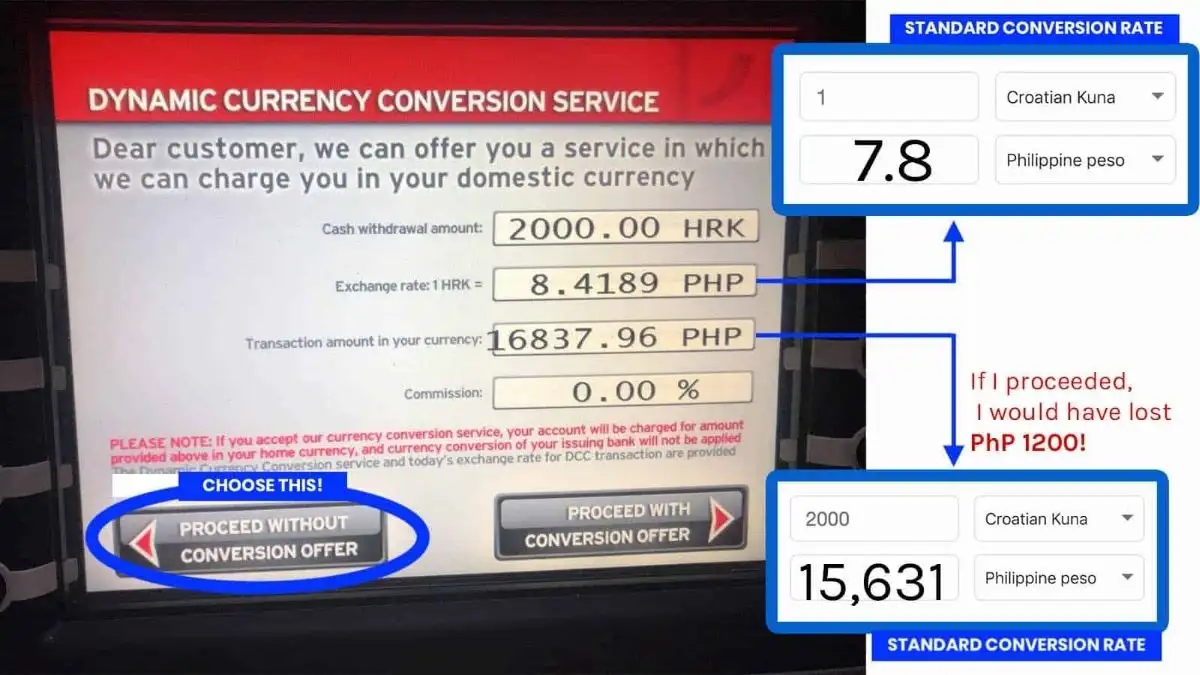
One screen that can catch travelers off guard when withdrawing Hoi An ATM cash is the Dynamic Currency Conversion (DCC) prompt. If you use an international card, the ATM may ask whether you want to “Accept Conversion” and show the withdrawal in USD, GBP, AUD, or another familiar currency. This means the ATM is offering to convert the money using its own exchange rate, which can include a significant markup of up to 11%. It is usually better to choose “Decline Conversion” and continue the withdrawal in VND. Your card-issuing bank or Visa/Mastercard will then handle the currency conversion, which can help you avoid the ATM’s less favorable exchange rate.
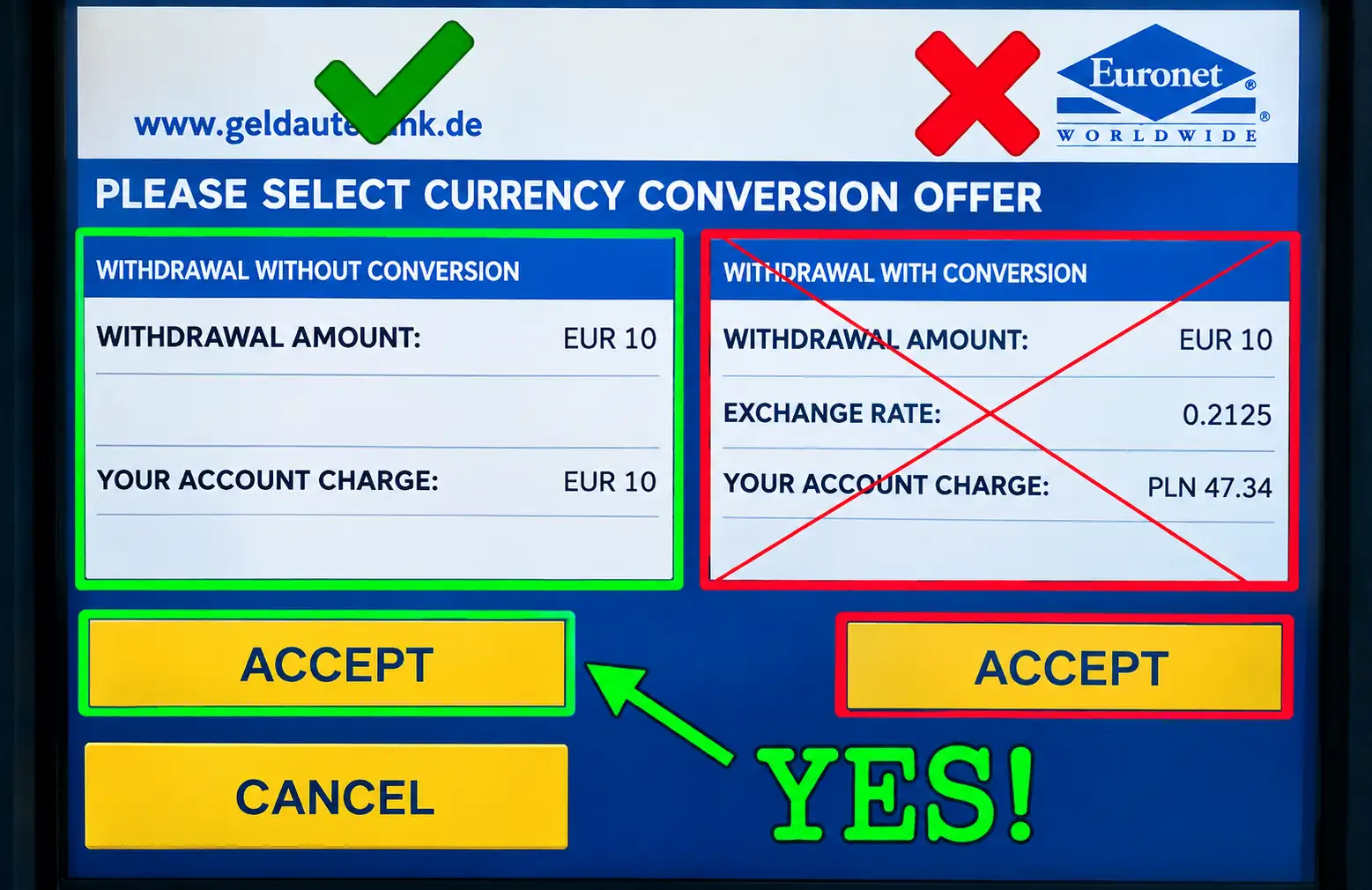
That said, declining DCC doesn’t make a withdrawal fee-free. It’s still worth checking your own card’s foreign transaction fee before you travel, since even a well-declined DCC prompt doesn’t eliminate whatever percentage your bank charges for processing a transaction in a foreign currency. The practical habit worth building before your trip is simple: whenever an ATM screen shows you a number in your home currency and asks for confirmation, treat that as the DCC prompt, decline it, and proceed in VND instead.
The lowest-fee ATM isn’t always the most cost-effective choice
It’s tempting to hunt for the one ATM in Hoi An charging zero fees and assume that’s automatically the smartest choice, but the math doesn’t always work out that way once withdrawal limits enter the picture.
For example, imagine you need 10,000,000 VND:
| ATM A | ATM B | |
| ATM fee | 0 VND | 50,000 VND |
| Withdrawal limit | 2,000,000 VND | 10,000,000 VND |
| Withdrawals needed | 5 | 1 |
| ATM fees paid | 0 VND | 50,000 VND |
| Possible card-issuer fees | Charged up to 5 times | Charged once |
ATM A looks cheaper at first, but five separate withdrawals can mean five separate charges from your card issuer. ATM B has a visible 50,000 VND fee, yet one larger withdrawal may cost less overall.
Hoi An ATMs can run out of cash during peak season
This is one of the more frustrating surprises for travelers looking for Hoi An ATM cash: machines are not always stocked and ready. ATMs in heavily touristed areas, especially near the Ancient Town, can run out of cash during busy periods, leaving you with a declined request or an error message instead of your money.
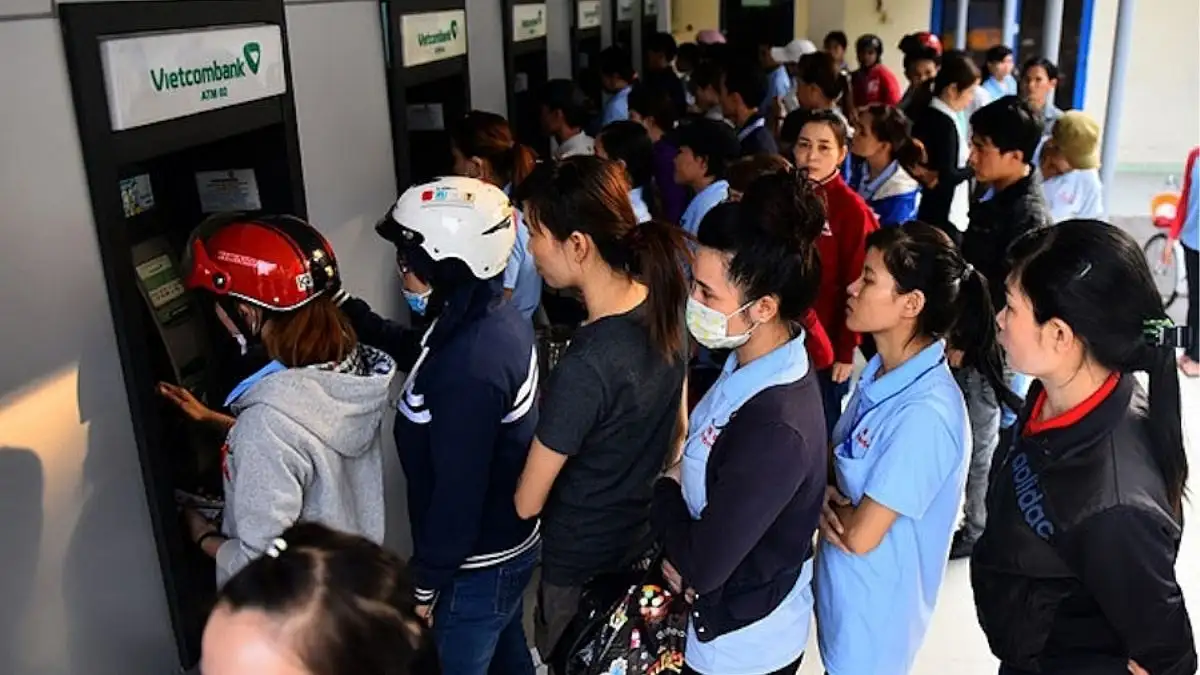
The simplest safeguard is having a second option already identified before you need one, rather than searching for an alternative machine while already stressed about cash running low. If you know of two or three ATMs near your accommodation from different banks, an empty machine becomes a minor inconvenience rather than a genuine problem. It’s also worth building this habit into any day where you’re heading out early or venturing beyond central Hoi An, since a machine running dry becomes considerably more disruptive once you’re further from other options.
What if an ATM keeps your card or doesn’t dispense cash?
If a machine retains your card without dispensing cash, or the transaction fails after your card is already inside, the priority is contacting your card-issuing bank directly rather than trying repeated attempts at the same machine. Most major Vietnamese banks maintain 24/7 support lines for exactly this situation, MB Bank’s customer hotline, for instance, runs around the clock at 1900 545 426 for domestic calls.
It’s also worth noting the ATM’s own safety mechanisms before you’re caught off guard by them: most machines automatically retract dispensed cash if it isn’t collected within about 30 seconds, and three incorrect PIN attempts is generally enough to trigger a card lock or retention, so it pays to be certain of your PIN before you start.
Read more: 5+ facts about Hoi An that even repeat visitors don’t know (2026 Guide)
Withdraw cash or exchange currency in Hoi An?
If you have an international card, withdrawing Vietnamese Dong (VND) from an ATM is generally the preferred option in Hoi An. While gold shops in the Ancient Town often offer informal currency exchange services and visitors might be tempted to exchange US dollars or euros immediately upon arrival, the rates at these small shops within the heritage area are usually significantly worse than those at professional exchange counters or banks in downtown Da Nang (located just 30 km away).
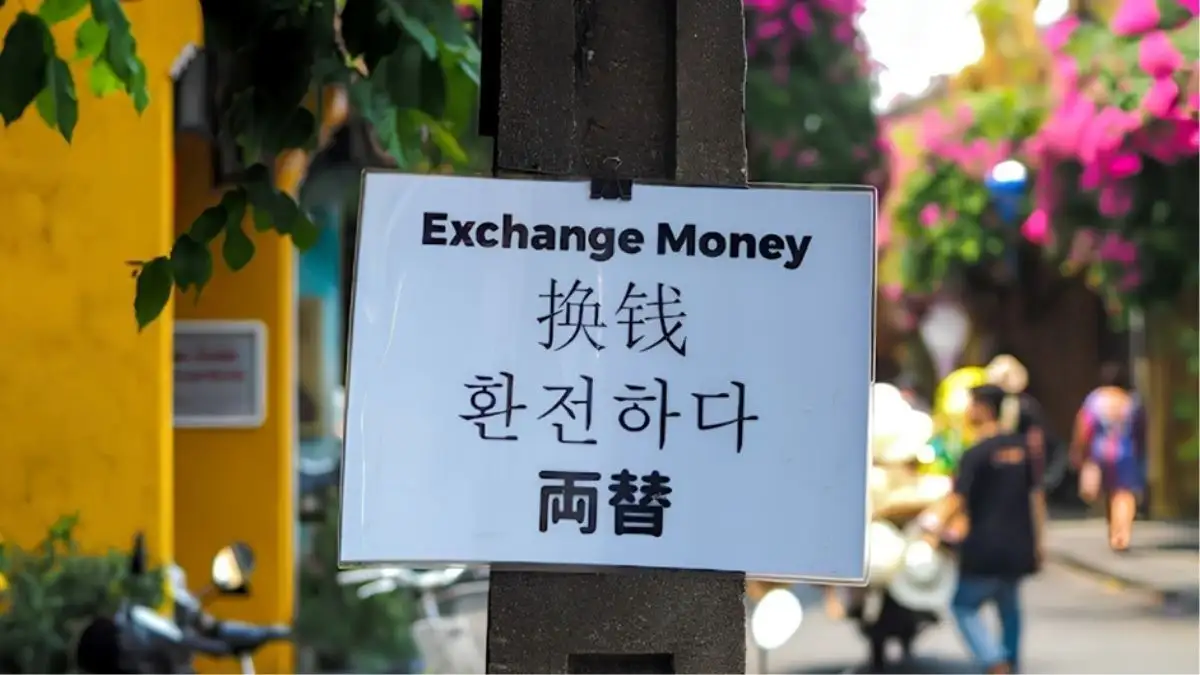
This is not necessarily a scam; rather, it is simply a price discrepancy resulting from lower competition and the high volume of tourists in the compact Ancient Town. Locals typically exchange money in Da Nang or use banking services instead of these gold shops, as the difference in rates can add up to a significant amount over the course of a long trip. For a family exchanging several hundred dollars, that difference represents a financial loss.
Using an ATM linked to your bank usually offers a more standard exchange rate compared to roadside gold shops. However, if you need cash right away in the Ancient Town to buy lanterns, take a basket boat ride, or enjoy street food, exchanging a small amount is fine, just be sure not to exchange your entire travel budget there.
Staying at Bliss Hoi An: Do you need cash?
Staying at Bliss Hoi An Beach Resort & Wellness means you do not necessarily need to carry much cash during your stay. The resort sits on Binh Minh Beach, with a range of on-site facilities including Binh Minh Restaurant, Rooftop Bar, Ngoc Linh Spa, a 55m oceanfront infinity pool, gym and wellness spaces, so guests can spend much of their time at the resort without making frequent trips into town. Card payment is available for resort services, so there is no need to exchange a large amount of cash simply for your stay.

Cash becomes more useful when heading into Hoi An Ancient Town, especially for small purchases, street food, markets or activities where card payment may not be available. When you need some VND, the Bliss Hoi An team can help you locate the nearest ATM before you leave the resort. Bliss also provides a complimentary shuttle to Ancient Town at 10:00, 14:00, 15:30 and 18:00, with a return reference time of 21:00. Free bicycles are available for guests who prefer to explore independently.
With the cash sorted out, the shuttle can take you straight into town for a day of sightseeing. For a more organized experience, Bliss also offers the Hoi An City Tour. If Hue is part of your itinerary, the Hue City Tour is another option to arrange through the resort.
Ready to stay by the beach in Hoi An? Check room options and plan your stay at Bliss Hoi An Beach Resort & Wellness, or contact the resort team for help with your accommodation and travel arrangements.

FAQs
How much cash should I carry per day in Hoi An?
Around 500,000-1,000,000 VND is a useful amount for small purchases and an occasional paid activity.
Do all ATMs in Hoi An charge a fee?
No. Domestic NAPAS cards may have free in-network withdrawals, while international cards can incur ATM and foreign transaction fees.
Should I accept currency conversion (DCC) when withdrawing Hoi An ATM cash?
Usually, no. Choose VND and decline DCC so your card issuer handles the conversion.
What should I do if an ATM keeps my Hoi An ATM cash card?
Contact your card-issuing bank immediately and note the ATM’s location and owner for follow-up.
Is it better to withdraw cash or exchange currency in Hoi An?
For most travelers, ATM withdrawals are more convenient. Exchange only a small amount locally when needed, and compare rates before changing larger sums.

Related Posts
TEST – n8n WordPress Automation

Hoi An Mid Autumn Festival 2026: 5 Things That Make It Different
Hoi An Old Town Tourist Traps: What to Watch Out For
Guide to using the Grab app Vietnam when traveling to Hoi An

Teh Dar Show Hoi An: Inside Vietnam’s Bamboo Circus of the Central Highlands