


Is Hoi An Flooded? How Central Vietnam Floods Can Affect Your Trip
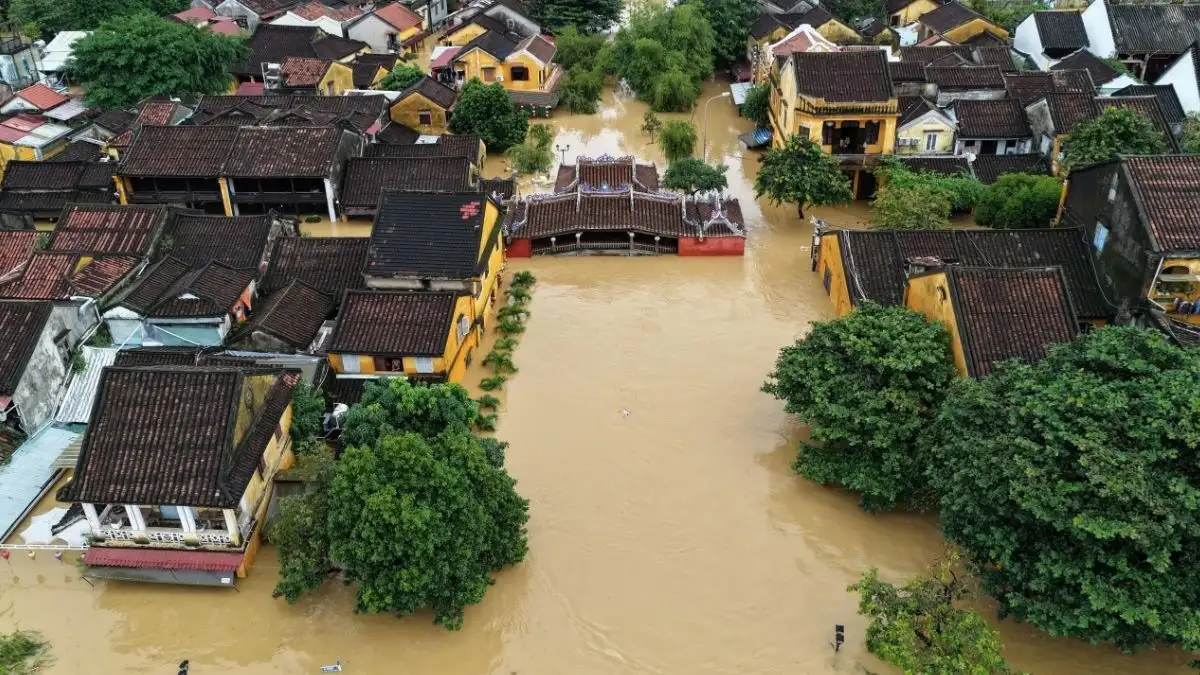
Hoi An can experience flooding during periods of heavy rain, particularly when high river levels coincide with prolonged rainfall in Central Vietnam. If you are visiting during the wetter months, let’s take a closer look at when floods are most likely, which areas are more vulnerable, and how to check conditions before your trip.
Is Hoi An Flooded? What causes flooding in Central Vietnam?
Yes, heavy rain can flood Hoi An, particularly during periods of prolonged heavy rain when water levels in the Thu Bon River system rise quickly. The town’s low-lying position near the river mouth makes it more exposed than many inland areas, especially when heavy rainfall across Quang Nam combines with already high river levels. To understand why flooding happens in Hoi An, it helps to look at the area’s geography, rainfall patterns and seasonal flood cycles that drive central Vietnam floods.
Storms and heavy rain
The biggest trigger is prolonged heavy rain. A few hours of rain do not necessarily cause serious flooding. The problem comes when rain continues for several days, saturating the ground and sending more water into the rivers. Tropical storms and typhoons can make this worse by bringing particularly intense rainfall.
The October 2025 flood shows what can happen when rainfall becomes extreme. After sustained rain across Quang Nam, the water level at Cau Lau reached 5.62 metres, about 1.62 metres above Alert Level 3 and 12 centimetres higher than the previous record from 1964. At the Hoi An monitoring station, the water reached 3.39 metres, just 1 centimetre below the 1964 record. (Source: vietnam.vn)
Geography and river system
Rain falling in Hoi An is only part of the story. A much larger amount of water can arrive from upstream. The Vu Gia and Thu Bon rivers drain water from the mountains and wider Quang Nam area toward the coast. As this water moves downstream, it eventually reaches the low-lying area around Hoi An. When river levels rise high enough, the water can spill into streets and buildings, particularly in areas close to the river.
This is also why upstream stations such as Nong Son and Cau Lau matter. They can record rising water before the increase reaches Hoi An, giving authorities an indication that more water is moving downstream.

Seasonal and extreme flooding
Flooding is more likely during the rainy season because the rivers receive much more water over a relatively short period. Most seasonal floods are not catastrophic, but the risk becomes much greater when prolonged rain, storms and already-high river levels occur at the same time. Vietnam uses three flood alert levels to describe rising river conditions:
- Alert Level 1: Water begins to affect low-lying farmland and riverbanks.
- Alert Level 2: Flooding spreads further and can begin affecting residential areas.
- Alert Level 3: Serious, widespread flooding that can threaten homes, property and personal safety and may lead to evacuation guidance.
Hoi An has experienced significant floods in 1964, 1999, 2009 and 2020, while the October 2025 flood was another example of how extreme the conditions can become (Source: hoianheritage.net).
So why does Hoi An flood?
It comes down to three things: lots of rain, a large river system carrying water downstream, and a low-lying town close to the river mouth. When these factors combine, the Thu Bon rises and water can spread into Hoi An. However, not every part of the town floods at the same time or to the same extent. Areas closer to the river and waterways generally see the effects earlier and more clearly.
| Area | Flood exposure | Why it is affected |
| Hoi An Ancient Town | High | Low-lying and directly beside the Thu Bon River |
| Riverside streets | High | Bach Dang and Nguyen Phuc Chu run along the river and can flood first |
| Cam Nam | High | Low-lying island surrounded by waterways |
| Areas further from the river | Generally lower | Areas toward An Bang and Binh Minh Beach are less directly affected by river flooding |
The exact extent of flooding still depends on the severity and location of each event. A flood warning for Hoi An therefore does not necessarily mean that every part of the city is underwater.
When is flood season in Central Vietnam?
Flood risk in Central Vietnam is highest during the rainy season, generally from September to January, with October and November being the months to watch most closely in Hoi An. Understanding this pattern is essential for anyone asking is Hoi An flooded during their planned travel dates.
| Month | Flood concern | Travel note |
| February-April | Lower | Drier and comfortable for outdoor activities |
| May-August | Lower | Hotter and sunnier; generally lower flood concern |
| September | Increasing | Rain and storm risk begin to rise |
| October-November | Highest seasonal concern | Watch rain, storms and river levels closely |
| December-January | Still elevated | Rain can continue; conditions vary by year |

Are October and November months to avoid Hoi An?
Not necessarily, but they are the months to plan more carefully. October and November fall within Hoi An’s wetter period, and prolonged rainfall can raise the Thu Bon River and increase the risk of flooding.
But rain does not automatically make Hoi An less enjoyable. A rainy afternoon can give the Ancient Town a quieter, more atmospheric character, with wet yellow walls reflecting the lanterns and fewer visitors crowding the narrow streets. Sitting in a small café while watching the rain fall over the old houses, or walking through the lantern-lit streets after a shower, can feel very different from visiting Hoi An on a bright, busy day.

Of course, prolonged heavy rain is another matter. What you need to do is stay indoors, avoid riverside and low-lying streets, follow local flood warnings, and wait until conditions improve before heading out.
Read more: Hoi An Weather November: Embrace the tranquil rainy season
When is the best time to visit Hoi An if you want to reduce flood risk?
February through April is the most suitable window if flood risk is your main concern. The weather is generally more stable, making it easier to spend a full day walking through the Ancient Town, cycling around the countryside or planning outdoor activities without having to constantly watch for central Vietnam floods.
May through August is another relatively low-risk period for flooding. The trade-off is the heat: midday cycling and walking can be tiring, so early mornings and late afternoons are usually more comfortable.
If your travel dates are still flexible, the best time to visit Da Nang, Hoi An and Hue guide provides a month-by-month look at weather and conditions across Central Vietnam.
How can flooding affect your trip to Hoi An?
Getting around Hoi An may take longer
Even moderate flooding can leave standing water on some of the lowest streets in the Ancient Town, forcing you to change your usual walking route. Taxis and Grab cars may also be unable to reach certain hotels if an approach road is flooded, so drivers may ask you to meet at a nearby dry junction instead. In many cases, this is more of an inconvenience than a serious disruption, a journey that normally takes five minutes may simply take another ten or fifteen during floods in central Vietnam.

Some attractions and activities may temporarily close
Heritage sites, boat tours on the Hoai River and businesses in the lowest parts of the Ancient Town may temporarily suspend operations when water levels become too high. This is a normal precaution rather than a sign that the entire town has shut down.
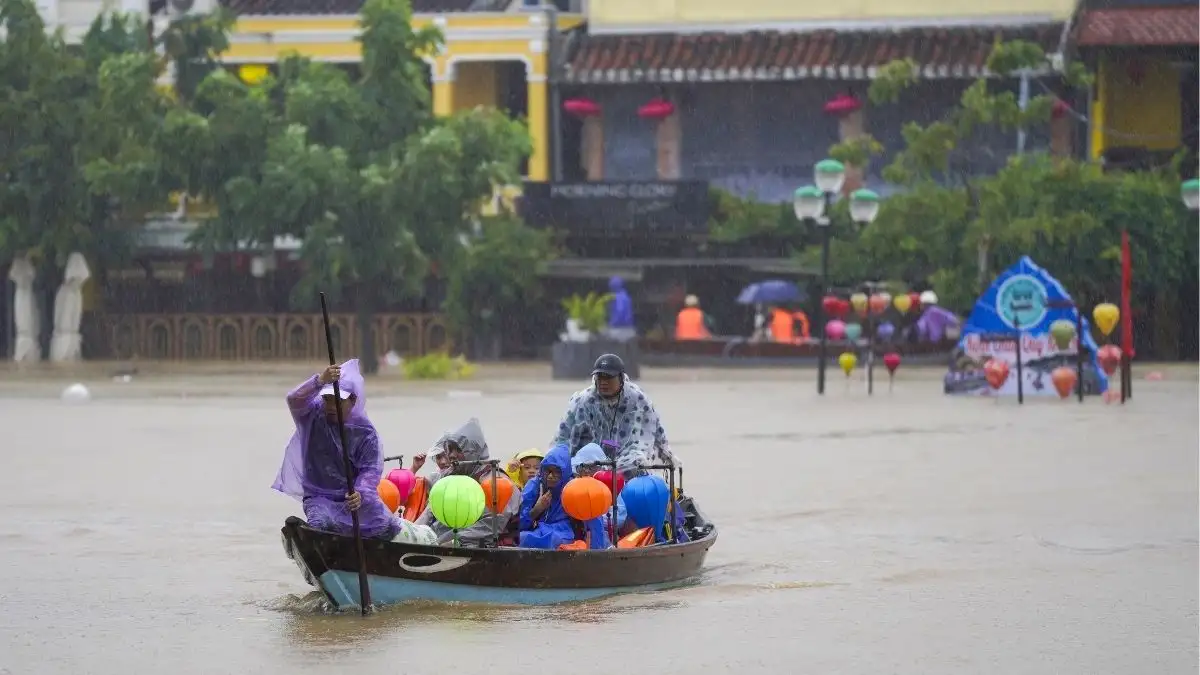
During a particularly prolonged period of flooding in November 2025, some visitors reportedly hired small boats to move through the flooded streets of the Ancient Town. It became an unusual way to see Hoi An during the flood, but it was a one-off response to exceptional conditions rather than something travelers should plan their trip around (Source: Vietnamnet global).

Flights to Da Nang and routes to Hoi An may be affected
Flooding and severe weather can also affect the journey to Hoi An before you even reach the town. During Typhoon Bualoi in late September 2025, Da Nang International Airport suspended aircraft operations from 6:00 to 11:00 AM on September 28, with at least 10 flights cancelled and others delayed or diverted to Cam Ranh (Source: Vietnam Tourism).
During the more severe central Vietnam floods in November 2025, railway services connecting passengers with Da Nang were also disrupted. If a storm or flood warning is active around your travel dates, check your airline’s official flight-status page and transport updates before leaving. During active weather events, these sources are more useful than relying solely on third-party travel information.
Read more: Da Nang Railway Station to Hoi An: Complete Travel Guide & Tips
Should You Cancel Your Trip to Hoi An Because of Flooding?
Not necessarily. A period of heavy rain or a flood warning does not mean that all of Hoi An is flooded or that you need to cancel your trip. What matters is how severe the flooding actually is, whether roads are still accessible, and what local warnings say at the time of your trip.
If the weather keeps you from going out, Bliss Hoi An Beach Resort & Wellness gives you enough options to make a rainy day feel like part of the holiday rather than a wasted day. You can start slowly with a treatment at Ngoc Linh Spa, then have lunch at Binh Minh Restaurant, which serves Vietnamese, Asian, Western and vegetarian dishes. The resort also has a Rooftop Bar for a quieter drink and a reading and game room where you can spend time without needing to leave the property.

For a longer stay indoors, Bliss Hoi An also offers wellness facilities including a gym, Himalayan salt-rock sauna and steam room, while its regular programme includes activities such as Yoga, Tai Chi and breathing sessions. There is also a cooking experience where guests can learn about local ingredients and prepare Vietnamese dishes, a more distinctly Hoi An way to spend a rainy afternoon than simply waiting for the weather to clear.
When the rain eases and conditions become safe for travel, the resort’s complimentary shuttle to Hoi An Ancient Town means you can still head into the Old Town without having to arrange transport yourself. For more ideas on how to enjoy the town even when the weather turns wet, see our guide to things to do in Hoi An when raining.
How to Check Flood Conditions Before Your Trip
Where can you check real-time weather and flood conditions?
Start with the National Centre for Hydro-Meteorological Forecasting (NCHMF) for official weather forecasts and flood warnings. During an active flood event, pay attention to the river station and alert level mentioned in the bulletin, rather than just the headline. For Hoi An, readings from stations such as Hoi An, Cau Lau and Nong Son can give you a better sense of what is happening across the Thu Bon River system.
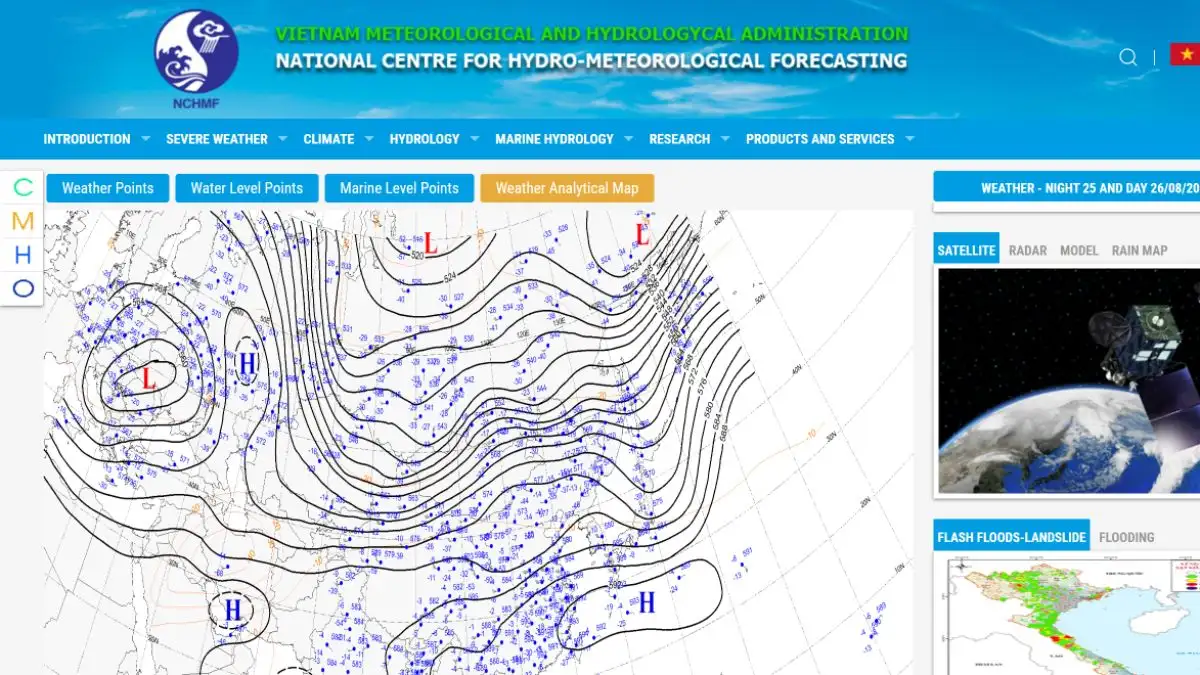
If you are not comfortable reading Vietnamese, the flash-flood and landslide risk map at luquetsatlo.nchmf.gov.vn is useful because the colour-coded warnings are easier to interpret at a glance. These tools form part of the essential central Vietnam floods emergency resources that travelers should know.
For a more immediate, traveler-friendly picture, check Tuoi Tre or VnExpress during an active flood. Local news reports often include photos and videos from the affected streets, which can tell you something an official rainfall forecast cannot, whether people are still walking through the Ancient Town, whether businesses are open and how deep the water actually is.
What should you do if your accommodation is affected by flooding?
If water starts entering your accommodation, do not wait until it becomes serious before asking the hotel what to do. Move your passport, electronics and other important belongings somewhere higher, then contact reception and follow their instructions.
If local authorities issue an evacuation order, follow it even if the water around your accommodation does not yet look dangerous. Flood conditions can change quickly, particularly when heavy rain continues and river levels are still rising.
Keep these emergency numbers accessible:
- Police: 113
- Fire and Rescue: 114
- Medical emergency: 115
These numbers are core central Vietnam floods emergency resources every visitor should save before arrival.
How can you check flights, trains and roads to Hoi An?
Do not treat “the flight is operating” as meaning the whole journey to Hoi An is fine. During a flood or major storm, the airport, railway and roads can be affected differently, so check the journey in stages:
- Before leaving for Da Nang: Check your airline and Da Nang International Airport first. Your flight may operate normally even when conditions in Hoi An are poor.
- From Da Nang to Hoi An: This is the part worth checking locally. Ask your hotel whether the route is currently passable and whether cars are still reaching the property. A local hotel can often tell you what the road actually looks like, rather than simply what the regional forecast says.
- If you are taking the train: Check Vietnam Railways for delays or cancellations, particularly after a major storm or prolonged flooding.
- If you are staying at Bliss Hoi An: Contact the resort before setting out and ask about current road conditions. When travel is safe, the resort’s complimentary shuttle to Hoi An Ancient Town gives you a straightforward way to continue your sightseeing without arranging another vehicle.
- If you are using Grab: A sudden lack of available drivers can be a useful warning that a particular route is becoming difficult, but do not use driver availability as proof that a flooded road is safe.
The useful question is therefore not simply “Can I get to Hoi An?” but “Can I safely complete every part of the journey today?” Checking the airport, the route and your accommodation separately gives you a much more realistic picture of what your trip will actually look like.
FAQs
Does Hoi An flood every year?
→ Flooding can occur every year during the rainy season, but its severity varies. Some years bring only minor flooding, while major events are less frequent.
Which months have the highest flood risk in Central Vietnam?
→ September to January is the main period to watch, with October and November generally carrying the greatest concern for Hoi An and the wider risk of central Vietnam floods.
Can flights to Da Nang be affected by flooding?
→ Yes. Severe storms and flooding can cause flight delays, cancellations or temporary airport closures, although flooding in Hoi An does not automatically mean flights to Da Nang are affected.
Is Hoi An safe during the rainy season?
→ Generally yes, if you monitor weather and flood warnings. During severe flooding, avoid low-lying and riverside areas and follow local guidance.
Should I avoid Hoi An in October and November?
→ Not necessarily. These months are wetter and carry a higher flood risk, but conditions vary from week to week, so checking the forecast and local flood situation before travelling is more useful than avoiding the entire period.

Related Posts
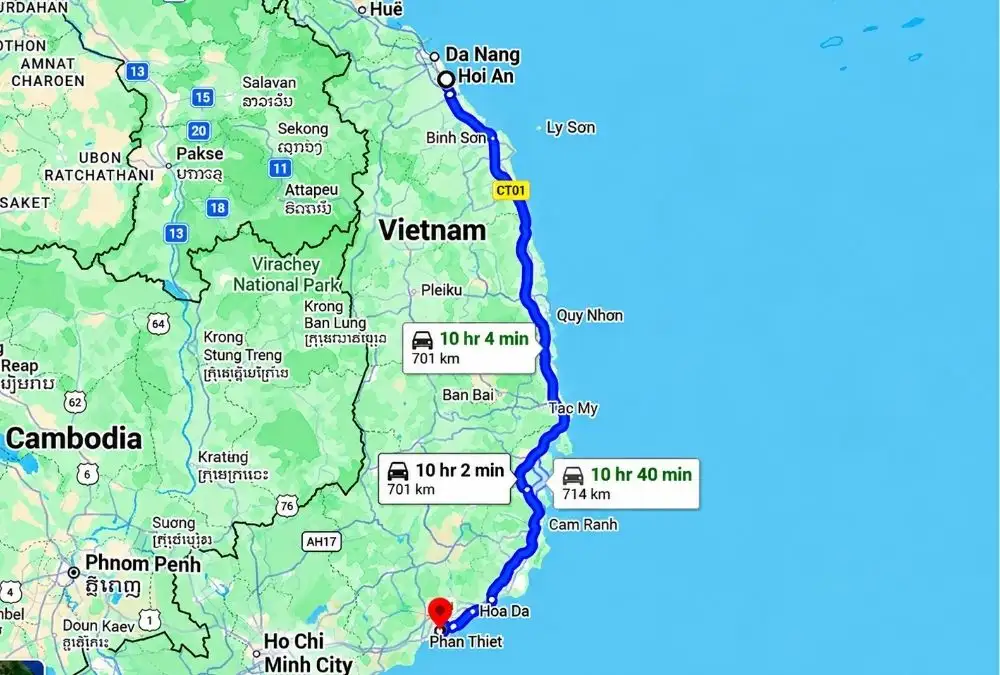
Hoi An to Mui Ne: 3 Routes Compared for Travel, Scenery and Adventure

Hoi An Indochine Style Resort: How to Choose a Stay With Real Vietnamese Character

Private Chef Hoi An: Top 10 Chefs for a Personalised Dining Experience
A trip from Hoi An to Tam Ky in one day: Is it feasible?

Private Tours from Hoi An Beach Resorts: Discover Central Vietnam from Bliss Hoi An