


Kim Bong Woodworking Village: Is It Worth Visiting in 2026?
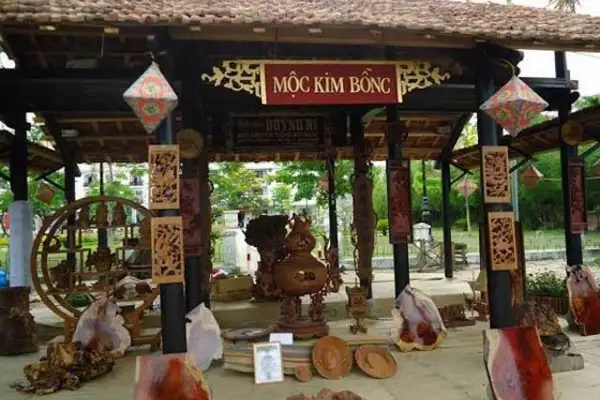
Kim Bong Woodworking Village sits just across the Thu Bon River from Hoi An Ancient Town, and it splits opinion more than almost any other stop on the local sightseeing list. Some travelers call it a peaceful escape from the crowds; others say half the workshops are closed and there’s little to see.
Is Kim Bong Woodworking Village worth Visiting? The honest answer
The short answer: it depends on what you’re looking for. If you want a lively, wall-to-wall craft market like the pottery villages closer to town, Kim Bong will likely disappoint you. Several visitors have noted that much of the village is quiet, with only a handful of shops open and craftsmen only picking up their tools once a tourist walks in. If your expectations are set by glossy brochure photos, that gap is real.
But if you’re after a quiet countryside pocket away from Hoi An’s tour buses, the same visitors who criticize the workshops often praise the setting itself. Travelers repeatedly describe it as a genuine break from the noise of the Old Town, a place to cycle past rice fields, chat with locals over coffee, and take photos without fighting through crowds. One frequent comment is that arriving early in the morning makes the biggest difference – the workshops on the eastern shipbuilding side tend to be more consistently active than the smaller carving stalls near the pier.
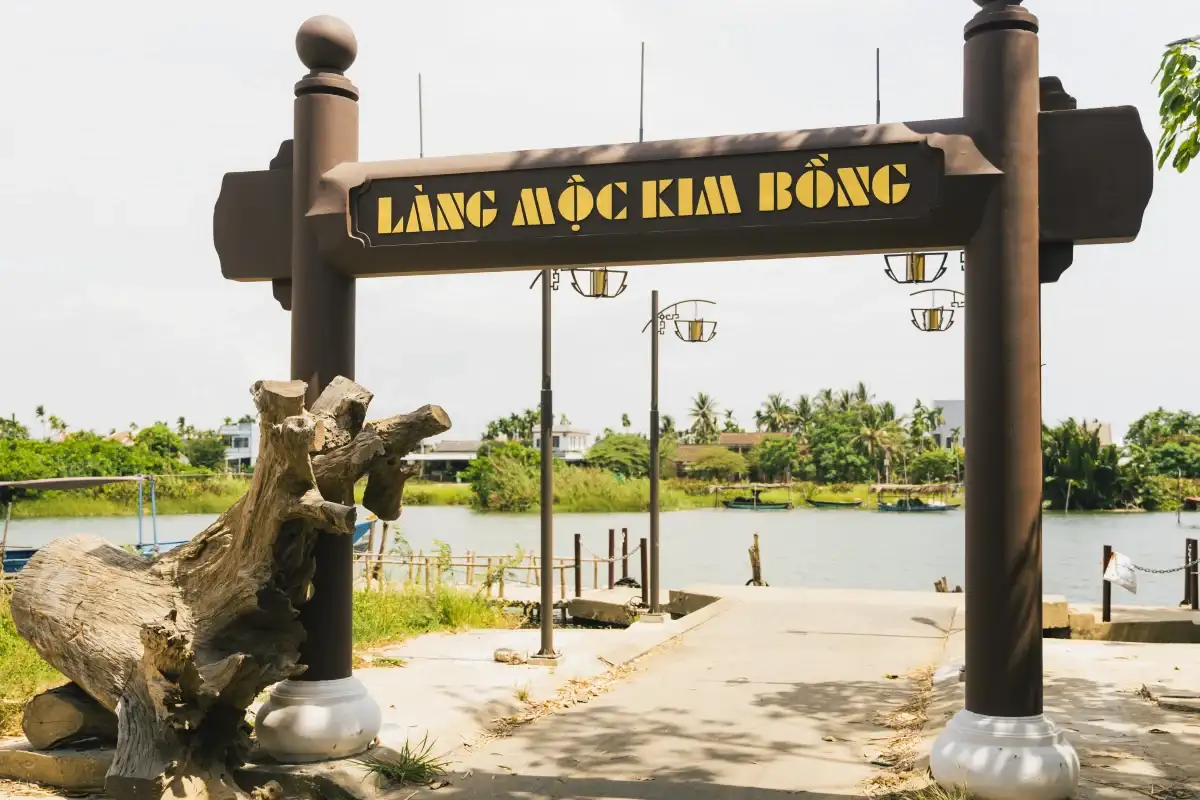
So who should go? Anyone craving a slower, local-feeling half-day trip, cyclists who enjoy countryside routes, and travelers who already plan to combine it with Thanh Ha Pottery Village or a Thu Bon River boat ride will get the most value. Anyone with only one free afternoon and a strict “must-see everything” checklist may be better off prioritizing the Ancient Town itself and treating Kim Bong as a bonus, not the main event.
What you’ll actually see and pay: Entry fee, zodiac carving and shopping
It’s free to entry to Kim Bong Woodworking Village. The prices at small craft-village kiosks can shift slightly, so treat this as a close estimate rather than a fixed figure. At several stalls, you can then try carving a second small piece yourself under a craftsman’s guidance, often at no extra charge.
The village is loosely split into two working zones. The western side is where the fine art carving happens – dragons, phoenixes and floral patterns worked into columns, panels and furniture pieces. The eastern side, closer to the riverbank, is where the shipbuilding and larger timber work takes place, and it’s generally considered the more “alive” half of the village since boats require ongoing maintenance year-round.
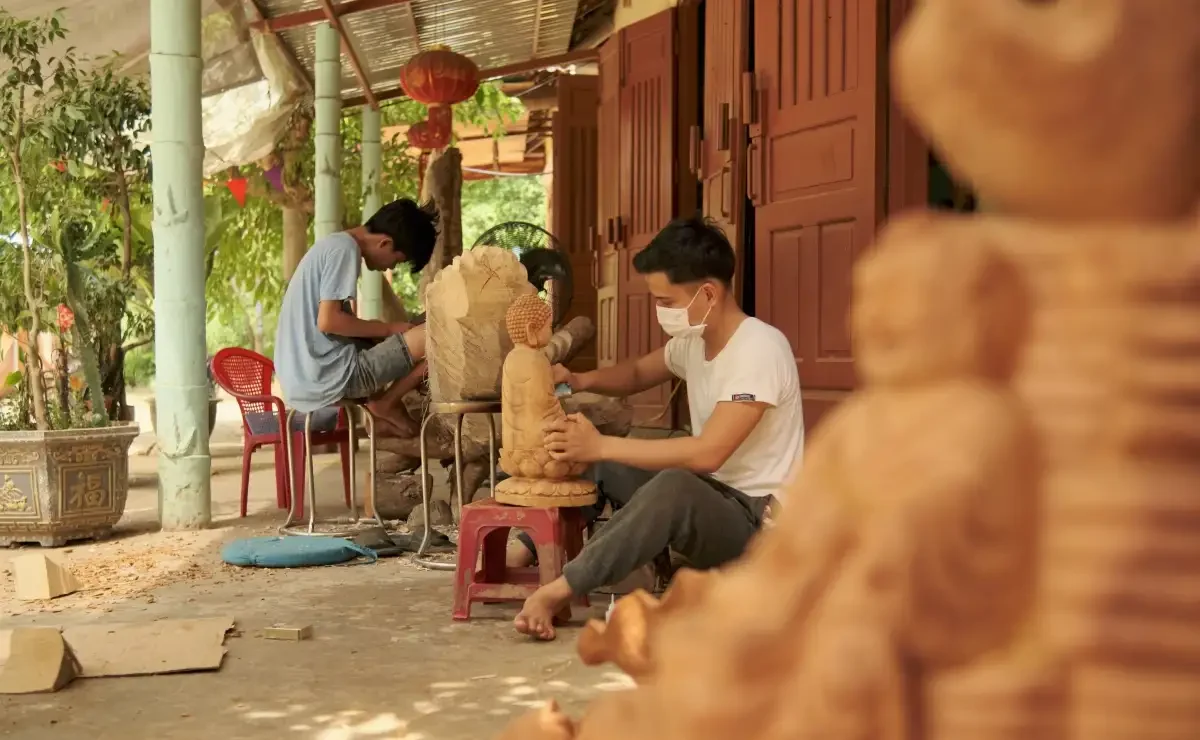
For souvenir shopping, budget furniture and larger custom pieces (cabinets, carved panels, boat models) are made to order and shipped, while small souvenirs – carved boxes, tea trays, wooden animals, and picture frames – are sized for a suitcase and priced far lower than what you’d pay for similar handmade items back home. Several shops will personalize an engraving on the spot, which makes for a more meaningful gift than a generic market souvenir.
Kim Bong vs Thanh Ha Pottery vs Tra Que: Which craft village should you pick?
Hoi An has three well-known craft villages within a short ride of the Ancient Town, and travelers with limited time often want to know which one to prioritize. Here’s how they compare on the factors that matter most for a short visit.
| Village | Craft | Crowd Level | Best For | Typical Visit Time |
| Kim Bong Woodworking | Wood carving & shipbuilding | Low | Quiet countryside feel, cycling | 1.5–2 hours |
| Thanh Ha Pottery | Ceramics & ceramic art park | High | Hands-on pottery wheel, families | 2–3 hours |
| Tra Que Vegetable Village | Organic herb & vegetable farming | Medium | Cooking classes, farm walks | 2–3 hours |
Thanh Ha Pottery Village tends to be the busiest of the three, largely because it sits closer to the Old Town and has a dedicated terracotta park with miniature landmark replicas that photograph well for social media. If you’ve read up on it already, our guide to Thanh Ha Pottery Village covers ticket prices and activities in detail. Tra Que, meanwhile, leans more toward food-focused experiences – picking your own herbs before a cooking class – which we cover in our craft village round-up along Hoi An River.
Kim Bong stands apart precisely because it’s less polished. There’s no terracotta park or Instagram-ready installation – just working boatyards, a handful of carving stalls, and river views that most tour groups skip. If you only have time for one craft village and want photographs without other tourists in the frame, Kim Bong wins. If you want a guaranteed hands-on activity for the whole family, Thanh Ha or Tra Que are the safer bet.
Getting there: Boat, bicycle or the Cam Kim Loop
By boat from Bach Dang Wharf
The most scenic route is a short boat ride from Bach Dang wharf in the Old Town, taking roughly 10–15 minutes to cross the Thu Bon River. Tickets typically run 10,000–20,000 VND depending on the boat operator and time of day. This option works well if you’re combining Kim Bong with a wider river excursion, since boats along this stretch often pass fishing rafts and riverside houses worth photographing on the way over.
By bicycle: The Cam Kim Loop
Renting a bicycle (around 30,000–50,000 VND per day) and crossing the Cam Kim Bridge is the most popular way to reach Kim Bong independently, and it lets you turn the trip into a proper countryside loop rather than a there-and-back visit. The route takes you past rice paddies, coconut groves and smaller weaving hamlets before you reach the woodworking stalls themselves. For a full route breakdown that pairs Kim Bong with Thanh Ha Pottery Village on two wheels, our Hoi An cycling routes guide lays out timing and stops.
By taxi or private car
For travelers short on time or traveling with young kids, a taxi or private driver takes only 5–10 minutes from central Hoi An and typically costs 50,000–70,000 VND per trip. This is the least scenic option but the most convenient if you’re squeezing Kim Bong into a packed itinerary alongside other stops.
Whichever route you choose, arriving before 10 a.m. gives you the best chance of catching workshops in full swing, since several close or slow down by early afternoon.
Best time to visit and the craft ancestor festival
The dry season, running roughly from February to August, is the most comfortable window to explore Kim Bong on foot or by bike. Rain is rare during these months, the light for photography is generally better, and workshops tend to keep more consistent hours since drying and finishing wood is easier without humidity.
Mornings are the strongest time slot for watching craftsmen at work, since many artisans wind down or close shop by mid-afternoon. If you visit in the late afternoon instead, you’ll trade fewer active workshops for softer golden light over the Thu Bon River, which is its own reward if photography matters more to you than watching the carving process itself.
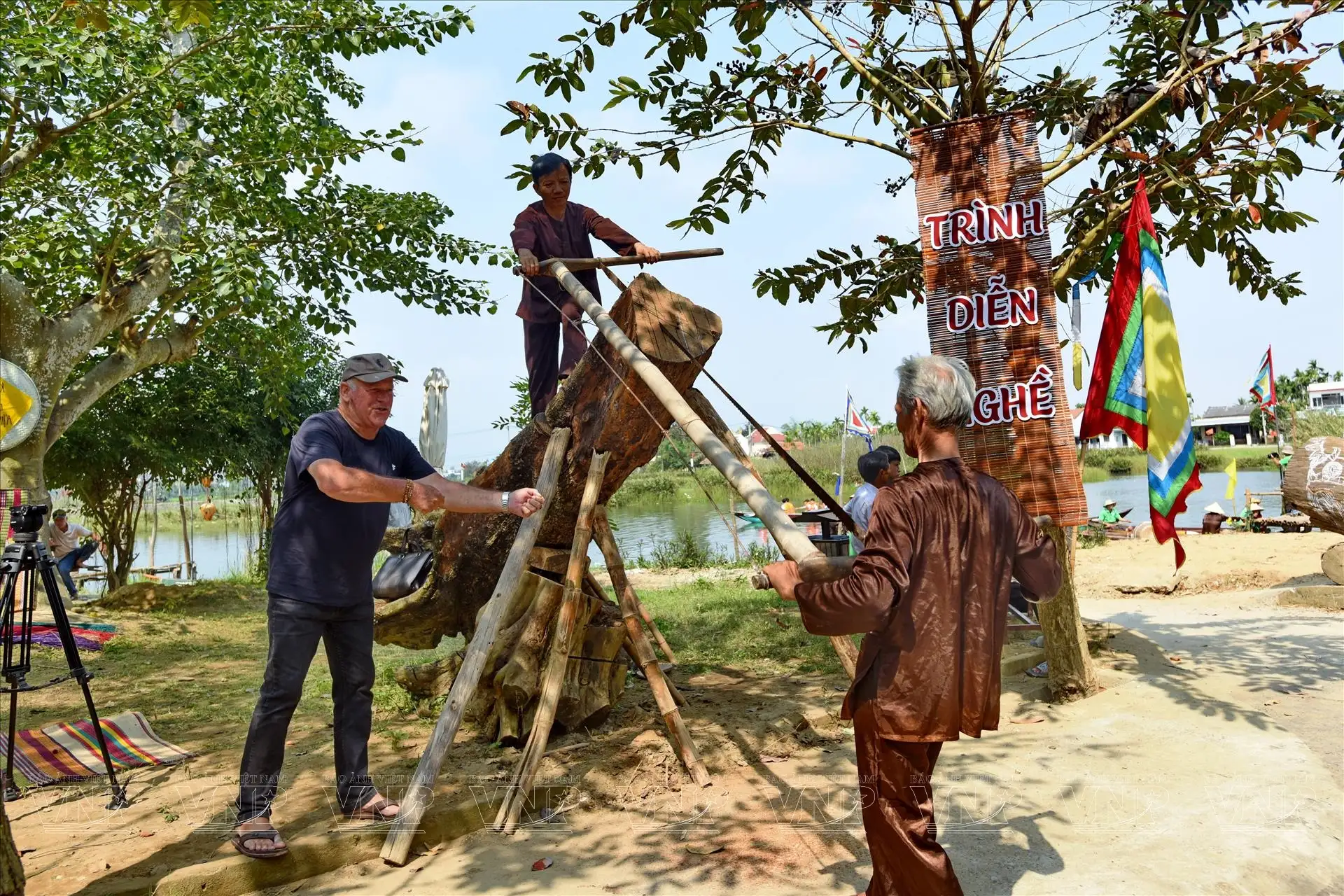
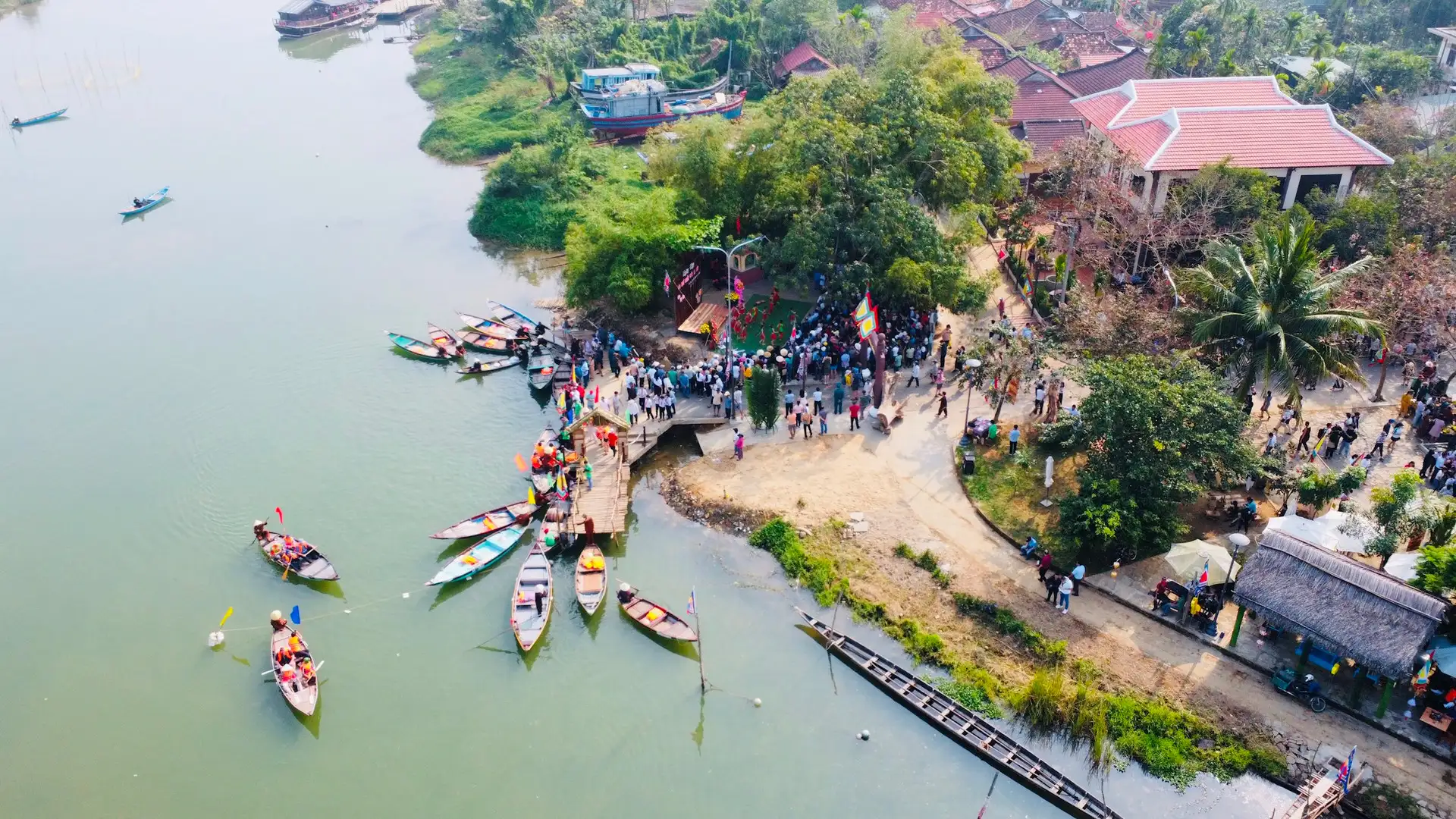
One date worth building a trip around is the Craft Ancestor Commemoration Festival, held annually on the 6th day of the first lunar month. Locals gather for ceremonies honoring the village’s founding craftsmen, along with lion dances and folk performances – a rare chance to see Kim Bong at its most lively rather than its quieter everyday pace. Outside of that festival window, expect a calm, low-key visit rather than a bustling market atmosphere.
Visitor etiquette and what to bring
Kim Bong is a working village, not a staged attraction, so a few etiquette basics go a long way. Keep noise to a minimum around active workshops, and always ask permission before photographing an artisan mid-task – most are happy to say yes if you ask first rather than assuming.
Comfortable, closed walking shoes are worth packing, since wood dust and off-cuts are common around the carving stalls. A hat and water bottle matter too, particularly if you’re cycling the Cam Kim loop in the dry-season heat rather than sticking close to the shaded riverside path.
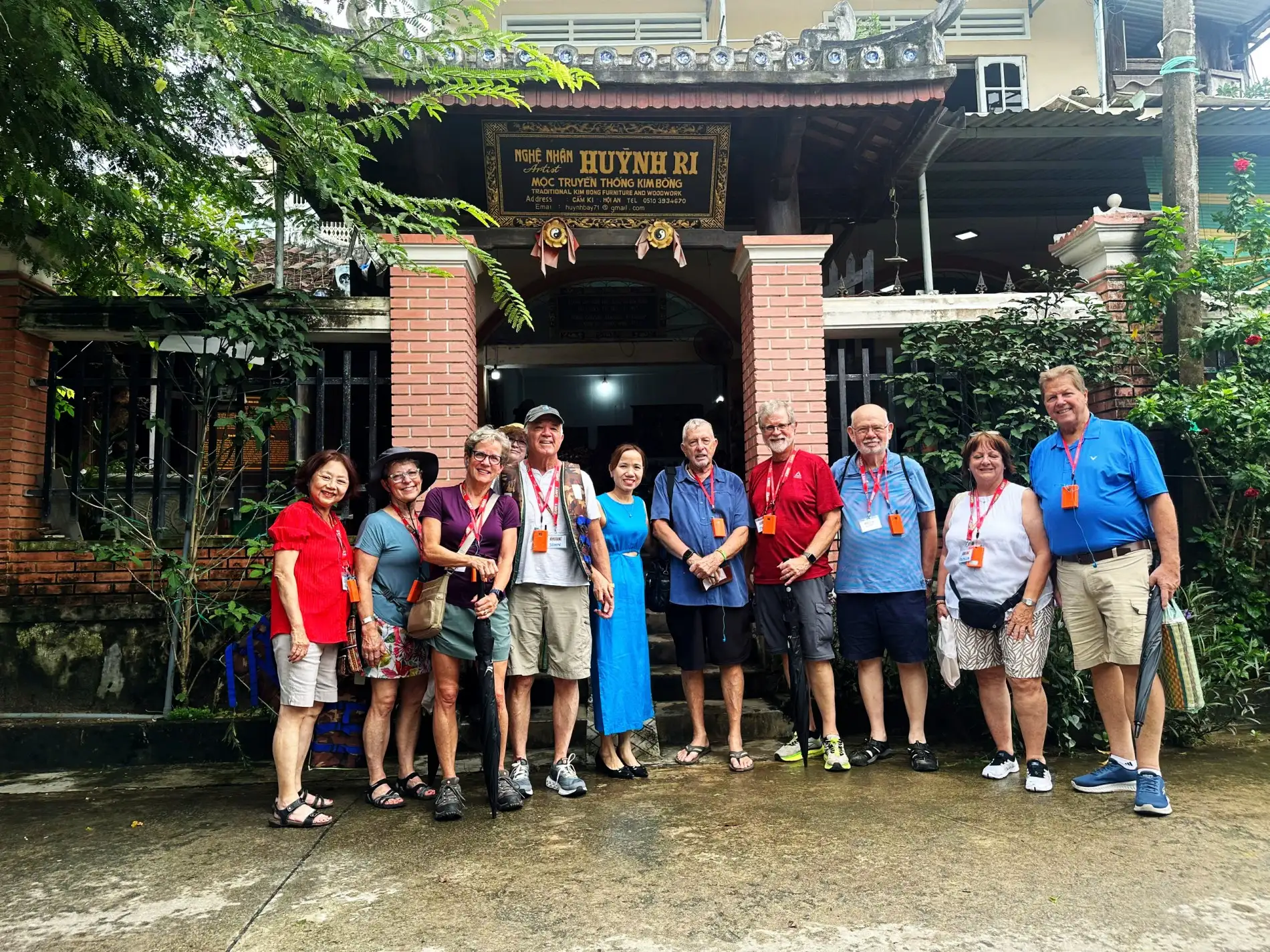
If you want more than a passing glance, plan for roughly 1.5 to 2 hours on-site. That’s enough time to walk both the western carving area and the eastern shipbuilding zone, watch a demonstration or two, and browse souvenir stalls without feeling rushed. Rushing through in under 45 minutes is the single biggest reason travelers come away feeling like there “wasn’t much to see.”
Where to relax after Kim Bong: Wind down at Bliss Hoi An
A few hours of walking through dusty village lanes and cycling countryside roads is a great start to the day, but Binh Minh Beach is the natural place to finish it. Guests staying nearby consistently mention how attentive and welcoming the team feels, with several travelers on Google specifically praising the food quality and the resort’s spa experience during their stay.

If your Kim Bong day trip leaves you hungry, Binh Minh Restaurant serves both Vietnamese specialties and international dishes right on the beachfront, a fitting reward after a morning of countryside cycling. On Saturdays, the resort’s BBQ and buffet night is a guest favorite worth timing your visit around – check the events & wedding page for the current schedule. Travelers who prefer a laid-back finish to the day often head to the Pool Bar or the Cham Beach Bar for a drink with their feet still sandy from the beach.
For visitors planning several craft-village days in a row, the resort’s all-Inclusive packages bundle meals and drinks together so you’re not calculating a bill after every excursion. Whatever pace you prefer, you can check availability and book your stay at Bliss Hoi An directly for the best rates.

Related Posts

8+ experiences in Tet Lunar New Year Hoi An worth trying

Hoi An to Phu Yen by road: 5 stops worth getting out of the car for

Hoi An to Quy Nhon: How to get there, routes and what to know
TEST – n8n CREATE 002

Gym Hoi An: Prices, Day Passes and Options for Travelers