

Tra Que Vegetable village Hoi An: An ultimate travel guide
Just a few kilometers from Hoi An’s Ancient Town, Tra Que is a working vegetable village where locals still farm the same chemical-free way their families have for generations. It’s become one of the region’s most popular half-day trips, so let’s take a look at what’s actually worth doing there, what it costs, and how to get there.
Overview of Tra Que vegetable village Hoi An
Tra Que Vegetable Village is located in Tra Que village, Cam Ha commune, Hoi An city, Quang Nam province. With a convenient location, only about 3km from the center of Hoi An city, Tra Que is not only a famous supplier of green vegetables but also one of the attractive eco-tourism destinations for domestic and foreign tourists.
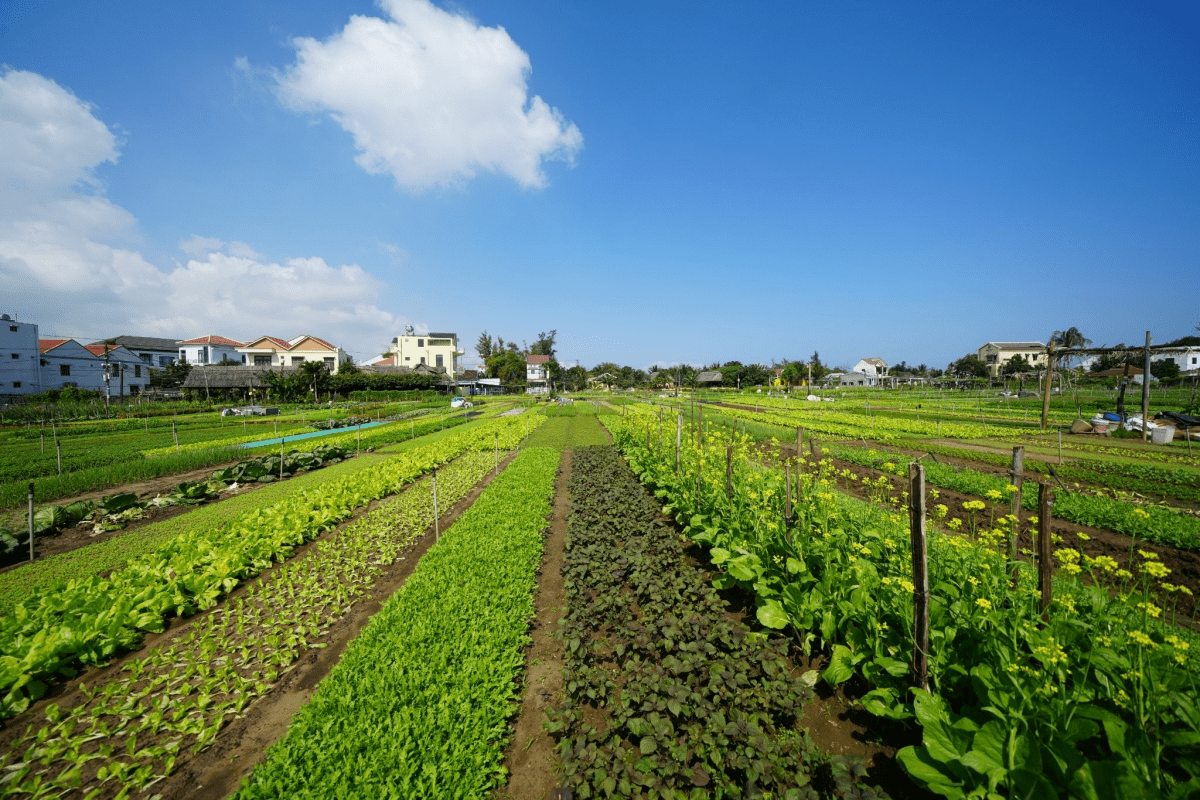
Covering an area of about 18 hectares and still worked daily by around 200 farming households, Tra Que organic vegetable village is a traditional craft village with a long history of growing and cultivating vegetables. What makes Tra Que different from other areas is the natural farming method, without using chemical fertilizers or pesticides. Instead, farmers here take advantage of organic fertilizers from moss taken from the Co Co River, which is both environmentally friendly and ensures the quality of clean and safe vegetables for consumers.
Tra Que vegetable garden supplies the market with about 20 different types of green vegetables, notably unique herbs such as basil, coriander, onions, lettuce, and many other herbs. These herbs have contributed to creating the characteristic flavor of many famous dishes of Hoi An such as Cao Lau, Quang noodles, Banh Xeo, etc. In particular, the fresh, pure flavor of Tra Que vegetables has captivated many diners, becoming an indispensable part of Hoi An cuisine.
Today, Tra Que vegetable village has become an eco-tourism destination, where visitors can participate in the farming process, learn about organic vegetable growing methods and experience the simple, peaceful countryside life. Thanks to the combination of agriculture and tourism, Tra Que vegetable village contributes to preserving traditional cultural values and developing a sustainable economy for local people.
History of Tra Que vegetable village
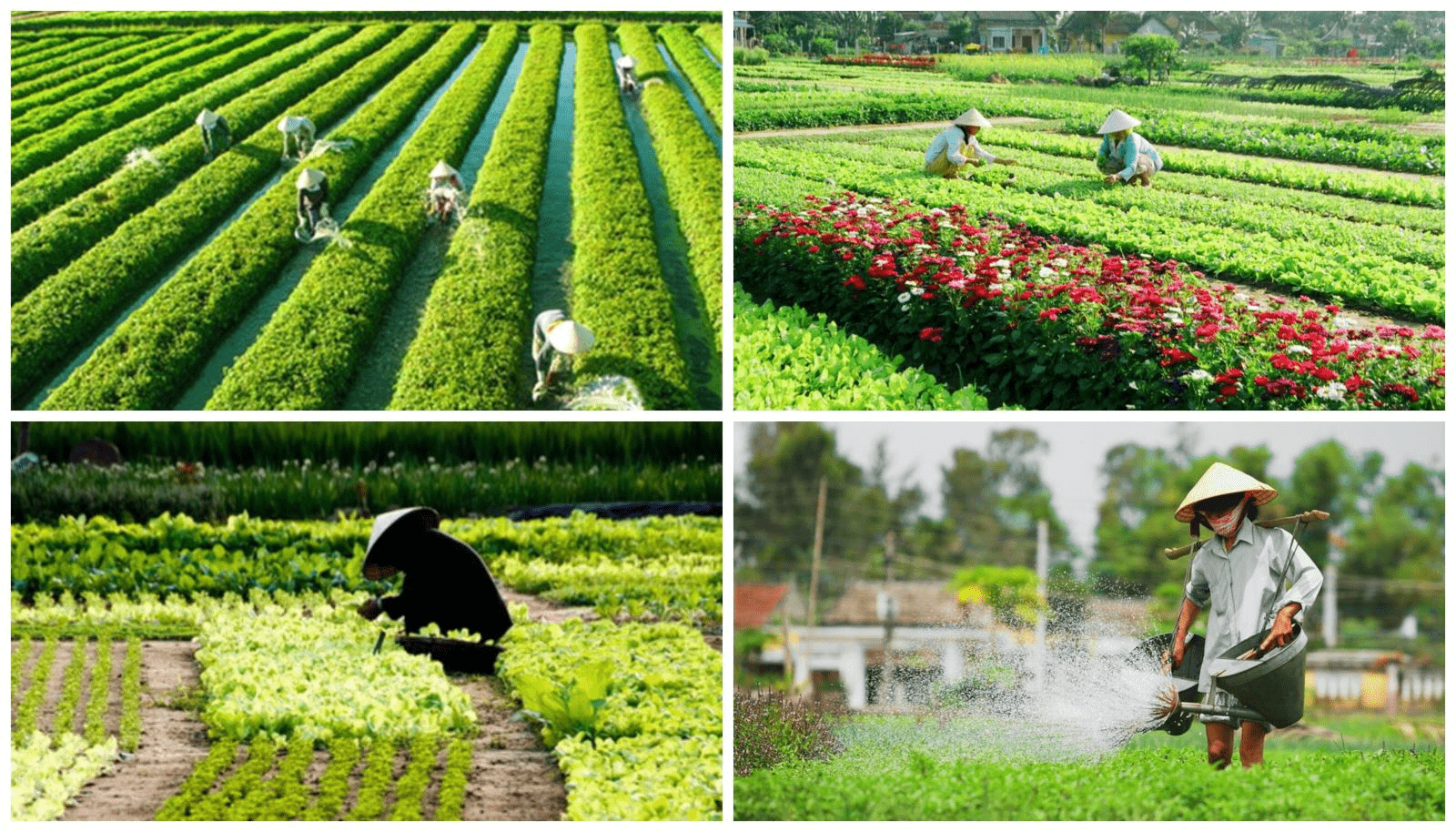
Tra Que vegetable village in Cam Ha commune, Hoi An city, has long been famous for its traditional vegetable growing profession and long history. Since ancient times, the first people living here have reclaimed and cultivated this fertile land. They took advantage of the alluvial soil along the Co Co river and natural farming techniques to grow many types of green vegetables, serving daily food needs.
One of the most prominent vegetables at that time was Ngu Que vegetable – a vegetable with a strong aroma and special flavor. According to legend, during the reign of King Gia Long, when the king enjoyed Ngu Que vegetables from the village, he praised them and decided to name the village “Tra Que vegetable village”. Since then, the name Tra Que has become a symbol of this land, associated with the development of vegetable growing.
With the efforts and dedication of the people, Tra Que vegetable village has increasingly affirmed its position in the clean and quality vegetable market. In 2009, the Intellectual Property Office granted a certificate of trademark registration to the vegetable village, marking an important turning point in protecting and developing the Tra Que vegetable brand (Source: Bao Tuoi Tre). This is an affirmation of the quality of clean, safe and nutritious vegetable products of this land.
By 2016, Tra Que vegetable village was officially recognized as a traditional craft village, opening up further development opportunities for local vegetable growing. The tradition of natural farming without the use of chemicals has been preserved and strongly developed, both serving consumer needs and being an important factor attracting tourists to visit and experience.
In 2022, Tra Que vegetable village continued to receive recognition when it was recognized as a National Intangible Cultural Heritage (Source: Bao Dan Tri). This is a testament to the profound cultural and historical values of the craft village, as well as a significant contribution to the preservation and promotion of traditional values of Vietnamese agriculture.
The most significant recognition came in October 2024, when UN Tourism (UNWTO) named Tra Que one of the World’s Best Tourism Villages – an award given to only a small number of destinations worldwide each year, placing this small farming community alongside some of the most celebrated rural tourism sites on the planet (Source: Bao Thanh Nien).
Entrance fee to visit Tra Que vegetable village
The current Tra Que vegetable village entrance fee is 35,000 VND, an extremely reasonable price for visitors to experience the cool green space and participate in many interesting activities in this famous vegetable village.
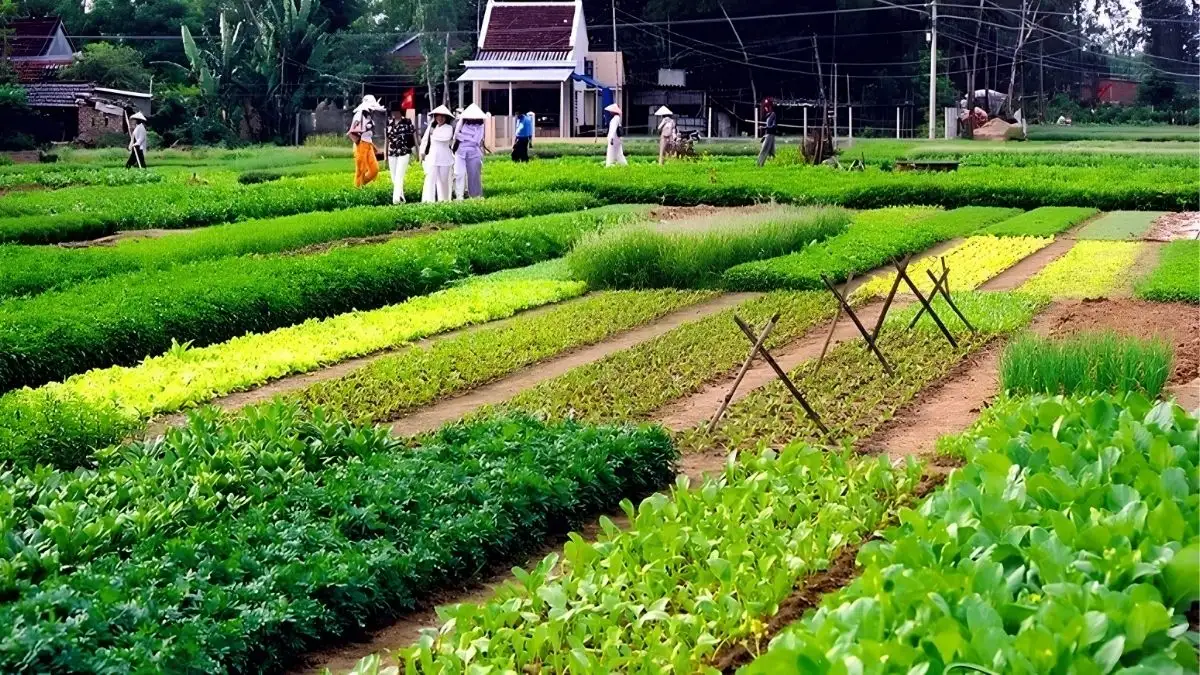
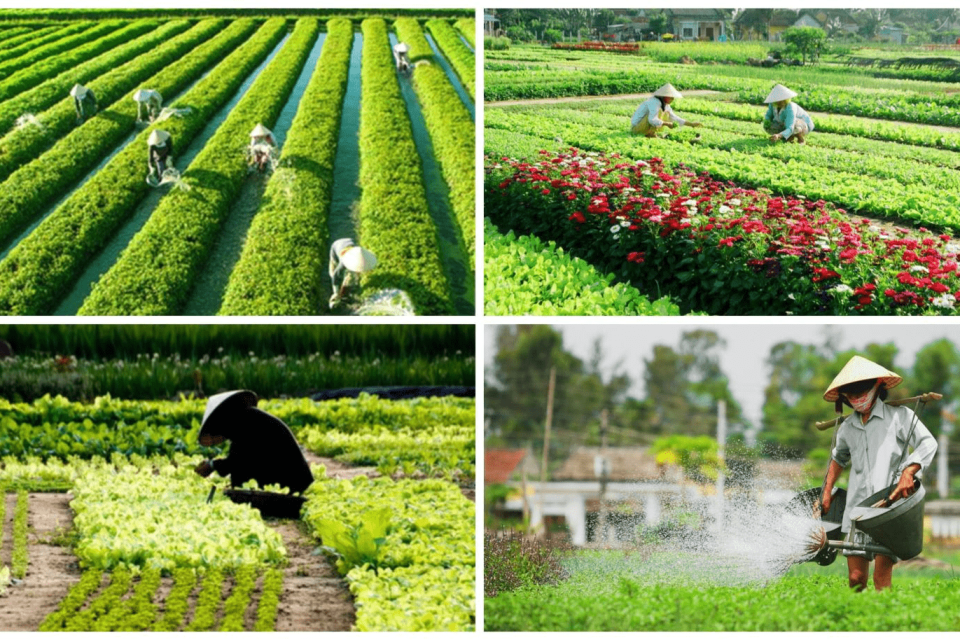
Visitors can freely explore how Tra Que villagers cultivate and care for vegetables using natural methods, ensuring cleanliness and safety. In particular, if you come early in the morning or in the afternoon – the time when people are caring for and harvesting vegetables, you will witness with your own eyes the meticulous and careful vegetable care process, from watering by hand to fertilizing with natural organic fertilizer from moss from Co Co river.
Great experiences when coming to Tra Que vegetable garden
If you are looking for an interesting place to experience local culture and immerse yourself in village life, Tra Que vegetable garden in Hoi An is a must-visit. When you come to Tra Que organic vegetable village, you will have great experiences such as:
Experience the real “farming” life
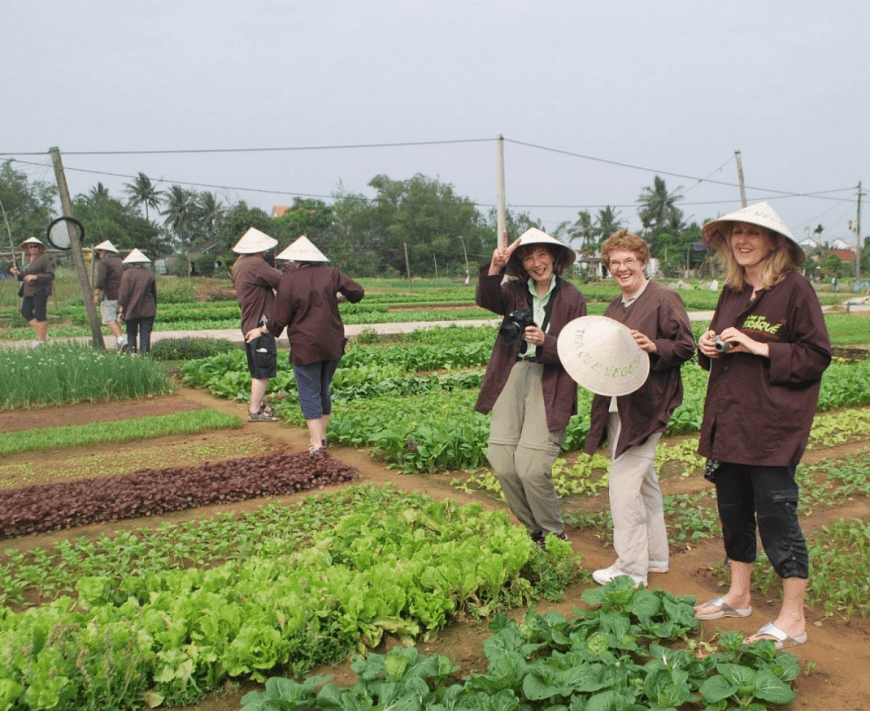
When coming to Tra Que, you will have the opportunity to participate in vegetable growing activities right in the garden. Under the enthusiastic guidance of local people, you will be able to plant green vegetable beds by yourself. This is a great opportunity for you to experience the daily life of simple farmers. Through that, you will understand more about farming and feel the joy of working.
Expect to be handed a conical hat and a set of well-worn farming clothes before anyone lets you near the beds, this is the moment the visit stops feeling like a tour and starts feeling like actual work, using the same hand tools local families have used for generations. Some visits also include a short ride on a water buffalo, a detail families with kids tend to remember longer than anything else on the itinerary.
Explore the peaceful countryside
In addition to experiencing farming, you can freely explore Tra Que village by walking or cycling around the small village roads. The countryside scenery here is full of peace, with green fields and fresh, cool air. This beautiful natural scenery will bring you a feeling of relaxation, comfort, away from the hustle and bustle of the city.
Take local cooking classes
Another experience not to be missed in Tra Que is joining a traditional cooking class. The better-run classes start at the local market, where visitors walk around with their host and pick out fresh herbs and vegetables before cycling to Tra Que. This makes the cooking experience feel more hands-on, as the ingredients used in the dishes are selected directly rather than simply provided for a demonstration.
Most classes cover four dishes, including green papaya salad, fresh spring rolls, Banh Xeo, and a fish or meat dish cooked in a clay pot. Visitors can also pick vegetables from the garden and prepare local specialties such as Quang noodles, Cao Lau, or chicken rice under the guidance of village chefs. Fresh, same-morning herbs can give dishes such as the spring rolls a noticeably different taste from those served back in town, making the cooking experience a practical way to experience the flavors of Central Vietnam.
Relax with herbal foot bath service
After outdoor activities, you can relax by soaking your feet in herbal water right at Tra Que village. The herbs grown here are known for their pleasant aroma and are traditionally used to help reduce stress and fatigue. The experience can also include a gentle foot massage, with the woman performing it sometimes humming or singing softly as she works, turning a simple foot soak into one of the more memorable ten minutes of the day.
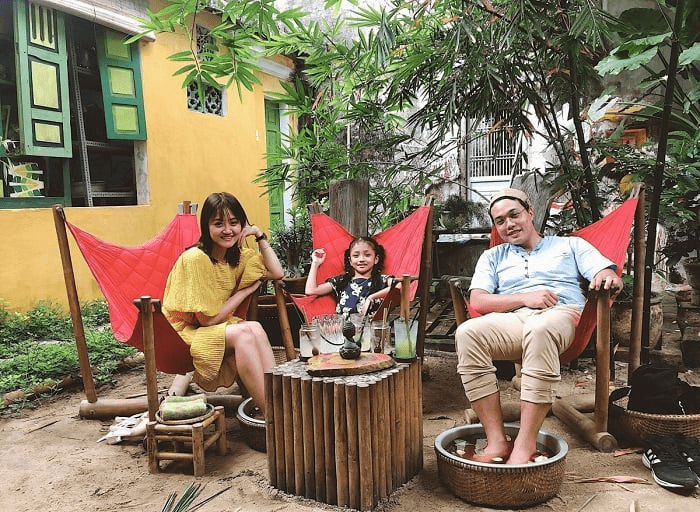
One thing worth asking upfront is whether the foot massage is included in the tour price. On some tours, it is offered as a paid add-on, often around 100,000 VND per person. If it is not listed as included when booking, ask about the price before sitting down.
Watching the sunset in the peaceful countryside
Sunset in Tra Que is a beautiful moment that any tourist wants to admire. As the sun gradually sets, the countryside scene becomes more peaceful and poetic than ever. The last rays of the day shine down on the fields, creating a colorful natural picture, making you feel relaxed and peaceful in your heart.
Join the Cau Bong festival
If you come to Tra Que on the 7th day of the first lunar month, you will have the opportunity to participate in Cau Bong festival – a traditional festival of the village. This festival is held annually to pray for favorable weather and bountiful harvests. This is an opportunity for you to experience the unique culture of the people here and feel their close-knit community spirit.
Read more: Tan Ky Old House: Discover Hoi An’s oldest living museum
Delicious dishes not to be missed in Tra Que vegetable village
With fresh ingredients grown right in the village, the dishes here have a strong local flavor and will make any diner linger. Below are the delicious dishes you cannot miss when coming to Tra Que vegetable village.
Cao Lau – A delicious and flavorful noodle dish
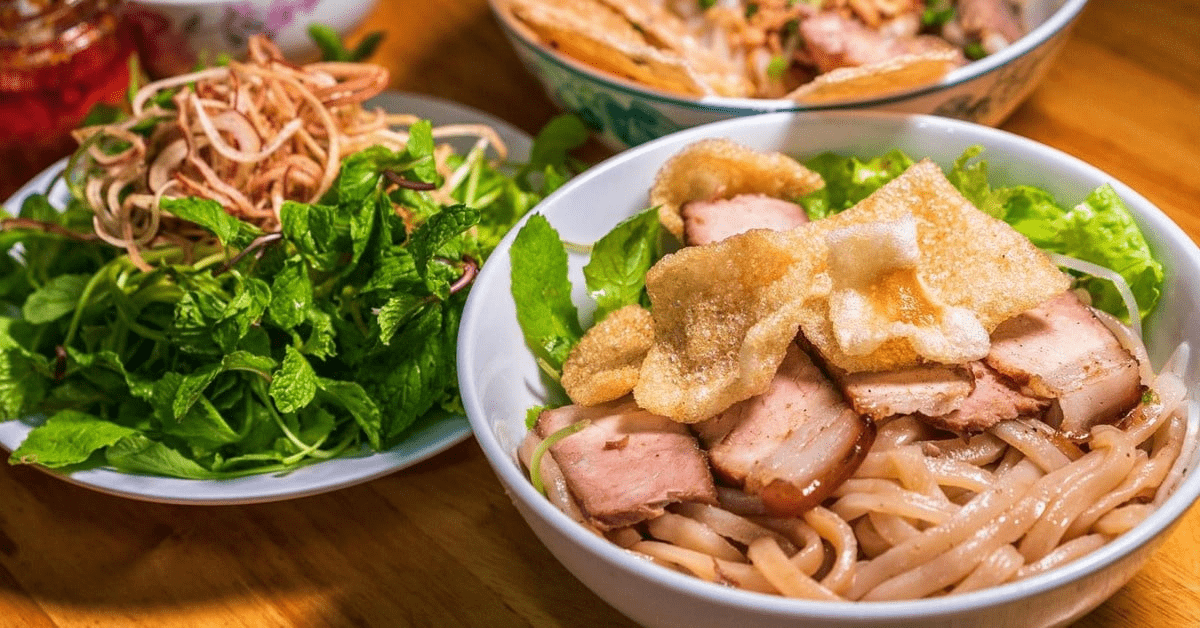
Cao Lau is one of the famous specialties of Hoi An. When enjoyed at Tra Que, the flavor of this dish is even more special thanks to the fresh vegetables grown right in the village. Cao Lau consists of thick, chewy noodles combined with soft, fragrant char siu, raw vegetables and rich sauce. When eaten, this noodle dish brings a unique flavor, both sweet and refreshing, extremely attractive.
Quang Noodles – Traditional Flavor of Quang Nam
Quang noodles are also an indispensable dish in the list of delicious dishes in Tra Que vegetable village. This noodle dish is famous for its harmonious combination of rich broth and rich ingredients such as shrimp, pork, quail eggs and raw vegetables. The raw vegetables are picked fresh from the garden in Tra Que, creating a crispy, sweet and fresh taste for the dish. When eaten, Quang noodles are often mixed with thick broth, accompanied by a little crispy rice paper, creating a rustic but extremely attractive flavor.
Banh Xeo – Crispy, delicious dish
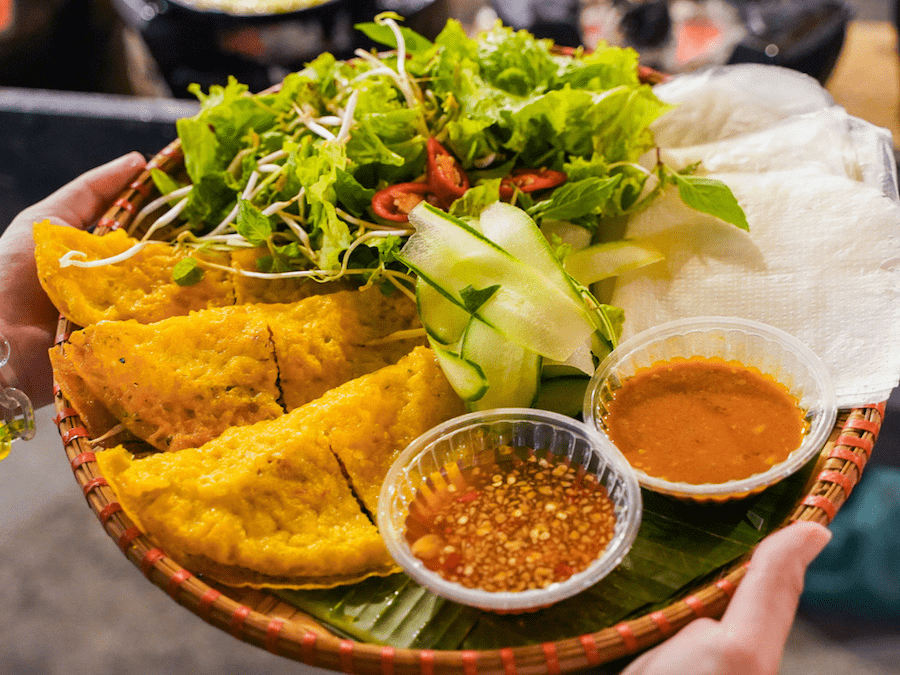
Banh xeo is a favorite dish because of its delicious taste and special way of eating when rolling the cake with raw vegetables and sweet and sour sauce. At Tra Que, banh xeo becomes more special thanks to the source of fresh and rich vegetables, helping to balance the rich taste of the cake. The banh xeo is fried until golden brown, inside is the sweet and soft shrimp and meat filling, served with raw vegetables, creating a perfect blend of flavors. In particular, the skillfully mixed sweet and sour sauce further enhances the appeal of this dish.
Hoi An Chicken Rice – Attractive golden rice dish
Hoi An chicken rice is a very famous dish, and when you enjoy it at Tra Que, you will feel the uniqueness of this dish even more clearly. Hoi An chicken rice has a characteristic golden color, cooked from delicious chicken broth, accompanied by soft, chewy chicken, soaked in spices. This dish is often served with fresh raw vegetables, which soften the fatty taste of chicken rice. The perfect combination of rice, chicken and raw vegetables makes Hoi An chicken rice a wonderful dish that you should not miss when coming to Tra Que vegetable village.
Read more: Cau Pagoda Hoi An: Bringing the soul of Ho An, stained with deep colors
Directions to Tra Que Vegetable Village
With a close distance and easy access, traveling to the vegetable village becomes extremely convenient and easy. Below are popular ways of transportation for you to choose when coming to Tra Que.
Travel by bicycle or motorbike
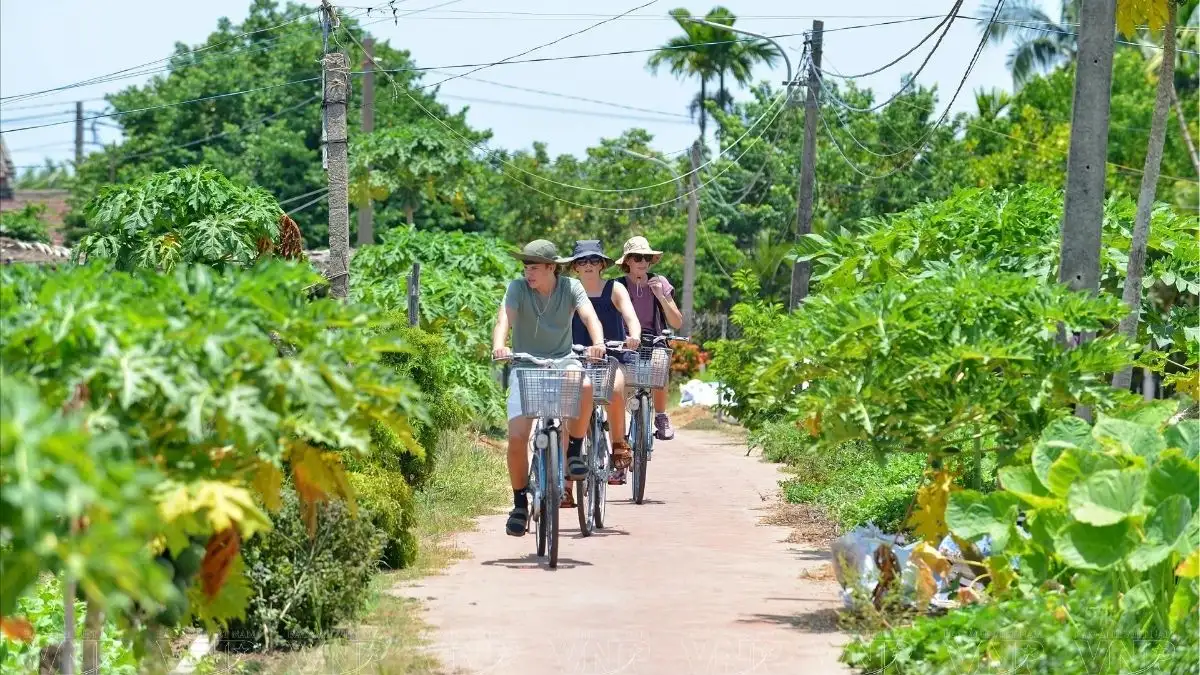
One of the most popular and suitable means of transport to Tra Que vegetable village is bicycle or motorbike. Hoi An has many bicycle and motorbike rental shops at reasonable prices. You can easily rent a bike at these shops and travel to the vegetable village yourself. Google Maps can help with navigation, while cycling offers a relaxing way to enjoy the countryside scenery along the route. A motorbike makes the journey faster and more convenient, especially when combining Tra Que with other nearby attractions.
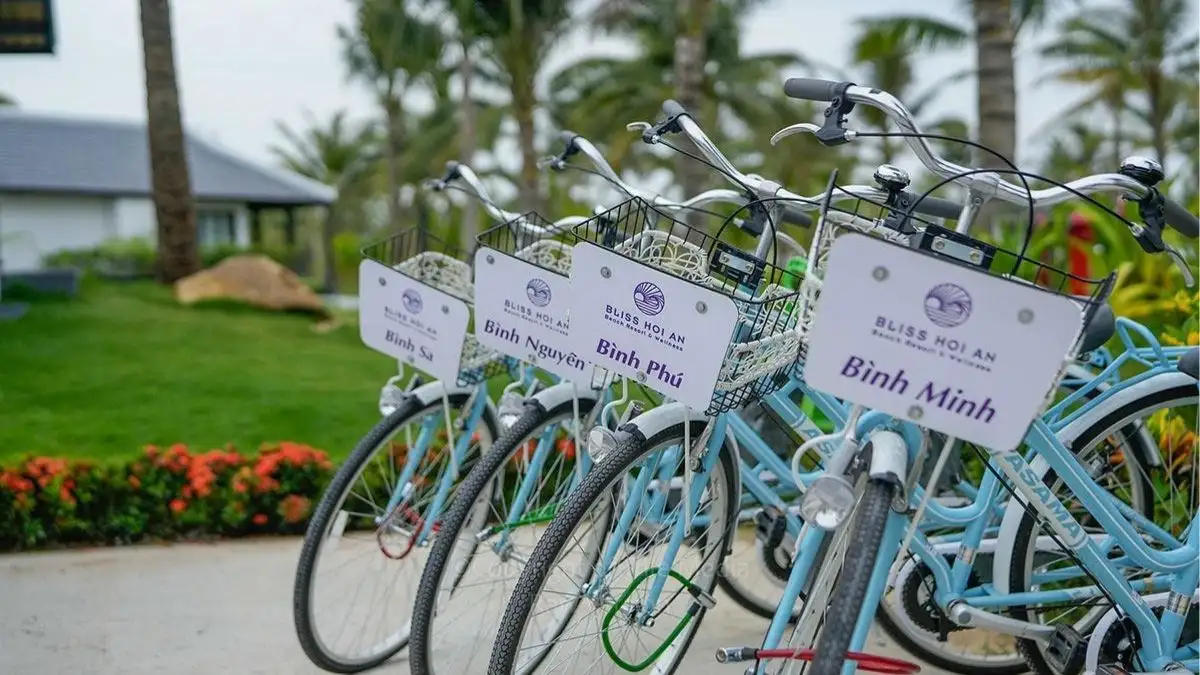
If you’re staying at Bliss Hoi An Beach Resort & Wellness, you don’t need to hunt down a rental shop, front desk can arrange bicycles or point you to a driver who knows the back roads to Tra Que well.
Travel by taxi or motorbike taxi
If you do not want to drive yourself, taxis and motorbike taxis are also reasonable options to get to Tra Que vegetable village. Hoi An has many reputable taxi companies and convenient motorbike taxi services. You just need to call a taxi or motorbike taxi to be able to travel quickly and safely to Tra Que. This is a suitable means of transport if you are not used to driving yourself or want to save time, especially when traveling with family or in a group.
Hotel to stay when visiting Hoi An
A convenient base can make it easier to combine a visit to Tra Que with other countryside experiences in Hoi An. Located on Binh Minh Beach, Bliss Hoi An Beach Resort & Wellness offers a quieter coastal setting for travelers who want to explore local life during the day and return to a relaxing beachfront resort afterward.
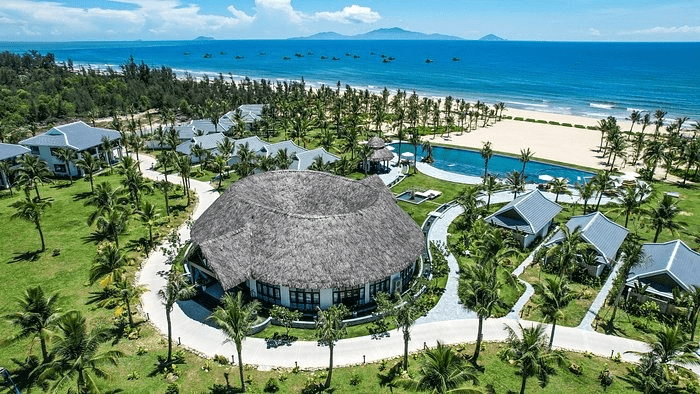
Bliss Hoi An spans 5 hectares and features 135 rooms and villas across eight categories. Resort facilities include a 55-meter oceanfront infinity pool, Ngoc Linh Spa, a gym, yoga and Tai Chi sessions, a Himalayan salt-rock sauna and steam room, and Binh Minh Restaurant, which serves Vietnamese, Asian, Western, and vegetarian dishes.
The beachfront setting also adds a slower side to a countryside-focused trip. Early risers can watch the sunrise over Binh Minh Beach, while the coconut trees along the resort grounds provide a natural spot to stretch out in the shade and enjoy the morning without rushing into the day’s activities. After visiting Tra Que or cycling through the surrounding countryside, guests can return to the beach, relax under the coconut trees, or spend the afternoon by the pool.

The resort also provides free bicycles, which can be useful for exploring the quieter roads around Hoi An. For travelers interested in seeing more of the countryside, Bliss Hoi An’s Travel Desk offers experiences such as the Hoi An Countryside Jeep Tour. The Cooking Class & Basket Boat Tour is another option for combining local food with a traditional basket boat experience.
With its combination of beachfront relaxation, wellness facilities, bicycles, and countryside experiences, Bliss Hoi An can be a convenient base for a Hoi An itinerary that includes Tra Que Vegetable Village.
FAQs
Is Tra Que Vegetable Village worth visiting?
Tra Que Vegetable Village is worth visiting for travelers interested in Hoi An’s countryside, traditional farming, local food, and hands-on cultural experiences.
What is the best time to visit Tra Que Vegetable Village?
Early morning or late afternoon is ideal for visiting Tra Que, when local farmers are more likely to be tending, watering, or harvesting vegetables and the weather is cooler.
How long does it take to visit Tra Que Vegetable Village?
A few hours is generally enough to explore the vegetable gardens and combine activities such as farming, cooking classes, or a herbal foot bath.
Can visitors cycle to Tra Que Vegetable Village?
Yes. Cycling is a convenient way to reach Tra Que from Hoi An while taking in the surrounding countryside and village roads.
What food is Tra Que Vegetable Village known for?
Tra Que is closely associated with fresh herbs and vegetables used in local dishes such as Cao Lau, Quang noodles, Banh Xeo, and Hoi An chicken rice.

Related Posts
TEST – n8n WordPress Automation
Hoi An Mid Autumn Festival 2026: 5 Things That Make It Different
Hoi An Old Town Tourist Traps: What to Watch Out For

Guide to using the Grab app Vietnam when traveling to Hoi An

Teh Dar Show Hoi An: Inside Vietnam’s Bamboo Circus of the Central Highlands