

Hoi An Tet and the traditions that make it unique
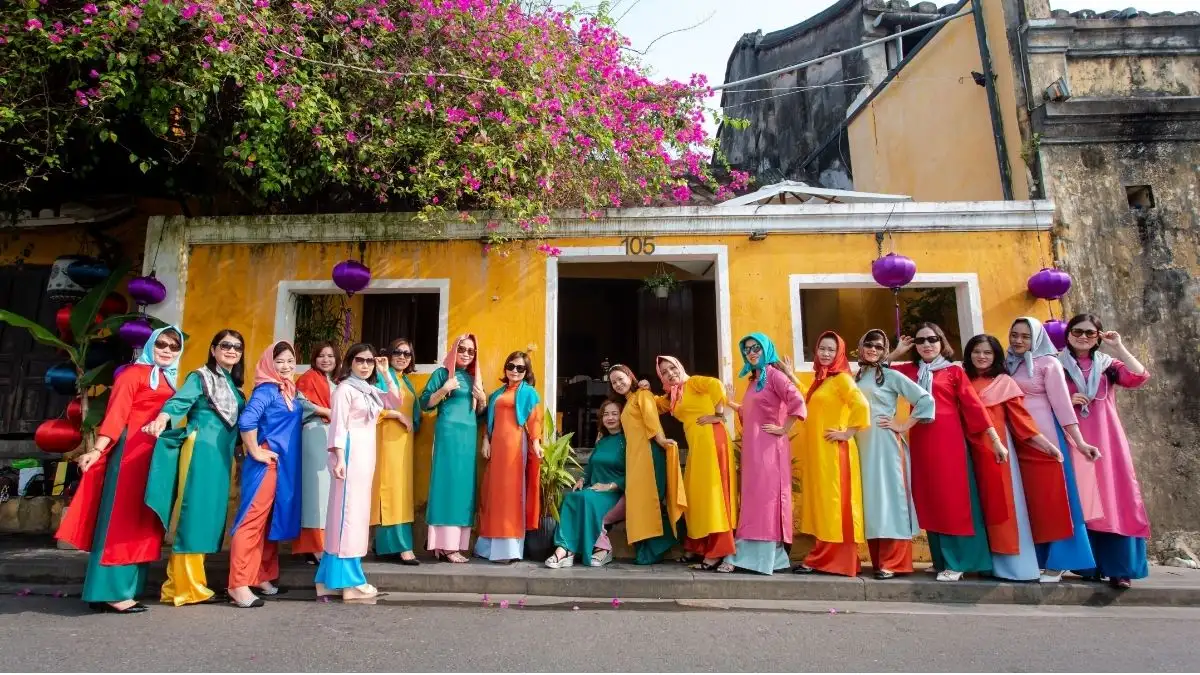
Hoi An Tet follows the same Lunar New Year traditions found across Vietnam, but the setting gives them a distinct character. This guide looks at what makes Tet in Hoi An different and the traditions behind what visitors see during the holiday.
What makes Hoi An’s Tet different
The traditions may be familiar across Vietnam, but Hoi An gives them a different setting and rhythm. Here are the details that make Tet in Hoi An distinctive.
Hoi An gets unusually busy when other Vietnamese cities go quiet
Tet can make Vietnam’s major cities feel surprisingly empty. In Hanoi and Ho Chi Minh City, streets that are normally crowded become much quieter around the first days of the Lunar New Year as many residents return to their hometowns for family reunions. Hoi An can be the opposite.
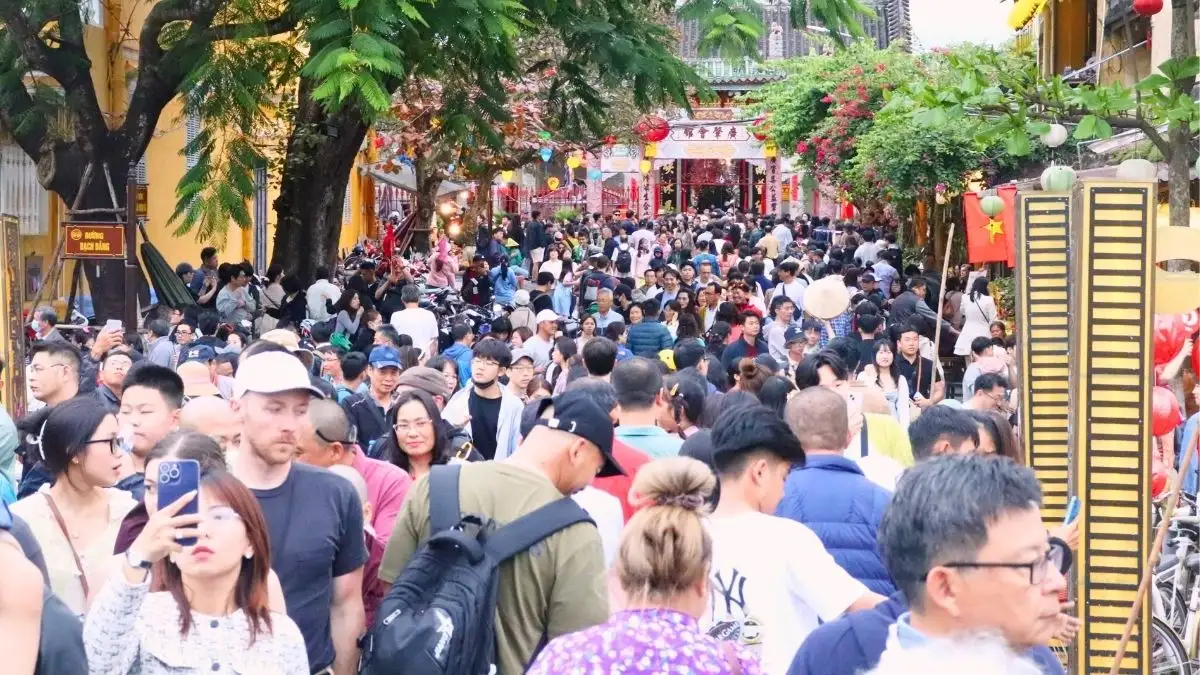
During Tet 2026, the Ancient Town was packed with both domestic and international visitors from the first day of the new year. Bach Dang, Tran Phu and Nguyen Thai Hoc became crowded, while the areas around the Japanese Covered Bridge and Hoai River were particularly busy.
The crowds also affected traffic and parking. Cars and tourist buses heading into the Old Town faced congestion throughout the day, while parking spaces filled up quickly. Parking fees also rose from around 30,000 VND to 50,000 VND per vehicle (Source: Bao Tuoi Tre). The crowds remained strong beyond the first day, with major attractions and riverside areas still busy several days into the holiday.
The reason is simple: Hoi An has become a destination for celebrating Tet rather than leaving town for Tet. Visitors come for the lantern-lit streets, spring outings, cultural performances and the chance to experience the New Year in a historic setting. If your idea of Tet is a quiet walk through an almost empty Old Town, the peak days may feel very different. For a more complete Tet experience, check the holiday programme and include local events alongside the usual sightseeing.
Festival of Light and Heritage brings a new side of Tet to Hoi An
One of the newest additions to the city’s Tet season is the Festival of Light and Heritage, held at Hoi An Memories Island under the theme of “Illuminating Vietnamese Culture.” The festival brings large-scale light installations, cultural performances and technology into a celebration that is otherwise deeply rooted in traditional heritage.
Its Tet programme, Heritage Tet, brings together familiar New Year customs with experiences from different parts of Vietnam. Visitors can encounter lucky-money activities, spring calligraphy, folk games, traditional food and performances representing the country’s three regions.
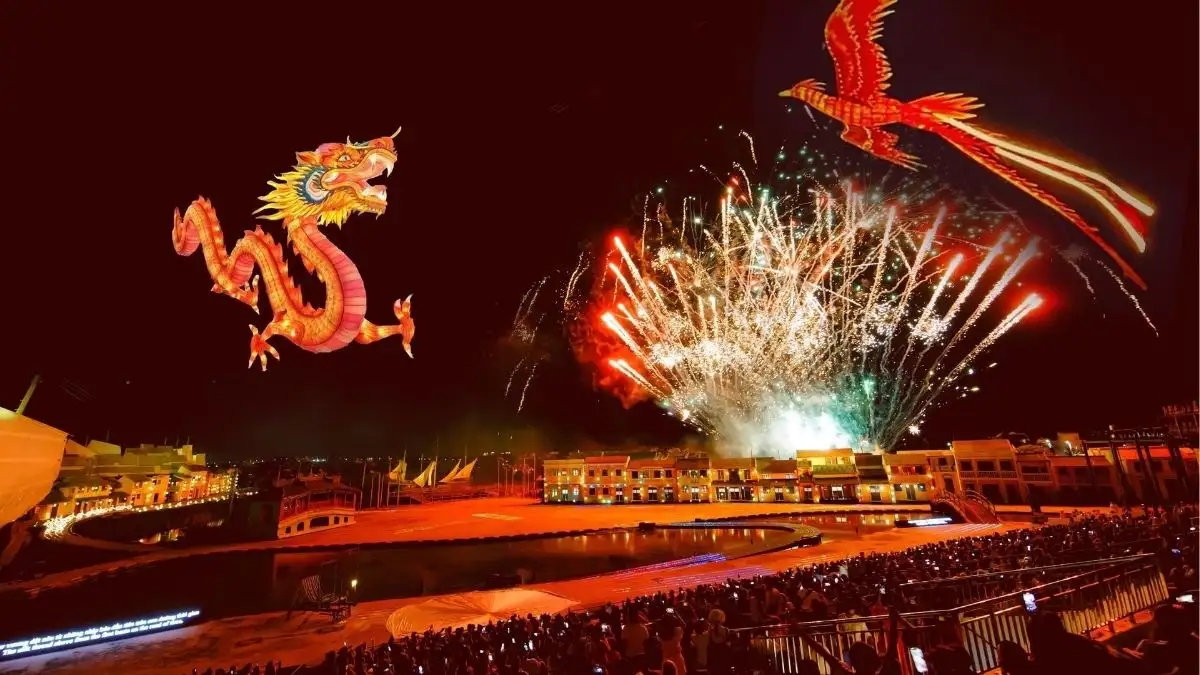
The festival also uses large-scale visual displays to tell stories about Hoi An’s past as an international trading port. Dragon and phoenix imagery, lantern art and the recreation of a Shuinsen, the Japanese trading vessel associated with Hoi An’s historic maritime connections, connect the modern spectacle back to the city’s older history.
This gives visitors another way to experience Tet beyond the Old Town itself. The traditional atmosphere remains in the historic centre, while Hoi An Memories Island adds a more contemporary evening experience built around light, performance and heritage.
Sac Bua and the Lion-like Thien Cau bring Tet into the streets
One of the less familiar Tet traditions visitors may encounter in Hoi An is Sac Bua chuc xuan, a traditional New Year performance in which musicians and performers move through the streets offering festive songs and good wishes. In Hoi An’s Tet programme, the procession can appear alongside a Thien Cau troupe, bringing music, movement and New Year blessings directly into the Old Town.
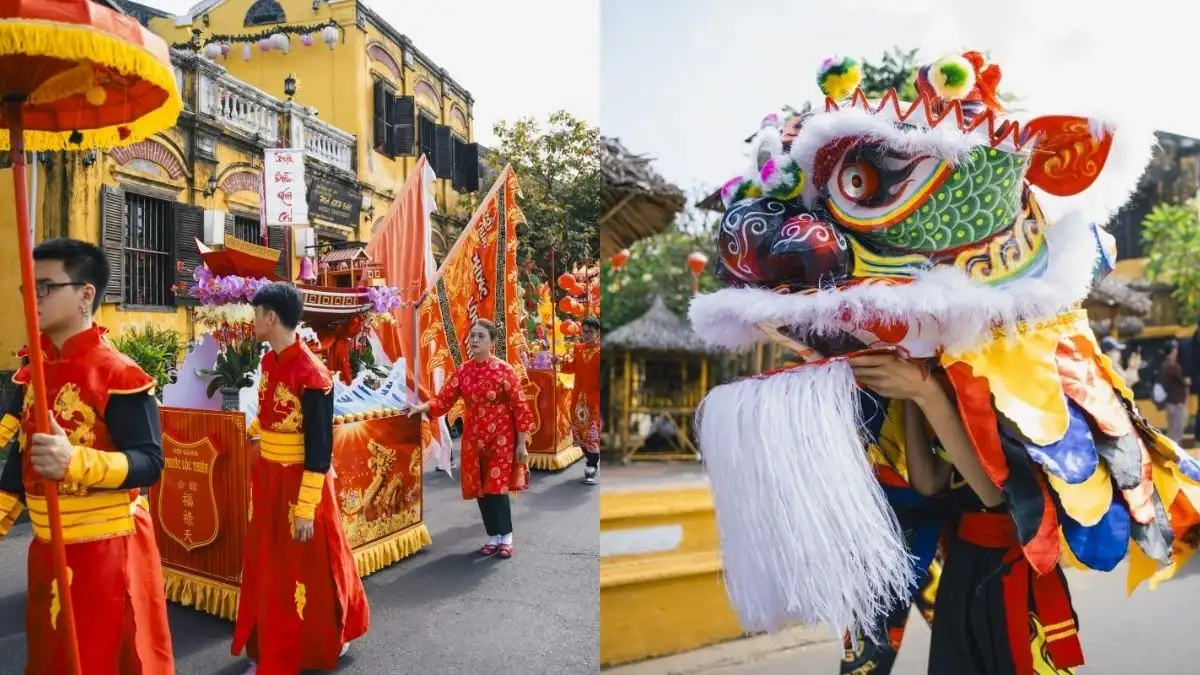
Unlike a performance watched from a fixed stage, the procession moves through the streets themselves. It reflects an older idea of Tet as something shared by the whole community rather than simply an event for spectators.
The Hoai River turns a Tet wish into something you can see
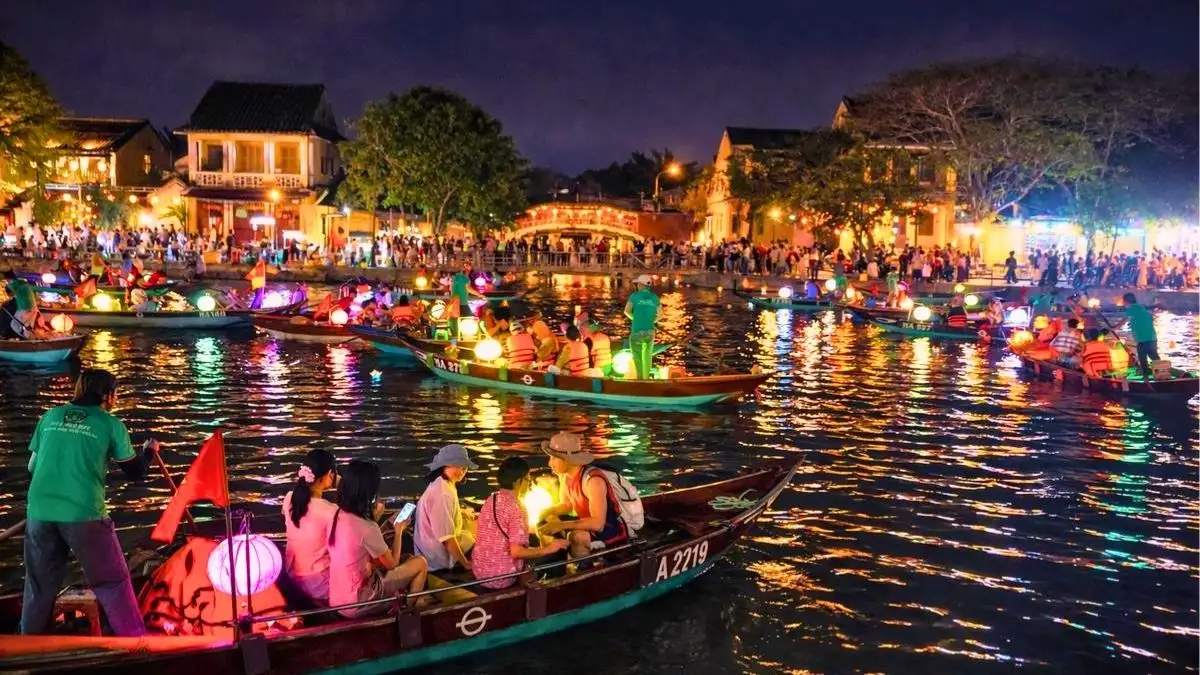
The lanterns floating on the Hoai River are one of the most recognisable images of Hoi An, and they become especially atmospheric around Tet. Visitors can release small illuminated lanterns onto the water while making a wish for peace, happiness or good fortune in the new year.
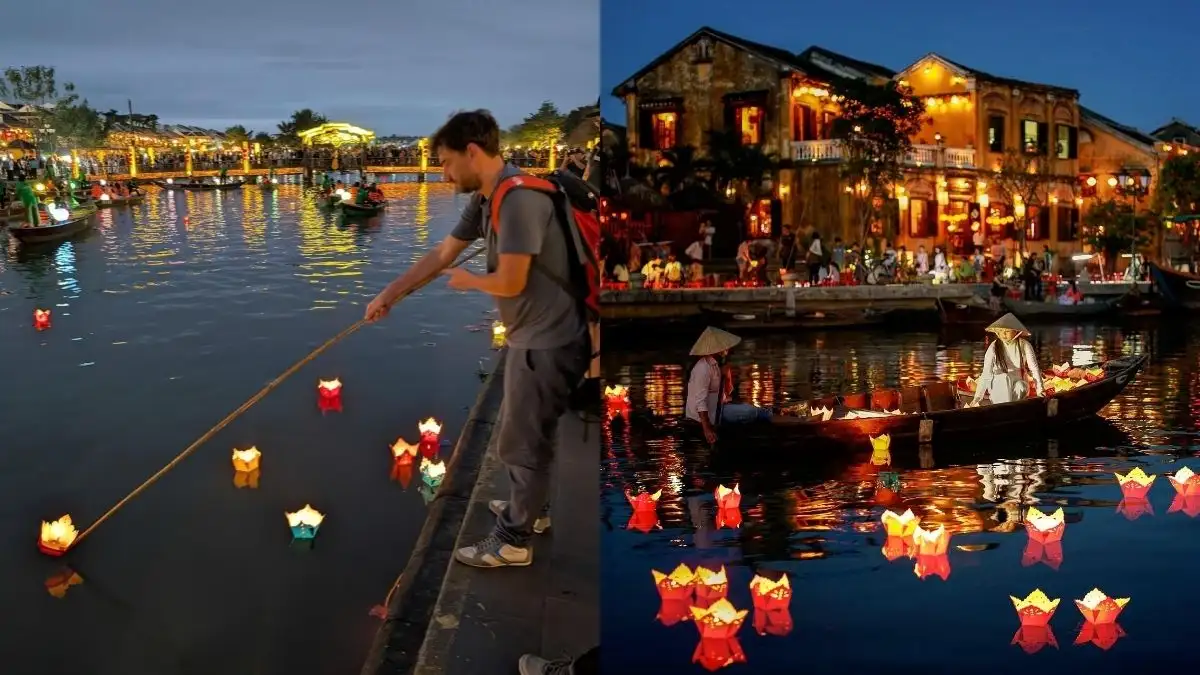
The setting is what makes this experience particularly Hoi An. The river runs directly beside the historic town, surrounded by old buildings, bridges and rows of colourful lanterns. A simple New Year wish therefore becomes part of the visual landscape that has come to define the town.
It is useful to distinguish lantern releasing from older Vietnamese Tet customs such as xong dat. Xong dat is a long-established New Year tradition found across Vietnam, while lantern releasing has become closely associated with Hoi An’s own cultural identity. Together, they show how the town combines national Tet traditions with customs that have developed around its river and historic streets.
Bai Choi brings Central Vietnamese culture into Tet
Bai Choi is another tradition worth looking for during the holiday. This Central Vietnamese folk art combines singing, spoken verses, cards and audience participation. Instead of simply announcing a card, the caller sings clues and uses humour, wordplay and local references to keep the game moving.
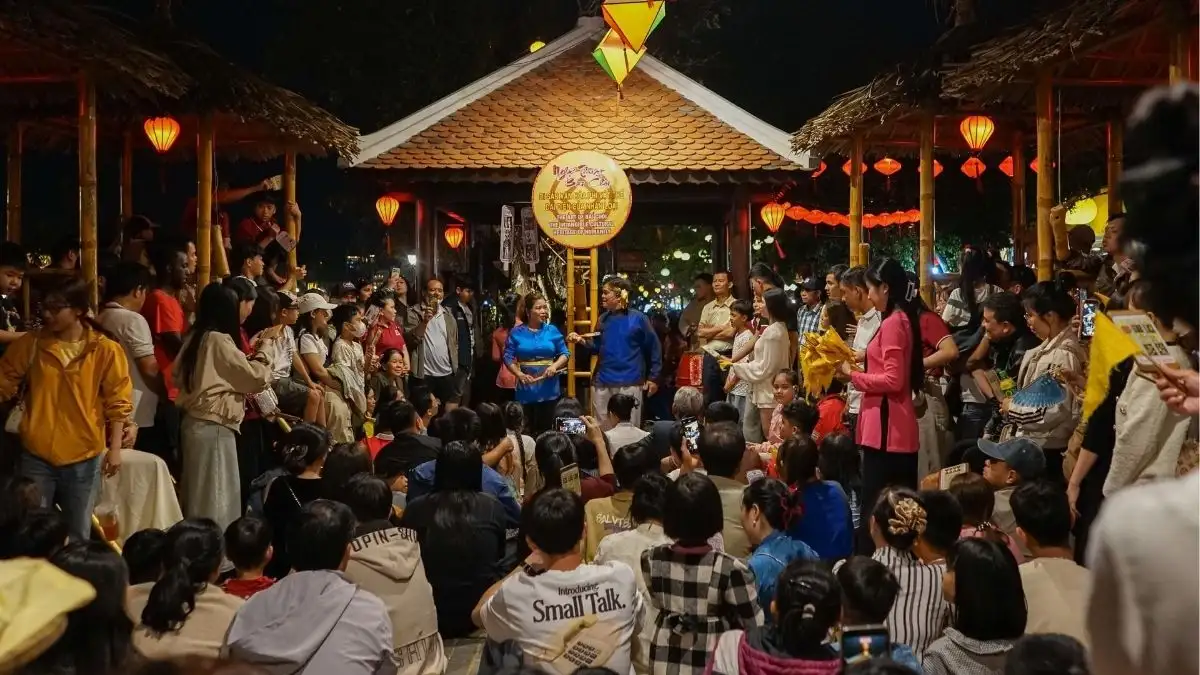
UNESCO inscribed Bai Choi of Central Viet Nam on the Representative List of the Intangible Cultural Heritage of Humanity in 2017 (Source: UNESCO). In Hoi An, the performance gives visitors a direct connection to the cultural traditions of Central Vietnam rather than just the visual side of the Old Town.
You do not need to understand every lyric to enjoy it. The distinctive singing style, interaction between performers and audience, and playful atmosphere are easy to appreciate even without Vietnamese. During Tet, Bai Choi offers a more participatory experience than simply walking through the lantern-lit streets.
Hoi An’s assembly halls reveal its merchant-port history
Hoi An’s historic Chinese assembly halls provide another clue to why its Tet feels different. The Old Town contains five major halls associated with different Chinese communities: Fujian, Cantonese, Chaozhou, Hainan and the Trung Hoa or Five Congregations Hall.
These buildings were originally community spaces for Chinese merchants and residents, serving religious, social and mutual-support functions. Their presence reflects Hoi An’s history as an international trading port, where merchants from China, Japan and other parts of Asia came to trade and settle.
The Fujian Assembly Hall, for example, is associated with the worship of Thien Hau, a sea goddess important to Fujian communities. Other halls preserve the religious traditions of their respective communities, giving each one a different character.
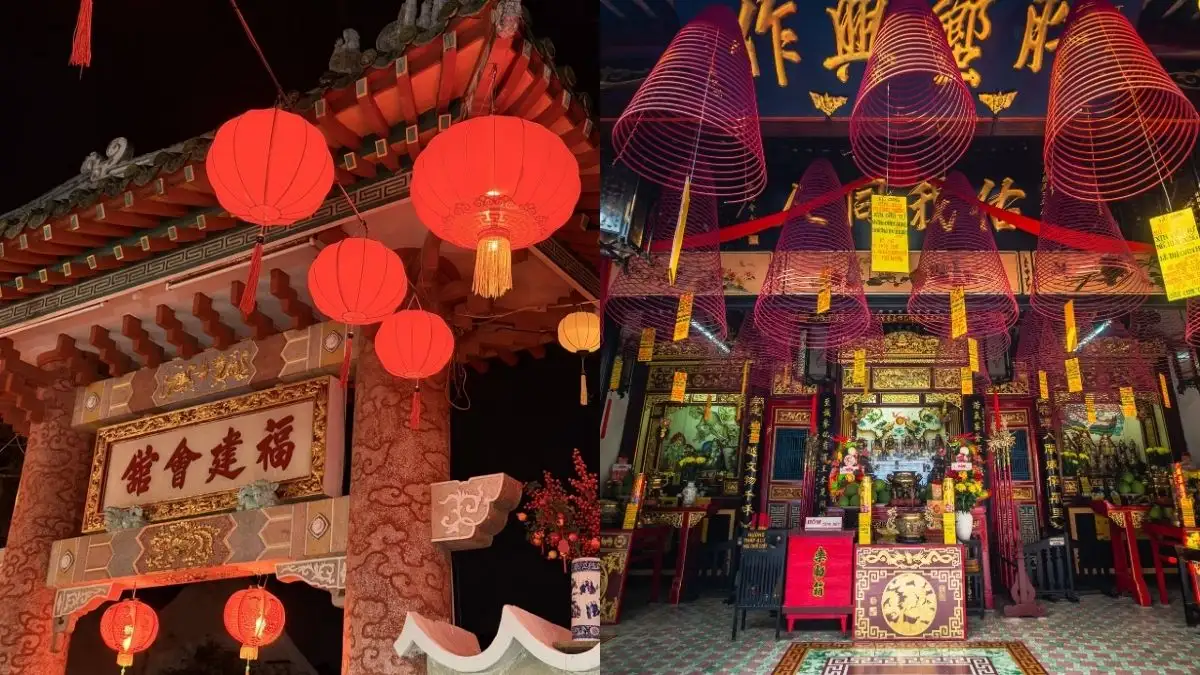
During Tet, these buildings are more than architectural attractions. Incense, offerings and prayers make them active places of worship, particularly during the spring holiday. Visitors can walk through them to see another side of Hoi An Tet, but should treat them as religious spaces rather than simply photo stops.
Read more: 8+ experiences in Tet Lunar New Year Hoi An worth trying
The customs and etiquette behind Hoi An Tet
A few simple things can make visiting Hoi An during Tet more respectful and less inconvenient:
- Do not visit a local home uninvited on the first morning of Tet: Xong dat, the first visitor of the year, is considered important for the household’s luck. If you are staying at a homestay, let your host decide when visitors are welcome.
- Do not sweep or tidy up Tet decorations without asking: Some families avoid sweeping or taking rubbish outside during the first days of Tet because it is believed to take away luck.
- Accept li xi politely: If someone gives you lucky money, thank them rather than opening the envelope immediately. If you give li xi yourself, use a red envelope and preferably a new or crisp banknote.
- Choose brighter clothes for Tet gatherings: Red and yellow are commonly associated with luck and celebration, while black and white can be linked with mourning.
- Ask before photographing private homes or ancestor altars: Tet decorations may look inviting, but family altars and ceremonies are private. Follow your host’s lead if you are invited inside.
- Check opening hours before visiting restaurants and shops: Many small businesses may close or reduce their hours during Tet. This is particularly important for tailor shops, which may take an extended holiday break.
The easiest approach is to respect private family traditions and keep your itinerary flexible. Enjoy the public celebrations while giving local households space during their most important family holiday.
The symbolic foods of Hoi An Tet
Most Tet dishes are shared across Vietnam, but Hoi An has a few food traditions that make its New Year table more distinctive.
- Banh To is the real Hoi An standout: Made from sticky rice flour, sugar, ginger and sesame, this chewy cake has long been used as an offering to ancestors during Tet. It is also traditionally associated with Hoi An and Quang Nam, making it more locally distinctive than the familiar Banh Chung or Banh Tet.
- Look for the “Tet quartet”: Banh Tet, Banh To, Banh No and Banh In. Local heritage sources describe these four traditional cakes as part of the old Tet food culture of Hoi An and Quang Nam. They were made for family offerings, gifts and sharing during the holiday.
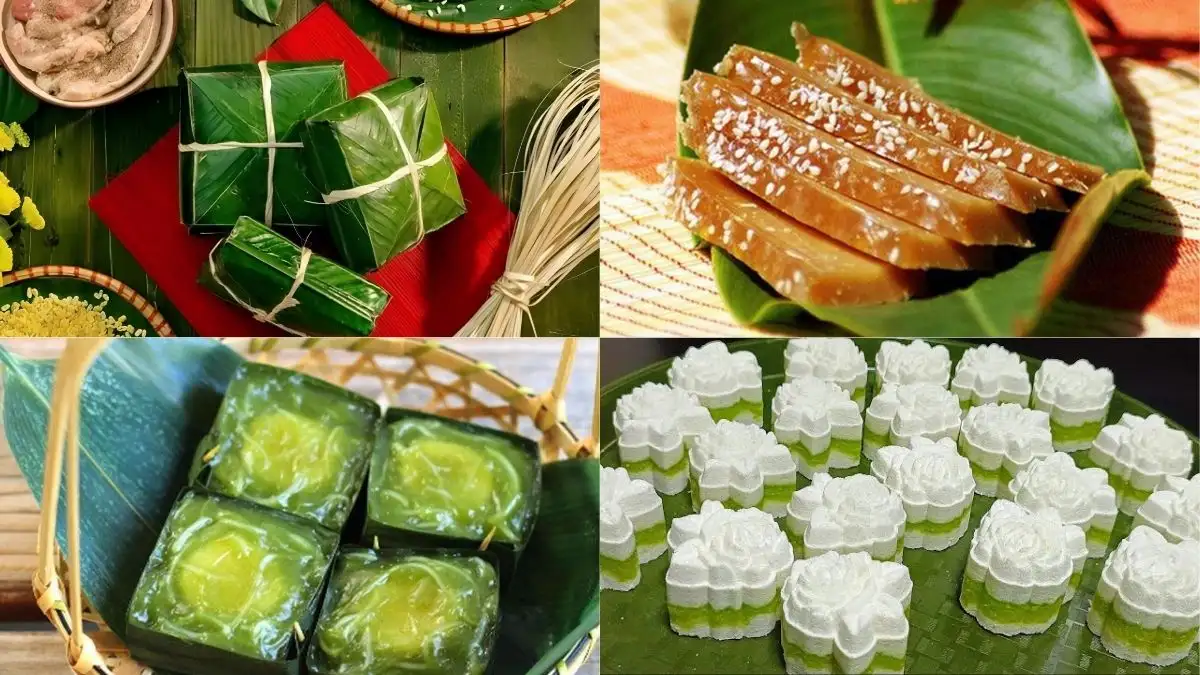
- Dua mon is the practical side of the Tet table: Hoi An families traditionally serve pickled vegetables alongside Banh Tet and other rich foods. The crunchy, salty-sweet vegetables cut through the richness and are prepared well before Tet.
For visitors, Banh To is the one worth seeking out. Try it plain, or pan-fried until the outside turns crisp while the inside stays soft. Around Tet, Hoi An Market is a convenient place to look for it, and the cake is also commonly bought as a traditional gift.
Read more: Food in Hoi An: A Journey through tradition and flavor
Where to stay in Hoi An during Tet
Where you stay can shape how easily you experience Hoi An Tet. Staying near the Ancient Town puts you close to the festive streets, lanterns, markets and cultural activities, while a beachside resort gives you a quieter place to return to after a busy day.
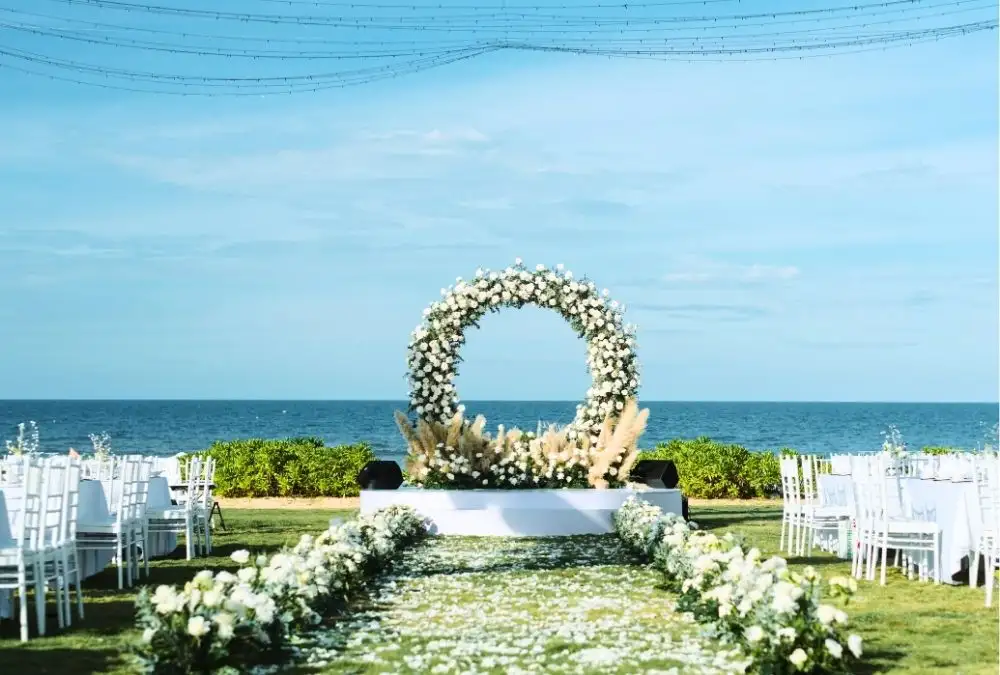
If you prefer the second option, Bliss Hoi An Beach Resort & Wellness sits on Binh Minh Beach, away from the busiest part of town. You can spend the morning by the beach or pool, then head into the Ancient Town for Tet activities and join a Hoi An City Tour to see more of the historic town without having to plan every stop yourself.
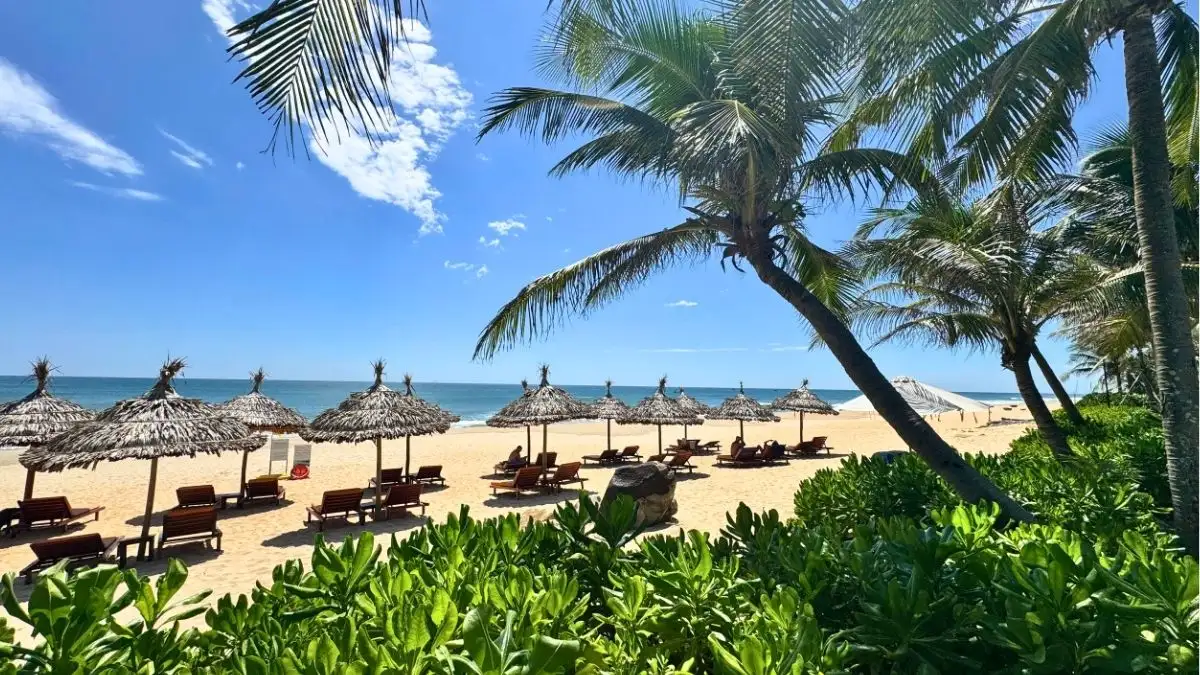
One couple staying at Bliss described this balance well: “It’s not too far from everything, but it’s still quiet and peaceful, which is exactly what we wanted.” That can be particularly useful during Tet, when you may want to spend part of the day in the busy Old Town before returning somewhere calmer.
The resort also provides a daily shuttle to Hoi An Ancient Town, which can be useful during Tet when traffic and parking may be less convenient. After your time in the Old Town, return to Bliss for a swim, a session at Ngoc Linh Spa, or a quieter evening by the beach.
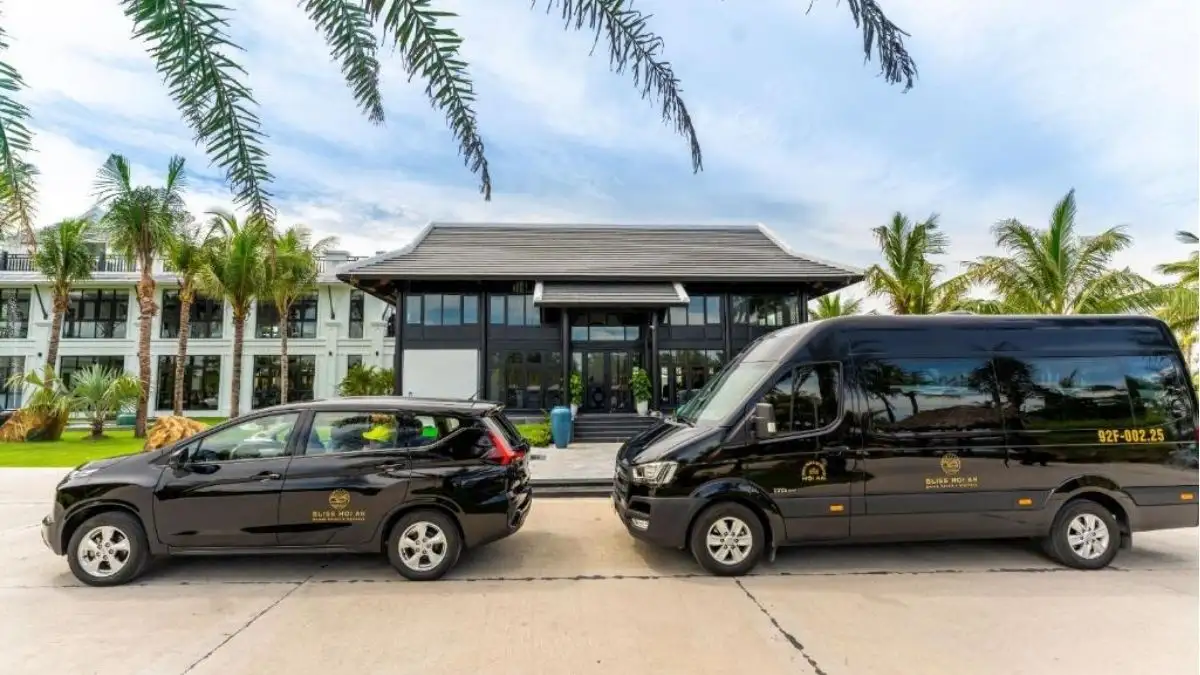
This setup works well if you want to experience the festive side of Hoi An while keeping your accommodation away from the busiest streets.
Frequently Asked Questions
What does Hoi An Tet actually mean?
Tet Nguyen Dan marks the Lunar New Year and is primarily a time for family reunion, ancestor worship and welcoming a new beginning.
Why do Vietnamese people give lucky money during Tet?
Li xi is given after New Year greetings as a wish for health, luck and prosperity, usually in new bills.
Is it rude to visit Hoi An during Tet?
No. Visitors are welcome, but some businesses may close or operate limited hours. Respect private family customs such as xong dat.
Why do Vietnamese people avoid sweeping during Tet?
Sweeping is traditionally avoided during the first few days because it is believed to sweep away good luck and fortune.
What should I wear during Hoi An Tet?
Red and yellow are popular for their associations with luck and happiness. Black and white are traditionally avoided.

Related Posts
Hoi An to Mui Ne: 3 Routes Compared for Travel, Scenery and Adventure
Hoi An Indochine Style Resort: How to Choose a Stay With Real Vietnamese Character
Private Chef Hoi An: Top 10 Chefs for a Personalised Dining Experience
A trip from Hoi An to Tam Ky in one day: Is it feasible?

Private Tours from Hoi An Beach Resorts: Discover Central Vietnam from Bliss Hoi An