

Cau Bong Festival in Hoi An: Inside Tra Que’s Agricultural New Year Tradition
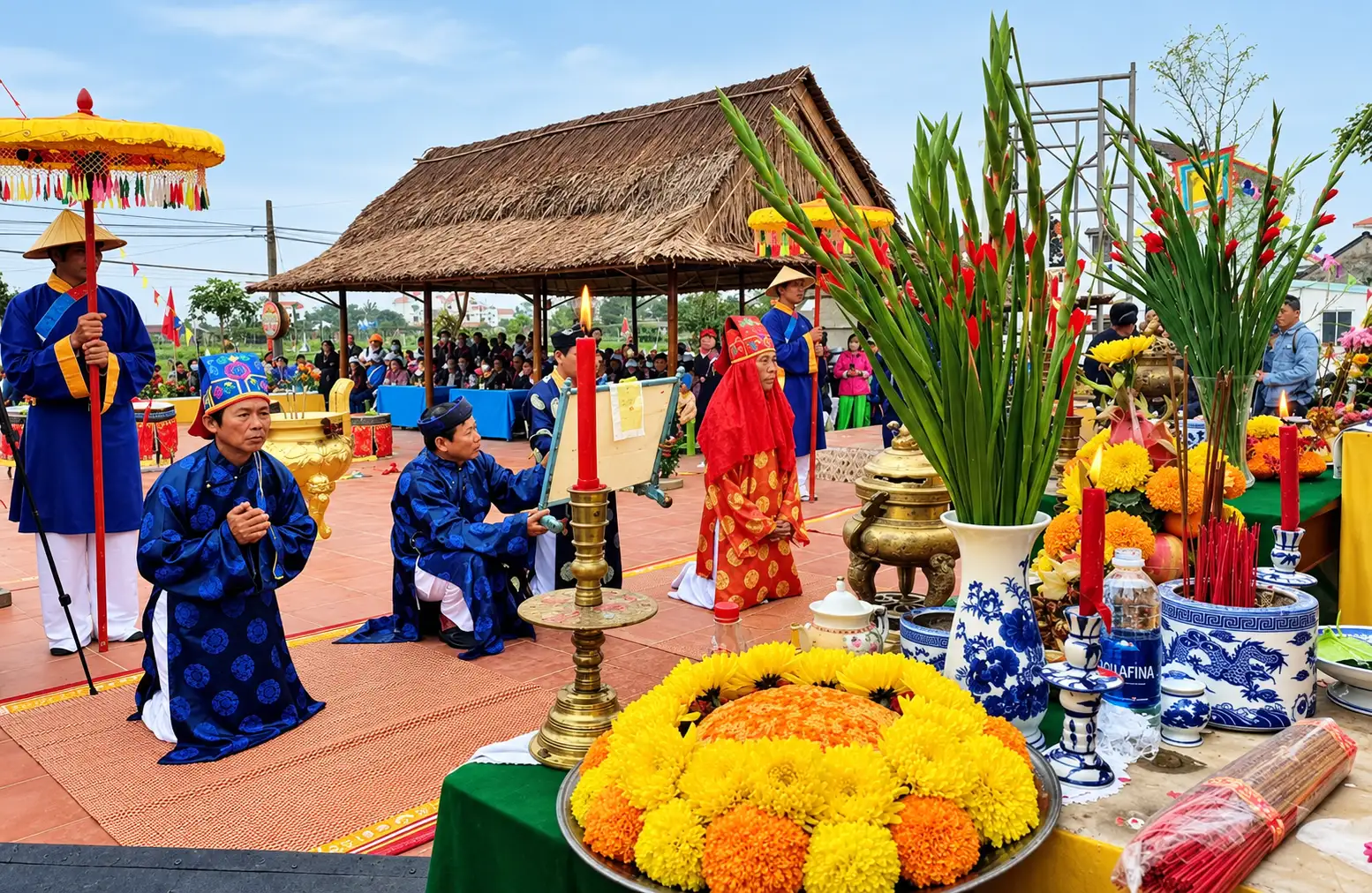
Held on the 7th day of the first lunar month, Cau Bong Festival marks the start of a new farming year in Tra Que Vegetable Village. Let’s explore its rituals, agricultural traditions and what travelers can experience during the festival.
Cau Bong Festival at a glance:
| Information | Details |
| Date | The 7th day of the first lunar month (expected to fall on February 12, 2027) |
| Location | Tra Que Vegetable Village, Hoi An Tay Ward, Da Nang City |
| Best time to arrive | Before 8:00 AM |
| Distance | About 3 km from Hoi An Ancient Town and around 17 km from Bliss Hoi An Beach Resort & Wellness |
| Main purpose | To pray for favorable weather, good crops, healthy vegetables and peace for the village in the new year |
| Main rituals | The Than Nghinh procession, offering ceremony and worship rituals dedicated to deities associated with agricultural beliefs |
| After the main ritual | Farming-related activities, folk games, performances and local food, depending on the year’s program |
| Best for | Culture lovers, photographers, families and travelers who enjoy slower, more local experiences |
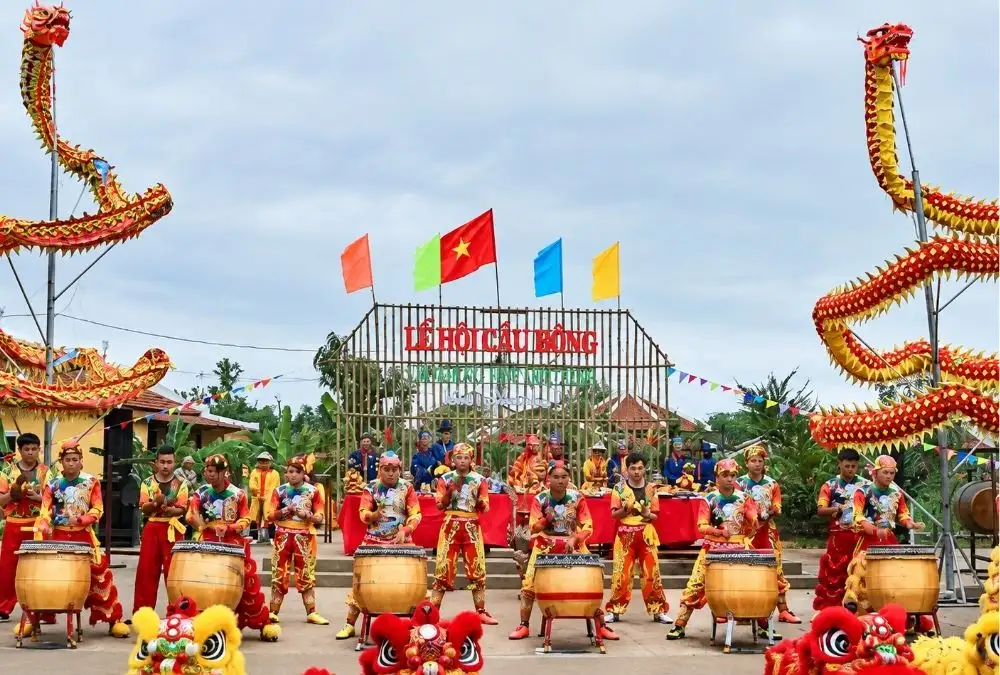
What is the Cau Bong Festival?
Cau Bong is an agricultural festival held in Tra Que Vegetable Village on the seventh day of the first lunar month. In 2027, it falls on February 12. The festival is a traditional occasion for local farmers to pray for favourable weather, good crops and peace for the community, closely connected with the worship of Than Nong (God of Agriculture) and Tra Que’s long-standing vegetable-growing tradition.
The main rituals take place in the morning, so visitors should arrive before 8:00 AM to have a better chance of seeing the ceremony. Arriving later means you may miss the most important ritual and only catch the community activities that follow.
Why is a chicken part of the offering?
One of the most distinctive parts of the Cau Bong offering is the boiled castrated chicken, prepared and presented as part of the traditional prayer for a productive farming season. Its carefully arranged appearance is not simply decorative: the offering follows local ritual customs and reflects the community’s respect for the agricultural deities.
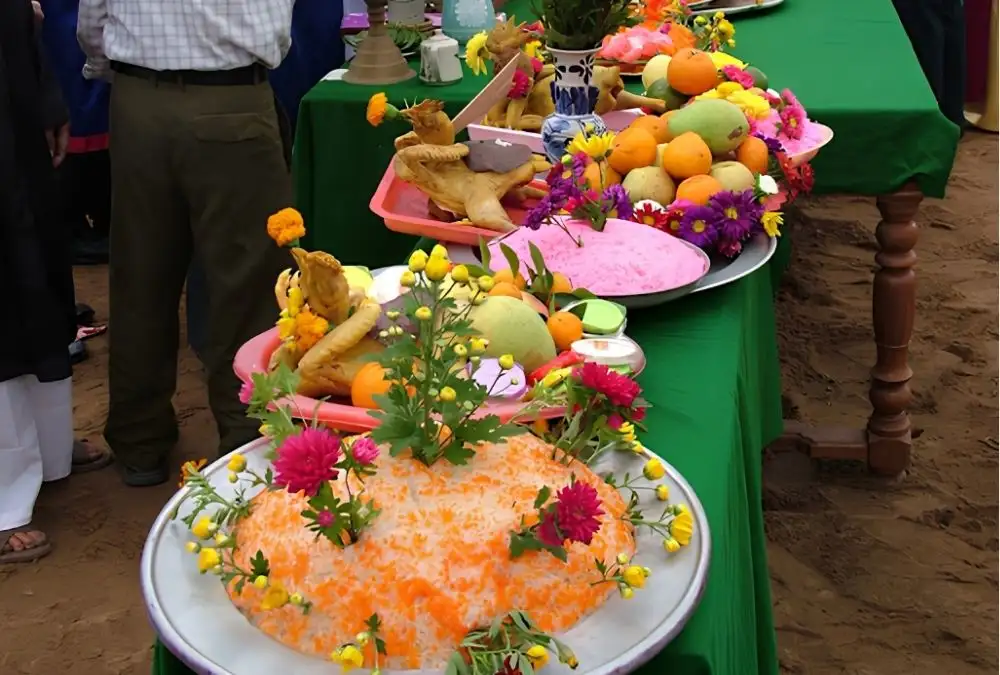
The chicken is decorated with a flower placed in its beak, while a bamboo knife is positioned behind its back. Together with red gac sticky rice, white rice wine and fresh Tra Que vegetables, these items form a symbolic agricultural offering. The vegetables represent the crop that sustains the village, while the food and wine complete the traditional act of presenting the fruits of local farming to the deities.
For visitors staying at Bliss Hoi An Beach Resort & Wellness, Tra Que is close enough to include in a morning outing before returning to the resort for breakfast or a slower start to the day. The village is about 3 km from Hoi An Ancient Town, making it a practical cultural stop rather than a full-day trip.
How Tra Que Cau Bong differs from Cau Bong elsewhere
The name Cau Bong appears in several places in Vietnam, but the traditions behind it are not the same. In Tra Que, Hoi An, the festival is closely tied to the village’s long history of vegetable farming and takes place on the 7th day of the first lunar month.
The village has around 400 years of history, with more than 200 farming households cultivating about 18 hectares of land and growing dozens of varieties of vegetables. This agricultural setting is central to understanding why Cau Bong in Tra Que focuses on prayers for favourable weather, good harvests and peace for the village (Source: Bao Dan Tri)
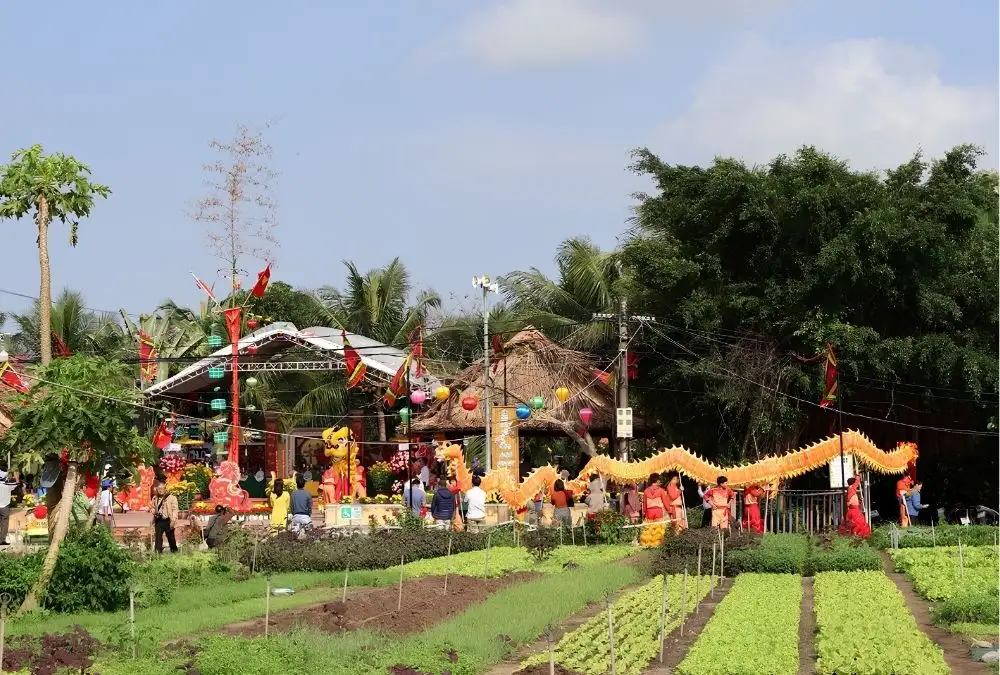
Tra Que’s farming tradition also sets it apart from other places associated with the name. In 2024, the village was recognised as a Best Tourism Village by UN Tourism, while its traditional vegetable-growing craft is included in Vietnam’s national intangible cultural heritage list (Source: Vietnam Plus). The festival therefore takes place within a living farming community rather than simply using the village as a backdrop for a cultural event.
| Criteria | Cau Bong in Tra Que, Hoi An | Cau Bong in Binh Phuoc |
| Cultural setting | Traditional vegetable-growing village | Agricultural tradition of the Kinh community |
| Time | 7th day of the first lunar month | Varies by location and time of year |
| Main setting | Tra Que Vegetable Village and village temple | Communal houses and a temple |
| Main purpose | Pray for favourable weather, good harvests and village peace | Agricultural beliefs and prayers for a good harvest |
| Ritual character | Closely connected with vegetable farming and village life | More closely associated with communal-house rituals |
| Activities | Processions, agricultural activities, folk performances and local food | Rituals, folk games and hat boi during major ceremonies |
There are also other unrelated results for the name. Cau Bong in Ho Chi Minh City is a bridge, not a festival, while Poon Poong in Thanh Hoa is a different folk ritual of the Muong people. Searching for “Cau Bong” alone can therefore lead to several different cultural or geographical references.
For visitors planning to attend the Tra Que festival, adding “Tra Que” or “Hoi An” to the search is the simplest way to make sure the information refers to the right Cau Bong.
Inside the morning ritual: What you will see and hear
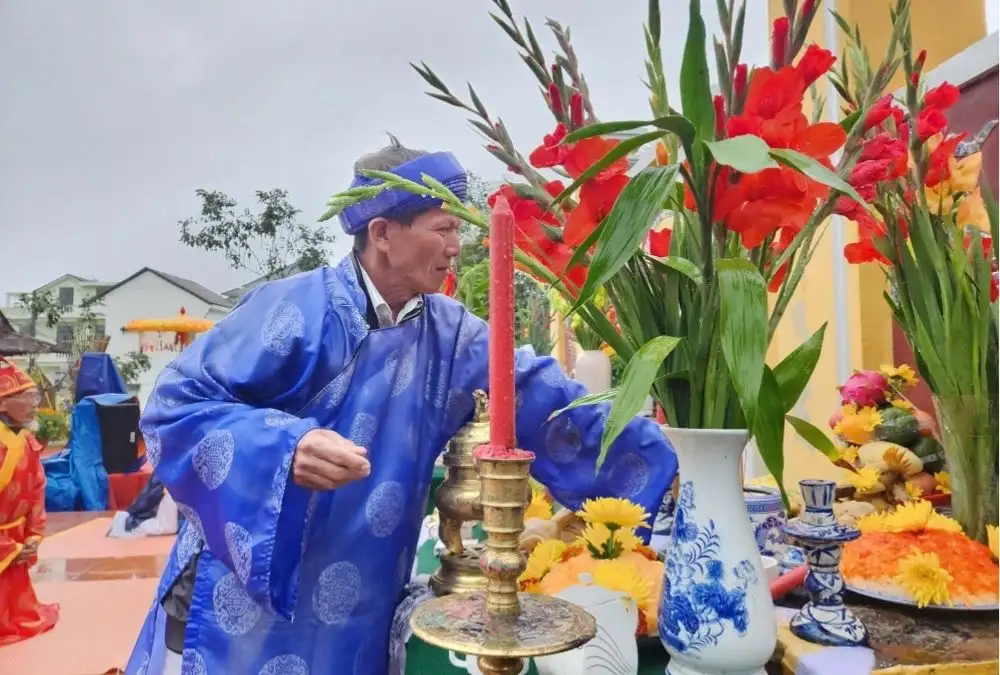
The morning ritual begins before the crowds arrive. Elders gather at the village communal house, while each of the village’s seven neighbourhoods prepares a tray of offerings. The trays are then carried in a solemn procession to the altar as drums and gongs set the pace and villagers line the lanes to watch.
The procession includes flag bearers, a palanquin, drummers and elders in traditional costume as part of the Welcoming the Deity ceremony. The elders wear long robes and black turbans, giving the procession a formal and respectful atmosphere.
For visitors, this is a moment to observe rather than treat as a performance. Keep your phone away or on silent during the main ritual, avoid stepping into the procession or altar area, and follow the villagers’ lead when taking photos.
The offerings are another distinctive part of Cau Bong. Each item has a place in the ceremony and reflects the village’s agricultural traditions:
| Offering | What visitors notice | Why it matters |
| Boiled rooster | A flower is placed in its beak and a small bamboo knife is positioned behind its back | After the shared ceremony, villagers read the rooster’s legs to anticipate how the year’s agricultural work will go |
| Pink sticky rice | Its pink colour comes from a leaf dye | Local sources associate it with good luck |
| Rice wine and tea | Small cups are arranged on the altar | They form part of the formal offering to the village deity |
| Tam huu (three friends) | A wrapped bite combining shrimp, pork and herbs | The dish is an essential part of the village’s New Year offering tray. (Source: Vietnam.vn) |
After the main ceremony, young men lower the festival pole, marking the end of Tet and the transition to the more communal activities. In 2026, the programme also included a visit to the tomb of Minister of War Nguyen Van Dien and a vegetable-planting experience. These activities can change from year to year, so visitors should treat them as possible programme items rather than guaranteed parts of the festival.
Read more: Perfect Hoi An itinerary for all travelers
After the ritual: When visitors step into Tra Que’s everyday life
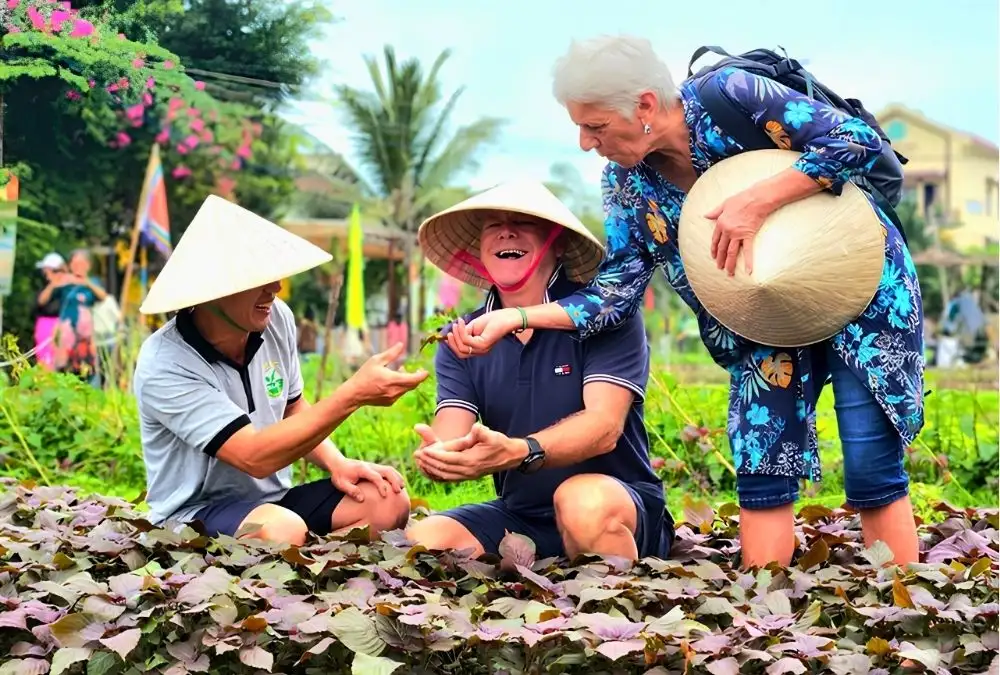
After the solemn morning rituals, Cau Bong becomes more hands-on. This is when visitors can leave the ceremonial area, head towards the vegetable fields and watch or try some of the farming work that local growers still do every day.
When the vegetable fields become part of the festival
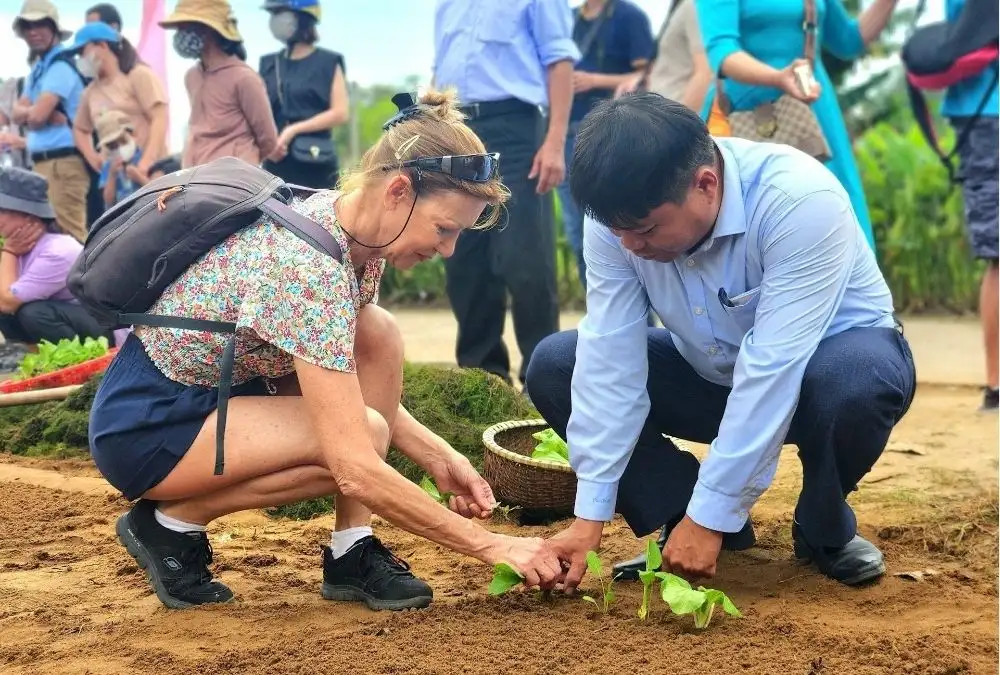
Don’t be surprised to see a ploughing competition, farmers competing in vegetable fertilising, algae collecting or vegetable decorating. In some festival years, visitors can also plant vegetables and try caring for a small plot with guidance from local farmers.
The appeal is that you are not simply watching a festival from the sidelines. You may get to roll up your sleeves, step into the fields and try a small part of the work that keeps Tra Que’s gardens growing. However, the activities vary from year to year, so not every Cau Bong festival will include all of these experiences.
Tom Huu: A dish to try in Tra Que
If you want to taste a dish closely associated with the vegetable village, try Tom Huu. It combines river shrimp, boiled pork and fresh Tra Que herbs, then wraps the ingredients together and ties them with blanched spring onion leaves instead of rice paper.
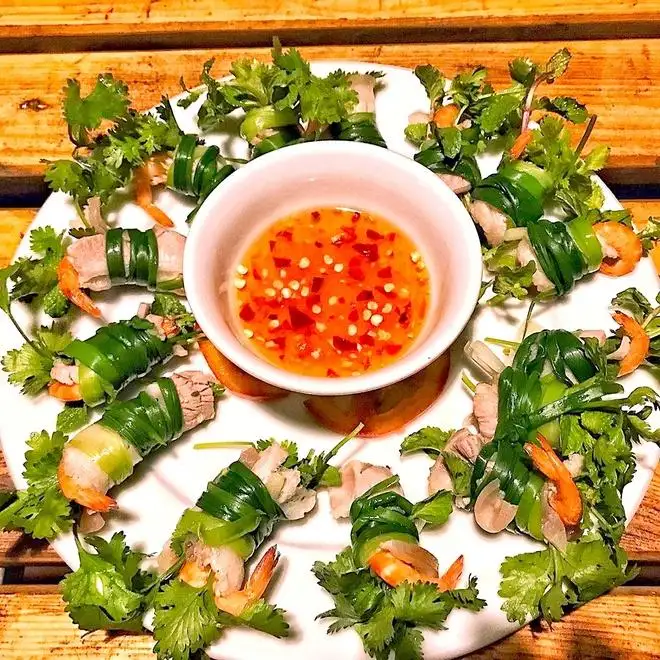
Each bite brings together the fresh herbs and savoury ingredients in a small, easy-to-eat roll. Tom Huu is also included in the village’s New Year offering tray, making it a natural dish to try when experiencing Cau Bong through its rituals, vegetable fields and food.
If you want more local food after the festival, Bliss Hoi An offers a Hoi An street food tour where you can try a range of local specialities. For a more hands-on experience, the cooking class and basket boat tour lets you cook with fresh Tra Que herbs and learn more about local cuisine.
What do visitors say about Tra Que’s Cau Bong festival?
For some international visitors, Cau Bong becomes an unexpected chance to experience Tra Que beyond its usual tourist attractions. French visitor Michel and his wife happened to arrive at the village on the morning of the festival. Taking part in some of the village’s agricultural activities helped them better understand the value of Tra Que’s traditional farming craft, which he described as a genuinely interesting experience.
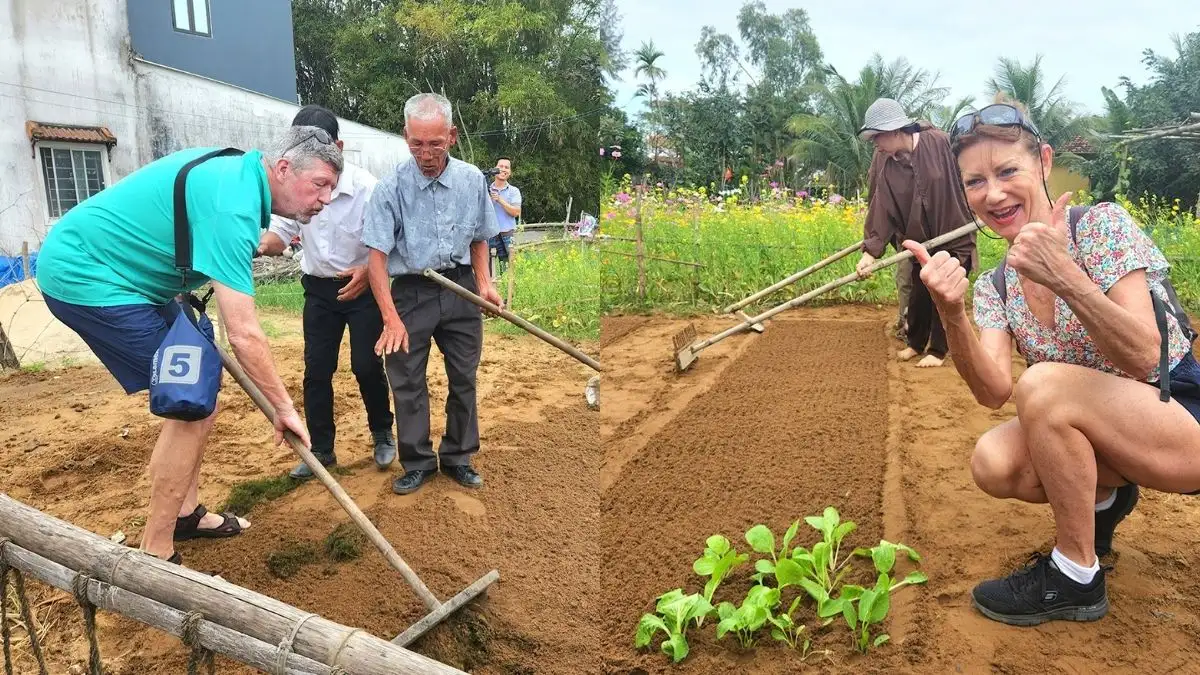
German visitor Katja Janssen also shared a positive impression of the festival. She was happy to attend Cau Bong and have the opportunity to experience life as a farmer. For her, the experience became a memorable part of her trip to Vietnam.
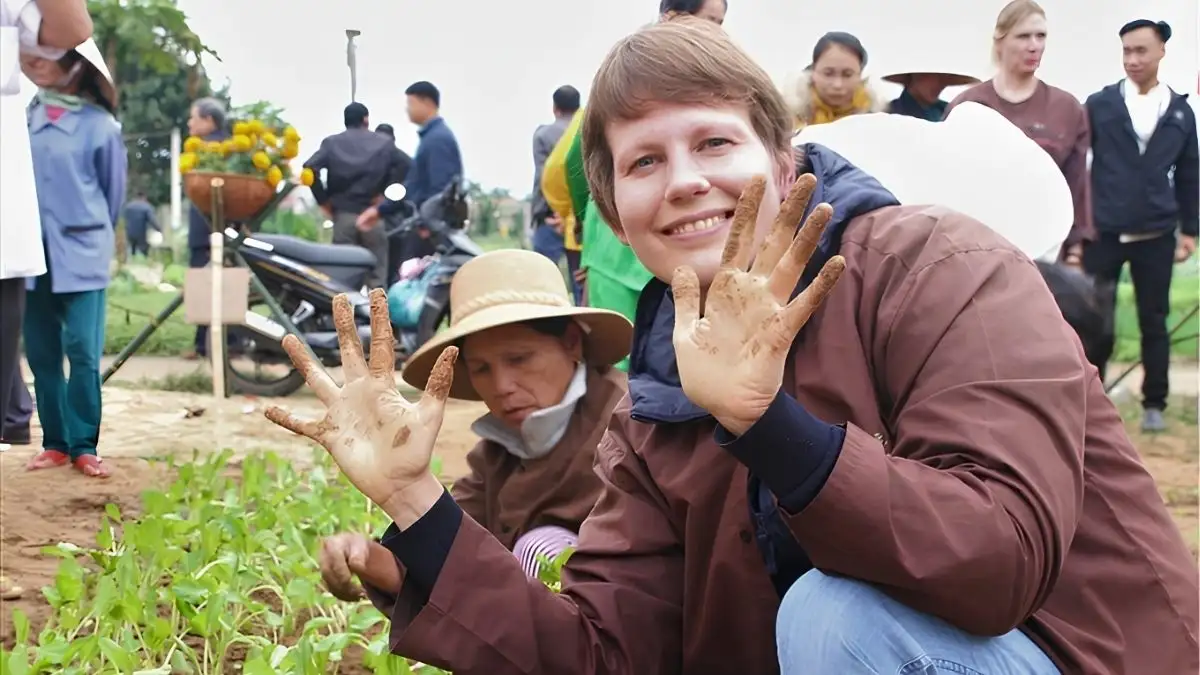
These experiences show why Cau Bong can feel different from simply visiting Tra Que’s vegetable fields. The festival brings visitors closer to the farming work, traditions and community life that have shaped the village, allowing them to experience part of the culture rather than only observe it.
Things to know before attending Cau Bong festival
Arrive early if you want to see the main ritual
The festival usually takes place from around 7:00 to 10:00 AM, with the main ritual held in the morning. Aim to arrive before 8:00 AM to catch the procession and ceremony. Tra Que is about 3 km from Hoi An Ancient Town, and traffic around the village can be slower than usual on the festival morning.
Arrange your transport in advance
Taxi, Grab and bicycles are all practical ways to reach Tra Que. If you are staying at Bliss Hoi An Beach Resort & Wellness, you can ask reception about the transportation service the night before. The reception hotline is +84 235 3874 888, and WhatsApp is +84 91 188 95 58.
Bring some cash for the morning in Tra Que
The village entrance fee is around VND 30,000 per person and may change. Small notes are useful for entrance fees, drinks or snacks around the village.
Wear clothes that work for both the ritual and the fields
Light, modest clothing is suitable, especially around the altar, where covering your shoulders and knees is appropriate. If you plan to walk through the vegetable fields, closed shoes are more practical as the ground can be wet or muddy. A hat, sunscreen and drinking water are also useful for the morning outdoors.
Keep the ritual in mind when taking photos
You can bring a phone or camera, but avoid using flash during the ceremony. Keep your phone on silent, stay outside the ritual area and do not step into the procession or altar area just to get a better photo. Follow the lead of local participants before taking pictures during the ritual.
Check the programme carefully if you book a tour or private car
Ask whether the itinerary includes the morning ritual or only the agricultural activities that take place afterwards. It is also worth confirming when the procession starts, whether the driver will wait and whether there is an additional charge for extended waiting time.
Do not make your schedule too tight
Arriving after 9:00 AM may mean missing the main ritual, while activities such as farming experiences, contests or folk performances can vary from year to year. During the first days of Tet, some shops and restaurants may also remain closed, so leave some flexibility in your itinerary.
Read more: 8+ experiences in Tet Lunar New Year Hoi An worth trying
Suggested itinerary for the Cau Bong Festival from Bliss Hoi An
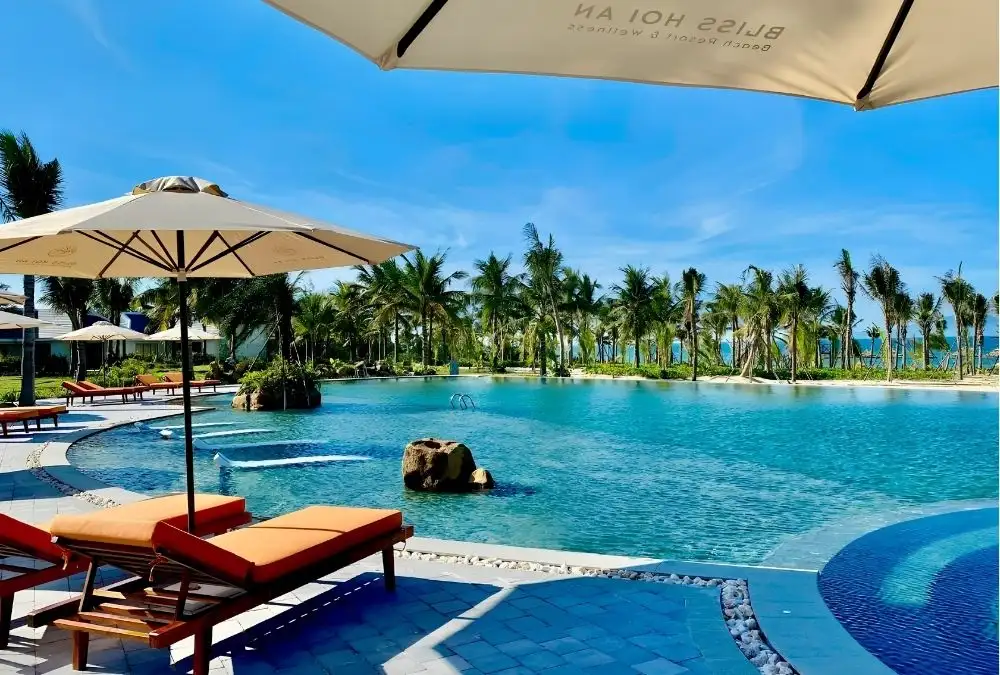
Staying near the beach gives you a quiet place to rest after a morning at Tra Que. From Bliss Hoi An Beach Resort & Wellness, you can combine Cau Bong with the Hoi An Countryside Vespa Tour to explore the rural side of Hoi An, then return to the resort to relax by the pool or unwind at the spa.
A simple itinerary could look like this:
- 7:00 AM: Leave Bliss Hoi An for Tra Que.
- 7:30-10:00 AM: Attend the Cau Bong Festival and explore the village.
- 11:30 AM: Return to Bliss Hoi An for lunch and a break.
- Afternoon: Join the Hoi An Countryside Vespa Tour or relax at the pool and spa.
- Evening: Take the free shuttle bus to Hoi An Ancient Town, around 20 minutes away.
This schedule leaves enough room for the festival without turning the day into a rush between activities. For the February 2027 festival, booking your stay early is also worth considering as Tet is a busy travel period.
FAQs
What does Cau Bong mean?
“Cau” means to pray, while “Bong” refers to flowers and crops. The festival is held to pray for a good harvest and honour the village founders.
Can tourists join Cau Bong?
Yes. Visitors can watch the rituals and join some farming activities, but should stay outside the ceremony area and ask before taking photos.
Is Cau Bong the same as Tet?
No. Tet is Vietnam’s Lunar New Year, while Cau Bong takes place on the 7th day of the first lunar month in Tra Que.
Is it held on the same date every year?
Yes, it is held on the 7th day of the first lunar month, but the solar date changes. In 2027, it falls on February 12.
Do I need to book a tour?
No. You can reach Tra Que by taxi, Grab or bicycle. A tour is useful if you want a guide to explain the festival and local farming traditions.

Related Posts
Top 8 things to consider for a wedding in Hoi An with 20 guests

Best Beach Resort in Hoi An: Top 7 things to avoid when choosing to stay

4 Hoi An wedding packages compared: Which one is right for you?

5 mistakes to avoid when self-driving from Hoi An to Quang Ngai in a day
8+ experiences in Tet Lunar New Year Hoi An worth trying