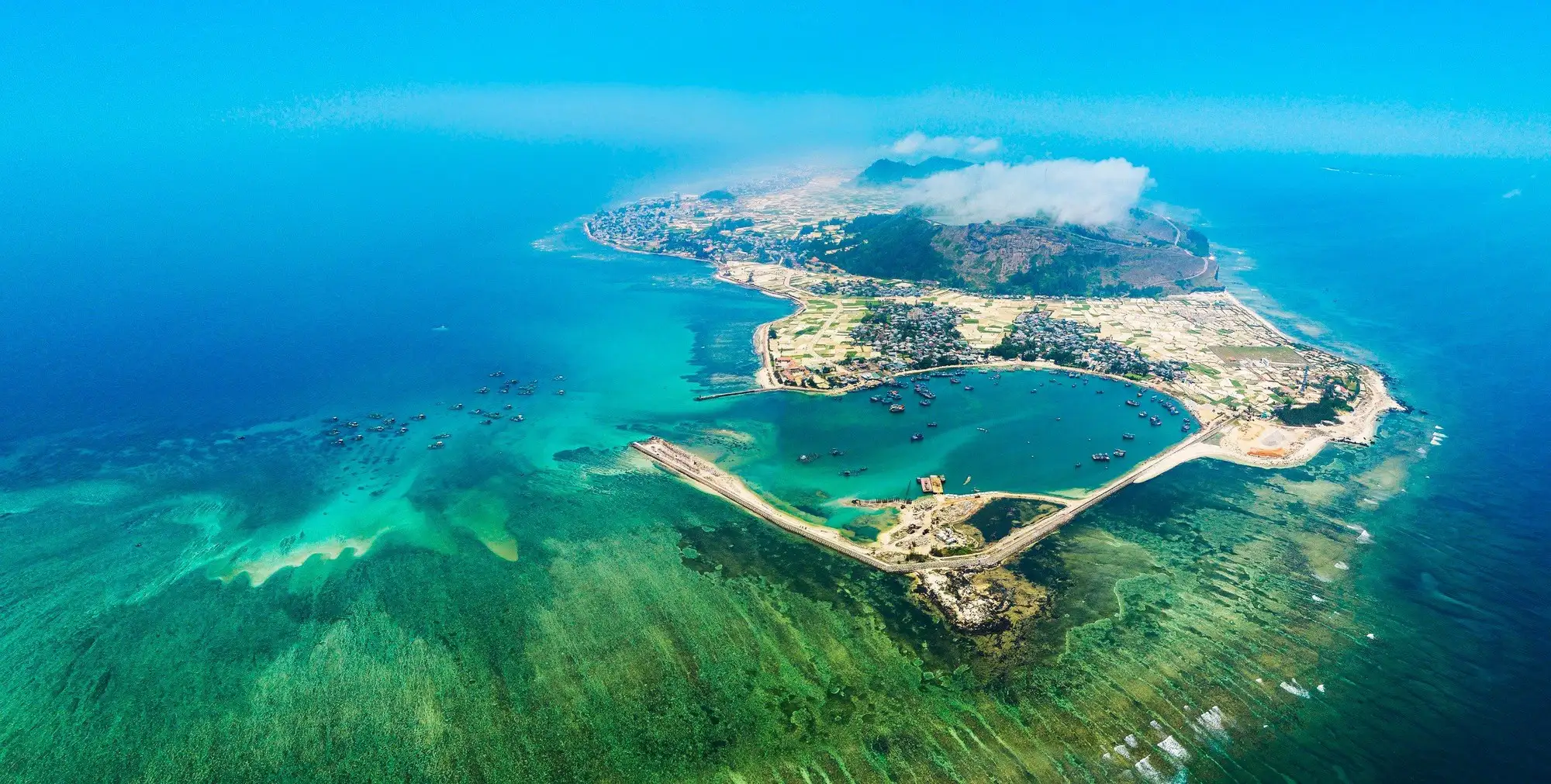


Hoi An to Phu Yen by road: 5 stops worth getting out of the car for
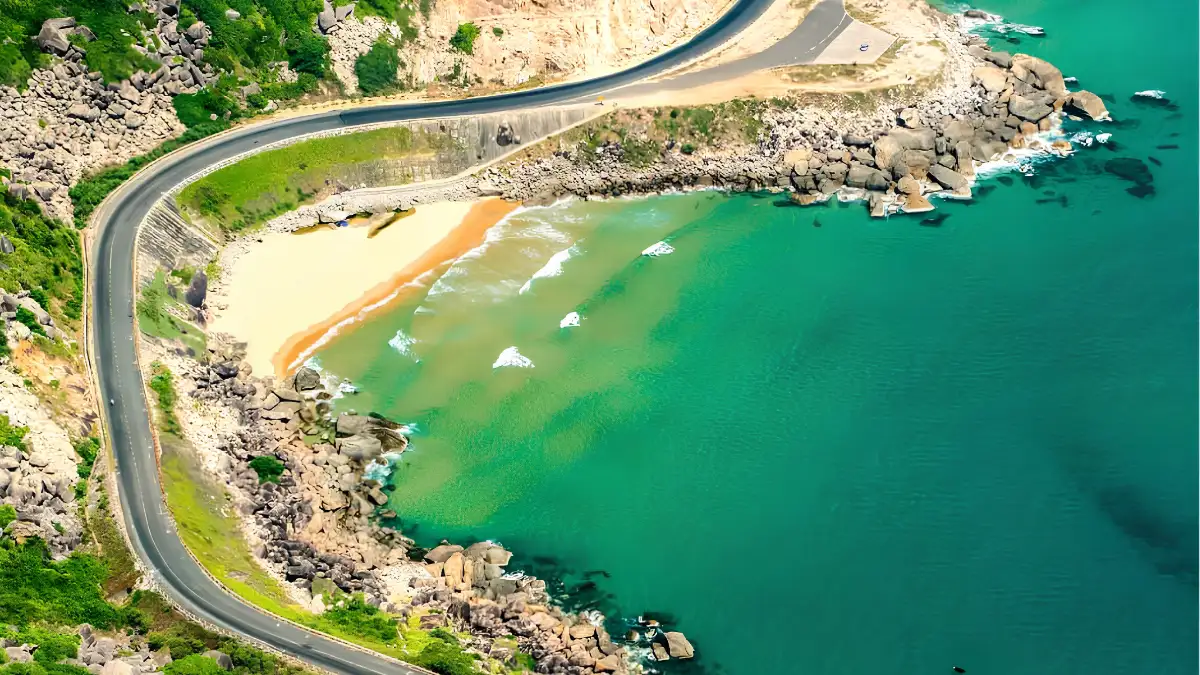
Hoi An to Phu Yen is a long road trip, but there are plenty of worthwhile stops along the way. The route passes through coastal towns, local sights and Quy Nhon, making it easy to break up the journey. This guide covers five stops that make the drive more enjoyable and manageable.
Fast information:
| Stop | Location | Why stop here |
| 1 | Tam Ky | First real break after leaving Hoi An |
| 2 | Sa Huynh | Sea views and a change of scenery |
| 3 | Quang Ngai | Local food and a change of pace |
| 4 | Quy Nhon | The main overnight stop |
| 5 | Tuy Hoa & Phu Yen | Where the real exploring begins |
Before you leave Hoi An: What to know about the route
The real distance and driving time
Hoi An and Phu Yen are roughly 380-400 km apart by road, depending on where you start and where you finish. A direct private-car journey to Tuy Hoa usually takes around 7-8 hours, while the bus takes about 7 hours on average.
The train is another option, but you first need to get to Da Nang Railway Station. Current services from Da Nang to Tuy Hoa take roughly 7-9 hours, depending on the train.
| Option | Approx. time | Typical fare | What to expect |
| Private car | 7-8 hours | From 4,300,000 VND/car | Door-to-door, with flexibility to stop |
| Bus | Around 7 hours | From 300,000 VND | Cheaper, but less flexible |
| Train from Da Nang | 7-9 hours | From 333,000 VND | More relaxed, but requires getting to Da Nang first |
If you are making several stops along the coast, it makes more sense to treat the journey as a two-day road trip rather than trying to cover everything in one long drive. You can leave Hoi An in the morning, stop at one or two places along the way, stay overnight, and continue towards Phu Yen the next day.
The exact distance and arrival time will also change with your stops. For that reason, use the figures above as a planning guide rather than expecting your map, bus operator and driver to show exactly the same number.
When should you leave Hoi An?
If your goal is to cover most of the distance on day one, an early start matters more than almost anything else. Leaving around 6:00 to 7:00 AM gives you enough daylight to stop properly in Tam Ky, Sa Huynh, and Quang Ngai before reaching Quy Nhon, rather than arriving after dark having skipped everything in between.
A later departure means you should drop a few stops from the plan rather than trying to fit all five in. A road trip with two rushed, five-minute photo stops isn’t meaningfully different from no stops at all, and it usually just means arriving in Quy Nhon exhausted and irritable instead of relaxed.
Before you go, rest well. A night at Bliss Hoi An Beach Resort & Wellness means you start the long drive fresh instead of jet-lagged.

What to prepare for a long day on the road
A journey from Hoi An to Phu Yen can take most of a day, so a little preparation makes the trip easier.
- Fill up before leaving Hoi An: This is especially useful if you are driving or taking a motorbike through less busy stretches of the route.
- Carry water, snacks and some cash: Smaller stops along the way may not accept cards or have reliable mobile payment.
- Check your vehicle before leaving: If you are driving yourself, check the tires, brakes, lights and fuel before setting off.
- Download an offline map: Mobile signals can be less reliable on some sections of the journey, particularly if you leave the main highway.
- For motorbikes, pack for changing weather: A light rain jacket, sun protection and gloves are useful on a long coastal ride.
If you would rather not drive, buses run throughout the day, with around 27 departures between approximately 8:05 AM and 11:45 PM. A private car gives you more flexibility with your departure time and stops along the way. The train is another option, with around 7 daily departures from Da Nang Railway Station to Tuy Hoa. Keep in mind that you will need to travel from Hoi An to Da Nang first before taking the train.
Stop 1: Tam Ky, the first real break after Hoi An
Tam Ky makes sense as your first stop simply because of timing: it’s far enough from Hoi An that stretching your legs actually feels necessary, but early enough in the day that you’re not yet behind schedule. The city itself is unremarkable as a destination, but two specific sights just outside it are genuinely worth the short detour.
Tam Thanh Mural Village, Vietnam’s first painted mural village, covers more than 100 houses in bright, large-scale artwork facing the sea, a strange and photogenic contrast to the quiet fishing town underneath it. A few kilometers further north on Highway 1A sits the Chien Dan Cham Towers, a cluster of three brick towers dating to the 10th and 11th centuries, built without mortar in the same tradition as the more famous towers around My Son.

Neither site demands more than 30 to 45 minutes, which is exactly the point: a short, worthwhile pause rather than a detour that eats into the rest of your day. If you’re traveling with kids or anyone prone to car sickness on winding roads, this is also a natural spot to reset before the longer coastal stretch ahead.
Read more: Hoi An to Hue: Detail travel guide for every travelers
Stop 2: Sa Huynh, where you get out to look at the sea
Sa Huynh is less a destination in its own right than a reason to pull over and actually look at the coastline you’ve been driving alongside. The beach here is known for its pale golden sand that catches the light differently depending on the hour, and the stretch of highway running past it offers some of the better sea views on the whole route north of Quy Nhon.
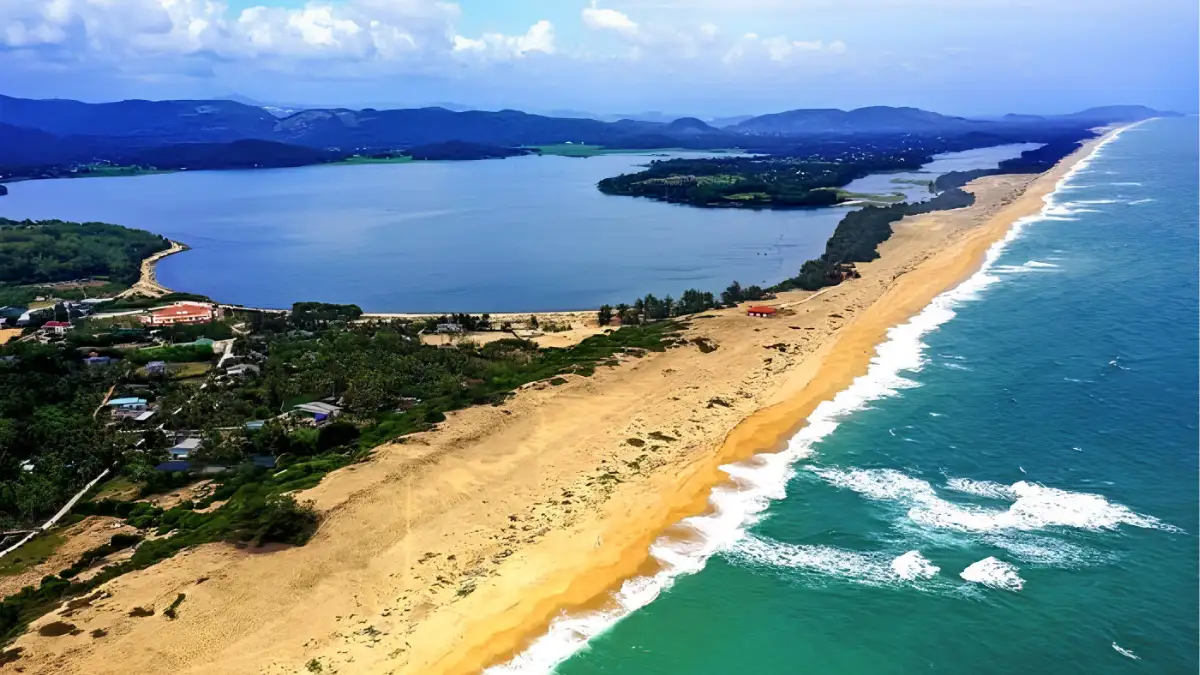
This stop works best as a short one, ten to twenty minutes to walk down to the sand, take photos, and stretch properly before getting back in the car. It sits close enough to Quang Ngai that combining the two into one longer break, rather than two separate stops, is often the more efficient choice if you’re running behind the early-start schedule described above.
Stop 3: Quang Ngai, for food and a change of pace
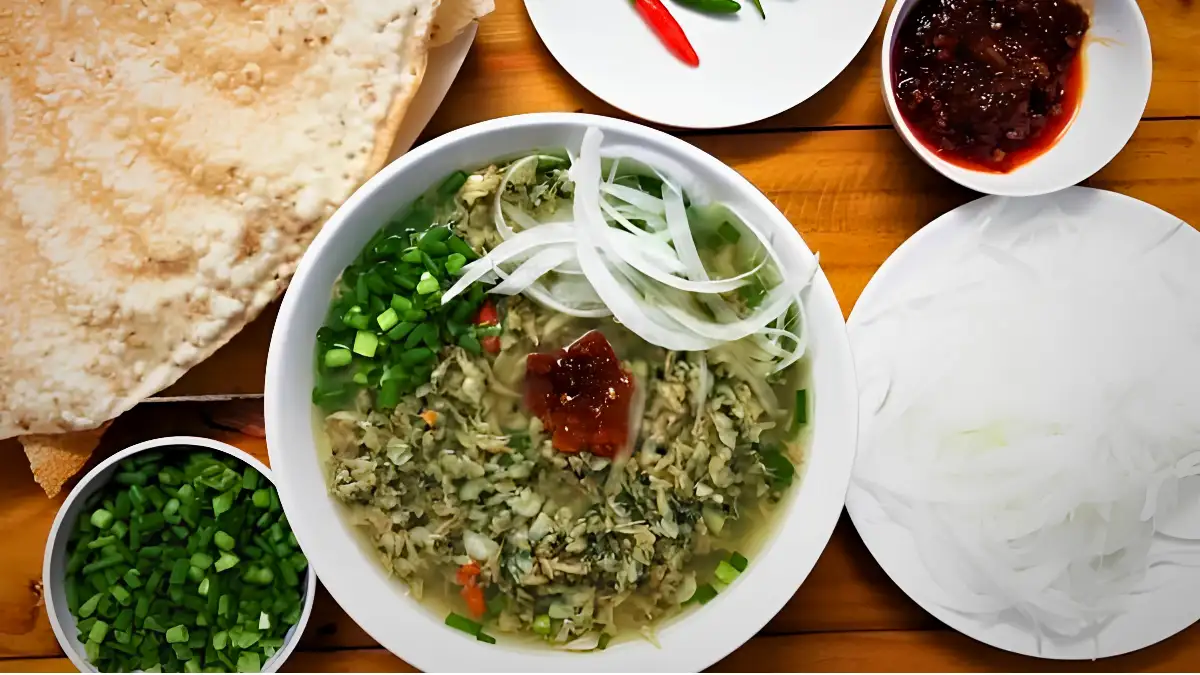
Quang Ngai city is where a proper meal break makes the most sense, roughly the midpoint of the first day’s driving. Local specialties worth seeking out include don soup, a light clam-based broth typical of the region, and various rice-paper wrapped dishes that differ noticeably from what you’ve likely eaten in Hoi An.
For travelers interested in a more sobering stop, the Son My Memorial Site, roughly 14 kilometers from central Quang Ngai, marks the site of the 1968 Son My massacre, with an entrance fee of around 15,000 VND including parking and hours from 7:00 AM to 5:00 PM (Source: VOV).
Whether you include Son My or not depends entirely on what kind of day you’re building. It’s a genuinely moving stop, but also a heavy one, and pairing it with a light lunch afterward rather than before tends to work better for most travelers’ mood on a long driving day.
Stop 4: Quy Nhon, the place to actually slow down
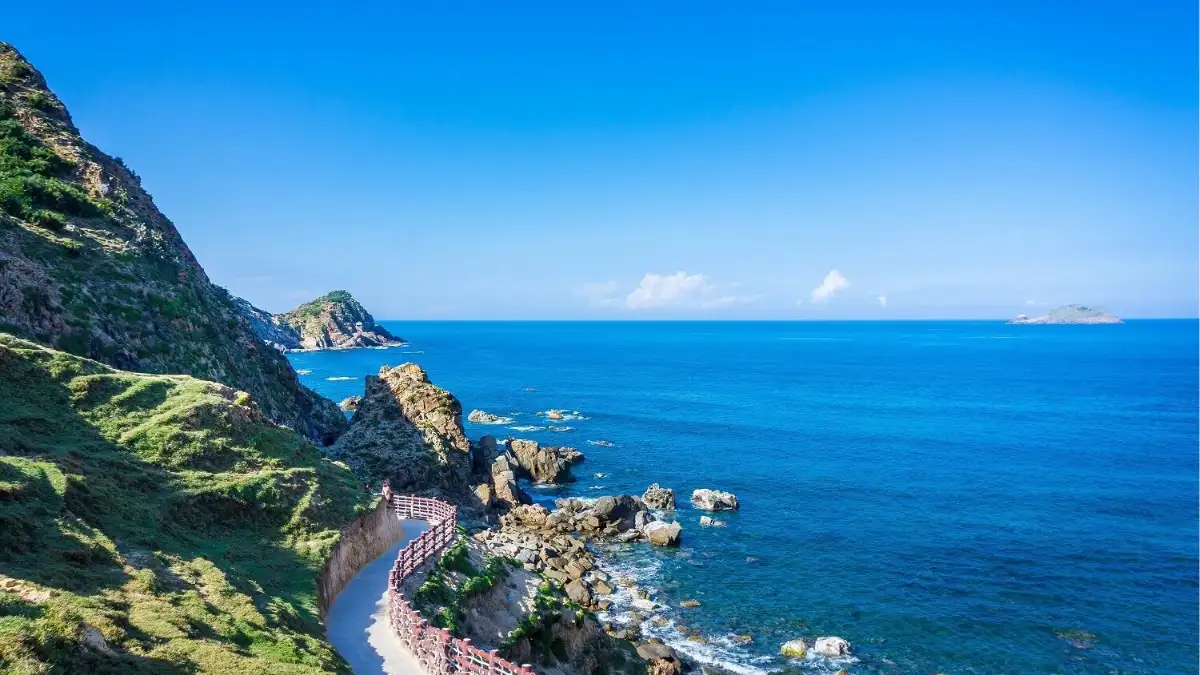
Quy Nhon is where the journey becomes less about covering kilometres and more about enjoying the destination. That makes it a better place to stay overnight than to treat it as another quick stop along the way. These are the main places to consider, depending on how much time you have:
| Place | What to see / do | Time / cost |
| Eo Gio | A horseshoe-shaped cove surrounded by cliffs; particularly popular around sunset | Increase from 22,000 VND to approximately 46,000-50,000 VND in June 2026 after a new operator takes over |
| Ghenh Rang | Visit Hoang Hau Beach and the grave of poet Han Mac Tu | Grave site: around 10,000 VND |
| Twin Towers (Thap Doi) | Two Cham brick towers dating from the 10th to 13th centuries; close to the city centre and easy to visit between the beach and dinner | Around 30 minutes; entrance: about 20,000 VND |
| Ky Co Island | A full-day trip with a round-trip canoe from Nhon Hai Pier; options for seafood and snorkelling | Canoe: around 150,000 VND/person; entrance: 60,000 VND/adult, 30,000 VND/child; combo with seafood and snorkelling: 350,000-420,000 VND |
Food is another reason to spend the night here. For a local breakfast or meal, try Gia Vy 2 at 14 Dien Hong for Quy Nhon’s famous crispy jumping-shrimp pancakes. Bun Ca Phuong Teo, with locations at 211 and 415 Nguyen Hue Street, is another option for a bowl of fish noodle soup before continuing your journey the next morning.
Staying overnight in Quy Nhon also makes the second day much easier. If you arrive in the late afternoon, you still have time for sunset at Eo Gio or a walk along Phan Boi Chau Street before dinner. The next morning, you can leave rested instead of trying to finish the whole journey in one long day.
If you are booking a private car, there is one practical detail worth checking. Some transfer services charge the same for a direct journey and for a journey that includes photo stops along the way. Ask whether stops are already included in the booking before assuming they will cost extra.
Stop 5: Tuy Hoa, the gateway to Phu Yen
Tuy Hoa marks the end of the road-trip portion of this journey and the start of actually exploring Phu Yen. The stretch from Quy Nhon to Tuy Hoa runs about 100 kilometers, roughly 2 hours by bus (fares around 80,000 VND), making it a manageable final leg after a proper night’s rest. If you’d rather explore Phu Yen at your own pace once you arrive, renting a motorbike locally runs about 100,000 to 200,000 VND per day.
Arriving in Tuy Hoa with the rest of the day still ahead of you is worth planning for specifically. Bai Xep, the low-key fishing cove made famous as a filming location for the Vietnamese film “Toi Thay Hoa Vang Tren Co Xanh,” charges a modest 20,000 VND entrance fee, and the Mui Dien lighthouse, marking the easternmost point on mainland Vietnam, costs the same 20,000 VND per visit (Source: vietnam.vn).
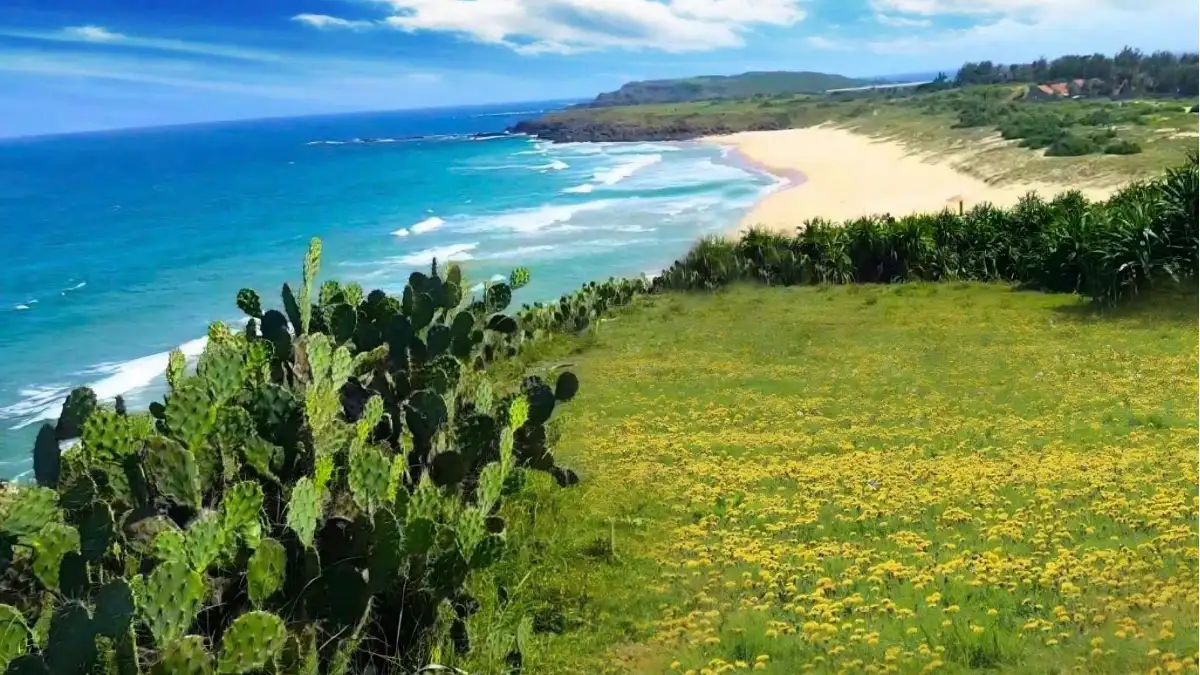
Further along the coast, Ghenh Da Dia’s stacked basalt columns are another 20,000 VND stop, while a seafood raft trip out on Vung Ro Bay runs around 800,000 VND for a group of six.
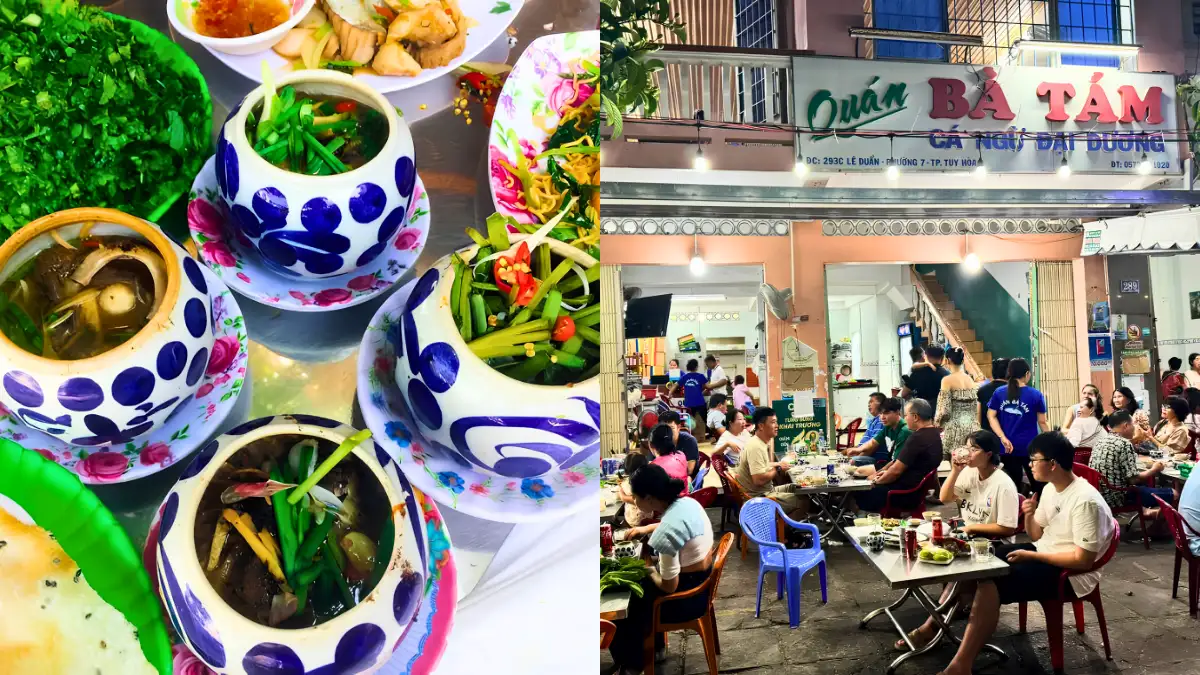
For dinner, Com Ga Tuyet Nhung at 189 Le Thanh Ton Street is a well-known local spot for Phu Yen-style chicken rice, and if you’re curious about the region’s famous tuna eye soup, Quan Ba Tam at 289 Le Duan Street is where locals send visitors first. This is also where a coastal road trip like this one tends to earn its reputation: the province gets a fraction of the visitor numbers that Hoi An or Da Nang see, and the payoff for the extra driving is a noticeably quieter stretch of coastline once you arrive.
Read more: Is the trip from Hoi An to Ly Son Island actually worth it?
Turning the 5 stops into a 2-day itinerary
Day 1: Hoi An → Tam Ky → Sa Huynh → Quang Ngai → Quy Nhon
Leave Hoi An around 6:00-7:00 AM so you have enough time for the stops along the way. Make a short stop in Tam Ky to visit the mural village or Cham towers, then continue to Sa Huynh for a quick break by the beach. From there, head to Quang Ngai for lunch and, if you have time, visit the Son My Memorial before continuing to Quy Nhon. You should arrive in the late afternoon, leaving some daylight for a walk along the coast before dinner.
Day 2: Quy Nhon → Tuy Hoa → Phu Yen
Spend the morning in Quy Nhon before checking out. You could visit Eo Gio around sunrise or simply have a slower breakfast and enjoy the city before leaving. The drive to Tuy Hoa is much shorter at around 100 km, so arriving in the early afternoon gives you the rest of the day to start exploring Phu Yen.
Real advice for driving Hoi An to Phu Yen
- Don’t rush the journey: Don’t push through in one go just because a map app shows a shorter total time than the two-day version described here. A car can comfortably cover the distance to Quy Nhon in one day, even with all three morning stops.
- Take a slower pace on a motorbike: This is especially important for inexperienced riders. If you start feeling tired, stop earlier rather than trying to stick to the original plan.
- Choose stops based on your energy levels: You don’t need to hit a fixed number of stops. Three unhurried stops are better than five rushed ones.
- Avoid arriving in Phu Yen very late at night: Tuy Hoa isn’t a large city, and finding a meal after a long drive is easier before things close for the evening.
If two full days of driving sounds like more than you want to take on, read our guide on traveling from Quy Nhon to Hoi An. It compares bus, train and private car options for a more direct journey between the two cities, without the multi-stop road trip.
Where to recover before or after the drive
A trip like this is easier to enjoy with a comfortable base on either end of it. Bliss Hoi An Beach Resort & Wellness, on Binh Minh Beach, is a good place to rest the night before a long driving day or unwind afterward, with the oceanfront infinity pool and Ngoc Linh Spa offering an easy way to slow down after hours on a motorbike or in a car seat.

That slower pace is also what some guests remember most. One group from New Zealand described spending their time having breakfast together, relaxing by the pool and enjoying the sunshine and beach, calling their stay “such a special moment” they would remember.
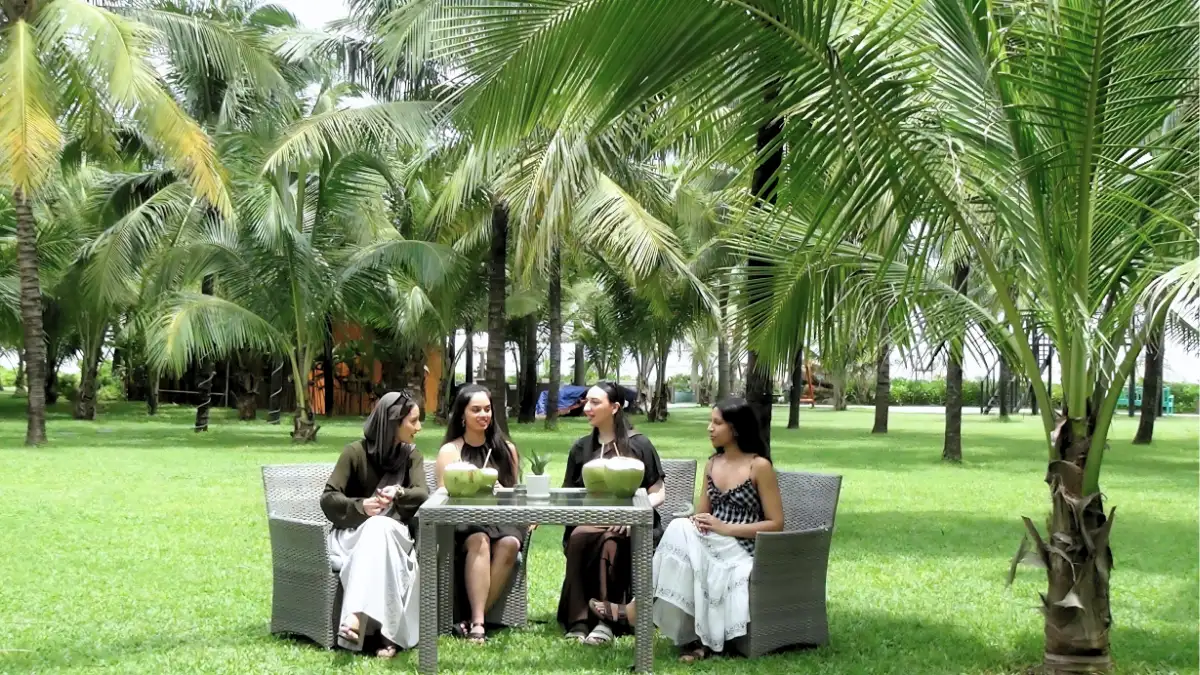
Planning this route as part of a longer Central Vietnam trip? Book your stay at Bliss Hoi An Beach Resort & Wellness before or after the drive, so you can start or end the journey somewhere genuinely restful. For a lighter activity before setting off, the Hoi An city tour offers an easy half-day walk through the Ancient Town without adding long transfers to your itinerary.
FAQs
How many kilometers is it from Hoi An to Phu Yen?
Around 300-308 km straight-line, but roughly 378-390 km by private car and up to 451 km by bus, depending on the route.
How long does it take to drive from Hoi An to Phu Yen?
Around 7 hours by private car and 5.5-7.25 hours by bus. Allow two days if you want a more relaxed journey.
Where should you stop between Hoi An and Phu Yen?
Good stops include Tam Ky, Sa Huynh and Quang Ngai, with Quy Nhon as the main overnight stop.
Should you stay overnight in Quy Nhon?
For most travelers, yes. It breaks the journey into two manageable days and gives you time to see Quy Nhon.
Can you drive from Hoi An to Phu Yen in one day?
Yes, by car with an early start and few stops. With a motorbike or several stops, two days is more practical.

Related Posts

8+ experiences in Tet Lunar New Year Hoi An worth trying

Hoi An to Quy Nhon: How to get there, routes and what to know
TEST – n8n CREATE 002

Gym Hoi An: Prices, Day Passes and Options for Travelers

Grang Waterfall from Hoi An: How to Get There and What to Expect