

Phuoc Thien Fishing Village: A quiet glimpse of coastal life in Vietnam
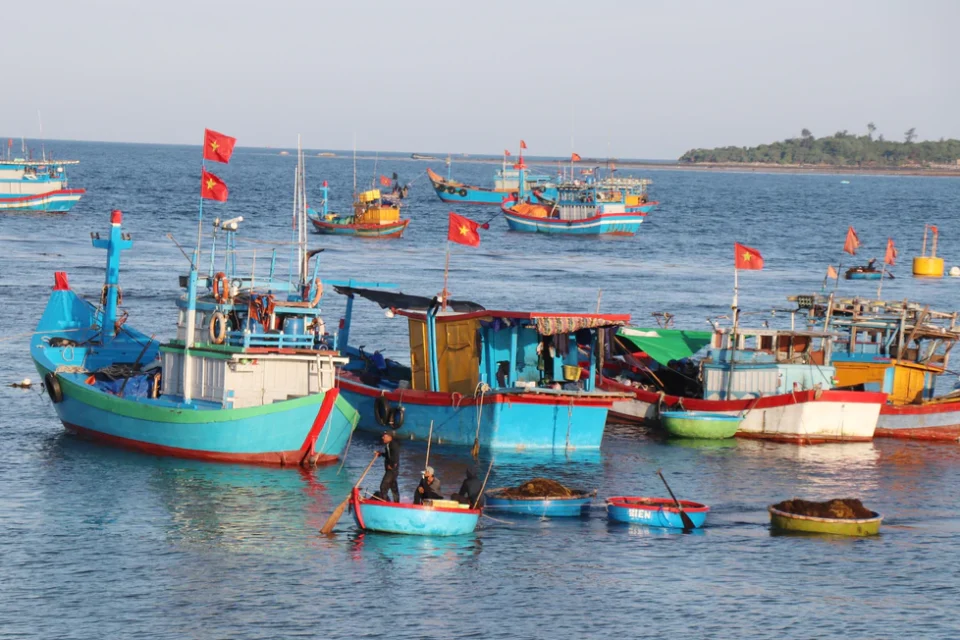
Phuoc Thien is a fishing village on the coast of Quang Ngai province in central Vietnam. It’s a “working” village, which means fishing is how the people there actually make their living, not something staged for visitors. Every morning, boats come back from the sea loaded with fresh fish and squid, and the beach turns into an open-air market for an hour or two. There’s no ticket booth, no gift shop, and no set photo spot. What you see is simply what the village does every day.
Phuoc Thien Fishing Village before the tourists arrive
The busiest time of day at Phuoc Thien has nothing to do with visitors. It happens before sunrise, when the fishing boats start coming back from the sea. By the time the sky turns pink, the beach is full of activity: men carrying baskets of fish off the boats, women wading into the shallow water to meet them, and round bamboo boats moving the catch from the larger vessels to the shore.
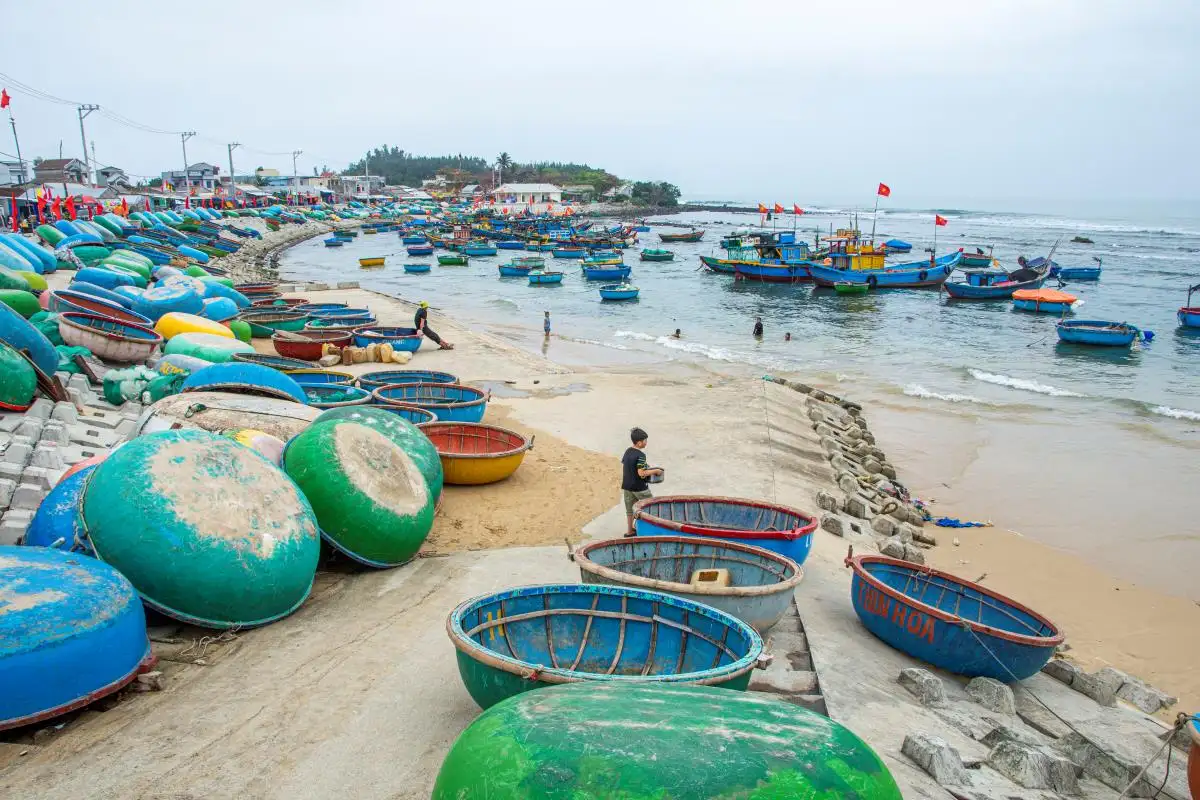
Those round boats are called basket boats. They look a bit like large woven baskets, and fishermen use them because Phuoc Thien has no proper dock or pier for big boats to pull up to directly. So instead, the catch gets transferred to these smaller, lighter boats that can move easily through shallow water. It’s a simple solution, but paddling one well takes real skill, learned over years, not something a visitor could casually pick up. Once ashore, squid gets sorted right there on the sand, and prices are settled on the spot between fishermen and buyers.
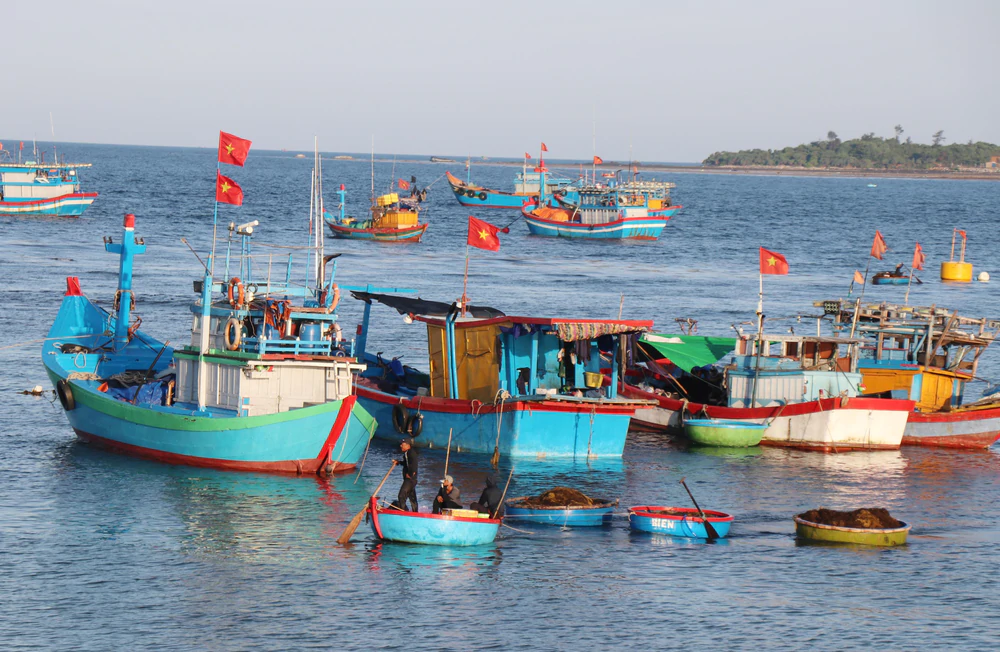
Timing changes everything here. Arrive after 8 or 9 AM and most of this activity is already over: the boats are tied up, the beach is quiet, and it looks like any ordinary stretch of sand. If you arrive before 6 AM, and you’re watching a small fishing economy in motion. That difference in timing is the whole reason people who know this coast recommend Phuoc Thien over busier, more polished spots nearby.
Phuoc Thien Fishing Village at low tide
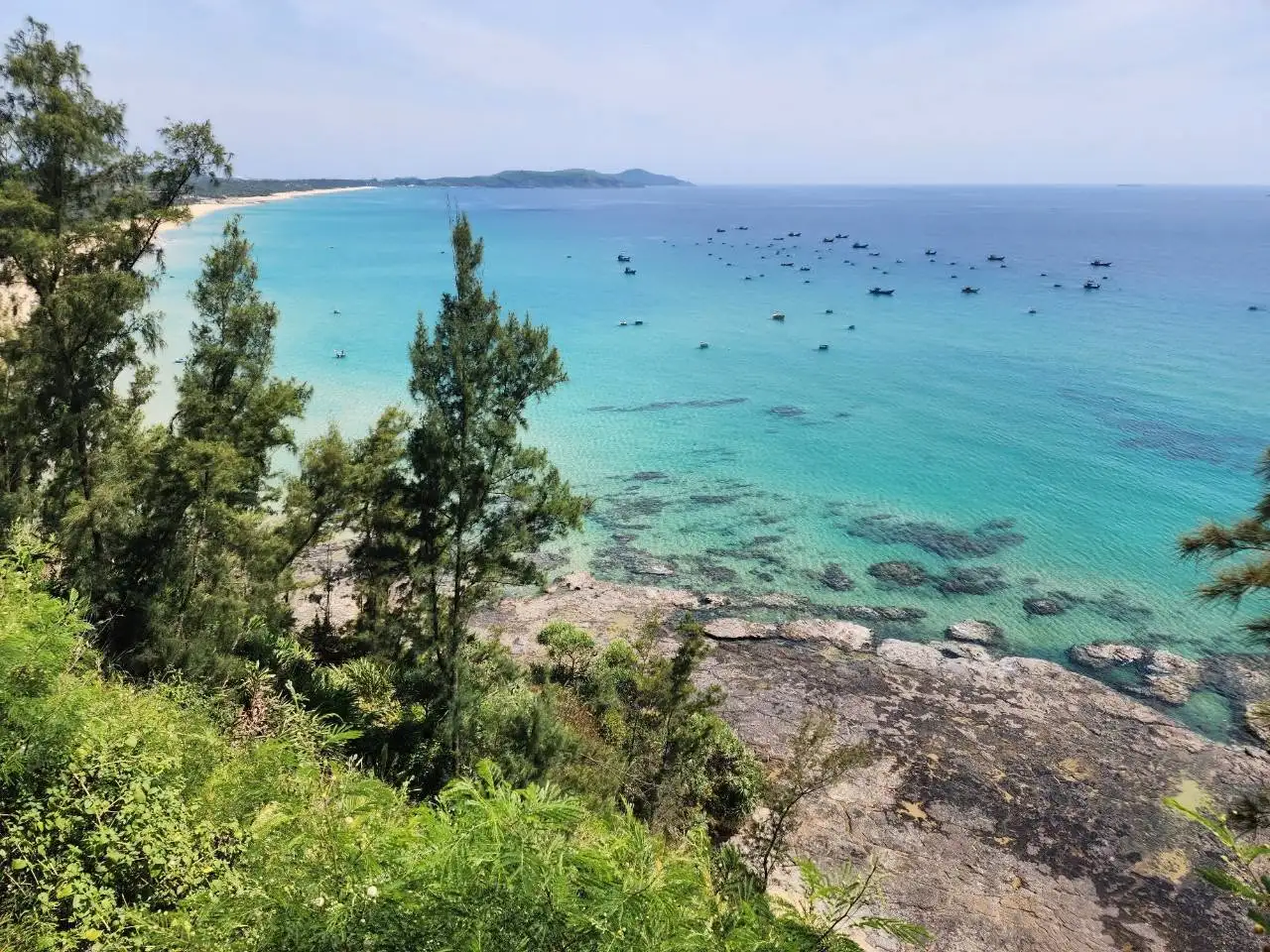
The sea level along this coast rises and falls twice a day, a natural cycle called the tide. At low tide, when the water pulls back the furthest, Phuoc Thien’s shoreline changes almost completely. Rocks that are fully underwater a few hours earlier are suddenly exposed, covered in seaweed, with small pools of seawater trapped between them. Tiny crabs move around the rocks, and starfish turn up in the pools often enough that local people barely notice them, though there’s no guarantee you’ll spot one on any single visit.
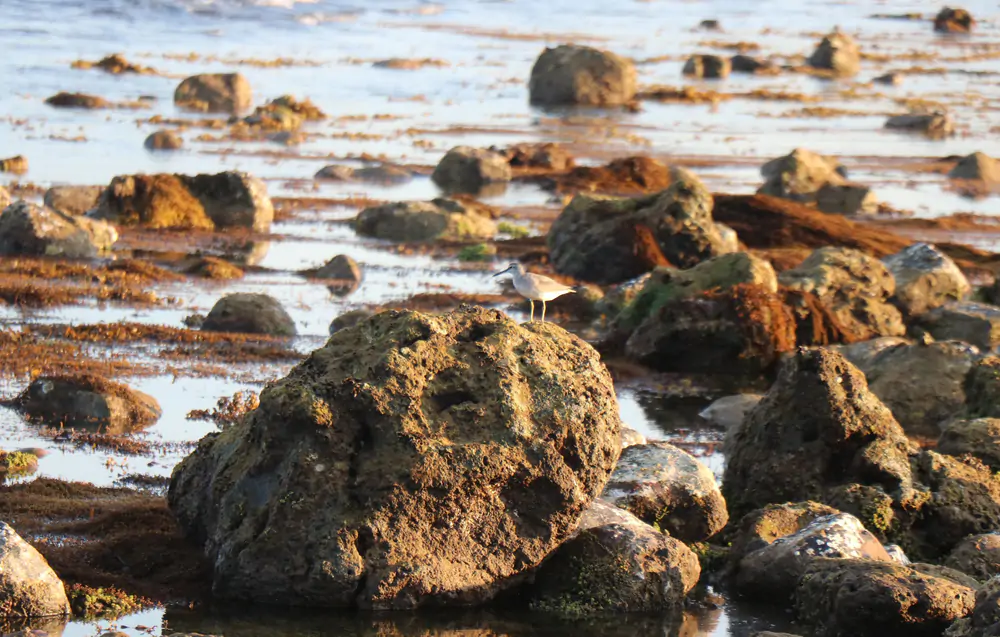
This is a slower, quieter side of the village than the busy morning market on the beach. Instead of watching boats come in, you’re crouching down to look into a rock pool. For photos, this is actually the most interesting time to visit: wet rock, seaweed, and shallow water create textures that flat, dry sand never does. One safety note worth taking seriously: the exposed rocks are slippery. A thin layer of algae covers many of them, and it’s often not obvious until you’re already standing on it. Wear closed shoes or sturdy sandals here, more than you’d need almost anywhere else on a typical day trip from Hoi An.
Planning a low-tide visit? Phuoc Thien’s shoreline looks very different depending on the tide, and tide times shift by roughly 30 to 60 minutes every day. Check tide conditions for your specific travel date rather than assuming a fixed hour will work. A morning that’s great for watching the fishing boats isn’t automatically a good time for the rock pools, since the two don’t always line up.
Read more: Wood Art Vietnam Workshop: What to Expect From the 3-Hour Wood Carving Class
More than fishing boats: The local life of Phuoc Thien
Take away the boats and the tide pools, and what’s left at Phuoc Thien is a community whose whole daily rhythm is set by the sea. Fishing isn’t a seasonal show here, it’s how families earn a living. Part of each morning’s catch is sold right on the beach, some is kept for the family’s own meals, and the rest moves through small local trading networks that carry fresh seafood further inland by midday.
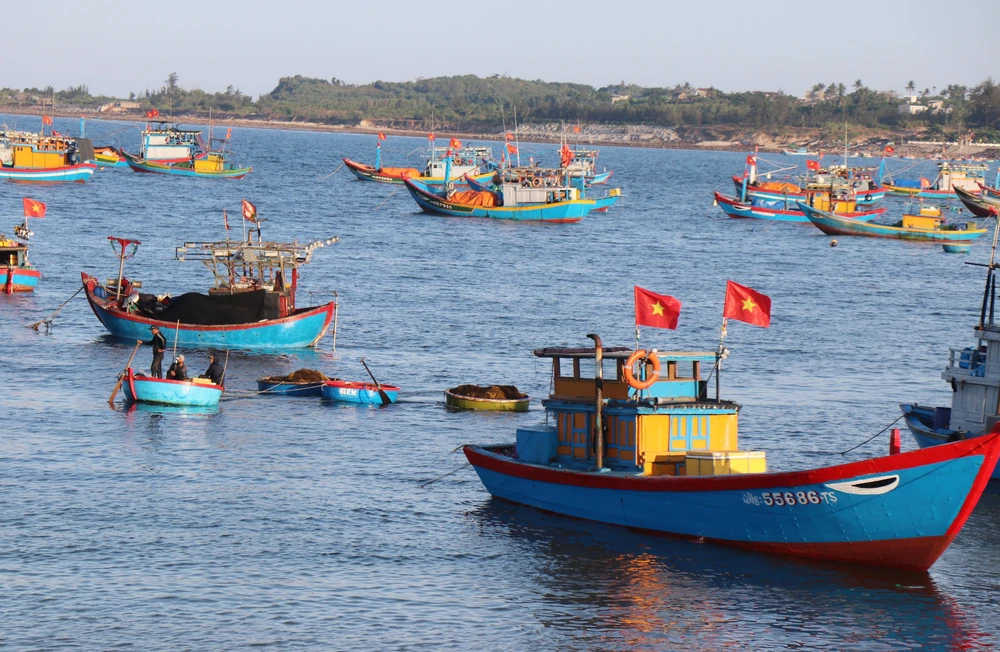
In the afternoons, you’ll often see people mending fishing nets in the shade or doing basic maintenance on their boats. None of it happens for an audience, which is exactly what makes it worth watching.
That close bond between the village and the sea shows up in how the community marks the new year too. In Van Tuong commune, where Phuoc Thien sits, local fishermen hold a traditional boat race during Tet, Vietnam’s Lunar New Year holiday, usually within the first few days of the new year.
According to the official newspaper of Vietnam’s Ministry of Culture, Sport and Tourism, the race is seen less as a sporting contest and more as a ritual, a way of asking for a safe, successful fishing season ahead. One of the fishermen who took part told the paper that winning matters less than the shared feeling of starting the new season together, with confidence for the months of fishing still to come. The same report notes that this boat race has been passed down through generations as a defining part of local culture.

You won’t see this race on an ordinary visit, unless your trip happens to fall during Tet. But it’s worth knowing about, because it shows that a place this small and quiet still carries real meaning for the people who live there, well beyond what shows up in a quick photo of boats on the sand.
Visiting Phuoc Thien Fishing Village: What to expect
| Expect | Why it matters |
| A working fishing community | You’re watching real daily life, not something put on for visitors |
| Very little tourism infrastructure | Plan your own visit; don’t expect signs, guides, or facilities |
| Activities that depend on the weather | Rough seas can shorten or change the morning fishing routine |
| A coastline that depends on the tide | The rock pools are only worth visiting at certain tide levels |
| Local working areas | Boats, nets, and trading spots are people’s livelihoods, so keep a respectful distance |
| A simple, undeveloped setting | This isn’t a conventional attraction with an entrance or gift shop |
What to Bring
- Comfortable, closed shoes (the rocks get slippery, especially at low tide)
- Sun protection, like a hat and sunscreen, since there’s little shade along the shore
- Drinking water, as there are no shops nearby
- Cash, in case you want to buy seafood straight from the boats
- A camera, ideally one that handles low early-morning light well
The best time to visit Phuoc Thien Fishing Village
There’s no single “best time” that covers everything at Phuoc Thien, it depends on what you want to see. If watching the fishing boats matters most to you, plan around the early morning. If the rock pools matter more, plan around the tide instead. Most visitors end up choosing one of the two as their main reason for the trip.
| What you want to see | When to plan |
| Fishing boats coming back to shore | Early morning, before around 7 AM |
| Seafood being unloaded and sold | Same early morning window as the boats |
| The low-tide shoreline and rock pools | Depends on the tide for your date, not a fixed time |
| Good photos | Early morning for the boats, low tide for the rocks; the two don’t always match up |
| General coastal scenery | Best on clear, calm mornings |
Read more: Tam Thanh Mural Village: Vietnam’s First Mural Village Near Hoi An
Getting to Phuoc Thien Fishing Village from Hoi An
A private car is the easiest way to cover this distance, especially with an early start. A self-drive motorbike is possible if you’re an experienced rider, but a 90 km ride each way on National Highway 1, on top of a very early wake-up, adds real fatigue and isn’t something to take on lightly. There’s no regular tourist bus that runs this route, so this is an independent trip by nature, not something you’ll find bolted onto a typical group tour. Check your route on Google Maps closer to your travel date, since road conditions can change.
Travelers staying in Hoi An can treat Phuoc Thien as a full coastal day out, without needing to change hotels, as long as the travel time is planned for from the start rather than added on as an afterthought.
From Bliss Hoi An to Phuoc Thien: A coastal day trip without changing hotels
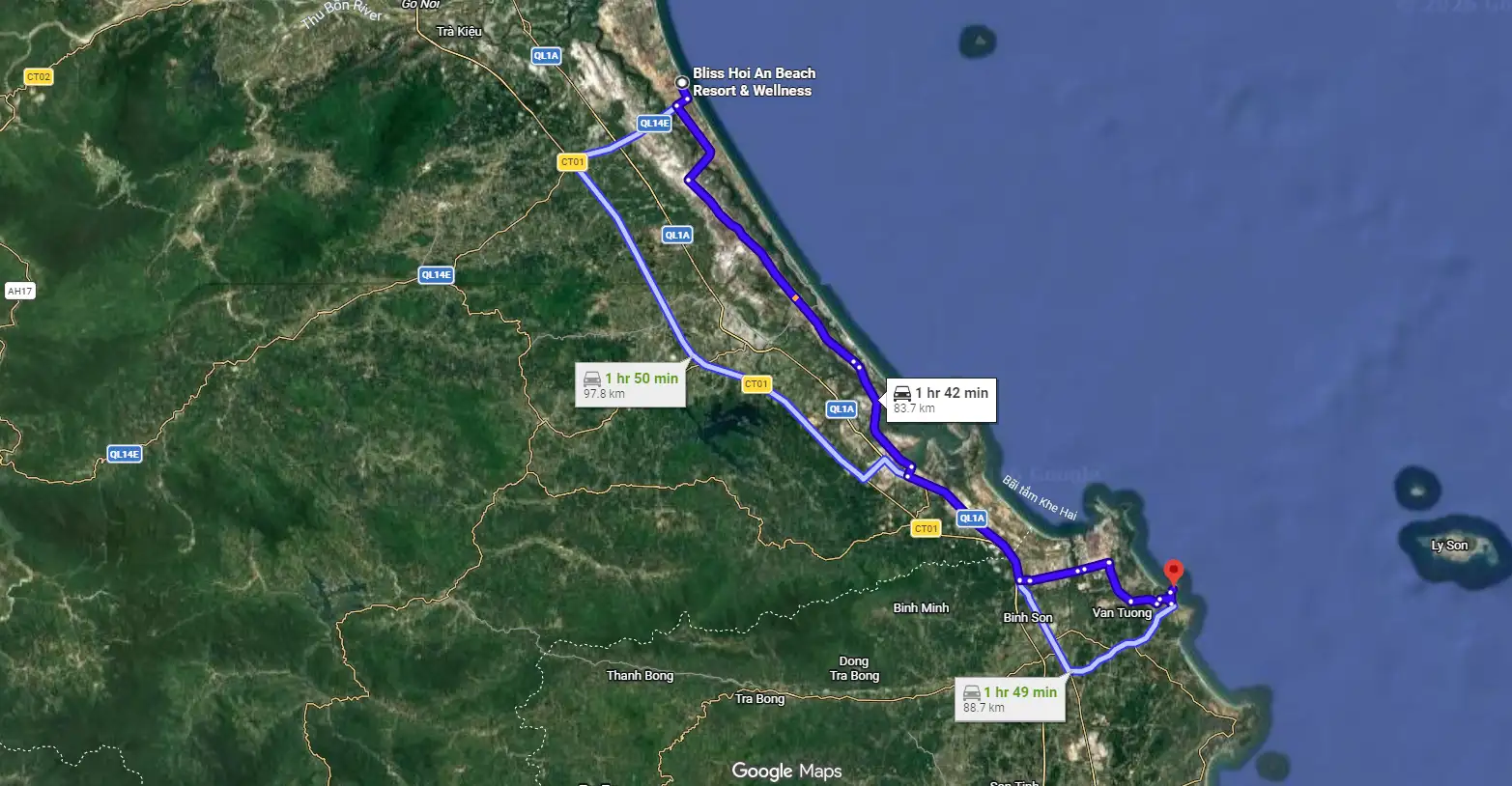
Phuoc Thien Fishing Village is about 90 km, roughly 2 by car, from Bliss Hoi An Beach Resort & Wellness. That’s a genuinely early start and a full day of travel, not a quick side trip, which is exactly why where you’re staying for the rest of your visit matters.
Bliss Hoi An already sits right on Binh Minh Beach, a quiet stretch of the same coastline that Phuoc Thien is part of, just much closer to Hoi An. That makes the resort less of a simple “place to sleep” for this particular trip, and more of a coastal base that fits the whole idea behind it: fishing villages, tide pools, working beaches, and quiet mornings by the sea, whether that’s a 90 km drive to Phuoc Thien or a five-minute walk along the sand right outside the resort on any other day of your stay.
At Bliss Hoi An, that slower pace is part of the experience. One returning guest, who had stayed at several hotels during a previous four-week trip to Vietnam, said he came back because he particularly enjoyed the peaceful atmosphere. His favourite moments were the mornings by the beach, where he could simply spend time with local people.

By the time you’re back, you’ve usually done enough walking and soaking for one day. This is where staying somewhere with its own pool and quiet grounds makes a real difference. At Bliss Hoi An, guests often go straight from a day like this to the pool or an evening treatment at the Ngoc Linh Spa instead of heading back out into town.
One guest travelling with his Vietnamese wife described the accommodation as “amazing” and said they were enjoying the food and their stay. Although he was actually in Vietnam for work rather than a traditional holiday, he found Bliss Hoi An a comfortable place to travel and relax at the same time.
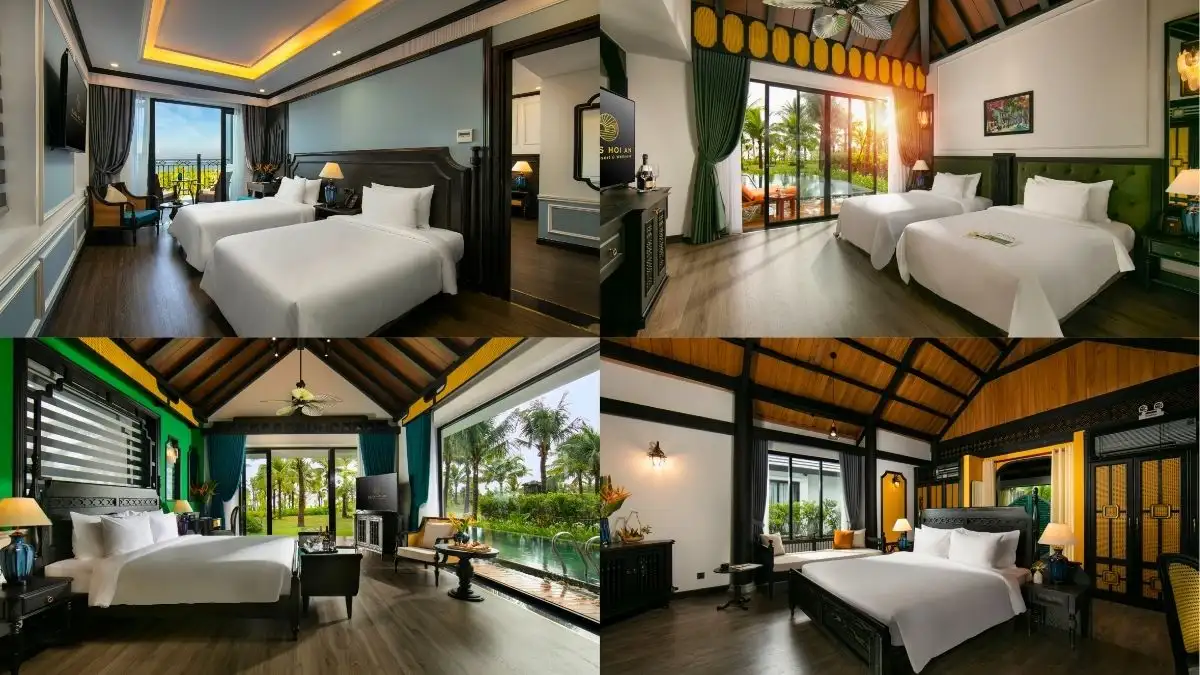
Book your stay at Bliss Hoi An Beach Resort & Wellness so the pool, breakfast, and a quiet room by the beach are already waiting when you get back from the mountains.
A full-day Phuoc Thien Fishing Village itinerary from Hoi An
- Early morning: Leave Hoi An or Bliss Hoi An by 4:30 to 5:00 AM to reach Phuoc Thien in time for the boats coming in around sunrise. This is genuinely early, but it’s the trade-off for seeing the village at its most active.
- Morning: Watch the fishing boats return, the basket boats carry the catch to shore, and the seafood trading that follows on the beach. This is the heart of the visit.
- Low tide, if conditions allow: Walk out onto the exposed rocky shoreline and look through the tide pools, watching your footing on the wet rocks.
- Late morning: Stop for a simple seafood meal nearby, or break up the drive back with a stop along the Quang Ngai or Quang Nam coast, since the return trip covers the same distance as the way out.
- Afternoon: Head back to Bliss Hoi An, a fair way to end a long day of travel.
Phuoc Thien Fishing Village FAQs
Where is Phuoc Thien Fishing Village?
It’s on the coast of Quang Ngai province, in Van Tuong commune (an area that used to be called Binh Hai, Binh Son district), south of Hoi An and Da Nang.
How far is Phuoc Thien Fishing Village from Hoi An?
About 90 km, roughly 2 hours by car. That’s further than most Hoi An day trips, so it’s better planned as a full day rather than a half day.
What is the best time to visit Phuoc Thien Fishing Village?
Early morning, ideally before 7 AM, if you want to see the fishing boats and the seafood trading. If the low-tide rock pools are your main interest, check tide times for your travel date instead of picking a fixed hour.
Can I visit Phuoc Thien Fishing Village at low tide?
Yes, and it’s arguably the most memorable part of the village: exposed rocks, seaweed, and shallow pools that sometimes hold starfish and other small sea creatures. The rocks can be slippery, so wear proper footwear.
What can I see at Phuoc Thien Fishing Village?
Working fishing boats, bamboo basket boats carrying the catch ashore, seafood being sold on the beach, and, at low tide, a rocky shoreline with pools and marine life.
Can I visit the fishing village independently?
Yes. There’s no ticket or organized tour needed. Most visitors arrive by private car or motorbike and walk around on their own, keeping in mind this is a real working village and not a built attraction.

Related Posts
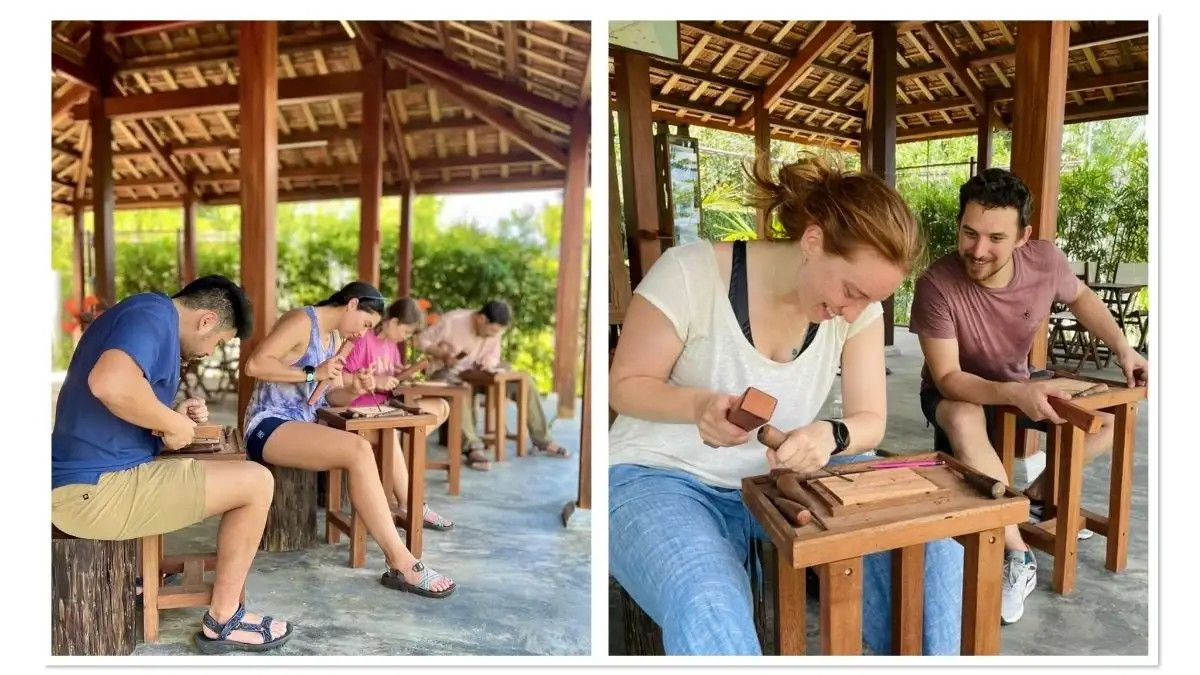
Wood Art Vietnam Workshop: What to Expect From the 3-Hour Wood Carving Class

Can You Take a Vietnam Sleeper Train Directly to Hoi An?

Where can you get Hoi An ATM Cash and how much can you withdraw?
TEST – n8n WordPress Automation
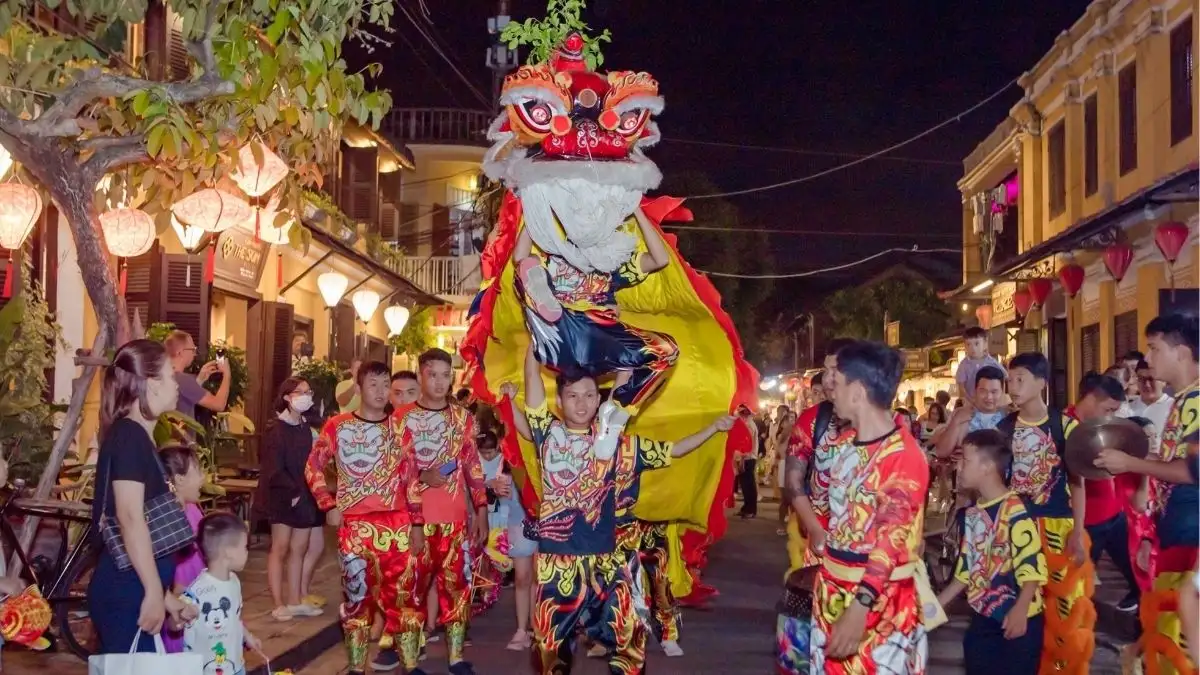
Hoi An Mid Autumn Festival 2026: 5 Things That Make It Different