

Wedding menu at Bliss Hoi An: How many dishes and which style is right?
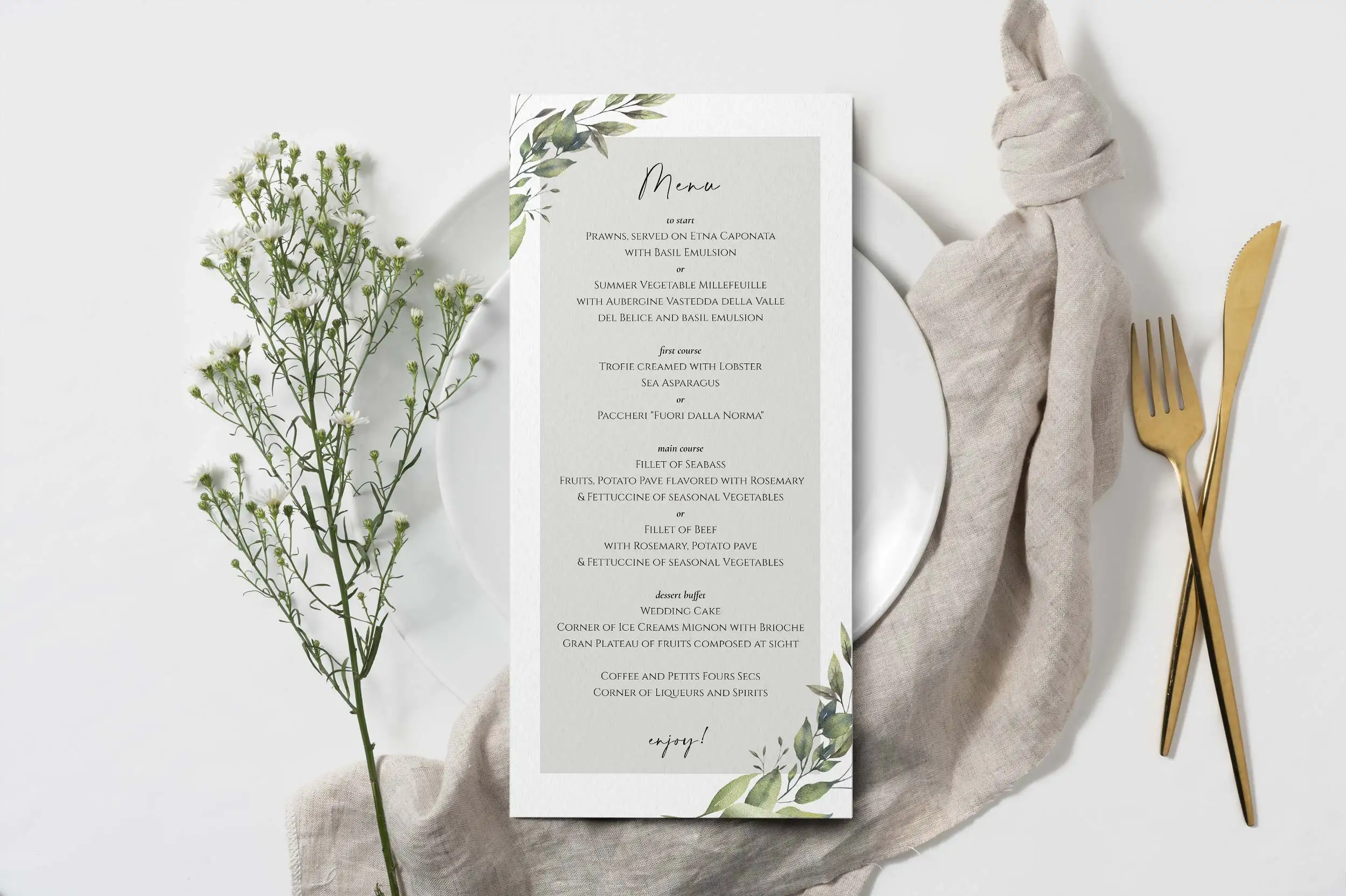
A full wedding menu typically needs around 10-12 dishes, drawn from several distinct flavor groups, and the right menu style Vietnamese, Western, Asian, or Korean. It should be chosen based on who is attending, not simply personal taste. This guide walks through how to build that it using the real dishes available at Bliss Hoi An Beach Resort & Wellness, so couples end up with a menu for wedding that is both generous and true to their story.
How many dishes should a wedding menu have?
10-12 dishes is the standard for a wedding banquet menu- not the 3-4 courses typical of an everyday restaurant set. A complete wedding menus should include:
- Cold starters (1-2 dishes): rolls, tossed salads
- Hot starters (1 dish): a crispy fried dish
- Soup (1 dish): to soften the palate between richer courses
- Seafood (1-2 dishes): the centerpiece of any beachfront wedding menu
- Meat or poultry (1-2 dishes): the anchor dish, easy to enjoy across all ages
- Stir-fried vegetables (1 dish): to balance the overall nutrition
- Starch (1 dish): rice, noodles, or a regional specialty
- Dessert (1-2 dishes): to close the menu on a light, sweet note
Miss one of these groups and the wedding menu can feel incomplete, even if every individual dish is delicious. At Bliss Hoi An, each course of the wedding menu is drawn from a different “kitchen corner”- Vietnamese, Western, Asian, Korean, local seafood specialties, and desserts- rather than being locked into one fixed set. This modular approach lets the resort tailor the wedding menu to each couple’s specific request instead of forcing every wedding into the same mold.
For a broader look at overall wedding budgeting in Vietnam, including how catering and wedding menu costs typically factor in, see how much a wedding costs in Vietnam, which breaks down the main cost drivers by season and guest count.
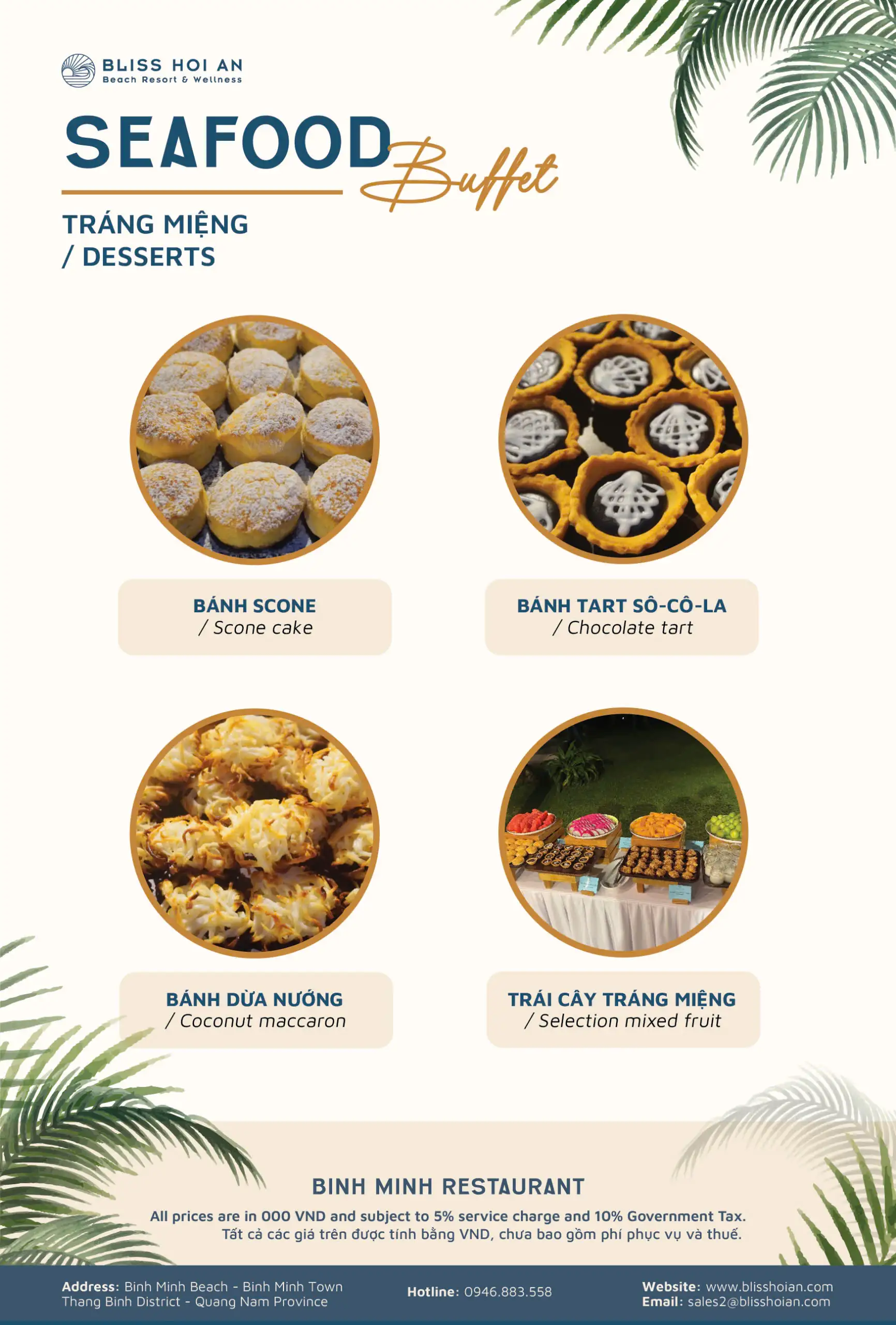
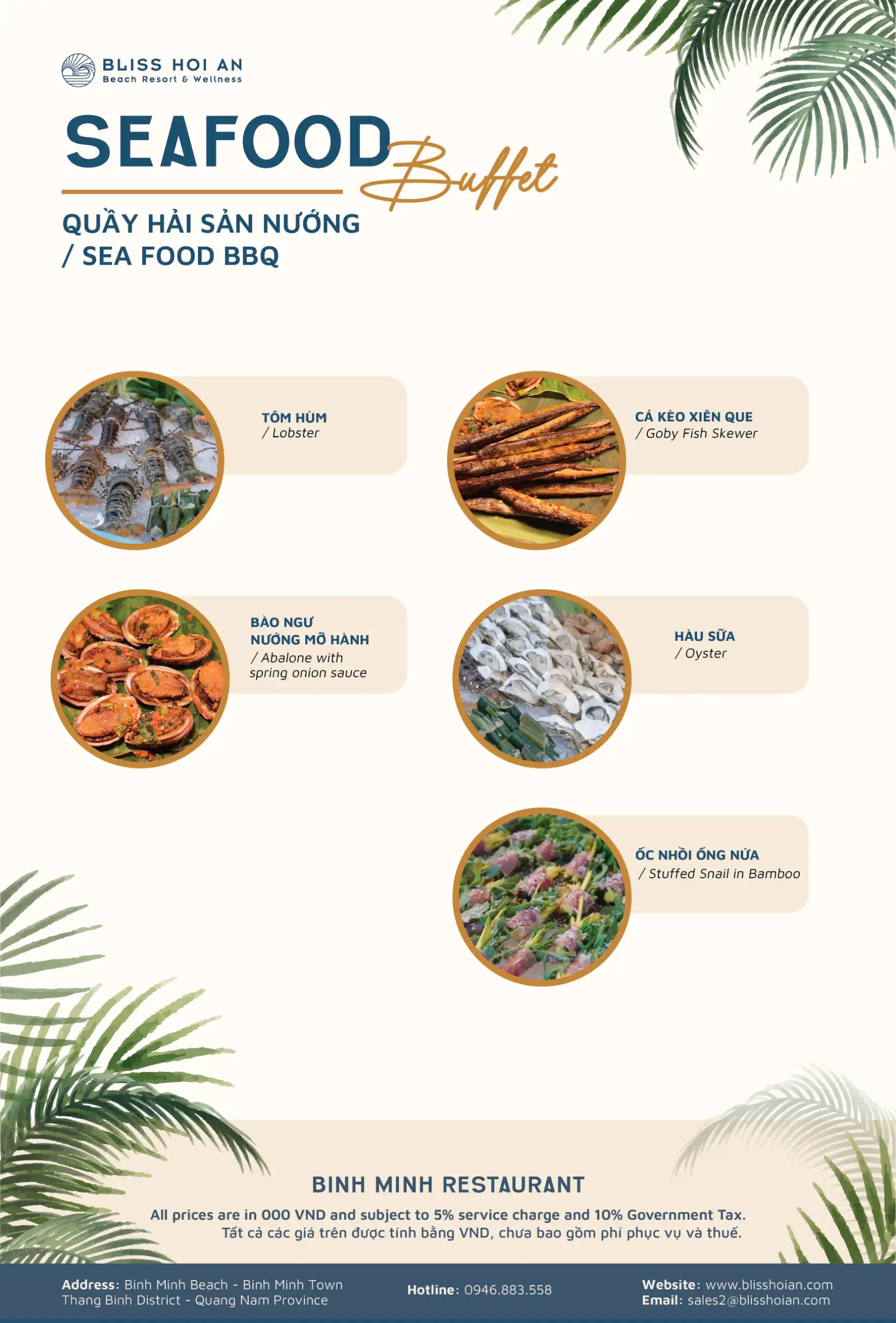
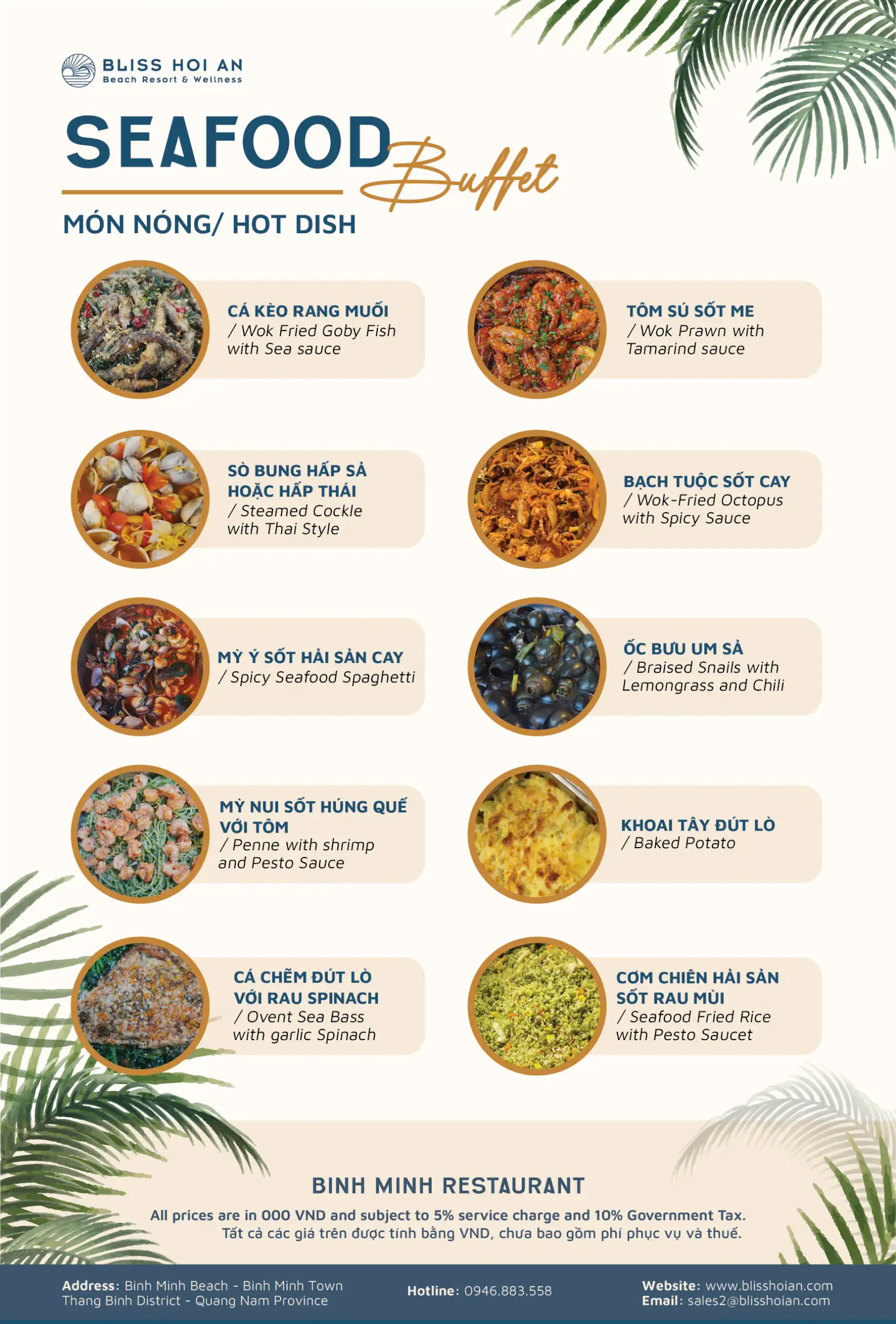
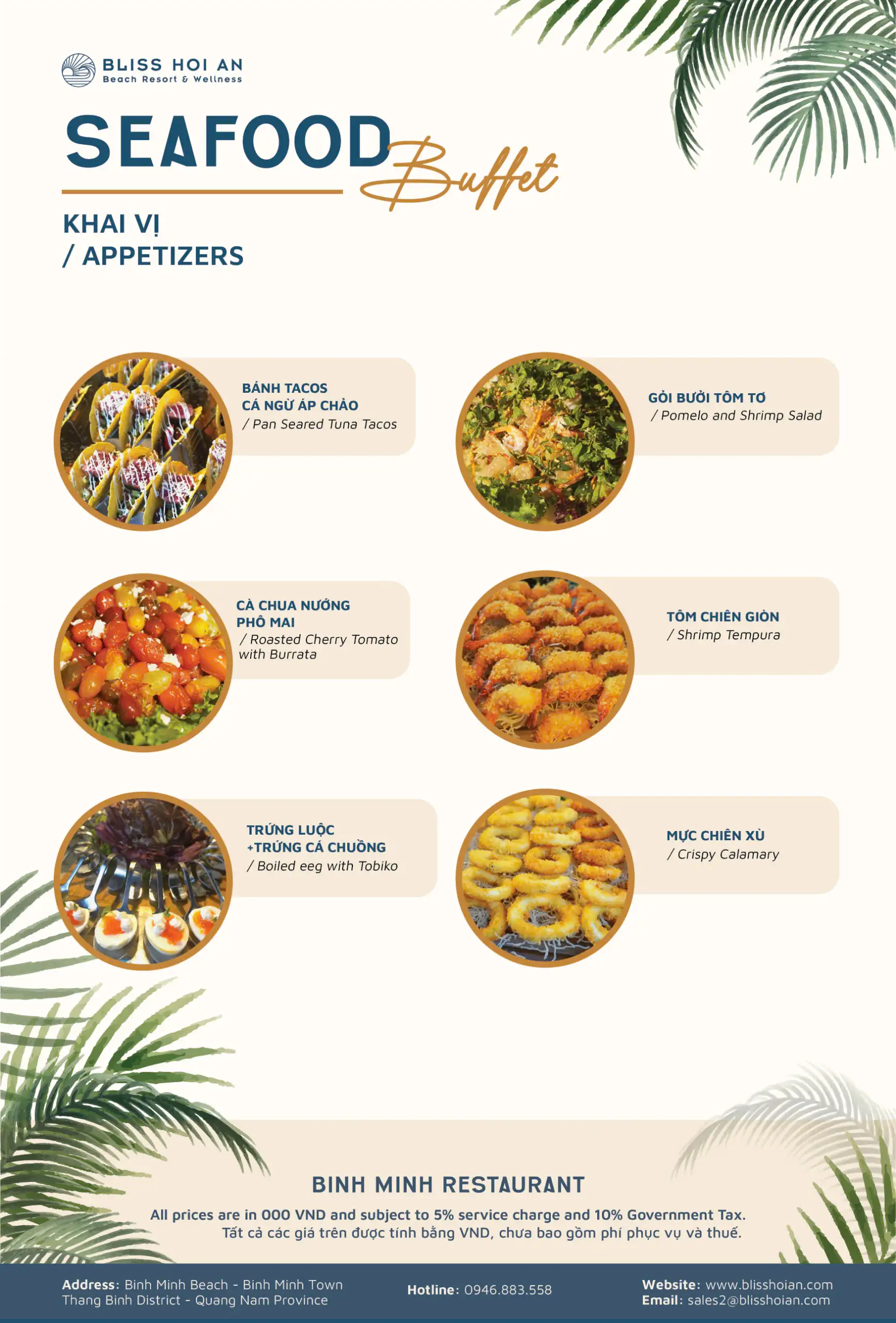
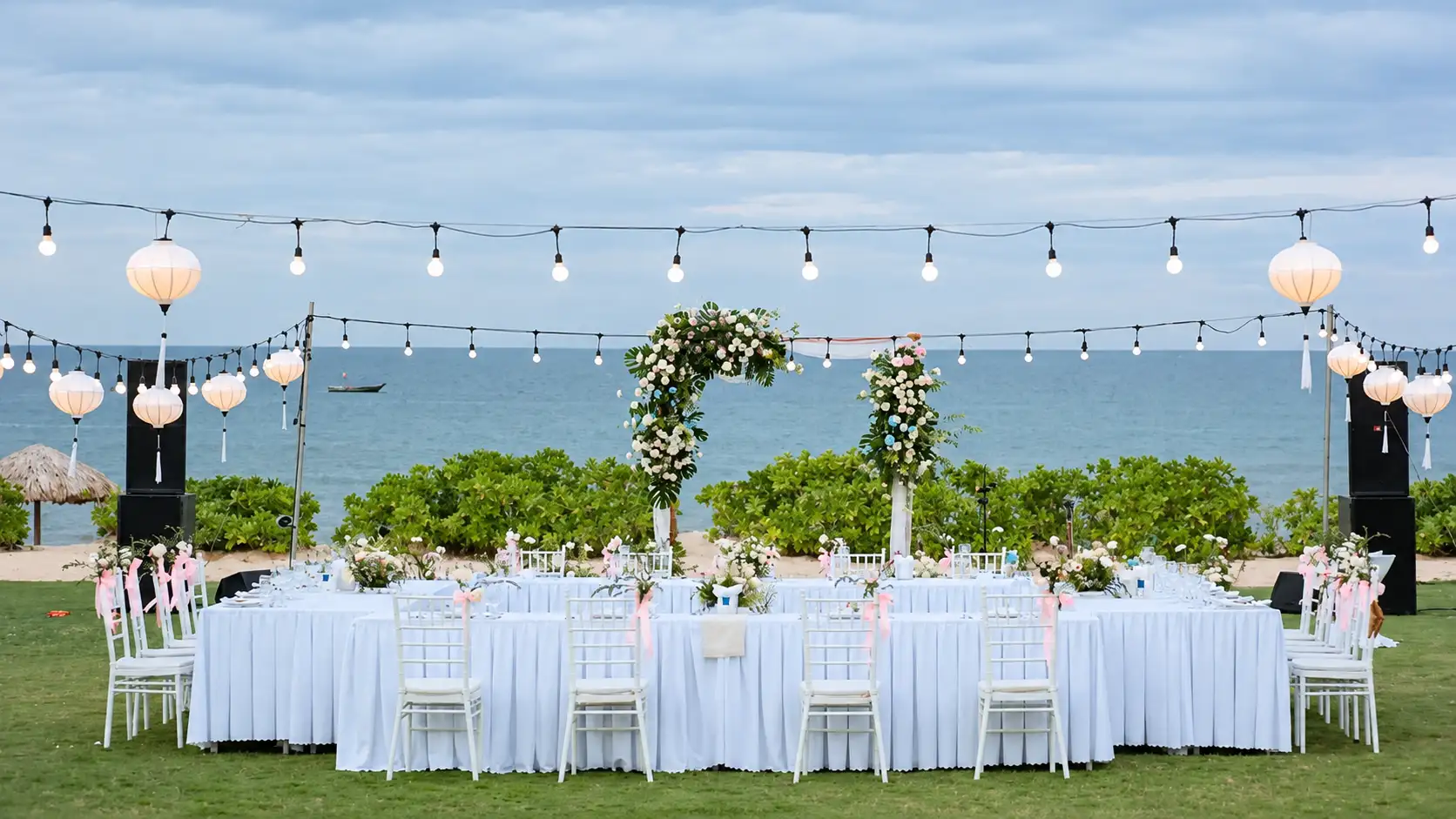
Wedding menu in Hoi An, how many dishes is right? (Source: Collected)
Which wedding menu style fits best: Vietnamese, Western, Asian, or Korean?
This is the core decision behind any wedding menu, and the answer depends on who the guests are and the atmosphere the couple wants to create.
- A Vietnamese menu works best when the guest list leans toward extended family and older relatives on both sides. Pomelo and prawn salad brings a clean, tangy sweetness; wok-fried chicken with cashew nuts is savory and nutty, easy for every generation to enjoy. It is the familiar, dependable choice for a traditional wedding menu that rarely disappoints anyone at the table.
- A Western menu suits a more contemporary, outdoor celebration, or a guest list with a significant number of international guests. Honey pumpkin soup is gently sweet, and chicken parmigiana with garlic butter pasta is rich and comforting- refined without overpowering the rest of it.
- An Asian or Korean menu brings heat and fermented depth (gochujang, kimchi) that neither Vietnamese nor Western cuisine offers. Spicy pan-fried pork belly, spicy baby octopus, and spicy seafood ramyun all make striking additions to it, particularly for younger couples or those with a personal connection to Korean culture. It is not the style to build a full traditional wedding menu around, but it works well as an accent.
- The most effective way to build a wedding menu: use Vietnamese or Western as the foundation (the majority of the dishes), then add one or two Asian or Korean dishes as a deliberate highlight partway through the meal- familiar enough for most guests, with a moment of surprise that gets the table talking.
| Wedding Menu Style | Signature Flavor | Best Suited For |
| Vietnamese | Balanced sour – spicy – salty – sweet | Older relatives, extended family, a traditional-leaning wedding |
| Western | Light, rich, restrained seasoning | Modern outdoor celebrations, international guest lists |
| Asian / Korean | Bold heat, fermented depth | An accent course, younger couples, adventurous palates |
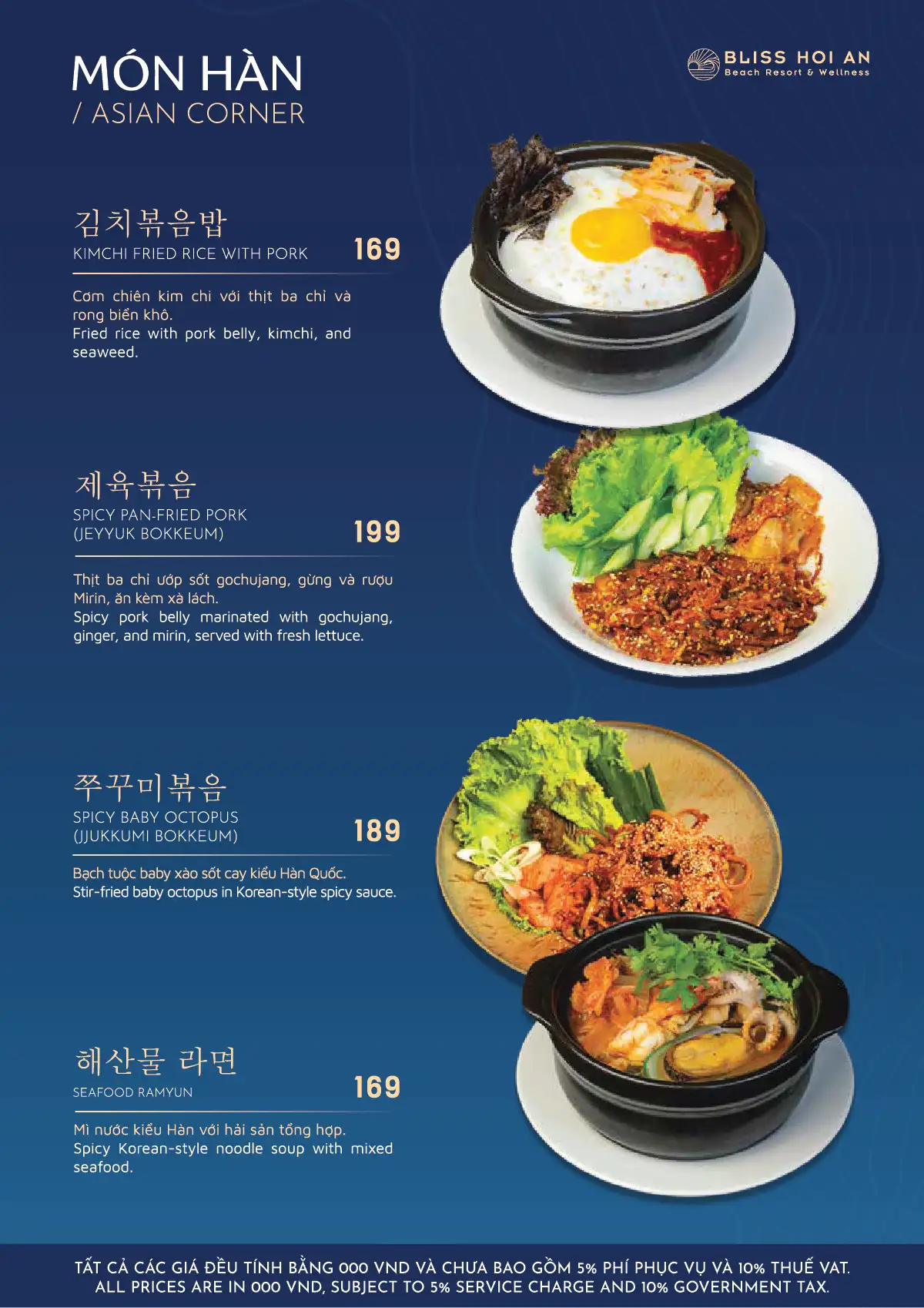
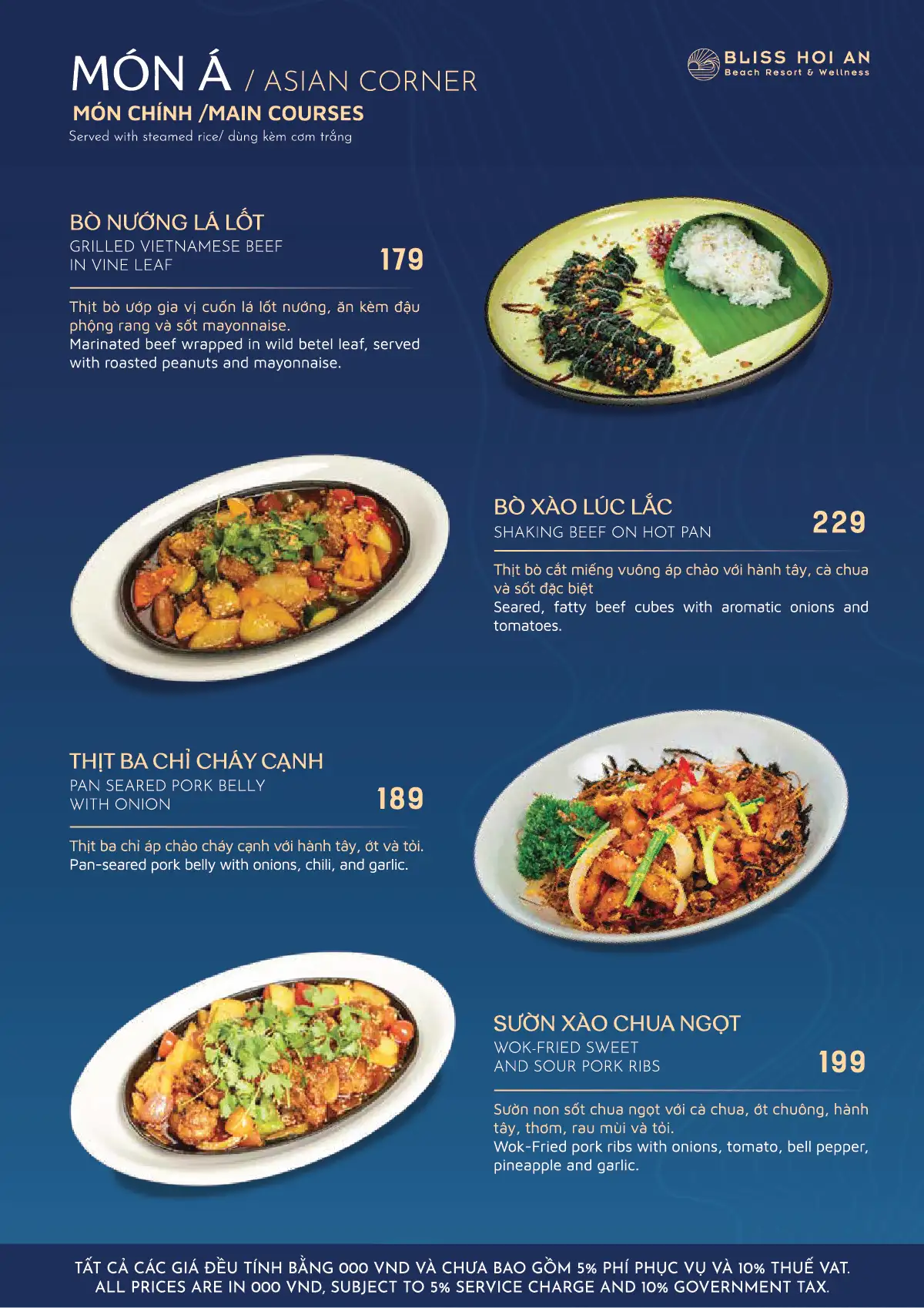
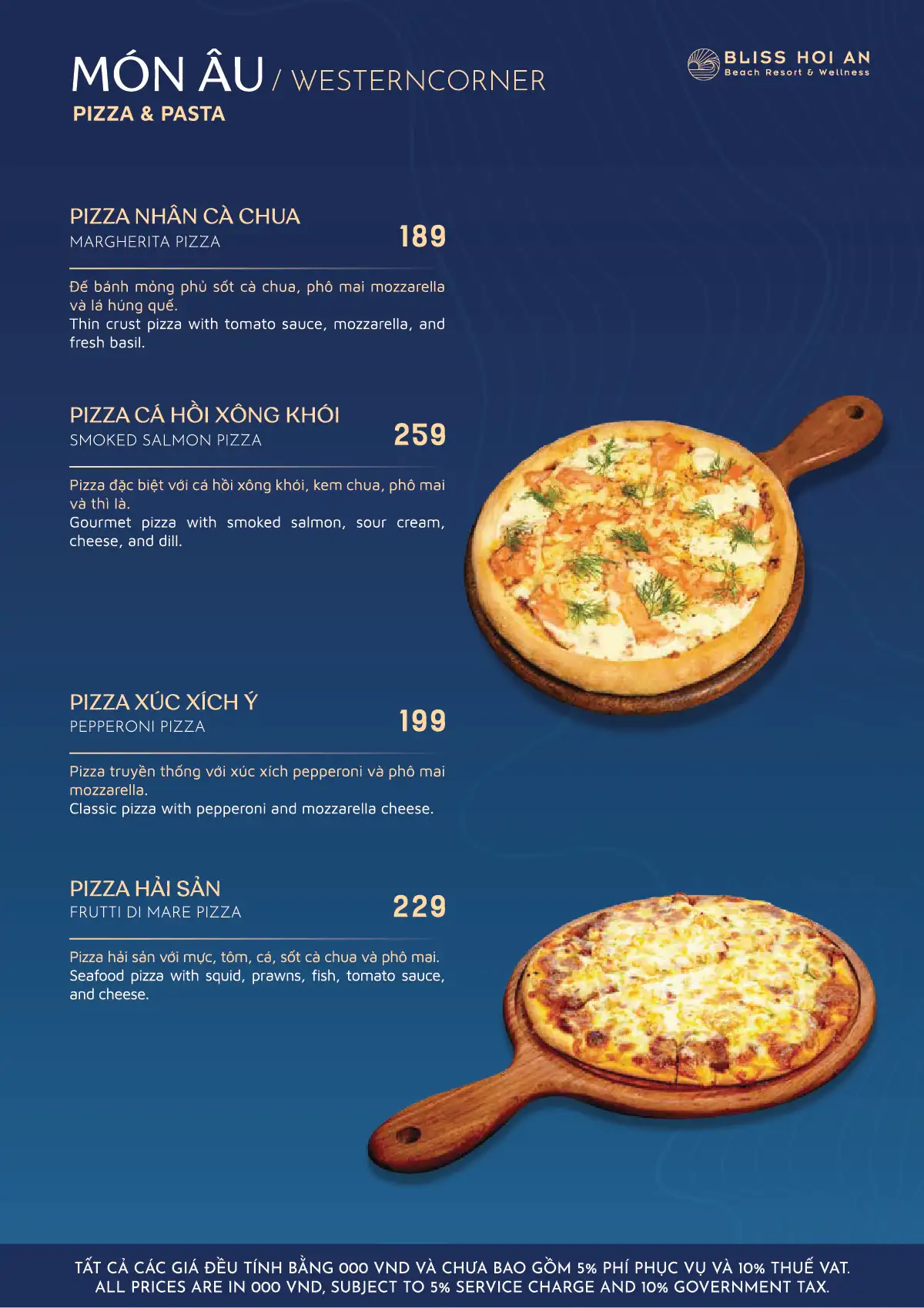
Comparing a Vietnamese dish, a Western dish, and a Korean dish
What dishes belong in a traditional Vietnamese wedding menu?
A Vietnamese-style wedding menu should cover the following groups:
- A crispy starter: spring rolls- opening the meal with texture and aroma
- A tangy-sweet salad: balances the palate before the main courses
- A roasted centerpiece (roast chicken or roast pork): the anchor dish that carries the spirit of a traditional menu for wedding
- Sticky rice: an essential starch in a Vietnamese menu, usually served alongside the roasted dish
- Soup: softens the richness between courses so it doesn’t feel heavy
- Seafood: a premium touch, especially fitting for a wedding held near the coast
- A sweet dessert: fruit, che (sweet soup), or ice cream to close the menu gently
Matched against what Bliss Hoi An currently offers, the two Vietnamese Set Menus already cover the crispy starter (Hoi An fried spring rolls), the tangy salad (pomelo and prawn salad, green papaya salad with chicken skewer), a hearty main (wok-fried chicken with cashew nuts, char-coal grilled cobia fish), and dessert (seasonal fruit, ice cream). That’s a solid foundation for a proper Vietnamese wedding menu.
That said, the two current sets do not yet include a roasted dish, sticky rice, or soup- three elements widely considered essential in Vietnamese wedding culture. Couples who want to keep the wedding menu fully traditional should raise this directly with the culinary team rather than assume the existing sets already cover it.
For the starch course, the Hoi An Specialties corner (Cao Lau, Mi Quang, Hoi An chicken rice, Pho) makes a strong substitute or addition to the wedding menu, giving it a clear sense of regional identity that plain steamed rice cannot provide on its own.
Every dish in a Vietnamese wedding menu also carries its own symbolism- red sticky rice, for instance, represents good fortune, while boiled chicken is associated with purity and family unity. For a deeper look at the meaning behind each dish and how the wedding menu differs across Vietnam’s North, Central, and South regions, see the complete guide to the traditional Vietnamese wedding menu.
Read more: Traditional Vietnamese wedding menu guide
The seafood highlight in a beachfront wedding menu
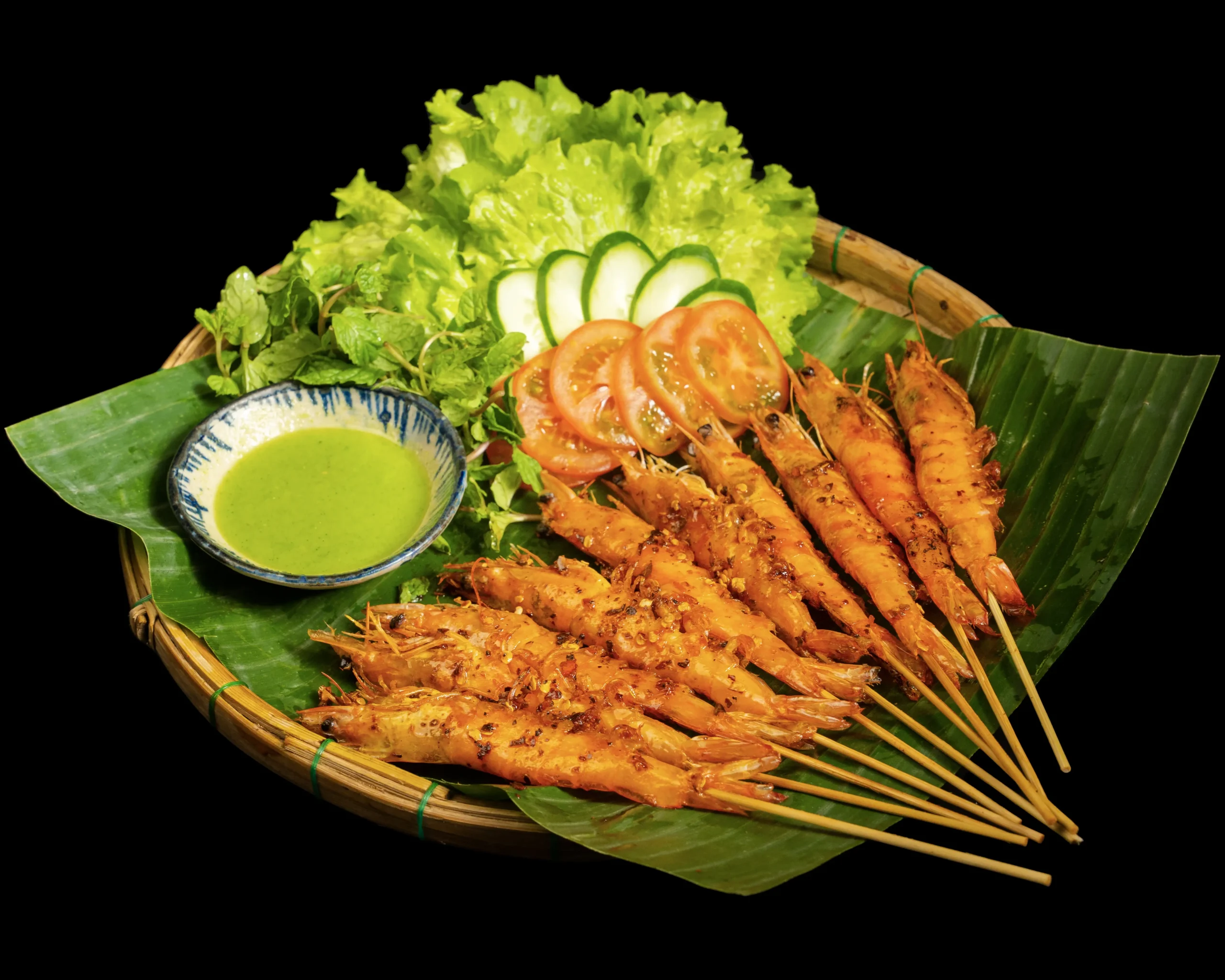
Bliss Hoi An sits directly on Binh Minh Beach, giving it access to same-day fresh seafood- an advantage worth building the wedding menu around rather than defaulting to meat and poultry alone. The Binh Minh grilled seafood boat- prawns, squid, octopus, oysters, clams, green mussels, apple snails, and goby fish arranged on a wooden boat- is the strongest visual centerpiece a wedding menu can offer, ideal for the head table or VIP tables. For a lighter touch, char-coal grilled cobia fish in banana leaf delivers the same coastal character in a simpler, more affordable dish.
One thing to keep in mind: if the rest of the wedding menu already leans heavily fried or stir-fried, choose a lighter seafood preparation (steamed or leaf-grilled) rather than adding another fried dish- this keeps the meal from feeling greasy by the final course.
Couples still weighing where to hold their reception to make the most of fresh seafood on the wedding menu may find it useful to compare the top 5 beachfront wedding venues in Hoi An.
Four sample wedding menus, built around different needs
There is no single “correct” 12-dish wedding menu- the right combination depends on who is sitting at the table and what the couple wants the reception to feel like. Below are four reference menus, each built around a different priority, all pulling from the same kitchen at Bliss Hoi An.
Option 1: Traditional & Family-Friendly
Best for a wedding menu where most guests are older relatives from both families, and the priority is comfort and familiarity over novelty.
- Hoi An fried spring rolls- hot starter
- Pomelo and prawn salad- tangy starter
- Honey pumpkin soup- soup
- Char-coal grilled cobia fish in banana leaf- seafood
- Wok-fried chicken with cashew nuts- anchor main course
- Local platter (grilled pork skewers, fried fermented pork rolls, shrimp on sugarcane)- shared centerpiece
- Cao Lau or Mi Quang- starch with local identity
- Mixed stir-fried vegetables- balance
- Seasonal fruit- dessert
- Ice cream- closing note
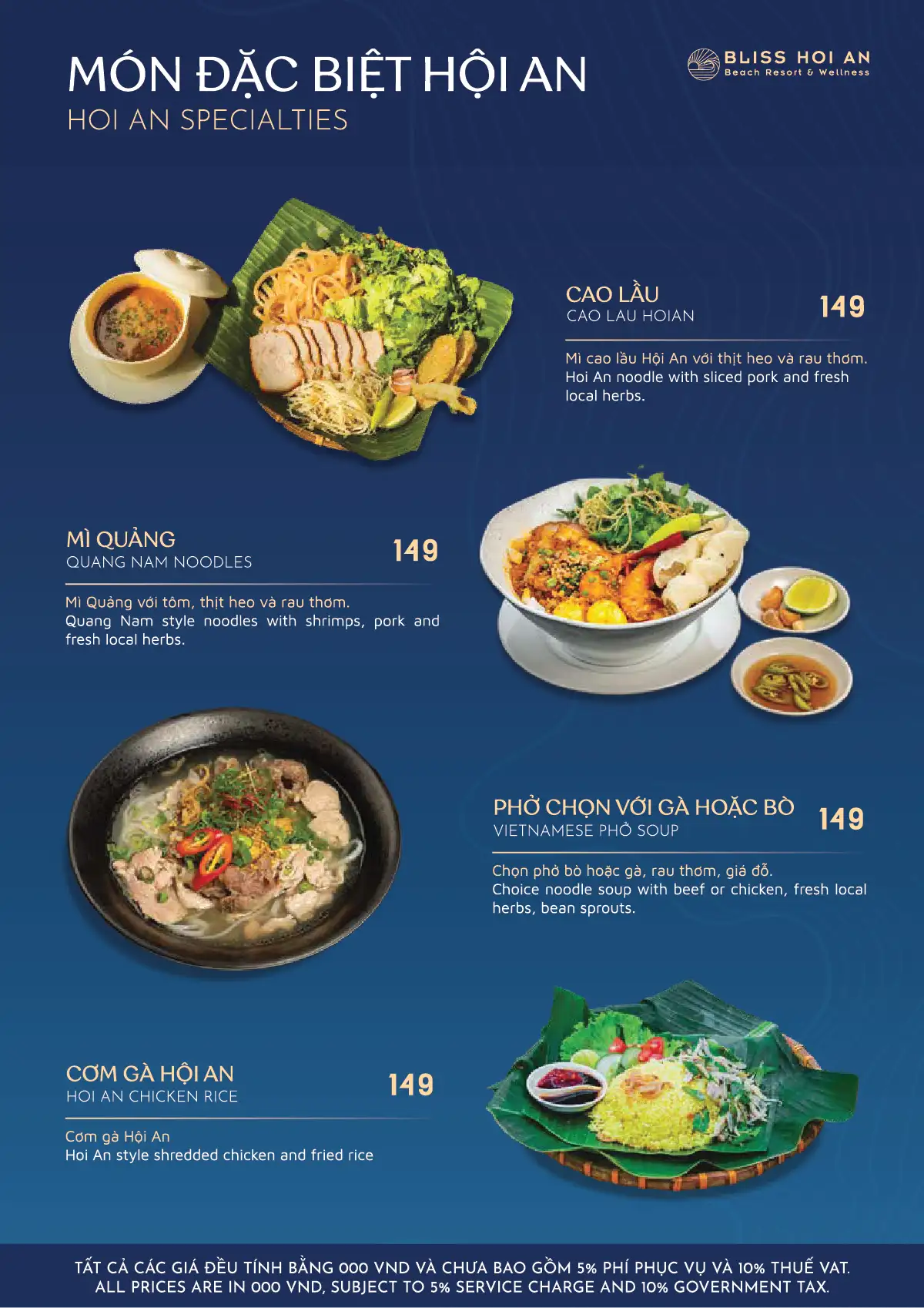
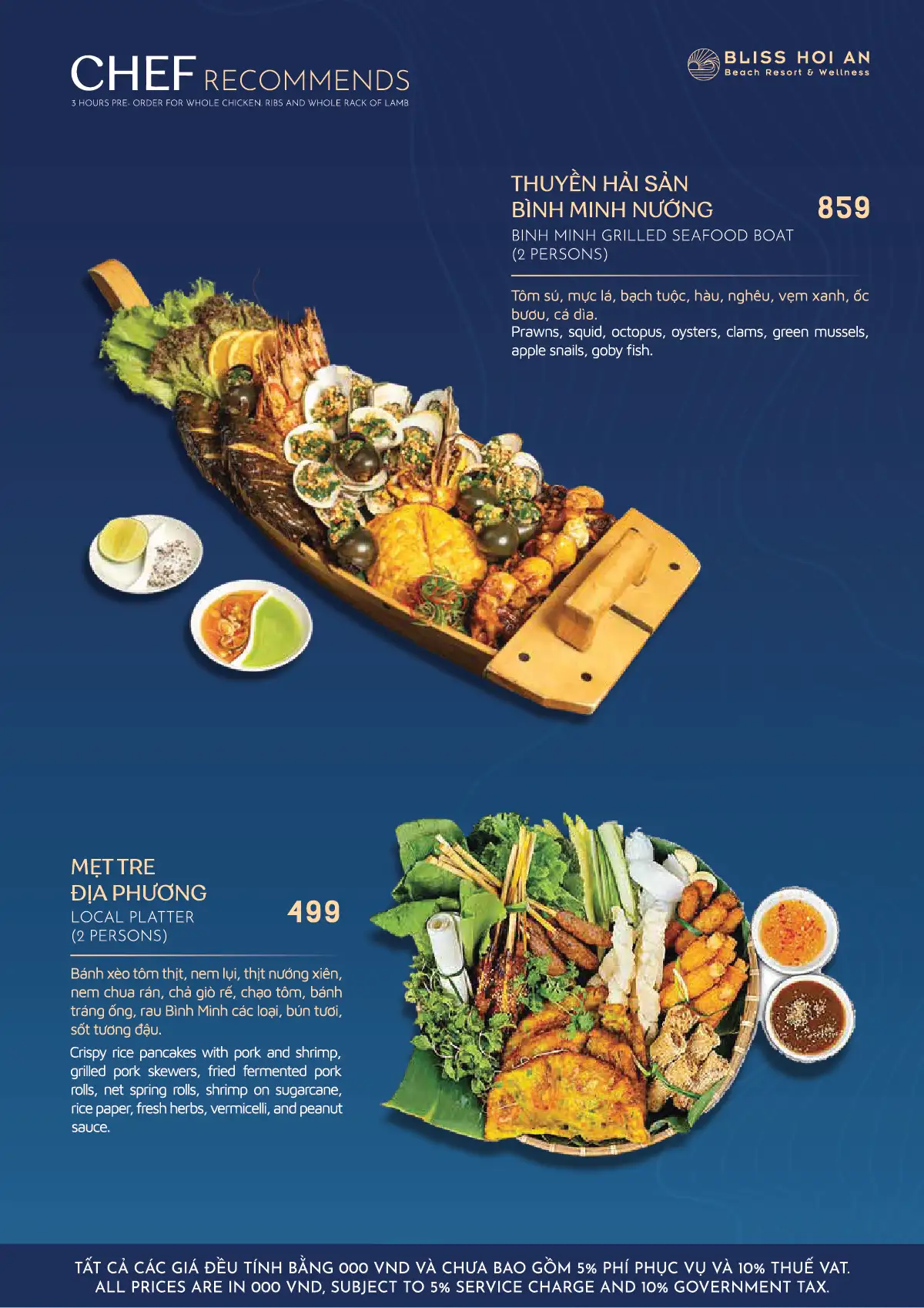
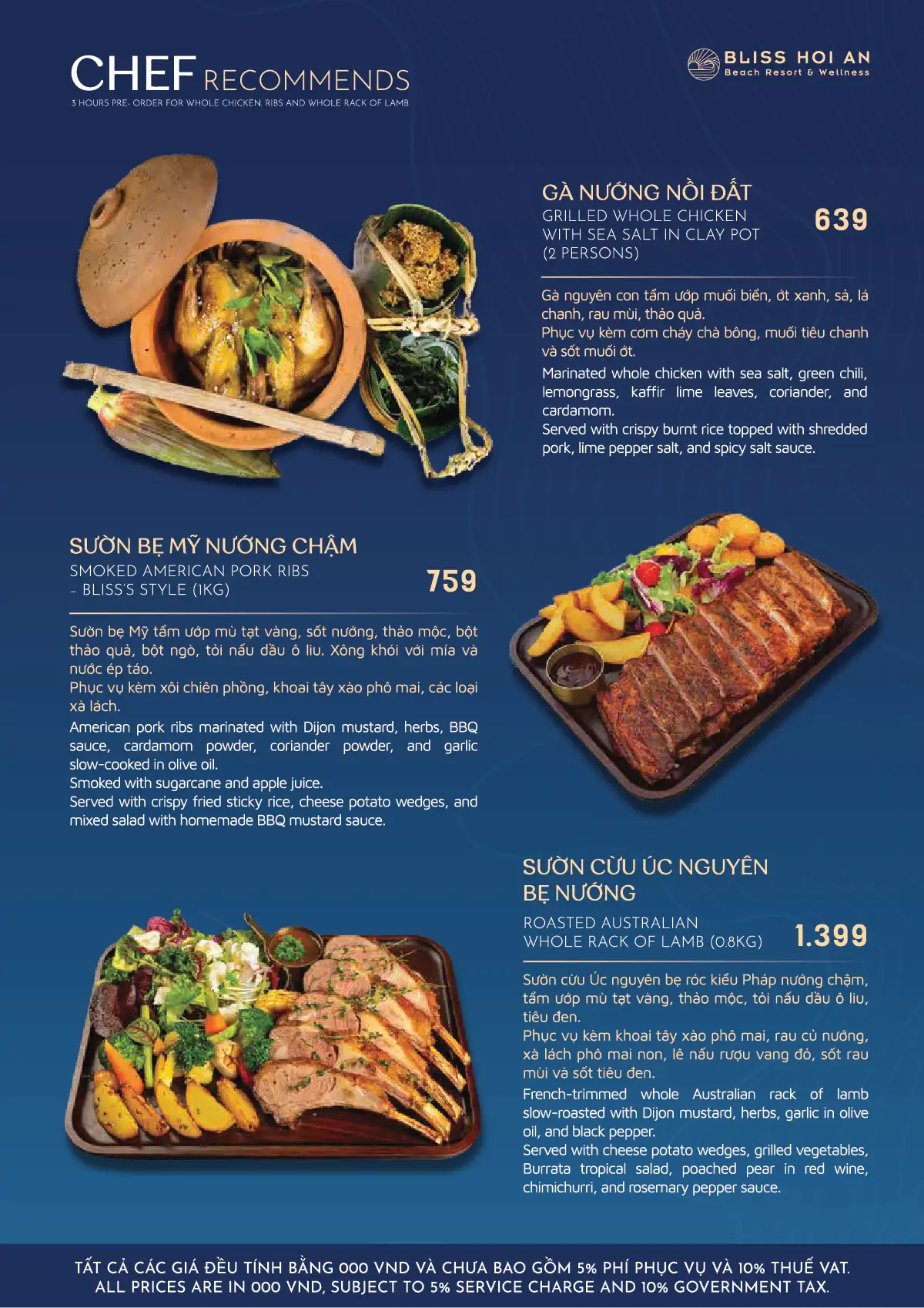
Hoi An’s Specialties at Bliss Hoi An Menu
Option 2: Modern & International
Best for an outdoor, contemporary-style wedding menus with a significant number of international guests, or a couple who wants a lighter, more restrained flavor profile throughout.
- Caesar salad- starter
- Honey pumpkin soup- soup
- Smoked salmon pizza- shared course
- Fish and chips- light main
- Chicken parmigiana with garlic butter pasta- main course
- Binh Minh grilled seafood boat- centerpiece
- Cao Lau- a single local touch to keep the menu grounded in place
- Mixed stir-fried vegetables- balance
- New York cheesecake- dessert
- Tiramisu- dessert
- Seasonal fruit- light closing note
Option 3: Fusion & Adventurous
Best for younger couples who want the wedding menu to feel personal and a little unexpected, without abandoning a familiar backbone.
- Fresh spring rolls, Bliss style- cold starter
- Deep fried wonton with sweet and sour sauce- hot starter
- Kimchi fried rice with pork- Asian corner highlight
- Spicy pan-fried pork belly (Jeyyuk Bokkeum)- bold accent
- Spicy baby octopus (Jjukkumi Bokkeum)- bold accent
- Seafood ramyun- shared bowl course
- Binh Minh grilled seafood boat- centerpiece
- Wok-fried chicken with cashew nuts- familiar anchor
- Cao Lau or Mi Quang- starch
- Mixed stir-fried vegetables- balance
- Ice cream- dessert
- Seasonal fruit- closing note
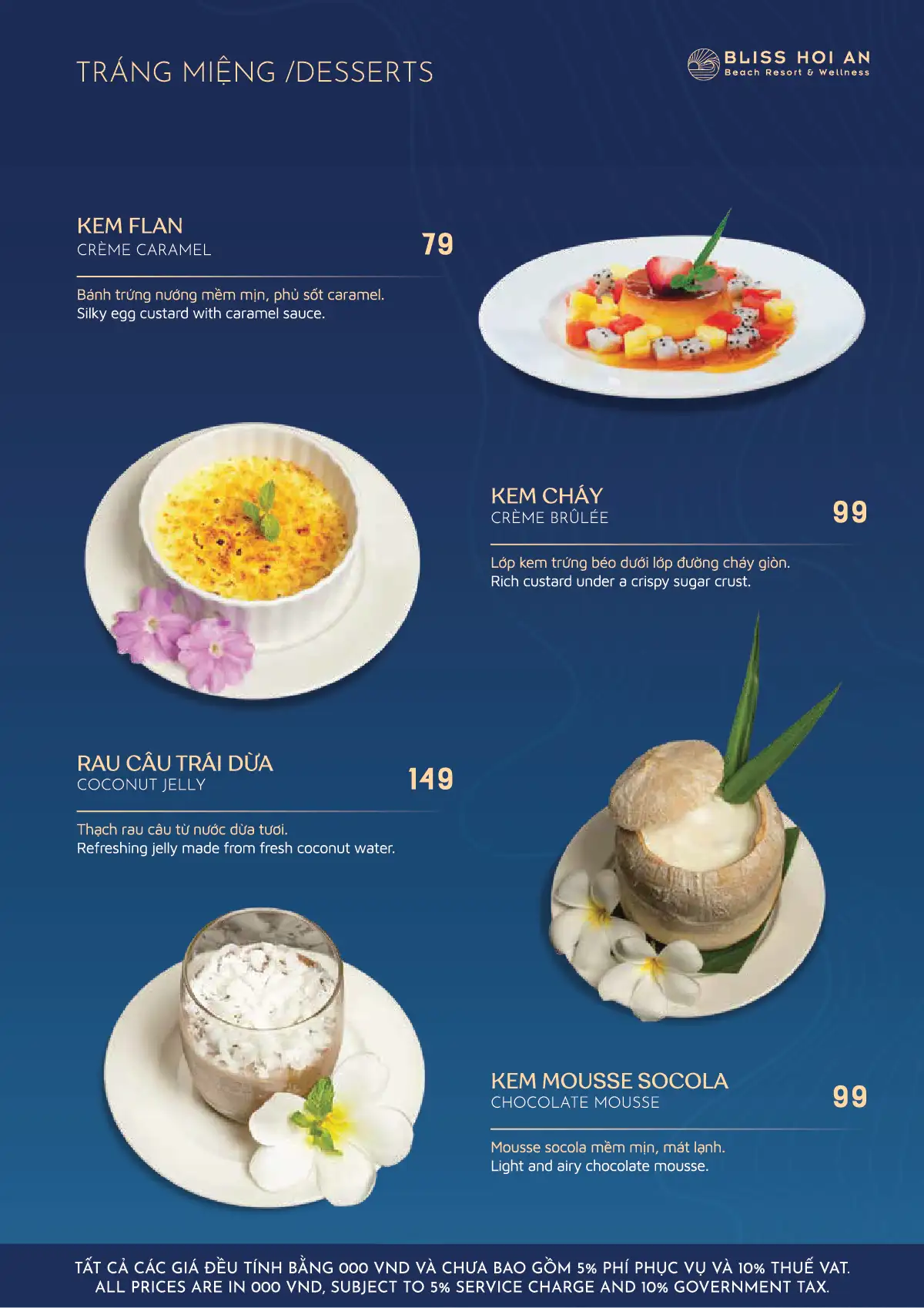
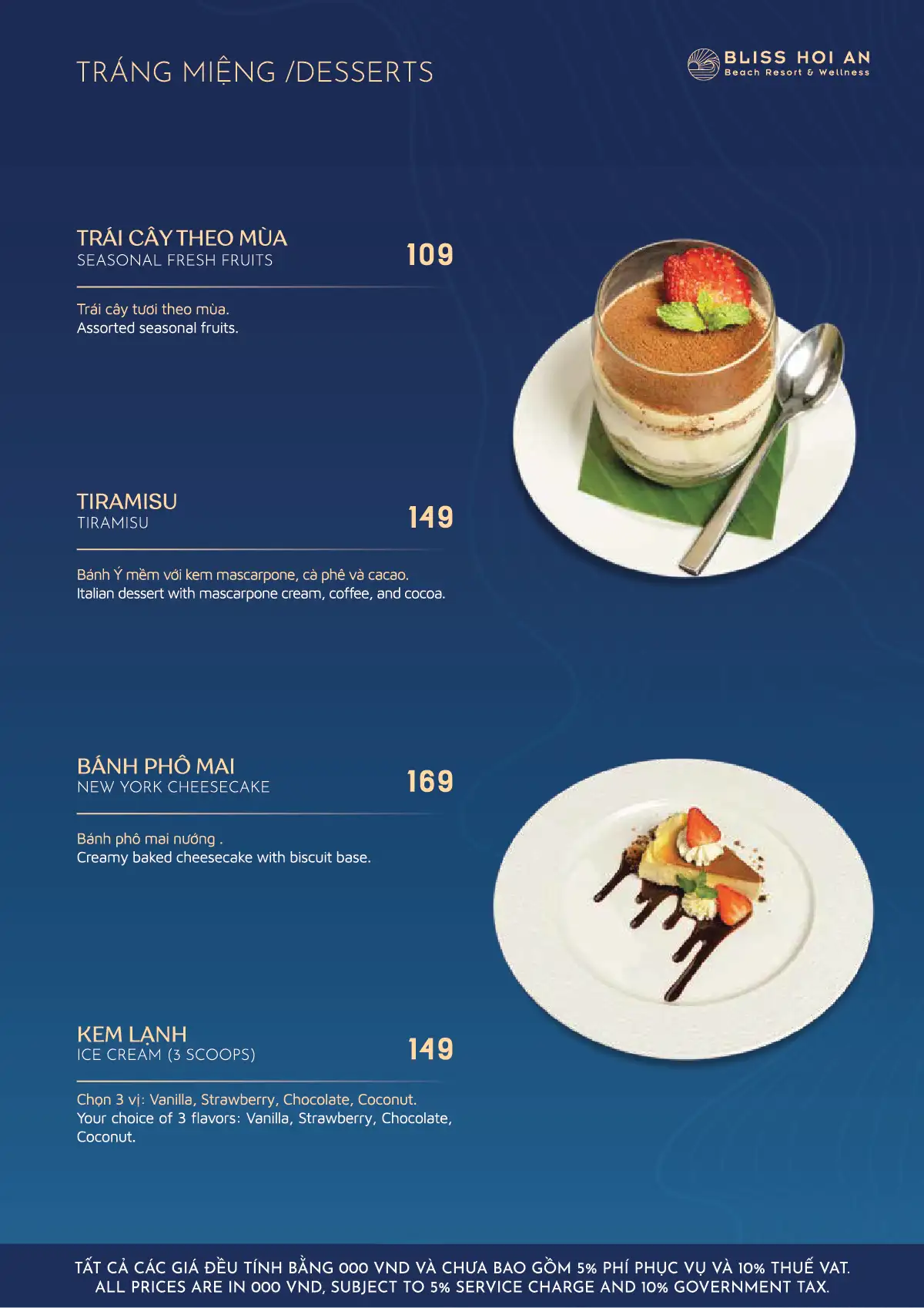
Some desserts option for chosing at Bliss Hoi An Menu
Option 4: Coastal & Seafood-Forward
Best for couples who want the beachfront setting reflected directly on the plate, with seafood carrying most of the wedding dishes.
- Deep fried calamari- starter
- Pomelo and prawn salad- tangy starter
- Honey pumpkin soup- soup
- Binh Minh grilled seafood boat- centerpiece
- Char-coal grilled cobia fish in banana leaf- second seafood course
- Frutti di mare seafood pizza- shared course
- Wok-fried chicken with cashew nuts- a non-seafood main for balance
- Mixed stir-fried vegetables- balance
- Cao Lau or Mi Quang- starch
- Cheesecake- dessert
- Seasonal fruit- light closing note
What all four wedding menus have in common
The dishes differ, but every version above follows the same underlying principles and this is what actually makes a wedding menu work, regardless of style:
- 10-12 dishes, never fewer than the full course arc – starter through dessert, with nothing skipped
- One clear seafood centerpiece – the Binh Minh grilled seafood boat or an equivalent, giving the wedding menu a visual high point
- A balance between rich and light dishes – heavier fried or sauced courses are offset by something tangy, steamed, or fresh
- At least one dish carrying local identity– Cao Lau, Mi Quang, or a Hoi An specialty, so the wedding menu doesn’t feel generic
- A dessert that closes gently – fruit or ice cream rather than another heavy, rich course
The exact ratio of Vietnamese, Western, and Asian dishes should always be finalized with the resort’s culinary team based on the couple’s specific guest list- but whichever option is chosen, holding to these five principles is what keeps a wedding menu feeling complete rather than assembled at random.
Don’t forget vegetarian guests
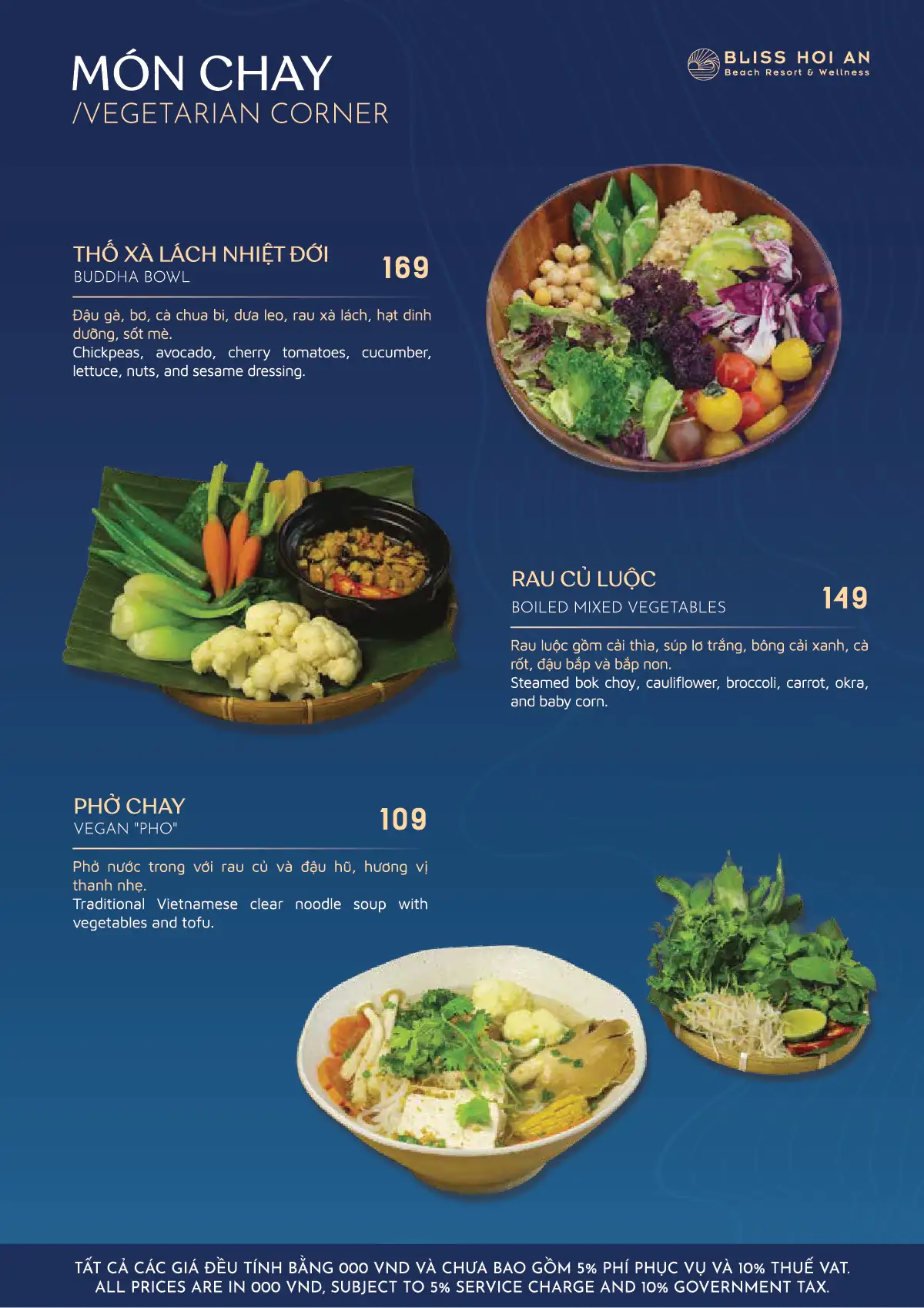
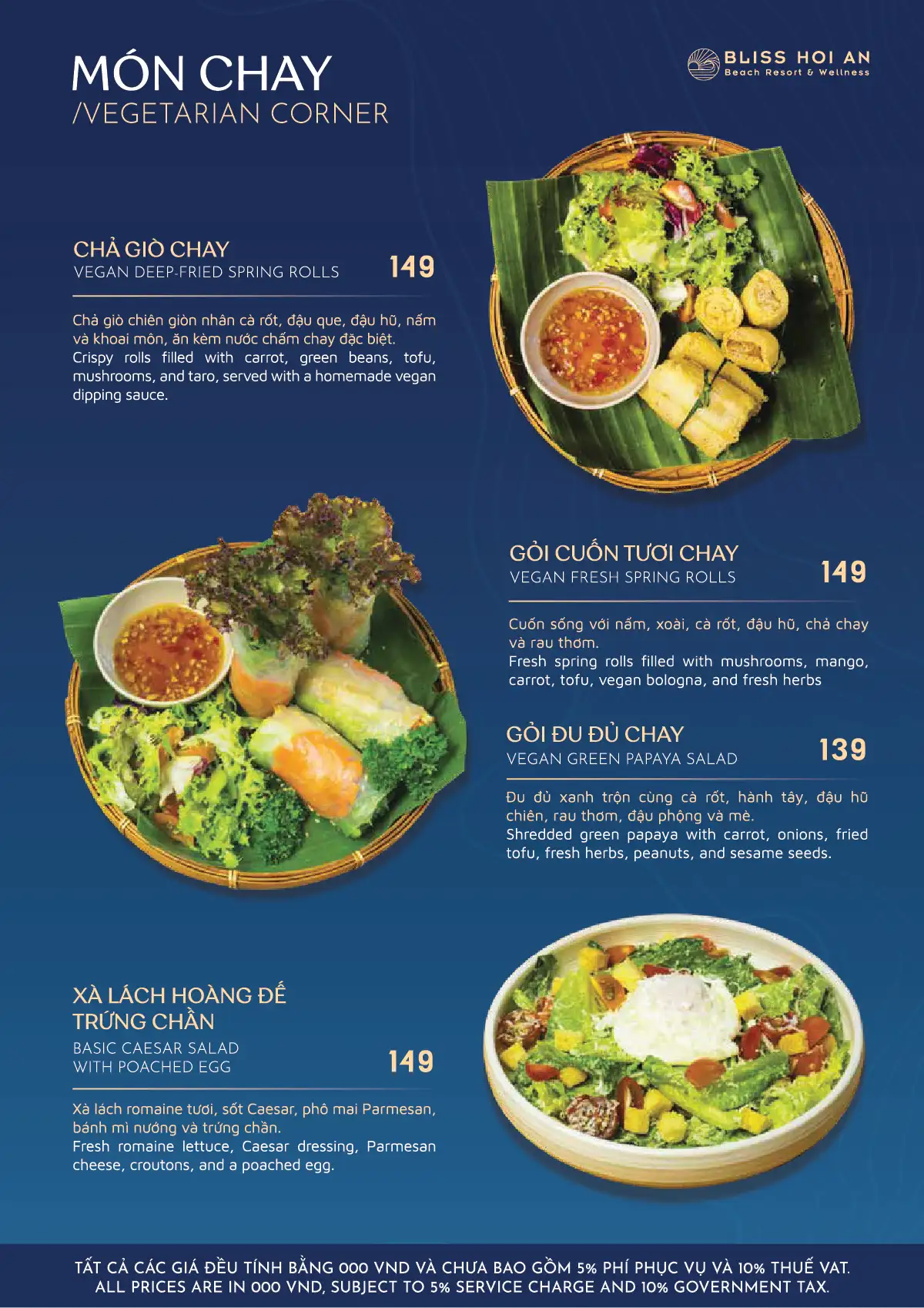
Vegetarian dish is an important option for a wedding menu
Bliss Hoi An has a dedicated vegetarian corner to round out the wedding menu: vegan spring rolls, vegan fresh spring rolls, vegan green papaya salad, and a basic Caesar salad with poached egg- enough to prepare a full parallel vegetarian table alongside the main wedding menu. Be sure to confirm the exact number of vegetarian guests with the event team in advance, so the kitchen isn’t caught short once the reception has already started.
Before finalizing the wedding menu
- Book the reception and finalize the wedding menu early, particularly for peak season (March to September)
- Taste the wedding menu in person before the wedding day rather than choosing from photos or descriptions alone
- Consider the Wedding A La Carte Menu to build a fully custom wedding menu instead of a fixed set
- Balance the rhythm of the wedding menu: alternate rich dishes with lighter ones, and avoid stacking too many fried or stir-fried courses back to back
Frequently Asked Questions
How many dishes should a wedding menu have?
→ Around 10-12 dishes, spread across starters, soup, seafood, main courses, starch, and dessert.
Should a wedding menu be Vietnamese or Western style?
→ Not necessarily one or the other. The most effective approach is to build the wedding menu around one style as the foundation, then add one or two dishes from another style as a highlight.
Does a Vietnamese wedding menu need a roasted dish, sticky rice, and soup?
→ These three elements are considered traditional staples of a Vietnamese wedding menu. If the standard set doesn’t include them, it’s worth requesting these additions directly with the culinary team.
Can couples design a fully custom wedding menu instead of using a fixed set?
→ Yes, through Bliss Hoi An’s hotline + 84 235 3874 888

Related Posts
Cau Bong Festival in Hoi An: Inside Tra Que’s Agricultural New Year Tradition
Top 8 things to consider for a wedding in Hoi An with 20 guests
Best Beach Resort in Hoi An: Top 7 things to avoid when choosing to stay
4 Hoi An wedding packages compared: Which one is right for you?

5 mistakes to avoid when self-driving from Hoi An to Quang Ngai in a day