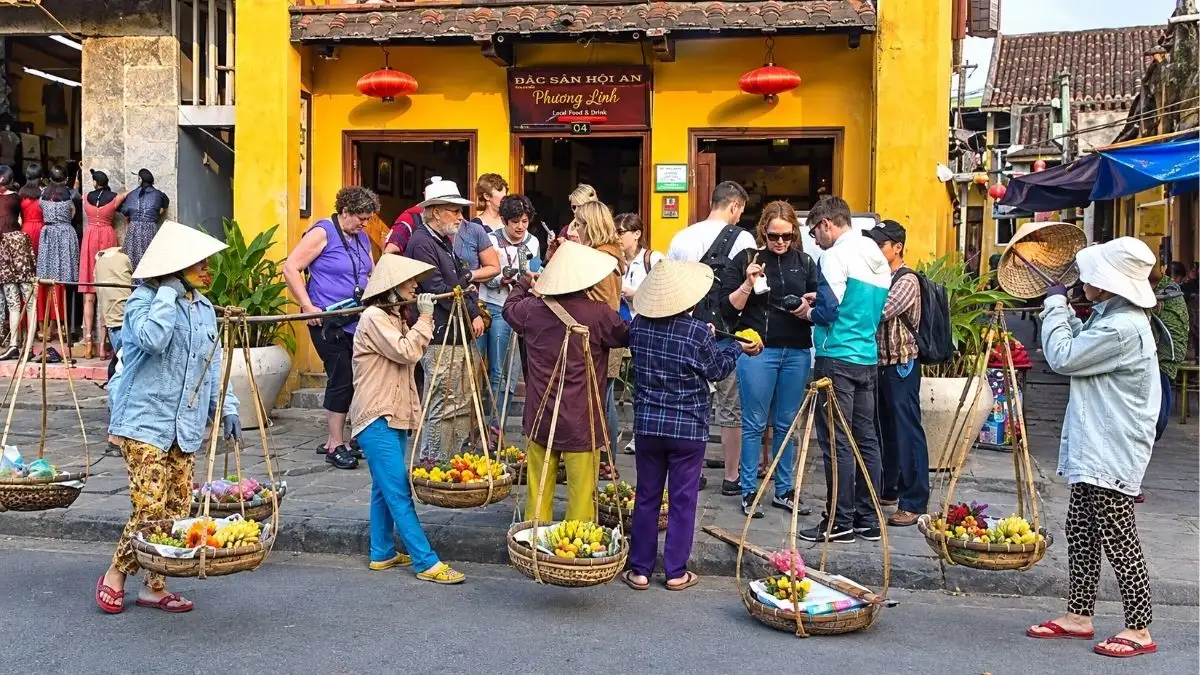


Wedding Venue in Hoi An: What Nobody Tells You
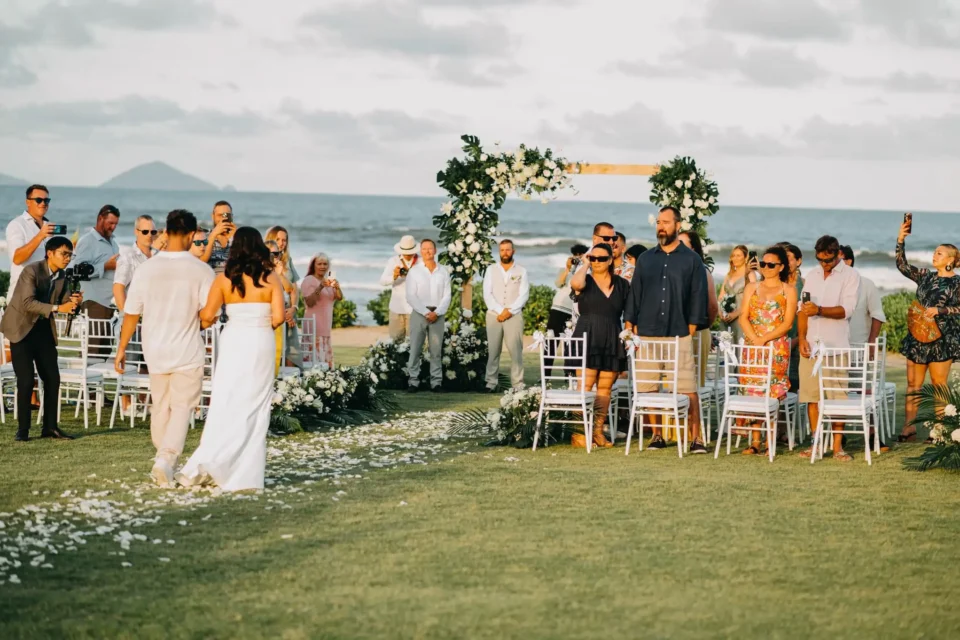
Finding the right wedding venue in Hoi An isn’t just about choosing the most beautiful location. It’s about understanding the real costs, legal requirements, weather considerations, and venue logistics before you book. This guide answers the key questions international couples ask, helping you compare venues and plan your destination wedding with fewer surprises.

The real cost of a wedding venue in Hoi An (it’s not as expensive as it looks)
Many couples assume Bali is the cheapest destination wedding option because its advertised packages often start around 300 million VND. In reality, those headline prices rarely reflect the final amount you’ll pay.
Here’s how the three destinations typically compare for a wedding with around 50 guests in 2026:
| Destination | Typical Budget | What the price usually includes |
| Hoi An | ~650 million–1.2 billion VND | Venue, catering, décor, coordination, and a higher staff-to-guest ratio are often included in one package. |
| Phuket | ~730 million–1.3 billion VND | Venue and villa packages are common, while catering, beverages, and styling are frequently priced separately. |
| Bali | From ~300 million VND(starting price) | Entry-level package only. Premium décor, additional guests, entertainment, and many upgrades are usually charged separately. |
The biggest surprise isn’t the starting price, it’s how much is excluded from it. Many Bali venues advertise an attractive base package, but couples often discover extra charges for floral upgrades, additional guests, premium furniture, extended venue hire, lighting, or entertainment. By the time everything is added, the final cost can be significantly higher than the original quote.
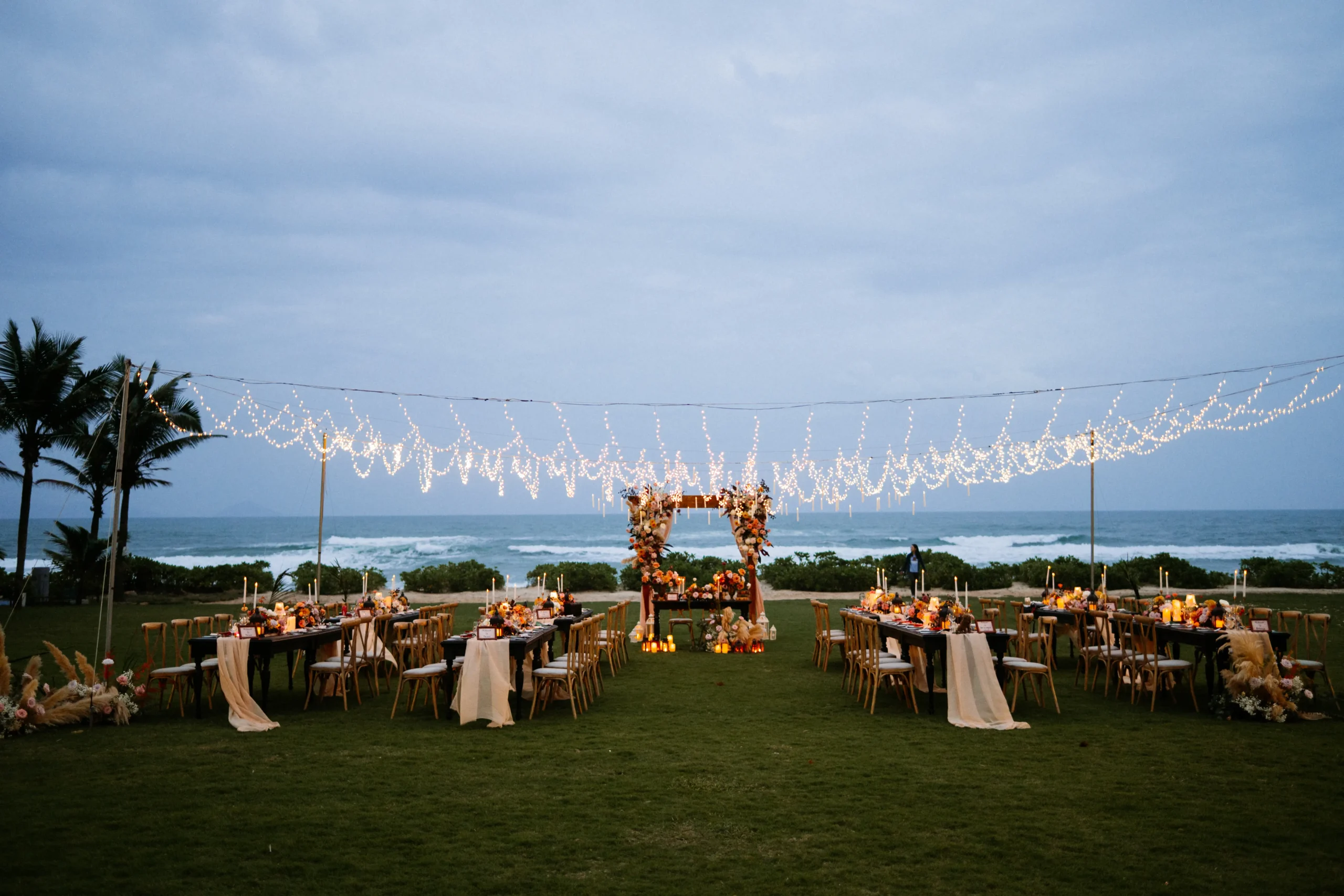
Hoi An works differently. Because the destination has a smaller wedding market, venues are generally more likely to provide comprehensive packages with fewer optional add-ons. While every venue is different, it’s common for quotes to already include ceremony setup, reception coordination, service staff, and catering instead of pricing each item separately.
There are also a few local pricing factors worth knowing before requesting quotes:
- Labour costs in Vietnam are lower, allowing venues to provide more service staff without dramatically increasing your budget.
- Imported products cost more: Champagne, premium spirits, imported flowers, and luxury décor can quickly increase your final invoice.
- Local ingredients offer better value. Fresh seafood and seasonal Vietnamese produce are usually both higher quality and more affordable than imported alternatives.
What to ask every venue before comparing prices
Instead of comparing package prices alone, request an itemized quotation and ask:
- Is catering included?
- Are taxes and service charges included?
- How many guests does the package cover?
- Does it include flowers, furniture, lighting, and sound?
- Are overtime fees charged?
- Which items are optional upgrades?
Two venues with similar package prices can end up thousands of dollars apart once hidden costs are added. Comparing what’s included, not just the advertised price, is the most reliable way to understand the true cost of a wedding venue in Hoi An.
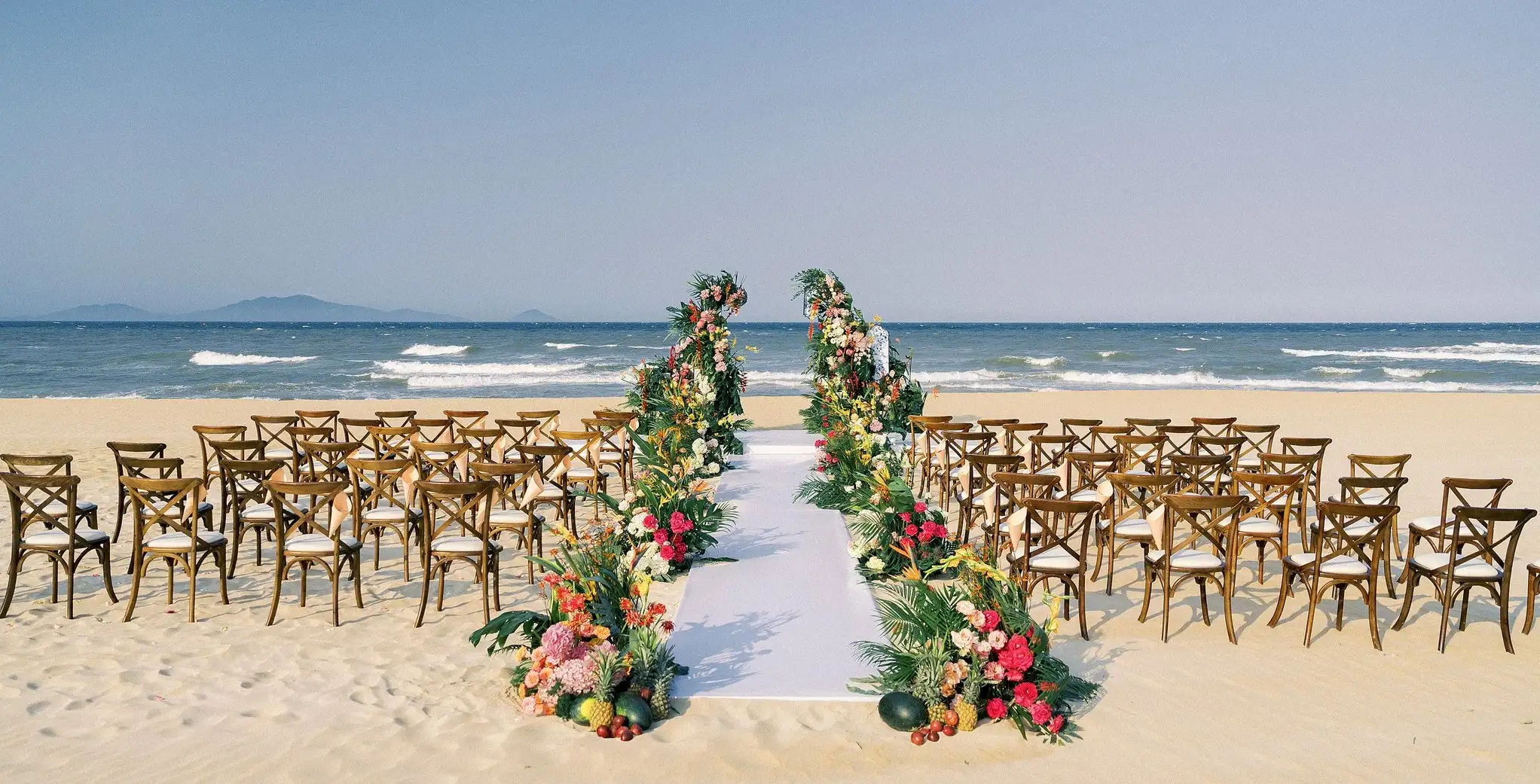
The practical move is to stop comparing headline totals and start comparing itemized ones. Ask every venue for a full breakdown – tables and chairs, sound, lighting, service staff, corkage, overtime past the contracted hours – before you set totals side by side. A $25,000 “all-in” Hoi An quote and an $11,000 Bali “starting from” price are not answering the same question, even though they look like they are on a spreadsheet. For a fuller breakdown of what drives Vietnamese wedding budgets specifically, our guide on how much a wedding costs in Vietnam walks through catering, guest-count scaling, and seasonal pricing in more detail.
Most weddings in Hoi An are symbolic, not legal marriages
One of the biggest misconceptions about destination weddings in Hoi An is that the ceremony automatically creates a legally recognized marriage. For most international couples, it doesn’t.
If neither partner is a Vietnamese resident, completing a legal marriage registration in Vietnam can be difficult or impractical due to residency requirements and administrative procedures. As a result, most overseas couples choose to have a symbolic wedding ceremony in Hoi An and complete the legal marriage registration in their home country before or after the trip.
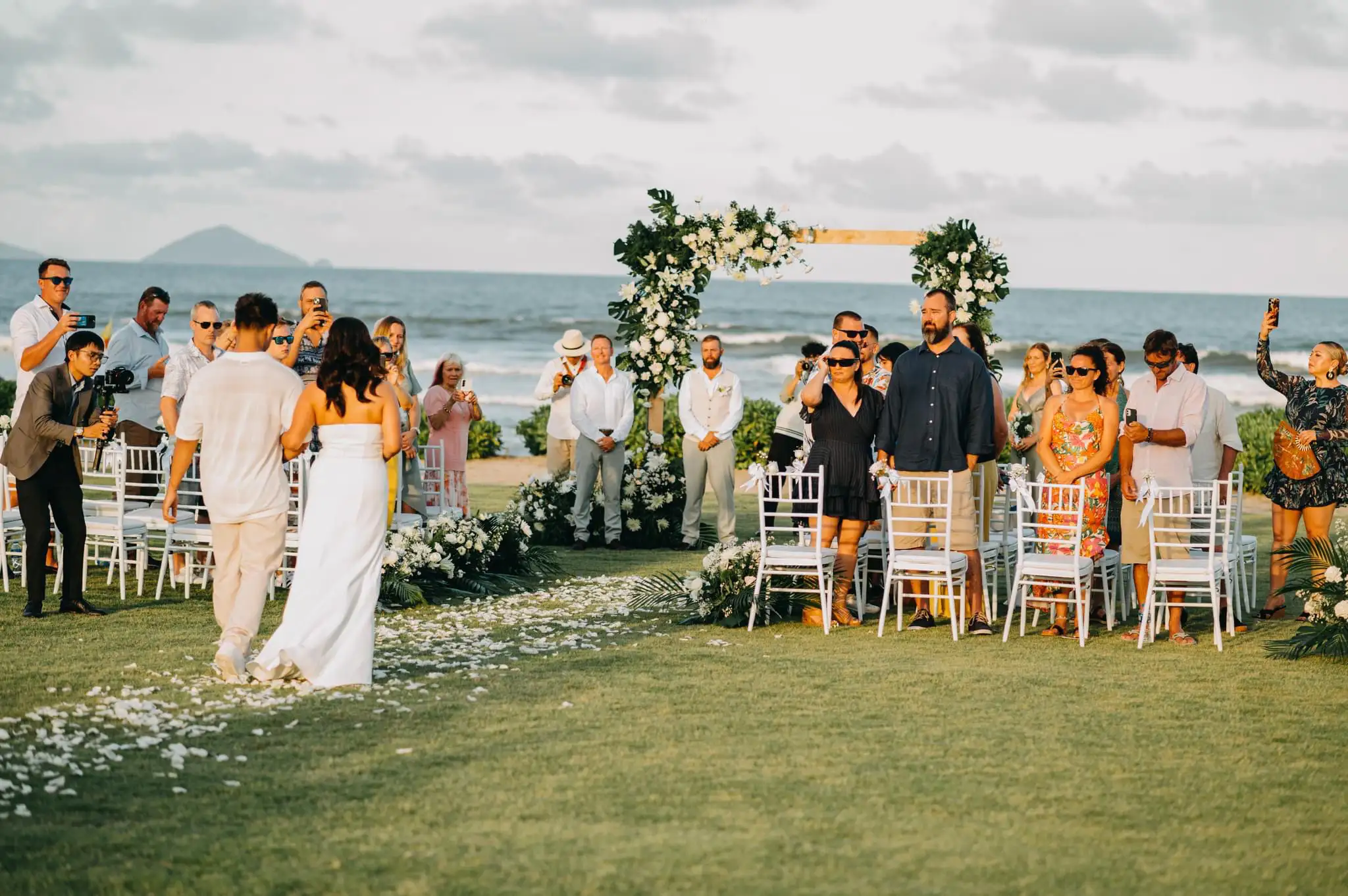
This isn’t unique to Vietnam. Many destination weddings in Bali, Phuket, and other popular wedding locations follow the same approach because it is simpler, faster, and avoids dealing with international legal documentation. A symbolic ceremony gives you everything most couples actually travel for: your vows, a professional ceremony, wedding photography, reception and celebration with family and friends, a personalized wedding experience. The only thing it doesn’t include is the legal paperwork.
Before confirming your wedding date, it’s worth checking a few practical details:
- Whether your home country recognizes overseas marriages.
- If you need to register your marriage before or after your trip.
- Whether any guests require a visa to enter Vietnam.
- Whether your wedding planner has experience coordinating weddings for international couples.
Most experienced wedding planners in Hoi An will explain the difference between a symbolic ceremony and a legal marriage early in the planning process and can advise you on what documents, if any, you’ll need to prepare.
The takeaway: treat your Hoi An wedding as the celebration, and handle the legal registration separately at home unless you’ve confirmed that a legally binding marriage in Vietnam is both possible and worthwhile for your situation.
Beautiful photos don’t tell you how a venue handles bad weather
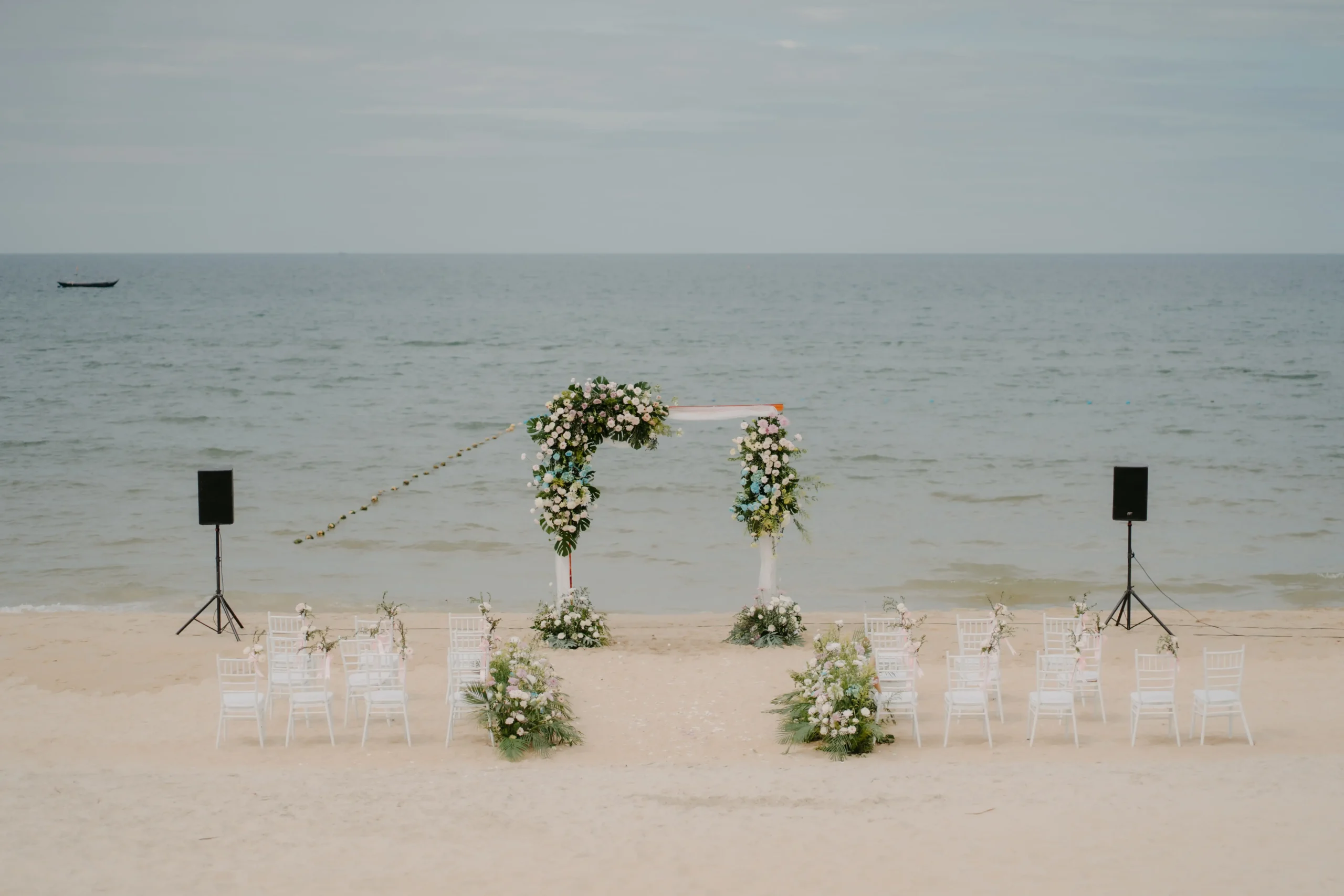
A wedding venue may look perfect on Instagram, but photos won’t tell you how it performs when the weather changes. That’s one of the biggest differences between a beautiful venue and a well-prepared one.
Hoi An’s dry season generally runs from February to July, making it the most reliable time for outdoor weddings. From September to November, however, heavy rain and occasional tropical storms become much more likely, increasing the risk of delayed flights, flooded roads, and last-minute schedule changes for guests arriving via Da Nang.
| Season | What to expect | Wedding impact |
| February–July | Mostly dry with occasional short showers | Best time for outdoor ceremonies |
| August | Transition period | Weather becomes less predictable |
| September–November | Heavy rain, tropical storms, possible flooding | Higher chance of moving ceremonies indoors |
| December–January | Cooler with intermittent rain | Outdoor weddings are still possible but require backup planning |
Weather isn’t the only factor couples overlook. For beach weddings, tide levels can significantly change the ceremony setting. At low tide, the shoreline may sit much farther from the ceremony area, while exposed sand can make it less comfortable for guests walking in formal shoes. The backdrop in your photos may also look very different from the promotional images taken at high tide.
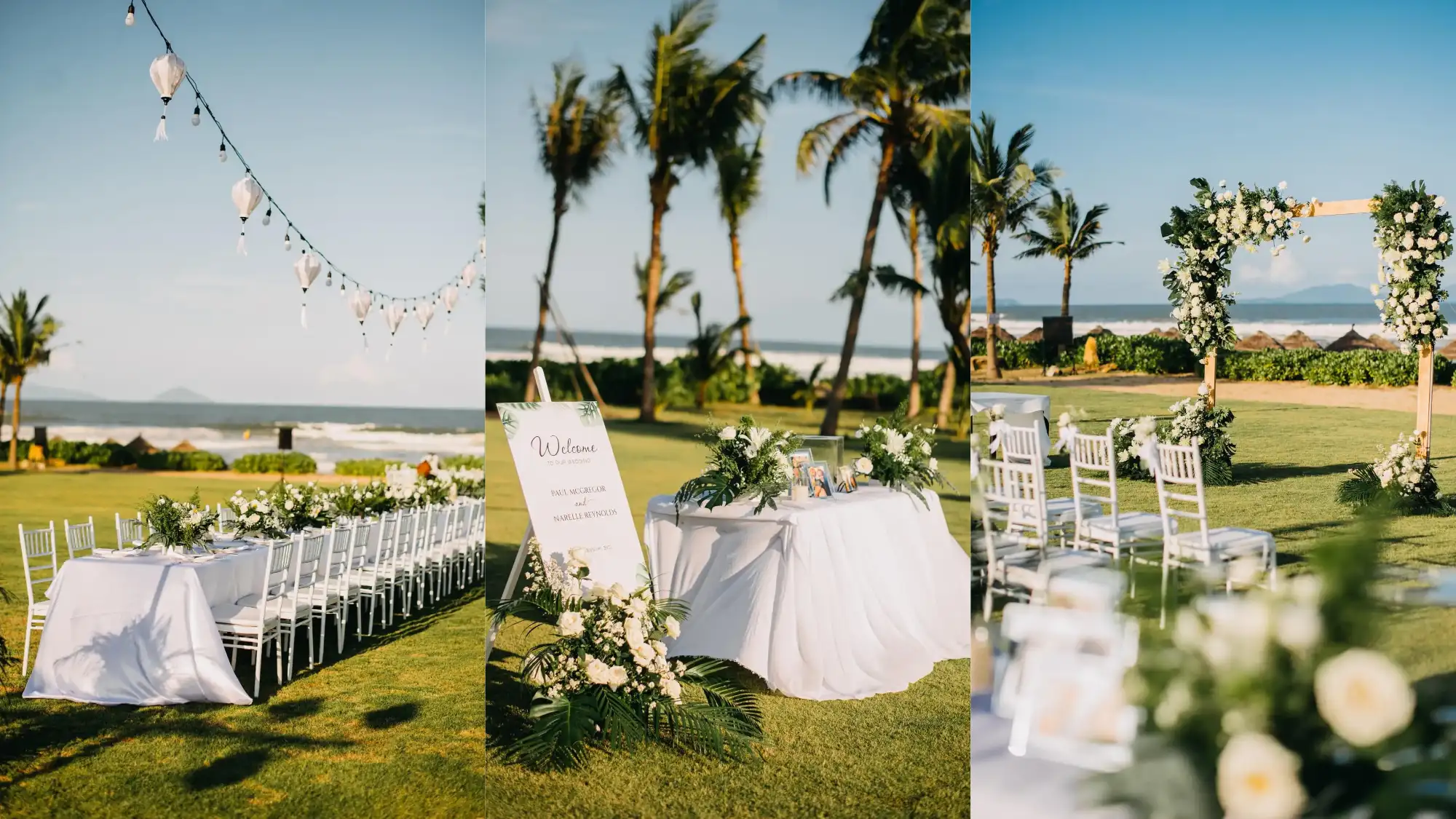
Humidity is another hidden challenge. Fresh flowers, candles, paper stationery, and even bridal hairstyles can all be affected by Hoi An’s tropical climate. Experienced local florists usually schedule installations shortly before the ceremony to keep arrangements looking fresh throughout the event. The most important question to ask a venue isn’t “What happens if it rains?” It’s: “Can you show us exactly where the ceremony and reception will be moved if the weather changes?”
A reliable venue should be able to show you its indoor backup location, explain how long the transition takes, and demonstrate that the alternative space is just as suitable—not simply a meeting room available at the last minute.The quality of a wedding venue isn’t measured by its sunny-day photos. It’s measured by how smoothly your wedding continues when conditions don’t go as planned.
Read more: How much does a wedding cost in Vietnam? Prices & budgeting tips
Every wedding venue type comes with hidden trade-offs
Choosing a wedding venue in Hoi An isn’t just about finding the most beautiful backdrop. Each venue type comes with practical trade-offs that affect your budget, guest experience, and contingency planning.
| Venue type | Best for | Things to consider |
| Beachfront | Sunset ceremonies, ocean views, destination weddings | Weather, wind, tides, and the need for a nearby indoor backup venue. |
| Riverside | Lantern-lit receptions and scenic water views | Public areas can be busy, especially near Hoi An Ancient Town. |
| Old Town / Heritage venue | Historic architecture and cultural atmosphere | Smaller guest capacity, limited vehicle access, and local noise regulations. |
| Resort garden or lawn | Private outdoor celebrations with tropical landscaping | Weather remains a factor, so an attractive indoor alternative is important. |
| Indoor ballroom | Large weddings and year-round reliability | Offers the greatest weather protection but less of Hoi An’s outdoor scenery. |
| Private villa | Fully customized celebrations | Usually requires separate vendors for catering, staffing, entertainment, and rentals. |
The biggest hidden cost isn’t always money, it’s complexity. For example, a private villa may appear more affordable at first, but you’ll often need to hire multiple suppliers individually. A beachfront venue may include full-service coordination, yet require weather contingency planning that isn’t necessary in a ballroom. Likewise, heritage venues can deliver a unique atmosphere but may limit guest numbers or event timing due to local regulations.
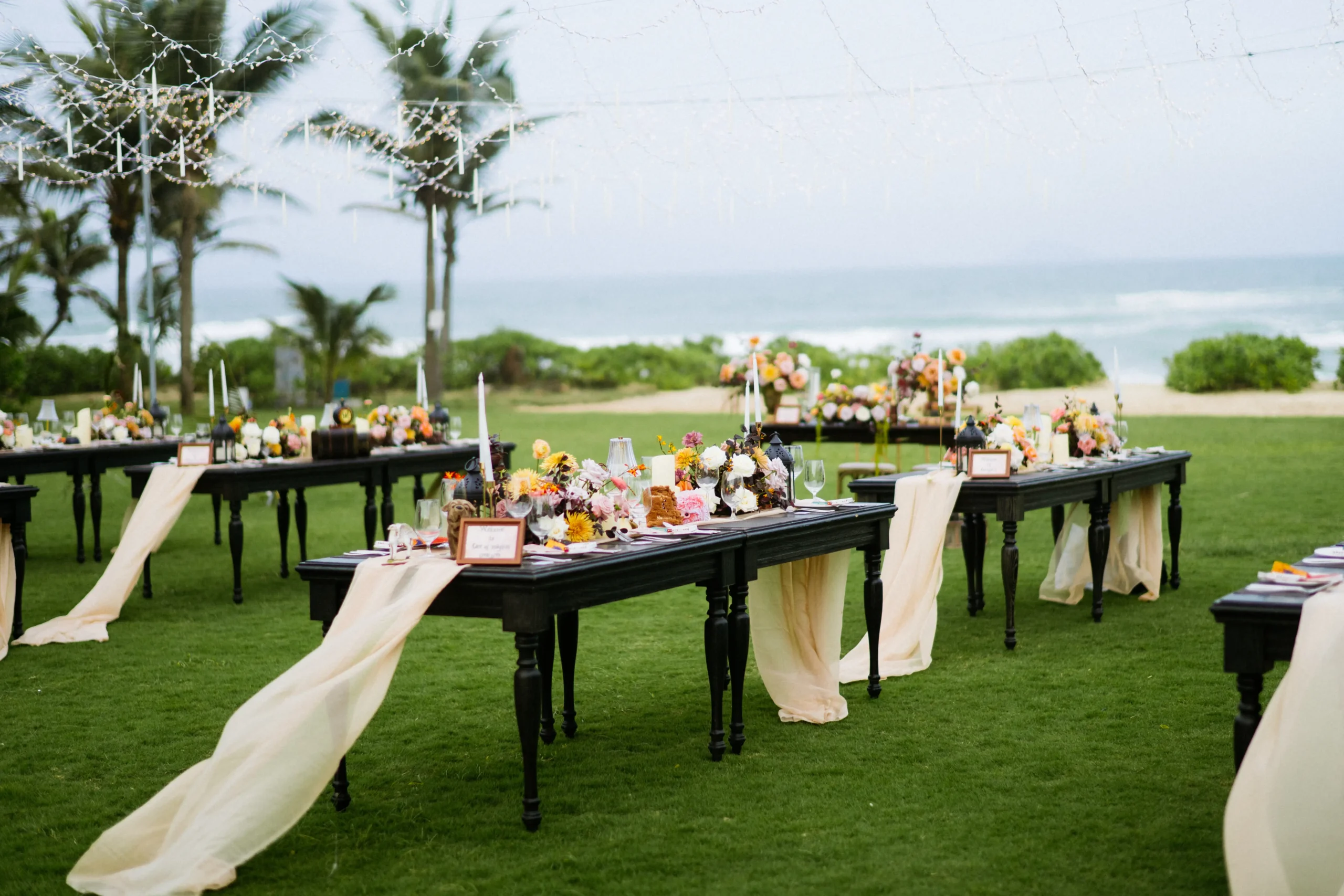
Instead of asking “Which venue is the most beautiful?”, think about this questions::
- How much planning is included?
- What happens if the weather changes?
- Can the venue comfortably accommodate my guest list?
- Will guests have easy access and parking?
- Which services are included in the package, and which require outside vendors?
The best venue isn’t necessarily the most photogenic. It’s the one whose strengths match your wedding style, guest expectations, and planning priorities.
Understand the payment schedule before you book
The venue price isn’t the only number you should pay attention to. Understanding how and when you’ll be expected to pay can help you avoid unnecessary stress as your wedding date approaches. Most wedding venues in Hoi An follow a staged payment schedule. While policies vary, it’s common to pay a 30 – 50% deposit to secure your date, with the remaining balance due several weeks before the wedding or shortly before the event. If you’re paying from overseas, remember that international bank transfers can take several business days to arrive. Always allow extra time so your payment reaches the venue before the deadline.
Before signing a contract, make sure it clearly states:
- The deposit amount and payment schedule.
- What is included in the quoted price.
- Cancellation and refund policies.
- Overtime charges and additional service fees.
- Payment methods and accepted currencies.
If the contract isn’t written in your preferred language, ask for an English version or have key terms explained before making any payment. Small misunderstandings about venue hire hours, decoration, equipment, or cleanup responsibilities can become expensive once the wedding day arrives.
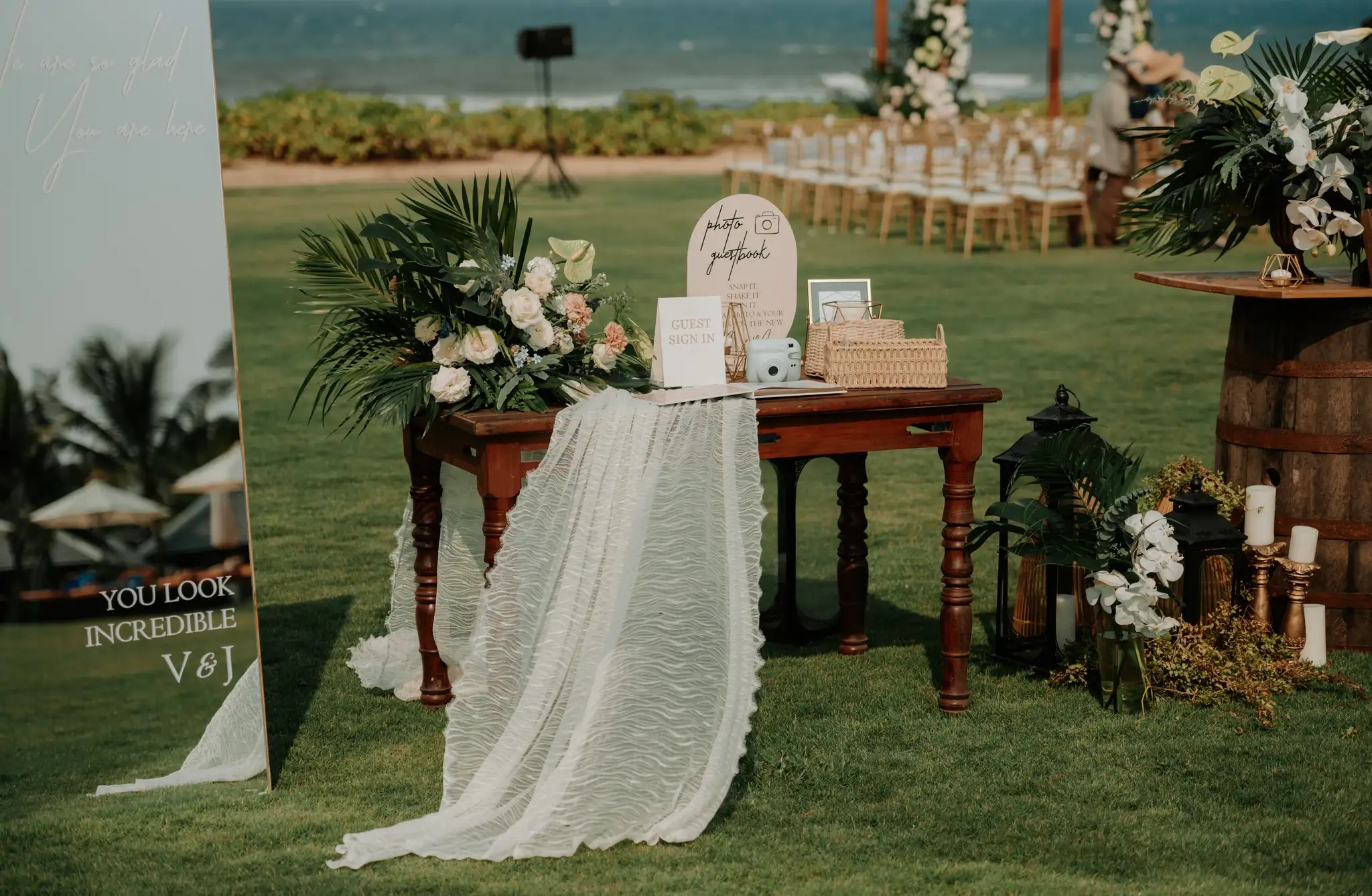
Finally, ask whether there are any costs not included in the quotation, such as premium beverages, imported flowers, extra guests, entertainment, or additional setup time. A transparent venue should be able to explain these items clearly before you commit.
A detailed contract is often a better indicator of a professional venue than a polished brochure. If every cost, timeline, and responsibility is documented upfront, you’re far less likely to face unexpected charges later.
6 questions every couple should ask before booking a wedding venue
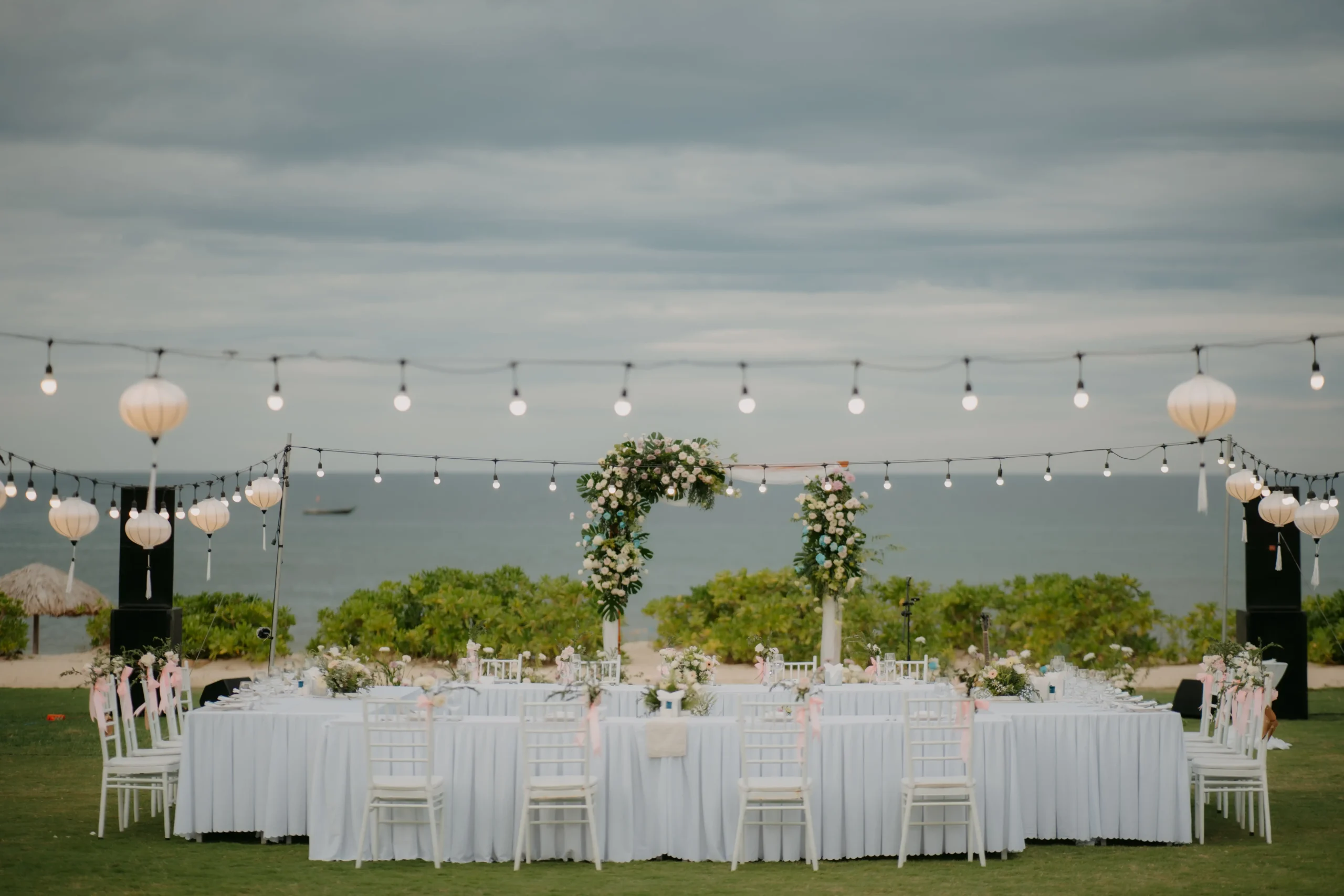
Before you sign a contract, ask these six questions. The answers will tell you far more about a venue than its photo gallery ever can.
| Ask this question | Why it matters |
| What’s included in the quoted price? | Prevents unexpected costs for furniture, sound systems, décor, service charges, or setup time. |
| What is your bad-weather backup plan? | A reliable venue should have a dedicated indoor space—not just a last-minute alternative. |
| Do you host symbolic ceremonies or legally registered marriages? | Helps you understand what paperwork you’ll need before or after your wedding. |
| When can vendors access the venue for setup and breakdown? | Avoids scheduling conflicts and additional labor costs, especially at heritage venues. |
| Can we use our own photographer, florist, or entertainment? | Some venues require in-house vendors or charge external supplier fees. |
| What weather or tide conditions should we expect at our ceremony time? | Particularly important for beachfront weddings, where tides and changing weather can affect both guest comfort and photography. |
Pay attention not only to what the venue answers, but how it answers. An experienced venue should be able to provide clear timelines, explain its contingency plans, and outline exactly what’s included in your package. Vague promises such as “We’ll sort it out on the day” are rarely a substitute for a documented plan.
Where this leaves you
Weigh your guest count, your tolerance for weather risk, and how much of the planning you actually want to hand off against everything above. Most couples find their shortlist narrows to one or two venue types fast once the decision is framed this way, rather than by scrolling photo feeds indefinitely.
If a beachfront ceremony is where you land, open water for the vows, with a genuine, walkable indoor space as backup rather than a theoretical one, and a wedding team that answers the tide, rain, and legal questions before you even finish asking – that’s the specific gap Bliss Hoi An Beach Resort & Wellness is built around.
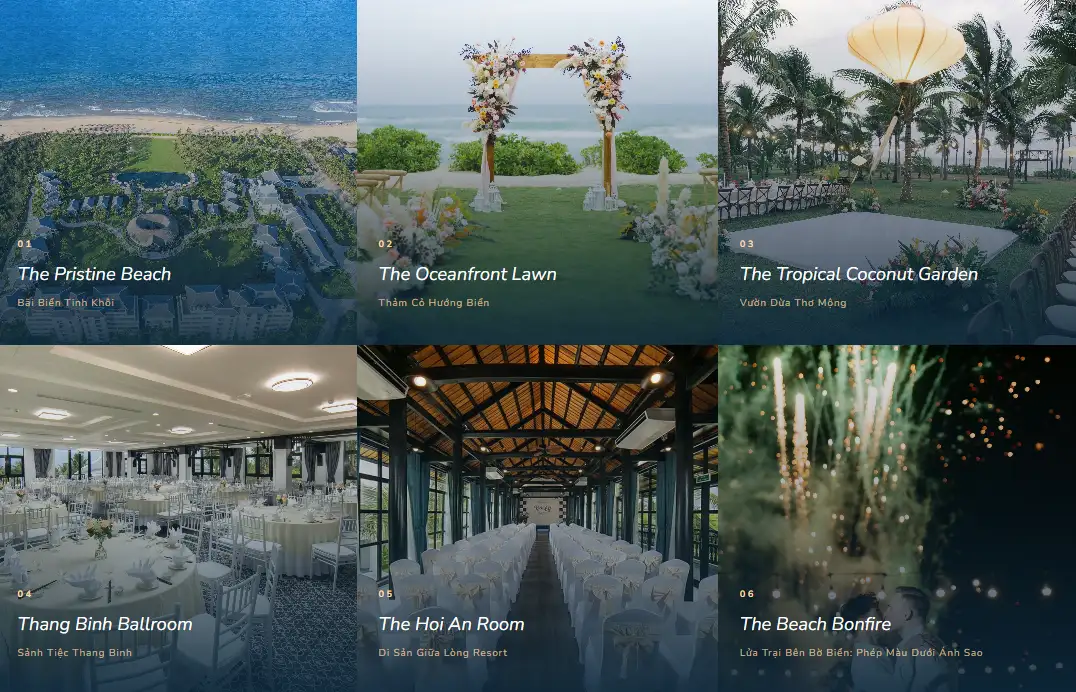
Its signature Barefoot Bliss package (from 62,150,000 VND++, applicable for 50 guests and above) is a useful benchmark for what a genuine all-in venue quote should cover before add-ons: exclusive rental of the outdoor ceremony and reception space for the full event, a handcrafted floral arch with bridal bouquet and groom’s buttonhole, 5 meters of fresh floral aisle decor, white Tiffany-style guest seating, a memory gallery table, and a standard sound system with two microphones, plus a complimentary night in a Deluxe Room, in-room lunch on the wedding day, a bottle of sparkling wine, and the resort’s signature Floating Breakfast for the couple.
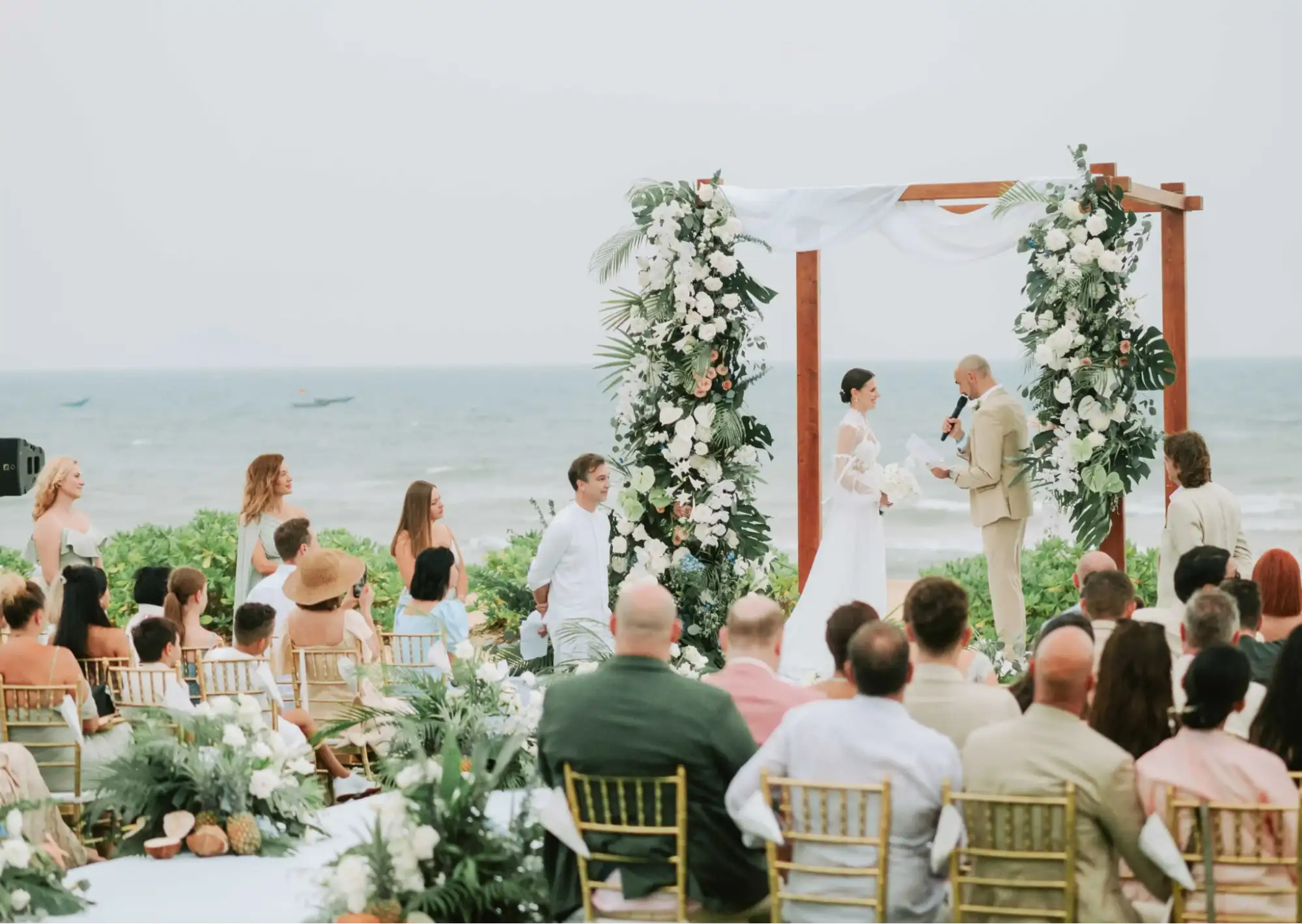
Every couple also gets one dedicated wedding coordinator from first inquiry through the last guest’s departure, which is exactly the single point of contact this guide has recommended asking for at every venue.
Check availability and get a full quote for Barefoot Bliss at Bliss Hoi An Beach Resort & Wellness
FAQ
Is Hoi An a good destination wedding location?
→ Yes – a UNESCO heritage setting with both beach and riverside options, generally running 20–40% lower than a comparable wedding in Bali or Phuket for similar scope.
What’s the best month for an outdoor wedding venue in Hoi An?
→ April, for the lowest rainfall risk (77mm average). Anything from September through November falls in typhoon season for the central coast and needs a confirmed indoor backup – not just a stated one.
Do I need a permit for an Old Town ceremony?
→ Heritage-zone venues carry their own restrictions – sound curfews, guest caps, vehicle and delivery access – separate from marriage registration rules. Confirm both directly with the venue.
Will my Hoi An wedding be legally recognized at home?
→ Usually not automatically. Most couples register legally in their home country and treat the Vietnam ceremony as a celebration. Confirm exact requirements with your civil registry before booking flights.
How far ahead should I book a wedding venue in Hoi An?
→ 9–12 months ahead for dry-season dates (February–July), when demand peaks. Wet-season dates can sometimes be booked closer in, but weigh that against the rain and typhoon-season risk above.

Related Posts
Wood Art Vietnam Workshop: What to Expect From the 3-Hour Wood Carving Class
Can You Take a Vietnam Sleeper Train Directly to Hoi An?
Where can you get Hoi An ATM Cash and how much can you withdraw?
TEST – n8n WordPress Automation
Hoi An Mid Autumn Festival 2026: 5 Things That Make It Different