


Ban Thach village: A 500-year-old sedge mat village near Hoi An
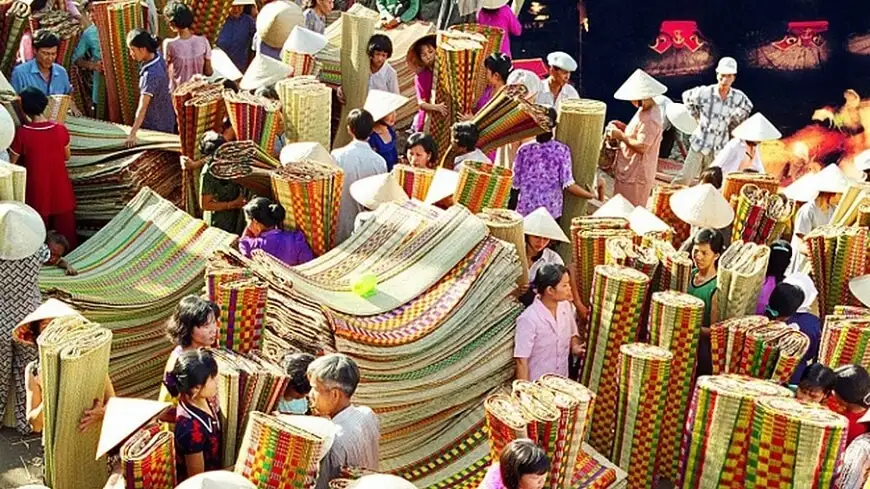
Ban Thach village is a 500-year-old sedge mat weaving village located 35 km from Hoi An Ancient Town in Quang Nam Province. Famous for its 4:00-6:00 AM sunrise mat market and generations of skilled artisans, it offers visitors an authentic glimpse into one of Central Vietnam’s oldest living craft traditions. This guide covers the best time to visit, unique cultural experiences, and essential travel tips for exploring Ban Thach Village beyond Hoi An’s popular attractions.
Where is Ban Thach village?
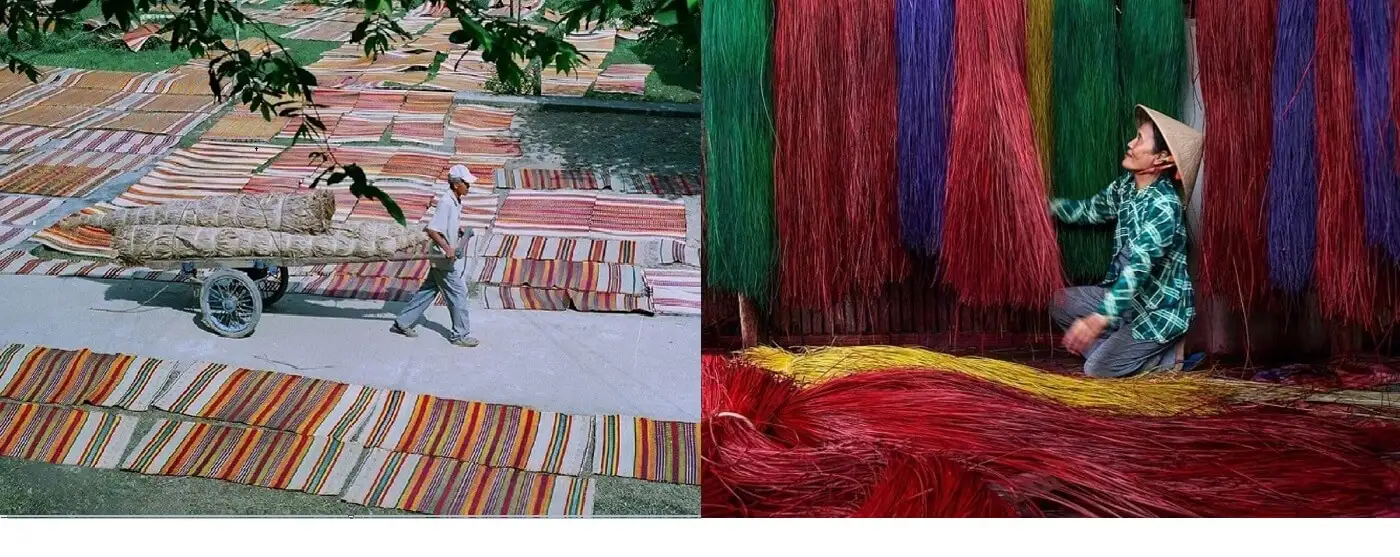
Ban Thach village is a 500-year-old sedge mat weaving village located in Duy Vinh Commune, Duy Xuyen District, Quang Nam Province, approximately 35 km south of Hoi An Ancient Town, 15 km from Tam Ky City, and 65 km from Da Nang. Nestled along the Truong Giang River, the village is recognized as one of the oldest surviving craft villages in Central Vietnam, where traditional weaving techniques have been preserved for generations.
At its peak, Ban Thach was home to around 1,356 residents, with more than 700 villagers working directly in sedge mat weaving. Nearly 90% of local household income depended on weaving and trading handcrafted mats, making the craft the economic backbone of the community. From elderly artisans to young family members, almost every household took part in different stages of production, from drying sedge grass and dyeing fibers to weaving and finishing the mats by hand.
Although fewer families weave today due to changing market demand, Ban Thach remains famous for its 4:00-6:00 AM sunrise mat market and dedicated artisans who continue to preserve the craft. Visitors can explore family workshops, meet experienced weavers, and discover a living tradition that has thrived for more than five centuries.
How far is Ban Thach Village from Hoi An?
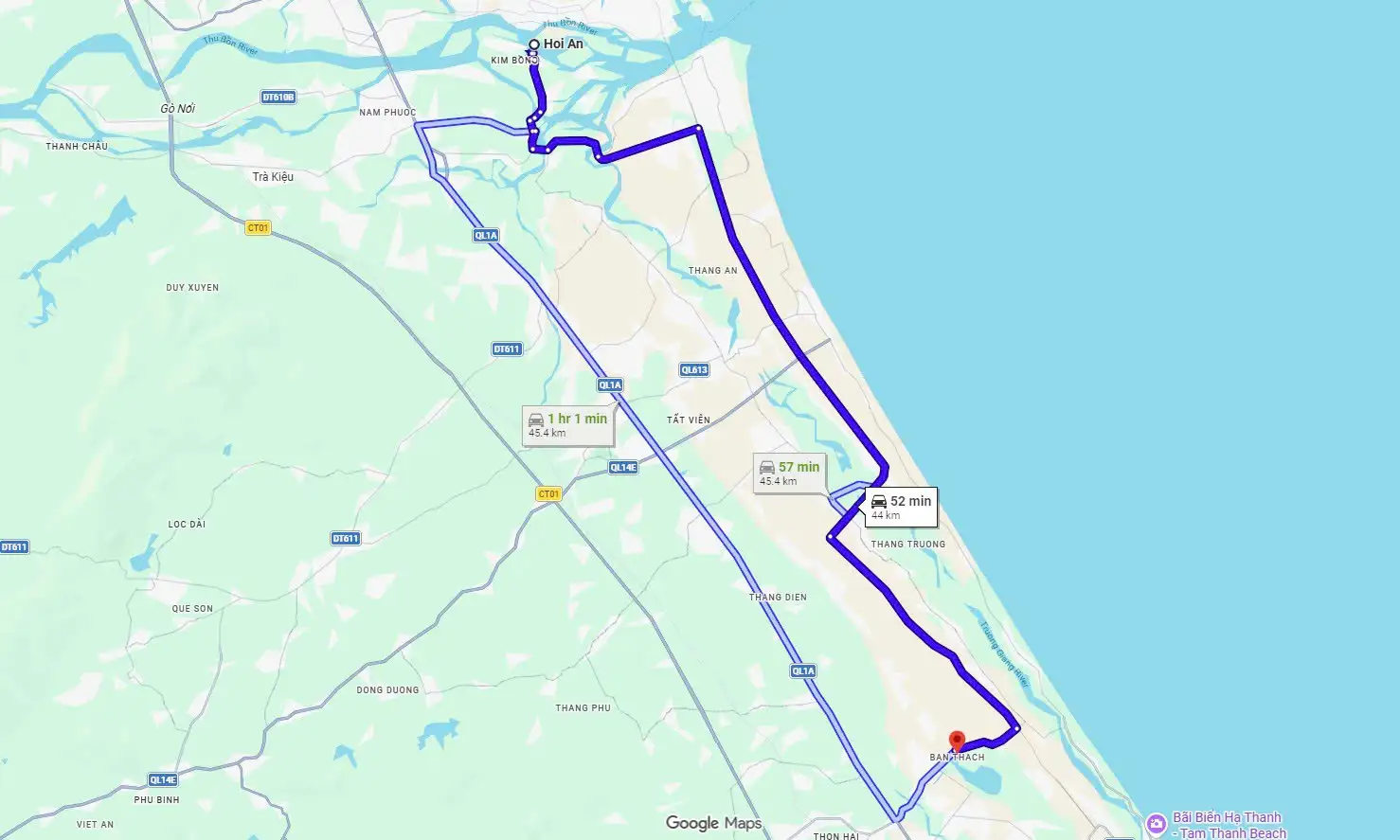
Ban Thach Village is close enough to visit as a half-day trip from Hoi An, making it an excellent choice for travelers who want to explore authentic rural life beyond the UNESCO-listed old town.
| Starting point | Distance | Travel time |
| Hoi An Ancient Town | ~35 km | 45-60 minutes |
| Da Nang | ~65 km | 1.5 hours |
| Tam Ky City | ~15 km | 20-25 minutes |
Most visitors travel by private car, motorbike, or guided tour. Cycling is also possible for experienced riders who enjoy countryside landscapes, although the distance from Hoi An makes it a full-day cycling adventure.
How to get to Ban Thach Village
There are several convenient ways to reach Ban Thach Village:
- Private car or taxi: The fastest and most comfortable option, especially if you plan to arrive before sunrise.
- Motorbike rental: Ideal for independent travelers who want to explore the rural scenery at their own pace.
- Private guided tour: A great choice for visitors interested in learning about the history of sedge mat weaving and meeting local artisans.
- Combined countryside itinerary: Many travelers pair Ban Thach Village with nearby fishing villages, rice fields, or local markets for a deeper cultural experience.
For the most memorable visit, plan to arrive between 4:00 and 6:00 AM, when the famous sunrise mat market comes alive. Watching traders negotiate bundles of colorful woven mats as the first light spreads across the village offers a completely different side of Vietnam – one that most tourists never get to experience.
What makes Ban Thach sedge mat weaving village unique?
Ban Thach village stands out for its authentic weaving culture, where traditional techniques, skilled artisans, and the iconic sunrise mat market continue to preserve one of Quang Nam’s most distinctive craft heritages. The village is free to explore, allowing visitors to walk through family-run workshops, meet local artisans, and experience everyday village life while learning about a weaving tradition that has been passed down for generations.
Discover every step of the traditional sedge mat weaving process
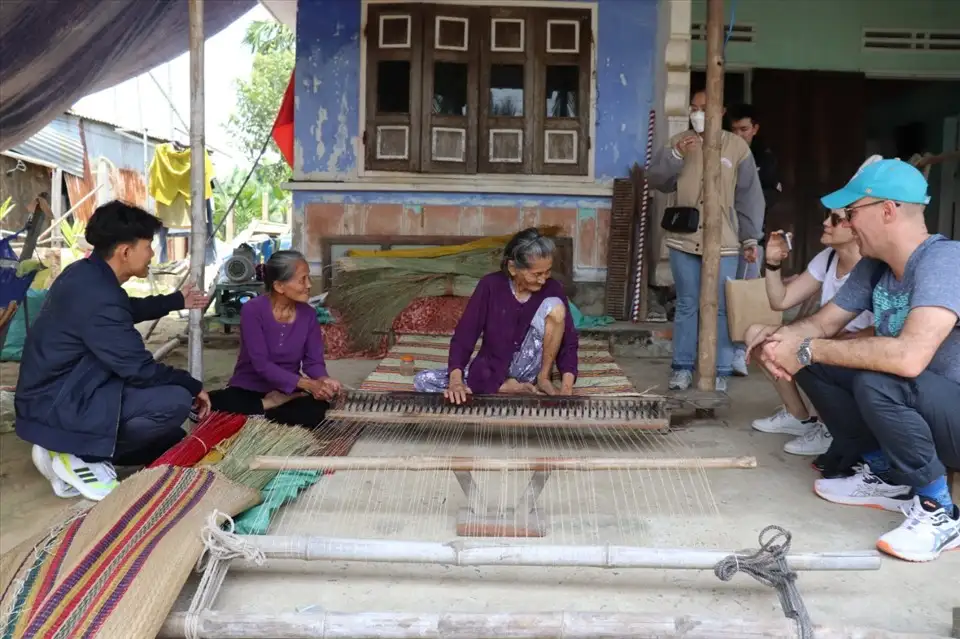
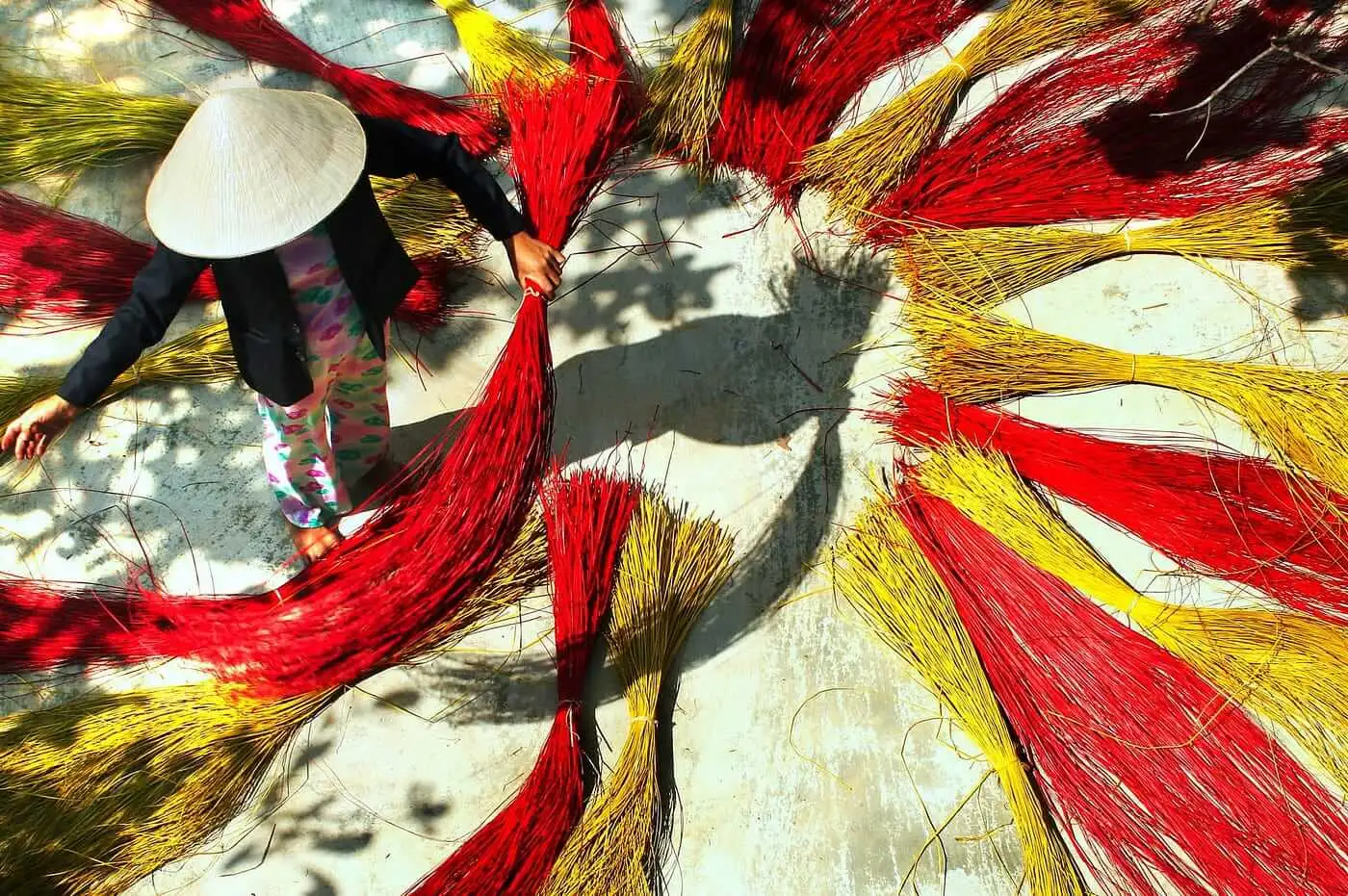
A visit to Ban Thach Village begins long before a mat reaches the loom. Local artisans carefully harvest sedge grass, sort the strongest fibers, dry them under natural sunlight for several days, and dye selected strands with vibrant colors before weaving begins. Each handcrafted mat contains thousands of tightly interwoven sedge fibers, and depending on its size and pattern, a skilled artisan may spend 4-8 hours completing a single piece using a traditional wooden loom.
Unlike factory-made mats, Ban Thach products are woven entirely by hand, allowing experienced weavers to create geometric patterns directly within the weave instead of printing designs afterward. Visitors can observe every stage inside family workshops and gain a deeper understanding of the craftsmanship behind each finished mat.
Meet veteran artisans preserving a 500-year-old craft
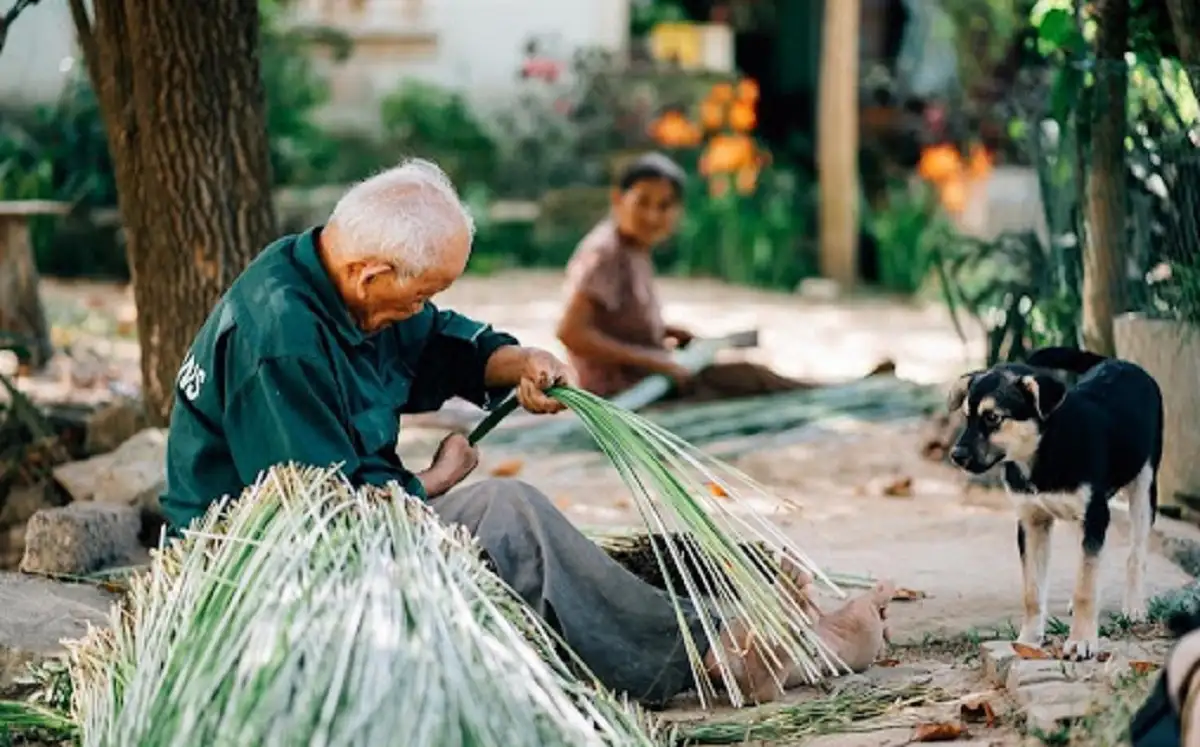
One of the most rewarding experiences in Ban Thach is meeting the village’s senior artisans, many of whom have spent 30-50 years weaving sedge mats. For these craftsmen, weaving is more than a livelihood, it is a family tradition passed from grandparents to parents and children over multiple generations.
Visitors often have the opportunity to hear personal stories about how the craft has changed, learn why certain weaving patterns are unique to Quang Nam, and even try operating a traditional wooden loom under the guidance of experienced artisans. These interactions provide insights that cannot be found in museums or souvenir shops.
Experience the famous sunrise mat market
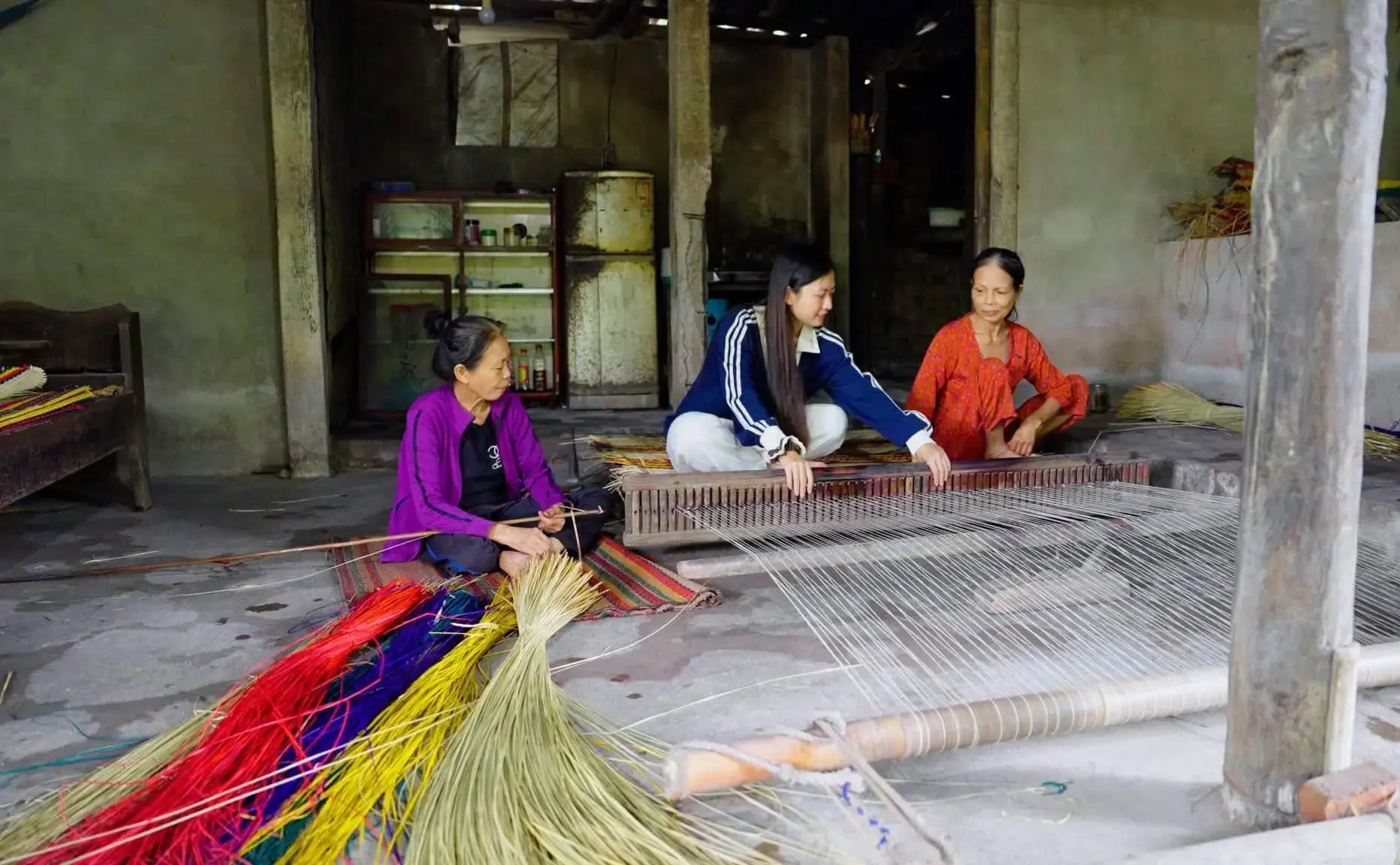
Between 4:00 AM and 6:00 AM, Ban Thach’s historic mat market becomes the center of village life. Dozens of local traders and weaving families gather before dawn to buy, sell, and transport newly completed mats to markets across Quang Nam and neighboring provinces.
Unlike markets created for tourism, this remains an active wholesale trading tradition that has existed for generations. Visiting at sunrise allows travelers to witness authentic negotiations, colorful stacks of handcrafted mats, and one of Vietnam’s last remaining traditional rural markets.
Join a hands-on weaving experience
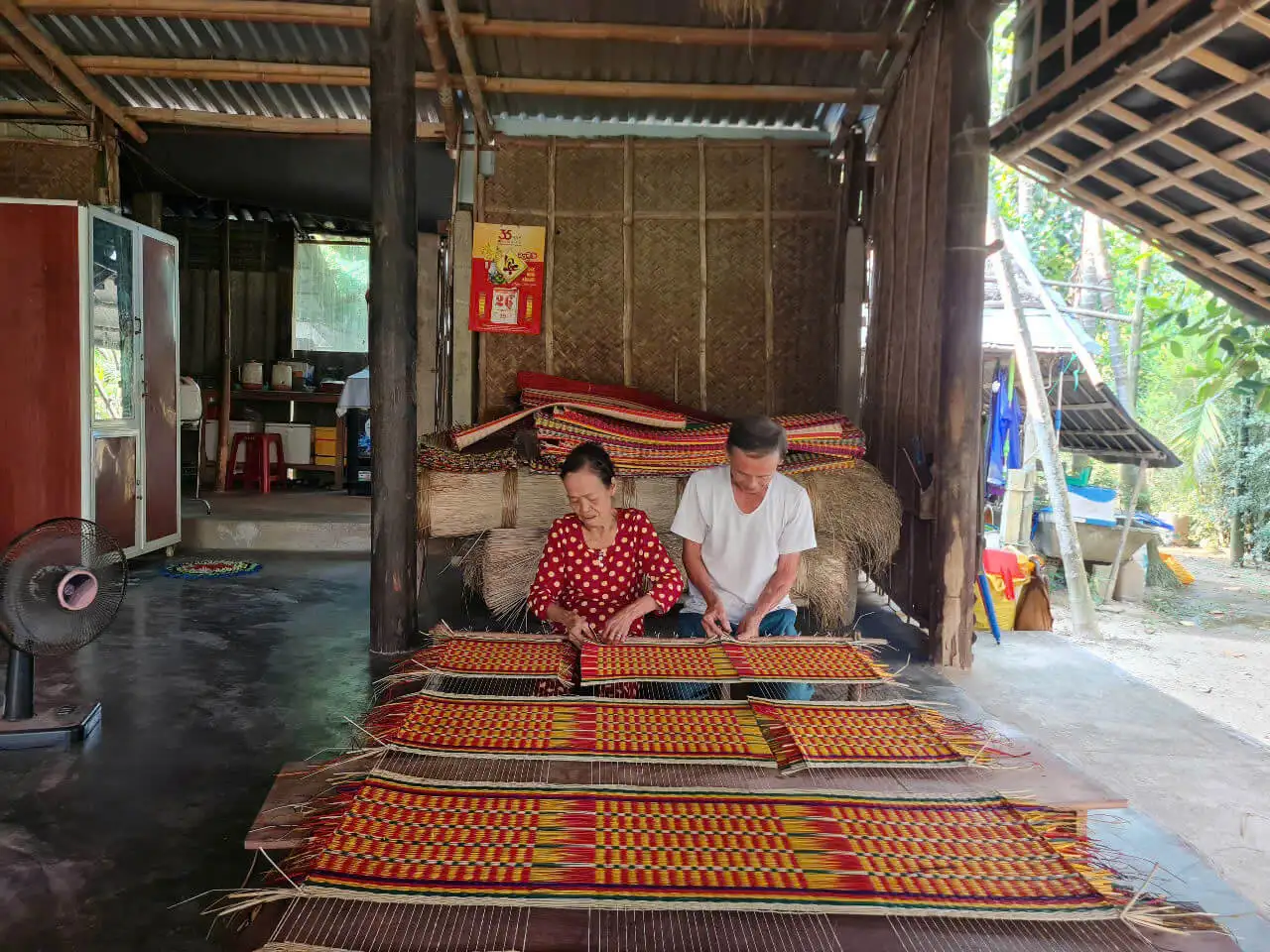
Several local families welcome visitors to try simple weaving techniques using traditional looms. Under the guidance of local artisans, guests can learn how sedge fibers are stretched, aligned, and woven into durable mats while discovering the patience and precision required for every row.
This interactive experience offers a deeper appreciation of the skill behind Ban Thach’s handcrafted products and creates a meaningful connection with one of Quang Nam’s oldest living craft traditions.
Read more: One Day on Cam Kim Island: Hoi An’s Boat-Building Village Most Tourists Never Find
Meet the artisans preserving Ban Thach Village’s 500-year weaving heritage
The heart of Ban Thach village lies in its skilled artisans, who have preserved the traditional sedge mat weaving craft through three to five generations. Despite the decline in weaving households, many master weavers continue to practice and pass on techniques that have shaped one of Quang Nam’s oldest craft villages.
Unlike staged cultural performances, weaving in Ban Thach still takes place inside family homes. Visitors can meet local artisans, learn their stories, and witness a living craft that remains an essential part of the village’s identity today.
Stories passed down through generations
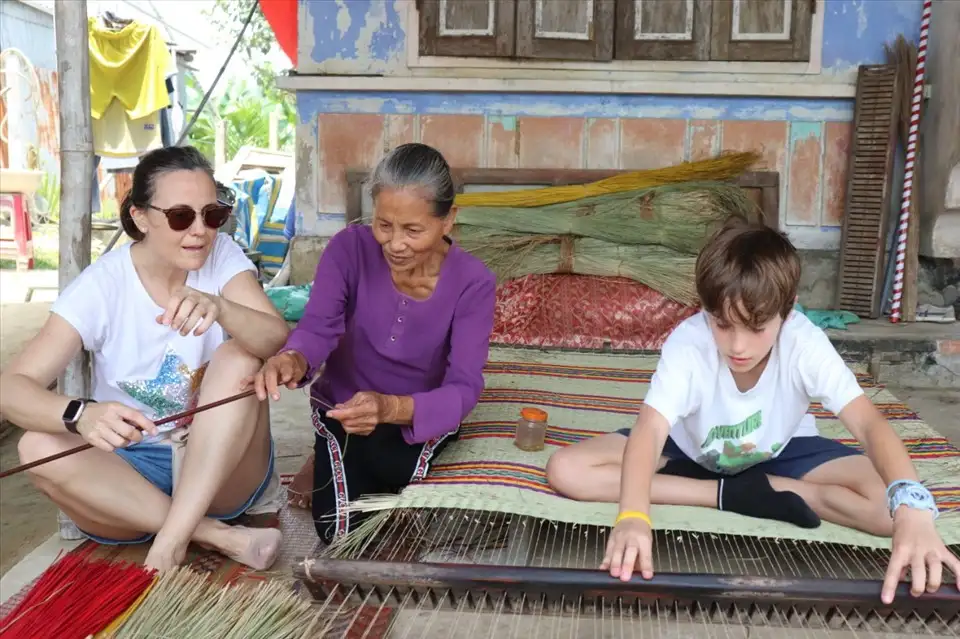
Many veteran artisans began learning to weave as children, sitting beside their parents and grandparents after school. Instead of formal lessons, every technique, from preparing sedge fibers to creating traditional patterns was taught through daily practice inside the family. Today, many weavers have 30-50 years of experience, making them living archives of Ban Thach’s cultural heritage.
Older residents often remember when nearly every household owned one or two wooden looms. During the village’s golden period, weaving employed more than 700 villagers, and almost 90% of local household income came from producing and selling handcrafted sedge mats. Those memories remain an important part of Ban Thach’s identity, even as the village has adapted to modern economic changes.
Why do Ban Thach artisans continue weaving?
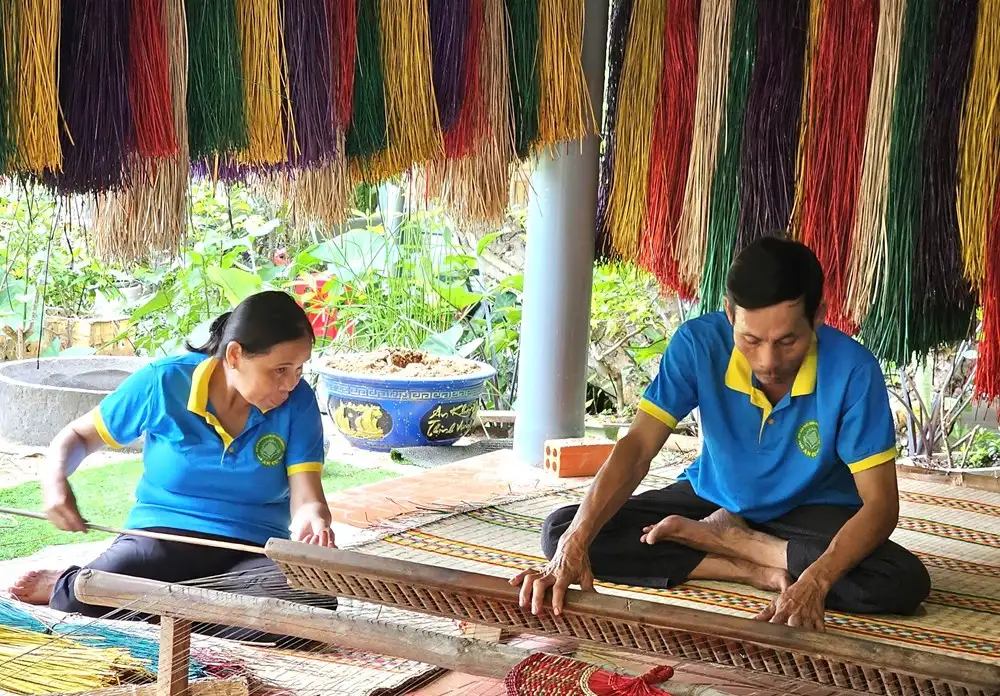
For many master weavers, continuing the craft is a personal choice rather than an economic one. Factory-made mats are cheaper and faster to produce, yet handcrafted weaving represents generations of family history that cannot be replaced by machines. Many artisans still use wooden looms inherited from their parents, believing that every mat carries the skills, patience, and values of those who came before them.
Rather than allowing the tradition to disappear, local families increasingly welcome visitors to learn about their work, share stories, and observe the weaving process firsthand. Responsible tourism has become an important way to support artisan livelihoods while helping preserve one of Central Vietnam’s oldest living craft traditions.
A heritage that depends on the next generation
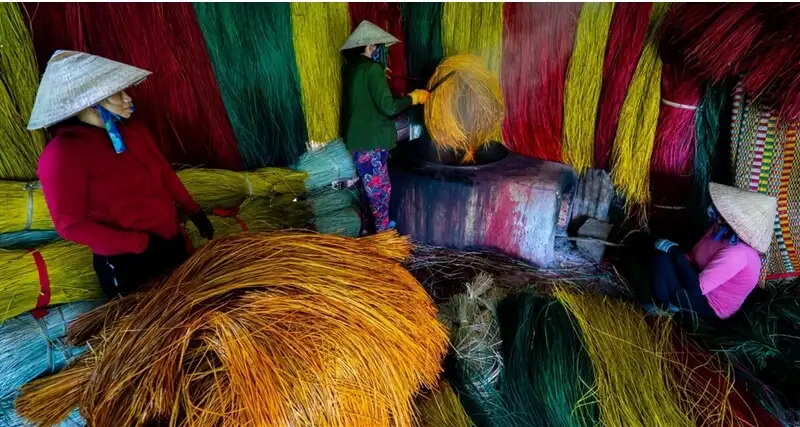
The greatest challenge facing Ban Thach today is not the weaving itself, but ensuring the knowledge survives. Although fewer young people choose weaving as a full-time profession, many artisan families still teach their children the traditional techniques so the craft will not be forgotten.
For visitors, these conversations often become the highlight of the journey. Beyond watching artisans weave, they gain a deeper understanding of the dedication, resilience, and pride that have allowed Ban Thach Village to preserve its 500-year-old weaving heritage through generations.
Best time to visit & What to combine with your trip
Ban Thach village can be visited year-round, but the best experience is in the dry season from February to August, when sunny weather creates ideal conditions for weaving, drying sedge mats, and exploring the countryside. To witness the village at its most vibrant, arrive between 4:00 AM and 7:00 AM, when the famous sunrise mat market is in full swing and the soft morning light creates perfect photography conditions.
The best season to visit
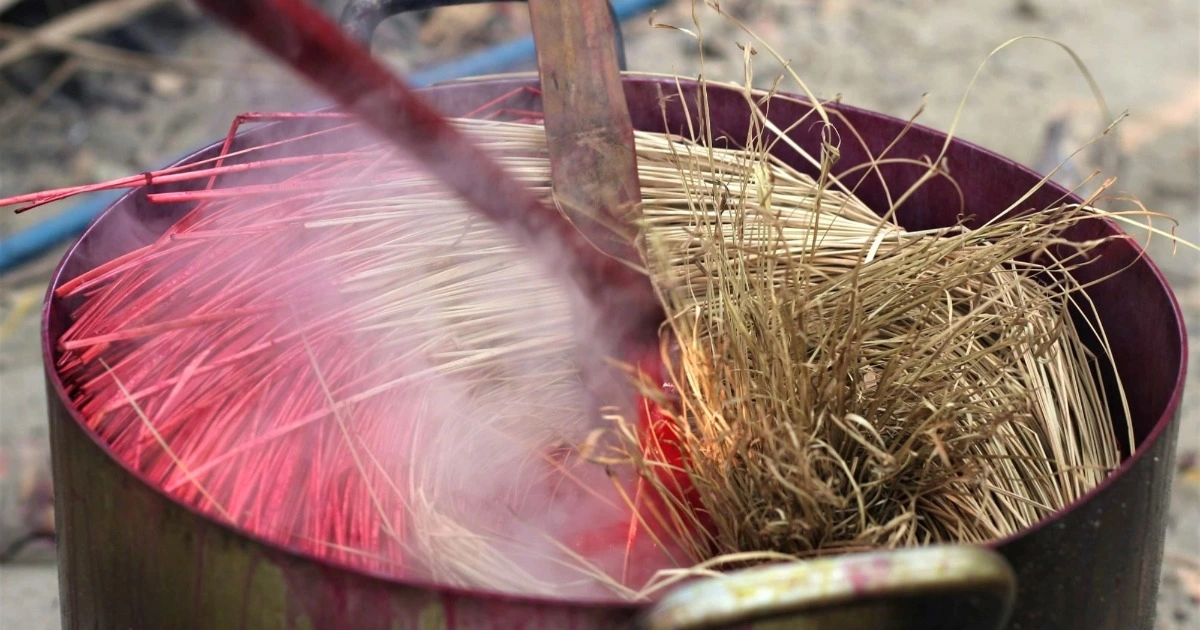
Each season offers a slightly different experience, but dry months provide the most comfortable weather for walking, cycling, and outdoor photography.
- February – April: Pleasant temperatures, green rice fields, and excellent weather for sightseeing.
- May – August: Sunny mornings highlight the colorful woven mats drying outdoors, making this the best time for photography.
- September – January: Rain is more common, but the village remains peaceful with fewer visitors and a slower local atmosphere.
If your schedule allows, plan to arrive before sunrise. The village is at its liveliest in the early morning, when artisans begin their day and freshly woven mats appear throughout workshops and village lanes. By late morning, daily activities slow down as the temperature rises.
Combine Ban Thach with other countryside attractions

Ban Thach Village is an ideal stop on a countryside journey beyond Hoi An. Because it is located between Hoi An and Tam Ky, visitors can easily combine several cultural and natural attractions in one day.
- Visit Ban Thach village at sunrise to experience the traditional mat market.
- Cycle through rice paddies and quiet rural roads surrounding the village.
- Explore the nearby coastline and peaceful fishing communities.
- Continue to Hoi An Ancient Town for its historic streets, cafés, and lantern-lit evenings.
- End the day relaxing at An Bang Beach or Cua Dai Beach after a morning of cultural exploration.
Why include Ban Thach in your Hoi An itinerary?
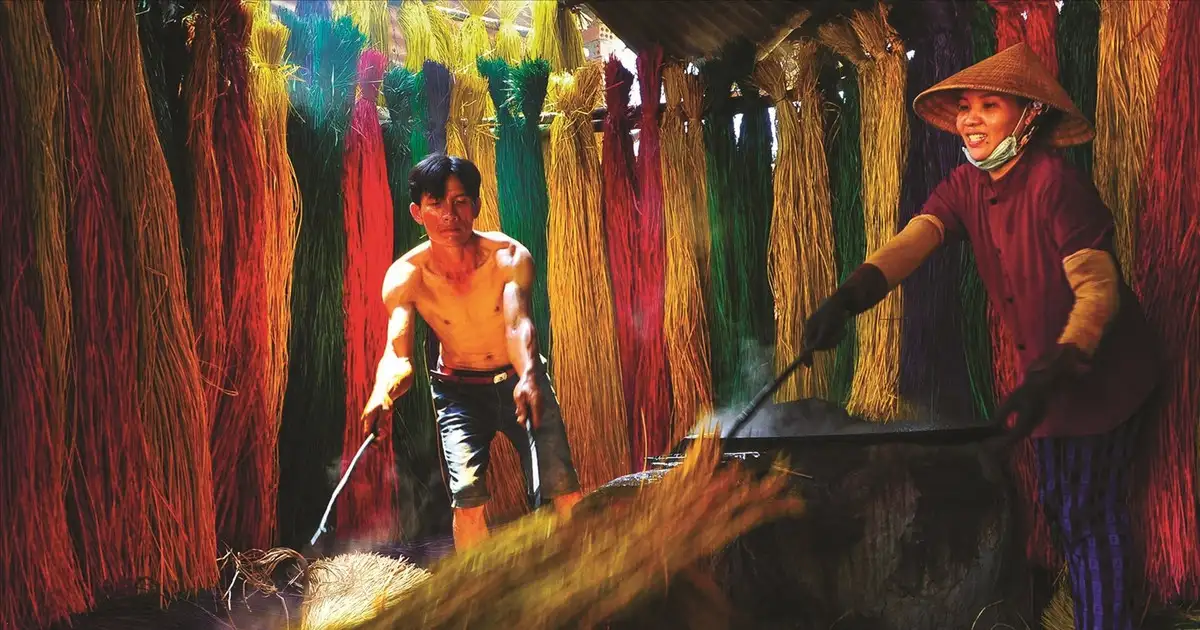
While Hoi An is famous for its lantern-lit streets and historic buildings, Ban Thach village offers something completely different, a chance to experience living craftsmanship, peaceful countryside landscapes, and authentic local culture. It is an ideal destination for travelers who want to explore beyond the usual tourist attractions and discover a quieter side of Central Vietnam.
Travel tip: If you’re looking to experience a quieter, more authentic side of Central Vietnam, visit Ban Thach on a weekday morning. You’ll enjoy a more relaxed atmosphere and better opportunities to interact with local artisans while avoiding weekend crowds.
Read more: Tam Tien Fish Market: A Vibrant Sunrise Scene in Quang Nam Province
Plan your Ban Thach adventure the right way with Bliss Hoi An
A visit to Ban Thach village becomes even more memorable when paired with a relaxing stay at Bliss Hoi An Beach Resort & Wellness. Located along the peaceful coastline of Quang Nam, the resort offers the perfect balance between cultural exploration and beachfront wellness. After discovering the village’s centuries-old tradition of handwoven sedge mats, guests can return to Bliss Hoi An to unwind with ocean views, outdoor yoga sessions, and authentic Vietnamese hospitality.
Start your morning with Ban Thach’s living heritage
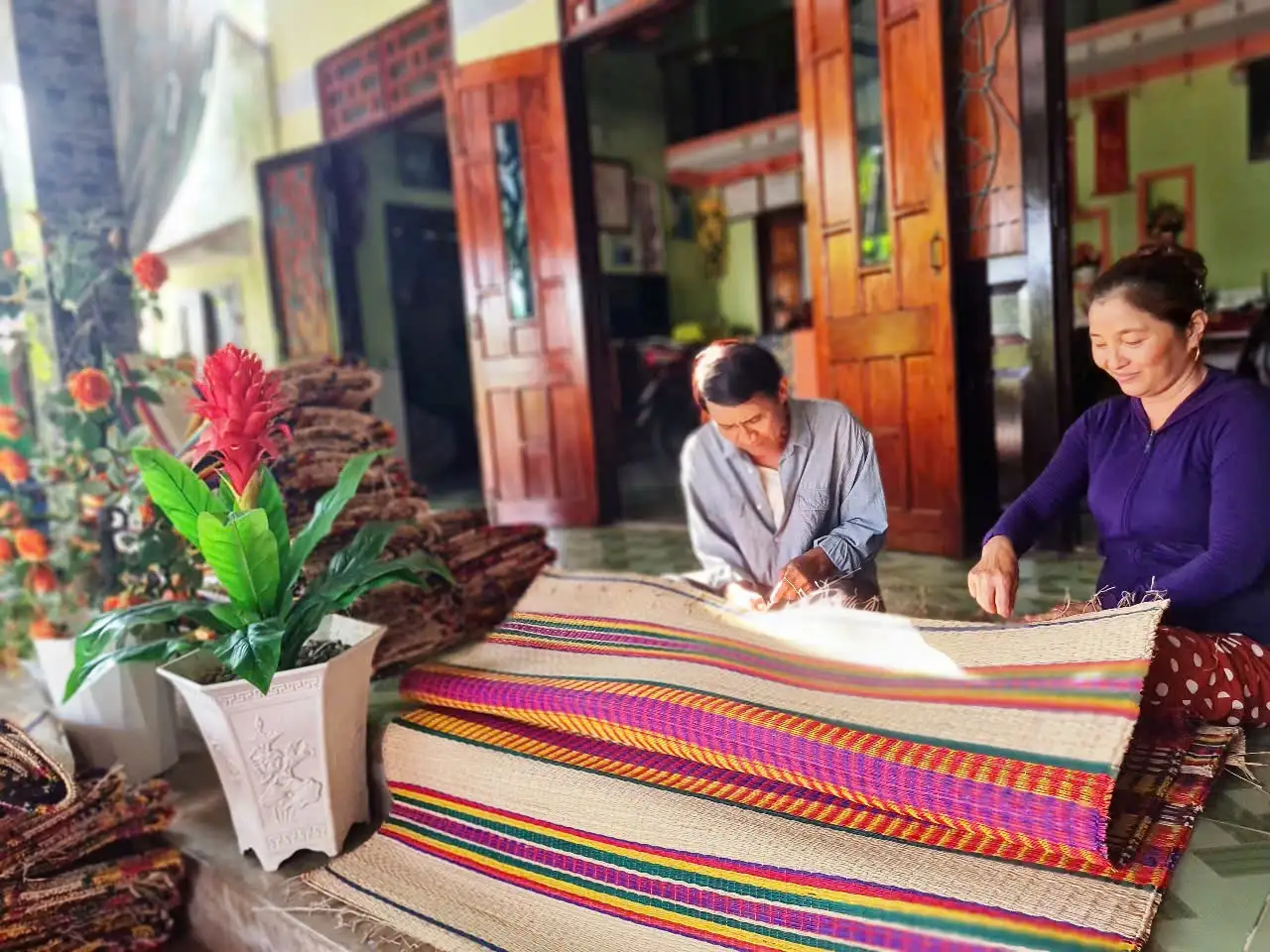
Begin your day before sunrise with a visit to Ban Thach Village, where the famous 4:00-6:00 AM mat market offers a rare glimpse into one of Quang Nam’s oldest trading traditions. Watch local artisans bring freshly woven sedge mats to market, meet weaving families, and experience the authentic rhythm of village life before the crowds arrive.
Beyond the bustling market, stroll through quiet village lanes lined with traditional wooden homes and family workshops that have preserved the art of sedge mat weaving for more than 500 years. Listening to artisans share their stories and lifelong dedication to the craft offers a meaningful cultural experience that reveals a different side of Quang Nam beyond Hoi An’s historic streets.
Reconnect through beachfront yoga at Bliss Hoi An
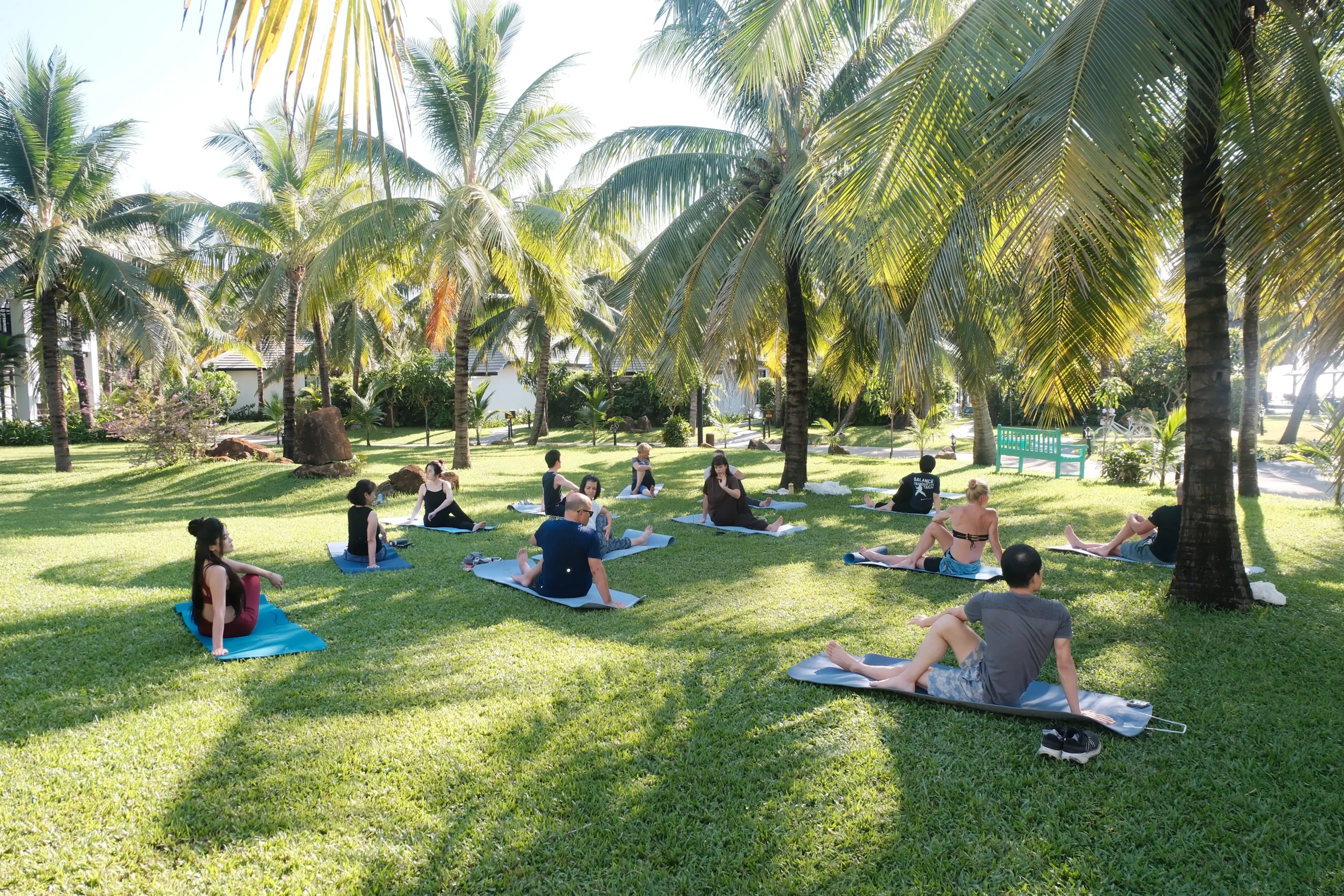
After an inspiring morning in Ban Thach, return to Bliss Hoi An Beach Resort & Wellness for one of its signature wellness experiences, outdoor yoga by the sea. Guided yoga sessions are held in an open-air setting overlooking Binh Minh Beach, where the sound of gentle waves and fresh ocean breeze create a naturally calming environment.
Suitable for both beginners and experienced practitioners, each session focuses on mindful breathing, gentle stretching, and restoring energy after a morning of exploration. The combination of traditional cultural discovery and holistic wellness reflects the resort’s philosophy of helping guests experience Central Vietnam at a slower, more meaningful pace.
Unwind with wellness experiences inspired by nature
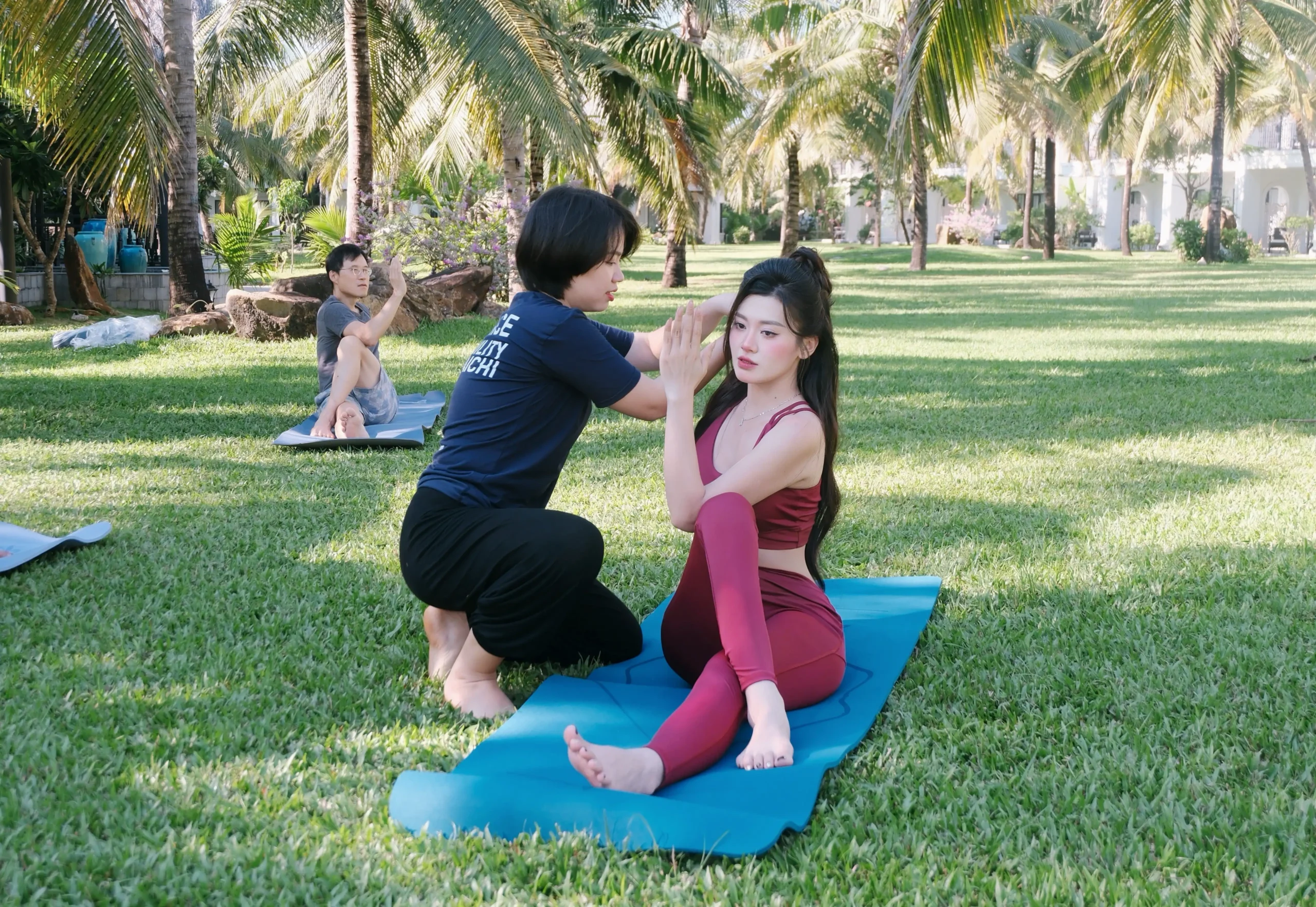
Beyond yoga, Bliss Hoi An offers a complete wellness retreat designed for travelers seeking rest and rejuvenation. Spend the afternoon swimming in the oceanfront infinity pool, strolling along the resort’s private beach, or enjoying a relaxing spa treatment that combines traditional Vietnamese wellness practices with modern therapeutic techniques.
As evening falls, guests can savor fresh seafood, Quang Nam specialties, and international cuisine while overlooking the East Sea. Watching the sunset from the beachfront restaurant provides a peaceful ending to a day filled with authentic cultural encounters and mindful relaxation.
Why choose Bliss Hoi An for your Ban Thach journey?
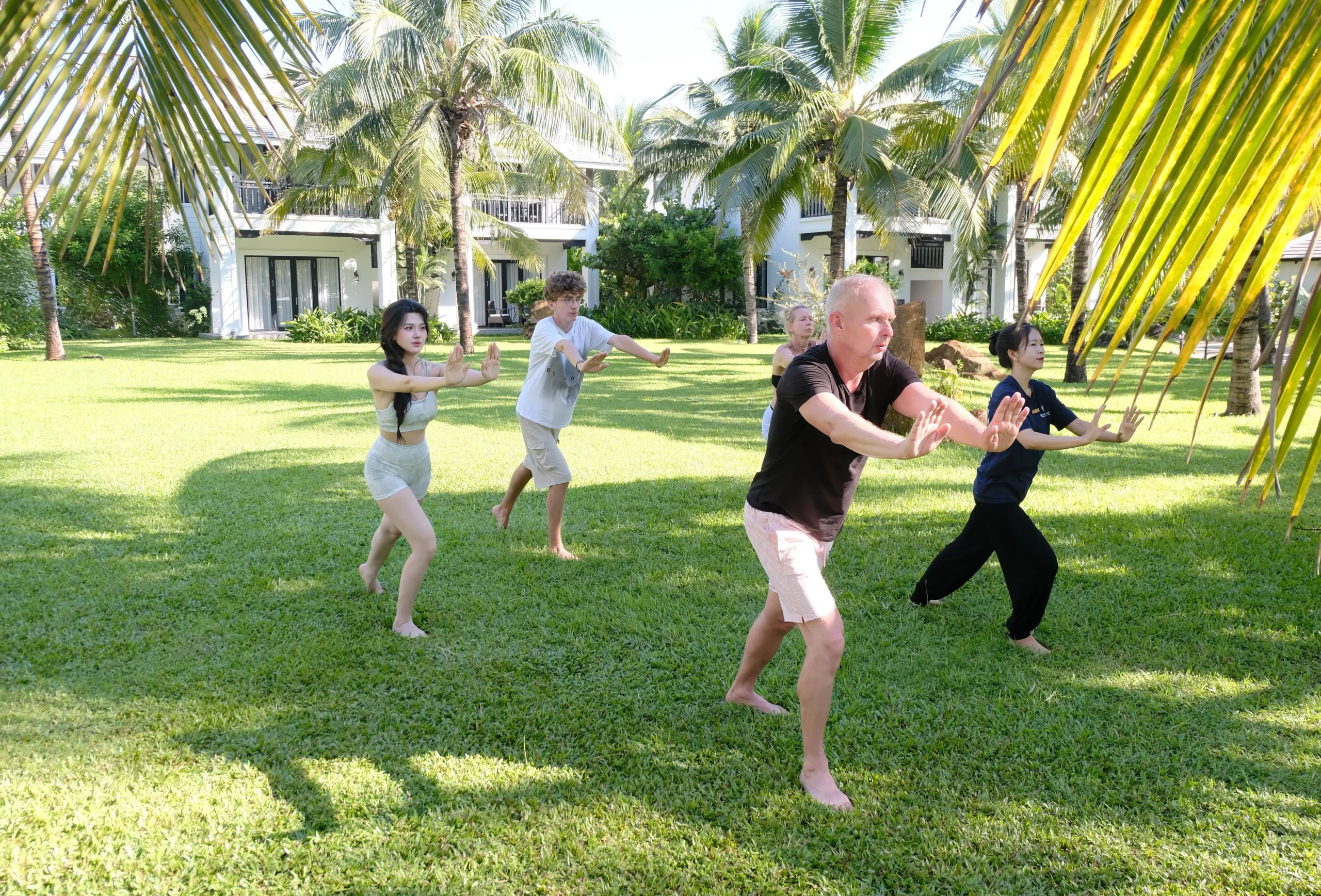
Bliss Hoi An is more than a luxury beachfront resort, it is a destination where culture, wellness, and nature come together. By combining a visit to Ban Thach Village with yoga sessions, spa experiences, oceanfront accommodation, and locally inspired cuisine, guests can enjoy a deeper connection with Quang Nam beyond its famous landmarks.
For travelers looking to balance cultural exploration with personal wellbeing, Bliss Hoi An offers an experience that is both enriching and restorative, transforming a simple day trip into a memorable wellness journey through Central Vietnam.
Tips for a respectful and rewarding visit
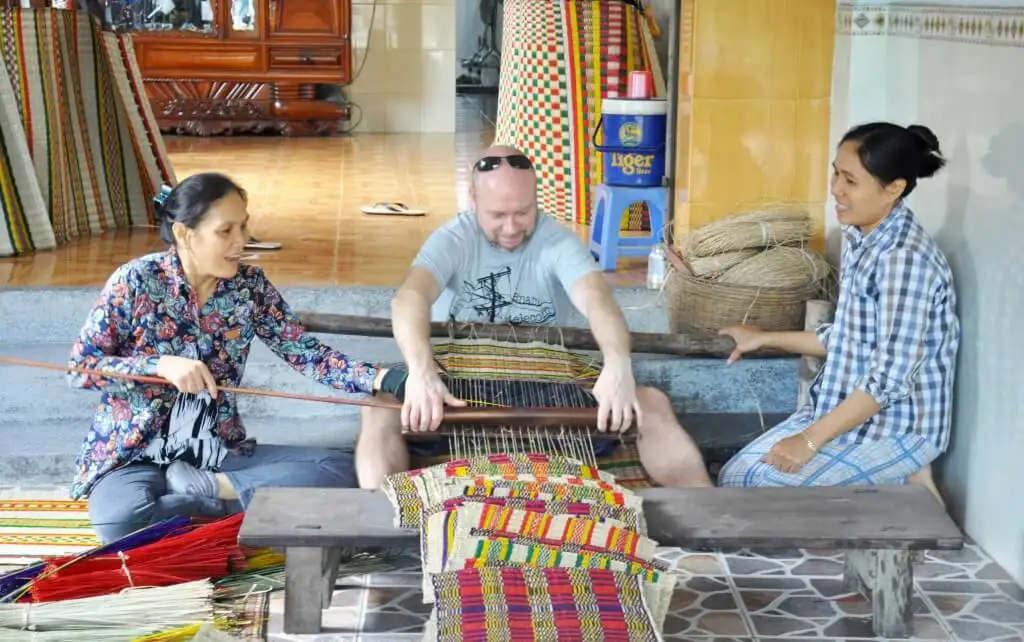
A few simple travel habits can help you enjoy a more authentic experience while supporting the local community at Ban Thach village. Respecting local customs and artisan families also helps preserve the village’s centuries-old sedge mat weaving tradition.
- Visit early for the best local experience: Arrive between 4:00 AM and 6:00 AM to experience Ban Thach’s famous sunrise mat market, enjoy the cooler weather, and watch local artisans begin their day before the village becomes busier.
- Respect local artisans and family workshops: Most weaving takes place inside private homes, so always ask permission before taking photos or entering workshops. A friendly conversation often leads to meaningful insights into the village’s 500-year-old weaving tradition.
- Support Ban Thach’s traditional craft: Purchase handmade sedge mats or woven souvenirs directly from artisan families whenever possible. Your support helps preserve one of Quang Nam’s oldest craft villages while providing sustainable income for local weavers.
- Dress comfortably and travel responsibly: Wear lightweight clothing and comfortable shoes for walking around the village. Respect local customs, keep the environment clean, and avoid disturbing artisans while they work to help protect Ban Thach’s living cultural heritage.
Respecting local customs helps create a more enjoyable experience for both visitors and residents. Small actions, such as supporting local artisans and following village etiquette, contribute to sustainable tourism. By visiting Ban Thach village responsibly, you also help preserve its unique cultural heritage for future generations.
Frequently asked questions about Ban Thach village
Do I need a tour to visit Ban Thach Village?
→ No. You can visit Ban Thach village independently by car, taxi, or motorbike. However, a local guide can provide valuable insights into the village’s history and the traditional sedge mat weaving process.
How much time should I spend in Ban Thach Village?
→ Most visitors spend 2-3 hours exploring the village, meeting local artisans, and browsing handmade products. If you enjoy photography or slow travel, consider allowing half a day.
Is Ban Thach Village suitable for families?
→ Yes. The village has a peaceful atmosphere, making it suitable for families, couples, and cultural travelers. Children can also enjoy watching artisans weave colorful sedge mats by hand.
Can I interact with local artisans?
→ Yes. Many artisan families welcome respectful visitors and are happy to share their weaving techniques or explain how sedge mats are made. Always ask before entering workshops or taking photographs.
Are handmade sedge mats easy to take home?
→ Yes. Besides traditional full-size mats, many workshops offer smaller handcrafted items that are lightweight and convenient for international travelers to pack.
Is Ban Thach Village crowded?
→ No. Compared with many attractions around Hoi An, Ban Thach village remains a quiet destination with relatively few tourists, offering a more authentic and relaxing cultural experience.

Related Posts

8+ experiences in Tet Lunar New Year Hoi An worth trying

Hoi An to Phu Yen by road: 5 stops worth getting out of the car for

Hoi An to Quy Nhon: How to get there, routes and what to know
TEST – n8n CREATE 002

Gym Hoi An: Prices, Day Passes and Options for Travelers