

Cycling in Hoi An: A Local’s Guide to the Real Countryside
If you are wondering whether to add cycling to your Hoi An trip, the short answer is yes for most travelers: some of the best parts of Hoi An sit between the famous sights, not at them.
Quick check:
- Best areas: Tra Que vegetable fields, Cam Thanh, Cam Kim Island, and the coastal road to An Bang Beach.
- Best time: Shortly after sunrise, especially from March to August when heat builds fast.
- Best style: Short rides with frequent stops beat long, distance-focused routes.
- Where you stay matters: A countryside or beachside base puts scenic roads at your door instead of city traffic.
Why Travelers Say Their Best Hoi An Memories Happen Away From the Ancient Town
The best Hoi An memories often form on quiet roads rather than at the famous sights. The Ancient Town earns its reputation – UNESCO listed Hoi An Ancient Town as a World Heritage Site in 1999 as one of the best-preserved Southeast Asian trading ports from the 15th to the 19th centuries. Yet talk to travelers who stay several days, and a pattern appears: their favorite moments rarely involve the places they expected.
One couple remembers a farmer waving them under a palm shelter to rest during an afternoon ride. Another traveler recalls a riverside path where fishing boats drifted through the morning mist. On our own rides around Hoi An, the moments that stayed with us were never planned. They happened while moving slowly through the countryside, not while ticking sights off a list. That is where cycling separates itself from sightseeing – the journey becomes the experience.
Some of the best parts of Hoi An are found between the famous attractions, not at them.
The Sounds, Smells, and Moments You Miss When Traveling by Car
A bicycle gives you the parts of Hoi An a car seals out: sound, smell, and the small encounters in between. Early in the morning you hear roosters before the villages wake and the rasp of fishing nets pulled from the river. In the growing season, the breeze carries the scent of fresh vegetation across open fields.
Near the local markets the air changes completely. Fresh herbs, grilled pork, Vietnamese coffee, and seafood blend into a sensory layer impossible to register from inside a vehicle. Riding near Cam Thanh, we kept stopping for reasons that had nothing to do with landmarks – a conversation, a photograph, a small roadside café, a curious dog following the bike for a few hundred meters.
Cars are efficient. Bicycles are immersive. For many travelers, that difference defines Hoi An.
Five Places You Are Likely to Stop Without Planning To
Five kinds of stops appear again and again on a Hoi An ride, none of them on a typical itinerary. The best cycling experiences tend to happen unplanned, and these are the ones travelers mention most.
A Village Market That Reveals Everyday Life
One of the biggest advantages of exploring Hoi An by bicycle is that it naturally brings travelers into places they would rarely visit otherwise. Small village markets scattered throughout Cam Kim Island, Cam Thanh, and the countryside around Tra Que Vegetable Village are among those unexpected discoveries. Unlike Hoi An Central Market, which welcomes large numbers of tourists every day, these neighborhood markets exist primarily for local residents. The atmosphere is busiest early in the morning, when farmers return from the fields and fishermen arrive with the day’s catch. Vendors sell herbs used in Cao Lau and Mi Quang, freshly picked vegetables, tropical fruits, rice noodles, and seafood brought in from nearby waters.
For visitors, the appeal lies not in shopping but in observation. Elderly women bargain over vegetables, neighbors exchange stories, and children stop by before heading to school. There are no souvenir stalls and no performances designed for tourists. These markets provide a rare opportunity to witness the rhythms of daily life that continue much as they have for generations. For many travelers, they offer a deeper understanding of Hoi An than some of the city’s better-known attractions. Because ultimately, local culture is often found not inside museums, but in the places where ordinary life unfolds every day.
Endless Rice Fields That Change With the Seasons
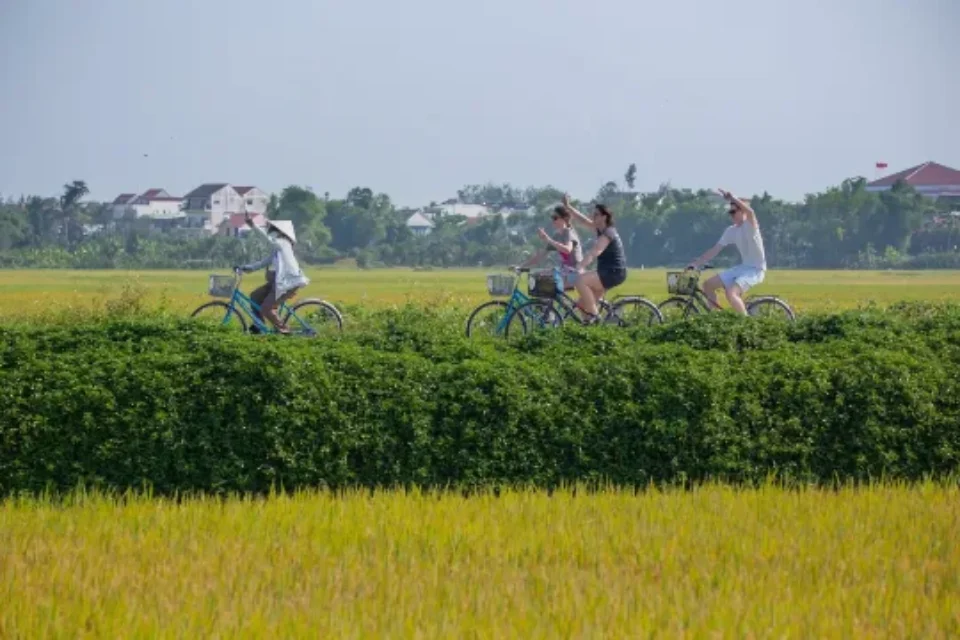
Rice paddies are among the defining landscapes of Hoi An’s countryside, and they are one of the reasons cycling has become so popular among photographers and slow travelers. What makes these landscapes particularly fascinating is that they are never exactly the same. During planting season, the fields are covered in vibrant shades of green. As harvest approaches, the scenery transforms into endless stretches of golden rice that glow beautifully in the late afternoon sun. Early morning rides often bring cooler temperatures and a peaceful atmosphere. Mist lingers above the fields, birds fly overhead, and water buffalo begin grazing while farmers start their work for the day.
Around sunset, golden-hour light creates some of the most photogenic scenery in Central Vietnam. It is no surprise that many visitors stop every few minutes simply to take photographs. Yet the appeal goes beyond photography. Cycling through the rice paddies allows travelers to slow down and appreciate a landscape that remains deeply connected to the traditions and livelihoods of Quang Nam Province. Unlike crowded tourist attractions, the rice fields offer something increasingly rare: space, silence, and a sense of calm.
Fishing Docks and the River Life Few Visitors Notice
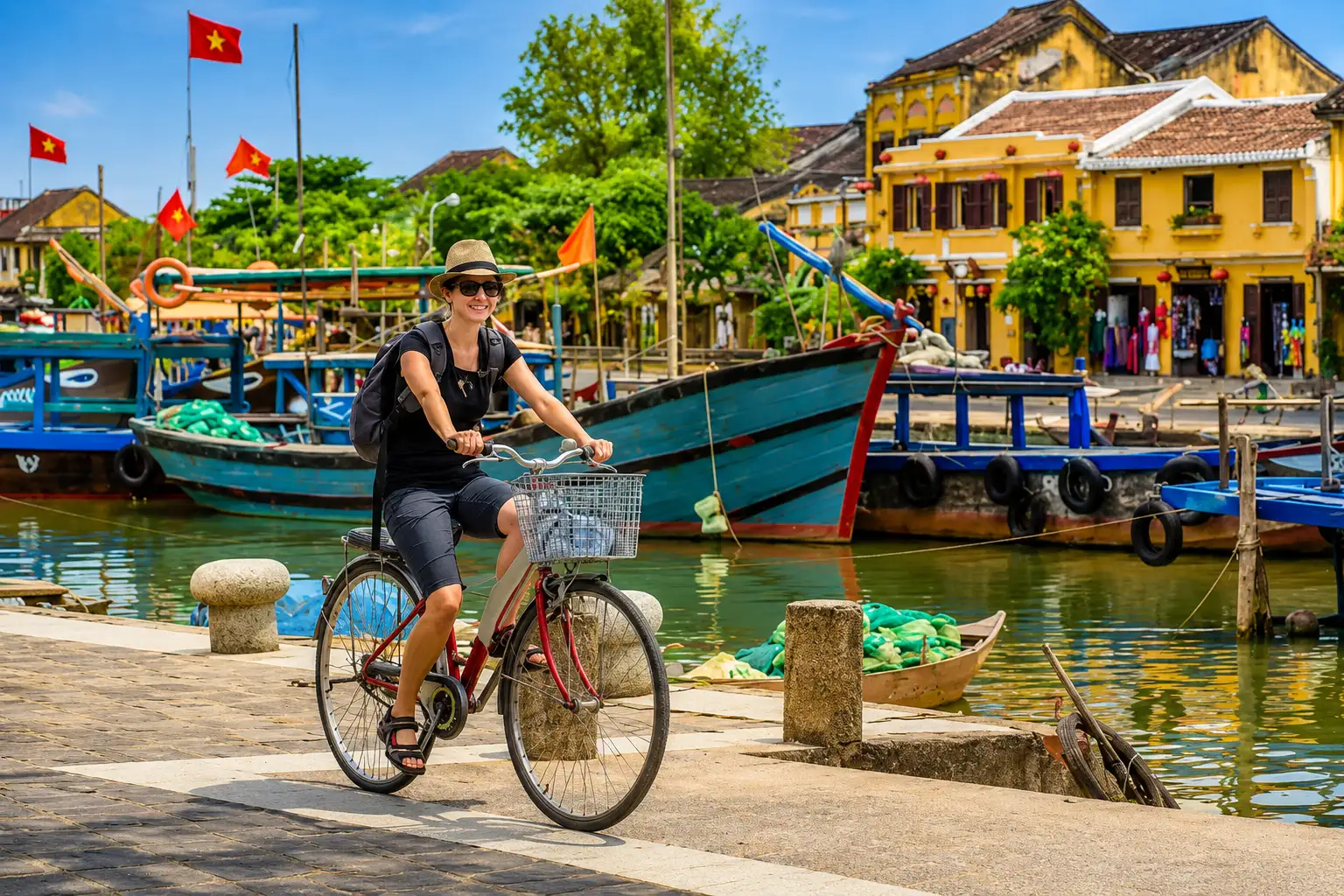
While many tourists focus on the Ancient Town, cyclists who venture toward Cam Thanh Coconut Village or Cam Kim Island often encounter another side of Hoi An. Along the smaller branches of the Thu Bon River, simple fishing docks serve as gathering places for local communities. Wooden boats line the banks while fishermen repair nets, sort their catch, and prepare equipment for the next journey. These scenes may appear ordinary to residents, but for visitors, they offer a fascinating glimpse into the traditions that have shaped life in Hoi An for centuries.
Early mornings are particularly rewarding. Basket boats move quietly across the water, local residents begin their daily routines, and the river reflects the soft colors of sunrise. Unlike organized attractions, these moments cannot be scheduled or guaranteed. They simply happen, which is precisely why many travelers remember them so vividly. For those interested in photography, culture, or simply understanding Hoi An beyond the lanterns and cafés, these quiet river communities reveal a side of the region that many visitors never experience.
The Shade Tree Everyone Somehow Remembers
Perhaps the most surprising stop during a Hoi An cycling tour is one that appears on no map. Experienced cyclists often joke that every memorable ride includes a random tree somewhere in the middle of nowhere. After hours of pedaling through villages and rice fields, even the simplest stop becomes meaningful. Sitting beneath a tree with a bottle of water, listening to birds, and looking across endless fields creates a kind of peace that many travelers rarely experience at home.
There are no tickets, no queues, and no famous landmarks. Just silence, fresh air, and open space.
Ironically, these unscripted moments are often what people remember most. Months later, travelers may forget the exact route they followed, but they still remember the breeze, the sound of insects in the distance, and the feeling of slowing down completely. That is perhaps the greatest appeal of cycling in Hoi An. The destination itself matters, but the spaces between destinations often become the most memorable part of the journey.
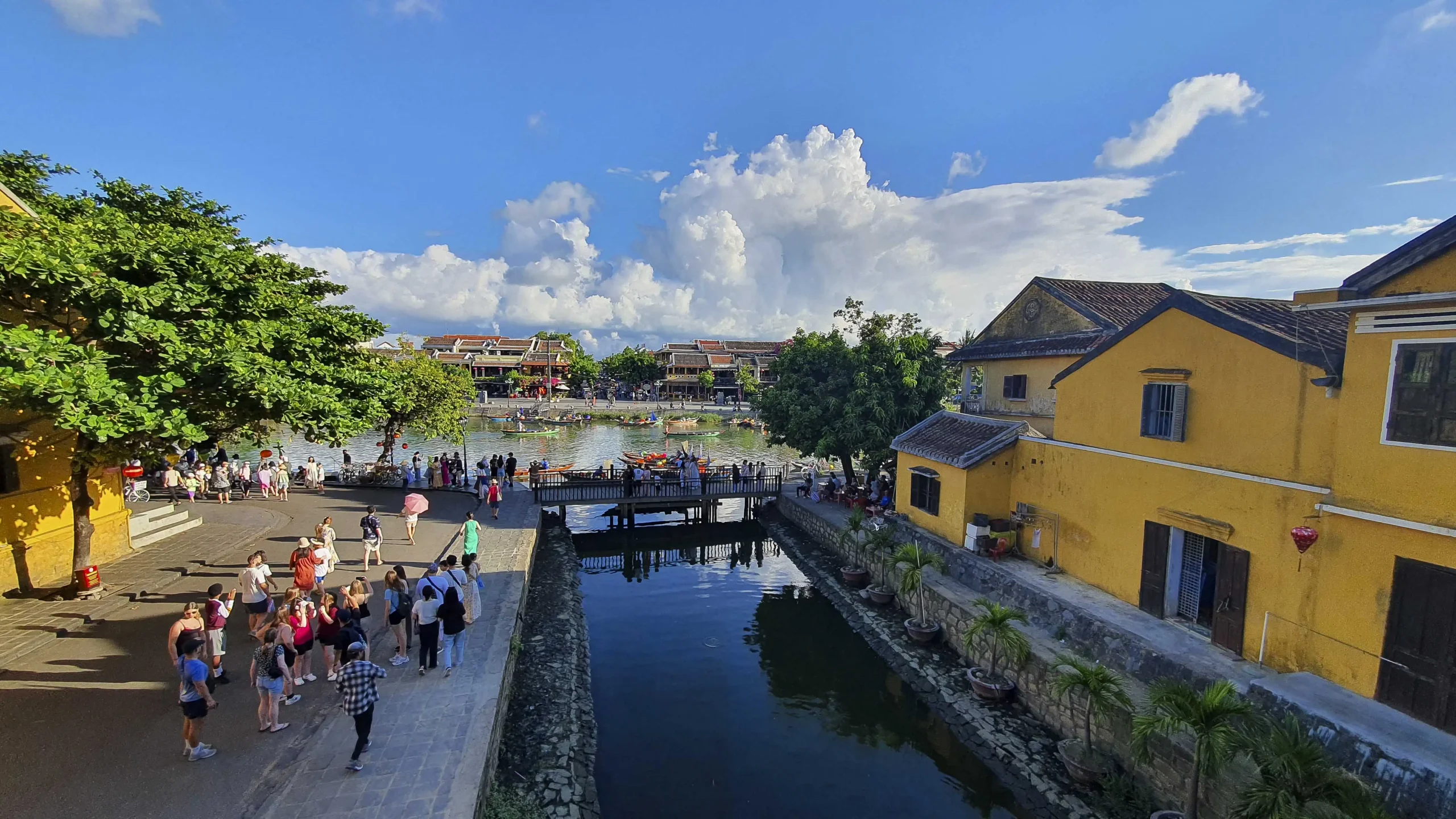
The Most Photogenic Moments Often Happen Between Attractions
The Best Photographs Usually Happen Between Destinations
One thing many travelers discover after cycling in Hoi An is that the most memorable photographs rarely come from the places they originally planned to visit. Popular attractions such as the Japanese Covered Bridge and the Ancient Town are undeniably beautiful, but they are also among the most photographed locations in Vietnam. As a result, many visitors return home with images that look remarkably similar to thousands of others.
Cycling through the countryside offers a completely different experience. Instead of moving from one attraction to the next, travelers become part of the landscape itself, constantly encountering scenes that cannot be scheduled or recreated. Some of the most striking photographs happen unexpectedly: a water buffalo crossing a narrow village road, farmers planting rice under the first light of day, or reflections appearing on irrigation canals after a summer rain.
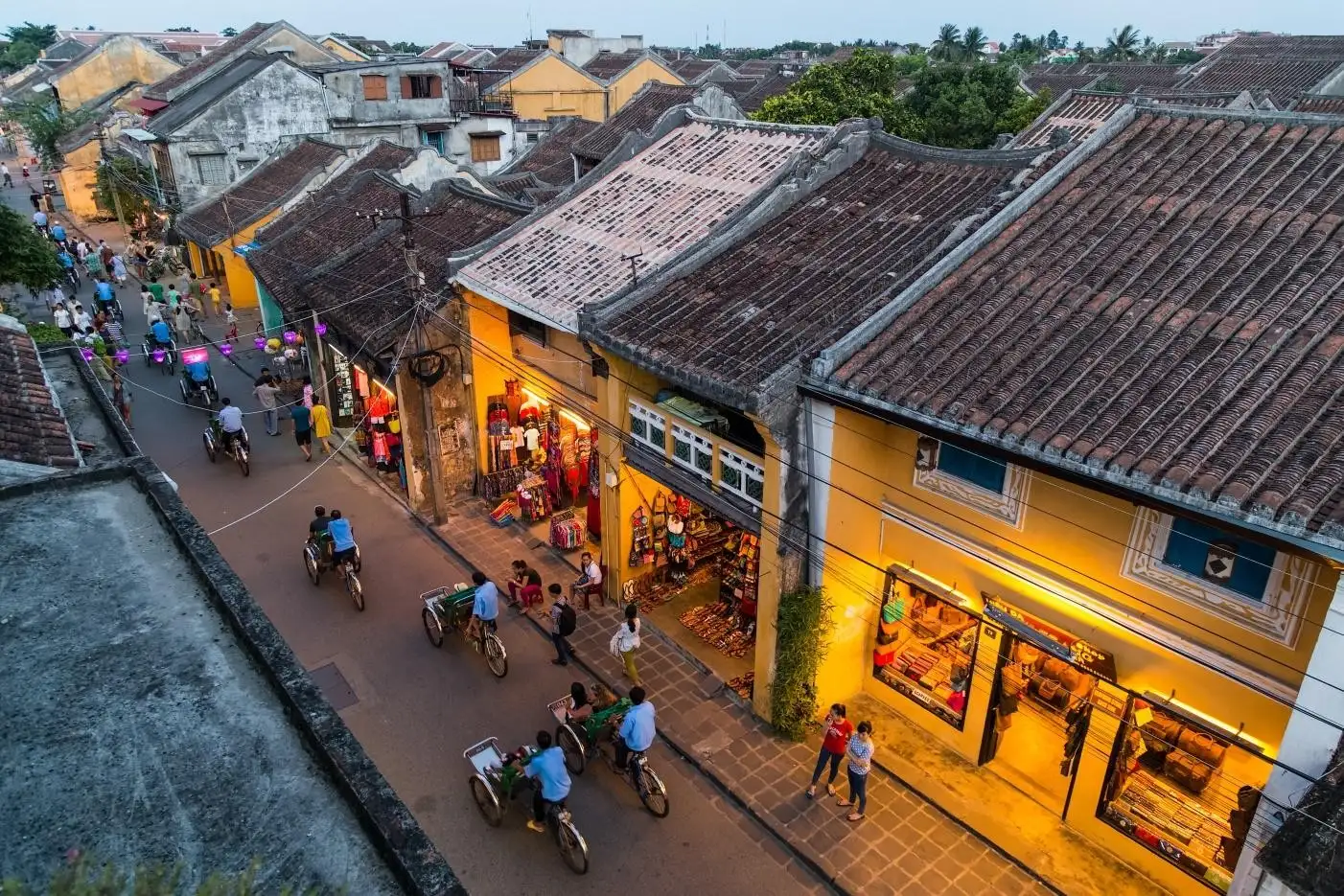
In villages around Tra Que and Cam Kim Island, photographers often find themselves stopping every few minutes. Elderly women wearing conical hats harvest herbs destined for local restaurants, children cycle home from school in the late afternoon, and fishermen prepare their wooden boats along quiet branches of the Thu Bon River. These moments may appear ordinary to local residents, but they are precisely the kinds of scenes that many travelers later remember most vividly.
The changing seasons add another layer of beauty to the experience. During the growing season, rice paddies create endless shades of green that stretch across the countryside. As harvest approaches, the landscape gradually transforms into golden fields illuminated by warm afternoon light. Even the weather influences the atmosphere. After rainfall, flooded paddies and canals reflect the sky, creating dramatic compositions that photographers rarely find inside the Ancient Town.
Time of day also plays an important role. Early mornings are often considered ideal for photography, when temperatures remain cool and village life begins slowly. Mist hangs above the rice fields, birds gather over the water, and the first rays of sunlight create soft colors across the landscape. In the late afternoon, golden-hour light bathes the countryside in warm tones that many photographers consider the most beautiful of the day.
Perhaps that is why some of the favorite images people bring home from Hoi An are not photographs of famous landmarks at all. Instead, they are pictures of simple moments that happened unexpectedly along the way. A farmer waving from a rice field, children laughing as they ride past, or a quiet country road lined with palm trees often becomes far more memorable than any attraction marked on a map.
In many ways, that is the greatest advantage of exploring Hoi An by bicycle. The destination itself certainly matters, but the spaces between destinations often reveal the scenes that travelers remember long after the journey has ended. The same route feels like two different rides depending on the hour. Sunrise rides bring cooler temperatures, softer light, and quieter roads, with villages just beginning their day. Sunset rides turn the fields golden as fishing boats return, families gather outside their homes, and the light grows warm and dramatic.
Local insider tip: Most visitors wait until mid-morning to start. Locals recommend setting out shortly after sunrise, particularly from March to August when temperatures climb quickly. You ride in comfort – and you see a side of Hoi An most tourists never reach.
A bicycle connects the villages that walking keeps separate. As you move between rivers, farms, workshops, and residential lanes, patterns emerge. You notice how closely daily life stays tied to agriculture: vegetable plots around Tra Que Vegetable Village, family woodworking workshops near Cam Kim, and fishing communities along the riverbanks.
According to the Vietnam National Authority of Tourism, community-based and cultural experiences keep growing among international visitors who want deeper connections with a destination. Cycling supports that kind of travel because it rewards observation over consumption. Instead of watching local life from the outside, you briefly move through it.
The Difference Between Cycling Through Hoi An and Taking a Guided Tour
A guided tour gives you context and structure; cycling independently gives you room for curiosity. You can stop when something catches your eye, change direction without checking an itinerary, and spend thirty minutes watching fishermen repair nets if it interests you.
Many travelers combine both. They join a guided activity on one day and explore by bicycle on another, and the two approaches complement each other well.
Common mistake to avoid: Trying to cover too much ground. Hoi An rewards slow exploration — a shorter ride with frequent stops creates better memories than a long route built around distance.
A Typical Morning Cycling Through Rice Fields, Villages, and River Paths
A good Hoi An morning starts just after sunrise, while the air is still cool and the roads stay quiet. Within minutes, urban streets give way to rice fields where farmers are already at work and water mirrors the morning sky across the irrigation channels.
You continue toward Tra Que Vegetable Village, where herbs and vegetables grow in neat, ordered plots. A small riverside road then leads toward the fishing communities near the Thu Bon River. Around mid-morning you stop for Vietnamese coffee – no major attraction, no ticket — just a simple moment that becomes part of the story you tell back home.
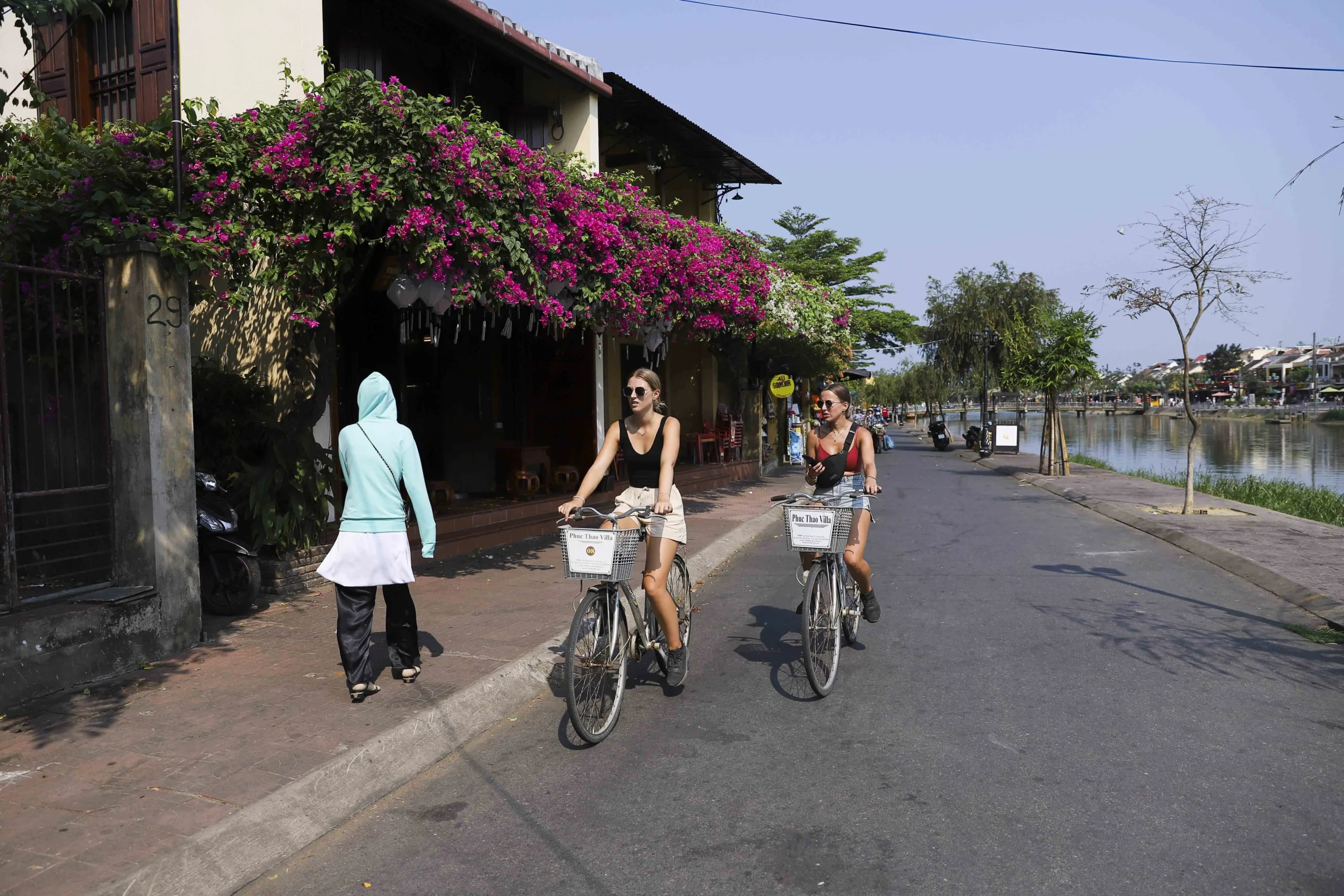
The Unexpected Encounters Travelers Remember Most
Ask travelers about their favorite cycling memory in Hoi An, and most do not name the Ancient Town, a landmark, or a route – they talk about people. One remembers stopping beside a rice field to watch an elderly farmer carry harvested vegetables on a traditional shoulder pole. Another got lost near Cam Kim Island and was guided back by a local woman balancing baskets on her own bicycle. These moments never appear on an itinerary, yet they become the stories told long after the trip ends.
On one morning ride near Tra Que Vegetable Village, we stopped to photograph the fields and ended up talking with a farmer who explained which herbs were being harvested for local restaurants that day. The conversation lasted minutes, but it revealed more about everyday Hoi An than any information board. These encounters happen because cycling slows the pace of travel: a family waves from a front yard, schoolchildren call out “Hello!”, a café owner points you toward a quiet riverside road that never appears in a guidebook.
Years later, travelers struggle to recall an entrance fee or a museum’s opening hours. What stays with them are the conversations, the small kindnesses, and the feeling of briefly connecting with local life rather than observing it from a distance.
Read more: See cycling routes from Bliss Hoi An
Who Enjoys Cycling in Hoi An Most?
Cycling is not necessarily for everyone. Travelers who prefer moving quickly between major attractions may find that exploring on foot or by car suits them better. However, for visitors who value experiences over checklists, cycling often becomes one of the most memorable parts of a Hoi An trip.
Couples Looking for More Than Sightseeing
Many couples discover that cycling offers something traditional sightseeing cannot: time to slow down together. Instead of following a packed schedule, riding through rice fields, coastal roads, and riverside villages creates opportunities for spontaneous moments that are difficult to plan. A coffee stop beside the Thu Bon River, an unexpected sunset over the paddies near Tra Que, or simply getting lost among quiet village lanes often becomes more memorable than checking famous landmarks off an itinerary.
Couples who enjoy traveling at a relaxed pace and prefer shared experiences over crowded attractions tend to appreciate Hoi An’s cycling routes the most. Areas around Tra Que Vegetable Village, Cam Thanh Coconut Village, and the quieter stretches of coastline near An Bang Beach are particularly popular because they combine scenery, local life, and plenty of opportunities to stop whenever something interesting appears.

Slow Travelers Staying Three Nights or More
Cycling appeals especially to travelers who prefer staying longer in one destination rather than rushing through several cities. Visitors spending three or four nights in Hoi An often begin searching for experiences beyond the Ancient Town. After exploring the lantern streets and markets, many want to discover a quieter side of the region. Cycling naturally encourages this slower style of travel.
Routes through Cam Kim Island, riverside roads along the Thu Bon River, and the countryside surrounding Tra Que reward curiosity rather than speed. There is no pressure to follow a timetable, and some of the most enjoyable discoveries happen unexpectedly, whether it is a village market, a hidden café, or a peaceful viewpoint overlooking the rice fields. For travelers who enjoy wandering without a strict itinerary, cycling offers a sense of freedom that organized tours rarely provide.
Photographers and Content Creators
Few activities reveal as many unexpected scenes as cycling. Photographers and content creators are often drawn to Hoi An’s countryside because it offers images that look very different from the classic postcards of the Ancient Town. Instead of photographing the same landmarks as everyone else, cyclists encounter farmers working in the fields, children riding home from school, water buffalo resting beside village roads, and fishermen preparing their boats along smaller branches of the Thu Bon River.
The constantly changing light and seasons add another layer of interest. Sunrise is especially popular because roads remain quiet and soft morning light creates ideal conditions for photography. During harvest season, golden rice fields provide some of the most beautiful landscapes in Central Vietnam. For travelers seeking authentic moments rather than staged scenes, cycling often provides endless inspiration.
Families Looking for an Easy Outdoor Activity
Families frequently find cycling to be one of the easiest ways to combine sightseeing and outdoor exercise. Most countryside routes around Hoi An are relatively flat, making them accessible even for casual riders. The slower pace also allows children to engage naturally with their surroundings. Seeing water buffalo, waving to local residents, and stopping at markets or cafés creates a sense of discovery that feels more interactive than sitting on a tour bus.
Early mornings are generally the most comfortable time for families, especially during the warmer months. Cooler temperatures and lighter traffic make the experience more enjoyable for younger children, while the relaxed atmosphere allows everyone to explore at their own pace.

Travelers Curious About Everyday Local Life
Perhaps the people who enjoy cycling the most are those interested in seeing the Hoi An that exists beyond the tourist center. While the Ancient Town remains the heart of the destination, much of everyday life unfolds elsewhere. Villages, farms, fishing communities, workshops, and neighborhood markets reveal another side of Quang Nam Province that many visitors never experience.
Unlike taxis or tour buses, bicycles encourage interaction. Travelers notice details they might otherwise miss, from incense drying outside a house to fishermen repairing nets beside the river. Distances between villages feel short enough to explore comfortably, yet long enough to reveal how closely connected the landscape and local communities remain. For visitors seeking a deeper understanding of Hoi An rather than simply its most famous attractions, cycling often provides one of the most rewarding experiences available.
Who May Not Enjoy Cycling as Much
Cycling is not the right fit for every traveler. You may prefer another way to explore if any of the following apply:
- You have only a few hours in Hoi An
- You dislike heat and outdoor activity
- You have mobility limitations
- You prefer structured sightseeing
In those cases, exploring the Ancient Town on foot or joining a guided tour is a better use of your time.
Quick self-check
| If you enjoy… | Cycling in Hoi An is for you |
|---|---|
| Slow travel | ✓ |
| Photography | ✓ |
| Local culture | ✓ |
| Family activities | ✓ |
| Romantic experiences | ✓ |
| Fast-paced sightseeing | ✕ |
| One-day visits | ✕ |
| Air-conditioned transport | ✕ |
Our observation after riding Hoi An: The travelers who enjoy cycling most are rarely serious cyclists. They simply like moving at a slower pace – taking a different road out of curiosity, watching farmers work, lingering at a riverside café. They leave room for the unexpected, and those moments become the memories that last.
Where to Stay If You Want to Experience This Side of Hoi An
Your accommodation location shapes a cycling trip more than most travelers expect. Many spend their planning time on routes, attractions, and bike rentals, and overlook the single factor that decides how each ride begins.
In Hoi An, the best rides often start before you reach any landmark – the moment you leave your hotel onto a quiet road lined with rice fields, fishing ponds, or riverside villages. Accommodations in the busiest parts of town require navigating traffic and crowded streets first, which delays the part of the ride you came for.

Properties near the coast and surrounding countryside give easier access to the slower, more scenic side of Hoi An. A morning ride can begin with sea breezes along the coast, continue through fishing communities, and reach rice fields where farmers are already working – a natural transition, because these landscapes connect rather than sit divided by busy urban roads. This is why many returning visitors choose a base outside the Ancient Town center.
For guests at Bliss Hoi An Beach Resort & Wellness, this becomes one of the trip’s quiet advantages. The location opens onto coastal roads, local villages, and quieter countryside routes, which makes it easy to set out for a sunrise ride before the roads fill. For travelers planning several days of cycling, that convenience changes the whole rhythm of the stay.
Frequently Asked Questions About Cycling in Hoi An
Is cycling in Hoi An safe for tourists?
Yes, cycling in Hoi An is safe for most tourists who stick to countryside and coastal roads. Traffic is light away from the town center, the terrain is flat, and quiet lanes around Tra Que, Cam Thanh, and An Bang see far fewer vehicles than the main streets.
How long should a cycling trip around Hoi An take?
A relaxed cycling trip around Hoi An takes two to four hours. Short rides with frequent stops suit the countryside better than long routes. Travelers staying three nights or more often turn a two-hour plan into a full, unhurried morning.
What are the best areas for cycling in Hoi An?
The best areas for cycling in Hoi An are the countryside and coastal routes just outside the center:
- Tra Que Vegetable Village and its surrounding rice fields
- Cam Thanh and the riverside paths
- Cam Kim Island, reached by a short bridge or ferry
- The coastal road toward An Bang Beach
When is the best time of day to cycle in Hoi An?
The best time to cycle in Hoi An is shortly after sunrise. Temperatures are cooler, the light is soft, and the roads are quiet, which matters most from March to August when the heat builds quickly through the day.
Do I need to bring a bicycle, or are bikes provided?
You do not need to bring a bicycle. Many resorts and rental shops in Hoi An provide bikes, and guests at countryside or beachside properties can usually borrow or rent one and set out directly onto quiet roads.
Is cycling in Hoi An suitable for families with children?
Yes, cycling in Hoi An suits families with children. Most countryside routes are flat and quiet, the rides combine sightseeing with light exercise, and early mornings keep younger children comfortable before the heat sets in.
Can I reach Hoi An overland from Hanoi before cycling?
Yes, you can reach Hoi An overland from Hanoi. The journey runs south along the coast with rest stops before Da Nang, and a planned transfer lets you arrive ready to ride./

Related Posts
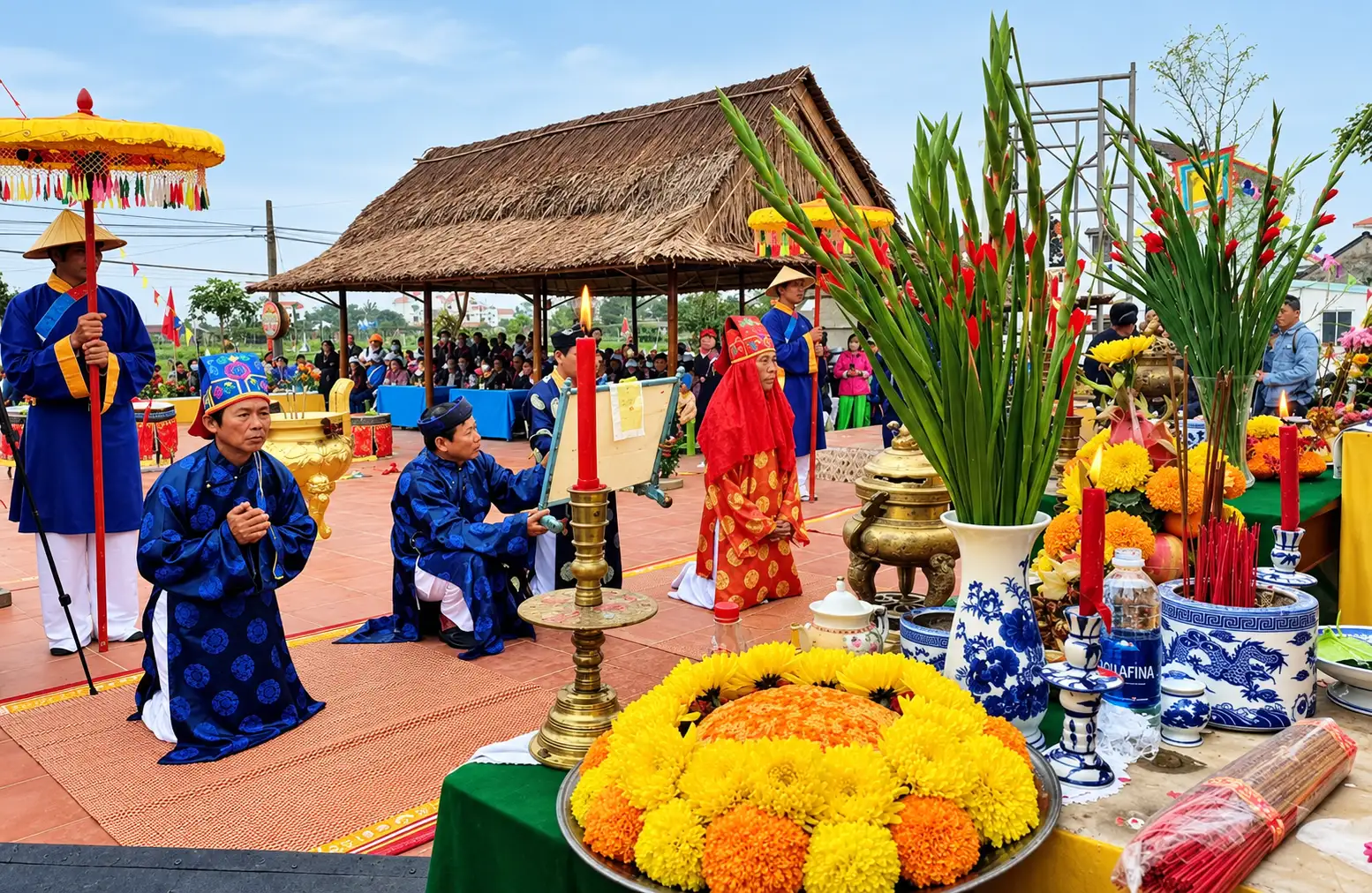
Cau Bong Festival in Hoi An: Inside Tra Que’s Agricultural New Year Tradition

Top 8 things to consider for a wedding in Hoi An with 20 guests
Best Beach Resort in Hoi An: Top 7 things to avoid when choosing to stay

4 Hoi An wedding packages compared: Which one is right for you?
5 mistakes to avoid when self-driving from Hoi An to Quang Ngai in a day